

 English
  Español
  русский

Plumbing systems depend on flexible, durable, and chemically stable components to transport water safely and efficiently. Although outer reinforcement layers, fittings, and protective coverings receive considerable attention, the inner liner is equally important. The inner liner comes into direct or indirect contact with the conveyed medium and must remain stable under changing temperatures, moisture, pressure, movement, and environmental conditions. For this reason, material selection is one of the most important decisions in plumbing pipe design.
Ethylene-Propylene-Diene Monomer, commonly known as EPDM, is a synthetic elastomer widely valued for its resistance to weathering, ozone, aging, water, and hot moisture. When manufactured as a plumbing pipe, inner pipe, or inner tube, EPDM can provide a dependable flexible lining solution for water-related applications. Its combination of elasticity, environmental resistance, and long-term stability makes it suitable for systems that require reliable movement absorption and protection against demanding service conditions.
EPDM plumbing pipe is particularly relevant in flexible plumbing assemblies, water liners, heating connections, building services, and other applications where a rubber-based inner layer must perform consistently over time. It can be incorporated into a broader flexible connection design that includes reinforcement, metal components, protective covers, and end fittings. The resulting assembly can help accommodate vibration, thermal movement, installation deviations, and repeated mechanical stress while supporting the safe conveyance of water.
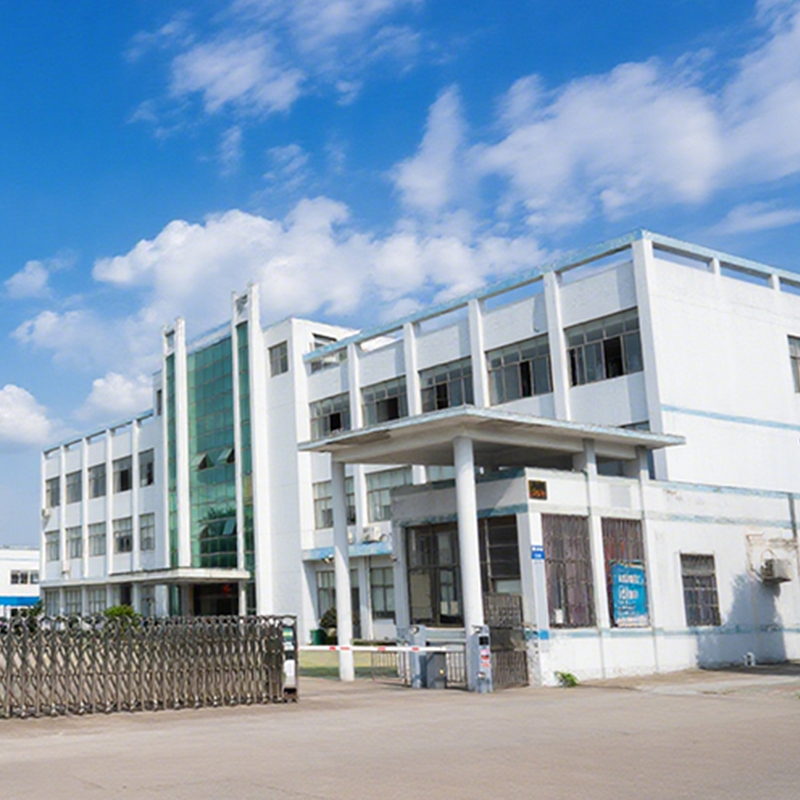
Haoyin (Ningbo) Bellows Technology Co., Ltd. is a professional manufacturer specializing in flexible connection products, stainless steel bellows, gas connectors, plumbing pipes and water liners, metal hoses, and compensators. Its manufacturing capabilities, research and development resources, quality systems, and process controls provide a strong foundation for producing EPDM plumbing pipe solutions for modern water and building-service applications.
This article explains the characteristics, advantages, applications, production considerations, and quality requirements of EPDM plumbing pipe. It also examines how a professional manufacturer can improve product consistency through material control, forming technology, welding, inspection, testing, and complete-process quality management.
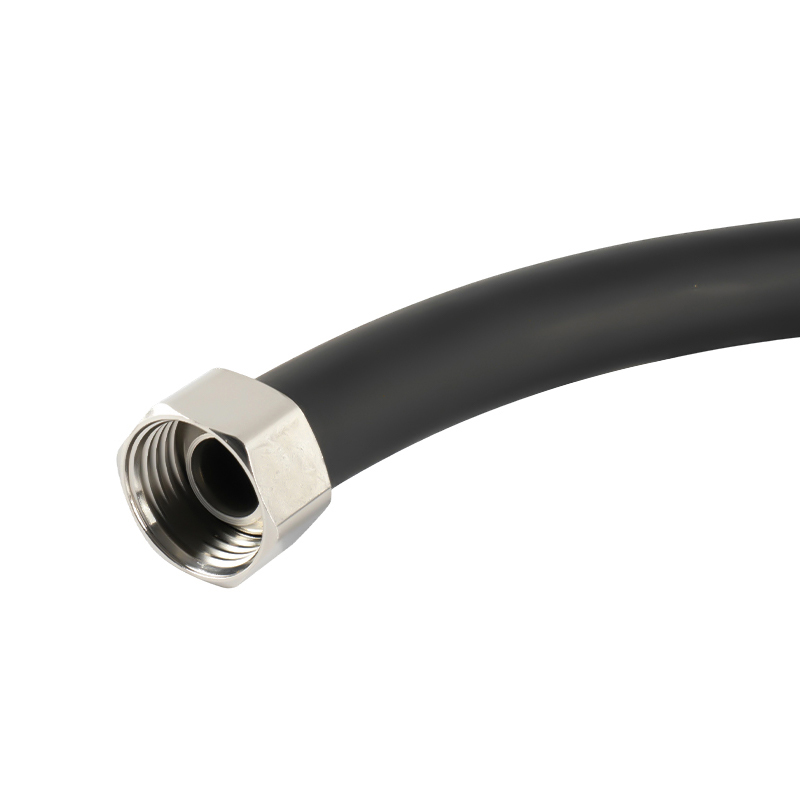
EPDM Plumbing Pipe
Understanding EPDM Plumbing Pipe
EPDM plumbing pipe is a flexible pipe or inner liner made from ethylene-propylene-diene monomer rubber. EPDM is a terpolymer, meaning that its polymer structure is formed from three monomer components. The material is designed to provide elastic performance while resisting environmental conditions that can degrade many conventional rubber compounds.
In plumbing applications, EPDM may be used as an inner tube, water liner, or flexible conveying layer. Depending on the final product design, it may function as the principal flexible pipe or as the internal medium-contact layer of a composite hose or connection assembly. The exact construction depends on the intended application, operating conditions, connection method, pressure requirements, temperature range, and applicable technical standards.
The principal value of EPDM lies in its balance of flexibility and resistance. A plumbing liner must be flexible enough to support installation and movement, but it must also remain stable when exposed to water, humidity, heat, atmospheric oxygen, sunlight, ozone, and repeated service cycles. EPDM is especially known for its resistance to weathering and ozone, making it useful in indoor and outdoor environments.
EPDM also demonstrates strong resistance to aging. This does not mean that the material is unaffected by every possible condition. Rather, it means that a properly formulated and manufactured EPDM product can retain useful physical properties for an extended period when used within its intended service environment. Proper design, compound selection, curing, dimensional control, and installation remain essential to achieving dependable performance.
Typical Construction
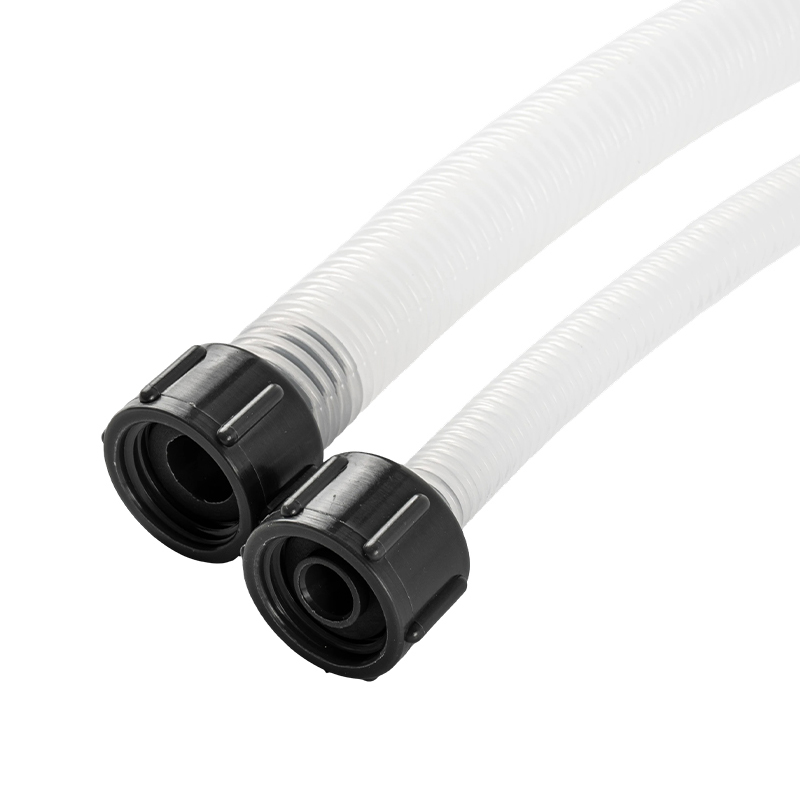
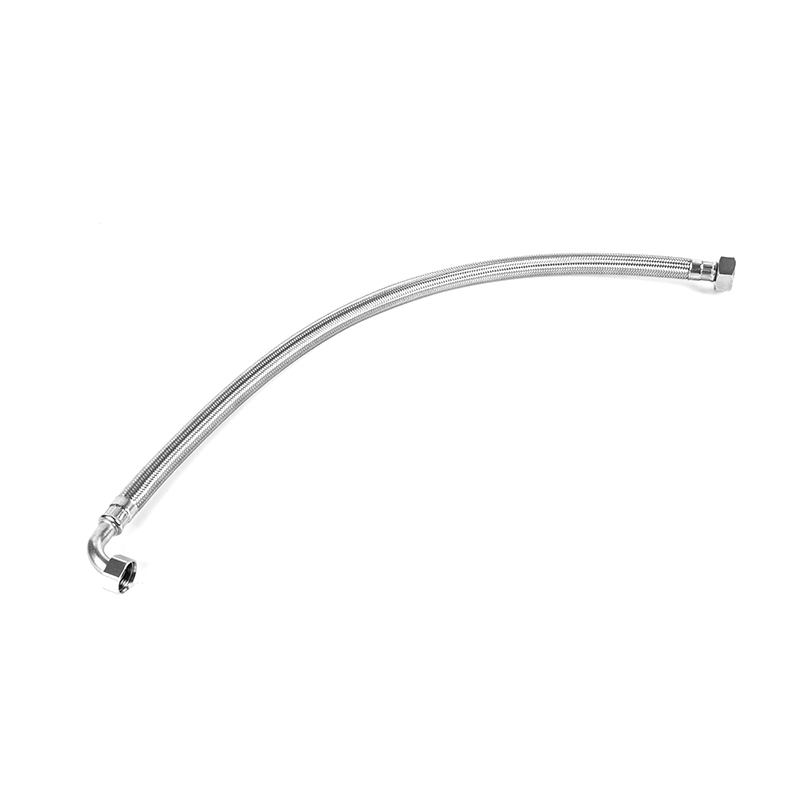
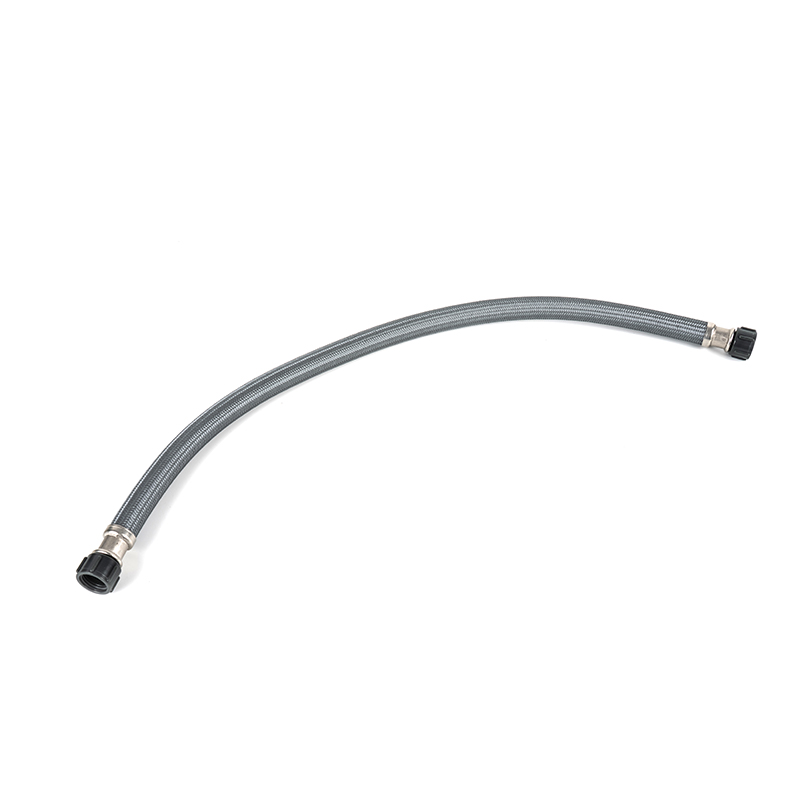
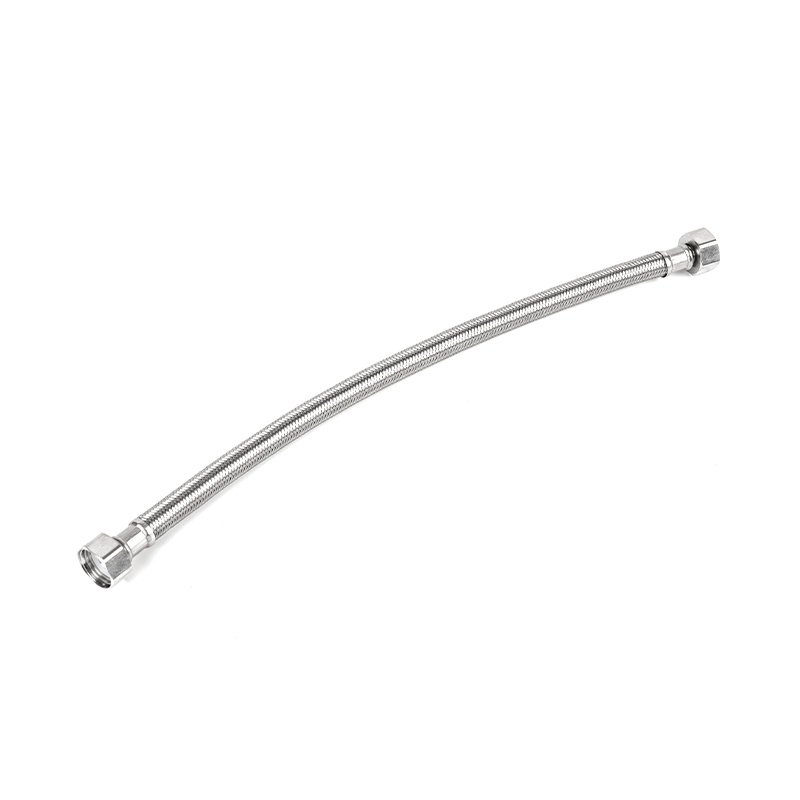
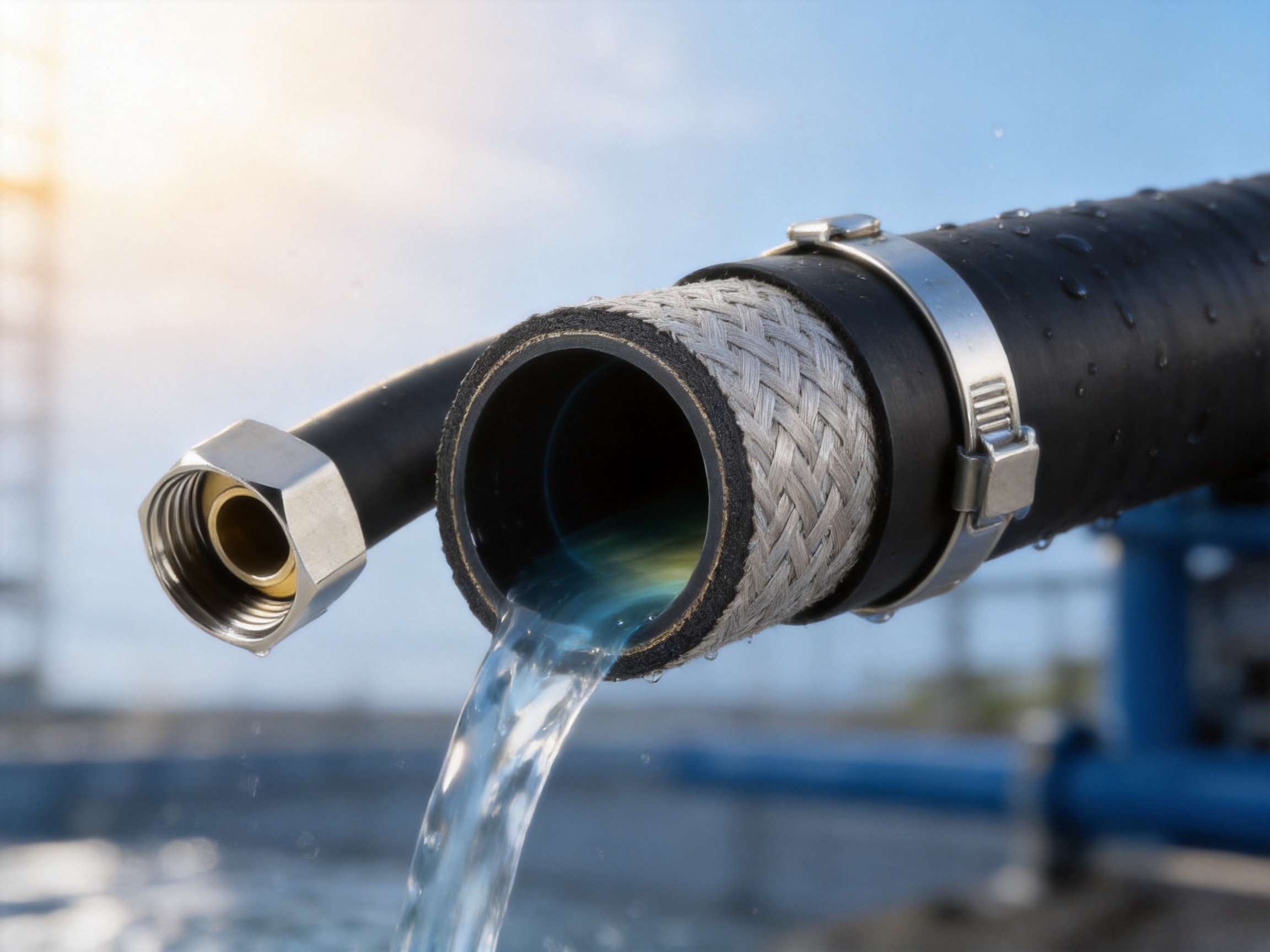
An EPDM plumbing pipe assembly may include several functional layers. The innermost EPDM layer provides the flexible water-contact surface. A reinforcement layer may provide additional resistance to internal pressure, external loads, or dimensional change. A metal braid, corrugated metal section, protective sleeve, or other structural element may be added according to the application. End fittings connect the flexible section to fixed piping, valves, equipment, manifolds, or building-service components.
Each layer performs a different role. The EPDM liner supports sealing and fluid conveyance. Reinforcement supports pressure and shape retention. Metal components can improve mechanical strength and connection security. External protection may reduce the risk of abrasion, impact, contamination, or accidental damage. The final product must be designed as an integrated system rather than as a collection of unrelated materials.
For this reason, EPDM plumbing pipe should be evaluated not only by its rubber compound but also by the quality of the complete assembly. A high-quality liner cannot compensate for poor fittings, insufficient reinforcement, inaccurate dimensions, weak bonding, improper curing, or inadequate inspection. Consistent performance depends on the interaction of materials, design, manufacturing processes, and service conditions.
Core Material Properties of EPDM
EPDM is selected for plumbing and water-liner applications because it offers several useful properties that support long-term service. The most important characteristics include resistance to weather, ozone, aging, water, and hot moisture. Its elasticity also makes it suitable for flexible assemblies that must accommodate movement and installation variation.
Weather Resistance
Outdoor plumbing components can be exposed to sunlight, rain, temperature changes, atmospheric pollutants, and seasonal humidity. Materials that are not designed for these conditions may become brittle, cracked, or less elastic over time. EPDM is widely recognized for its weather resistance, allowing it to remain suitable for applications where the product may encounter changing environmental conditions.
Weather resistance is important not only for exposed pipe but also for components installed in equipment rooms, utility spaces, plant rooms, rooftops, service corridors, and partially open environments. Even when the liner is not directly exposed to sunlight, temperature fluctuations and moisture can affect the service life of a plumbing assembly. A weather-resistant elastomer provides an additional level of material security.
Ozone Resistance
Ozone can contribute to surface cracking in certain rubber materials, particularly when the rubber is under tension. This type of deterioration can reduce flexibility and eventually compromise sealing performance. EPDM is recognized for its strong ozone resistance, which makes it advantageous for flexible plumbing products that may be exposed to atmospheric ozone or electrical equipment environments.
Ozone resistance is particularly useful when a flexible connection is installed near mechanical equipment, ventilation systems, electrical rooms, or outdoor equipment. By selecting a material with inherent ozone resistance, designers can reduce dependence on protective coatings or special external barriers, although the overall assembly should still be appropriately protected and installed.
Resistance to Aging
A plumbing product is expected to operate for many years. During service, it may experience repeated expansion and contraction, vibration, movement, moisture, heat, and pressure changes. Material aging can gradually reduce elasticity, increase hardness, or create surface defects. EPDM is valued for retaining its functional properties over time when correctly compounded and used within a suitable application range.
Long-term aging resistance can reduce maintenance frequency and help preserve the original sealing behavior of the product. It can also support more predictable inspection intervals. However, a reliable service life still requires correct installation, avoidance of incompatible media, control of excessive pressure or temperature, and protection from mechanical damage.
Resistance to Water and Hot Moisture
EPDM is well suited to water-related service because it has strong resistance to water and hot moisture. This property is important for domestic water systems, plumbing connections, water circulation, heating-related applications, and equipment that operates in humid conditions. A liner that absorbs excessive moisture or loses its physical stability in hot water environments may create leakage, swelling, or dimensional problems.
Hot moisture resistance is especially relevant in systems where water temperature changes regularly. Thermal cycling can cause expansion and contraction in both the pipe and the surrounding assembly. EPDM’s flexibility allows the liner to accommodate a degree of movement, while its resistance to hot moisture supports continued service under humid and heated conditions.
Elasticity and Flexibility
Flexible plumbing products are often installed where rigid pipe cannot easily accommodate the required route or movement. EPDM can bend and recover more effectively than many rigid materials. This flexibility helps simplify installation, reduce alignment stress, and absorb vibration generated by pumps, compressors, valves, heating equipment, or other machinery.
Flexibility must be matched with appropriate reinforcement and support. Excessive bending, twisting, stretching, or compression can damage any flexible pipe. Product design should therefore define a suitable bending radius, connection method, support arrangement, and installation procedure. A professional manufacturer can help ensure that the flexible behavior of the EPDM liner is compatible with the structure of the complete assembly.
Advantages Compared with Less Specialized Alternatives
EPDM plumbing pipe offers several advantages compared with general-purpose rubber liners or materials that are less resistant to environmental exposure. Its greatest benefit is not a single property but the combination of water resistance, hot-moisture resistance, ozone resistance, weather resistance, aging resistance, and flexibility.
More Stable Outdoor Performance
Some general-purpose elastomers perform adequately in protected indoor locations but deteriorate more quickly when exposed to sunlight, ozone, rain, or large temperature variations. EPDM is better suited to demanding atmospheric conditions because its polymer structure provides strong resistance to weather-related degradation.
This advantage can be important for building-service connections, rooftop equipment, external utility lines, agricultural facilities, water treatment areas, and industrial installations. The selection of EPDM can improve material suitability without requiring the designer to rely entirely on additional external protection.
Improved Resistance to Hot Water Environments
Water systems are not always operated at a constant ambient temperature. Heating loops, hot-water distribution systems, equipment connections, and circulation lines may expose the liner to elevated temperatures and moisture for extended periods. EPDM is a practical material option for these conditions because it is designed to resist water and hot moisture more effectively than many ordinary rubber materials.
The benefit is especially clear when a flexible connection must repeatedly transition between lower and higher temperatures. The liner must maintain elasticity, support sealing, and resist cracking or excessive hardening. EPDM can provide a stable base for this type of service when the compound and product design are properly selected.
Reliable Flexibility for Installation
Rigid pipes can require precise alignment and additional elbows, supports, or expansion devices. A flexible EPDM plumbing pipe can simplify certain connection layouts by allowing controlled bending and movement. This can help reduce installation time and make it easier to connect equipment that is not perfectly aligned with fixed piping.
Flexible connection also reduces the direct transmission of vibration. Pumps, motors, compressors, and other equipment may generate mechanical movement that can travel through rigid pipework. A properly designed flexible section can help interrupt this transmission and reduce stress on connected components.
Longer Functional Service Potential
Resistance to aging, ozone, weather, and water contributes to long-term functional stability. A product that remains flexible and dimensionally stable for a longer period can reduce the risk of unplanned replacement. It may also lower the labor and material costs associated with frequent maintenance.
Service life depends on more than the material name. It is influenced by the compound formulation, curing conditions, wall thickness, reinforcement, operating temperature, pressure, conveyed medium, installation quality, and maintenance environment. Nevertheless, EPDM provides a strong material platform for applications where long-term environmental resistance is required.
Applications of EPDM Plumbing Pipe
EPDM plumbing pipe can be used in a wide range of water and building-service applications. The appropriate product construction should be selected according to the actual medium, pressure, temperature, movement, connection type, and installation environment.
Domestic and Commercial Plumbing
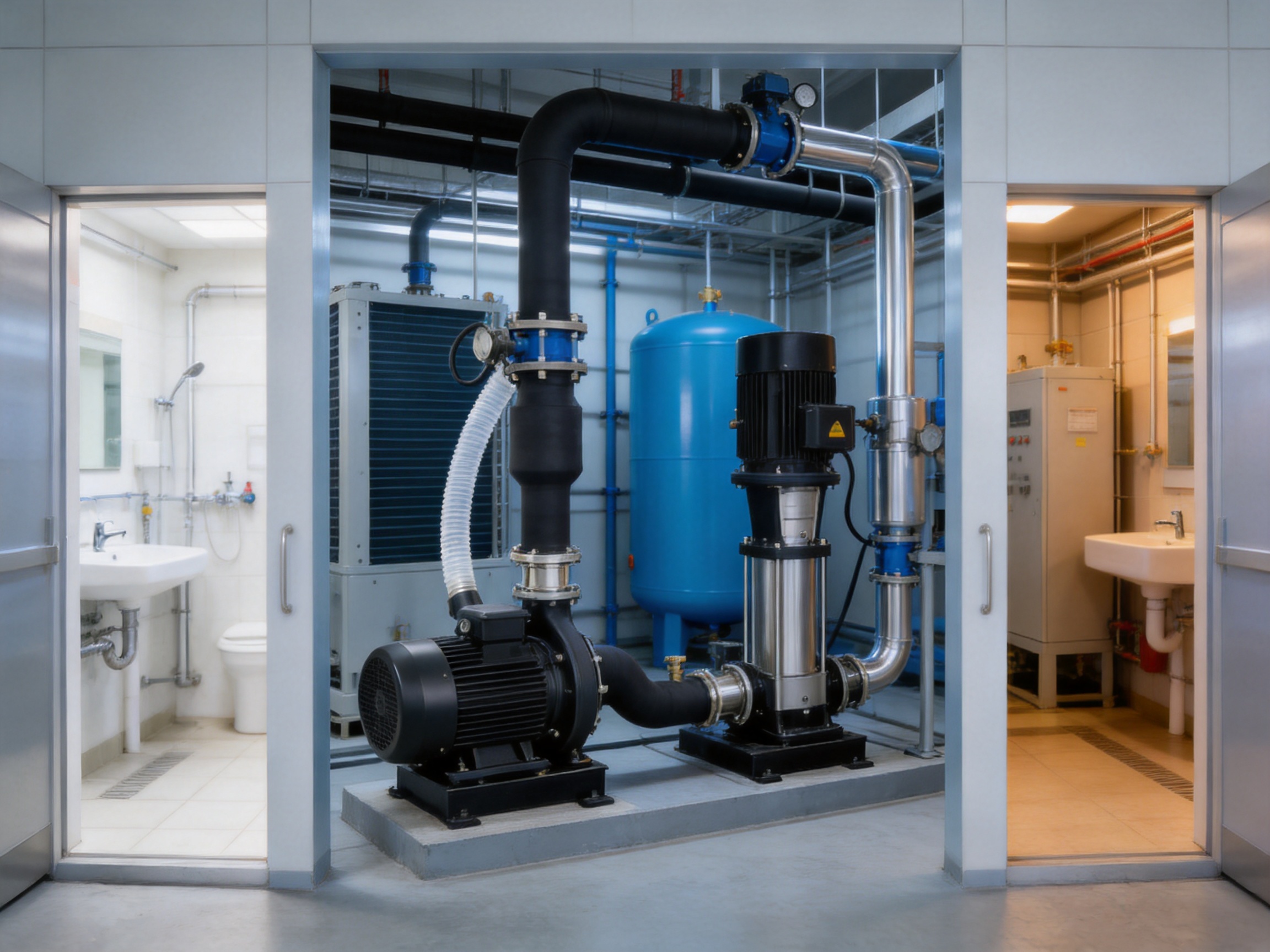
In domestic and commercial buildings, flexible plumbing components may be used to connect water equipment, fixtures, circulation systems, pumps, valves, and distribution lines. EPDM water liners can support flexible routing and help accommodate minor movement between equipment and fixed pipework.
Commercial buildings often contain complex mechanical rooms with multiple pumps, tanks, heat exchangers, control valves, and branch connections. A flexible plumbing pipe can simplify equipment installation and maintenance access. Its ability to accommodate controlled movement may also protect rigid pipework from excessive stress.
Heating and Hot-Water Systems
Heating systems experience thermal expansion and contraction. Pipes, fittings, and connected equipment may move as temperatures rise and fall. Flexible EPDM components can assist with controlled movement while resisting water and hot moisture. They may be used in suitable heating connections, equipment interfaces, circulation systems, and building heating installations.
Product selection must consider the actual water temperature, operating pressure, additives, and system design. If the fluid contains chemicals, oils, or specialized treatment agents, compatibility should be confirmed before installation. EPDM is highly suitable for many water applications, but no elastomer should be considered universally compatible with every medium.
Industrial HVAC Systems
Industrial heating, ventilation, and air-conditioning systems contain pumps, fans, chillers, boilers, cooling equipment, and complex pipe networks. Flexible connectors can reduce vibration transfer and accommodate equipment movement. EPDM liners may be used in suitable water and heating circuits where resistance to moisture, temperature fluctuation, and environmental aging is required.
In HVAC installations, the flexible pipe should be installed without torsion and supported in a way that prevents unnecessary loading on the fittings. The assembly should be selected to match the equipment’s vibration characteristics and the system’s pressure and temperature requirements.
Healthcare and Service Facilities
Healthcare facilities rely on dependable plumbing and heating infrastructure. Flexible water connections may be required around equipment, service units, heating systems, and maintenance areas. EPDM’s water resistance and aging resistance can support stable performance in building-service environments, provided that the final product meets the relevant hygiene, safety, and regulatory requirements for its intended use.
Water Equipment and Utility Connections
Water treatment equipment, storage tanks, circulation pumps, filtration units, and related machinery may benefit from flexible pipe connections. These connections can help simplify installation and reduce mechanical stress caused by vibration or minor movement. EPDM may serve as a practical inner liner for such systems where the conveyed medium and operating conditions are compatible.
Design Considerations for EPDM Inner Liners
The performance of an EPDM plumbing pipe begins with correct design. Product developers must consider the internal diameter, wall thickness, length, bending behavior, connection method, reinforcement, and expected operating conditions. A liner that is suitable for one application may not be suitable for another if the pressure, temperature, or medium changes substantially.
Dimensional Accuracy
Accurate dimensions are necessary for proper assembly and consistent sealing. Variations in internal diameter may affect flow, while variations in outer diameter may influence reinforcement fit, clamping, or connection strength. Wall-thickness consistency is also important because thin areas can become weak points under pressure or repeated bending.
Professional manufacturing requires controlled tooling, calibrated measurement equipment, and regular in-process inspection. Dimensional checks should be performed at appropriate stages rather than only after final assembly. Early detection of deviation helps reduce material waste and prevents defective products from moving into later operations.
Pressure and Movement
The product must be designed for the intended pressure conditions, including normal operating pressure, pressure fluctuations, and possible transient events. Reinforcement may be required when the EPDM liner alone cannot provide sufficient dimensional stability. The assembly should also be evaluated for movement caused by vibration, thermal expansion, installation displacement, and equipment operation.
A flexible pipe should not be used as a substitute for an incorrectly designed support system. The connection must be positioned so that bending occurs within the intended direction and radius. Twisting can place uneven stress on the liner and fittings, while excessive stretching may reduce service life.
Temperature Conditions
Temperature affects rubber elasticity, pressure capability, dimensional behavior, and aging. The expected minimum and maximum temperatures should be identified before the material and construction are finalized. Repeated thermal cycling can be more demanding than a single short-term exposure because it creates continuous expansion and contraction.
EPDM is recognized for resistance to water and hot moisture, but the product must still be engineered for the actual thermal conditions. The manufacturer should evaluate compound formulation, curing, wall thickness, reinforcement, and connection components together.
Medium Compatibility
EPDM is commonly associated with water-related applications, but compatibility depends on the exact fluid composition and operating conditions. Water quality, additives, cleaning agents, disinfectants, glycol solutions, oils, and other chemicals may affect elastomers differently. Before selecting the product, the designer or user should provide accurate information about the conveyed medium.
A professional supplier can review the application and recommend an appropriate construction. If the fluid is unusual or the operating conditions are severe, laboratory testing or application-specific validation may be advisable.
Advanced Manufacturing Processes
Reliable EPDM plumbing pipe production requires more than simply forming rubber into a tube. It involves raw-material control, compound preparation, extrusion or forming, curing, cutting, reinforcement assembly, fitting integration, testing, and final inspection. Each stage can influence the service performance of the finished product.
Raw-Material Selection and Control
The quality of the starting materials affects every later stage. EPDM polymer, fillers, curing agents, plasticizers, pigments, reinforcement materials, and metal components should be sourced and controlled according to defined specifications. Material identification and batch traceability help manufacturers investigate any quality issue and maintain consistency across production orders.
Raw materials should be stored under suitable conditions to reduce contamination, moisture exposure, and degradation. Incoming inspection may include visual checks, documentation review, dimensional verification, and selected physical or chemical tests. Consistent input materials support stable processing and predictable final properties.
Compound Preparation
EPDM compounds are formulated to achieve the required balance of elasticity, hardness, strength, processing behavior, and resistance. Mixing must distribute the ingredients uniformly throughout the polymer. Poor dispersion can create weak areas, surface defects, inconsistent hardness, or unstable curing behavior.
Controlled mixing equipment and documented process parameters help maintain repeatability. The compound should be evaluated for workability and uniformity before it proceeds to forming. A disciplined compound-preparation process is particularly important when products are manufactured in different sizes or for different application categories.
Tube Forming and Extrusion
The EPDM liner may be formed through controlled extrusion or another suitable shaping process. The objective is to produce a continuous tube with stable dimensions, a smooth internal surface, and consistent wall thickness. Process speed, temperature, tooling, pressure, and cooling conditions must be managed carefully.
An accurate die design helps control the internal and external dimensions of the tube. Cooling and stabilization after forming reduce dimensional variation. Online monitoring can identify changes in diameter, surface condition, or wall thickness before a long length of material is produced outside specification.
Curing and Vulcanization
Curing, also known as vulcanization, transforms the processed rubber compound into a stable elastic material. During this process, crosslinks form within the polymer structure. The curing system must be carefully controlled because under-curing and over-curing can both reduce performance.
Under-cured EPDM may have insufficient strength, poor compression resistance, or unstable dimensions. Over-cured material may become excessively hard or less flexible. Time, temperature, pressure, and compound formulation must be coordinated to achieve consistent curing throughout the wall thickness.
Reinforcement and Assembly
Where the final product requires additional mechanical strength, reinforcement may be integrated around the EPDM liner. Metal braid, protective sleeves, corrugated metal sections, or other structural components can support pressure resistance, movement control, and external protection.
The reinforcement must be aligned correctly and assembled without damaging the liner. Contact pressure, positioning, overlap, and end termination can influence the performance of the finished connection. Automated or semi-automated equipment can improve repeatability, while trained operators remain essential for process supervision and visual quality control.
Laser Welding and Metal Component Integration
Flexible plumbing products may include stainless steel or other metal components that require secure joining. Laser welding can provide accurate, localized, and controlled welding for suitable parts. Compared with less precise welding methods, laser welding can help reduce heat-affected areas, improve dimensional control, and create consistent joints when the process is properly qualified.
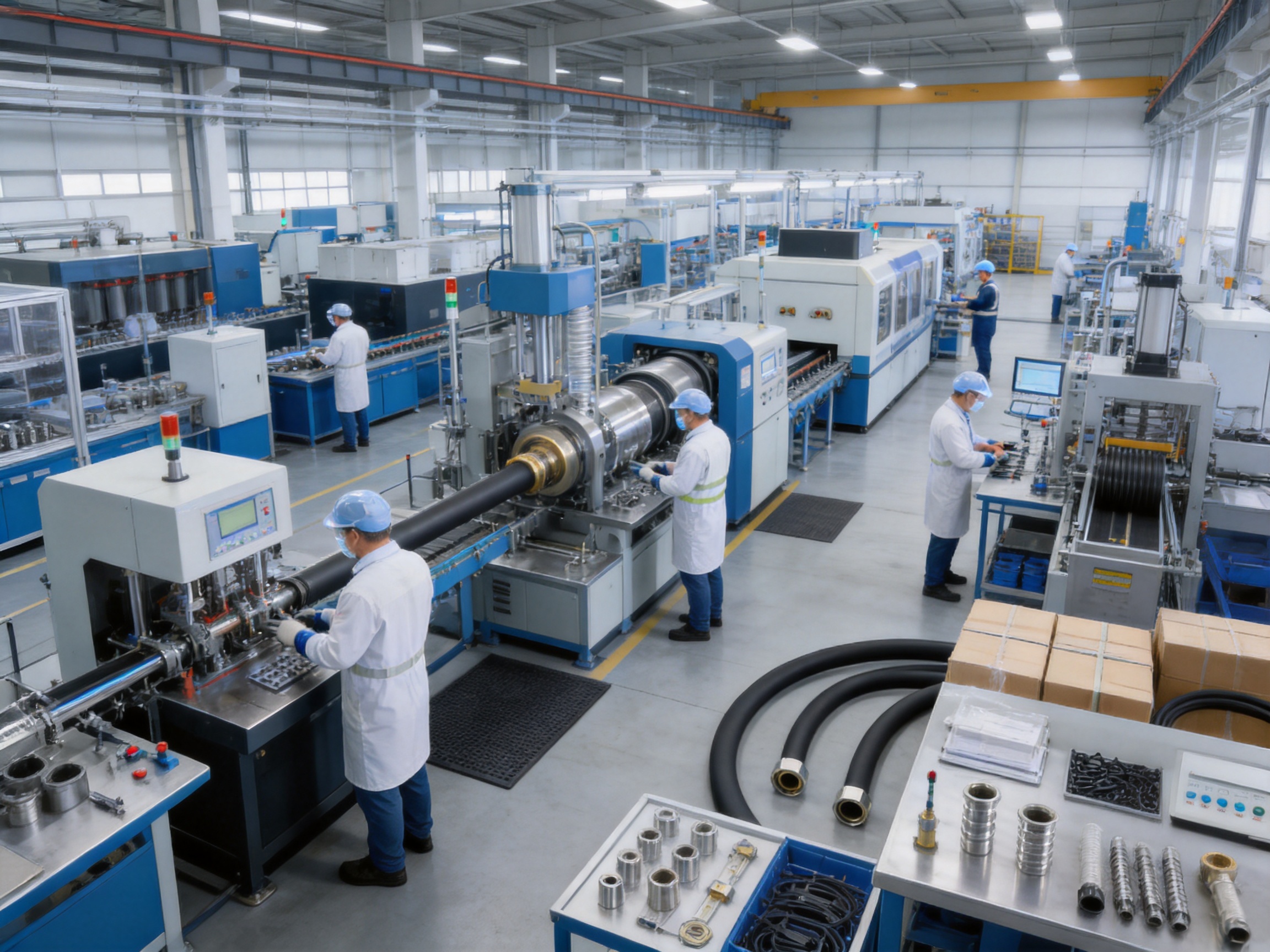
Haoyin uses advanced manufacturing equipment, including laser welding machines and CNC forming machines, to support the production of flexible connection products. These technologies help connect design accuracy with repeatable manufacturing. Welding parameters, joint appearance, penetration, alignment, and structural integrity should be verified through appropriate inspection and testing procedures.
CNC Forming
CNC forming machines support the controlled production of corrugated or shaped metal components. Computer-controlled forming can improve repeatability between batches and help maintain consistent geometry. This is important because the shape of a metal bellows or flexible section affects its movement capacity, stress distribution, pressure behavior, and connection fit.
Combining a controlled EPDM liner with accurately formed metal components can produce a balanced flexible assembly. The elastomer provides water resistance and elasticity, while the metal structure supplies additional strength and connection support.
Automated Packaging
Packaging is part of product quality. Flexible pipes and liners can be damaged by sharp edges, compression, contamination, or improper handling before installation. Automated packaging systems can improve consistency in labeling, protection, grouping, and shipment preparation.
Packaging should preserve the shape and cleanliness of the product without creating excessive deformation. Product identification should include appropriate information such as model details, batch or production references, and handling instructions where required.
Quality Management and Inspection
A dependable EPDM plumbing pipe should be supported by a comprehensive quality-management system. Quality cannot be created through final inspection alone. It must be built into product design, material selection, process planning, operator training, equipment maintenance, testing, and corrective action.
Haoyin (Ningbo) Bellows Technology Co., Ltd. has obtained ISO9001, ISO14001, and ISO45001 management system certifications. These certifications reflect structured approaches to quality management, environmental management, and occupational health and safety. They also support a more systematic manufacturing environment in which responsibilities, procedures, records, and improvement activities are defined.
Incoming Inspection
Incoming inspection verifies that raw materials and purchased components meet established requirements before they enter production. EPDM compound materials may be checked for identification, batch consistency, appearance, and relevant physical properties. Metal components may be checked for material grade, dimensions, surface condition, and documentation.
Effective incoming inspection reduces the risk that unsuitable material will affect an entire production batch. It also creates traceability between finished products and the materials used to manufacture them.
In-Process Inspection
In-process inspection may include checks of tube dimensions, surface appearance, wall thickness, curing condition, reinforcement position, fitting alignment, and weld quality. The purpose is to identify deviations as early as possible.
Inspection frequency should be determined by product risk, process capability, customer requirements, and production history. Critical dimensions and characteristics should receive particular attention because they can affect sealing, pressure resistance, connection reliability, or installation performance.
Final Inspection and Testing
Final inspection confirms that the completed product meets the applicable specifications. Depending on the product design, this may include visual inspection, dimensional inspection, leakage testing, pressure testing, flexibility checks, and examination of metal joints or fittings.
Testing should be performed using controlled equipment and documented procedures. Test instruments must be maintained and calibrated so that results are reliable. When a product is manufactured for an important building, industrial, or infrastructure application, clear test records can provide valuable evidence of conformity.
Non-Destructive Testing
Haoyin’s advanced equipment includes eddy current flaw detectors. Eddy current inspection can help identify certain discontinuities or irregularities in conductive metal components without destroying the part. This technology is useful for supporting the quality control of metal sections used in flexible connectors, bellows, hoses, and compensators.
Non-destructive testing is particularly valuable when a component must retain its structural integrity after inspection. It can be integrated with visual examination, dimensional measurement, pressure testing, and process verification to create a broader quality-assurance program.
Manufacturing Strengths of a Professional Supplier
Choosing an EPDM plumbing pipe supplier involves evaluating more than product appearance or price. A capable supplier should have appropriate production capacity, technical expertise, inspection resources, quality systems, and application support.
Research and Development Capability
EPDM plumbing products may require different dimensions, connection methods, reinforcement structures, or performance characteristics. A professional research and development team can adapt the design to meet the needs of a specific application rather than forcing every customer into a standard configuration.
Research and development may include material evaluation, product modeling, tooling design, prototype production, process optimization, performance testing, and failure analysis. This capability is valuable when the customer requires a customized length, end connection, geometry, or installation arrangement.
Integrated Product Portfolio
A manufacturer that supplies gas connectors, plumbing pipes and water liners, metal hoses, compensators, and stainless steel bellows can approach a flexible connection project from multiple technical perspectives. The supplier may be able to recommend a complete connection structure rather than only one isolated component.
An integrated portfolio can also support consistency in fittings, reinforcement, surface treatment, packaging, and documentation. Customers may benefit from simplified sourcing and communication when related flexible products are obtained from one experienced manufacturer.
Standardized Production Facilities
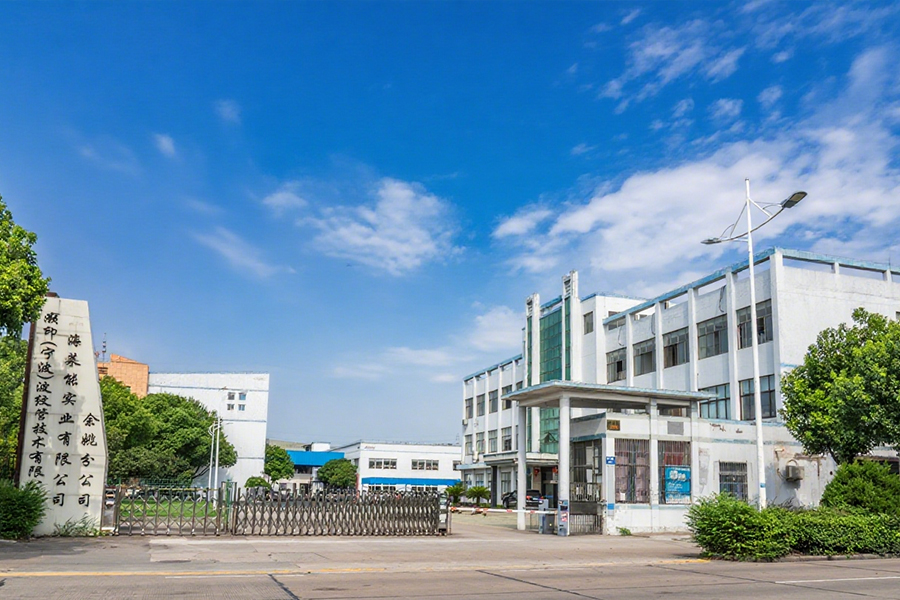
Haoyin operates standardized workshops covering approximately 18,000 square meters within a company area of about 35 mu. A structured production environment provides space for material storage, forming, welding, assembly, inspection, testing, packaging, and logistics. Proper separation and organization of these functions can improve workflow and reduce the risk of contamination or handling errors.
Green and Responsible Manufacturing
Environmental management is increasingly important in industrial manufacturing. A Green Factory approach encourages more efficient use of energy, materials, water, and production space while reducing waste and improving workplace conditions. ISO14001 certification provides a framework for systematic environmental management.
Responsible manufacturing can benefit customers by supporting supply-chain compliance, reducing process waste, and demonstrating that production decisions consider long-term environmental impact. It also encourages continuous improvement in equipment efficiency, material utilization, packaging, and waste handling.
Occupational Health and Safety
Safe production conditions support stable operations and responsible employment. ISO45001 certification provides a structured approach to identifying workplace hazards, controlling risks, training personnel, and improving safety performance. A safe factory environment can also contribute to better process discipline because employees are trained to follow documented procedures and recognize abnormal conditions.
EPDM Plumbing Pipe Compared with Other Material Options
Material comparison should be based on the complete application rather than on one general ranking. Different elastomers and plastics have different strengths. EPDM is particularly competitive when the system requires water resistance, hot-moisture resistance, ozone resistance, weather resistance, aging resistance, and flexibility.
| Evaluation Factor | EPDM Plumbing Pipe | General Rubber Liner | Rigid Plastic Pipe | Metal-Only Flexible Section |
|---|---|---|---|---|
| Flexibility | High, depending on construction and wall thickness | Varies significantly by compound | Usually lower than elastomeric pipe | Flexible but may require specialized geometry |
| Water Resistance | Strong for suitable water applications | Depends on rubber type | Often suitable, depending on plastic | Generally strong, subject to corrosion conditions |
| Hot Moisture Resistance | Strong when properly formulated and specified | May be limited | Depends on polymer and temperature range | Generally strong, subject to design and material grade |
| Ozone Resistance | Strong | Varies by material | Varies by polymer and additives | Usually not a primary concern for the metal itself |
| Weather Resistance | Strong | Varies by compound | Depends on formulation and protection | Depends on metal grade and surface condition |
| Vibration Isolation | Good when used in a suitable flexible assembly | Potentially good | Limited by rigidity | Moderate to good, depending on geometry |
| Installation Adaptability | Good for controlled flexible routing | Good when correctly designed | More dependent on fittings and layout | Good but may require precise forming |
The table provides a general comparison rather than a substitute for application-specific engineering. The best material depends on the operating medium, temperature, pressure, movement, code requirements, installation environment, and expected service life. EPDM’s competitive advantage is strongest in water and humid applications where environmental resistance and flexibility are both important.
Installation and Maintenance Guidance
Even a well-manufactured EPDM plumbing pipe can fail prematurely if it is installed incorrectly. Installation should follow the supplier’s technical instructions and the requirements of the system designer. The pipe should be inspected before use for cuts, punctures, deformation, contamination, or damage to fittings.
Avoid Twisting
Flexible pipe should be installed so that the bending movement occurs in the intended plane. Twisting places additional stress on the liner, reinforcement, and fittings. The installer should align the connection ends before tightening and should avoid using the pipe as a lever to pull equipment into position.
Respect the Minimum Bending Radius
Every flexible pipe has a suitable bending radius. Bending below that radius can create excessive strain, flatten the internal passage, weaken reinforcement, and increase stress near the fittings. A larger radius generally reduces mechanical stress and supports more stable long-term operation.
Prevent Abrasion and External Damage
The pipe should not rub continuously against sharp edges, moving machinery, unprotected metal surfaces, or abrasive building materials. Where external contact cannot be avoided, suitable protection or repositioning should be considered. The surrounding area should allow inspection and should not place the flexible section under unnecessary compression.
Use Proper Supports
Flexible connections should not carry loads for which they were not designed. Adjacent pipework and equipment should be adequately supported. Supports should prevent sagging, excessive movement, and stress concentration while still allowing the flexible section to perform its intended function.
Inspect at Appropriate Intervals
Maintenance personnel should periodically inspect the product for cracking, bulging, flattening, leakage, corrosion of metal components, fitting movement, surface damage, or unusual vibration. Inspection frequency should reflect the importance of the system and the severity of service conditions.
If any abnormal condition is found, the system should be safely isolated and the cause should be investigated. Replacing a flexible pipe without correcting excessive vibration, poor alignment, pressure surges, or chemical incompatibility may result in repeated failure.
Selection Checklist for Buyers and Engineers
Before purchasing EPDM plumbing pipe, users should define the technical requirements as clearly as possible. This allows the manufacturer to recommend a suitable product structure and prevents avoidable mismatches between the product and the system.
The first consideration is the conveyed medium. The buyer should identify whether the product will carry cold water, hot water, treated water, heating water, glycol-containing fluid, or another medium. Any chemical additives should be declared.
The second consideration is the operating temperature. Both the normal operating temperature and possible peak temperature should be provided. Temperature cycling should also be considered because repeated changes can influence service life.
The third consideration is pressure. The system’s normal pressure, maximum working pressure, pressure fluctuations, and possible water hammer should be reviewed. The flexible assembly should be selected with an appropriate safety margin.
The fourth consideration is movement. The user should explain whether the product must absorb vibration, compensate for thermal expansion, accommodate installation misalignment, or support repeated movement. The direction and amplitude of movement are important for design.
The fifth consideration is installation space. Available length, connection orientation, bending radius, fitting type, and access for maintenance all affect product selection. A supplier with engineering support can help convert these practical requirements into a suitable configuration.
The sixth consideration is compliance. Projects may require specific material declarations, quality certificates, hygiene approvals, pressure-test records, traceability, or management-system evidence. These requirements should be discussed before production begins.
Why Manufacturing Process Matters to Product Performance
Two products made from a material with the same general name may perform very differently. Differences in polymer quality, compound formulation, mixing, curing, wall thickness, dimensional accuracy, reinforcement, fitting design, and inspection can significantly affect service life.
Manufacturing process control reduces variation. Stable process conditions help ensure that each production batch meets the intended design. This is especially important for flexible plumbing products because small defects may remain hidden until the component is exposed to pressure, movement, heat, or prolonged moisture.
Advanced equipment such as laser welding machines, CNC forming machines, eddy current flaw detectors, and automatic packaging systems supports a more controlled production process. Equipment alone does not guarantee quality, but when combined with trained personnel, documented procedures, preventive maintenance, and verification testing, it can improve repeatability and reliability.
Haoyin’s full-process quality philosophy covers raw-material selection, structural design, manufacturing, performance testing, and after-sales support. This approach recognizes that a successful flexible connection is created through cooperation between design, production, inspection, and customer service.
Application Support and Customization
Not every plumbing project can be solved with a standard product. Building layouts, equipment interfaces, pressure requirements, connection dimensions, and movement conditions vary from one installation to another. Customization may involve length, inner diameter, wall construction, reinforcement, end fittings, surface protection, packaging, or labeling.
A customized product should begin with a clear technical discussion. The manufacturer should understand the operating medium, temperature, pressure, movement, installation environment, expected service life, and applicable standards. Drawings, samples, photographs, or installation measurements can help the engineering team develop a more accurate solution.
Prototype evaluation may be appropriate for critical or unusual applications. The prototype can be checked for dimensions, flexibility, connection fit, leakage, pressure behavior, and installation practicality. Feedback from this stage can be used to refine the final design before volume production.
Customization does not mean abandoning standardization. In fact, the best custom products are usually developed through controlled design rules, qualified materials, repeatable tooling, and documented inspection procedures. The objective is to adapt the product to the application while maintaining reliable manufacturing control.
Q&A: EPDM Plumbing Pipe
Q1: What is EPDM plumbing pipe?
EPDM plumbing pipe is a flexible pipe, inner tube, or water liner made from ethylene-propylene-diene monomer rubber. It is used in suitable water-related and building-service applications where flexibility and resistance to weather, ozone, aging, water, and hot moisture are required.
Q2: What are the main advantages of EPDM as a plumbing liner?
The main advantages include flexibility, water resistance, hot-moisture resistance, ozone resistance, weather resistance, and aging resistance. These properties help the liner remain functional under changing environmental and operating conditions.
Q3: Can EPDM plumbing pipe be used outdoors?
EPDM is well suited to many outdoor or partially exposed environments because of its resistance to weathering and ozone. However, the complete product assembly and installation should still be protected from sharp edges, excessive mechanical damage, unsuitable chemicals, and conditions outside the product specification.
Q4: Is EPDM suitable for hot-water systems?
EPDM is commonly considered for suitable hot-water and heating applications because it resists water and hot moisture. The exact product must be selected according to the actual temperature, pressure, water chemistry, and applicable requirements of the system.
Q5: Can EPDM plumbing pipe absorb vibration?
A flexible EPDM assembly can help reduce vibration transmission between equipment and rigid pipework. Its effectiveness depends on length, construction, reinforcement, installation direction, support arrangement, and the characteristics of the equipment generating the vibration.
Q6: Is EPDM compatible with every fluid?
No. EPDM is highly suitable for many water-related applications, but compatibility depends on the exact medium and operating conditions. Oils, solvents, concentrated chemicals, and specialized fluids may require another material. The conveyed medium should always be reviewed before product selection.
Q7: What information should be provided when requesting a quotation?
Useful information includes the fluid, operating temperature, working pressure, required length, internal diameter, connection type, movement requirements, installation environment, quantity, applicable standards, and any documentation requirements. Drawings or photographs can help clarify the installation.
Q8: What manufacturing technologies support product quality?
Important technologies may include controlled rubber mixing, tube forming, curing equipment, CNC forming, laser welding, dimensional inspection, pressure testing, non-destructive testing, and automated packaging. The value of these technologies is maximized when they are managed through documented procedures and a complete quality system.
Q9: What certifications does the manufacturer hold?
Haoyin (Ningbo) Bellows Technology Co., Ltd. has obtained ISO9001, ISO14001, and ISO45001 management system certifications. The company is also described as a National High-tech Enterprise and Green Factory.
Q10: Does the company manufacture products other than EPDM plumbing pipe?
Yes. Its product range includes gas connectors, plumbing pipes and water liners, metal hoses, compensators, and stainless steel bellows. This broader product portfolio supports flexible connection requirements in gas, plumbing, heating, healthcare, building heating, industrial HVAC, and related fields.
Q11: How should EPDM plumbing pipe be maintained?
The product should be inspected periodically for leakage, cracking, bulging, abrasion, deformation, fitting movement, and abnormal vibration. It should be kept within its intended operating conditions and replaced if visible damage or performance deterioration is found.
Q12: Why should a buyer work with an experienced manufacturer?
An experienced manufacturer can support material selection, product design, process control, inspection, testing, documentation, and after-sales service. This reduces the risk of selecting a liner that appears suitable but does not match the complete operating conditions of the system.
Conclusion
EPDM plumbing pipe is a practical inner liner solution for water and building-service applications that require flexibility, environmental resistance, and reliable long-term performance. Its resistance to weather, ozone, aging, water, and hot moisture gives it a strong advantage over less specialized rubber materials in demanding plumbing environments.
The product’s performance depends on the quality of its complete construction. Correct compound formulation, uniform mixing, stable tube forming, controlled curing, accurate dimensions, suitable reinforcement, reliable fittings, and thorough testing are all essential. Installation quality is equally important because twisting, over-bending, poor support, abrasion, and misalignment can reduce the service life of any flexible pipe.
Haoyin (Ningbo) Bellows Technology Co., Ltd. combines product development, standardized manufacturing facilities, advanced equipment, management-system certifications, and a broad flexible-connection portfolio. Its capabilities in laser welding, CNC forming, eddy current inspection, automatic packaging, and full-process quality management support the production of safe, efficient, and durable solutions for plumbing, heating, HVAC, healthcare, industrial, and building applications.
For engineers, contractors, distributors, and equipment manufacturers, the most effective approach is to select EPDM plumbing pipe according to the complete application rather than by material name alone. When the fluid, temperature, pressure, movement, dimensions, connection method, and installation environment are clearly defined, a professional manufacturer can provide a more reliable and technically appropriate solution.
References
1. General technical literature on ethylene-propylene-diene monomer elastomers and their resistance to water, ozone, weathering, and aging.
2. General engineering references on flexible hose design, vibration isolation, thermal movement, pressure behavior, and installation practice.
3. ISO 9001, Quality Management Systems — Requirements.
4. ISO 14001, Environmental Management Systems — Requirements with Guidance for Use.
5. ISO 45001, Occupational Health and Safety Management Systems — Requirements with Guidance for Use.
6. General manufacturing references on rubber compounding, extrusion, vulcanization, dimensional control, and elastomer testing.
7. General technical references on stainless steel bellows, metal hoses, compensators, laser welding, CNC forming, and non-destructive inspection.
8. Product and company information supplied for Haoyin (Ningbo) Bellows Technology Co., Ltd., including EPDM plumbing pipe characteristics, manufacturing capabilities, certifications, equipment, and application areas.