




 English
 Español
 русский



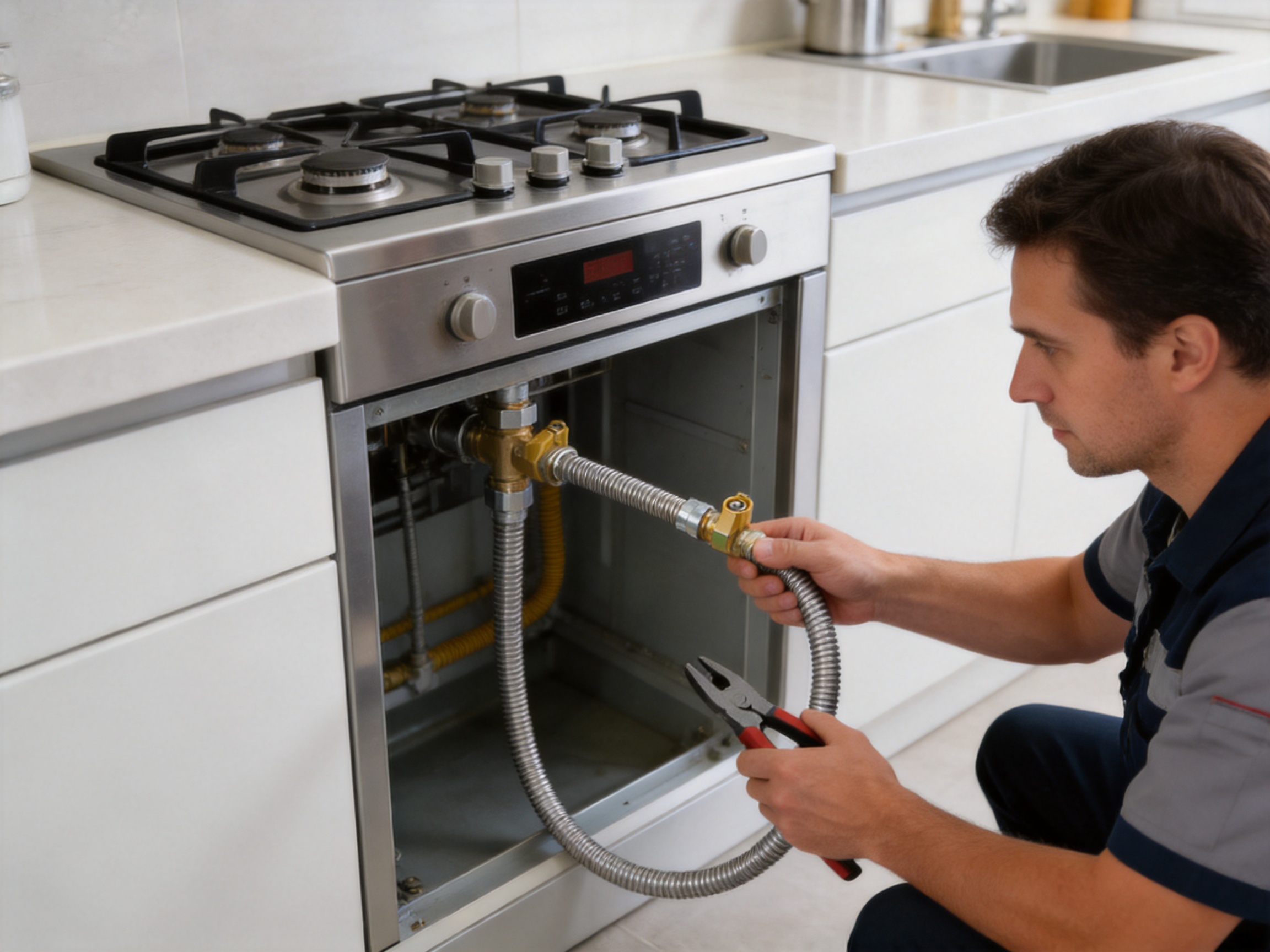
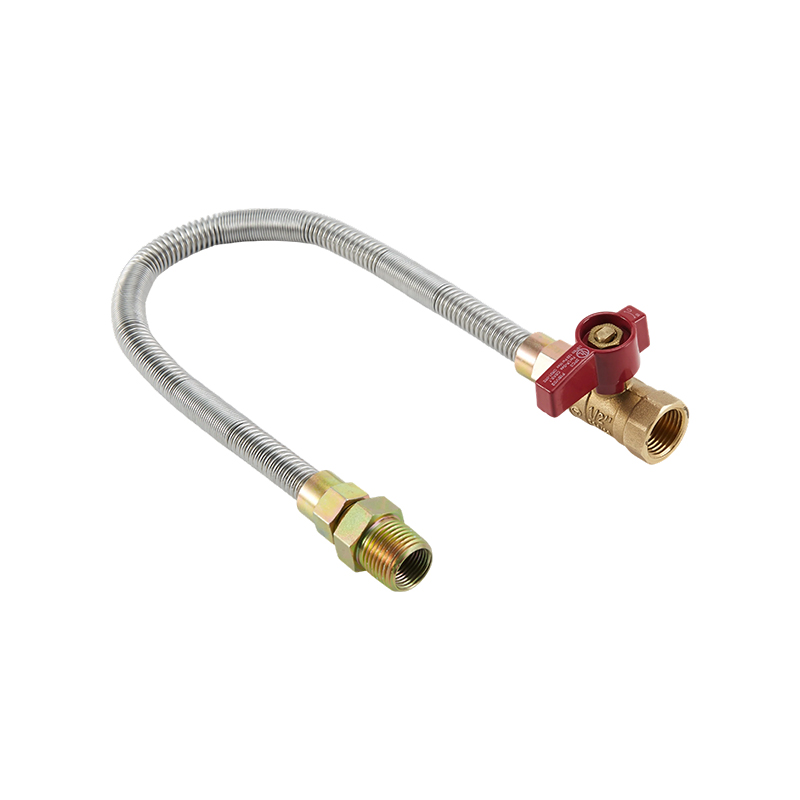
Modern gas systems require connection components that combine flexibility, mechanical strength, corrosion resistance, installation convenience, and dependable sealing performance. A gas connector may appear to be a relatively small part of a complete piping system, but its quality has a direct influence on system safety, service life, maintenance requirements, and installation efficiency. The DN25 stainless steel gas connector is designed to meet these needs through a carefully selected 304 stainless steel tube, a compact corrugated structure, flexible length options, and robust connection hardware.
With a nominal DN25 size and a 0.25 mm pipe wall thickness, this connector is intended for gas connection applications in residential, commercial, and industrial environments. It is available in lengths from 12 inches to 72 inches, allowing installers to select a configuration that matches the distance between the gas supply line and connected equipment. Brass or carbon steel nuts can be selected according to project requirements, while natural stainless steel, yellow, and black finishes provide practical and visual alternatives.
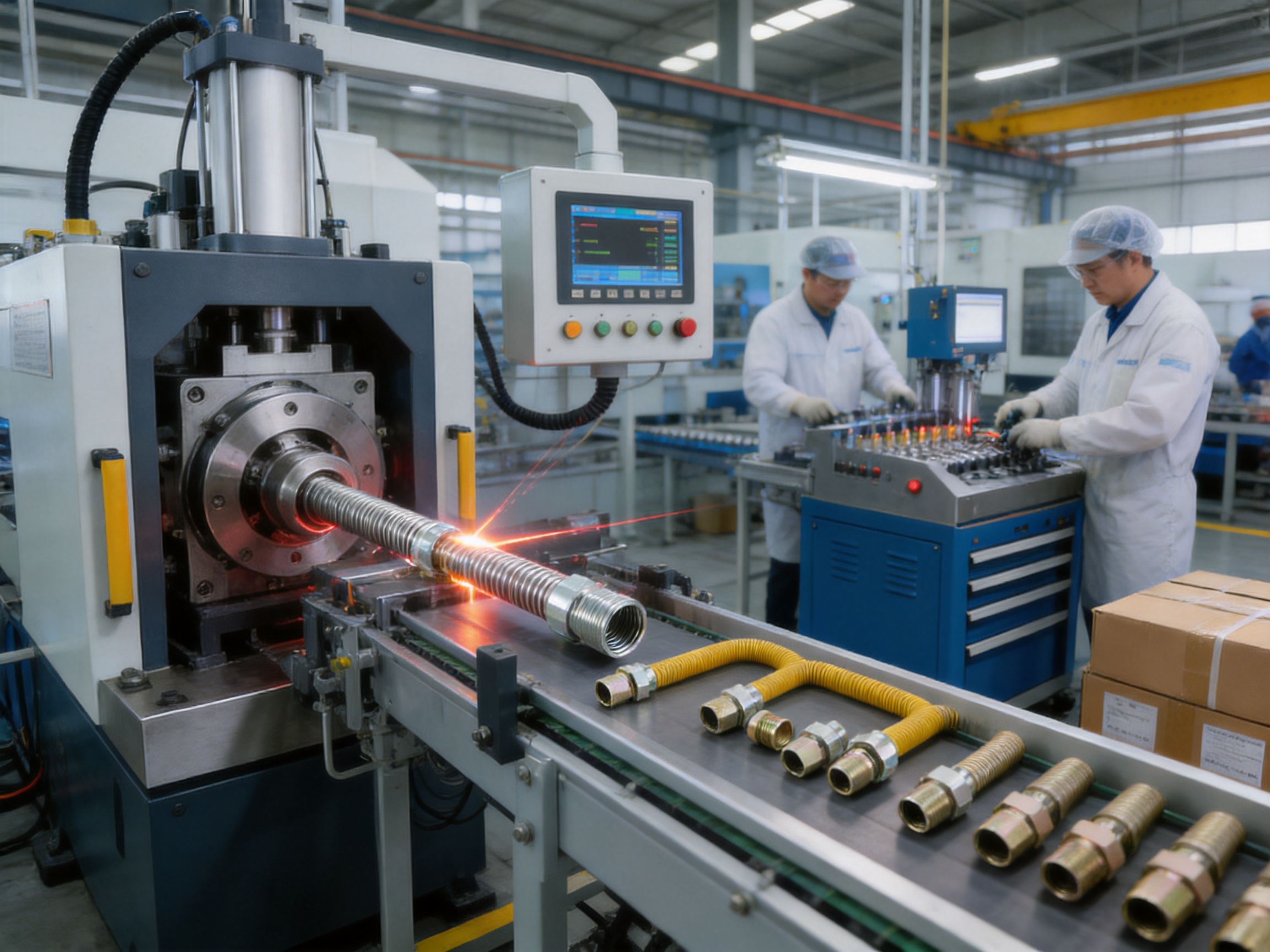
The product is manufactured by Haoyin (Ningbo) Bellows Technology Co., Ltd., a specialist enterprise focused on the research, design, production, and sales of stainless steel bellows and flexible connection products. Its manufacturing capabilities include laser welding, CNC forming, automated packaging, eddy current flaw detection, and structured quality control covering raw materials, forming, joining, testing, and after-sales support.
This article explains the construction, advantages, manufacturing process, application value, selection considerations, installation principles, and quality characteristics of the DN25 stainless steel gas connector. It also compares the product’s practical strengths with common alternative connector materials and designs.
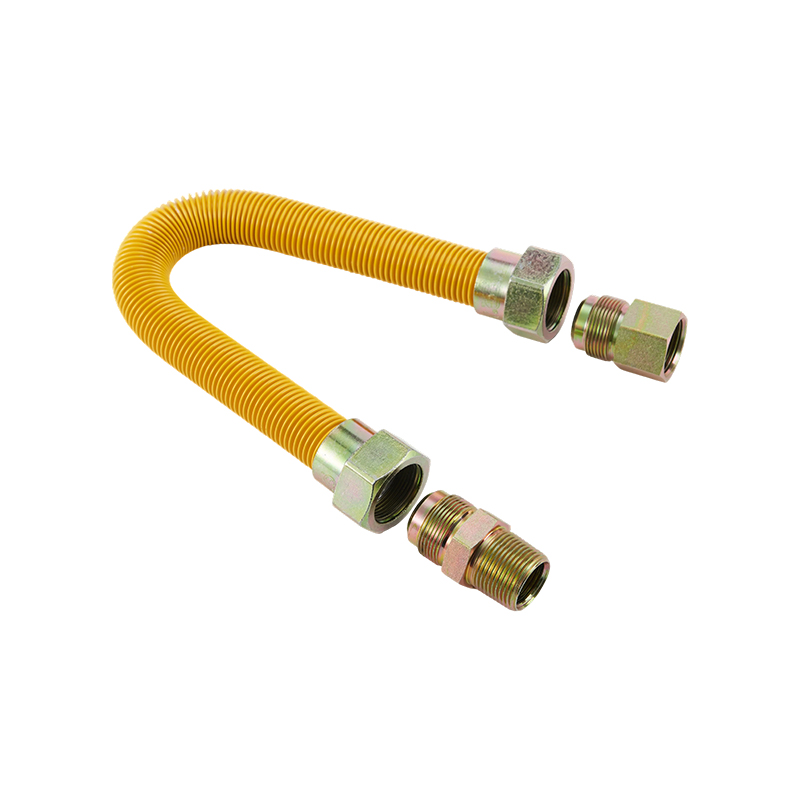
DN25 Stainless Steel Gas Connector
1. Product Overview
The DN25 stainless steel gas connector is a flexible metal connector designed to create a reliable connection between a gas supply pipe and a gas appliance or gas-system component. Its stainless steel tube is manufactured from 304 stainless steel, a widely used austenitic stainless steel known for its balance of corrosion resistance, formability, strength, and availability.
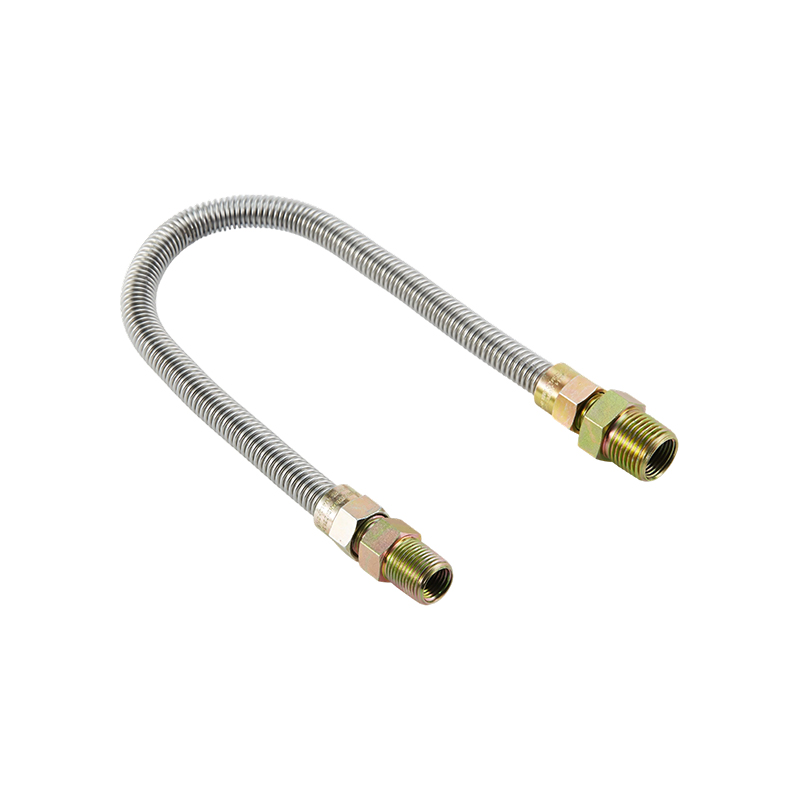
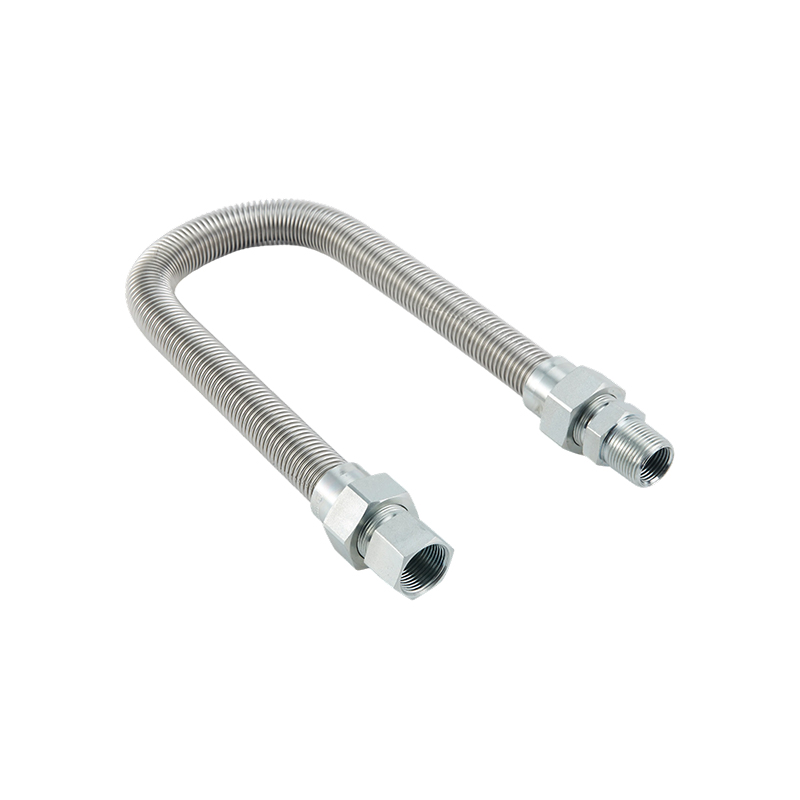
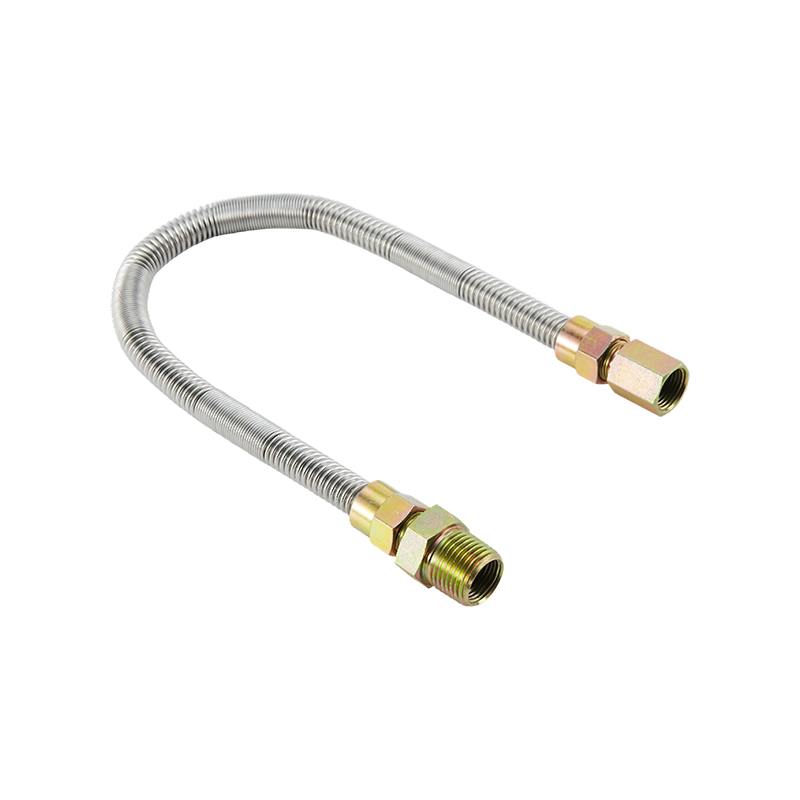
The connector uses a corrugated tube structure. Corrugation allows the tube to bend and accommodate small movements without requiring a rigid elbow or multiple threaded fittings. This feature can simplify installation where the available space is limited, where the appliance position is offset from the supply line, or where minor movement may occur during operation, maintenance, or building use.
The product has a 0.25 mm wall thickness. This specification provides a balance between flexibility and structural integrity when the connector is correctly selected, installed, and used within the applicable pressure, temperature, and code requirements. The connector is not intended to replace a complete gas piping system; rather, it functions as a flexible connection component within such a system.
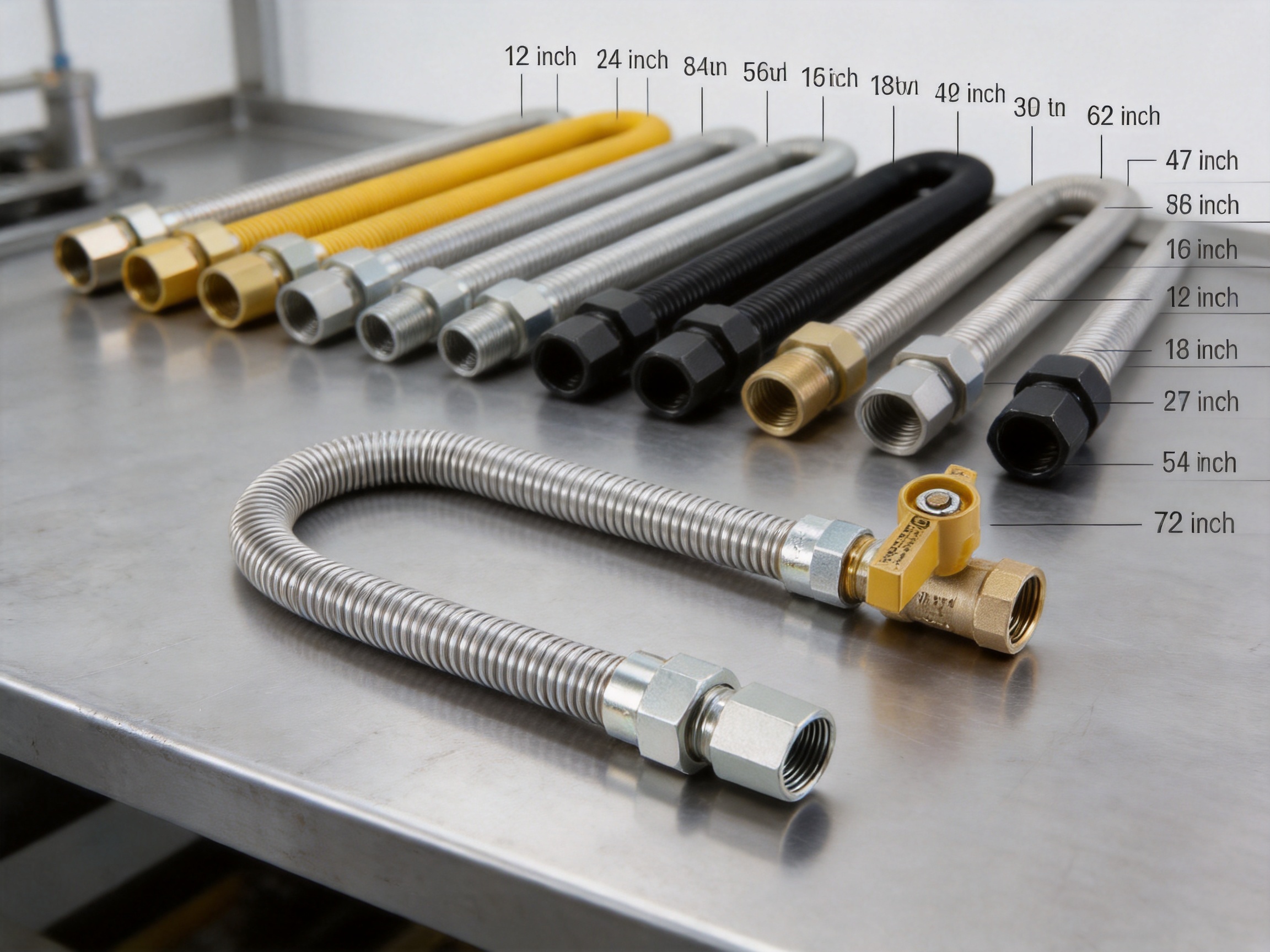
The product range includes seven standard lengths:
| Item | Specification | Available Options |
|---|---|---|
| Nominal size | DN25 | One nominal size configuration |
| Tube material | Stainless steel | 304 stainless steel |
| Wall thickness | 0.25 mm | Standard product configuration |
| Length | Overall connector length | 12, 18, 24, 36, 48, 60, and 72 inches |
| Nut material | Connection hardware | Brass or carbon steel |
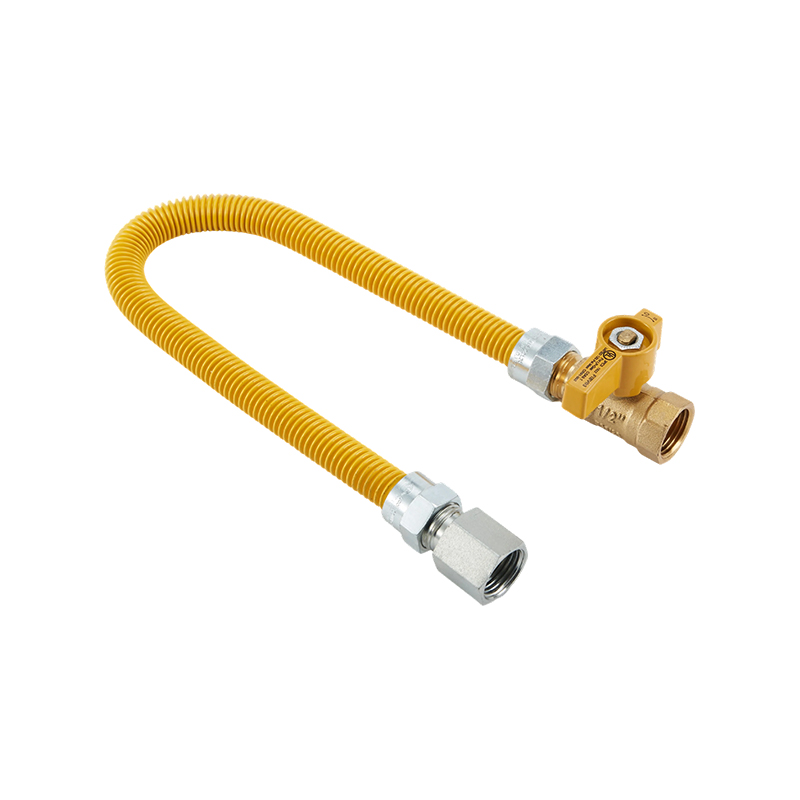
| Finish | External appearance | Natural stainless steel, yellow, or black |
| Seal form | Connection sealing method | Hard sealing |
| Cover | Protective cover | None |
Because the product is offered in several lengths and hardware options, it can be incorporated into different installation layouts without relying on excessive bending, extension pieces, or unnecessary intermediate fittings. Selecting the shortest practical length that allows correct installation is generally beneficial because it can reduce slack, simplify routing, and improve visual order.
2. Why Stainless Steel Is Important in Gas Connections
Gas connectors operate in an environment where material selection matters. The tube may be exposed to indoor humidity, condensation, cleaning agents, atmospheric contaminants, temperature variations, and occasional contact with construction materials. A material that resists corrosion helps preserve the tube’s mechanical properties and surface condition throughout its service life.
304 stainless steel is widely used because it contains chromium that supports the formation of a passive protective oxide layer on the surface. This passive layer helps the metal resist ordinary atmospheric corrosion and many common environmental exposures. Compared with ordinary unprotected carbon steel, stainless steel generally offers better resistance to rust and a cleaner appearance over time.
The corrosion resistance of 304 stainless steel does not mean that the connector is immune to every chemical or environmental condition. Concentrated chlorides, aggressive industrial chemicals, poor drainage, dissimilar-metal contact, and abnormal operating conditions can affect stainless steel. For this reason, project engineers and installers should always evaluate the actual environment and comply with local gas installation requirements.
Stainless steel also offers useful forming characteristics. The material can be processed into a corrugated flexible tube while maintaining a consistent structure. Proper forming is essential because uneven corrugation depth, irregular pitch, excessive thinning, or surface damage can reduce flexibility and affect fatigue performance. Controlled manufacturing therefore matters as much as the nominal material grade.
Compared with rubber or polymer-based connectors, a stainless steel connector offers a different performance profile. Metal construction provides a high level of resistance to abrasion, crushing, heat exposure, and aging caused by ordinary environmental conditions. It also provides a firm and stable connection structure. Polymer products may be suitable for specific applications, but stainless steel is often preferred where a durable metal connection is required.
3. Main Advantages of the DN25 Stainless Steel Gas Connector
3.1 Corrosion-resistant 304 stainless steel construction
The most fundamental advantage of this product is its 304 stainless steel tube. The material supports long-term durability in common residential, commercial, and industrial environments. The smooth metallic surface is also easy to inspect, and the natural stainless finish can be used where a clean industrial appearance is desired.
When compared with basic carbon steel tubing without suitable protection, 304 stainless steel provides a stronger defense against ordinary rust formation. This can be especially valuable in kitchens, utility rooms, mechanical areas, and other locations where humidity or intermittent condensation may occur.
3.2 Flexible corrugated structure
The corrugated tube can bend around obstacles and accommodate differences between the fixed gas outlet and the appliance inlet. This flexibility can reduce the need for rigid elbows and additional joints. Fewer intermediate components may result in a cleaner installation and fewer points requiring inspection.
Flexibility also supports maintenance. If an appliance must be moved slightly for cleaning or servicing, a properly installed flexible connector can provide useful movement without forcing the rigid pipework to absorb the displacement. The connector must not be used as a substitute for careless alignment, and it should never be bent beyond the manufacturer’s permitted radius or twisted during installation.
3.3 Multiple length options
The 12-inch through 72-inch length range provides a practical selection for short appliance connections and longer routing requirements. Installers can choose a length that avoids excessive tension while preventing unnecessary loops. This flexibility in product selection can reduce field modification and help standardize installation planning.
Using a correctly sized length is also important for appearance and safety. An overly short connector may be stretched or placed under stress, while an excessively long connector may sag, contact sharp edges, or become vulnerable to accidental impact. The available options make it easier to match the connector to the actual installation distance.
3.4 Choice of brass or carbon steel nuts
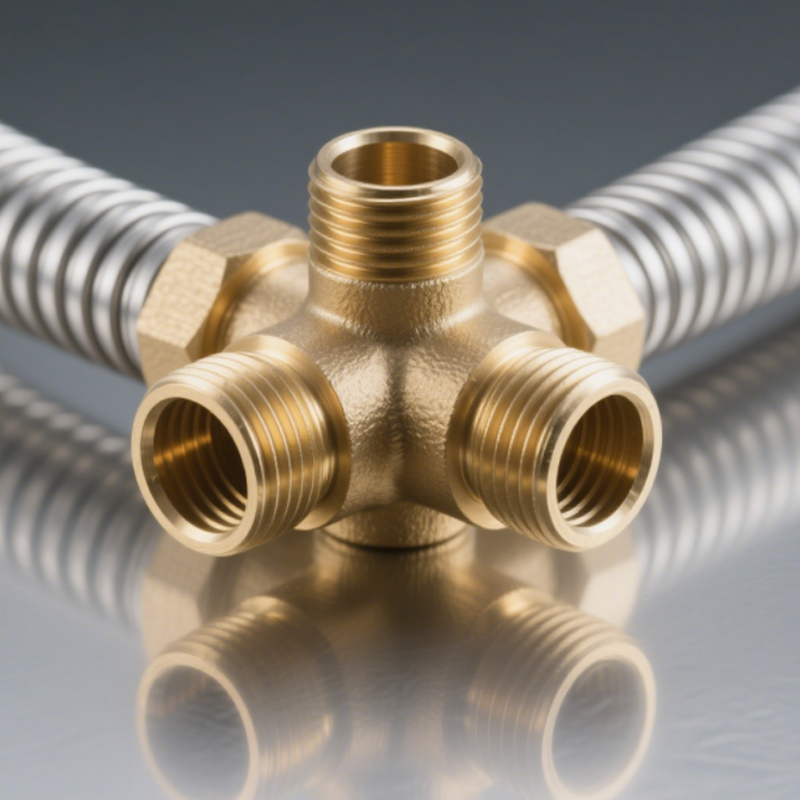
The nut material can be selected as brass or carbon steel. Brass is valued for its corrosion resistance, machinability, and compatibility with many plumbing and gas connection assemblies. Carbon steel can provide a strong and economical hardware option when the project specification, protective finish, and environmental conditions are suitable.
Offering both options allows distributors, contractors, and original equipment manufacturers to align the connector with their preferred connection systems and purchasing requirements. The selected nut should be compatible with the mating fitting, thread arrangement, torque requirements, and applicable regulations.
3.5 Hard sealing connection design
The product uses a hard sealing form. A hard seal relies on accurately matched metallic sealing surfaces and correct mechanical engagement rather than a soft elastomeric washer as the primary sealing element. This type of sealing can provide a stable connection when the mating parts are correctly manufactured, clean, aligned, and tightened according to the specified procedure.
Hard sealing can be advantageous in applications where resistance to aging, temperature variation, or material degradation is important. However, sealing performance depends on the complete connection assembly. A high-quality tube cannot compensate for damaged threads, contamination, cross-threading, incorrect fittings, or insufficient tightening.
3.6 Practical finish choices
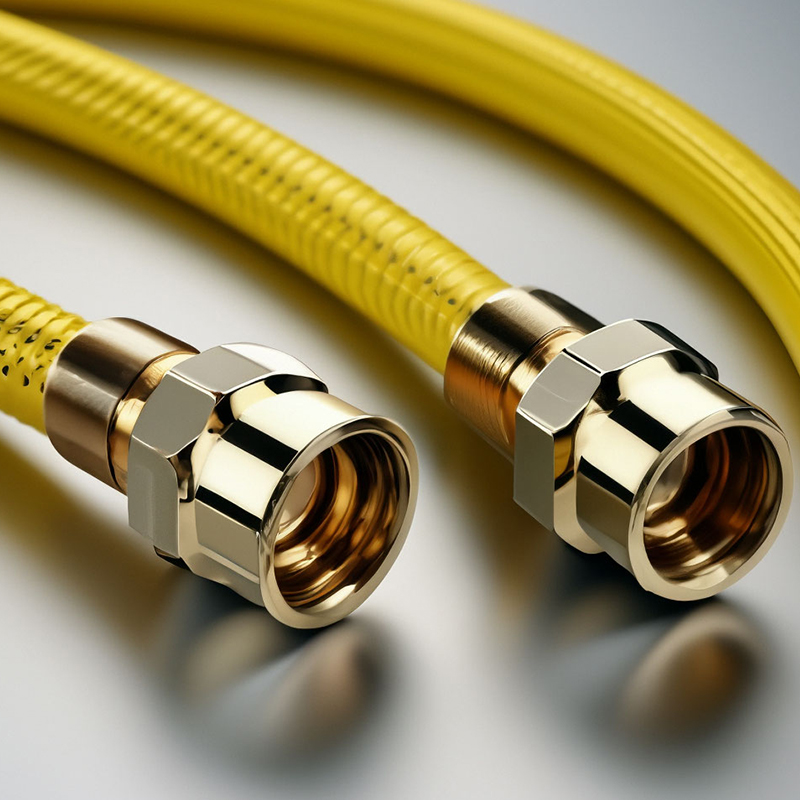
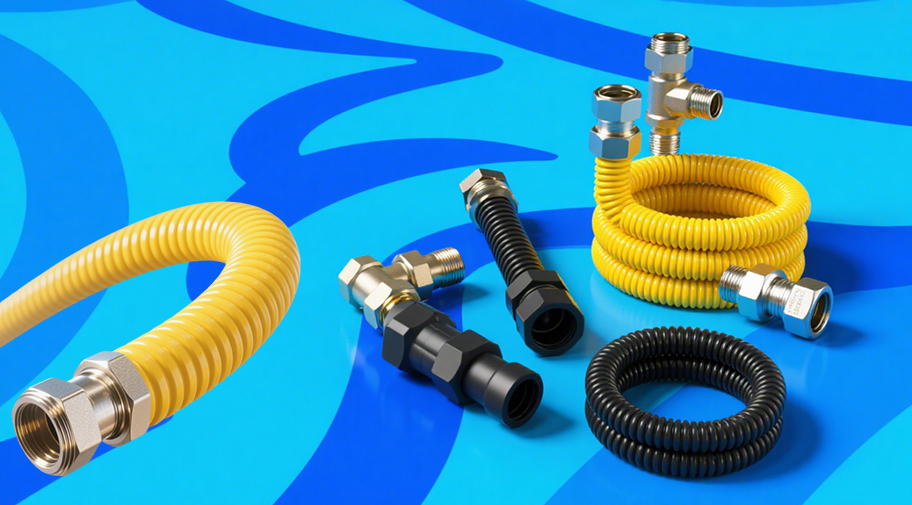
The connector is available in natural stainless steel, yellow, and black. The natural stainless steel option presents the original metallic appearance of the tube and can be suitable for installations where the product is visible. Yellow and black versions provide visual differentiation and may coordinate with appliance, equipment, or project appearance requirements.
The yellow and black versions contain colored zinc joints or fittings. This information is important for purchasers and installers because the finish applies not only to appearance but also to the hardware configuration. The actual suitability of a finish should be evaluated in relation to the installation environment, cleaning chemicals, and local requirements.
3.7 Suitable for different market segments
The combination of stainless steel construction, flexible routing, several length choices, and selectable nut materials makes the product suitable for a broad range of users. Residential applications may include gas appliances and household equipment. Commercial applications may include kitchens, restaurants, retail facilities, and building service areas. Industrial applications may include equipment connection points, process support systems, and HVAC-related gas installations, subject to the required technical approvals.
The same basic product platform can support distributor inventories and project procurement because the standard lengths and material options are clearly defined. This can make it easier to organize product selection and reduce confusion during ordering.
4. Advantages Compared with Common Alternatives
4.1 Compared with rigid metal pipe assemblies
Rigid metal pipe is valuable for permanent distribution lines, but it requires accurate cutting, threading, bending, and alignment. A rigid assembly may also require more elbows and fittings when the connected equipment is not directly aligned with the supply line. Each additional joint can add installation time and create another point that must be inspected.
A flexible stainless steel connector can simplify the final connection between the fixed pipe and the appliance. It can absorb small positional differences and reduce the need for complex rigid fitting arrangements. This does not mean that a flexible connector should replace rigid piping where rigid piping is required. Instead, the two systems can work together: rigid pipe provides the main distribution route, while the flexible connector supplies the final adjustable connection.
4.2 Compared with unprotected carbon steel connectors
Unprotected carbon steel can be susceptible to rust, particularly in humid environments or where the coating is damaged. Corrosion may affect appearance and, if severe, reduce wall integrity. The 304 stainless steel construction of this connector offers a more corrosion-resistant alternative for many ordinary service environments.
Carbon steel nuts remain available as an option because carbon steel hardware can provide strength and cost flexibility. In such cases, the entire assembly should be considered, including protective coating, environmental exposure, galvanic compatibility, and maintenance needs.
4.3 Compared with polymer or rubber hoses
Polymer and rubber hoses are lightweight and flexible, but their performance can be affected by heat, ultraviolet exposure, aging, abrasion, chemical contact, and compression. Their service life may depend strongly on the specific formulation and installation conditions.
A stainless steel connector provides a metallic barrier and a more rigid protective structure. It is less likely to be damaged by ordinary abrasion or accidental contact than many soft hoses. The metal construction also supports a professional appearance in visible installations. Nevertheless, the appropriate product depends on the application, and every connector must meet the relevant safety and certification requirements.
4.4 Compared with generic low-cost connectors
Some low-cost connectors may focus primarily on price while providing limited information about material grade, wall thickness, forming consistency, inspection procedures, or traceability. For gas applications, these factors should not be overlooked. A connector is part of a safety-related system, and product selection should consider manufacturing control as well as initial purchase cost.
The DN25 product provides defined information about its tube material, wall thickness, available lengths, nut materials, finish options, and sealing method. This clarity supports more accurate specification and purchasing. The manufacturer’s broader experience in stainless steel bellows and flexible connections further supports a process-oriented approach to product quality.
5. Manufacturing Expertise and Production Capability
Product performance begins with the manufacturing process. A flexible metal connector must maintain consistent tube geometry, reliable joints, accurate dimensions, and clean surfaces. These results require suitable machinery, trained personnel, process controls, and inspection methods.
Haoyin (Ningbo) Bellows Technology Co., Ltd. specializes in stainless steel bellows and flexible connection products. The company operates standardized workshops covering approximately 18,000 square meters within a site of about 35 mu. Its product portfolio includes gas connectors, plumbing pipes and water liners, metal hoses, and compensators. This product breadth indicates experience with several forms of flexible metal components and different application requirements.
5.1 Research and development
The company maintains a professional research and development team focused on product structure, forming technology, connection design, and manufacturing improvement. Research and development is important for gas connectors because a product must balance flexibility, pressure resistance, dimensional accuracy, sealing performance, and production efficiency.
Design work may involve selecting corrugation geometry, evaluating material behavior during forming, determining suitable end connections, and improving the interaction between the tube and fitting assembly. A well-designed connector is not simply a piece of thin metal pipe; it is an engineered component in which the tube, nut, end fitting, sealing surface, and production tolerances must function together.
5.2 Laser welding
Laser welding is used in advanced manufacturing because it can create precise, concentrated welds with controlled heat input. For stainless steel components, controlled welding can help reduce distortion, maintain dimensional accuracy, and produce consistent joints when the process is properly qualified.
In a gas connector, welded areas are particularly important. The joint must withstand the expected pressure and mechanical movement while remaining leak-tight. Laser welding equipment can support repeatable production by controlling parameters such as energy input, welding speed, and beam position. The final quality still depends on material preparation, fixture accuracy, parameter management, operator training, and inspection.
5.3 CNC forming
CNC forming machines provide programmable control over the shaping of metal components. For corrugated stainless steel tubes, controlled forming helps maintain consistent pitch, depth, diameter, and overall geometry. Consistency matters because irregular forming can create localized stress concentrations or cause differences in flexibility from one section of the tube to another.
CNC equipment also supports repeatability across different production batches. When a customer orders the same connector specification over time, controlled forming helps maintain a stable product profile. This is valuable for distributors, appliance manufacturers, contractors, and project owners who need predictable replacement and installation compatibility.
5.4 COSMO equipment and specialized production systems
The company uses COSMO equipment as part of its advanced manufacturing resources. Specialized equipment supports efficient production and process stability, particularly where components require controlled shaping, assembly, or inspection. The value of such equipment is realized when it is integrated into a complete production system rather than used as an isolated machine.
Equipment capability is supported by production planning, work instructions, preventive maintenance, tooling control, and process documentation. These systems help reduce variation and create a repeatable path from raw material to finished connector.
5.5 Eddy current flaw detection
Eddy current flaw detection is a non-destructive testing method used to identify certain surface and near-surface discontinuities in conductive materials. It can support inspection of stainless steel tubes and help detect defects that may not be visible during ordinary visual inspection.
For thin-wall flexible tubing, non-destructive testing can provide useful additional assurance without damaging the product. Inspection technology is especially important when a component must remain leak-tight during service. Eddy current testing is not a replacement for all other tests, but it can form part of a broader quality program involving dimensional checks, visual inspection, weld evaluation, and pressure or leak testing where applicable.
5.6 Automated packaging
Automated packaging systems help protect finished connectors during storage and transportation. Packaging must prevent unnecessary bending, crushing, surface damage, contamination, and mixing of different lengths or finish options. Automation can improve consistency in labeling, counting, and product handling.
Correct packaging is also important for supply-chain efficiency. Clearly identified packages help distributors and installers distinguish between 12-inch, 18-inch, 24-inch, 36-inch, 48-inch, 60-inch, and 72-inch versions. This reduces the risk of selecting the wrong length during installation.
6. Quality Management and Certifications
Haoyin has obtained ISO9001, ISO14001, ISO45001, and other management system certifications. These certifications relate to quality management, environmental management, and occupational health and safety management. They indicate that the company has established formal management processes rather than relying solely on individual inspection at the end of production.
ISO9001-based quality management emphasizes controlled procedures, customer requirements, documented processes, corrective action, and continual improvement. For a gas connector, such a framework can support better control over raw material purchasing, production records, equipment maintenance, inspection results, nonconforming products, and customer feedback.
ISO14001 environmental management is relevant to modern manufacturing because production facilities must manage energy use, waste, emissions, chemicals, and resource efficiency. ISO45001 occupational health and safety management supports safer working conditions for employees involved in metal processing, welding, forming, inspection, and packaging.
The company is also identified as a National High-tech Enterprise and Green Factory. These designations reflect an emphasis on technology development, manufacturing capability, and more responsible industrial operations. While certifications and designations do not remove the need for product-specific testing, they provide useful evidence of an organized production environment.
The gas connector product category is identified with CSA certification. Buyers should confirm the exact certification scope, model designation, size, configuration, and market requirements for the intended project. Certification marks must always correspond to the product actually supplied and installed.
7. Application Areas
7.1 Residential gas systems
In residential construction and renovation, the connector may be used to connect gas appliances to a fixed supply point. Its flexible structure can help accommodate kitchen layouts, utility areas, and appliance positions where the inlet and outlet are not perfectly aligned.
The available length choices support both compact and more separated layouts. A 12-inch or 18-inch connector may suit a close connection, while longer versions can be considered when the appliance position is farther from the supply outlet. The connector should be routed so that it remains accessible for inspection and is protected from sharp edges, excessive heat, impact, and unnecessary movement.
7.2 Commercial kitchens
Commercial kitchens often contain several gas appliances, including cooking equipment and heating devices. The installation environment may involve humidity, cleaning activity, frequent maintenance, and limited space. Stainless steel construction can offer a practical combination of durability and clean appearance.
Commercial installations generally require careful coordination between the gas contractor, kitchen equipment supplier, building services engineer, and local authority. The connector should be selected for the appliance, pressure, connection type, and applicable code. It should not be routed through areas where it may be exposed to excessive heat or mechanical abuse.
7.3 Industrial equipment
Industrial equipment may require flexible connections to accommodate vibration, thermal movement, equipment access, or alignment differences. A metal connector can provide useful flexibility while maintaining a durable connection structure.
Industrial applications demand additional engineering review. The designer should evaluate gas type, pressure, operating temperature, vibration frequency, movement amplitude, chemical exposure, installation orientation, and maintenance access. The DN25 connector can be considered where its technical parameters and certification status match the equipment requirements.
7.4 Heating and HVAC-related systems
Gas-fired heating equipment and industrial HVAC systems often contain burners, heaters, or other gas-consuming components that require secure final connections. The connector’s flexible design can simplify equipment installation and future servicing.
Because heating systems may generate elevated temperatures, the connector must be kept outside the manufacturer’s restricted heat zones. It should not contact hot surfaces, exhaust components, burners, or unprotected combustion equipment. Thermal conditions must be verified before installation.
8. Selection Guidance
Choosing the correct connector involves more than selecting a nominal diameter. The installer or engineer should confirm the required length, end connection, nut material, finish, pressure rating, temperature range, gas type, certification, and installation environment.
8.1 Confirm the nominal size
The product is specified as DN25. The mating connection must correspond to the required nominal size and thread or fitting configuration. Nominal size does not by itself define every dimensional feature, so the complete technical drawing or product specification should be checked before ordering.
8.2 Select the correct length
Measure the connection path carefully and select a length that allows natural routing without tension, sharp bends, twisting, or excessive slack. The connector should not be stretched to reach the fitting. It should also not be coiled or arranged in a way that creates a permanent stress concentration.
8.3 Choose the nut material
Brass nuts may be selected where corrosion resistance, machinability, and traditional plumbing hardware compatibility are priorities. Carbon steel nuts may be selected for strength and cost considerations where the environment and project specification permit. The nut and mating fitting must be compatible, and the selected material should be clearly identified in purchasing documents.
8.4 Consider finish requirements
Natural stainless steel, yellow, and black finishes can be selected according to appearance, product identification, or project requirements. Colored versions include colored zinc joints or fittings, so buyers should confirm the complete assembly specification rather than considering tube color alone.
8.5 Review application conditions
Before installation, review the expected pressure, temperature, gas composition, vibration, movement, chemical exposure, and mechanical risks. The connector should only be used within the conditions for which it has been designed and approved.
9. Installation Principles
Installation should be carried out by qualified personnel familiar with gas systems and local regulations. The following principles provide general guidance but do not replace the product’s installation instructions or applicable codes.
First, inspect the connector before installation. Check the tube, fittings, nuts, sealing surfaces, threads, and finish for visible damage. Do not install a connector that has been crushed, deeply scratched, distorted, contaminated, or previously damaged.
Second, verify that the connection points are correctly aligned. The connector should not be used to force two misaligned pipes into position. Misalignment can create bending stress at the fittings and may reduce sealing reliability.
Third, route the connector with smooth bends. Avoid sharp kinks, repeated back-and-forth bending, twisting, and contact with sharp corners. Corrugated tubing is flexible, but flexibility does not mean unlimited resistance to deformation.
Fourth, keep the connector away from excessive heat, open flames, abrasive surfaces, moving mechanisms, and areas where it may be struck. Provide suitable clearance and support where required by the installation instructions.
Fifth, tighten the connection using the correct method and tools. Do not over-tighten the nut, use the connector body as a lever, or apply a wrench to an inappropriate part of the assembly. Hard sealing depends on correct alignment, clean sealing surfaces, and controlled tightening.
Finally, test the completed installation according to local requirements. Leak testing should be performed using an approved method. Open flames must never be used to search for gas leaks. After testing, the connector should remain accessible for inspection and future maintenance.
10. Maintenance and Service Considerations
A stainless steel gas connector generally requires limited routine maintenance, but it should be included in periodic inspection programs. The inspection frequency depends on the application, environment, local regulations, and equipment manufacturer’s instructions.
Inspect the tube for dents, deep scratches, corrosion, discoloration caused by overheating, unusual deformation, or contact damage. Check the fittings and nuts for signs of movement, leakage, corrosion, or mechanical stress. Confirm that the connector has not been twisted or forced into a tighter bend than originally installed.
Cleaning should be performed with methods and products that are compatible with stainless steel and the connector finish. Aggressive chemicals, chloride-containing cleaners, abrasive tools, and uncontrolled mechanical scrubbing may damage the surface or compromise the finish.
If an appliance is moved, disconnected, or replaced, the connector should be inspected before being reused. A connector that has been repeatedly flexed, crushed, or exposed to abnormal conditions may require replacement. Reuse should only occur when permitted by the applicable instructions and regulations.
11. Sustainability and Manufacturing Responsibility
Stainless steel is a durable material with a long service potential when used correctly. Longer service life can reduce replacement frequency, material consumption, packaging waste, and maintenance disruption. The product’s flexible design may also reduce the number of additional elbows and fittings needed for certain final connections.
The company’s ISO14001 environmental management system and Green Factory designation demonstrate attention to environmental performance within its manufacturing operations. Environmental responsibility can include more efficient use of raw materials, improved energy management, waste reduction, responsible chemical handling, and better process control.
Automated production and inspection can also support sustainability by reducing avoidable defects and rework. When a product is manufactured consistently the first time, fewer materials and resources are consumed during correction or replacement. Efficient packaging and organized logistics further contribute to responsible supply-chain performance.
12. Why Manufacturer Capability Matters
For a gas connector, a product specification should be supported by manufacturing competence. Material selection alone does not guarantee a reliable result. The forming process must preserve tube integrity, welded areas must be controlled, sealing surfaces must be accurate, and finished products must be inspected and packaged properly.
A manufacturer specializing in stainless steel bellows and flexible connections is positioned to understand these relationships. Experience across gas connectors, water liners, metal hoses, and compensators can support knowledge transfer between product categories. Technologies used for one type of flexible metal component may help improve forming, welding, inspection, or quality control for another.
Haoyin’s combination of research and development, standardized workshops, specialized machinery, management system certifications, non-destructive testing, and automated packaging provides a comprehensive manufacturing foundation. This is an important competitive advantage over suppliers that rely on basic assembly or incomplete process controls.
Another advantage is the ability to support product customization and project-specific requirements. While the standard DN25 connector is offered in defined lengths and configurations, professional manufacturers can generally communicate more effectively about material, fittings, finish, packaging, testing, and documentation requirements.
13. Purchasing and Project Specification Checklist
When purchasing the DN25 stainless steel gas connector, the following information should be confirmed:
| Specification Area | Information to Confirm |
|---|---|
| Product type | DN25 stainless steel gas connector |
| Tube material | 304 stainless steel |
| Wall thickness | 0.25 mm |
| Required length | 12, 18, 24, 36, 48, 60, or 72 inches |
| Nut material | Brass or carbon steel |
| Finish | Natural stainless steel, yellow, or black |
| Seal form | Hard sealing |
| Cover | No cover supplied |
| Certification | Confirm applicable CSA and local regulatory requirements |
| Application | Residential, commercial, industrial, heating, or equipment connection |
| Documentation | Technical data, inspection records, packaging identification, and installation guidance |
Clear purchasing information helps prevent errors between similar-looking products. It also allows the supplier to prepare the correct finish, nut material, length, packaging, and documentation for the intended project.
14. Frequently Asked Questions
Q1: What does DN25 mean?
DN25 is the nominal size designation of the connector. It identifies the general size class of the product, but the exact outside diameter, thread type, end fitting dimensions, and connection details should be confirmed in the technical specification before installation.
Q2: What material is used for the tube?
The tube is made from 304 stainless steel. This material is widely used for flexible metal components because it offers a useful combination of corrosion resistance, formability, durability, and strength.
Q3: What wall thickness does the connector have?
The specified wall thickness is 0.25 mm. The connector should be operated and installed within the pressure, temperature, movement, and application limits defined by the product documentation and applicable regulations.
Q4: Which lengths are available?
The available lengths are 12 inches, 18 inches, 24 inches, 36 inches, 48 inches, 60 inches, and 72 inches. The correct length should allow smooth routing without tension, twisting, sharp bending, or excessive slack.
Q5: Can I choose the nut material?
Yes. The nut is available in brass or carbon steel. Selection should be based on the project specification, environmental conditions, compatibility with the mating fitting, and applicable technical requirements.
Q6: What finishes are available?
The product is available in natural stainless steel, yellow, and black. The yellow and black versions contain colored zinc joints or fittings. Finish selection should consider appearance, environmental exposure, identification requirements, and project specifications.
Q7: Does the connector include an external protective cover?
No. The specified cover material is listed as non. The connector should therefore be routed and protected carefully to avoid abrasion, impact, excessive heat, and contact with sharp edges.
Q8: What type of seal does the connector use?
The connector uses hard sealing. Reliable performance depends on clean and undamaged sealing surfaces, correct alignment, compatible fittings, and proper tightening according to the installation instructions.
Q9: Is the connector suitable for residential use?
It is designed for gas connection applications that may include residential systems. The exact use must comply with local gas codes, appliance requirements, pressure limitations, certification scope, and qualified installation practices.
Q10: Can it be used in commercial or industrial systems?
It may be suitable for commercial and industrial applications where its technical specifications and certification requirements match the project. Industrial use requires review of gas type, pressure, temperature, vibration, movement, chemical exposure, and maintenance conditions.
Q11: How does it compare with a rigid pipe connection?
The flexible connector can simplify the final connection where the supply pipe and appliance inlet are not perfectly aligned. It may reduce the need for extra elbows and fittings, but it should not replace rigid piping where rigid piping is required by the design or code.
Q12: How should the connector be inspected?
Inspect for dents, deep scratches, corrosion, overheating, distortion, damaged threads, loose fittings, and signs of leakage. Inspection should be performed by qualified personnel and according to the applicable maintenance schedule.
Q13: What manufacturing technologies support this product?
The manufacturer uses technologies and equipment including laser welding machines, CNC forming machines, COSMO equipment, eddy current flaw detectors, and automatic packaging systems. These resources support controlled forming, joining, non-destructive inspection, and consistent product handling.
Q14: Does the product have certification?
The product category is identified with CSA certification. Buyers should verify the certification details for the exact model, configuration, market, and installation conditions before approving the product for a specific project.
Q15: Who manufactures the product?
The product is manufactured by Haoyin (Ningbo) Bellows Technology Co., Ltd., a Chinese manufacturer specializing in stainless steel bellows, gas connectors, plumbing pipes and water liners, metal hoses, and compensators.
15. Conclusion
The DN25 stainless steel gas connector is designed to provide a dependable and flexible connection solution for gas systems. Its 304 stainless steel tube, 0.25 mm wall thickness, corrugated structure, hard sealing design, multiple length options, and brass or carbon steel nut choices make it adaptable to a wide range of installation requirements.
Compared with rigid assemblies, it can simplify final appliance connections and accommodate alignment differences. Compared with unprotected carbon steel, its stainless steel tube offers improved resistance to ordinary corrosion. Compared with many polymer or rubber alternatives, its metal construction provides a durable barrier against common mechanical and environmental risks. These advantages are strongest when the connector is correctly selected, installed, inspected, and maintained.
The product is supported by a manufacturer with specialized stainless steel bellows expertise, standardized workshops, advanced forming and welding equipment, non-destructive testing capability, automated packaging, and ISO9001, ISO14001, and ISO45001 management systems. These capabilities demonstrate that product quality is supported by a complete manufacturing process rather than by material selection alone.
For residential, commercial, heating, HVAC, and industrial equipment applications, the DN25 stainless steel gas connector offers a practical combination of flexibility, durability, installation convenience, and specification choices. Final approval should always be based on the complete technical documentation, certification requirements, operating conditions, and local gas installation regulations.
References
1. Product specification information for the DN25 stainless steel gas connector, including material, wall thickness, dimensions, finishes, nut options, and sealing form.
2. ISO 9001, Quality Management Systems—Requirements.
3. ISO 14001, Environmental Management Systems—Requirements with Guidance for Use.
4. ISO 45001, Occupational Health and Safety Management Systems—Requirements with Guidance for Use.
5. General technical literature on 304 austenitic stainless steel, corrosion resistance, forming behavior, and industrial applications.
6. General technical literature on corrugated metal hoses, stainless steel bellows, flexible connectors, and mechanical movement accommodation.
7. General guidance on non-destructive testing methods, including eddy current inspection of conductive metal components.
8. Applicable local gas installation codes, appliance manufacturer instructions, and certification requirements for flexible gas connectors.