




 English
 Español
 русский



Flexible Plumbing Outer Braid PET Wires
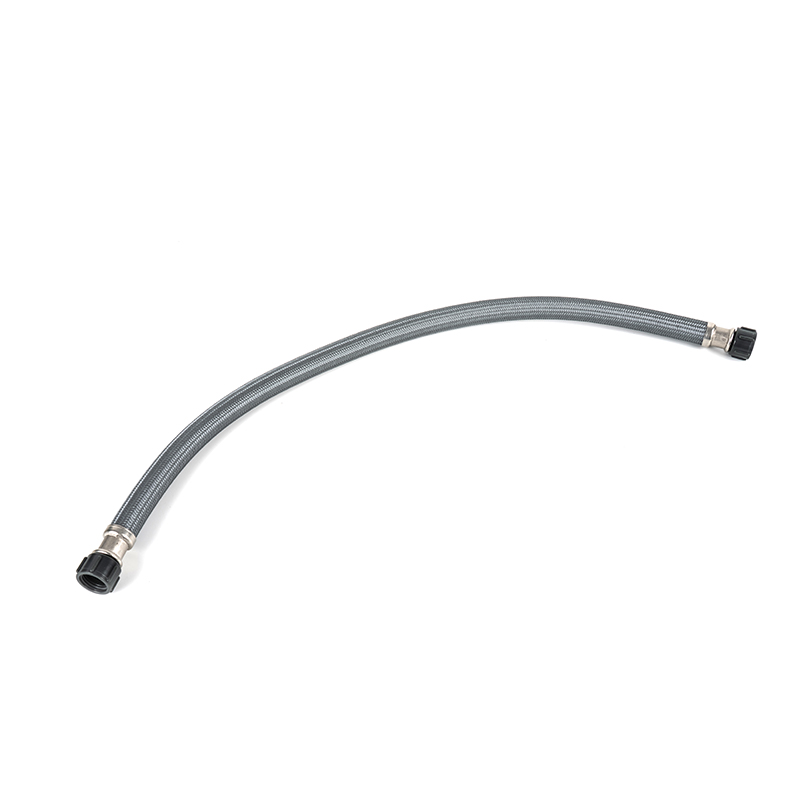
Flexible plumbing systems depend on more than the performance of the inner water tube. The outer reinforcement and protective layer also play an important role in maintaining shape, resisting repeated movement, improving handling, and extending service life. Flexible Plumbing Outer Braid PET Wires are designed for use in braided plumbing pipes, water liners, flexible connection assemblies, and related hose products where a combination of strength, low weight, chemical resistance, and cost efficiency is required.
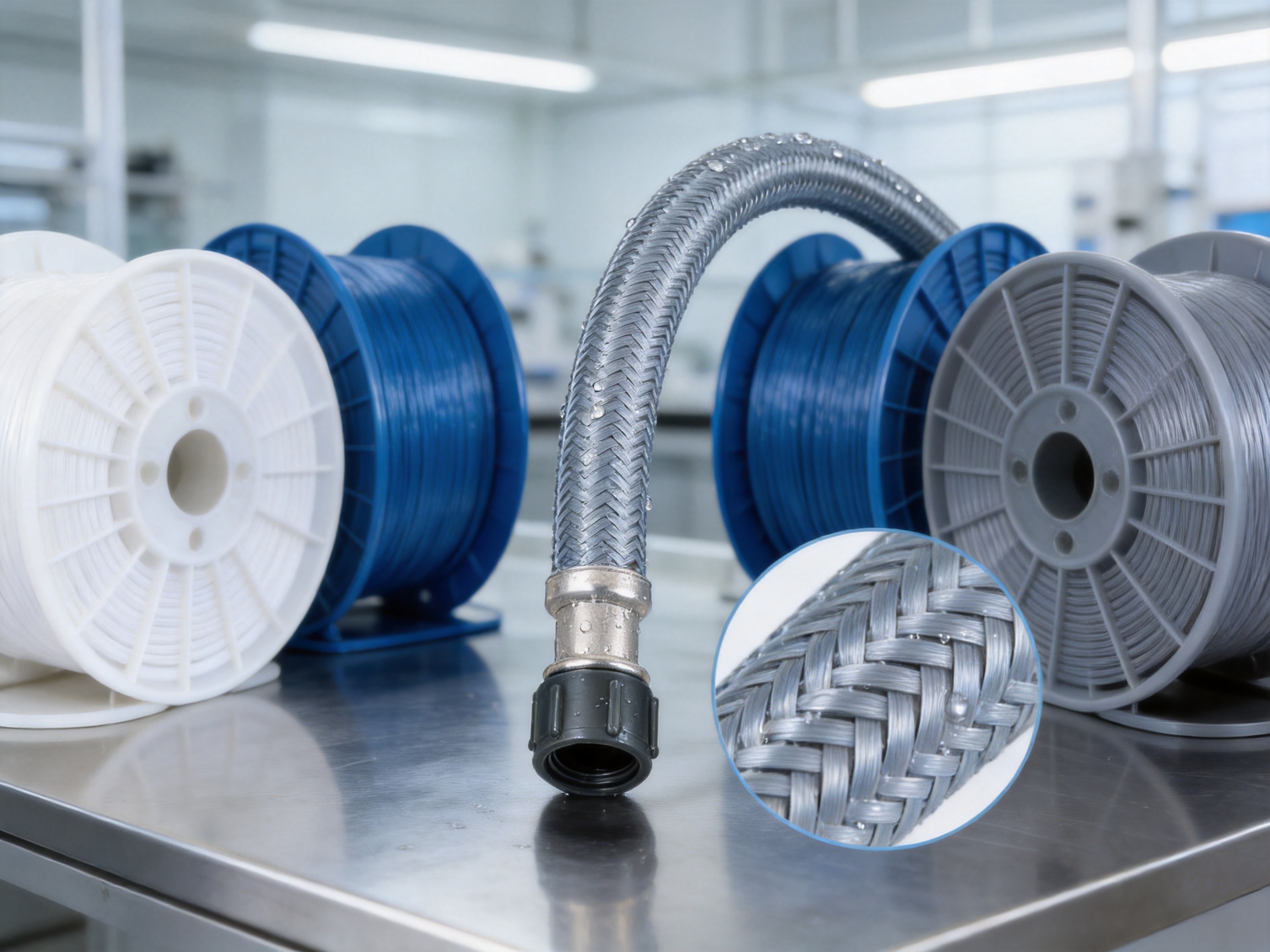
Manufactured from polyethylene terephthalate, commonly known as PET, these wires are formed into a braided outer layer that supports and protects the hose beneath. The braid can help control expansion, improve external durability, provide a clean and uniform appearance, and make flexible plumbing products easier to install. At the same time, PET has a low density and low moisture absorption, allowing the finished braid to remain lightweight and dimensionally stable in humid service conditions.
Compared with conventional metal braid materials, PET wires offer a practical alternative for applications in which electrical insulation, low weight, corrosion resistance, and economical production are important. Compared with many ordinary polymer reinforcement materials, PET provides a stronger balance of tensile performance, toughness, abrasion resistance, and dimensional stability. This balance makes it suitable for manufacturers seeking dependable outer braid performance without adding unnecessary weight or exposing the product to metal corrosion.
The product is supplied by Haoyin (Ningbo) Bellows Technology Co., Ltd., a professional manufacturer specializing in stainless steel bellows and flexible connection solutions. The company serves gas, plumbing, heating, healthcare, building heating, industrial HVAC, and other markets. Its experience in flexible piping, structured manufacturing, process control, and performance testing provides a strong foundation for producing and applying PET wire in demanding hose assemblies.
Understanding Flexible Plumbing Outer Braid PET Wires
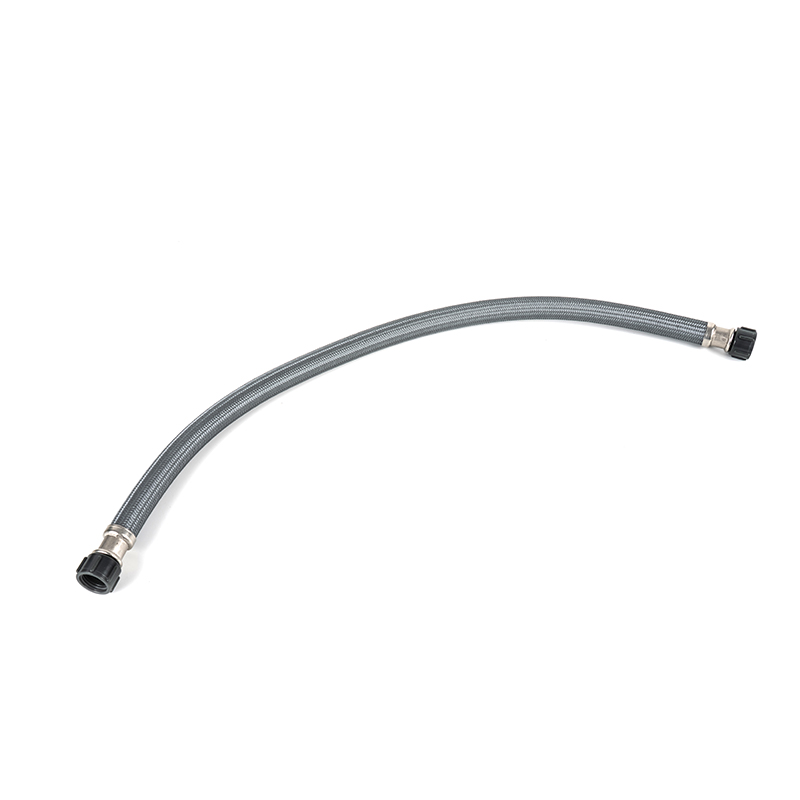
Flexible Plumbing Outer Braid PET Wires are narrow, high-strength PET filaments or wire-like strands intended to be woven or braided around a flexible tube. In a finished plumbing hose, the braid is positioned outside the inner liner or tube. Depending on the hose construction, the outer braid may be covered by an additional protective layer, or it may remain visible as a functional and decorative reinforcement layer.
The main purpose of an outer braid is to improve the overall mechanical behavior of a flexible hose. A flexible tube without reinforcement can be vulnerable to excessive expansion, external abrasion, kinking, and damage caused by installation or repeated movement. The braid distributes mechanical loads around the circumference of the tube and helps the assembly retain a more controlled shape.
PET wires are particularly useful when the hose manufacturer wants reinforcement that does not introduce the weight or corrosion concerns associated with metal. The material can be braided at high speed, handled efficiently during production, and integrated into different hose constructions. It also offers a smooth and consistent surface when produced with appropriate process control.
Although PET wire is not intended to replace every form of stainless steel reinforcement, it provides a valuable solution for applications where the braid is primarily required to provide external protection, handling strength, controlled flexibility, abrasion resistance, or visual quality. The correct choice depends on pressure, temperature, fluid compatibility, installation conditions, and applicable product standards.
Core Performance Advantages
High Strength and High Modulus
One of the most important advantages of PET is its combination of tensile strength and modulus. Tensile strength represents the material’s ability to withstand pulling forces before breaking, while modulus reflects its resistance to deformation under load. In an outer braid, these properties help the wire resist stretching and maintain the geometry of the braided structure.
A braid made from high-strength PET wires can help stabilize a flexible tube during installation and operation. When the hose is bent, pulled, or moved repeatedly, the braid absorbs and distributes part of the mechanical stress. This can reduce localized loading on the inner tube and help the assembly maintain a consistent appearance and functional shape.
High modulus is also valuable during production. A wire with suitable stiffness can be guided through braiding equipment with less uncontrolled deflection. This supports more uniform coverage and helps the braid maintain consistent density. Uniform braiding is important because irregular spacing can create weak areas, inconsistent flexibility, or an uneven external surface.
The actual strength of a finished hose depends on more than the individual PET wire. It is influenced by wire size, braid angle, carrier count, braid density, tube material, production tension, and end-fitting design. Nevertheless, the high-strength characteristics of PET provide a reliable foundation for designing a balanced and durable outer reinforcement.
Excellent Chemical Resistance
PET demonstrates good resistance to many dilute acids, dilute alkalis, alcohols, oils, and commonly encountered substances. This characteristic is valuable in plumbing and water-related environments, where the external surface may be exposed to cleaning agents, condensation, installation compounds, or occasional chemical contact.
Unlike ferrous metals, PET does not rust. This is a significant advantage in humid rooms, utility spaces, kitchens, bathrooms, mechanical rooms, and other environments in which water exposure is frequent. Avoiding rust can help preserve the appearance of the braid and reduce the risk of corrosion-related staining on nearby components.
Chemical resistance also supports longer-lasting external protection. If the braid is exposed to mild contaminants during transportation, installation, or service, PET is less likely to suffer rapid surface deterioration than a less resistant polymer. However, chemical compatibility should always be checked for concentrated chemicals, elevated temperatures, strong oxidizers, and unusual operating conditions.
For manufacturers, the chemical stability of PET can reduce the need for additional corrosion-prevention treatments. A metal braid may require careful material selection, passivation, protective coatings, or special attention to galvanic interaction. PET avoids many of these concerns while maintaining the flexibility required for hose assembly.
Low Moisture Absorption
PET has low moisture absorption compared with many other polymeric materials. This means that its physical dimensions and mechanical behavior are less affected by humid conditions or incidental water exposure. In plumbing products, this characteristic is particularly useful because the outer braid may be installed in environments where humidity is consistently high.
Low moisture absorption helps the braid retain a stable structure. Excessive moisture uptake in some materials can lead to swelling, dimensional change, reduced strength, or altered flexibility. PET’s relatively low absorption helps limit these changes, supporting more predictable performance throughout the service life of the finished hose.
The property is also beneficial during storage and transportation. Properly manufactured PET wire is less vulnerable to short-term environmental changes than highly moisture-sensitive reinforcement materials. Even so, the wire should be stored in clean, dry conditions and protected from contamination, direct sunlight, and unnecessary mechanical damage before processing.
Toughness and Wear Resistance
Flexible plumbing hoses are often bent, twisted, pulled, and repositioned during installation. They may also rub against cabinets, brackets, wall openings, floor surfaces, or other components. PET wires provide good toughness and abrasion resistance, allowing the outer braid to withstand repeated mechanical contact more effectively than a fragile or brittle reinforcement.
Toughness is especially important when the braid must flex many times. A material that is strong but brittle may fail prematurely under repeated bending. PET combines useful strength with resistance to impact and fatigue, creating a more practical balance for flexible hose assemblies.
Wear resistance helps preserve both function and appearance. A braid that rapidly frays or loses material can expose the underlying tube and create a poor-quality appearance. Properly selected PET wire, combined with controlled braid tension and suitable coverage, can help maintain the integrity of the outer layer during routine handling and installation.
Electrical Insulation
PET is an electrical insulating material. This feature can be advantageous in installations where the flexible hose passes near electrical equipment, wiring, sensors, or conductive components. While the hose assembly must still be designed according to the requirements of the specific installation, a nonconductive outer braid avoids creating an unnecessary conductive path.
Electrical insulation can also simplify product separation in mixed-material systems. In certain applications, a metal braid may need additional attention to grounding, electrical continuity, or isolation from neighboring parts. PET does not introduce the same metal-conductivity considerations, making it attractive where nonconductive reinforcement is preferred.
Low Weight and Easy Handling
PET has a relatively low density. A PET-braided hose can therefore be lighter than an otherwise similar hose using a substantial metal outer braid. Lower weight benefits both the manufacturer and the installer.
During manufacturing, lighter reinforcement can reduce material handling requirements and make reels, carriers, and finished hose coils easier to move. During installation, a lighter hose is easier to position in confined spaces and can reduce the physical effort required to connect fixtures or equipment.
Low weight is also valuable in applications involving long hose lengths, portable equipment, modular plumbing systems, and assemblies installed overhead or inside cabinets. The reduction in mass may help lower shipping costs and reduce the load placed on supporting fittings or mounting structures.
Cost-Effectiveness
PET wires benefit from relatively stable raw material availability and efficient production methods. Their low density means that a given mass of material can produce a substantial length of reinforcement. This can contribute to competitive material consumption and favorable overall manufacturing economics.
Cost-effectiveness does not mean choosing the least expensive material without considering performance. A more useful approach is to evaluate total value, including material cost, production speed, equipment compatibility, installation efficiency, corrosion resistance, service life, and warranty risk. PET can offer a strong value proposition when the application does not require the extreme pressure performance or temperature capability of a metallic reinforcement.
| Performance factor | PET outer braid wire | Potential practical benefit |
|---|---|---|
| Tensile performance | High strength and useful modulus | Supports braid stability and controlled deformation |
| Moisture behavior | Low moisture absorption | Maintains more consistent dimensions in humid environments |
| Chemical resistance | Resistant to many dilute chemicals, alcohols, and oils | Reduces risk of external corrosion and chemical deterioration |
| Weight | Low density | Produces lighter hose assemblies and easier installation |
| Flex fatigue | Good toughness and repeated-bending resistance | Supports long-term movement and handling |
| Electrical behavior | Nonconductive insulating material | Useful near electrical equipment and conductive components |
| Production economics | Efficient polymer processing and braiding potential | Supports competitive manufacturing and operating costs |
Advantages Compared with Conventional Metal Outer Braids
Stainless steel braid remains an important material for high-pressure, high-temperature, and severe industrial service. It offers excellent mechanical strength and can be the correct choice for demanding applications. However, metal reinforcement is not automatically the best option for every plumbing hose. PET wires provide several advantages where the service conditions allow a polymer braid.
The first advantage is corrosion resistance. Stainless steel has good corrosion resistance, but its behavior depends on alloy grade, surface condition, exposure environment, chlorides, cleaning chemicals, and contact with other metals. PET does not rust and is not affected by many of the corrosion mechanisms relevant to metal braid.
The second advantage is weight. A PET outer braid can be significantly lighter than a metal braid with comparable coverage. This makes the finished hose easier to transport, install, and support. Lower weight can also improve the user experience in consumer plumbing products and reduce strain on connection points.
The third advantage is electrical insulation. Metal braid can conduct electricity and may need to be considered in grounding or isolation plans. PET provides a nonconductive alternative in systems where electrical separation is preferred.
The fourth advantage is surface comfort and handling. PET braid can offer a softer and less abrasive external surface than exposed metal wire. This may reduce the possibility of scratching nearby surfaces during installation, although the final surface depends on braid design, wire finish, and whether an outer jacket is applied.
The fifth advantage is manufacturing flexibility. PET wire can be selected in different sizes and colors and can be adapted to visual requirements. The braid may be integrated into products where appearance, labeling, or color coding is important.
Metal braid still has clear advantages in extreme conditions. Applications involving very high operating temperatures, aggressive mechanical loads, high pressure pulses, fire exposure, or strict metallic containment requirements may require stainless steel or another engineered metal. The correct comparison is therefore not simply PET versus stainless steel; it is the selection of the most suitable reinforcement for the pressure, temperature, chemical, electrical, and installation environment.
Advantages Compared with Ordinary Polymer Reinforcement
Not all polymer fibers provide the same balance of performance. Some low-cost polymer materials may have lower tensile strength, greater moisture uptake, poorer abrasion resistance, or weaker fatigue performance. PET offers a more stable and dependable combination of properties for outer braid applications.
Its high modulus helps it maintain braid geometry. Its toughness helps it tolerate repeated bending. Its chemical resistance supports use in wet and contaminated environments. Its low moisture absorption improves dimensional consistency. These characteristics make PET a practical middle ground between basic polymer strands and more specialized high-performance fibers.
For many plumbing products, the goal is not maximum strength at any cost. The goal is reliable and repeatable performance at a commercially reasonable price. PET can meet this objective by delivering useful mechanical reinforcement without requiring exotic raw materials or complex processing.
Applications in Plumbing and Flexible Hose Products
Flexible Water Supply Lines
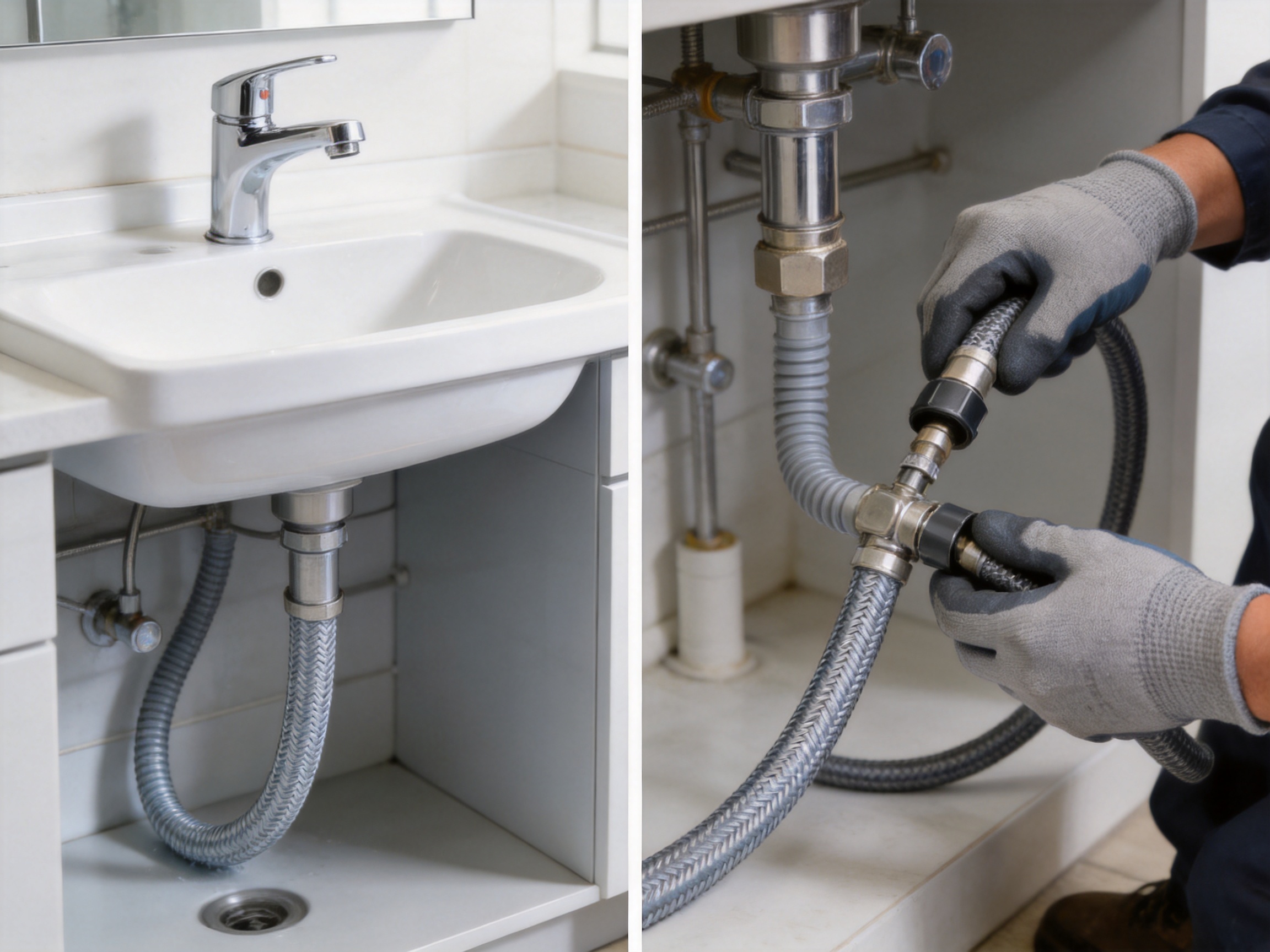
PET outer braid wires can be used in flexible water supply lines connecting faucets, valves, tanks, filters, and other plumbing fixtures. The braid can help protect the inner tube from external abrasion and maintain a controlled profile during installation.
In residential and commercial plumbing, installation spaces are often narrow. A lightweight hose that bends easily and resists external wear can make installation more efficient. The absence of metal corrosion can also be useful in areas exposed to condensation or accidental splashing.
Water Liners and Plumbing Pipes
Water liners and flexible plumbing pipes may require an outer layer that balances protection and flexibility. PET braid can be applied over suitable inner tubes to provide additional handling strength and visual consistency without making the assembly unnecessarily heavy.
The braid design can be adjusted according to the required coverage and flexibility. A more open braid may support greater flexibility and lower material usage, while a denser braid can provide more complete external coverage. The final design should be verified through pressure, bending, abrasion, and dimensional testing.
Shower and Sanitary Connections
Sanitary connections are frequently bent, moved, and exposed to water, cleaning agents, and humid air. PET reinforcement can provide a clean-looking external layer with good resistance to ordinary service conditions. Its low weight is also helpful for hand-held or frequently adjusted connections.
Heating and Building Services
In building heating and utility systems, flexible connections may be routed around equipment and through restricted spaces. PET braid may be suitable for the outer reinforcement of products where the operating temperature remains within the material’s design range and where a nonmetallic outer layer is desirable.
Temperature must be evaluated carefully. PET is not a universal solution for every heating application. The temperature rating of the complete hose depends on the PET material, braid construction, inner tube, fittings, and exposure time. Product designers should establish a clear operating envelope before selecting the braid.
Industrial HVAC and Equipment Connections
Industrial HVAC systems often use flexible connectors to reduce vibration, simplify installation, or accommodate movement between components. PET braid can support lighter flexible assemblies in suitable auxiliary or moderate-duty applications. The braid may also provide external wear protection when the hose passes through equipment compartments or service areas.
Healthcare and Specialized Facilities
Healthcare facilities require careful control of materials, cleanliness, reliability, and maintenance. PET’s smooth, noncorrosive, and nonconductive characteristics may be beneficial in selected flexible connection products. Any use in healthcare-related systems must be evaluated against the relevant hygiene, fluid-contact, sterilization, and regulatory requirements.
Manufacturing and Process Control
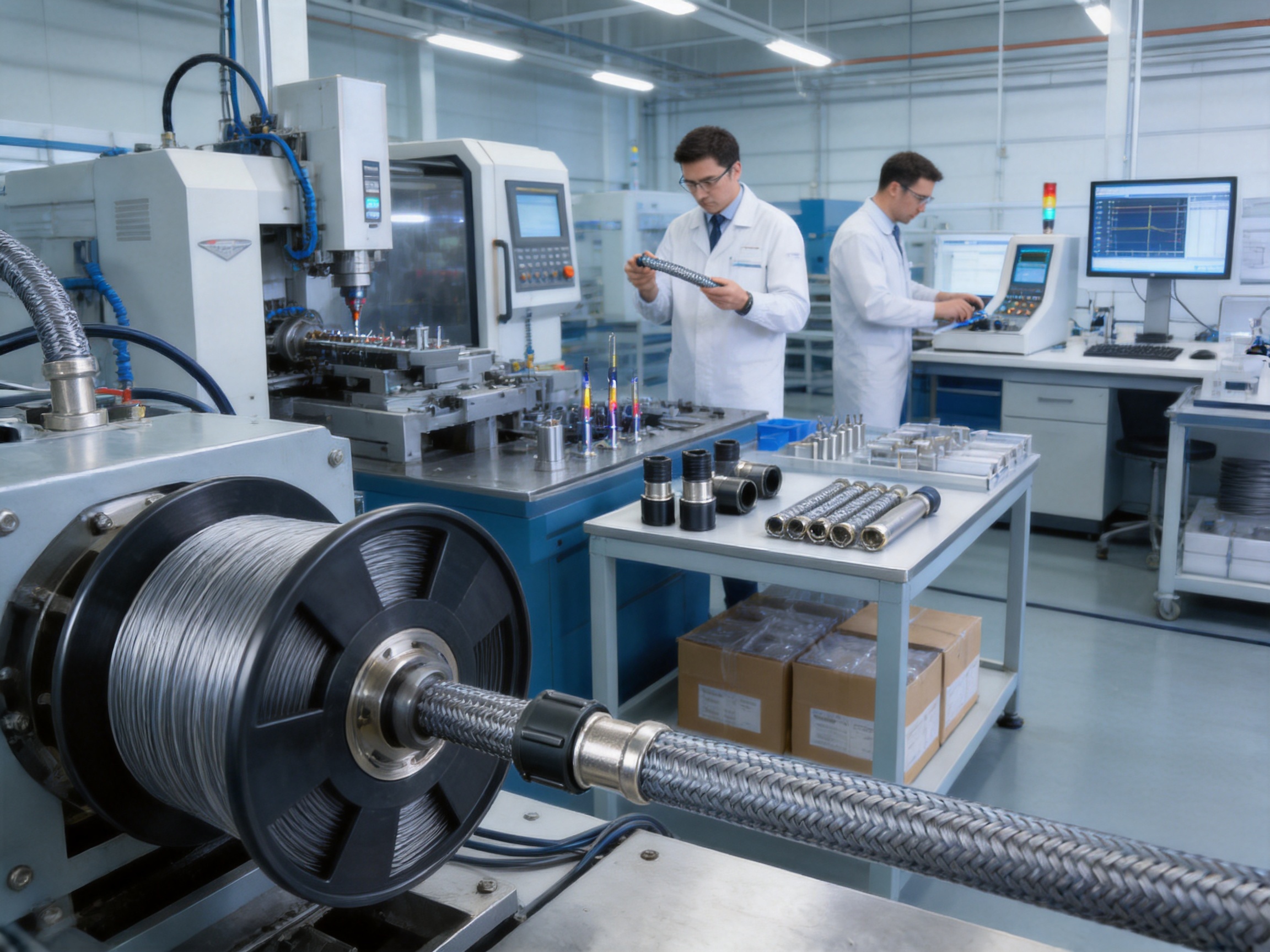
Product performance begins with material selection and continues through every manufacturing step. Haoyin (Ningbo) Bellows Technology Co., Ltd. operates as a professional manufacturer with capabilities in research and development, design, production, and sales. Its experience in flexible connection products supports a process-oriented approach to PET wire applications.
Material Selection
Raw material quality influences tensile performance, consistency, surface finish, and processing behavior. Suitable PET resin and carefully controlled spinning or forming conditions are necessary to produce wires with stable properties. Material selection should consider filament strength, elongation, thermal behavior, surface friction, color requirements, and compatibility with the intended braiding process.
Incoming material control is an important part of manufacturing. A structured quality system can verify supplier documentation, batch identification, storage conditions, and basic material characteristics before production begins. Consistent traceability allows potential issues to be investigated more efficiently and supports reliable product documentation.
Wire and Filament Formation
PET must be processed under controlled conditions to achieve the required orientation and mechanical performance. Drawing, stretching, heat setting, and related operations can influence strength, modulus, shrinkage, and dimensional stability.
Control of process temperature, line speed, tension, and cooling conditions helps produce wire with more uniform behavior. Excessive variation can lead to inconsistent diameter, uneven tensile properties, poor braiding performance, or unstable finished dimensions. For this reason, process monitoring is essential rather than relying only on final inspection.
Braiding Equipment and Braid Formation
After wire production, the braid must be formed around the selected tube or mandrel. The number of carriers, wire tension, braid angle, line speed, and coverage are important variables. Proper coordination of these parameters helps ensure that the wires are evenly distributed and that the braid remains stable during bending.
Inadequate tension may create loose sections, uneven coverage, or wire displacement. Excessive tension may restrict flexibility, deform the inner tube, or create unnecessary stress in the wire. A controlled braiding process seeks a balanced result that provides reinforcement without making the hose too rigid.
Modern manufacturing systems can integrate equipment monitoring, repeatable setup procedures, and inspection checkpoints. These systems improve consistency from one production lot to another and help reduce variations that may not be visible until the finished hose is tested.
Integration with Flexible Tubes
The PET braid must work together with the inner tube and any outer jacket. The interface between these layers affects movement, friction, pressure behavior, and durability. The production team must consider whether the braid is applied directly over the tube, separated by an intermediate layer, or covered by an additional protective sheath.
Haoyin’s broader experience with bellows, gas connectors, plumbing pipes, metal hoses, and compensators supports an understanding of layered flexible products. This product knowledge is valuable because a braid cannot be evaluated independently from the complete hose assembly. The best results come from treating the tube, braid, fittings, and testing program as one integrated product system.
Laser Welding and Precision Fabrication Capabilities
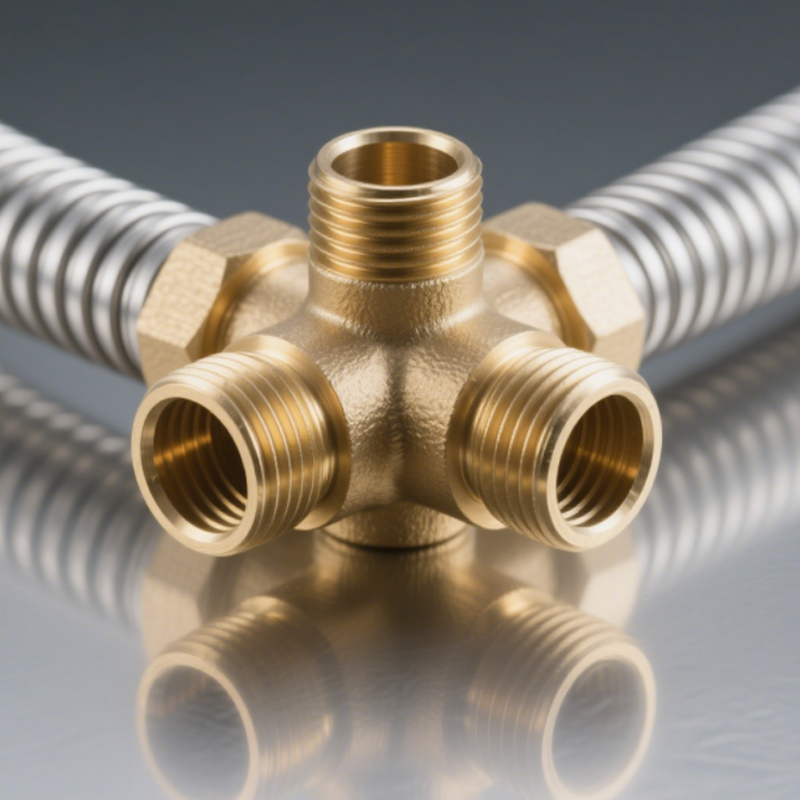
The company uses advanced manufacturing equipment, including laser welding machines and CNC forming machines, in its broader flexible connection product operations. These technologies support accurate fabrication of metal components, connection parts, and bellows assemblies. Although PET wire itself is a polymer reinforcement, the quality of the final hose may depend on the accuracy of adjoining metallic fittings and formed components.
Laser welding can provide controlled, precise welds with limited heat influence when properly applied. CNC forming supports repeatable geometries and consistent production of formed components. Together with disciplined assembly procedures, these capabilities help create reliable transitions between the flexible hose body and its end connections.
Inspection and Non-Destructive Testing
Quality control may include dimensional inspection, tensile testing, visual examination, pressure testing, bending evaluation, and other tests appropriate to the product. Haoyin also has equipment such as COSMO systems and eddy current flaw detectors for its broader manufacturing operations. These technologies support the detection of defects in applicable components and help strengthen process confidence.
For a PET-braided hose, inspection should focus on both the wire and the finished assembly. Wire inspection may evaluate diameter, tensile strength, elongation, surface condition, and appearance. Finished product inspection may evaluate braid coverage, braid angle, flexibility, pressure resistance, leakage, fitting retention, and external abrasion behavior.
Automatic Packaging and Product Protection
Packaging is part of product quality. A correctly manufactured PET wire or braided hose can still be damaged by poor coiling, sharp bending, contamination, moisture, or excessive compression during storage and transportation. Automatic packaging systems can help standardize coil dimensions, labeling, quantity control, and protection.
Proper packaging also supports traceability. Product labels can identify batch information, size, production date, and handling requirements. Clear identification reduces the risk of mixing materials or using the wrong product during assembly.
Quality Management and Company Strengths
Haoyin has obtained ISO9001, ISO14001, and ISO45001 management system certifications. These certifications represent structured approaches to quality management, environmental management, and occupational health and safety. A certified management system does not replace product testing, but it helps establish repeatable procedures, documented responsibilities, corrective action processes, and continual improvement.
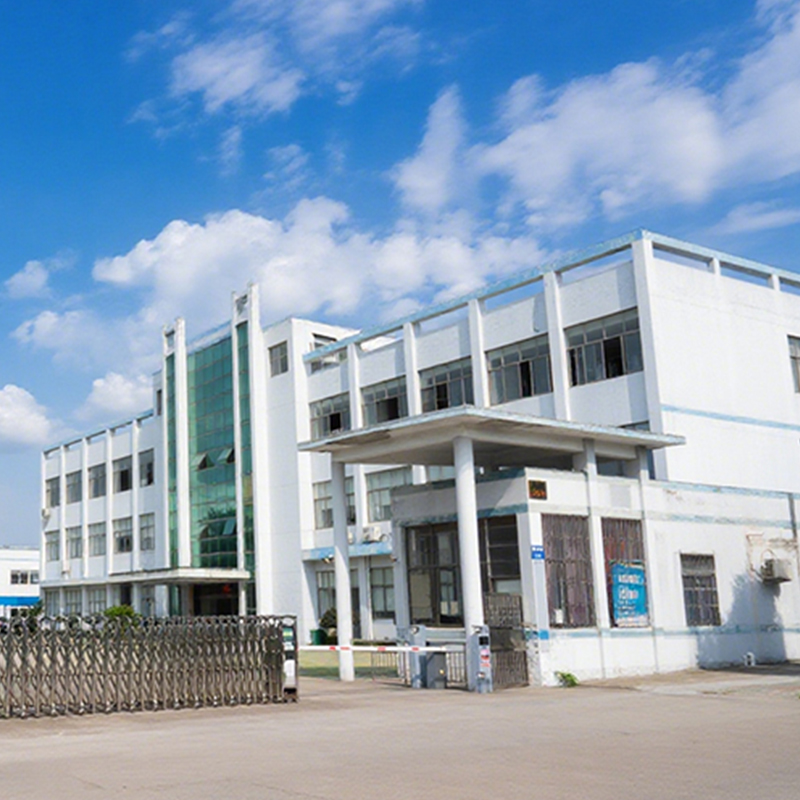
The company operates from a facility covering approximately 35 mu, with around 18,000 square meters of standardized workshops. This production environment provides room for organized manufacturing flow, equipment placement, material control, inspection areas, and finished-product handling.
As a National High-tech Enterprise and Green Factory, the company combines technical development with environmental and operational objectives. This is relevant to PET wire production because polymer processing efficiency, material utilization, energy consumption, waste reduction, and packaging control all influence the sustainability profile of the finished product.
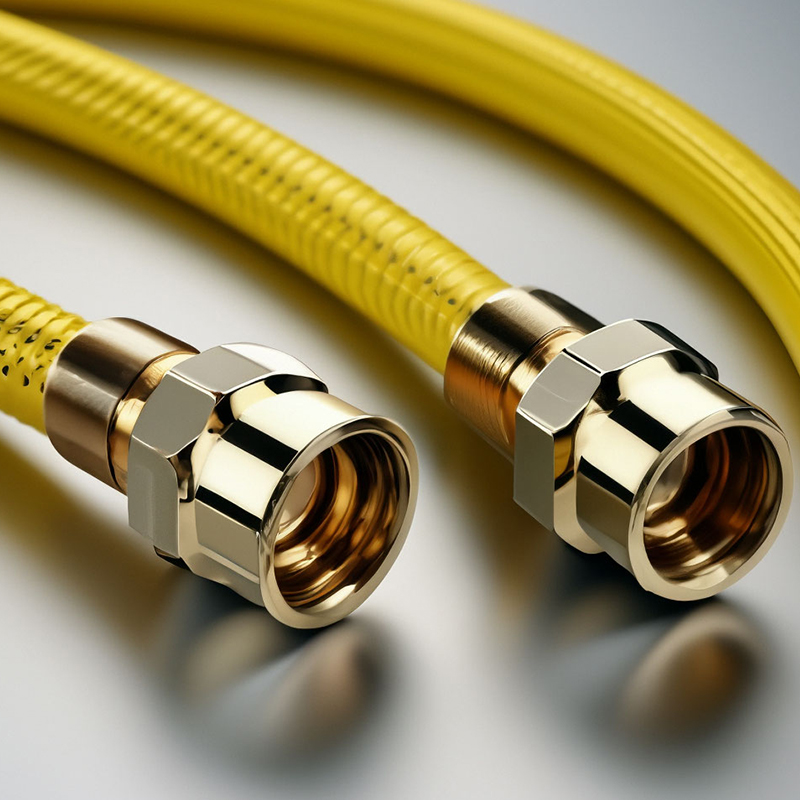
The company’s product range includes gas connectors, plumbing pipes and water liners, metal hoses, and compensators. This range demonstrates experience across several types of flexible connection technology. Customers seeking PET outer braid solutions can benefit from working with a manufacturer that understands both polymer reinforcement and the metal components often used at the ends of flexible assemblies.
A professional research and development team can assist with product customization. Depending on the application, development may involve wire size, braid density, color, coverage, flexibility, hose diameter, fitting configuration, packaging, or performance requirements. A collaborative design process helps ensure that the PET wire is selected according to the actual operating conditions rather than treated as a generic material.
Customization Considerations
Customers should provide clear technical information when requesting PET wire or a PET-braided hose. Important details include the application, inner tube material, nominal diameter, required length, working pressure, pressure pulses, operating temperature, bend radius, chemical exposure, installation method, expected movement cycles, and applicable standards.
Wire diameter influences braid coverage, flexibility, strength, and appearance. A larger wire may provide greater individual tensile capacity but can produce a stiffer braid. A finer wire may support a more flexible structure but require a greater number of carriers or a different braid configuration to achieve the desired coverage.
Braid density and angle also affect performance. A dense braid can offer more complete protection, while a more open braid can reduce weight and support flexibility. The correct design depends on the balance between external protection, expansion control, movement, and cost.
Color can be selected for product identification, appearance, or brand differentiation. Color consistency should be controlled across production batches, particularly when the braid remains visible on the finished hose. Surface finish is another consideration because it affects handling, friction, visual quality, and interaction with an outer jacket.
Packaging requirements should be discussed before production. Wire may be supplied on reels, in coils, or in other formats appropriate to the customer’s braiding equipment. Packaging must prevent tangling, crushing, contamination, and excessive bending during storage.
Testing and Validation
Testing should be based on the intended use of the PET wire and the finished hose. Basic material testing may include tensile strength, elongation, dimensional inspection, moisture conditioning, and visual examination. Finished hose testing may include hydrostatic pressure, burst pressure, leakage, pull-out resistance, bending, repeated flexing, abrasion, and chemical exposure.
Repeated bending tests are particularly important for flexible plumbing products. The hose should be evaluated under a bend radius and movement pattern that reflect actual installation and service. Testing only a straight section may not reveal weaknesses associated with braid displacement, fitting transitions, or localized stress.
Pressure testing should consider both steady pressure and pressure variation. The braid may help control expansion, but the complete pressure capability depends on the inner tube, braid design, end fittings, crimping or connection method, and operating temperature.
Environmental testing can evaluate performance under humidity, temperature cycling, chemical contact, ultraviolet exposure, or abrasion, depending on the application. PET offers strong general resistance, but no material should be selected without considering the full service environment.
Test results should be recorded by batch and linked to production information. Traceable testing supports quality assurance, customer confidence, and continuous improvement. It also helps the manufacturer identify trends before they become field problems.
Installation and Service Recommendations
A PET-braided hose should be installed without sharp kinks, excessive twisting, or forced bending below its recommended minimum radius. The braid improves protection and stability, but it cannot compensate for incorrect installation practices. The hose should be routed so that it is not pinched by cabinets, brackets, panels, or moving equipment.
Connections should be aligned before tightening. Twisting the hose while securing the fittings can transfer torsional stress into the braid and inner tube. Where movement is expected, the installer should provide sufficient length and avoid placing the fitting under continuous side loading.
The hose should not be dragged across sharp edges or exposed to direct contact with hot surfaces beyond its rated temperature. If the product has an outer jacket, the jacket should be inspected for cuts, abrasion, or separation. If the braid is exposed, the installer should check for broken wires, severe fraying, unusual flattening, or other damage.
Maintenance requirements depend on the application. Routine visual inspection can identify external wear, discoloration, leakage, fitting movement, or signs of chemical attack. Products used in critical systems should be inspected according to the system owner’s maintenance schedule and replaced when they reach the designated service interval or show damage.
Sustainability and Lifecycle Value
Material selection should consider the entire lifecycle of the product. PET’s low density can reduce the amount of material required by weight and lower transportation loads. Its corrosion resistance can help reduce premature replacement caused by rust or external deterioration. Its durability can also support longer service intervals when the product is correctly designed and installed.
Manufacturing efficiency contributes to lifecycle value. Controlled processes can reduce scrap, improve first-pass yield, and limit unnecessary consumption of raw materials. Standardized packaging can reduce damage in transit and prevent products from becoming unusable before installation.
Environmental performance should be evaluated responsibly. PET is a recyclable polymer in appropriate waste streams, but the recyclability of a finished braided hose may be affected by mixed materials, adhesives, coatings, and metal fittings. Product designers and users should follow applicable local disposal and recycling requirements.
ISO14001 management practices can support systematic attention to environmental impacts, including energy use, emissions, waste handling, and resource efficiency. A Green Factory designation further reflects the company’s effort to combine industrial production with environmental improvement.
Why Manufacturer Capability Matters
A PET wire may appear to be a simple product, but its performance depends on controlled raw materials, accurate forming, consistent dimensions, suitable packaging, and technical support. A supplier with only basic polymer processing capability may not understand the requirements of the complete flexible connection.
Haoyin’s experience in stainless steel bellows and flexible connection products provides a broader engineering perspective. Bellows, metal hoses, compensators, gas connectors, and plumbing liners all require careful attention to movement, sealing, pressure, fatigue, dimensional control, and connection reliability. This knowledge can improve the development and application of PET outer braid solutions.
The company’s manufacturing equipment supports both metal and flexible product production. Laser welding, CNC forming, testing equipment, eddy current inspection, and automatic packaging contribute to a complete manufacturing environment. This is important for customers who need more than a raw material supplier and prefer a partner capable of supporting finished hose assemblies or customized components.
Technical cooperation can include product selection, sample development, process verification, testing plans, production validation, and after-sales support. These activities reduce the risk of selecting a material based only on price or a single laboratory value.
Frequently Asked Questions
What are Flexible Plumbing Outer Braid PET Wires?
They are high-strength PET filaments or wire-like strands used to braid the outside of flexible plumbing tubes and hose assemblies. The braid provides external reinforcement, protection, controlled flexibility, and improved handling characteristics.
What is the main advantage of PET over a metal braid?
The main advantages are low weight, corrosion resistance, electrical insulation, good flexibility, and cost efficiency. PET can be a strong alternative when the application does not require the high-temperature or extreme-pressure performance of a metallic braid.
Can PET braid be used for every plumbing hose?
No. Selection depends on working pressure, temperature, chemical exposure, movement, installation conditions, and applicable standards. Some high-temperature, high-pressure, fire-exposed, or severe industrial applications may require stainless steel or another specialized reinforcement.
Does PET absorb water?
PET has low moisture absorption. This helps it maintain relatively stable dimensions and mechanical performance in humid environments, although proper storage and application-specific testing remain necessary.
Is PET resistant to chemicals?
PET is resistant to many dilute acids, dilute alkalis, alcohols, oils, and common substances. Concentrated chemicals, strong oxidizers, elevated temperatures, and unusual fluids require specific compatibility evaluation.
Is PET wire electrically conductive?
PET is an electrical insulating material. This can be advantageous where the outer braid should not create a conductive path near wiring, sensors, or electrical equipment.
Can PET wire improve hose flexibility?
It can support a flexible hose design because it is lightweight and can be braided with controlled wire size, angle, and density. Flexibility depends on the complete hose construction, not the wire alone.
How does the braid affect pressure performance?
The braid can help control expansion and distribute mechanical loads, but pressure performance depends on the inner tube, braid structure, fittings, connection process, temperature, and testing. A finished assembly must be validated under its intended pressure conditions.
What quality controls are important for PET wire?
Important controls include raw material verification, wire diameter, tensile strength, elongation, surface condition, color consistency, braid performance, packaging, and batch traceability. Finished hose testing should also include pressure, leakage, bending, and fitting retention as appropriate.
Can the product be customized?
Customization may include wire size, braid density, color, packaging, hose diameter, coverage, flexibility, and integration with different tube or fitting designs. The exact options should be confirmed according to the customer’s equipment and application.
Why is the manufacturer’s experience important?
A manufacturer experienced in flexible connections understands how reinforcement interacts with tubes, fittings, pressure, movement, and sealing. This helps customers select a complete solution rather than evaluating PET wire as an isolated material.
How should PET-braided hose be installed?
The hose should be routed without sharp kinks, excessive twisting, crushing, or contact with unsuitable hot surfaces. Connections should be aligned before tightening, and the hose should not be forced below its recommended bend radius.
Conclusion
Flexible Plumbing Outer Braid PET Wires provide a balanced solution for manufacturers of plumbing pipes, water liners, flexible connectors, and related hose products. Their high strength and modulus support braid stability, while their toughness and abrasion resistance help them withstand repeated handling and movement. Low moisture absorption contributes to dimensional consistency, and chemical resistance reduces concerns associated with rust and external corrosion.
The material’s low density makes finished products easier to handle and transport. Its electrical insulation is useful near electrical equipment, and its production economics can support competitive product development. Compared with ordinary polymer reinforcement, PET offers a strong combination of mechanical performance, durability, and stability. Compared with metal braid, it can provide significant benefits in weight, corrosion resistance, electrical behavior, and handling, provided that the application remains within its design limits.
Product quality ultimately depends on more than the polymer itself. Consistent raw materials, controlled wire formation, accurate braiding, reliable fitting integration, complete testing, and protective packaging are all essential. Haoyin (Ningbo) Bellows Technology Co., Ltd. combines research and development, standardized workshops, advanced equipment, certified management systems, and experience across flexible connection products. These strengths support dependable PET wire applications and provide customers with access to broader technical and manufacturing capabilities.
For the best result, PET wire selection should begin with a clear understanding of the finished hose requirements. When pressure, temperature, chemical compatibility, movement, installation, and standards are properly evaluated, PET outer braid technology can deliver a lightweight, durable, corrosion-resistant, and cost-effective reinforcement solution for modern plumbing and flexible connection systems.
References
1. General principles of polymer fiber tensile strength, modulus, elongation, and fatigue performance.
2. Technical guidance on polyethylene terephthalate material selection and processing for industrial applications.
3. General practices for designing, braiding, testing, and installing flexible plumbing hose assemblies.
4. ISO 9001 quality management system principles.
5. ISO 14001 environmental management system principles.
6. ISO 45001 occupational health and safety management system principles.
7. General engineering practices for pressure testing, leakage testing, bending evaluation, and abrasion testing of flexible hoses.
8. Manufacturer-provided information concerning flexible connection products, stainless steel bellows, plumbing pipes, water liners, metal hoses, compensators, manufacturing equipment, and management certifications.