




 English
  Español
  русский


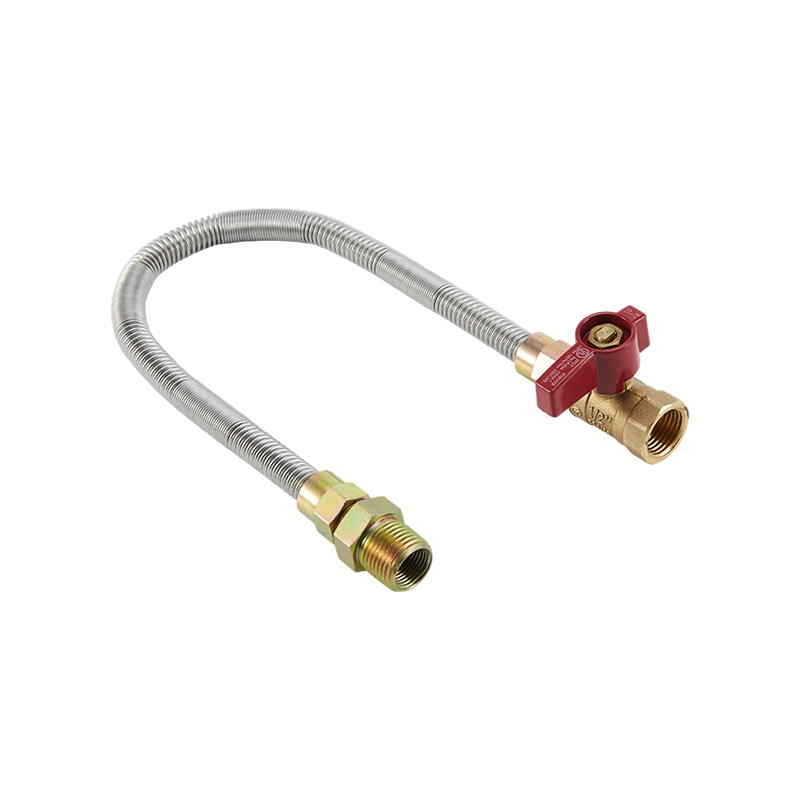
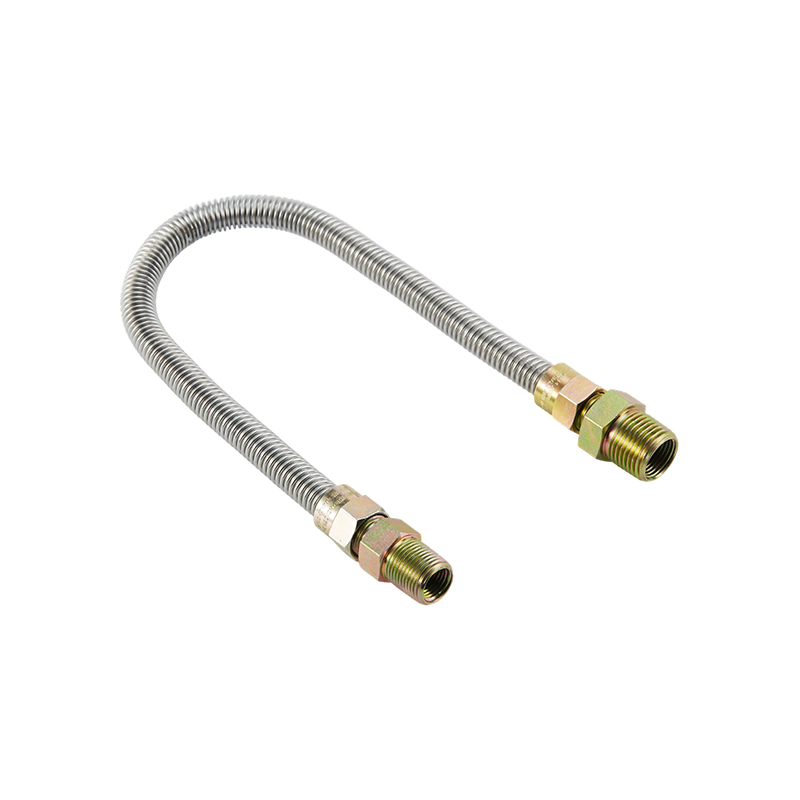
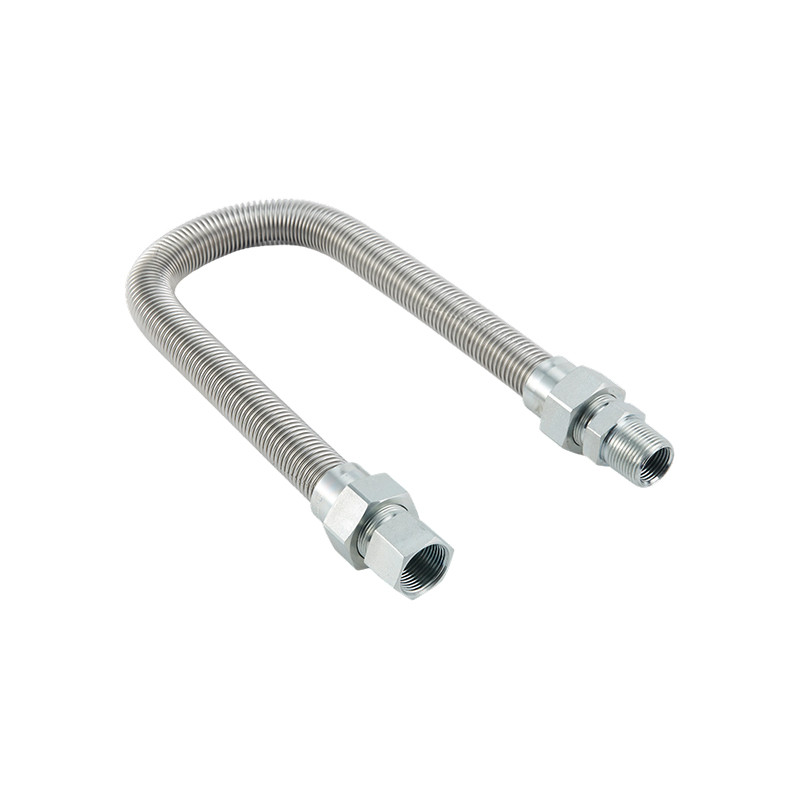
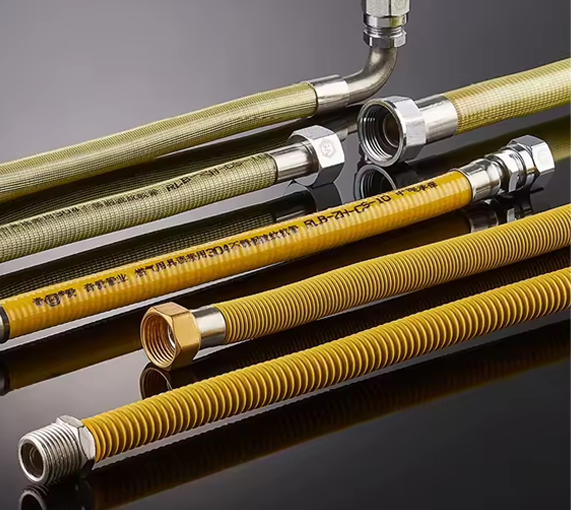
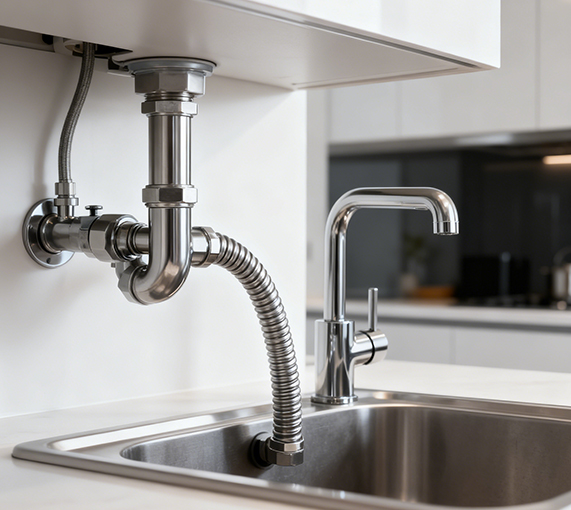
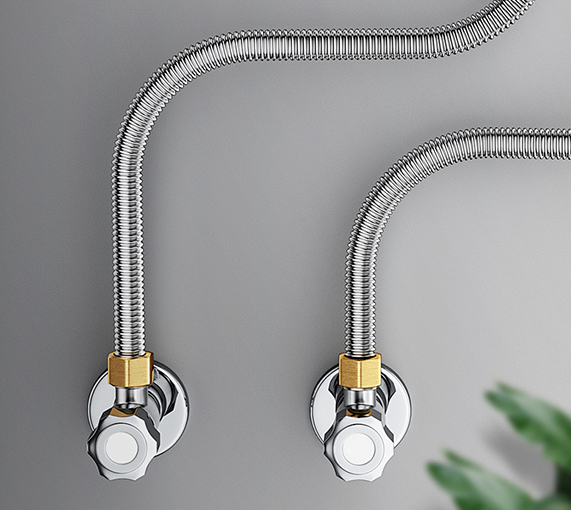
Flexible gas connections are small components with a major influence on the safety, reliability, and service life of residential, commercial, and light industrial gas systems. A connector must do more than join two points in a pipe network. It must accommodate installation movement, maintain a dependable seal, resist corrosion, withstand repeated handling, and operate quietly enough for modern indoor environments. The DN10 stainless steel whistle-free gas connector is designed to address these requirements through a combination of 304 stainless steel construction, a compact flexible tube body, flare-type connection technology, hard sealing, and a noise-reducing internal design.
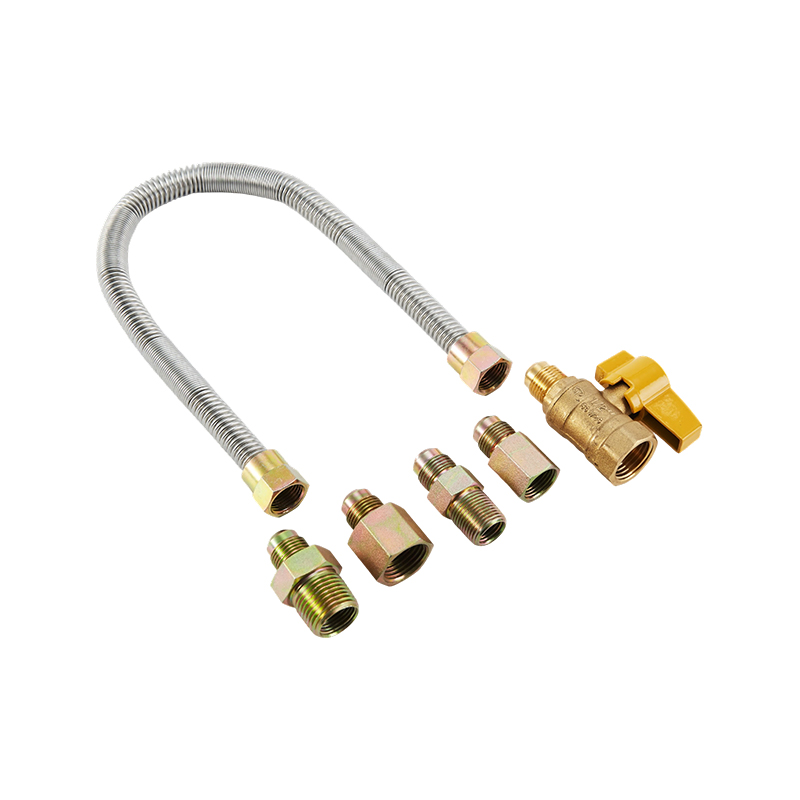
This product is suitable for applications where a flexible gas connection is required between a fixed supply line and gas-using equipment. Its available lengths range from 12 inches to 72 inches, allowing installers to select a practical connection without unnecessarily bending, stretching, or extending the hose. The connector is also offered with several adapter configurations, including 5/8 × 3/8 male with 1/4 female, 5/8 × 3/8 female, 5/8 × 1/2 male with 3/8 female, and 5/8 × 1/2 female options.
Compared with ordinary flexible connectors made from less corrosion-resistant materials or products with less refined sealing arrangements, this DN10 model provides a balanced solution for long-term use. Its 0.2 mm wall thickness supports flexibility while the 304 stainless steel material offers a strong level of resistance to moisture, oxidation, and common environmental exposure. The whistle-free configuration is another important point of differentiation, especially in kitchens, utility rooms, heating areas, and commercial spaces where gas-flow noise can be distracting.
Product Overview
The DN10 stainless steel whistle-free gas connector is a flexible connection component manufactured for gas pipeline and equipment installation. The main tube is produced from 304 stainless steel, a widely used austenitic stainless steel known for corrosion resistance, formability, and stable mechanical performance. The tube wall thickness is specified as 0.2 mm, providing a carefully selected balance between flexibility and structural integrity.
The connector uses a 5/8-18UNF flare nut as its primary connection specification. Depending on the installation requirement, different adapters can be supplied to connect the flare interface with other commonly used pipe or equipment interfaces. This modular approach reduces the need for improvised fittings and helps installers create a more orderly connection arrangement.
Available standard lengths are 12 inches, 18 inches, 24 inches, 36 inches, 48 inches, 60 inches, and 72 inches. The range covers short appliance connections as well as longer connections where the equipment is positioned farther from the supply point. Selecting the correct length is essential. A connector should be long enough to avoid tension, but it should not be excessively long or installed in a way that creates unnecessary loops, sharp bends, or contact with hot surfaces.
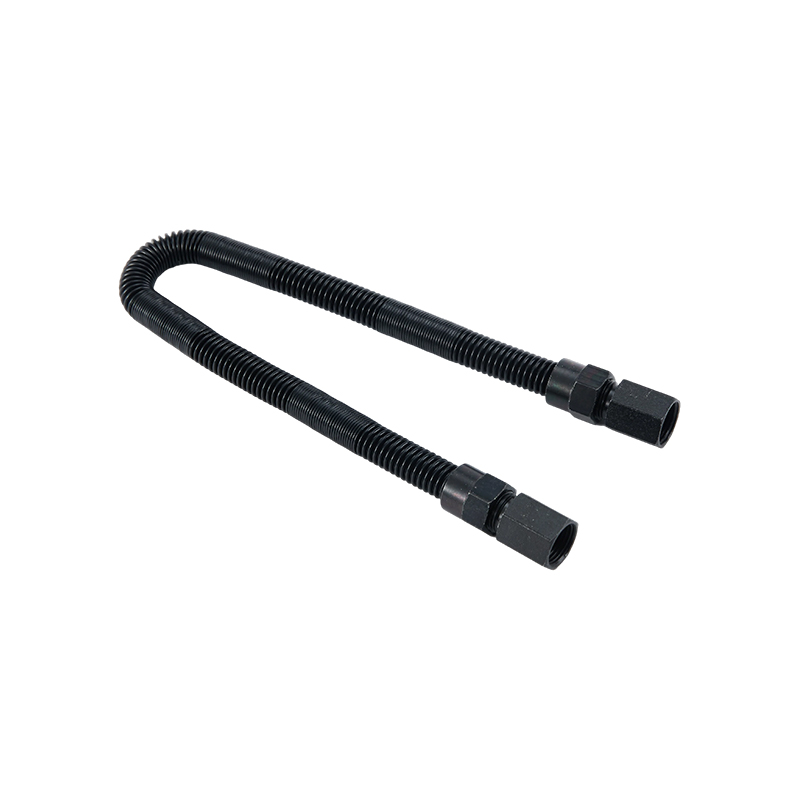
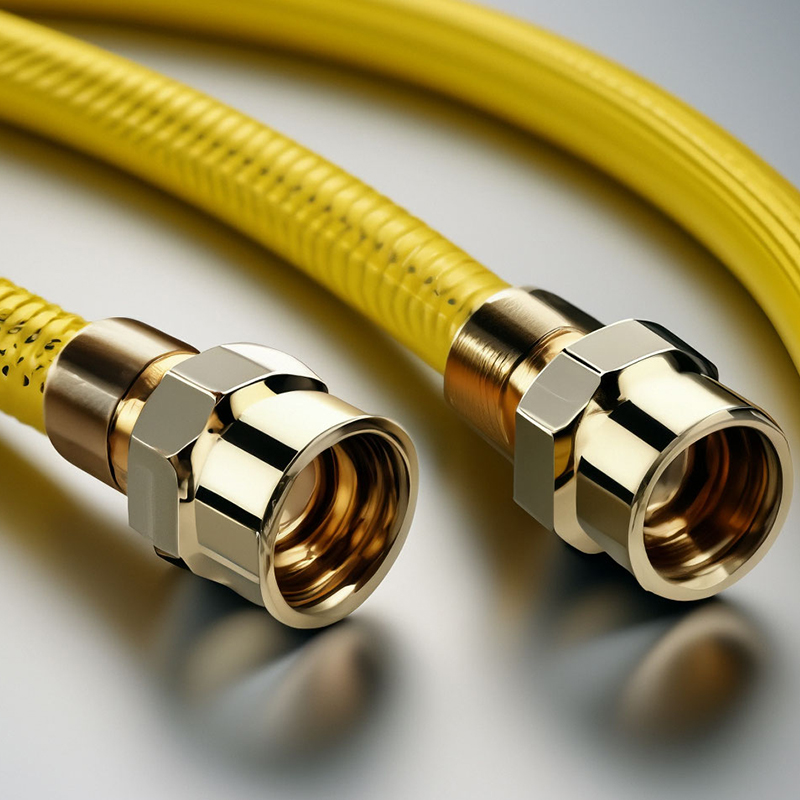
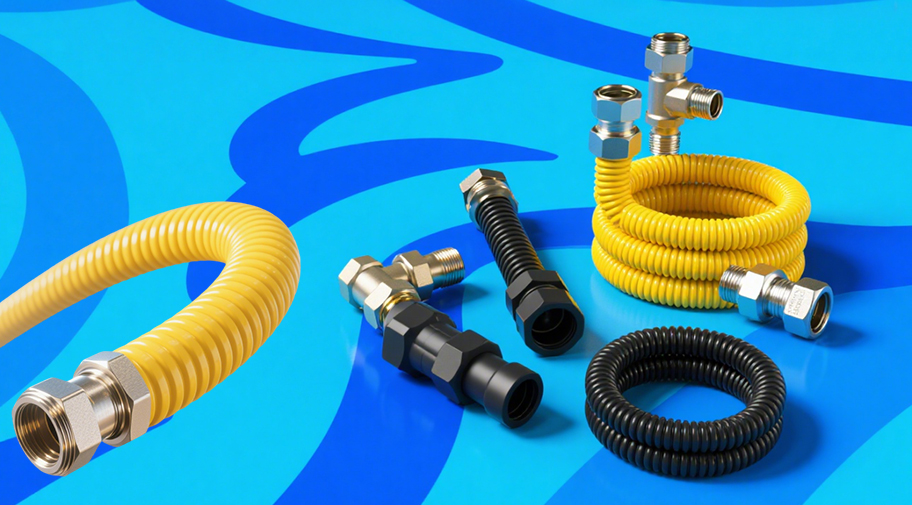
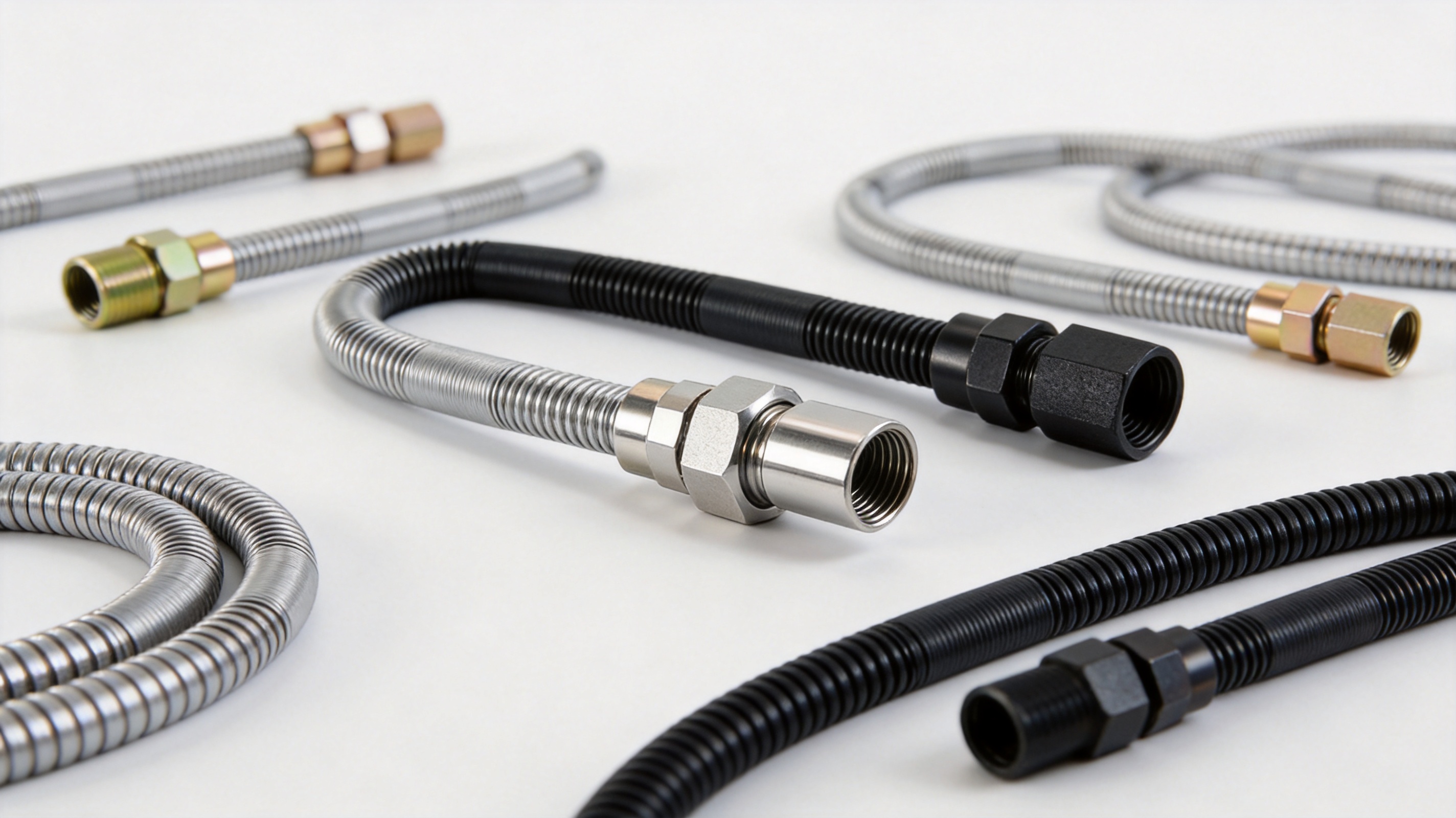
The connector is available in a natural stainless steel finish and a black finish. Stainless steel provides a clean, technical appearance that suits exposed installations, while the black version can coordinate with dark appliances, decorative panels, or industrial-style equipment. The finish options do not change the basic function of the product, but they give distributors, installers, and project designers greater flexibility.
| Item | Specification | Application Significance |
|---|---|---|
| Product type | DN10 stainless steel whistle-free gas connector | Flexible connection for gas systems and equipment |
| Tube material | 304 stainless steel | Corrosion resistance, formability, and long-term durability |
| Tube wall thickness | 0.2 mm | Supports flexibility while maintaining a stable tube structure |
| Flare nut | 5/8-18UNF | Provides a defined connection interface |
| Available lengths | 12, 18, 24, 36, 48, 60, and 72 inches | Supports different equipment layouts and installation distances |
| Adapter options | 5/8 × 3/8M (1/4F), 5/8 × 3/8F, 5/8 × 1/2M (3/8F), and 5/8 × 1/2F | Allows adaptation to different interface requirements |
| Seal form | Hard sealing | Creates a stable mechanical sealing interface |
| Nut material | Brass or carbon steel | Provides options for strength, machinability, and project requirements |
| Color options | Stainless steel and black | Supports functional and aesthetic installation preferences |
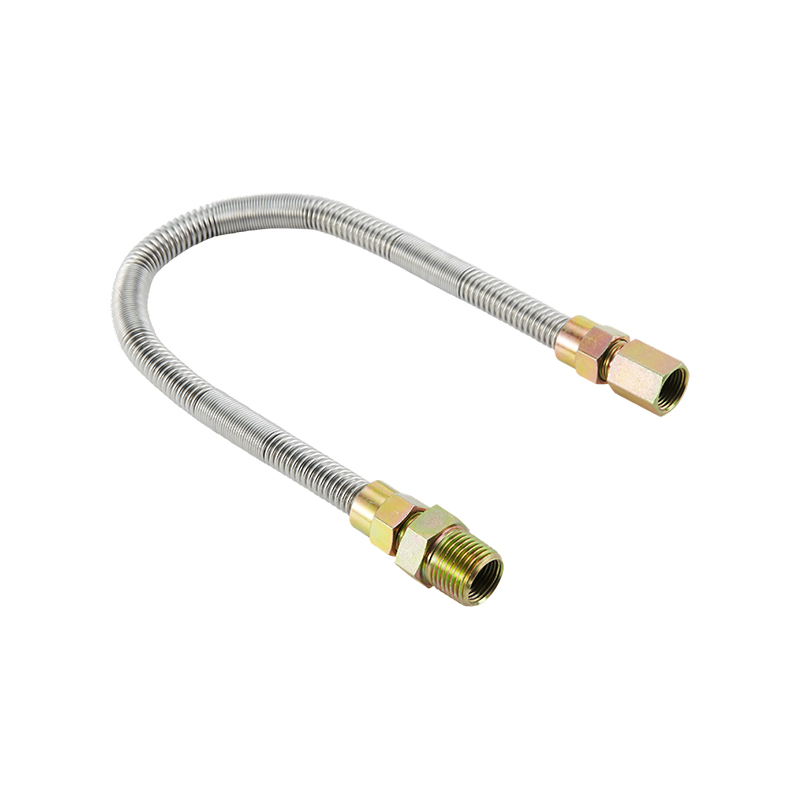
DN10 Stainless Steel Whistle Free Gas Connector
Why Stainless Steel Matters in Gas Connections
Material selection is one of the most important decisions in the design of a flexible gas connector. The material must tolerate repeated handling, installation movement, humidity, temperature variation, and contact with the surrounding environment. 304 stainless steel is used widely in fluid-handling and equipment applications because it combines corrosion resistance with good forming and welding characteristics.
In a gas connection, corrosion resistance is particularly important because the connector may be installed in kitchens, laundry rooms, utility spaces, outdoor service areas, or commercial environments where humidity and cleaning chemicals are present. Surface corrosion can gradually affect appearance, flexibility, and connection reliability. A 304 stainless steel body helps reduce the likelihood of premature deterioration when the connector is used within suitable operating conditions.
The stainless steel tube also supports a clean and professional appearance. This is useful in exposed appliance installations where the connector may remain visible. Unlike painted or coated materials that can scratch during handling, stainless steel maintains a functional metallic surface. The black finish provides an additional appearance option for installations where a darker visual profile is preferred.
Stainless steel should not be treated as a substitute for correct installation. Even a corrosion-resistant connector can be damaged by excessive bending, sharp tools, improper tightening, abrasion, contact with incompatible chemicals, or installation near excessive heat. The value of the material is realized when it is combined with proper routing, correct fittings, controlled assembly, and appropriate inspection.
Engineering Benefits of the 0.2 mm Tube Wall
The tube wall thickness of 0.2 mm reflects a design aimed at providing flexibility without making the body unnecessarily heavy or difficult to handle. A flexible connector must be able to follow a practical installation route while maintaining a continuous passage for gas. If a tube is too rigid, it can transfer excessive force to the equipment connection or supply piping. If it is too thin or poorly formed, it may be more vulnerable to deformation during handling.
A controlled wall thickness helps manufacturers maintain consistency during forming and welding. Consistency is important because variation in the tube body can affect flexibility, dimensional accuracy, surface quality, and the connection between the tube and end fittings. Advanced manufacturing equipment and process controls are therefore essential to ensure that the specified wall thickness is achieved throughout production.
The flexible tube structure can help absorb minor movement caused by equipment positioning, maintenance access, vibration, or thermal changes. This does not mean that the connector should be used as a support member or deliberately subjected to repeated aggressive movement. Instead, the connector is intended to provide controlled flexibility within a correctly planned installation.
Compared with rigid pipe sections, a flexible stainless steel connector can simplify final equipment connection and reduce the number of elbows, joints, and alignment adjustments required near the appliance. Fewer unnecessary joints can make the installation easier to inspect and may reduce potential leakage points. The exact installation method must always comply with the applicable gas code, equipment instructions, and local requirements.
Whistle-Free Design and Noise Reduction
Gas-flow noise can occur when gas moves through a restricted passage, changes direction, passes an irregular edge, or interacts with a fitting or internal component. In a quiet home, even a low-level whistle can become noticeable. In a commercial kitchen, heating room, or equipment area, continuous airflow noise can create discomfort and make it more difficult to identify other sounds.
The whistle-free design of this connector is intended to reduce the acoustic effect associated with gas flow through the connection. The internal geometry and connection arrangement are designed to support smoother passage conditions and reduce the likelihood of a sharp, high-pitched sound. The result is a more comfortable operating environment when the connector is correctly matched to the gas system and equipment.
Noise reduction is not only an issue of comfort. Unusual sound can cause users to become concerned about a possible gas leak or pressure problem. A quieter connector can help create a more stable user experience, although every unusual odor, sound, or operating condition should still be investigated by a qualified professional.
The actual sound level in an installation depends on several factors, including gas type, supply pressure, flow rate, regulator performance, appliance design, pipe sizing, fitting geometry, and the condition of the entire system. The whistle-free connector addresses one potential source of noise, but it cannot compensate for an incorrectly sized regulator, blocked burner, damaged valve, or unsuitable system design.
Connection Design and Adapter Flexibility
The 5/8-18UNF flare nut provides a defined connection interface for the connector assembly. A standardized thread specification helps support compatibility with suitable fittings and equipment interfaces. However, thread compatibility should never be assumed solely from a similar appearance. Installers should verify thread size, thread type, gender, sealing method, gas-service suitability, and the requirements of the equipment manufacturer.
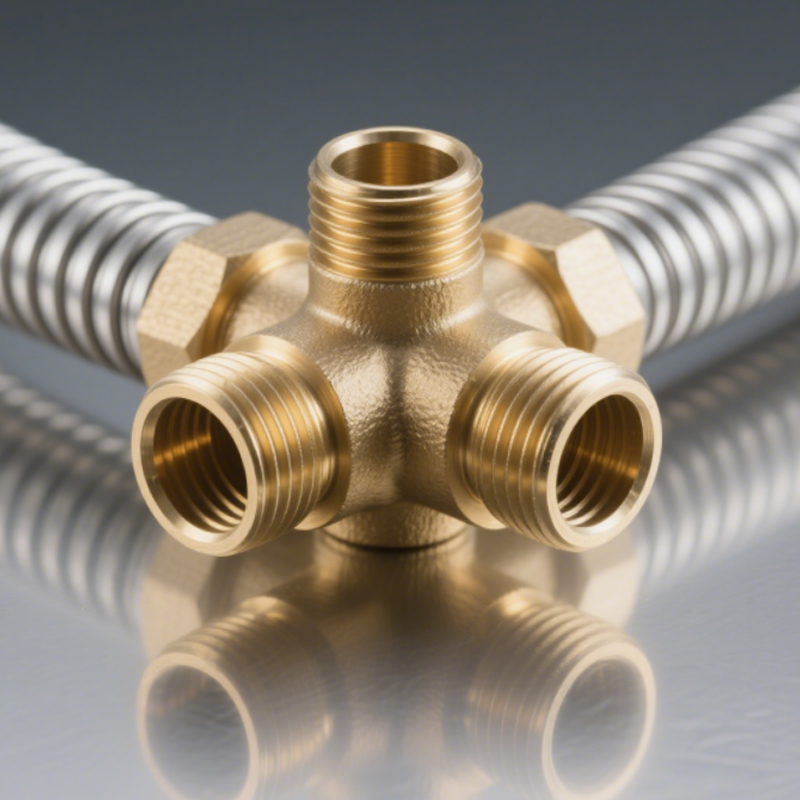
The available adapter configurations extend the practical use of the connector. The listed options include 5/8 × 3/8M (1/4F), 5/8 × 3/8F, 5/8 × 1/2M (3/8F), and 5/8 × 1/2F. These combinations are intended to support different pipe diameters and interface arrangements. By selecting an appropriate adapter at the time of purchase, an installer can reduce the need for additional conversion parts.
Adapter flexibility can provide several advantages over a single-format connector. It can simplify inventory management for distributors, support more appliance models, and reduce installation delays caused by an unsuitable end connection. It also allows the same basic connector platform to serve different project requirements.
Every adapter must be correctly seated and tightened according to the relevant technical instructions. Excessive tightening can damage threads, deform sealing surfaces, or place unnecessary stress on the connector. Insufficient tightening can result in leakage. The correct method depends on the specific fitting design, sealing surface, and applicable installation standard.
The hard sealing arrangement is intended to create a reliable mechanical seal at the connection point. Hard sealing differs from systems that rely primarily on soft sealing washers or thread-compound filling. The sealing surfaces must remain clean, properly aligned, and free from scratches, dirt, metal chips, and other contaminants. A hard seal cannot perform correctly if the mating surfaces are damaged or misaligned.
Comparison with Conventional Flexible Gas Connectors
Gas connectors from different manufacturers may appear similar while having meaningful differences in materials, tube forming, fitting quality, sealing design, and inspection procedures. The DN10 stainless steel whistle-free gas connector offers several practical advantages when compared with basic flexible connectors that use less corrosion-resistant materials, limited length choices, or a single connection format.
First, the 304 stainless steel tube provides a strong material foundation. This can be advantageous in humid or frequently cleaned environments. Products made from ordinary carbon steel or lower-grade materials may require greater attention to surface protection and corrosion control. Stainless steel does not eliminate all environmental risks, but it generally offers a more durable solution for many indoor and light commercial applications.
Second, the whistle-free structure addresses an operational characteristic that is often overlooked. A standard connector may provide a functional gas path but still produce an irritating noise under certain flow conditions. The noise-reducing design adds value for users who expect quiet operation, especially where appliances are located close to living areas.
Third, the broad length range provides more choices than a product offered in only one or two standard sizes. A correct length can help prevent excessive tension and reduce the temptation to create unsuitable routing. Length selection should still be based on measured installation requirements rather than simply choosing the longest available option.
Fourth, the adapter range supports different interfaces without requiring a complicated collection of separate components. This can improve purchasing efficiency and simplify field installation. It may also reduce the total number of joints near the appliance, depending on the selected configuration.
Fifth, the use of brass or carbon steel nuts allows the connector configuration to be matched to different commercial and technical requirements. Brass is valued for corrosion resistance and machinability, while carbon steel can provide a strong and economical fitting option when properly protected and used in a suitable environment.
These advantages should be evaluated together rather than considered in isolation. A high-quality material cannot overcome improper installation, and a convenient adapter cannot compensate for incorrect system sizing. The best performance is achieved when product selection, manufacturing quality, installation technique, and system design are treated as one complete process.
| Evaluation Factor | DN10 Whistle-Free Connector | Potential Limitation of Basic Alternatives |
|---|---|---|
| Tube material | 304 stainless steel | Some basic products may use materials with lower corrosion resistance |
| Operating sound | Designed to reduce whistle-related airflow noise | Conventional internal designs may create more noticeable noise |
| Length selection | Seven standard length choices from 12 to 72 inches | Limited sizes can result in excessive bending or unnecessary slack |
| Interface flexibility | Multiple adapter configurations | A single interface may require extra conversion fittings |
| Sealing method | Hard sealing connection design | Less consistent sealing arrangements may depend heavily on added materials |
| Appearance | Stainless steel and black finishes | Fewer finish options may restrict exposed installation design |
| Manufacturing support | Produced through specialized bellows and metal hose processes | General-purpose production may offer less process specialization |
Manufacturing Expertise Behind the Product
The performance of a flexible stainless steel connector depends heavily on how the tube is formed, welded, fitted, inspected, and packaged. Haoyin (Ningbo) Bellows Technology Co., Ltd. specializes in the research, design, manufacturing, and sales of stainless steel bellows and flexible connection products. This specialization is relevant because bellows, metal hoses, gas connectors, plumbing liners, and compensators all require careful control of thin-wall metal forming and connection technology.
The company operates standardized workshops covering approximately 18,000 square meters on a site of about 35 mu. This manufacturing base supports organized production, material handling, process control, equipment maintenance, and product inspection. A dedicated production environment is particularly important for thin-wall stainless steel products, where surface condition, dimensional accuracy, and weld quality can directly influence product reliability.
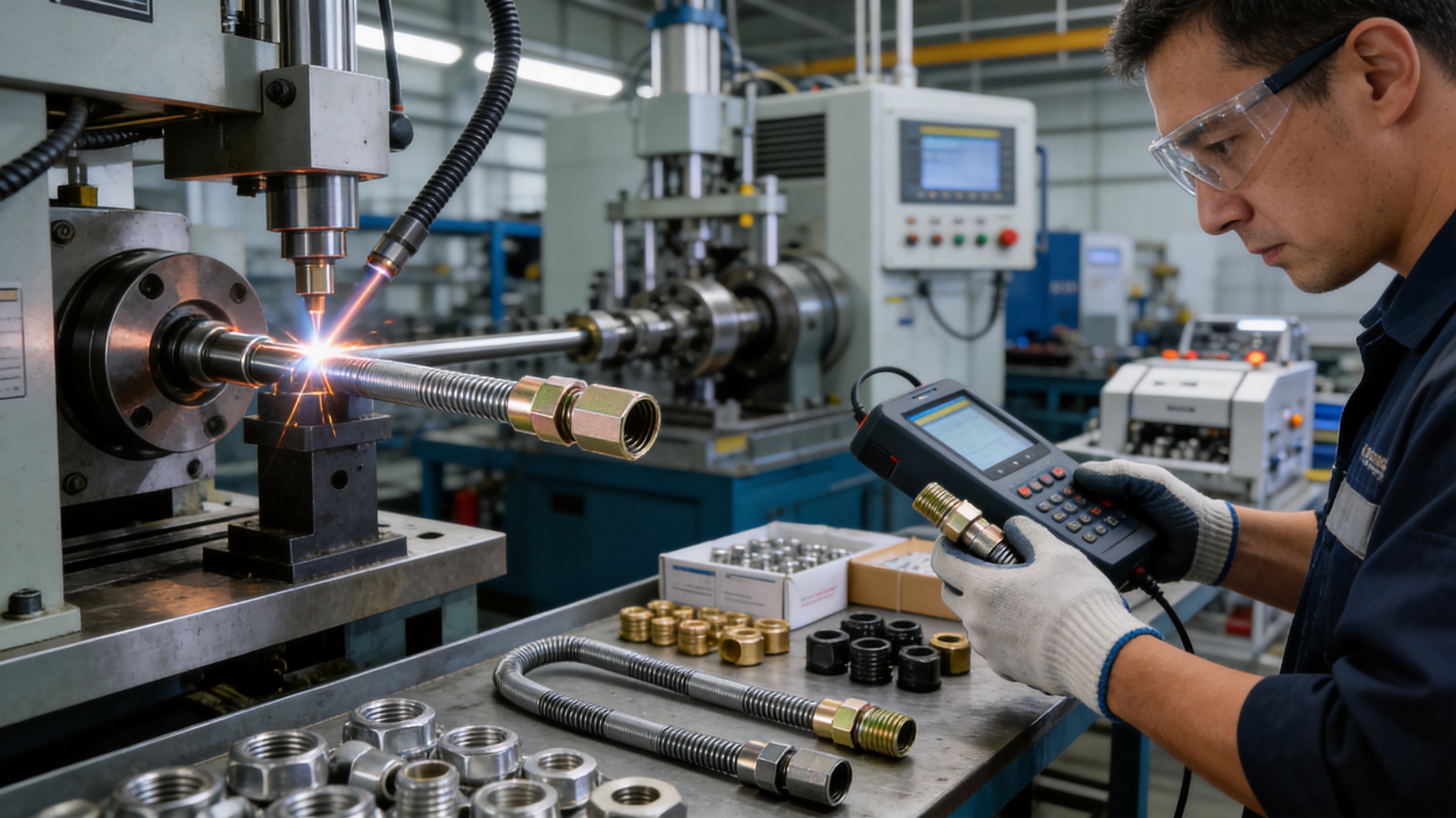
Laser welding machines are used as part of the company’s advanced manufacturing equipment. Laser welding can provide a concentrated heat source and controlled weld formation when properly configured. For thin stainless steel components, controlled heat input may help reduce distortion and support clean, repeatable joints. Welding parameters must be matched to the material thickness, joint geometry, production speed, and required inspection criteria.
CNC forming machines support accurate and repeatable shaping of metal components. Computer-controlled forming can help maintain dimensional consistency across production batches. This is especially valuable for flexible tubes and bellows, where the shape of the formed section affects movement characteristics, connection alignment, and installation behavior.
The company also uses COSMO equipment, eddy current flaw detectors, and automatic packaging systems. Eddy current inspection is a non-destructive testing method that can help identify certain surface and near-surface discontinuities in conductive materials. Its use demonstrates the importance placed on detecting potential defects without damaging the finished component.
Automatic packaging systems help standardize final handling and protect products from unnecessary damage during storage and transportation. Packaging quality is often underestimated. A connector that leaves the factory in good condition can still be damaged if fittings are exposed to impact, tubes are sharply bent in a carton, or finished surfaces are allowed to rub against abrasive materials.
Quality Management and Process Control
A reliable gas connector requires more than final visual inspection. Quality must be built into each stage, from raw material selection to product design, forming, welding, assembly, testing, packaging, and after-sales service. Haoyin has established a full-process quality management system covering these stages.
Raw material control begins with verification of the stainless steel grade, thickness, surface quality, and traceability information. Using the correct grade is essential because chemical composition and material condition influence corrosion resistance, forming behavior, weldability, and mechanical performance. Fitting materials, including brass and carbon steel, must also be selected and controlled according to the intended product configuration.
During structural design, engineers must consider tube flexibility, connection geometry, adapter compatibility, sealing surfaces, assembly sequence, and expected installation conditions. A connector that is easy to manufacture but difficult to install may not provide the best practical result. Design reviews should therefore consider both factory production and field use.
Manufacturing controls may include dimensional checks, forming verification, weld inspection, surface examination, connection checks, and leak-related testing. The appropriate inspection plan depends on the product specification and the requirements of the target market. Consistent inspection helps identify deviations before products reach customers.
The company holds ISO9001, ISO14001, and ISO45001 management system certifications. ISO9001 relates to quality management, ISO14001 addresses environmental management, and ISO45001 focuses on occupational health and safety. These systems do not replace product-specific technical testing, but they provide a structured framework for managing processes, responsibilities, documentation, improvement activities, environmental impacts, and workplace risks.
Haoyin is also described as a National High-tech Enterprise and Green Factory. These recognitions reflect an emphasis on research capability, technical development, production efficiency, and environmental responsibility. For customers purchasing flexible gas connectors, such capabilities can provide confidence that the product is supported by a broader engineering and manufacturing organization rather than by an isolated assembly operation.
Material and Component Options
The main connector body is made from 304 stainless steel. This material is suitable for many general gas connection environments because it offers a practical combination of corrosion resistance, manufacturability, and appearance. Its formability is important for producing flexible tube structures and creating accurate transitions to the end fittings.
The nut is available in brass or carbon steel. Brass is commonly selected for its good machinability, resistance to many forms of corrosion, and compatibility with numerous plumbing and gas fitting applications. Carbon steel can provide high mechanical strength and cost efficiency when the surface protection, environmental conditions, and project specifications are appropriate.
The product information identifies the cover material as “non” for the base configuration and also lists brass or carbon steel options. This indicates that the connector may be supplied in configurations with different external fitting or cover arrangements according to customer requirements. Purchasers should confirm the exact bill of materials, surface treatment, adapter selection, and nut material before placing a large order.
The choice of finish can also be important in project planning. A stainless steel finish may be preferred where a bright metallic appearance and easy visual inspection are desired. A black finish can be useful where the connector needs to blend with dark equipment or where a lower-contrast appearance is preferred. Finish selection should not interfere with inspection of the tube, fittings, or sealing areas.
Installation Planning
Correct installation begins with an accurate assessment of the distance between the gas supply point and the appliance or equipment inlet. The selected connector should provide enough length for a gentle route without being stretched. It should not be used to compensate for an incorrectly positioned supply line or an unsuitable appliance location.
The connector should be routed so that it is protected from sharp edges, crushing forces, abrasion, excessive heat, and contact with moving components. It should not be trapped behind equipment in a way that prevents inspection. If the appliance must be moved for cleaning or service, the connector should have sufficient flexibility to support the intended movement without being kinked or twisted.
The ends should be aligned naturally with the mating connections. Forcing an angled connector into alignment can place bending stress on the fittings and sealing surfaces. The connector should not be twisted during tightening. Where the design allows, the installer should hold the appropriate fitting body while tightening the nut so that torque is not transferred through the flexible tube.
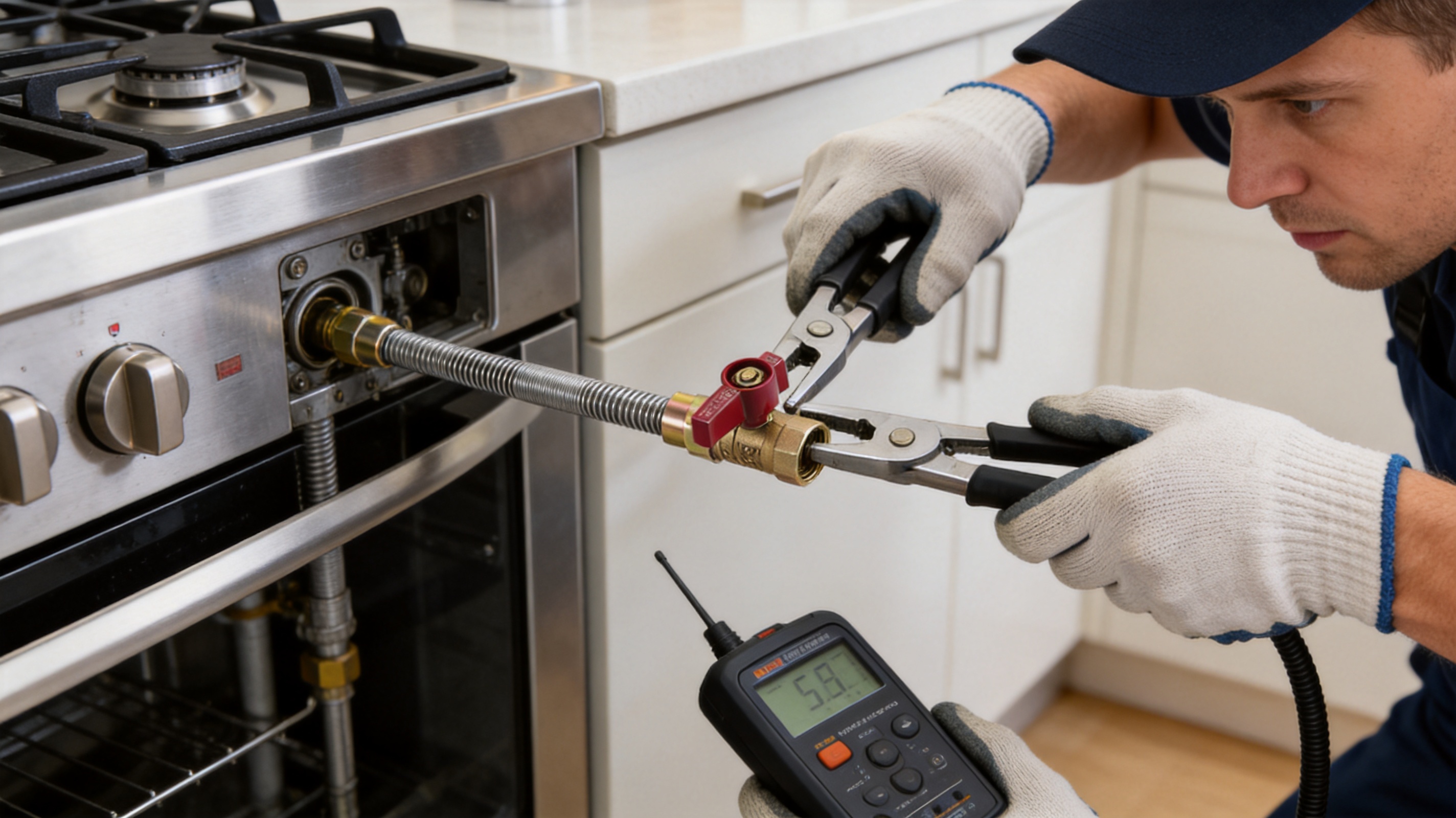
Only suitable tools should be used. Pliers, pipe wrenches, or gripping tools applied directly to the thin-wall tube can leave marks, create dents, or reduce the cross-sectional area. Such damage may affect the gas passage and reduce the service life of the connector.
After installation, the system should be inspected and tested according to applicable regulations and professional procedures. Leak detection should be performed using an approved method. Open flames must never be used to test for gas leakage. If a leak is suspected, the gas supply should be shut off and the system should be examined by a qualified professional.
Installation requirements can vary by country, gas type, appliance category, pressure, and building code. The connector should be selected and installed only for the service for which it is approved. Product information, appliance instructions, local regulations, and authority requirements should all be considered.
Selecting the Correct Length
The available lengths provide flexibility for different installation layouts. The 12-inch and 18-inch versions may be suitable for compact connections where the appliance is close to the supply point. The 24-inch and 36-inch options can accommodate common residential arrangements. The 48-inch, 60-inch, and 72-inch versions may be used where a greater distance is necessary, provided the installation design permits the longer connection.
A connector that is too short may be stretched or forced into a sharp bend. This can transfer stress to the fittings and make future servicing more difficult. A connector that is too long may form large loops, contact the floor, rub against a cabinet edge, or become exposed to avoidable mechanical damage.
The ideal length is normally the shortest standard size that allows a smooth, unstressed route with sufficient access for inspection and maintenance. Measurement should account for the fitting depth and the natural bend radius of the connector. Installers should avoid making final decisions based only on a straight-line measurement.
Length selection also affects appearance. A neat route improves the visual quality of an exposed installation and makes the connector easier to inspect. In commercial applications, orderly routing can also support cleaning routines and reduce the chance that the connector will be caught by carts, containers, or other equipment.
Applications in Residential and Commercial Systems
Residential kitchens are one of the most common application environments for flexible gas connectors. Cookers, ranges, ovens, and other gas appliances may require a connection that accommodates cabinet dimensions, appliance movement, and access for cleaning or servicing. The stainless steel body and available black finish can suit both visible and semi-concealed installations.
Utility rooms may also benefit from flexible gas connections for suitable heating or water-heating equipment. These areas can experience humidity, temperature variation, and frequent maintenance activity. A corrosion-resistant stainless steel connector can be advantageous when the installation is properly protected and the connector is not exposed to conditions beyond its design scope.
Commercial kitchens often place greater demands on connection organization. Equipment may be moved for cleaning, floors may be washed frequently, and the surrounding environment may contain heat, grease, moisture, and cleaning agents. The connector should be routed to minimize exposure and should be inspected regularly as part of the equipment maintenance program.
Light commercial heating and service equipment can also use flexible connectors where permitted by the applicable code and equipment instructions. The product’s length and adapter options may support different installation arrangements, but the gas flow requirement, pressure rating, temperature range, and connection standard must be verified before use.
The connector may also serve original equipment manufacturers and system integrators that need a repeatable flexible gas connection component. Consistent dimensions, defined adapter options, and controlled manufacturing can help simplify assembly procedures and support more predictable production planning.
Advantages for Distributors and OEM Customers
For distributors, a product with multiple lengths, finishes, nut materials, and adapter options can address a broader range of customer requirements. The core DN10 platform can be stocked in several configurations without requiring an entirely different product family for every installation scenario.
For OEM customers, the ability to discuss connection geometry and interface requirements with a specialized manufacturer can support better integration. A connector can be selected according to the available equipment space, maintenance access, and connection direction rather than being treated as a generic afterthought.
Flexible packaging and standardized product identification can also help reduce order errors. Because fittings may look similar while having different threads or sealing surfaces, clear configuration records are important. Product drawings, specification confirmation, sample approval, and batch traceability can all contribute to smoother procurement.
Haoyin’s experience across gas connectors, plumbing pipes and water liners, metal hoses, and compensators provides a broader technical background in flexible metal connection systems. Knowledge gained from one application can support improvements in another, particularly in areas such as bellows forming, laser welding, non-destructive inspection, surface control, and flexible movement design.
The company’s R&D team and production equipment allow it to support more than simple standard-product supply. Depending on project needs, customers can discuss adapter configurations, lengths, finishes, material combinations, packaging, and other product details. Any customized requirement should be confirmed through technical drawings and formal approval before production.
Maintenance and Service Life Considerations
A flexible gas connector should be included in routine equipment inspection. The inspection should look for dents, deep scratches, corrosion, discoloration caused by overheating, fitting damage, unusual deformation, and signs of contact with sharp or moving objects. The connector should also be checked for improper routing, excessive tension, or twisting.
Cleaning should be performed with methods compatible with stainless steel and the selected finish. Strong chemicals, abrasive pads, and aggressive scraping can damage the surface. If a commercial cleaning product is used nearby, it should not be allowed to remain on the connector or fittings for extended periods.
Connectors should not normally be reused after removal unless the applicable product instructions and regulations specifically permit reuse. The sealing surfaces and threads may be affected during disassembly, and a component that appears visually acceptable may not provide the same sealing performance after reinstallation.
If an appliance is replaced, the connector should be evaluated rather than automatically transferred to the new equipment. The new appliance may require a different connection size, adapter, length, pressure condition, or installation route. Replacement by a qualified installer is the safest approach when the existing connector’s history or condition is uncertain.
The service life of a connector depends on installation environment, gas type, operating conditions, movement, maintenance, and compliance with applicable requirements. A stainless steel body supports durability, but no flexible connector should be considered permanent or maintenance-free.
Safety Principles
Gas systems require professional care because leakage, ignition, and improper combustion can create serious hazards. The connector should be installed only by a qualified person familiar with gas appliance connection procedures and local regulations.
The product should not be installed where it may be exposed to direct flame, excessive radiant heat, sharp edges, severe vibration, corrosive chemicals, or mechanical loads outside the intended application. It should not be used as a structural support, lifting point, or substitute for fixed piping.
The connector should not be painted, drilled, welded, clamped, or modified in the field. Any modification can change the tube structure, damage the protective surface, interfere with movement, or compromise the seal.
After installation or maintenance, all connections should be checked using an approved leak-testing procedure. If a gas odor is detected, occupants should avoid operating electrical switches or producing ignition sources, leave the area if necessary, and contact the relevant gas emergency service or qualified professional.
Noise reduction should never be interpreted as proof that a system is safe. A quiet connector can still be connected incorrectly, and a noisy system may have a problem elsewhere. Safety depends on the entire gas installation, including the supply pipe, regulator, valves, appliance, ventilation, combustion system, and connector.
Technical Questions to Confirm Before Ordering
Before purchasing, customers should confirm the gas type, operating pressure, required flow, connection dimensions, appliance manufacturer requirements, environmental conditions, and applicable certification or code requirements. These details determine whether the DN10 connector is suitable for a particular project.
The required length should be measured carefully, and the desired adapter should be identified using a technical drawing rather than only a verbal description. Customers should also confirm whether they require a brass nut, carbon steel nut, stainless steel finish, black finish, or another configuration.
For larger projects, it is advisable to request samples or drawings before mass production. Sample approval can verify the overall length, fitting orientation, thread details, tube appearance, adapter arrangement, packaging, and compatibility with the intended equipment.
Project purchasers should also ask about inspection records, batch identification, packaging requirements, production lead time, and after-sales support. These administrative details can be as important as the basic product specification when the connector is being incorporated into a large equipment program.
Company Manufacturing Strengths
Haoyin (Ningbo) Bellows Technology Co., Ltd. is a professional manufacturer focused on stainless steel bellows and flexible metal connection solutions. Its product portfolio includes gas connectors, plumbing pipes and water liners, metal hoses, and compensators. This product range demonstrates experience in applications where controlled flexibility, metal forming, connection reliability, and resistance to demanding conditions are important.
The company’s production capabilities include laser welding, CNC forming, COSMO equipment, eddy current flaw detection, and automatic packaging. Together, these resources support a manufacturing process that can address precision forming, welding quality, non-destructive inspection, and consistent shipment preparation.
The company’s standardized workshops and full-process quality management system are designed to connect research and development with practical mass production. This is important for customers who require not only an initial sample but also stable quality over repeated orders.
Its ISO9001, ISO14001, and ISO45001 certifications provide structured management frameworks for quality, environmental responsibility, and workplace safety. The company’s National High-tech Enterprise and Green Factory status further indicate an emphasis on technical advancement and responsible manufacturing.
The company’s stated philosophy, “Striving for Excellence, Forging Quality,” reflects an approach centered on continuous improvement. In the case of a flexible gas connector, continuous improvement may involve better forming control, improved welding stability, more accurate adapter production, enhanced inspection, optimized packaging, and clearer customer support.
Purchasing and Specification Checklist
| Question | Information to Confirm |
|---|---|
| What is the connector size? | Confirm that DN10 is suitable for the intended gas system and equipment |
| What length is required? | Select 12, 18, 24, 36, 48, 60, or 72 inches based on the actual route |
| Which adapter is needed? | Confirm the exact 5/8 × 3/8 or 5/8 × 1/2 configuration and male or female end |
| Which nut material is preferred? | Select brass or carbon steel according to the project specification |
| Which finish is required? | Choose stainless steel or black |
| What sealing arrangement applies? | Confirm the hard sealing design and the mating surface requirements |
| What installation environment is expected? | Review humidity, heat, chemicals, movement, abrasion, and access conditions |
| What documentation is needed? | Confirm drawings, inspection information, packing details, and batch records |
| Who will install the product? | Use a qualified installer familiar with local gas regulations |
Frequently Asked Questions
What is the DN10 stainless steel whistle-free gas connector used for?
It is used to provide a flexible connection between a suitable gas supply line and gas equipment or an appliance. It is designed for applications where a controlled flexible route is preferable to a rigid final pipe connection, subject to the applicable gas code and equipment instructions.
What material is used for the tube?
The tube is made from 304 stainless steel with a specified wall thickness of 0.2 mm. This material provides corrosion resistance, good formability, and a durable surface for many residential and commercial installation environments.
What does whistle-free mean?
Whistle-free refers to the design intention of reducing high-pitched airflow noise that can occur in some flexible gas connections. Actual sound performance depends on the complete gas system, including pressure, flow rate, regulators, appliance design, and upstream fittings.
Which lengths are available?
The standard lengths are 12 inches, 18 inches, 24 inches, 36 inches, 48 inches, 60 inches, and 72 inches. The correct size should be selected according to the actual installation route and should not be stretched, sharply bent, or left with excessive unsupported slack.
Which adapter configurations are offered?
The listed adapter choices are 5/8 × 3/8M (1/4F), 5/8 × 3/8F, 5/8 × 1/2M (3/8F), and 5/8 × 1/2F. The exact meaning and suitability of each configuration should be verified against a technical drawing and the mating equipment connection.
What type of flare nut does the connector use?
The connector uses a 5/8-18UNF flare nut. Thread size alone is not enough to confirm compatibility. The installer must verify the full connection specification, sealing surface, fitting gender, and gas-service suitability.
Are brass and carbon steel nuts both available?
Yes. The product information identifies brass and carbon steel as available nut materials. The preferred option depends on the project’s corrosion environment, mechanical requirements, cost target, and customer specification.
Is the connector suitable for outdoor installation?
Suitability depends on the specific outdoor environment, local regulations, exposure to weather, temperature, chemicals, physical damage, and the product’s approved operating conditions. Outdoor use should be confirmed with the manufacturer and the applicable installation authority before selection.
Can the connector be used as a permanent support for an appliance?
No. A flexible gas connector is intended to provide a gas connection, not to support the weight of equipment or act as a structural member. The appliance and supply piping should be independently supported.
Can the connector be cut or modified on site?
Field cutting, drilling, welding, painting, or other modification is not recommended. Modification can damage the tube, alter the sealing system, and invalidate the product’s intended performance. A connector with the correct length and fitting arrangement should be ordered instead.
How should leakage be checked?
Leak testing should be performed by a qualified professional using an approved method required by local regulations. Open flames must never be used. If a gas odor is detected, the gas supply should be shut off when safe to do so and professional assistance should be obtained.
Why is choosing the correct length important?
A connector that is too short may be stretched or sharply bent, while one that is too long may loop, rub against surrounding surfaces, or become difficult to inspect. The shortest standard length that allows a smooth, unstressed route is generally the best choice.
What makes this product different from a basic connector?
Its differentiating features include a 304 stainless steel tube, a whistle-free design, multiple standard lengths, several adapter configurations, hard sealing, stainless steel and black finishes, and production by a company specializing in stainless steel bellows and flexible metal connection products.
Does stainless steel eliminate maintenance requirements?
No. Stainless steel improves resistance to many forms of corrosion, but the connector must still be inspected for damage, overheating, abrasion, chemical exposure, improper routing, and fitting deterioration. Maintenance requirements depend on the installation environment and applicable regulations.
Can the product be supplied for OEM projects?
The available lengths, finishes, adapter configurations, and nut materials make the product suitable for discussion in OEM and project applications. OEM customers should confirm drawings, samples, testing requirements, packaging, and change-control procedures before production.
Conclusion
The DN10 stainless steel whistle-free gas connector is designed as a practical, durable, and adaptable solution for flexible gas connections. Its 304 stainless steel tube, 0.2 mm wall thickness, 5/8-18UNF flare nut, hard sealing arrangement, multiple adapter options, and seven standard lengths make it suitable for a wide range of properly specified installations.
Its whistle-free design adds an important comfort advantage by helping reduce airflow-related noise. The stainless steel and black finish options support different visual requirements, while brass and carbon steel nut choices provide flexibility for project specifications and installation environments.
The product’s value is supported by the manufacturing capabilities of Haoyin (Ningbo) Bellows Technology Co., Ltd. Specialized equipment such as laser welding machines, CNC forming machines, COSMO equipment, eddy current flaw detectors, and automatic packaging systems supports controlled production from raw material handling through final shipment. The company’s experience in stainless steel bellows, metal hoses, plumbing liners, gas connectors, and compensators provides a strong technical foundation for flexible metal connection products.
For the best result, product selection should be combined with accurate measurement, correct adapter verification, professional installation, approved leak testing, and regular inspection. When these factors are managed together, the DN10 connector can provide a clean, quiet, corrosion-resistant, and dependable connection for suitable residential, commercial, and equipment applications.
References
1. Product specification information for the DN10 Stainless Steel Whistle-Free Gas Connector, including dimensions, materials, adapter options, finishes, and sealing form.
2. General technical principles for flexible stainless steel tubing, flare connections, corrosion-resistant materials, and gas appliance installation.
3. ISO 9001 quality management system principles and process-control practices for manufacturing organizations.
4. ISO 14001 environmental management system principles for responsible industrial production.
5. ISO 45001 occupational health and safety management system principles.
6. General non-destructive testing principles for eddy current inspection of conductive metallic components.
7. General engineering guidance for laser welding and CNC forming of thin-wall stainless steel components.
8. General installation and maintenance practices for flexible gas connectors, flare fittings, appliance connections, and leak testing.
9. Manufacturer information regarding stainless steel bellows, gas connectors, plumbing pipes and water liners, metal hoses, compensators, production facilities, and quality management capabilities.