




 English
  Español
  русский


Gas connection components play a critical role in the safety, efficiency, and service life of residential, commercial, and industrial gas systems. Although a connector may appear to be a small part of a complete installation, its material quality, dimensional accuracy, sealing structure, connection compatibility, and manufacturing consistency can directly influence system performance. The DN12 Stainless Steel Gas Connector is designed to provide a dependable flexible connection for gas appliances, branch lines, equipment interfaces, and other applications where a durable and adaptable gas connection is required.
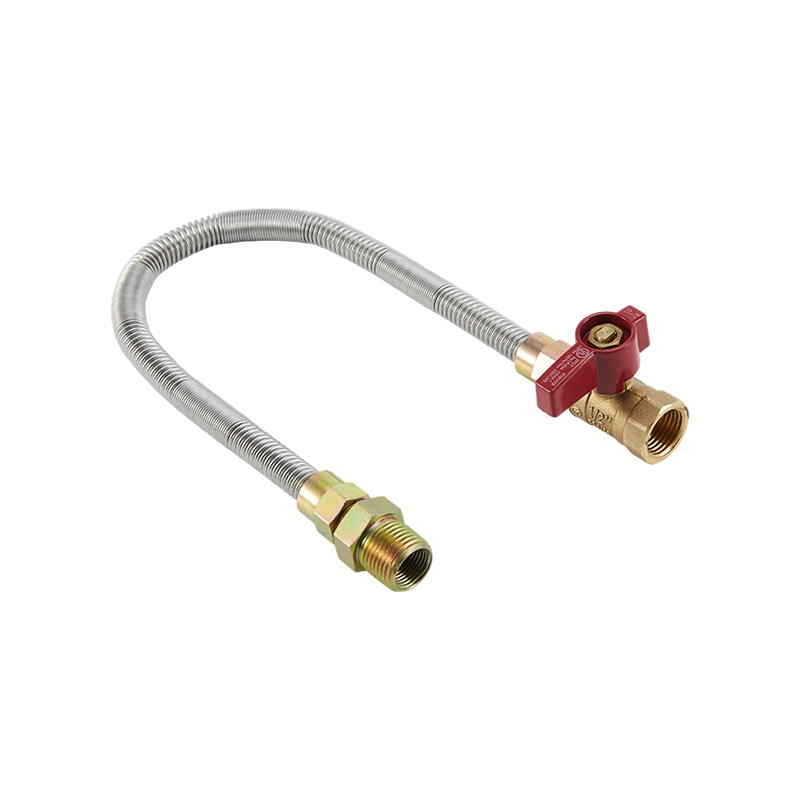
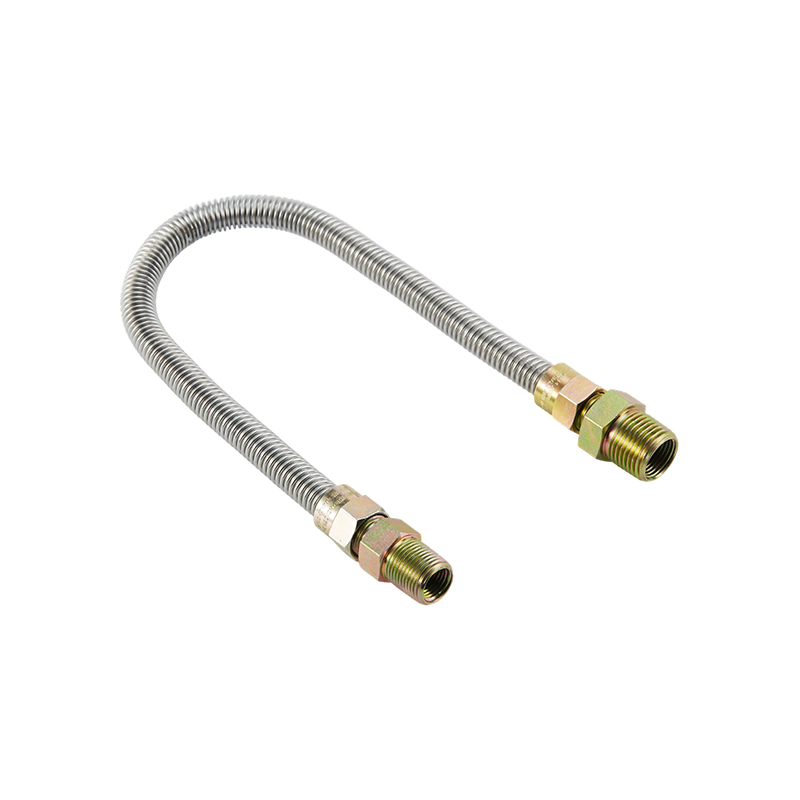
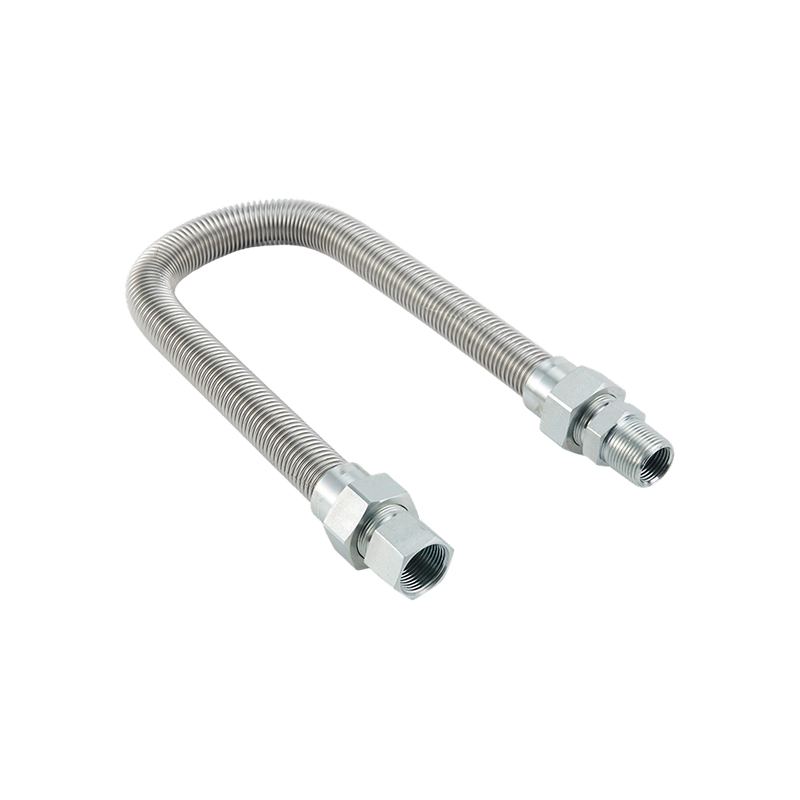
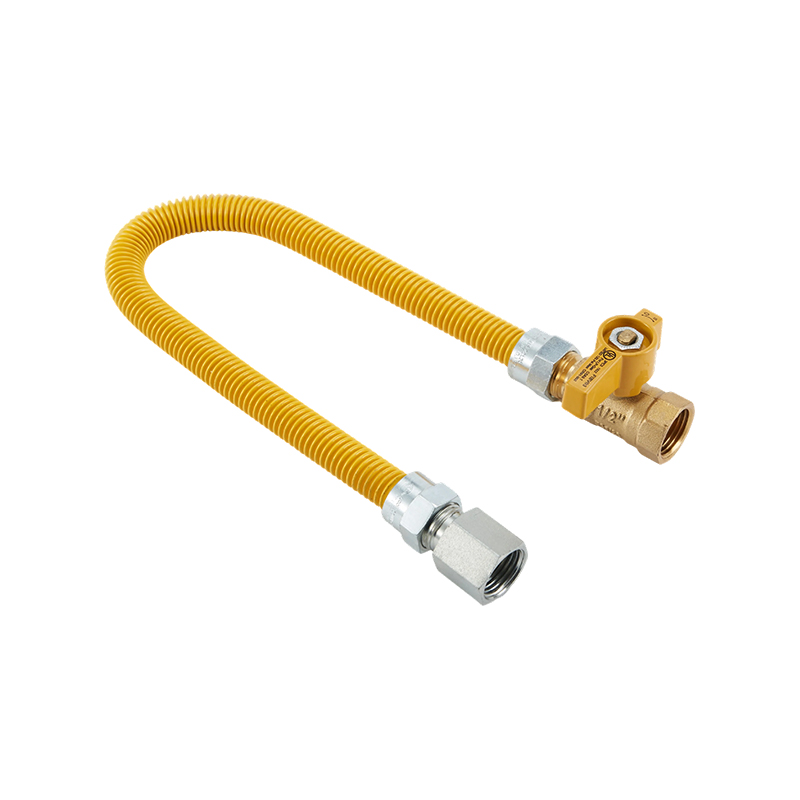
Manufactured from 304 stainless steel with a stated wall thickness of 0.25 mm, this flexible connector combines corrosion resistance with practical installation flexibility. Its 3/4"-16UNF flare nut and multiple adapter configurations allow it to connect with different pipe diameters and interface types. Available in lengths from 12 inches to 72 inches, the connector can be selected for compact appliance connections, longer equipment layouts, or installations where rigid pipe alignment would be difficult.
The product is also available with brass or carbon steel nuts, several exterior color options, and a hard-sealing connection design. These choices allow distributors, installers, and project purchasers to select a configuration appropriate for the intended installation environment. Supported by specialized stainless steel bellows manufacturing capabilities, quality management systems, and a full-process production approach, the connector is positioned as a practical alternative to less durable or less adaptable connection products.
Product Overview
The DN12 Stainless Steel Gas Connector is a flexible gas connection tube designed for use in systems that require a reliable interface between gas piping and appliances or equipment. The main tube is made from 304 stainless steel, a widely used engineering material known for its combination of corrosion resistance, mechanical strength, formability, and long-term stability in demanding environments.
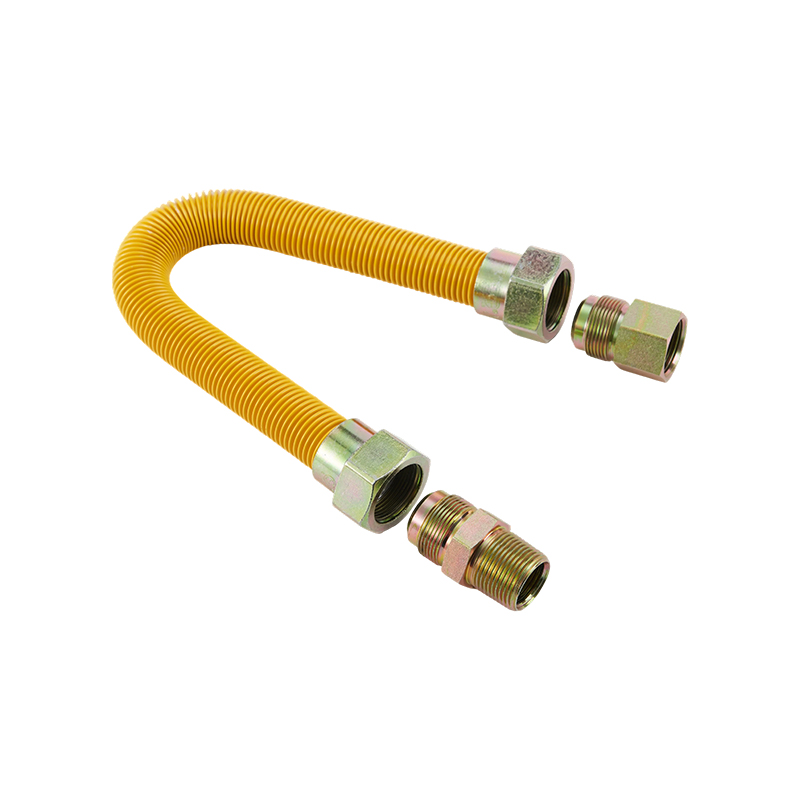
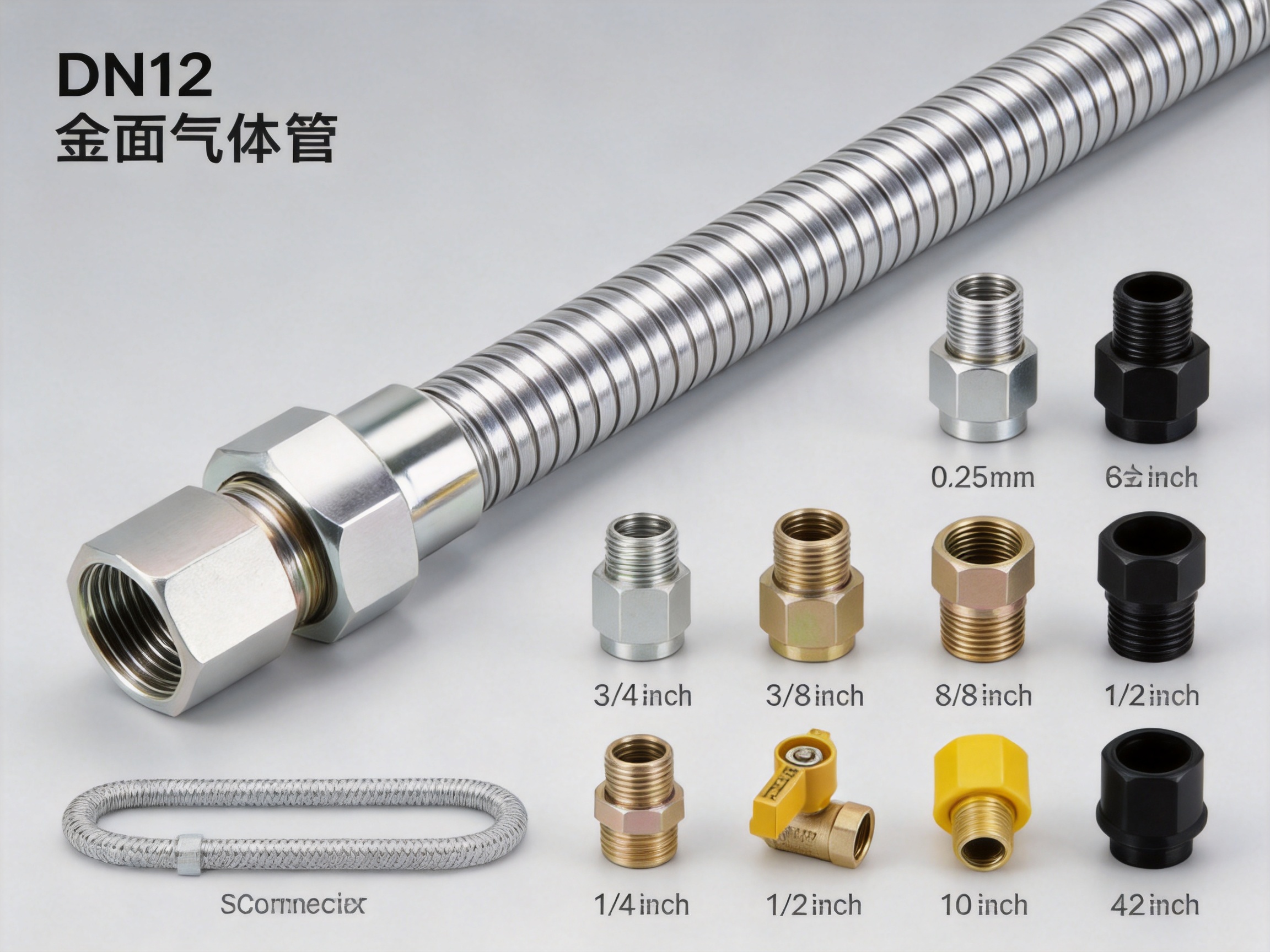
Its DN12 designation identifies the nominal size family of the connector, while the listed connection system includes a 3/4"-16UNF flare nut. The connector can be supplied with several adapter combinations, including 3/4 x 3/8 male with 1/4 female, 3/4 x 3/8 female, 3/4 x 1/2 male with 3/8 female, and 3/4 x 1/2 female configurations. These options help accommodate installation systems with different thread and interface requirements.
Available lengths include 12, 18, 24, 36, 48, 60, and 72 inches. This range provides installers with multiple options when working around cabinets, walls, appliances, valves, regulators, and other components. A correctly selected length can reduce excessive bending, prevent unnecessary tension, and simplify routing during installation.
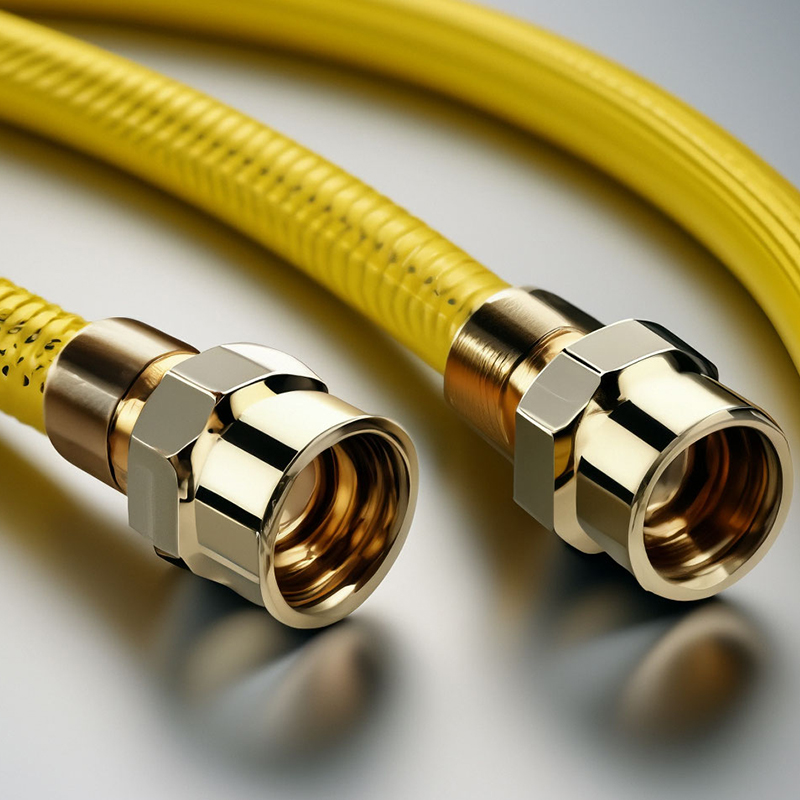
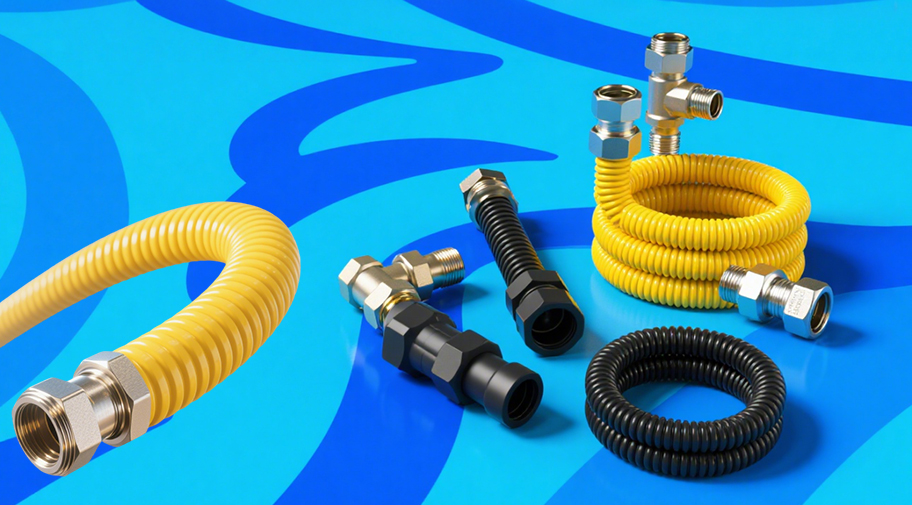
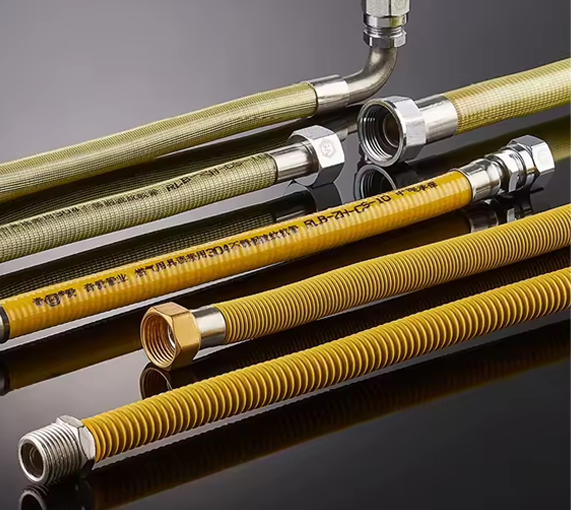
The product is offered in stainless steel, yellow, and black colors. Depending on the application and local installation practice, color may be selected for visual coordination, product identification, or project standardization. The connector is also available with either brass or carbon steel nuts. This gives purchasing teams greater flexibility when balancing material preference, mechanical performance, application conditions, and project cost.
| Item | Specification |
|---|---|
| Product type | DN12 flexible stainless steel gas connector |
| Main tube material | 304 stainless steel |
| Wall thickness | 0.25 mm |
| Flare nut | 3/4"-16UNF |
| Adapter options | 3/4 x 3/8 male with 1/4 female; 3/4 x 3/8 female; 3/4 x 1/2 male with 3/8 female; 3/4 x 1/2 female |
| Available lengths | 12, 18, 24, 36, 48, 60, and 72 inches |
| Nut materials | Brass or carbon steel |
| Available colors | Stainless steel, yellow, and black |
| Cover material | None |
| Sealing form | Hard sealing |
| Certification positioning | Stainless steel gas connector category with CSA certification positioning; project documentation should be verified for the selected configuration |
Why 304 Stainless Steel Matters in Gas Connections
Material selection is one of the most important differences between a dependable gas connector and a low-quality substitute. The DN12 connector uses 304 stainless steel for its flexible tube. This material is widely selected for piping, bellows, fittings, food-processing equipment, architectural components, and industrial assemblies because it provides a useful balance between corrosion resistance, strength, manufacturability, and availability.
Gas connection components may be exposed to humidity, condensation, cleaning chemicals, airborne contaminants, temperature changes, and accidental contact with corrosive substances. A stainless steel tube can provide better resistance to these conditions than ordinary untreated carbon steel. The result is a connection component that is better suited to long-term service in kitchens, utility spaces, mechanical rooms, commercial buildings, and other areas where environmental conditions may vary.
The 0.25 mm wall thickness is designed to provide a practical balance between flexibility and structural integrity. A thin, carefully formed stainless steel wall can allow the tube to be routed around obstacles without the excessive stiffness associated with rigid metal pipe. At the same time, controlled forming and welding processes are necessary to maintain consistent geometry and dependable performance throughout the product length.
Stainless steel also contributes to product cleanliness and appearance. The metallic surface is easy to identify and can be visually inspected during installation. The stainless steel finish can be supplied as a natural stainless appearance or with yellow or black color options, depending on the intended product presentation and project requirements.
Flexible Design for Easier Installation
One of the main advantages of a flexible gas connector is its ability to accommodate real-world installation conditions. Buildings and appliances rarely provide perfectly aligned connection points. Rigid pipes may require additional elbows, nipples, couplings, or field adjustments to reach an appliance inlet. Each additional fitting can increase installation time, occupy valuable space, and create another potential inspection point.
The DN12 connector is available in seven lengths, from 12 inches to 72 inches. Shorter versions can be used where the gas valve and appliance inlet are close together. Longer versions can help installers route the connection around cabinets or equipment while avoiding sharp interference with nearby structures. Selecting the correct length is important because the connector should not be stretched, compressed, twisted, or bent beyond the limits appropriate for its construction.
Flexible routing can be especially useful in renovation projects. Existing buildings may have limited access, irregular wall layouts, or appliance positions that differ from the original design. A flexible connector can reduce the need for extensive modifications to surrounding construction. In new projects, it may also help contractors achieve a cleaner installation with fewer rigid transition pieces.
Flexibility should not be confused with unrestricted movement. A professional installation still requires proper support, suitable bend radii, careful alignment, and compliance with applicable gas installation codes. The connector should be installed only in applications permitted by local regulations and by the instructions for the specific appliance and gas system.
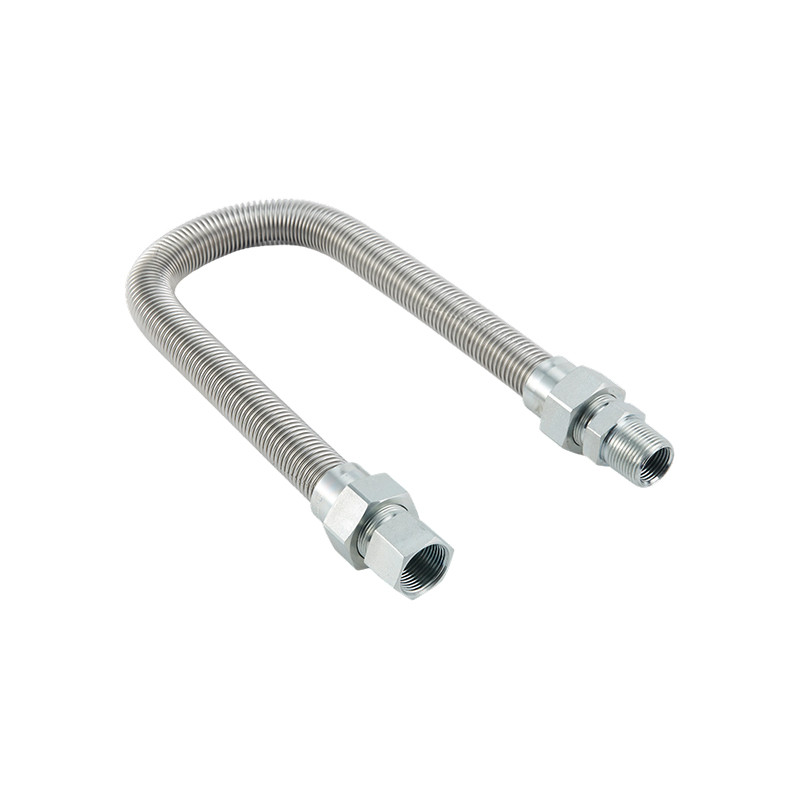
DN12 Stainless Steel Gas Connector
Connection Compatibility and Adapter Selection
Gas systems use a range of connection sizes and thread arrangements. A connector that is available in only one configuration may require additional adapters or may not be suitable for a particular appliance. The DN12 Stainless Steel Gas Connector addresses this issue through multiple adapter specifications.
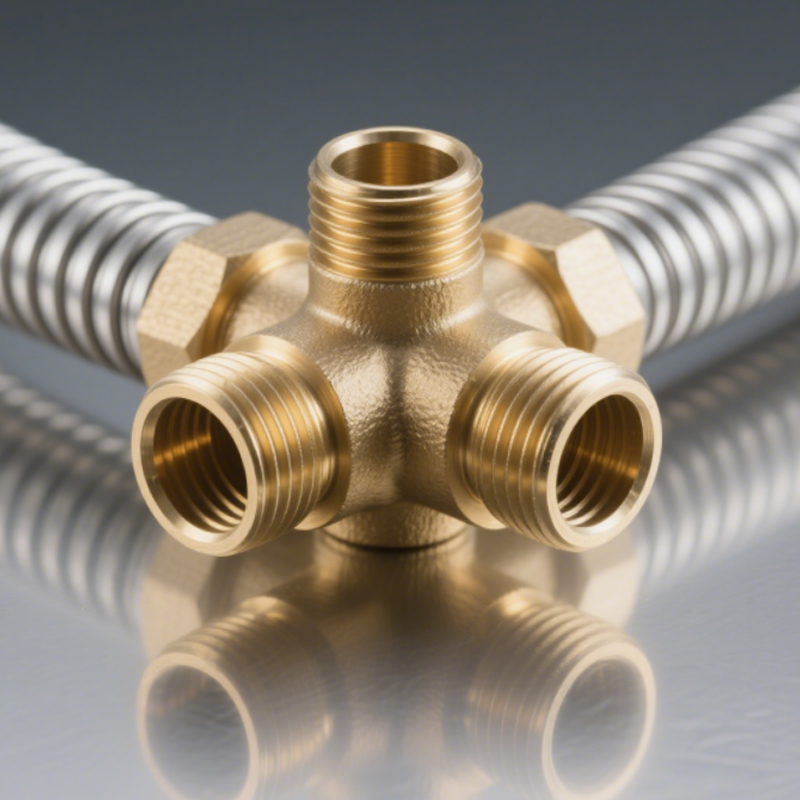
The primary flare nut is specified as 3/4"-16UNF. In addition, the product can be supplied with adapter configurations that support 3/8 and 1/2 connection sizes, together with male, female, and combined male-female arrangements. These options are intended to cover common interface requirements while reducing the number of separately sourced transition components.
Adapter selection should always be based on the actual connection dimensions, thread type, sealing method, gas type, working conditions, and applicable standards. Nominal size alone is not sufficient. Two fittings with similar nominal dimensions may use different thread forms or sealing principles and may not be mechanically or safely interchangeable.
Before ordering, installers and purchasing teams should confirm the following information:
• The gas appliance inlet size and thread specification.
• The supply-side valve or pipe connection size and thread specification.
• Whether the connection requires a male, female, or combined adapter.
• Whether the installation uses a flare, hard seal, gasket, or another approved sealing arrangement.
• The required connector length and routing path.
• Local code requirements and certification requirements for the project.
Correct adapter selection can improve installation efficiency and reduce the possibility of mismatched components. It also makes inventory management easier because distributors can offer several practical configurations from one product family.
Hard-Sealing Connection Design
The DN12 connector uses a hard-sealing form at the connection interface. A hard seal is designed to create a reliable metal-to-metal or mechanically controlled sealing relationship when the fitting is correctly assembled. Compared with improvised sealing methods, a properly engineered hard-sealing interface provides a more predictable connection structure.
The sealing area must be clean, correctly aligned, and free from damage before assembly. Threads should be engaged carefully to avoid cross-threading, and the connector should be tightened according to the relevant installation instructions. Excessive force can damage threads or deform the sealing surface, while insufficient tightening can prevent the connection from seating correctly.
A hard-sealing design can be advantageous in applications where long-term dimensional stability and resistance to environmental exposure are important. Unlike some sealing materials that may age, harden, swell, or degrade under certain conditions, the primary sealing function is established through the fitting geometry and controlled assembly. However, no sealing system can compensate for incorrect installation, contamination, damaged threads, or incompatible fittings.
After installation, the connection should be inspected and tested in accordance with local requirements. Leak testing should use an approved method. Open flames must never be used to check for gas leakage. The system should be commissioned only after the installer has confirmed that all connections are secure and leak-free.
Advantages Compared with Conventional Alternatives
Corrosion Resistance
Compared with ordinary unprotected carbon steel tubing, 304 stainless steel offers improved resistance to many common environmental conditions. This can be particularly valuable in kitchens, damp utility rooms, commercial food-service facilities, and mechanical areas where moisture and contaminants may be present.
Reduced Fitting Complexity
A flexible connector can reduce the number of elbows and intermediate fittings needed to connect an appliance. Fewer components may simplify installation, reduce material handling, and make the finished assembly easier to inspect. The multiple adapter options further support direct connection to common interface arrangements.
Installation Flexibility
Rigid pipe requires precise measurement and alignment. The DN12 connector can accommodate moderate routing variations, allowing installers to work around physical obstacles and appliance positioning constraints. This is useful in both new construction and replacement projects.
Length Selection
The seven available lengths provide more choice than a single standard-size connector. Users can select a length that better matches the installation path, helping avoid an unnecessarily short connection or excessive unused material.
Material and Nut Options
The availability of brass and carbon steel nuts gives buyers flexibility. Brass may be selected for its corrosion resistance and established use in gas fittings, while carbon steel may be considered when a different strength, coating, or project cost profile is required. The appropriate option should be selected according to the gas medium, environment, code requirements, and approved product configuration.
Recognizable Product Presentation
Stainless steel, yellow, and black color options can support product differentiation and project coordination. Color selection may also help distributors organize product families or allow contractors to match project specifications. Color does not replace technical identification, so size, connection type, and certification information should remain clearly marked in product documentation.
Manufacturing Strengths Behind the Product
The performance of a flexible stainless steel gas connector depends not only on its design but also on the consistency of its manufacturing process. Stainless steel bellows and flexible tubing require controlled forming, stable welding, accurate end preparation, and dependable inspection. Small variations in geometry or connection alignment can affect assembly quality and service performance.
The manufacturer specializes in the research, development, design, manufacturing, and sales of stainless steel bellows. Its product scope includes gas connectors, plumbing pipes and water liners, metal hoses, and compensators. This product concentration provides relevant experience in forming flexible metallic structures and developing connection solutions for gas, plumbing, heating, healthcare, building services, and industrial HVAC applications.
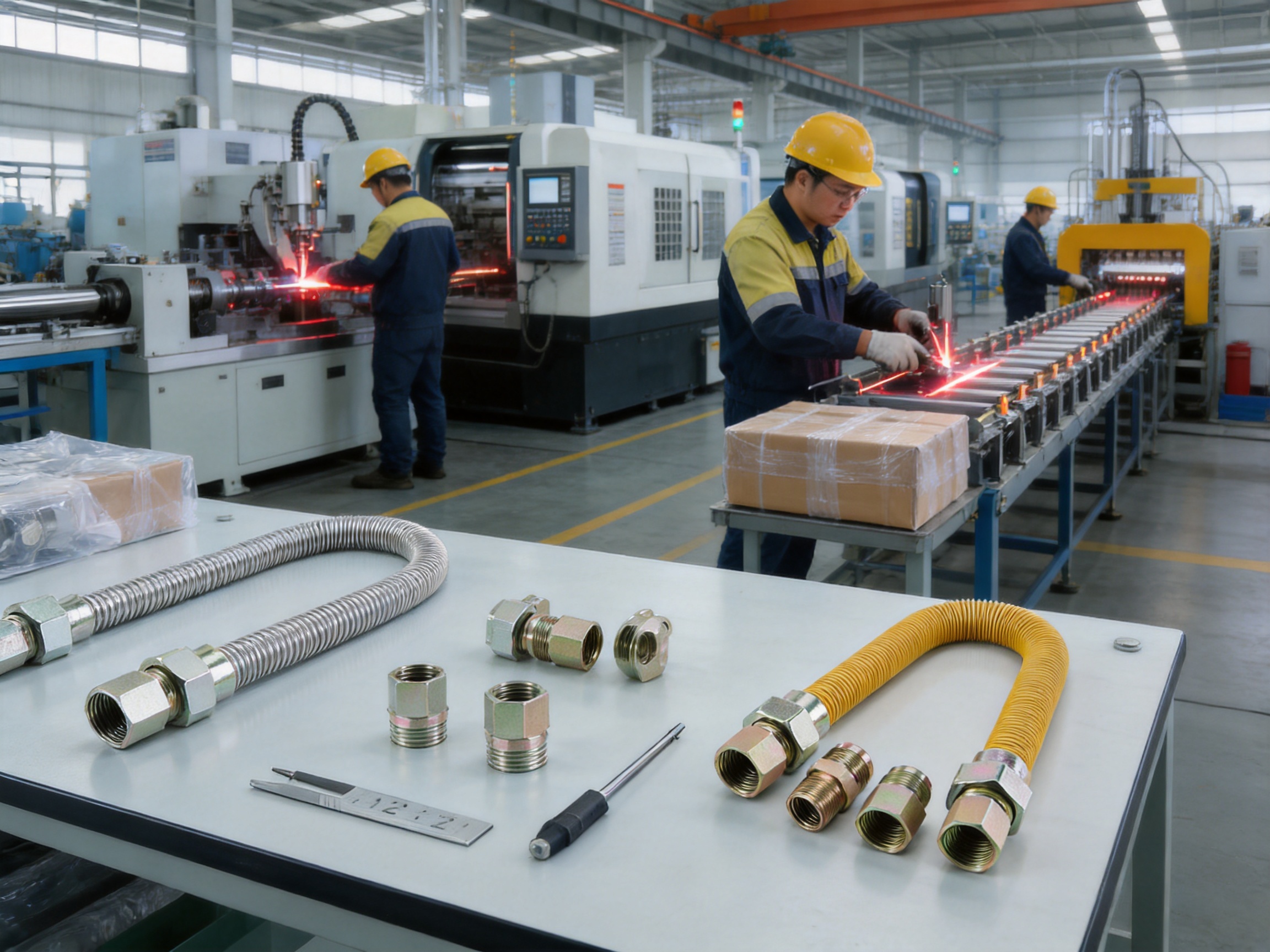
The company operates standardized workshops covering approximately 18,000 square meters within a larger site of about 35 mu. This production environment supports organized material flow, dedicated processing areas, equipment deployment, quality inspection, storage, and packaging. A standardized workshop structure can help manufacturers maintain repeatable procedures as production volumes and product varieties increase.
Advanced equipment listed for the manufacturing operation includes laser welding machines, CNC forming machines, COSMO equipment, eddy current flaw detectors, and automatic packaging systems. Each type of equipment contributes to a different stage of production and quality control.
Laser Welding
Laser welding can provide a concentrated heat source and a controlled weld zone. For thin stainless steel materials, controlled energy input is important because excessive heat may cause distortion, discoloration, dimensional variation, or unnecessary changes in the material around the weld. Laser welding can support clean, repeatable joints when parameters, material preparation, alignment, and inspection are properly controlled.
In a flexible gas connector, weld quality is particularly important because the tube must maintain pressure integrity while also tolerating handling and installation movement within its intended operating range. A consistent welding process helps reduce variation between production batches.
CNC Forming
CNC forming machines support repeatable shaping of stainless steel components. Computer-controlled forming can improve dimensional consistency, control the geometry of corrugations or flexible sections, and reduce variation caused by manual operations. Consistent forming is important because the flexibility, bending behavior, and mechanical response of the connector depend on the tube profile.
Accurate forming also helps ensure that end fittings and nuts align correctly with the tube assembly. When the tube and fitting are not properly centered, installation may become difficult and the sealing surfaces may not seat evenly.
Inspection and Eddy Current Testing
Eddy current flaw detection is a non-destructive inspection method used to identify certain surface and near-surface discontinuities in conductive materials. In stainless steel tubing production, this type of inspection can support the detection of potential defects that may not be visible during ordinary visual examination.
Non-destructive testing is valuable because it allows manufacturers to inspect components without damaging or dismantling them. When combined with dimensional checks, visual inspection, pressure-related testing, and process controls, it contributes to a more comprehensive quality assurance system.
Automatic Packaging
Packaging is part of product quality because connectors can be scratched, bent, contaminated, or mixed with incorrect fittings during storage and transportation. Automatic packaging systems can improve consistency in product handling and labeling. Organized packaging also helps distributors and installers identify connector length, adapter configuration, nut material, and color before the product reaches the job site.
Full-Process Quality Management
The manufacturer states that it has established a full-process quality management system covering raw material selection, structural design, manufacturing, performance testing, and after-sales support. This approach is important for flexible gas connectors because product reliability is influenced by every stage of the supply chain.
Raw material control helps ensure that the stainless steel, fitting materials, and other components match the specified product configuration. Material identification and supplier evaluation can reduce the risk of inconsistent chemical composition, incorrect thickness, or unsuitable component substitution.
Structural design determines the relationship between tube diameter, wall thickness, flexible profile, fitting geometry, length, and sealing method. Design review is necessary to ensure that the product is suitable for its stated use and that manufacturing processes can reproduce the intended characteristics.
Manufacturing controls help maintain stable forming, welding, fitting assembly, thread quality, surface condition, and dimensional accuracy. Performance testing can then be used to verify selected characteristics, such as pressure resistance, leak tightness, connection integrity, and mechanical behavior, according to the applicable product standard or customer requirement.
After-sales support completes the quality cycle. Feedback from installers, distributors, and end users can help identify recurring installation questions, packaging issues, product selection problems, or opportunities for design improvement. A supplier that maintains communication after delivery is better positioned to support long-term project requirements.
Certifications and Technical Compliance
The product category identifies the connector as a stainless steel gas connector with CSA certification positioning. Certification is an important consideration for gas products because it indicates that a product configuration has been evaluated against specified technical and safety requirements. However, certification should always be confirmed for the exact model, length, adapter combination, material configuration, and market in which the connector will be installed.
Project purchasers should request current certification documentation, test reports, product drawings, installation instructions, and applicable compliance information before approval. Certification marks should be used only in accordance with the requirements of the issuing organization. If a project requires a specific national or regional approval, the buyer should confirm that the supplied configuration is covered.
The manufacturer also reports ISO9001, ISO14001, and ISO45001 management system certifications. ISO9001 relates to quality management, ISO14001 addresses environmental management, and ISO45001 concerns occupational health and safety management. These systems do not replace product certification, but they demonstrate an organized approach to business processes, environmental responsibilities, and workplace safety.
The company is also identified as a National High-tech Enterprise and Green Factory. These designations support its broader manufacturing profile and indicate an emphasis on technical development and environmental management. For international buyers, it remains important to evaluate the specific technical documents and inspection records associated with the product being purchased.
Applications
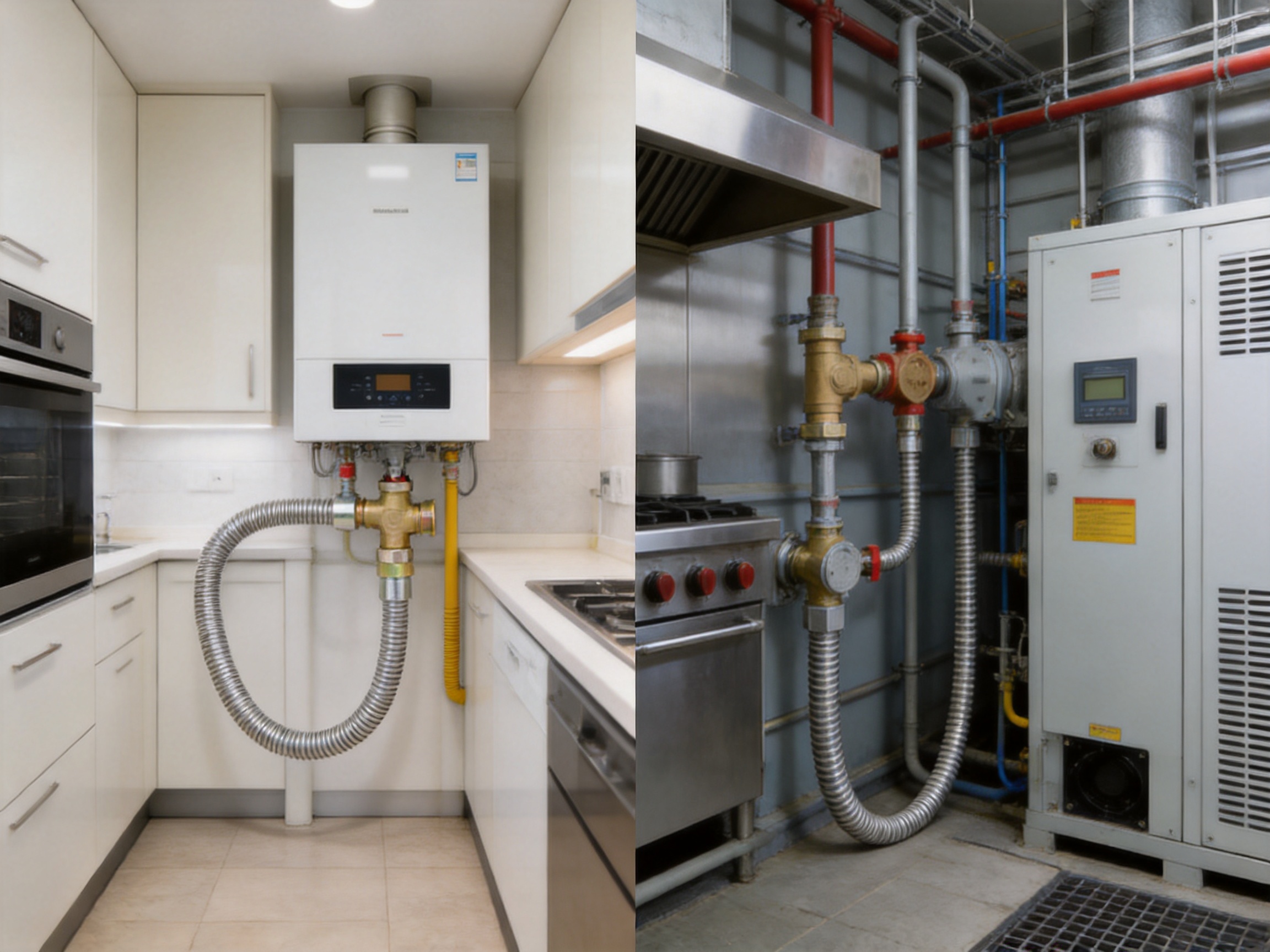
The DN12 Stainless Steel Gas Connector can be considered for a range of approved gas connection applications, including residential appliance installations, commercial kitchens, building service systems, and selected industrial equipment connections. Its flexibility and length range make it suitable for locations where the supply connection and appliance inlet are not directly aligned.
Residential Installations
In residential kitchens and utility areas, the connector may be used to connect approved gas appliances to a gas valve or supply connection. Available short and medium lengths can help accommodate common cabinet layouts while maintaining a neat connection path.
Commercial Kitchens
Commercial cooking environments may involve multiple appliances, frequent cleaning, limited space, and higher exposure to moisture or contaminants. Stainless steel construction can offer a practical material advantage in these conditions. The selected connector must still comply with the applicable commercial kitchen code and appliance manufacturer requirements.
Building Heating Systems
Gas-fired heating equipment often requires connections within mechanical rooms or service areas. The flexible connector may help simplify the transition between fixed piping and equipment, provided that the application, temperature, pressure, movement, and local regulations are suitable.
Industrial and HVAC Equipment
Industrial HVAC and process equipment can have complex layouts and restricted access. The range of lengths and adapter options may support equipment installation and maintenance planning. Industrial users should confirm operating pressure, temperature, gas compatibility, vibration conditions, and any special certification requirements before use.
The connector should not be used outside its approved purpose. It should not be treated as a substitute for a permanently supported piping system, and it should not be installed in a location where it may be exposed to flame, excessive heat, physical damage, unsupported loads, or movement beyond its design capability.
Installation Guidance
Installation should be performed by qualified personnel familiar with gas piping and the applicable local regulations. The following general principles can help support a safe and effective installation, but they do not replace the product instructions, appliance instructions, or code requirements.
First, verify the product before installation. Confirm the connector length, tube material, nut material, adapter configuration, and connection dimensions. Check that the packaging is intact and that the tube has not been crushed, sharply bent, scratched, or otherwise damaged during transport.
Second, inspect the mating connections. Threads should be clean and undamaged. Sealing surfaces should be free from dirt, metal chips, oil, paint, and other contamination. If the connection components do not match, do not force them together. Select the correct adapter or obtain technical assistance.
Third, route the connector carefully. Avoid sharp bends, twisting, kinking, excessive tension, compression, and contact with sharp edges. The connector should not support the weight of the appliance or be used to correct serious misalignment between fixed connection points.
Fourth, assemble the hard-sealing connection correctly. Start threads by hand to reduce the risk of cross-threading. Align the connector naturally with the mating fitting and tighten according to the applicable instructions. Do not use excessive force or apply tools in a way that could damage the tube or fitting.
Fifth, inspect and test the finished connection. Confirm that the connector is not under strain and that the fittings are fully seated. Conduct a leak test using an approved procedure. If a leak is found, shut off the gas supply and correct the connection before placing the equipment into service.
Finally, provide appropriate protection after installation. Keep the connector away from sharp cabinet edges, moving parts, excessive heat, corrosive chemicals, and areas where it may be used as a handle or support. Periodic visual inspection can help identify damage, corrosion, displacement, or other conditions requiring professional attention.
Purchasing and Specification Considerations
For distributors and project buyers, purchasing the correct configuration is just as important as choosing the correct material. A product family may include multiple lengths, adapters, colors, and nut materials. The purchase order should identify each characteristic clearly to avoid receiving an unsuitable variant.
| Purchasing factor | Recommended verification |
|---|---|
| Tube size | Confirm DN12 designation and project dimensional requirements |
| Length | Select from 12, 18, 24, 36, 48, 60, or 72 inches, subject to application needs |
| Connection | Confirm 3/4"-16UNF flare nut and the required adapter arrangement |
| Adapter gender | Verify male, female, or combined male-female configuration |
| Tube material | Confirm 304 stainless steel and 0.25 mm wall thickness |
| Nut material | Choose brass or carbon steel according to project requirements |
| Color | Specify stainless steel, yellow, or black |
| Sealing design | Confirm hard-sealing interface and compatible mating components |
| Compliance | Request current certification and test documentation for the exact configuration |
| Packaging | Confirm labeling, quantity, protective packaging, and shipping requirements |
Bulk buyers should also evaluate production capacity, lead times, batch consistency, private labeling options, packaging requirements, inspection procedures, and technical support. These factors can influence the total cost of ownership, especially when the product is being distributed through multiple markets or used in recurring construction projects.
Why Choose a Specialized Bellows Manufacturer?
A general metalworking supplier may be able to produce a basic tube or fitting, but a specialized bellows manufacturer brings more relevant knowledge to flexible metallic connection products. Bellows and flexible hoses require an understanding of thin-wall forming, controlled corrugation, welding behavior, pressure integrity, fatigue considerations, and end-fitting assembly.
The manufacturer’s product portfolio includes gas connectors, plumbing pipes and water liners, metal hoses, and compensators. These products share several technical foundations: controlled stainless steel forming, reliable welded joints, flexible movement, connection design, and quality testing. Experience across these product categories can support continuous improvement in tooling, process controls, inspection, and application engineering.
The company also maintains a professional research and development team. Product development in this field may involve improving connection compatibility, refining forming profiles, enhancing production efficiency, optimizing packaging, and adapting products to different market requirements. A dedicated technical team can also help customers review drawings, determine suitable configurations, and identify documentation requirements.
Advanced equipment is another important strength. Laser welding, CNC forming, non-destructive inspection, and automated packaging provide a foundation for repeatable manufacturing. Equipment alone does not guarantee product quality, but when combined with trained personnel, controlled procedures, preventive maintenance, process records, and final inspection, it can significantly improve manufacturing consistency.
Environmental and Operational Responsibility
Modern product evaluation increasingly includes environmental and workplace considerations. The manufacturer reports ISO14001 environmental management certification and identifies its operations with Green Factory status. These elements indicate that environmental performance is considered as part of the broader operating system rather than treated as an isolated activity.
Stainless steel products can support long service life, which may reduce the need for frequent replacement when the product is correctly selected and maintained. Durable materials can also contribute to reduced material consumption over the life of a building or equipment system. At the same time, responsible production requires attention to energy use, material waste, packaging, emissions, water management, and recycling practices.
ISO45001 occupational health and safety management is also relevant to manufacturing reliability. Safe workplaces support stable operations by reducing avoidable incidents, improving employee awareness, and encouraging documented procedures. Quality, environmental management, and occupational safety are interconnected elements of a professional manufacturing organization.
Maintenance and Service Life Considerations
A flexible gas connector is not normally a component that should be repeatedly repositioned or treated as a permanent moving joint. Its service life depends on correct selection, proper installation, suitable environmental conditions, and protection from mechanical damage. The exact service period should be determined according to local regulations, appliance requirements, manufacturer instructions, and site conditions.
During routine inspections, users or qualified technicians should look for visible kinks, crushing, unusual deformation, corrosion, discoloration caused by overheating, damaged threads, movement of fittings, and contact with sharp surfaces. Any connector showing signs of damage should be evaluated by qualified personnel and replaced if necessary.
Connections should not be modified in the field unless the modification is specifically permitted by the product instructions and applicable standards. Cutting, welding, drilling, extending, or combining connectors can change the product’s safety characteristics and invalidate certification or warranty coverage.
When an appliance is replaced, the connector should be inspected rather than automatically reused. The new appliance may have a different inlet arrangement, length requirement, gas demand, or installation condition. Replacing the connector with a correctly specified new component can help reduce compatibility risks.
Quality Assurance from Raw Material to Delivery
A reliable connector begins with controlled raw materials. Stainless steel coil, tube stock, fittings, nuts, and other components should be received against defined specifications. Identification procedures can help prevent material mix-ups, while supplier controls can support consistent quality across production batches.
During forming, process parameters should be monitored to maintain the intended tube dimensions and flexible profile. Forming tools require inspection and maintenance because tool wear can gradually influence geometry. CNC equipment can help maintain repeatability, but process verification remains necessary.
Welding operations should be controlled through qualified procedures, suitable material preparation, stable equipment settings, and inspection. Thin stainless steel requires particular attention to heat input, alignment, shielding, and surface condition. Weld appearance may provide useful information, but visual inspection should be supplemented by appropriate testing for the intended product requirements.
Assembly inspection should verify nut installation, adapter alignment, thread quality, sealing surfaces, and overall dimensions. Performance testing can help confirm leak tightness and pressure-related characteristics. Final packaging inspection should ensure that the correct product is protected, labeled, and prepared for shipment.
This type of staged quality control is more dependable than relying only on a final visual inspection. It creates multiple opportunities to identify and correct problems before the product reaches the customer.
Technical Support and Customization Potential
Because the product is available in multiple lengths, adapter configurations, colors, and nut materials, technical communication is important. Buyers may need support in identifying the correct product code, preparing a project specification, reviewing drawings, or organizing samples for approval.
A specialized manufacturer can potentially support different market and project requirements through product configuration, packaging, documentation, and production coordination. Buyers should communicate their application details early, including required quantities, delivery schedules, applicable standards, packaging language, labeling, inspection needs, and any special installation environment.
Customization should be evaluated carefully. Changes to wall thickness, connection design, length, material, welding method, or sealing structure may affect certification and performance. Any non-standard version should be documented through an approved technical drawing and validated before mass production.
Comparison with Less Suitable Connector Options
When comparing the DN12 connector with lower-cost alternatives, it is important to evaluate more than the purchase price. A connector made from less corrosion-resistant material may have a lower initial cost but could be more vulnerable to environmental degradation. A connector with limited length choices may require additional fittings or produce a less efficient routing path. An adapter system with poor compatibility may lead to installation delays and additional sourcing costs.
Products without stable forming or welding controls may also show greater variation between batches. Such variation can affect fitting alignment, surface quality, flexibility, and installation consistency. In contrast, a product manufactured with CNC forming, laser welding, non-destructive inspection, and documented quality procedures offers a stronger basis for repeatable project performance.
The DN12 connector is not necessarily the correct choice for every gas system. The final selection must be based on pressure, temperature, gas type, movement, installation location, code requirements, and appliance approval. Its advantages are most relevant when the project requires corrosion-resistant stainless steel, flexible routing, multiple adapter options, selectable lengths, and a controlled manufacturing source.
Installation Risk Reduction
Good connector design can reduce some installation risks, but safe performance depends on the complete system. The multiple length choices help reduce the likelihood of excessive stretching or unnecessary loops. Adapter options can minimize the use of unplanned transition fittings. Stainless steel construction can improve resistance to common environmental exposure. A hard-sealing interface can provide a defined connection method when correctly assembled.
Manufacturing controls also contribute to risk reduction. Consistent tube geometry supports predictable installation behavior. Reliable welds help preserve pressure integrity. Accurate threads and fitting alignment support proper assembly. Inspection and testing help identify defects before delivery.
Nevertheless, users should not interpret product advantages as permission to ignore installation standards. Gas systems require professional design, qualified installation, leak testing, ventilation considerations, shutoff access, and appropriate protection from damage. The connector is one component within a larger safety system.
Q&A
What is the DN12 Stainless Steel Gas Connector made of?
The flexible tube is made from 304 stainless steel with a stated wall thickness of 0.25 mm. The connector nut can be supplied in brass or carbon steel, depending on the selected configuration.
What is the main connection specification?
The listed flare nut specification is 3/4"-16UNF. Additional adapter configurations are available for different 3/8 and 1/2 connection arrangements.
Which adapter options are available?
The listed options include 3/4 x 3/8 male with 1/4 female, 3/4 x 3/8 female, 3/4 x 1/2 male with 3/8 female, and 3/4 x 1/2 female configurations. The exact selection should be matched to the appliance and supply-side connection.
What lengths can be ordered?
Available lengths are 12, 18, 24, 36, 48, 60, and 72 inches. The correct length should allow natural routing without stretching, twisting, crushing, or excessive bending.
Does the connector have an external cover?
The listed cover material is “None.” The product is based on the stainless steel flexible tube and its connection components rather than an additional external cover layer.
What sealing method does the connector use?
The listed sealing form is hard sealing. The mating surfaces and threads must be clean, compatible, correctly aligned, and assembled according to the applicable instructions.
Is the connector suitable for residential use?
It is positioned for residential, commercial, and industrial gas connection applications. Residential use must comply with local regulations, appliance instructions, and any required certification conditions.
Can the connector be used in commercial kitchens?
It may be considered for approved commercial kitchen applications where the material, connection type, pressure, temperature, routing, and certification requirements are suitable. Commercial installations should be completed and inspected by qualified professionals.
How does stainless steel compare with ordinary carbon steel tubing?
304 stainless steel generally provides better resistance to corrosion and environmental exposure than untreated carbon steel. The actual performance depends on the installation environment, gas system, surface condition, and maintenance practices.
Why are multiple lengths useful?
Multiple lengths allow installers to select a connector that better matches the distance and routing path between fixed connection points. This can reduce unnecessary loops, tension, and additional fittings.
Can the connector be cut or extended on site?
It should not be cut, extended, welded, drilled, or otherwise modified unless such work is specifically approved by the manufacturer and applicable standards. Field modification may compromise sealing, strength, certification, and safety.
How should a finished installation be tested?
The completed installation should be inspected and leak-tested using an approved method in accordance with local regulations and professional installation procedures. An open flame must never be used for leak detection.
Does CSA certification apply to every configuration?
Certification should be confirmed for the exact product configuration being purchased, including length, adapter arrangement, materials, and market application. Buyers should request current certification documentation before approval.
What manufacturing equipment supports the product?
The manufacturing operation includes laser welding machines, CNC forming machines, COSMO equipment, eddy current flaw detectors, and automatic packaging systems. These technologies support forming, welding, inspection, and consistent product handling.
What management certifications does the manufacturer report?
The company reports ISO9001, ISO14001, and ISO45001 management system certifications. It also identifies itself as a National High-tech Enterprise and Green Factory.
Who should install the gas connector?
Gas connectors should be installed by qualified personnel who understand gas piping, appliance connections, leak testing, and applicable local codes. Product documentation should be reviewed before installation.
Conclusion
The DN12 Stainless Steel Gas Connector is designed to provide a flexible and durable solution for approved gas pipeline and appliance connection applications. Its 304 stainless steel tube, 0.25 mm wall thickness, 3/4"-16UNF flare nut, multiple adapter arrangements, seven available lengths, brass or carbon steel nut options, and hard-sealing structure make it adaptable to a wide range of installation requirements.
Compared with less corrosion-resistant, less flexible, or less configurable alternatives, the connector offers practical benefits in routing, material durability, connection selection, and project organization. These benefits are supported by the manufacturer’s specialization in stainless steel bellows and flexible metallic products, standardized workshops, professional research and development capabilities, advanced forming and welding equipment, non-destructive testing resources, automatic packaging, and full-process quality management.
For the best results, customers should select the connector according to the actual gas system, appliance requirements, connection dimensions, installation environment, and applicable regulations. Certification and technical documentation should be verified for the exact configuration. When properly specified, professionally installed, and routinely inspected, the DN12 connector can provide a dependable flexible interface for residential, commercial, building-service, and selected industrial gas applications.
References
1. Product specification information for DN12 Stainless Steel Gas Connector, including material, wall thickness, adapter options, available lengths, colors, nut materials, and sealing form.
2. General technical principles for stainless steel flexible hoses, bellows, gas connectors, and metallic expansion components.
3. ISO 9001, Quality Management Systems: Requirements.
4. ISO 14001, Environmental Management Systems: Requirements with Guidance for Use.
5. ISO 45001, Occupational Health and Safety Management Systems: Requirements with Guidance for Use.
6. General requirements for gas appliance connectors, threaded interfaces, flare connections, leak testing, and professional installation practices.
7. General principles of laser welding, CNC forming, eddy current flaw detection, and non-destructive inspection for stainless steel components.
8. Manufacturer-provided company profile and manufacturing capability information for stainless steel bellows, gas connectors, plumbing pipes, water liners, metal hoses, and compensators.
9. Applicable local gas installation codes, appliance manufacturer instructions, and certification requirements for the intended market and product configuration.