




 English
 Español
 русский




Flexible gas connections play an important role in residential, commercial, and industrial piping systems. They provide a practical connection between fixed gas piping and appliances or equipment that may experience vibration, movement, installation tolerances, or limited alignment space. The quality of the connector directly influences system reliability, ease of installation, resistance to environmental conditions, and long-term maintenance requirements.
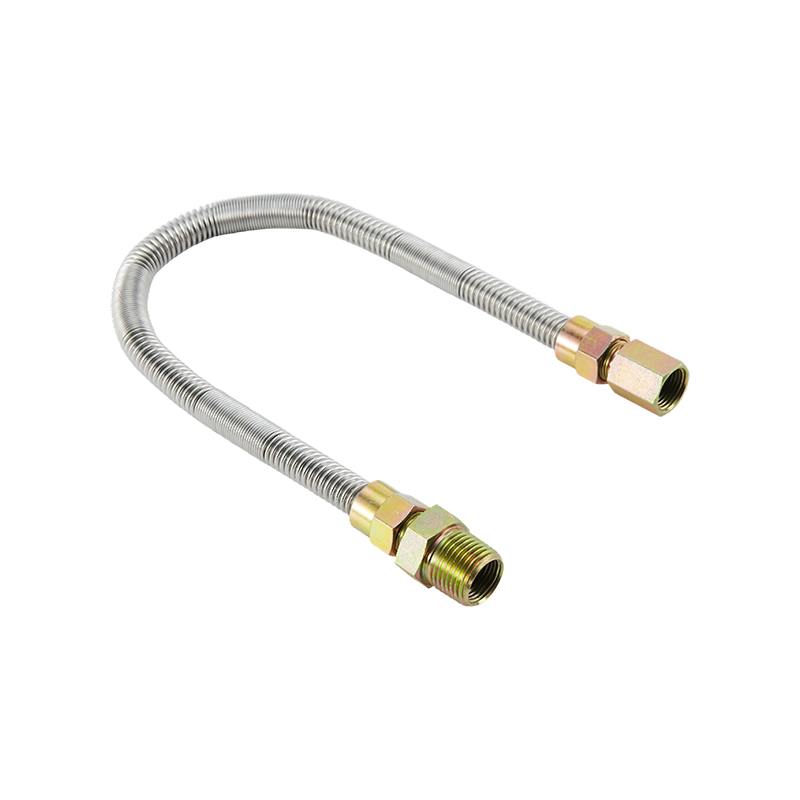
The DN25 stainless steel gas connector described in this article is designed for applications that require a durable, corrosion-resistant, and flexible connection solution. Manufactured from 304 stainless steel with a nominal wall thickness of 0.25 mm, the connector combines a corrugated metal tube structure with carefully selected end fittings and a hard-sealing connection design. It is available in multiple lengths, nut materials, and external finishes to support different installation requirements.
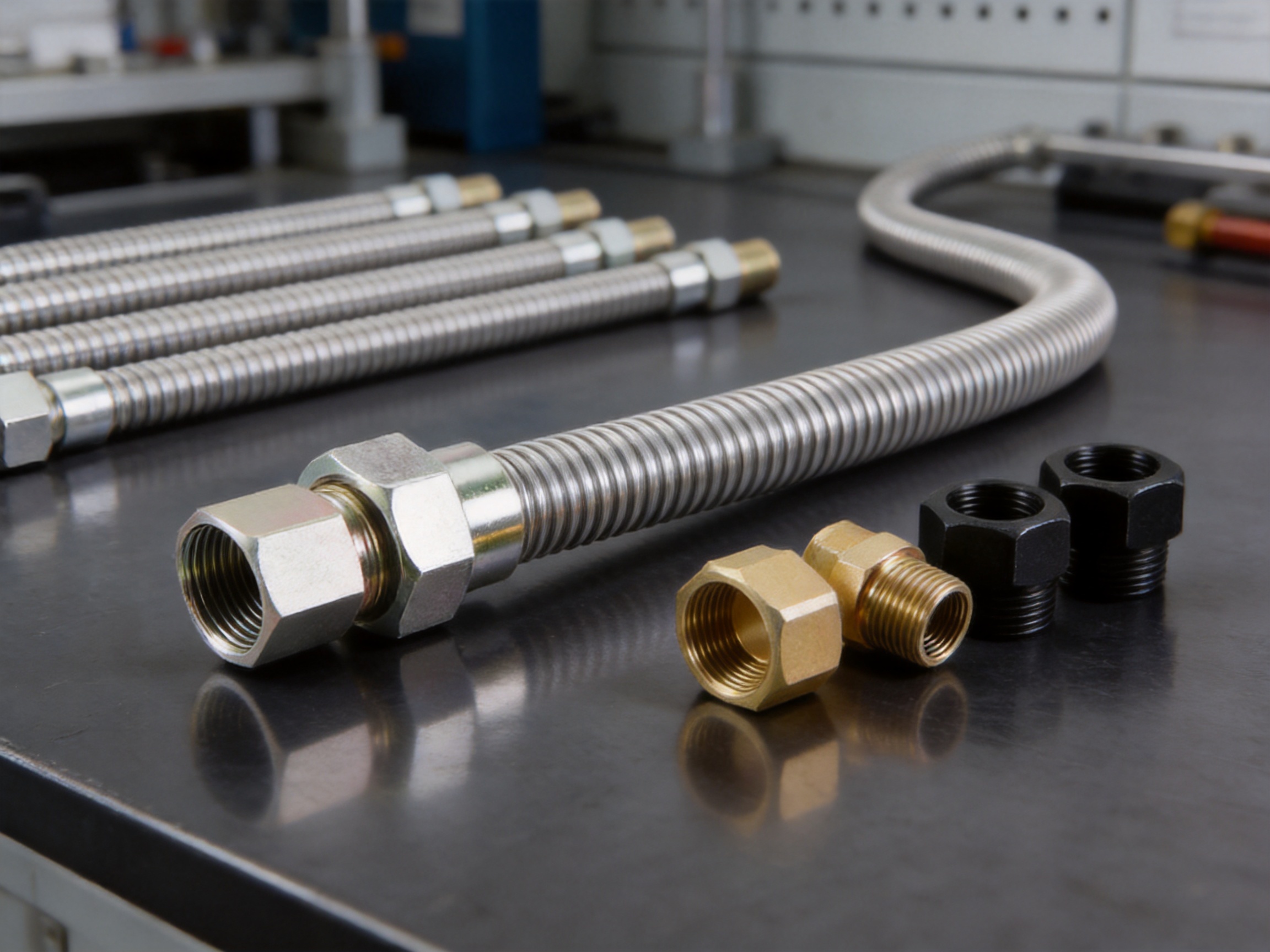
Beyond the product itself, its performance is supported by a complete manufacturing system that includes material control, precision forming, laser welding, automated inspection, pressure-related testing, and packaging management. These processes are important because a gas connector must do more than appear strong. It must maintain dimensional consistency, resist corrosion, tolerate normal movement, and provide a dependable connection when installed in accordance with applicable codes and professional requirements.
1. The Role of a Stainless Steel Gas Connector
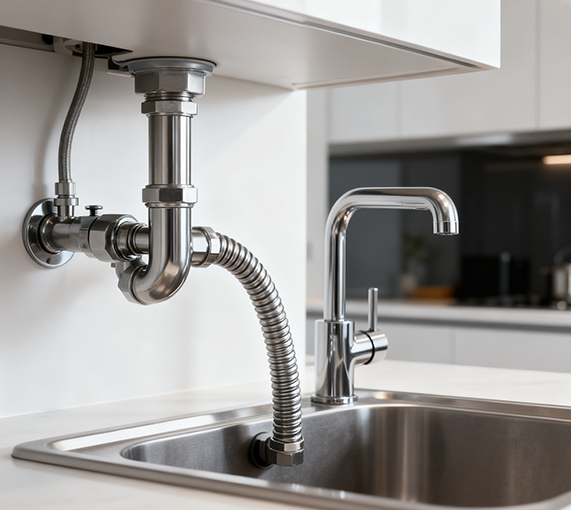
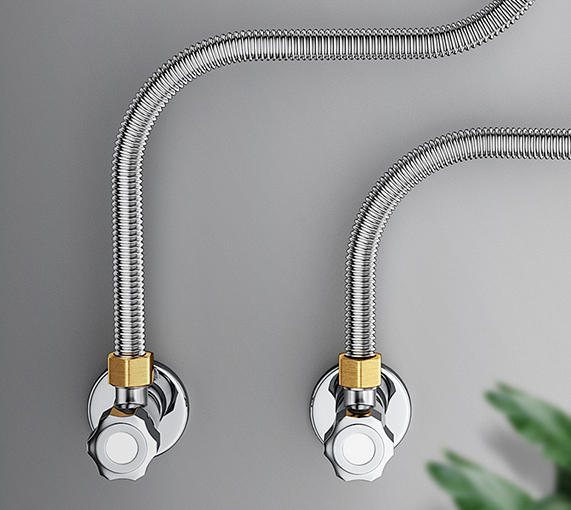
A gas connector is a flexible section of piping installed between a rigid gas supply line and a gas appliance or other gas-using equipment. Unlike ordinary rigid pipe, a flexible connector can accommodate limited changes in position and simplify alignment during installation. This feature is especially useful when the final position of an appliance cannot be matched perfectly with the fixed location of the gas outlet.
In a typical installation, the connector must perform several functions at the same time. It must carry gas safely, maintain a reliable seal at both ends, resist mechanical damage, tolerate the surrounding environment, and remain stable throughout its service life. The connector may also be exposed to temperature changes, vibration from equipment, cleaning chemicals, humidity, and accidental contact during maintenance.
Stainless steel corrugated construction is well suited to this type of application. The corrugations provide flexibility while retaining the basic strength of a metal tube. Compared with many nonmetallic alternatives, stainless steel offers a higher level of resistance to rust and a more robust structure against ordinary environmental exposure. When the material, forming process, fittings, and sealing system are properly controlled, a stainless steel gas connector can provide a dependable connection for a wide range of gas systems.
2. Product Overview
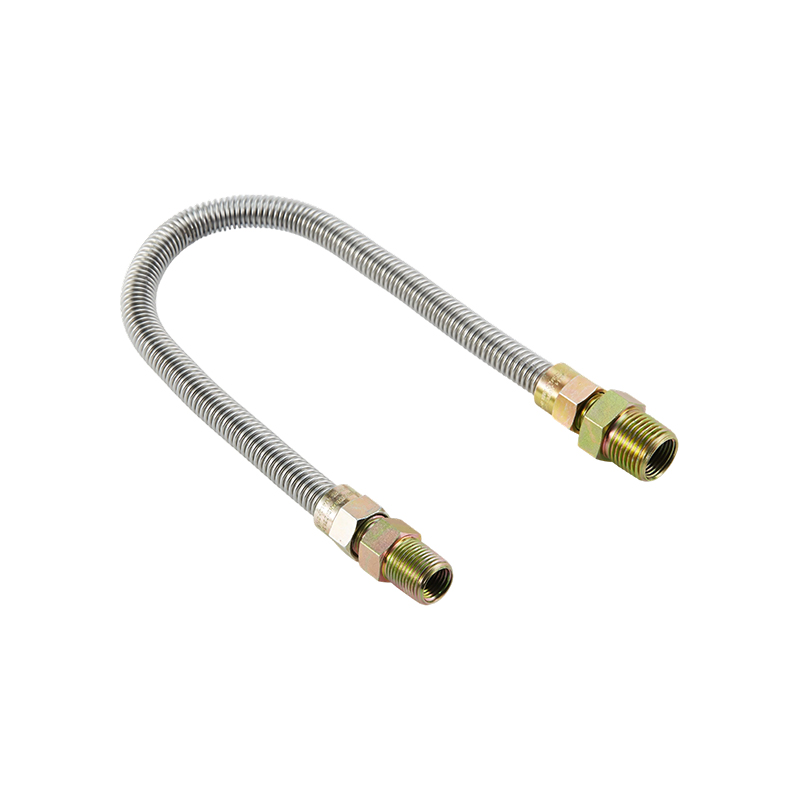
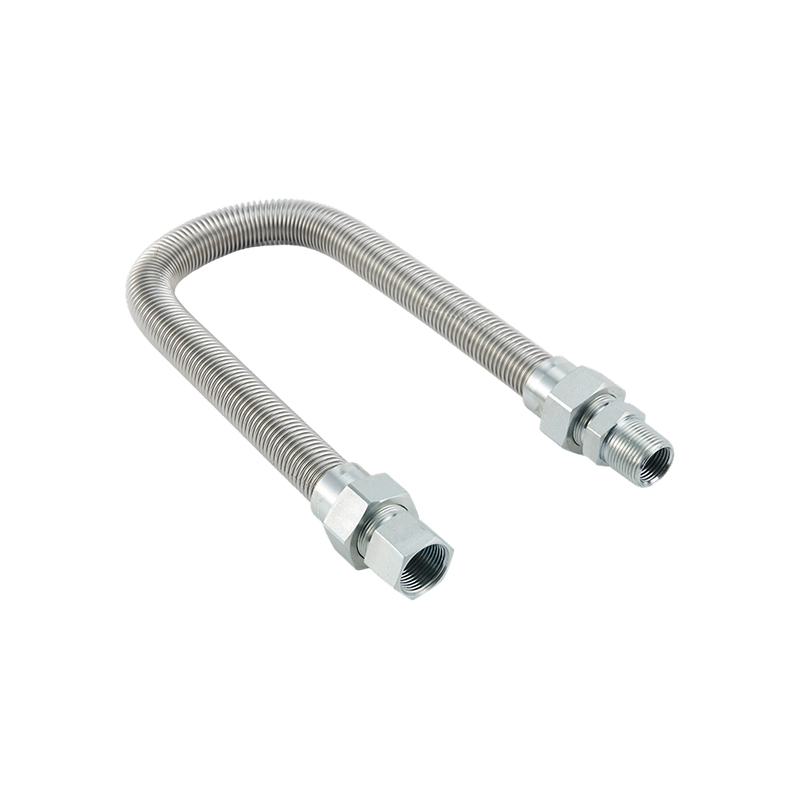
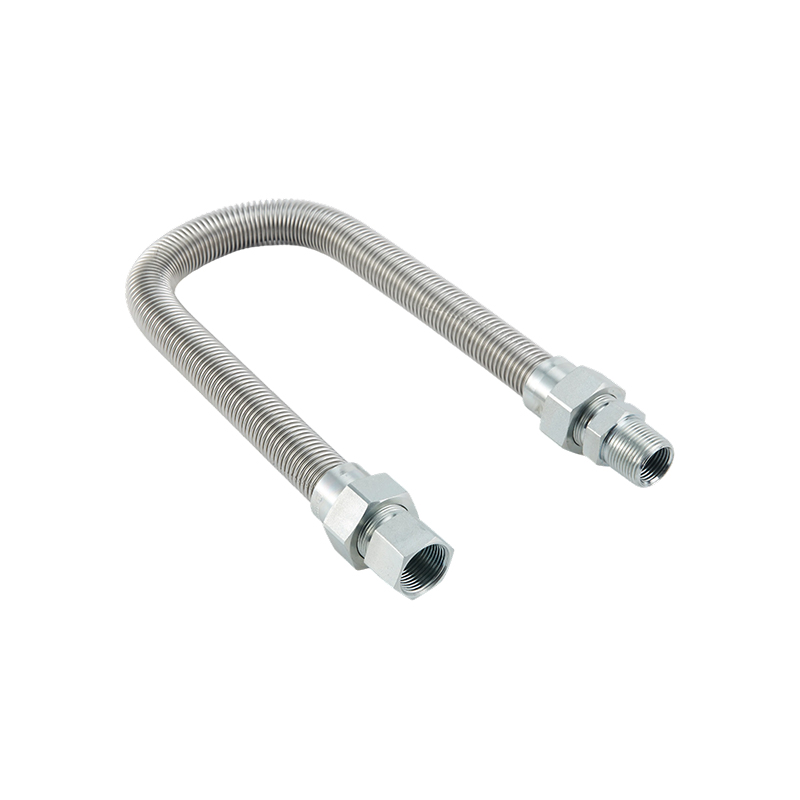
The DN25 model is a stainless steel gas connector intended for systems requiring a nominal 25 mm class connection. Its tube is made from 304 stainless steel and has a stated wall thickness of 0.25 mm. The product can be supplied in lengths of 12, 18, 24, 36, 48, 60, and 72 inches, allowing users to select a size that supports a clean installation without unnecessary bends or excessive unused length.
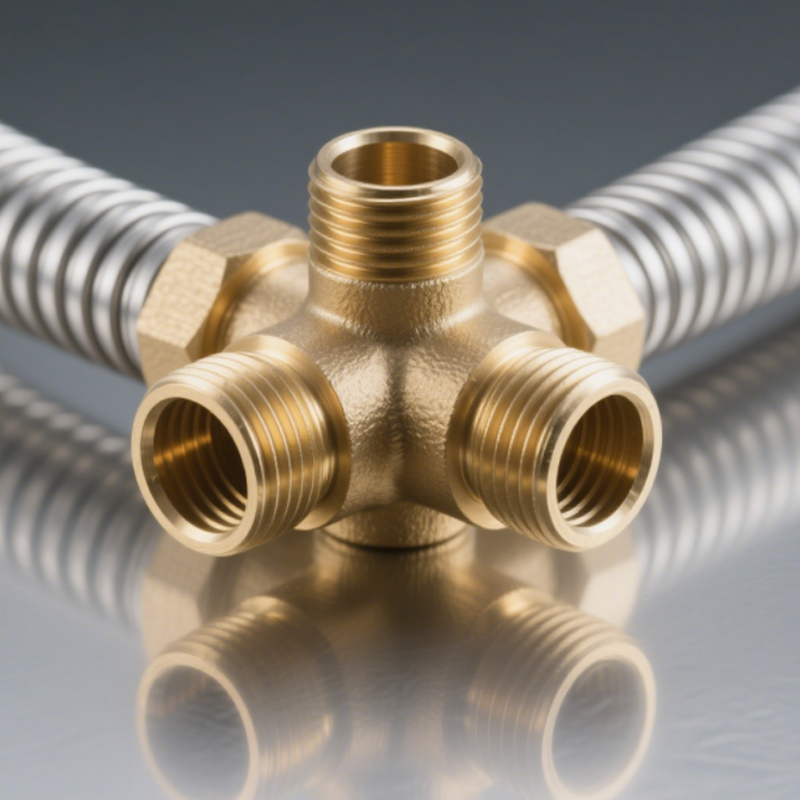
The connector is available with brass or carbon steel nuts. This choice allows the product configuration to be adapted to different cost, strength, finish, and project requirements. Brass fittings are commonly selected for their corrosion resistance and appearance, while carbon steel fittings may be chosen when a robust and economical fitting solution is required, particularly when an appropriate protective finish is applied.
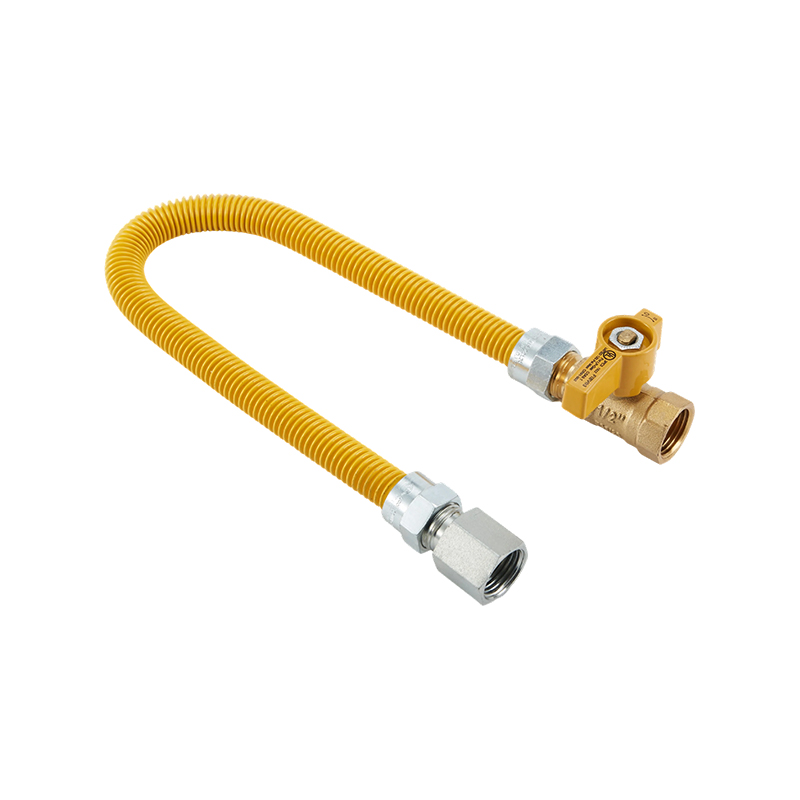
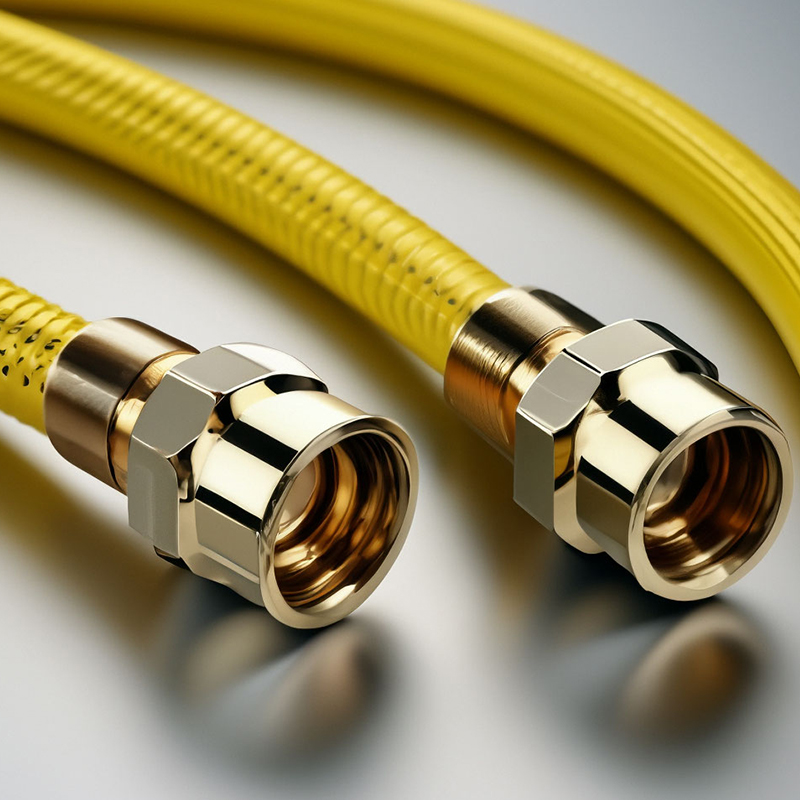
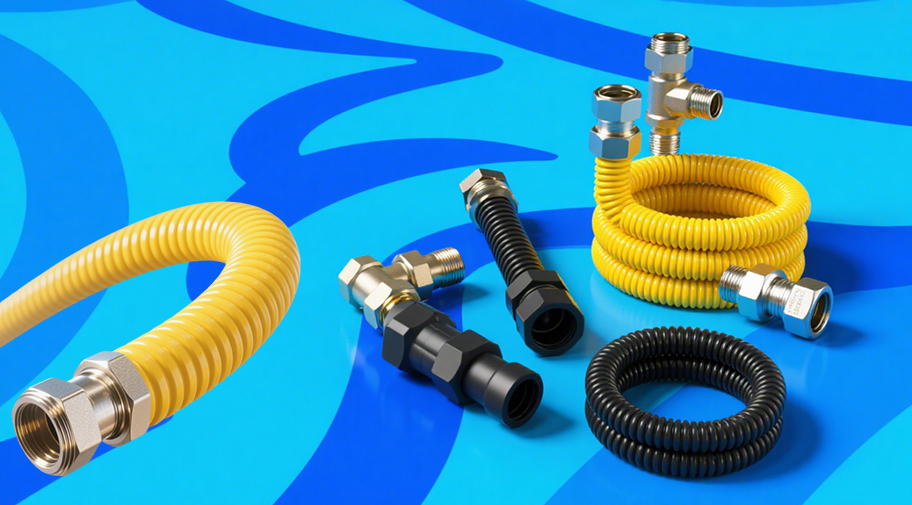
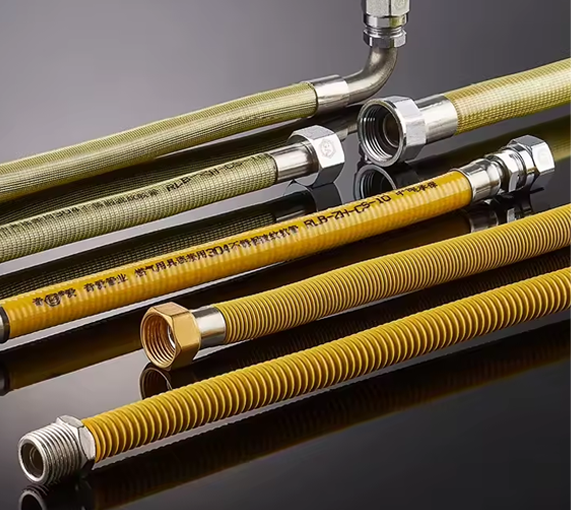
Several external finish options are available. The natural stainless steel appearance presents a clean metallic surface and emphasizes the material’s industrial character. Yellow and black versions use colored zinc fittings or colored components to provide visual differentiation and a distinctive appearance. Color selection can assist with product identification, project coordination, or aesthetic matching, but the suitability of the finish must always be evaluated according to the actual installation environment.
| Product Attribute | Specification | Practical Significance |
|---|---|---|
| Product type | DN25 stainless steel gas connector | Provides a flexible connection for gas piping and equipment |
| Tube material | 304 stainless steel | Offers corrosion resistance, durability, and a stable metallic structure |
| Wall thickness | 0.25 mm | Balances flexibility with the structural requirements of the connector |
| Available lengths | 12, 18, 24, 36, 48, 60, and 72 inches | Supports different equipment layouts and installation distances |
| Nut material | Brass or carbon steel | Provides configuration flexibility for different project requirements |
| Finish options | Natural stainless steel, yellow, or black | Supports appearance preferences and visual product identification |
| Seal form | Hard sealing | Creates a firm metal-to-metal or engineered fitting connection when correctly installed |
| Cover material | None | Uses the stainless steel tube and fitting assembly without an additional cover |
3. Why 304 Stainless Steel Is Important
Material selection is one of the most important factors in the performance of a flexible gas connector. The tube is exposed to the surrounding atmosphere and may encounter moisture, condensation, household cleaning products, construction dust, or industrial contaminants. A material with suitable corrosion resistance helps preserve the tube’s structural integrity and appearance over time.
304 stainless steel is an austenitic stainless steel widely used in plumbing, gas, food-processing, building services, and industrial equipment. Its principal advantages include good corrosion resistance, useful mechanical strength, formability, and weldability. These characteristics make it appropriate for forming into a corrugated tube while maintaining a relatively thin and flexible wall.
Another advantage of 304 stainless steel is its balance between performance and manufacturing practicality. Some higher-alloy stainless steels may offer improved resistance in particularly aggressive environments, but they can also increase material cost and affect forming or welding requirements. For many ordinary residential, commercial, and general industrial environments, 304 stainless steel provides an effective combination of durability, manufacturability, and cost control.
The material alone does not guarantee product performance. Stainless steel must be specified correctly, stored properly, formed without damaging the surface, and welded with appropriate process control. Surface contamination, poor weld quality, excessive forming stress, or uncontrolled dimensional variation can reduce the benefits of a good raw material. This is why a reliable manufacturing system is as important as the material grade itself.
4. Corrugated Construction and Flexibility
The corrugated structure is central to the connector’s design. Instead of using a smooth straight tube, the tube is shaped into a series of controlled circular or helical corrugations. These formations allow the tube to flex over a limited range while reducing the amount of stress concentrated at any single point.
Flexibility helps installers align the connector with the appliance connection and fixed gas outlet. It can also reduce the need for complicated rigid pipe offsets. A properly selected connector length may improve installation efficiency, minimize the number of joints, and create a neater finished arrangement.
Flexibility must not be confused with unlimited bendability. A corrugated metal connector is engineered for controlled movement and positioning, not for repeated sharp bending or unrestricted manipulation. Excessive bending, twisting, crushing, or stretching can damage the corrugations and affect the connection. Professional installers should follow the relevant installation instructions, product requirements, and local gas regulations.
The manufacturing process must maintain consistent corrugation depth, pitch, diameter, and overall length. If the corrugations vary significantly, the connector may not distribute bending stress evenly. Accurate forming helps the tube behave predictably and supports consistent installation performance from one production batch to another.
5. Hard-Sealing Connection Design
The product uses a hard-sealing connection form. In this type of design, the sealing function is achieved through accurately manufactured metallic or fitting surfaces that create a firm connection when properly assembled. The reliability of the seal depends on the dimensions, surface condition, fitting design, torque, alignment, and installation method.
A hard-sealing arrangement can be advantageous in gas applications because it does not depend on a soft gasket that may deteriorate under certain temperature, chemical, or aging conditions. However, this does not mean that installation quality is unimportant. A hard seal must be correctly aligned and tightened using the prescribed procedure. Cross-threading, contamination, over-tightening, under-tightening, or the use of incompatible components can compromise the joint.
The tube-to-fitting transition is also critical. This area must withstand the mechanical loads introduced during handling and installation while maintaining gas tightness. Manufacturing controls should therefore address fitting insertion, tube attachment, welding or joining, dimensional accuracy, and final inspection.
For safety reasons, gas connectors should be installed and inspected by qualified personnel. The connector should be used only in an application for which its size, pressure rating, material, certification status, and connection type are suitable. Product information should be reviewed together with the requirements of the gas authority, building code, appliance manufacturer, and project specification.
6. Available Lengths and Installation Planning
The range of available lengths is one of the product’s practical strengths. The connector can be supplied in 12, 18, 24, 36, 48, 60, and 72 inch versions. This range helps users select a product that matches the distance between the gas supply point and the appliance without forcing the connector into an unsuitable position.
A shorter connector may be appropriate where the outlet and equipment are close together and a compact installation is preferred. Longer options may be useful when the appliance is positioned farther from the fixed outlet or when limited movement is needed for access and maintenance. The correct length should be selected carefully. A connector should not be stretched to reach an outlet, and excess length should not be arranged in a tight coil or unsupported loop.
Good installation planning considers the connector’s natural routing, minimum bend requirements, access to the shut-off valve, protection from impact, and the possibility of appliance movement. The connector should not be installed where it can be trapped behind equipment, exposed to sharp edges, pinched by moving components, or subjected to excessive heat.
Offering multiple standard lengths can also improve purchasing efficiency. Distributors and contractors can select a suitable size from a consistent product family rather than requesting a special length for every project. Standardized options simplify inventory management and make product selection easier for residential, commercial, and industrial users.
7. Finish and Fitting Options
The DN25 connector is offered in natural stainless steel, yellow, and black finishes. The natural stainless steel version provides a clean, technical appearance and may be preferred where the metallic surface is visible or where a neutral finish is required. Yellow and black options provide visual distinction and can coordinate with equipment, project standards, or distributor product ranges.
Color should not be treated as a substitute for technical identification. The product’s size, certification, pressure suitability, material, and intended service must be confirmed independently of its appearance. Colored zinc fittings may offer a useful finish, but their suitability depends on the environment and the protection provided by the coating.
Nut selection is another configurable feature. Brass nuts provide a familiar combination of corrosion resistance, machinability, and appearance. Carbon steel nuts can provide strength and cost efficiency, particularly when the finish and environmental exposure are appropriate. The nut material should be selected as part of a complete fitting system rather than as an isolated component.
Compatibility between the nut, fitting, tube, mating connection, and sealing surfaces is essential. A connector should not be modified by replacing fittings or combining components from unrelated systems unless the resulting assembly has been properly engineered and approved.
8. Advantages Compared with Ordinary Flexible Connectors
The product offers several advantages over basic flexible connection products that may use less corrosion-resistant materials, inconsistent fittings, or limited size options. The use of 304 stainless steel provides a strong foundation for long-term performance in ordinary indoor and protected outdoor environments.
One important advantage is corrosion resistance. Rust can weaken a connector, affect the appearance of an installation, and make inspection more difficult. Stainless steel does not eliminate every possible form of corrosion, but it provides a significant advantage over unprotected carbon steel in many service environments.
A second advantage is controlled flexibility. The corrugated tube can accommodate limited movement and alignment differences without requiring numerous rigid pipe fittings. This can reduce installation complexity and help create a more organized piping layout.
A third advantage is configuration flexibility. The availability of seven standard lengths, two nut material choices, and several finish options makes it easier to adapt the connector to different projects. Competing products may offer only one or two standard lengths or a single fitting material, forcing installers to make compromises or hold a larger inventory of unrelated products.
A fourth advantage is the focus on manufacturing consistency. A connector is not evaluated only by the specification printed on a product label. Its practical value depends on repeatable forming, stable fitting dimensions, reliable joining, effective inspection, and careful packaging. A product supported by a full-process quality system can provide more predictable results than one made with uncontrolled or highly variable processes.
9. Comparison with Alternative Materials
9.1 Comparison with Carbon Steel
Carbon steel can provide useful strength and is widely used in rigid piping and mechanical components. However, unprotected carbon steel is more vulnerable to corrosion than 304 stainless steel. Protective coatings may reduce this risk, but coating damage, edge exposure, and long-term environmental conditions must be considered.
For a flexible connector that may be handled repeatedly during installation and maintenance, stainless steel offers an attractive surface durability advantage. The corrugated tube can flex without relying solely on an external coating to protect the base metal. Even so, stainless steel must still be protected from contamination and unsuitable chemical exposure.
9.2 Comparison with Copper
Copper tubing is valued for its workability and corrosion resistance in many plumbing applications. However, it is not identical to a corrugated stainless steel gas connector. Copper connections may require different joining techniques, and copper tubing may not provide the same combination of compact corrugated flexibility and standardized connector fittings.
The stainless steel connector is designed as a ready-to-install flexible assembly with selected end components. This can simplify the connection between a rigid gas line and an appliance when compared with fabricating a custom copper offset.
9.3 Comparison with Nonmetallic Flexible Products
Nonmetallic flexible connectors may be lightweight and easy to handle, but their performance can be affected by temperature, aging, ultraviolet exposure, chemical contact, or mechanical damage depending on the material. Stainless steel provides a metallic barrier and a robust structure that may be preferred in locations where mechanical durability is important.
Each material has a proper field of use. The correct choice should be based on gas type, pressure, temperature, installation environment, code requirements, certification, and appliance instructions. The advantage of the stainless steel connector is not that it replaces every other material, but that it provides a strong and versatile option for applications suited to its design.
10. Manufacturing Capabilities
The manufacturer specializes in the research, design, production, and sale of stainless steel bellows and flexible connection products. Its product range includes gas connectors, plumbing pipes and water liners, metal hoses, and compensators. This specialization is relevant because the engineering of bellows and corrugated products requires knowledge of forming behavior, welding, fatigue, dimensional control, and pressure-related performance.
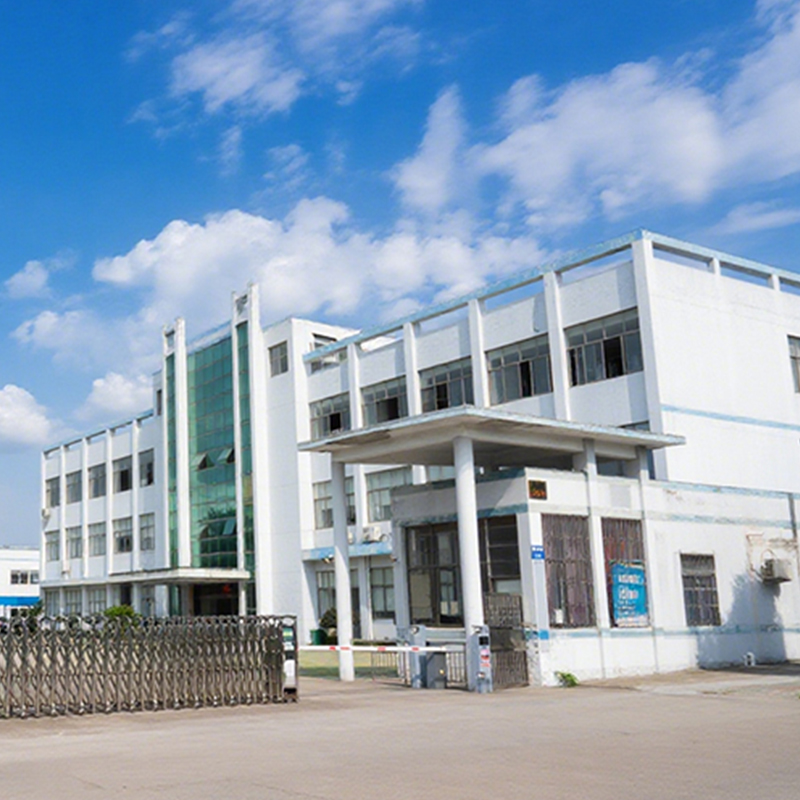
The company operates standardized workshops covering approximately 18,000 square meters within a larger site of about 35 mu. This scale supports organized production flow, dedicated equipment, raw material management, inspection areas, and finished-product storage. A structured production environment can reduce the risk of process confusion and help separate different stages of manufacturing.
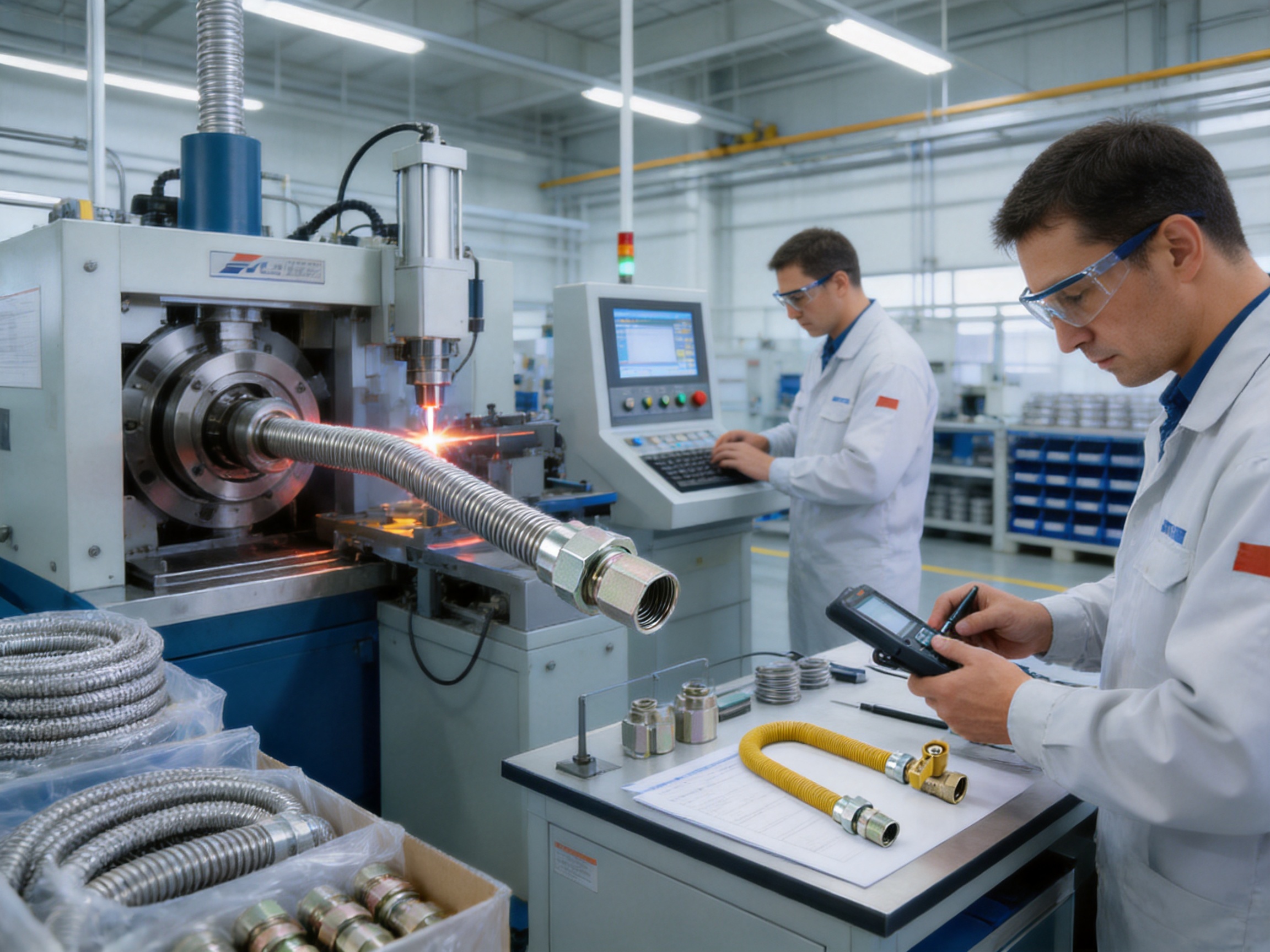
Advanced equipment includes laser welding machines, CNC forming machines, COSMO equipment, eddy current flaw detectors, and automatic packaging systems. Each type of equipment contributes to a different part of the product’s performance and consistency.
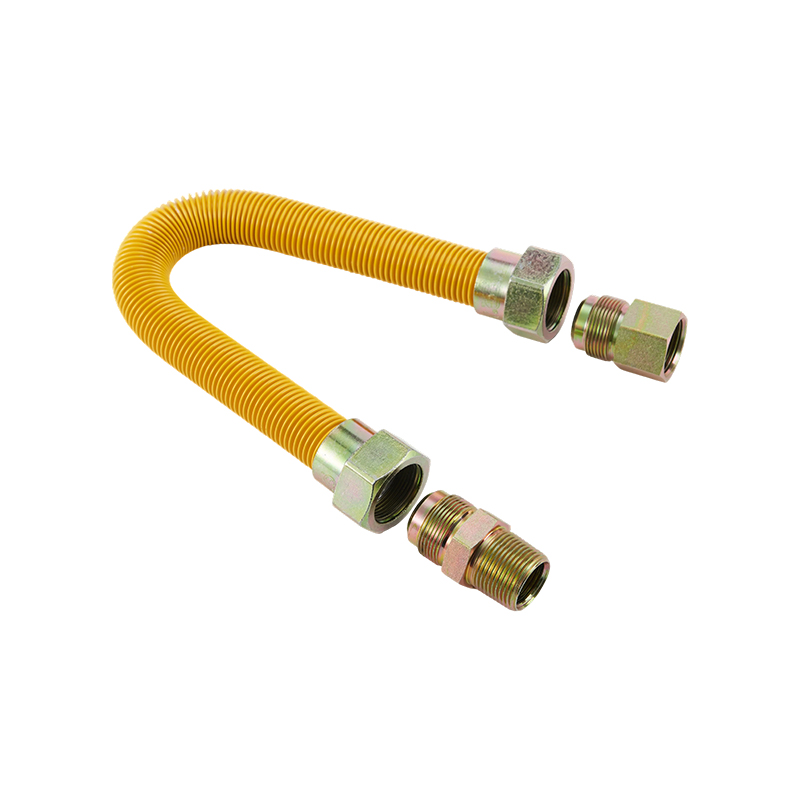
DN25 Stainless Steel Gas Connector
11. Laser Welding and Joint Quality
Laser welding is used in many precision metal applications because it can produce a concentrated heat input and a controlled weld zone. For thin stainless steel components, controlled welding is particularly important. Excessive heat may cause distortion, discoloration, penetration variation, or changes in the surrounding material. Insufficient heat may result in incomplete joining or weak areas.
A well-managed laser welding process can support narrow, consistent welds and accurate component alignment. It may also reduce the amount of post-weld correction required. However, the equipment itself is only one part of the solution. Welding parameters, material preparation, fixture accuracy, operator training, equipment maintenance, and inspection procedures must work together.
Before welding, stainless steel surfaces should be prepared to reduce contamination and support stable fusion. During welding, the process should be monitored according to established production parameters. After welding, the joint may be visually inspected and subjected to appropriate dimensional, leak, strength, or nondestructive testing depending on the product design and quality plan.
For a gas connector, the tube-to-fitting joint deserves special attention. A visually attractive weld is not necessarily a sufficient weld. The manufacturing system should verify that the joint meets the required structural and sealing criteria. Traceable inspection records can further support quality assurance and customer confidence.
12. CNC Forming and Dimensional Consistency
CNC forming machines help produce repeatable corrugation profiles and component dimensions. Computer-controlled forming can improve consistency in tube diameter, pitch, corrugation depth, end geometry, and overall length. This consistency is important because the connector must fit its end components and maintain predictable flexibility.
Forming thin stainless steel requires a careful balance. Excessive deformation may thin the wall, introduce local stress, or create surface marks. Insufficient deformation may reduce flexibility or produce a profile that does not match the intended design. Tool condition, forming speed, material properties, lubrication where applicable, and machine calibration can all affect the final product.
Computer-controlled production also makes it easier to switch between standard lengths and configurations. The seven available length options can be managed through standardized process settings and inspection criteria. This supports product variety without sacrificing production discipline.
Dimensional control should continue after forming. Finished tube length, end position, fitting orientation, and nut movement should be checked before final assembly. A connector that is dimensionally accurate is easier to install and less likely to require forced alignment.
13. Eddy Current Inspection and Non-Destructive Quality Control
Eddy current flaw detection is a non-destructive testing method used to identify certain surface and near-surface discontinuities in conductive materials such as stainless steel. It can assist in detecting cracks, discontinuities, material variations, or other conditions that may not be visible during a basic visual inspection.
For thin-wall corrugated tubing, non-destructive inspection can provide an additional level of process control. The method can be integrated into production to screen material or formed sections without cutting or damaging every product. This is valuable because a gas connector must retain pressure integrity while also tolerating controlled flexing.
Inspection technology does not replace good design or skilled manufacturing. Instead, it provides information that can help identify process variation and prevent questionable products from moving to the next stage. When combined with material certification, weld inspection, dimensional measurement, leak testing, and final visual examination, it forms part of a comprehensive quality assurance system.
14. Automatic Packaging and Product Protection
Packaging is sometimes treated as a minor production step, but it has a direct effect on the condition of the connector when it reaches the customer. A flexible stainless steel tube can be damaged by crushing, sharp contact, uncontrolled bending, or contamination during transport. Automatic packaging systems help standardize the way products are protected and prepared for shipment.
Appropriate packaging should prevent unnecessary deformation of the corrugations and protect the fittings from impact. It should also keep the sealing surfaces clean. Clear labeling can identify the product size, length, material, finish, batch information, and any relevant handling instructions.
Consistent packaging improves warehouse management and reduces the possibility of shipping errors. It also supports traceability, especially when multiple lengths, nut materials, and colors are supplied within the same product family.
15. Quality Management and Certifications
The manufacturer has obtained ISO9001, ISO14001, and ISO45001 management system certifications. These standards address quality management, environmental management, and occupational health and safety management respectively. Their value is greatest when the documented systems are actively applied to daily operations rather than treated only as formal credentials.
ISO9001 supports a process-oriented approach to quality. It encourages organizations to define responsibilities, control documents, manage suppliers, monitor production, handle nonconforming products, and pursue continual improvement. For a gas connector, these controls can influence raw material verification, welding procedures, forming parameters, inspection records, and customer feedback.
ISO14001 reflects attention to environmental management. Stainless steel manufacturing involves material use, energy consumption, cleaning processes, packaging, and waste management. A systematic environmental approach can help reduce waste and improve resource efficiency while supporting responsible production.
ISO45001 addresses occupational health and safety. Metal forming, welding, machining, inspection, and packaging involve different workplace risks. A structured safety management system helps identify hazards, establish controls, train employees, and improve working conditions.
The product category identifies the stainless steel gas connector as CSA certified. Certification status, scope, model coverage, and applicable standard should always be verified through current product documentation before purchase or installation. Certification is product- and configuration-specific; it should not automatically be assumed to apply to every length, fitting material, finish, or application.
16. Full-Process Quality Control
The company describes a quality management system covering raw material selection, structural design, manufacturing, performance testing, and after-sales support. This full-process approach is particularly appropriate for flexible gas connectors because performance is influenced by many connected stages.
Raw material control begins with confirming the stainless steel grade, thickness, surface condition, and relevant documentation. Material should be stored in a way that avoids contamination, scratching, and mix-ups between grades or thicknesses. Correct identification at this stage reduces the possibility of using unsuitable material in production.
Structural design determines the corrugation profile, fitting configuration, length range, connection geometry, and expected service conditions. A design that is easy to manufacture and inspect is more likely to achieve consistent quality in volume production.
Manufacturing control includes forming, welding, fitting assembly, finishing, and labeling. Each stage should have defined process requirements and acceptance criteria. Performance testing may include leak testing, dimensional checks, pressure-related evaluation, visual inspection, material verification, and other tests required by the product standard or customer specification.
After-sales support is also part of product quality. Customers may need assistance with product selection, documentation, installation interpretation, replacement identification, or project-specific configuration. Technical communication helps ensure that the connector is used in a manner consistent with its design.
17. Application Areas
17.1 Residential Gas Systems
Residential kitchens, heating equipment, water heaters, and other gas appliances often require a flexible connection between the fixed gas supply and the appliance inlet. The available short and medium lengths support common household layouts, while the stainless steel structure provides a durable alternative for suitable installations.
In residential applications, the connector may be located in a cabinet, behind an appliance, or in another restricted service area. The installer should ensure that the connector remains accessible for inspection and is not compressed or exposed to excessive heat. The appliance manufacturer’s instructions and local code requirements must take priority over general product descriptions.
17.2 Commercial Kitchens
Commercial kitchens may contain multiple appliances, frequent maintenance activity, and higher levels of heat, moisture, and cleaning chemical exposure. A corrosion-resistant stainless steel connector can be useful in this environment when its certification and service limits are suitable.
Commercial installations require careful routing because equipment may be moved for cleaning or maintenance. The connector should not be used as a substitute for proper equipment supports or incorrectly positioned shut-off valves. Professional design and installation are essential, especially where many appliances are connected to a common gas system.
17.3 Industrial and HVAC Equipment
Industrial heating units, burners, boilers, and HVAC equipment may generate vibration or require limited movement at the connection point. A flexible metal connector can help isolate small alignment differences and reduce the need for rigid pipe modifications.
Industrial applications often involve more demanding conditions than residential service. Temperature, pressure, gas composition, vibration frequency, movement amplitude, and chemical exposure should be reviewed before selecting the product. The connector should be used only within its approved performance range.
17.4 Building Services and Equipment Connections
Building services projects often benefit from standardized product families. A connector available in multiple lengths and finishes can be specified across apartments, hotels, restaurants, offices, and light industrial buildings. Consistent documentation and labeling simplify procurement, installation, inspection, and future replacement.
18. Installation Considerations
Installation should be performed by qualified personnel familiar with gas systems and applicable safety procedures. Before installation, the user should verify the connector size, length, fitting type, certification, gas compatibility, pressure range, temperature range, and physical condition.
The connector should be routed without sharp kinks, twisting, crushing, or tension. Its natural flexible shape should be respected. It should not be used to support an appliance or compensate for poor alignment by applying excessive force to the fittings.
Connection surfaces should be clean and compatible. Threads should be inspected for damage, and the connector should be tightened according to the applicable instructions. Tools should be used in a way that prevents damage to the corrugated tube and finished surfaces. After installation, the system should be tested for leaks using an approved procedure before being placed into service.
Inspection should also include the surrounding installation. The connector should be protected from sharp edges, moving parts, severe heat, corrosive substances, and accidental impact. If the connector becomes visibly damaged, deformed, heavily corroded, or otherwise questionable, it should be evaluated by qualified personnel and replaced when necessary.
19. Maintenance and Service Life
A stainless steel gas connector is designed to provide durable service, but no flexible component should be treated as maintenance-free under every condition. Periodic visual inspection can help identify deformation, corrosion, fitting damage, abrasion, or changes caused by appliance movement.
Inspection frequency depends on the installation environment. Commercial kitchens, industrial facilities, and locations subject to frequent equipment movement may require more frequent checks than stable residential installations. Maintenance personnel should follow site procedures and applicable regulations.
The connector should not be repaired by welding, cutting, extending, or replacing individual sections in the field unless an approved repair procedure specifically permits it. Flexible gas connectors are engineered assemblies. Unapproved modification can alter the pressure boundary, sealing surfaces, flexibility, and certification status.
When a connector is replaced, the replacement should match the required size, length, connection type, and application. Reusing a connector that has been removed may not be appropriate, particularly if it has been bent, exposed to contamination, or subjected to unknown mechanical stress.
20. Purchasing and Specification Guidance
Purchasers should provide complete technical information when requesting this product. Important details include nominal size, required length, nut material, finish, gas type, operating pressure, connection configuration, certification requirements, delivery quantity, and packaging expectations.
For projects with multiple installation conditions, it may be useful to create a product schedule listing each connector location and required configuration. This reduces the risk of ordering an incorrect length or fitting option. The product’s natural stainless steel, yellow, and black finishes can also be identified in the schedule when visual differentiation is useful.
Buyers should request current technical documents, inspection information, and certification details when required by the project. They should also confirm whether the selected configuration is included within the applicable certification scope. This is particularly important when changing nut material, fitting finish, length, or connection type.
Reliable supply is another important purchasing factor. A manufacturer with standardized production equipment, automated packaging, multiple inspection stages, and a documented management system is better positioned to provide repeatable products for ongoing projects. Consistent supply can reduce field substitutions and simplify future maintenance.
21. Sustainability and Responsible Manufacturing
Stainless steel is a durable material that can support long service life when properly selected and installed. A long-lasting connector may reduce the frequency of replacement, material consumption, transportation, and installation labor over the life of a building or equipment system.
Responsible manufacturing also includes efficient use of raw materials, control of welding and forming waste, proper handling of production residues, and reduction of packaging waste. The manufacturer’s ISO14001 environmental management certification indicates a structured approach to environmental responsibilities.
Energy-efficient equipment, automated production, process monitoring, and improved yield can further reduce the environmental impact per finished product. These improvements must be balanced with the need to maintain safety, product consistency, and the required performance of the connector.
22. Engineering Value of the Product
The value of the DN25 stainless steel gas connector comes from the interaction of material, geometry, fittings, manufacturing, inspection, and application flexibility. A 304 stainless steel tube provides a corrosion-resistant base. Corrugation provides controlled flexibility. Multiple lengths support installation planning. Brass or carbon steel nuts provide configuration choices. Hard sealing supports a firm connection when correctly assembled.
These features become more meaningful when backed by precision equipment and process control. Laser welding, CNC forming, eddy current inspection, automated packaging, and full-process quality management help convert a design specification into a repeatable commercial product.
Compared with lower-cost products made with inconsistent materials or uncontrolled processes, the connector can offer greater confidence in dimensional accuracy, appearance, supply consistency, and manufacturing traceability. Its competitive advantage is therefore not limited to stainless steel as a material. It is the combination of product design and manufacturing discipline.
23. Frequently Asked Questions
What is the main application of the DN25 stainless steel gas connector?
It is designed to provide a flexible connection between a fixed gas supply line and suitable gas appliances or equipment in residential, commercial, and industrial systems. The actual application must comply with the product’s certification, technical documentation, and local regulations.
What material is used for the tube?
The tube is made from 304 stainless steel and has a stated wall thickness of 0.25 mm. This material offers a useful balance of corrosion resistance, strength, formability, and weldability.
Which lengths are available?
Available lengths are 12, 18, 24, 36, 48, 60, and 72 inches. The correct length should be selected according to the actual distance, routing, movement requirements, and installation instructions.
Can the connector be bent freely?
No. The corrugated tube provides controlled flexibility, but it should not be sharply kinked, twisted, crushed, stretched, or repeatedly manipulated beyond its design limits. Qualified installers should follow the manufacturer’s instructions and applicable codes.
What nut materials are available?
The product can be supplied with brass or carbon steel nuts. The appropriate choice depends on the project specification, environmental conditions, connection requirements, and applicable certification scope.
What finishes are available?
The connector is available in natural stainless steel, yellow, and black versions. Colored versions contain colored zinc fittings or components. Finish selection should not replace verification of the product’s technical suitability.
What does hard sealing mean?
Hard sealing refers to a connection design that relies on accurately matched rigid sealing surfaces rather than a conventional soft gasket as the primary sealing element. Correct alignment, cleanliness, compatible components, and proper tightening are essential.
Is the product suitable for every gas system?
No product should be assumed to suit every gas system. Users must confirm gas type, operating pressure, temperature, connection configuration, certification, and local code requirements before selection and installation.
What manufacturing equipment supports the product?
The manufacturer uses equipment including laser welding machines, CNC forming machines, COSMO equipment, eddy current flaw detectors, and automatic packaging systems. These technologies support joining, forming, inspection, and product protection.
Does the company have management system certifications?
The company has obtained ISO9001, ISO14001, and ISO45001 management system certifications. The product category is also identified as a stainless steel gas connector with CSA certification. Current certification documents should be reviewed for the exact product configuration.
Can the connector be repaired in the field?
Unapproved cutting, welding, extension, fitting replacement, or other modification is not recommended. A damaged or questionable connector should be assessed by qualified personnel and replaced with a suitable approved product when necessary.
How should the connector be inspected?
Inspection should look for visible corrosion, crushing, kinks, abrasion, fitting damage, abnormal movement, and other signs of deterioration. Gas leakage testing should be performed using an approved professional procedure whenever required.
24. Conclusion
The DN25 stainless steel gas connector is a practical flexible connection solution built around 304 stainless steel, controlled corrugation, configurable fittings, multiple standard lengths, and a hard-sealing connection design. Its corrosion resistance, flexibility, and configuration range make it suitable for many residential, commercial, and industrial gas applications when correctly selected and installed.
Its advantages over less consistent alternatives are supported by more than material selection. Precision forming, laser welding, non-destructive inspection, automated packaging, and full-process quality management contribute to dimensional consistency, connection reliability, product protection, and supply confidence.
The manufacturer’s experience in stainless steel bellows and flexible connection products, together with its standardized workshops, professional research and development capabilities, advanced equipment, and ISO management systems, provides a strong foundation for production. For distributors, contractors, engineers, and equipment manufacturers, the product offers a versatile option for projects that require a durable and professionally manufactured stainless steel gas connector.
References
1. Stainless Steel Material Selection Principles for Gas, Plumbing, and Industrial Flexible Connections.
2. General Engineering Guidance for Corrugated Metal Hoses, Bellows, and Flexible Tubing.
3. ISO 9001, Quality Management Systems: Requirements.
4. ISO 14001, Environmental Management Systems: Requirements with Guidance for Use.
5. ISO 45001, Occupational Health and Safety Management Systems: Requirements with Guidance for Use.
6. General Technical Principles for Non-Destructive Eddy Current Testing of Conductive Metallic Materials.
7. General Installation and Inspection Practices for Gas Appliance Connectors and Flexible Gas Piping.
8. Product specifications and manufacturing information supplied for the DN25 stainless steel gas connector.