




 English
 Español
 русский



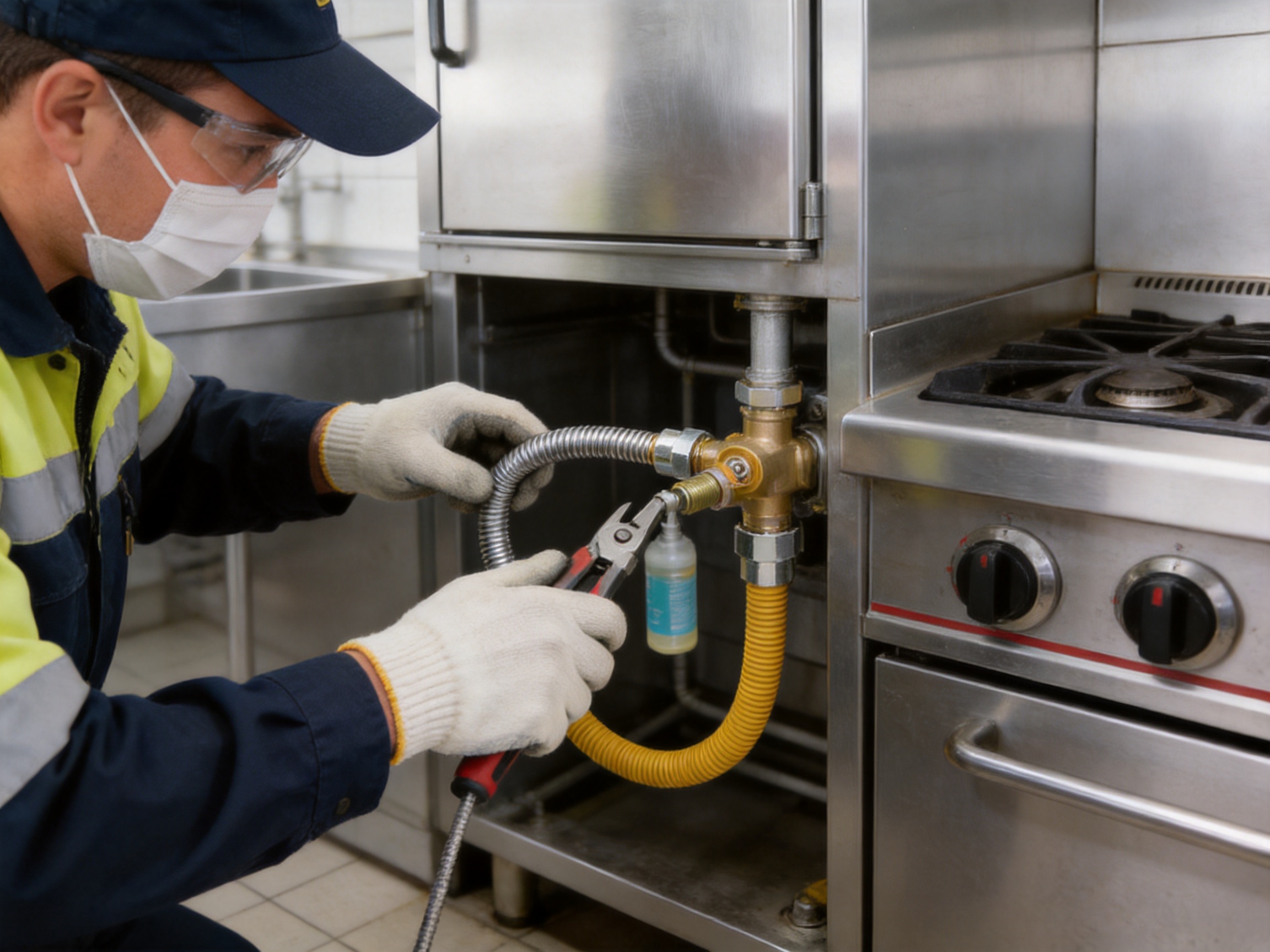
Reliable gas connection components are essential to the safety, efficiency, and service life of residential, commercial, and industrial gas systems. A connector may appear to be a small part of an installation, but its materials, forming quality, connection method, dimensional accuracy, and testing standards directly influence the performance of the complete system. The DN10 Stainless Steel Gas Connector is designed to provide a dependable flexible connection for gas appliances, distribution systems, and equipment installations where controlled movement, convenient routing, and corrosion resistance are required.
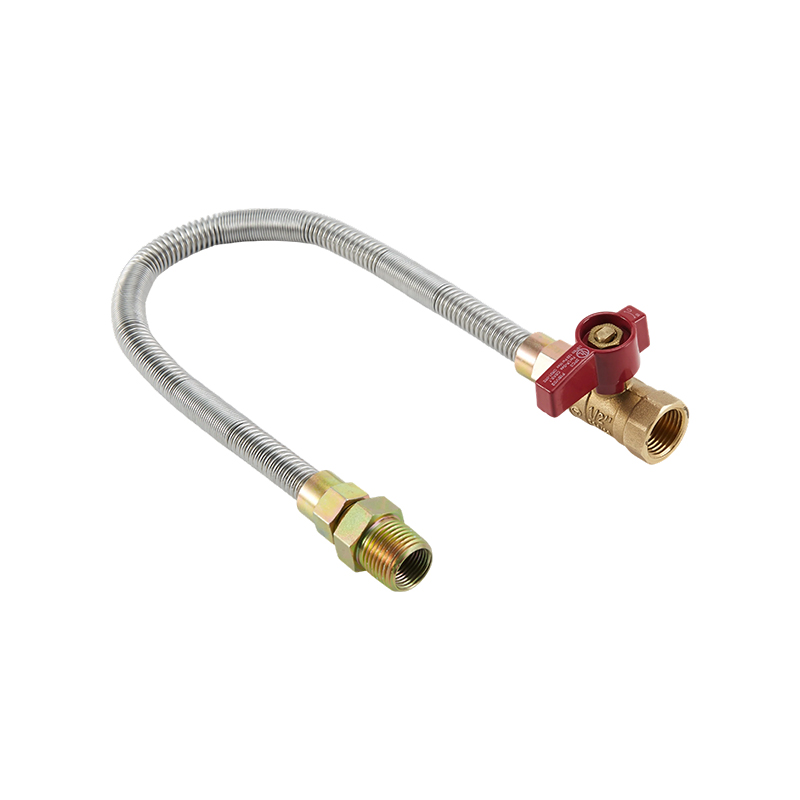
Manufactured from 304 stainless steel with a 0.2 mm wall thickness, this connector combines a flexible corrugated tube structure with robust metal connection components. Its 5/8-18UNF flare nut and selection of adapter configurations support installation across a range of interface requirements. Available lengths from 12 inches to 72 inches allow installers to select a suitable product without unnecessary bends, extensions, or complex routing arrangements.
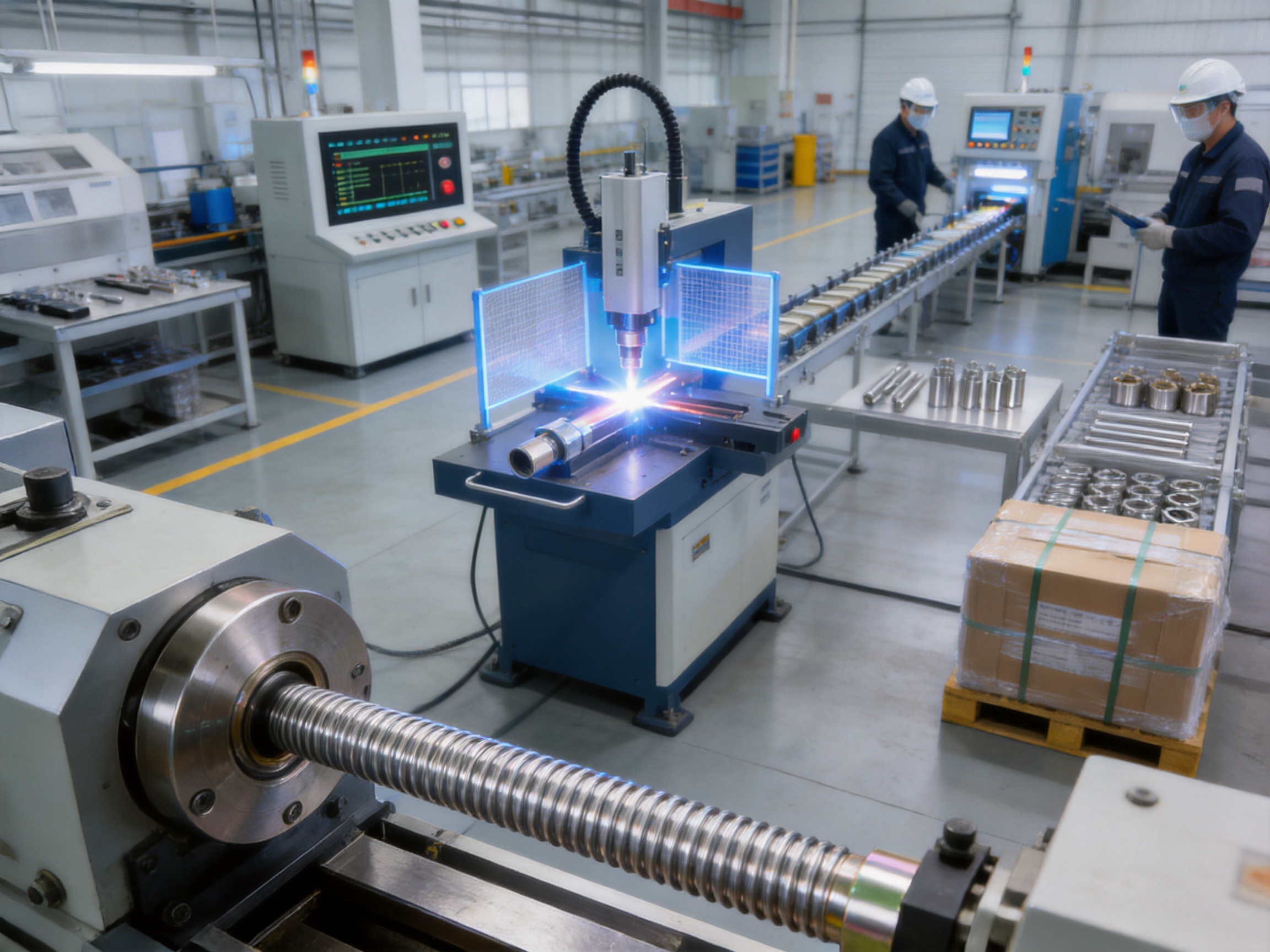
The product is part of a broader portfolio of gas connectors, plumbing pipes, water liners, metal hoses, and compensators manufactured by Haoyin (Ningbo) Bellows Technology Co., Ltd. The company specializes in stainless steel bellows and flexible connection solutions, supporting applications in gas, plumbing, heating, healthcare, building services, industrial HVAC, and related fields. Its manufacturing capabilities include laser welding, CNC forming, eddy current flaw detection, automated packaging, and systematic quality control.
Understanding the DN10 Stainless Steel Gas Connector
The DN10 Stainless Steel Gas Connector is a flexible metallic connector intended for use in gas systems that require a controlled and secure connection between fixed piping and an appliance, valve, regulator, or other gas interface. The nominal DN10 designation identifies the compact size class of the connector, while the actual connection configuration is determined by the flare nut and selected adapter.
Unlike a rigid pipe, a flexible gas connector can accommodate practical installation conditions such as limited space, appliance movement, alignment differences, and minor vibration. It can simplify the final connection between a fixed gas outlet and equipment that must be installed, serviced, or repositioned. The flexible structure also reduces the need to force rigid piping into an awkward alignment.
The connector is manufactured with a 304 stainless steel tube. This material is widely used in demanding plumbing, gas, food-service, architectural, and industrial environments because it provides a strong balance of corrosion resistance, mechanical durability, formability, and availability. The 0.2 mm wall thickness supports a lightweight design while maintaining the metal structure needed for a flexible gas connection.
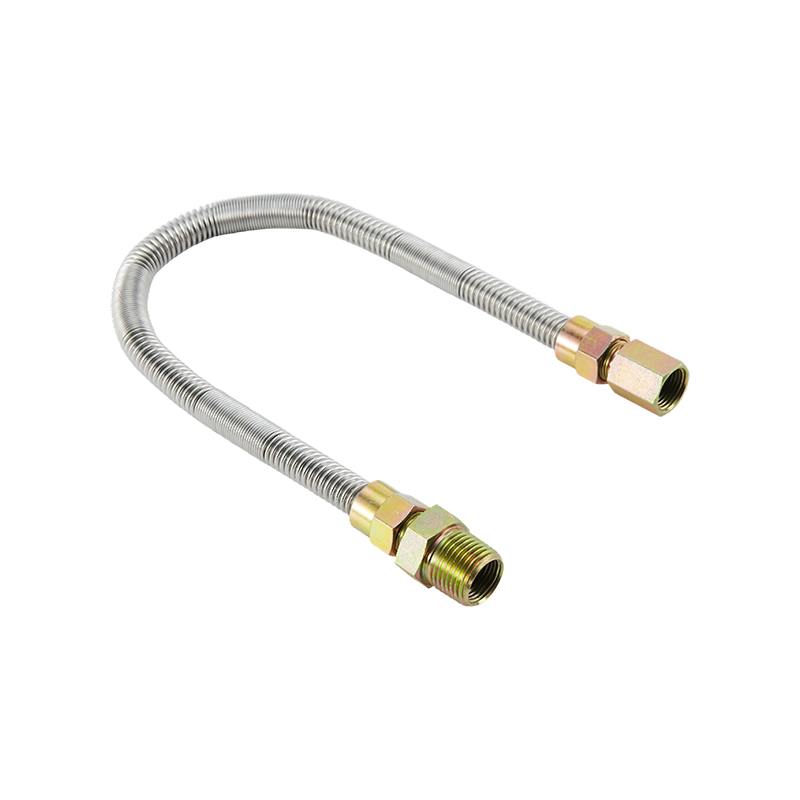
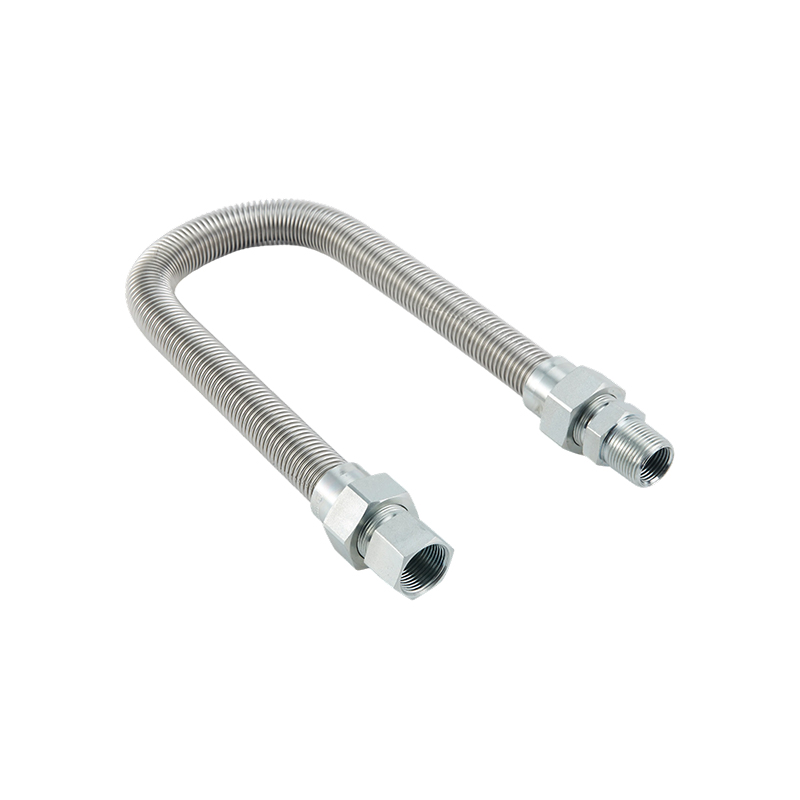
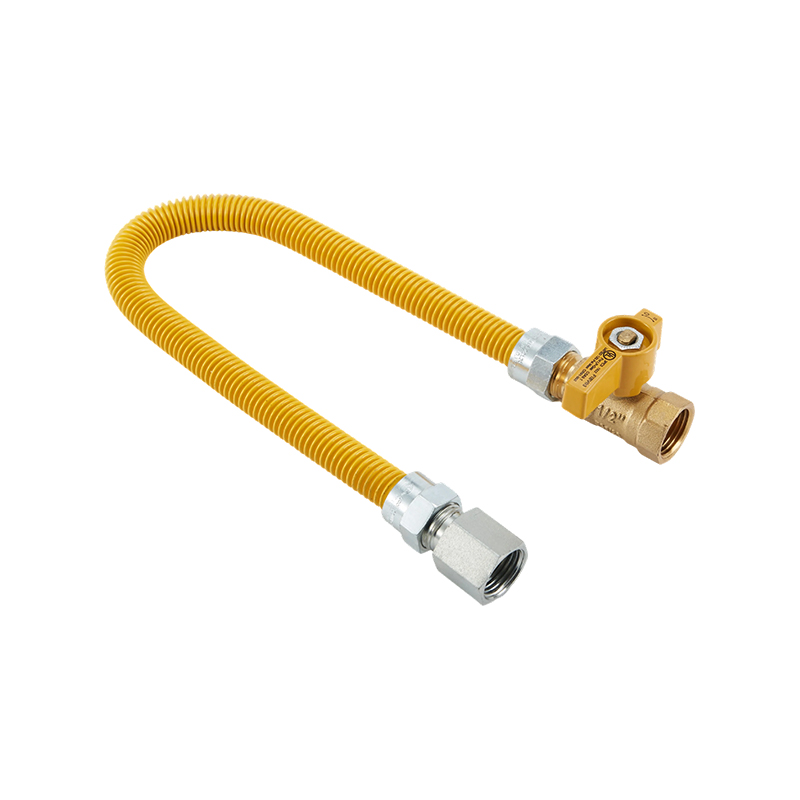
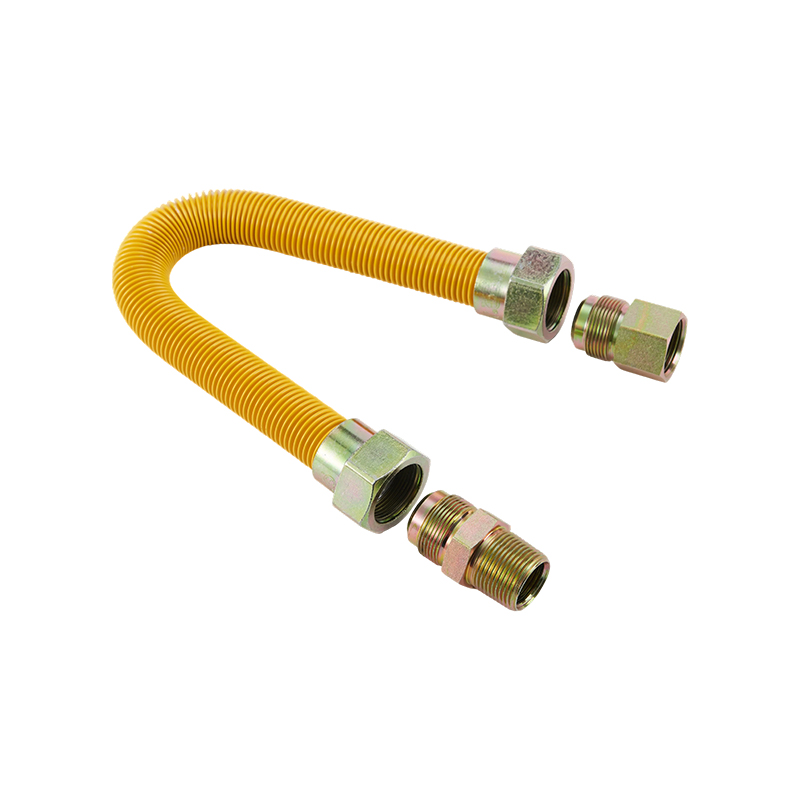
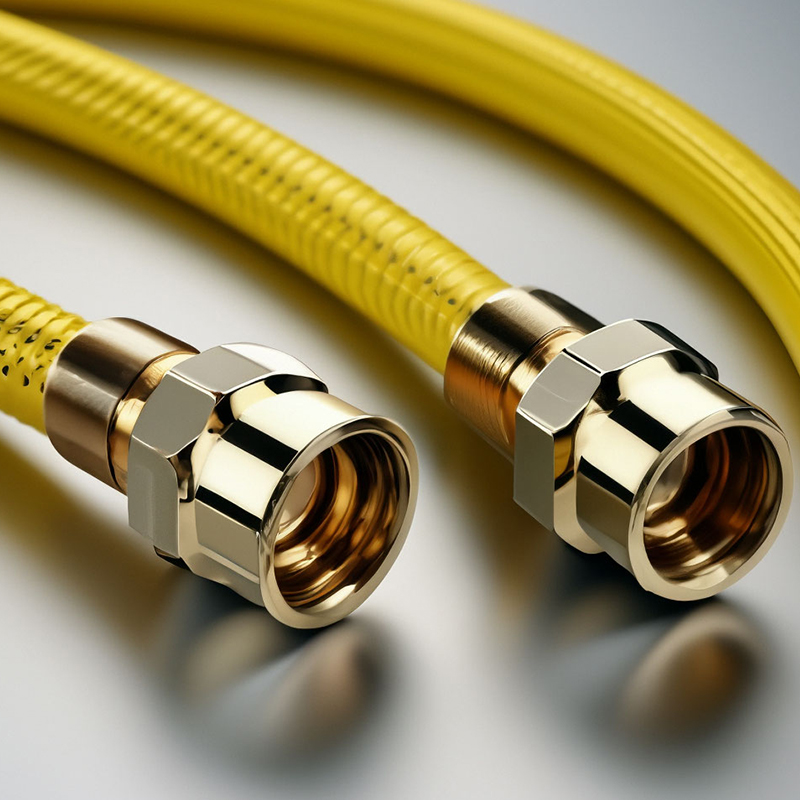
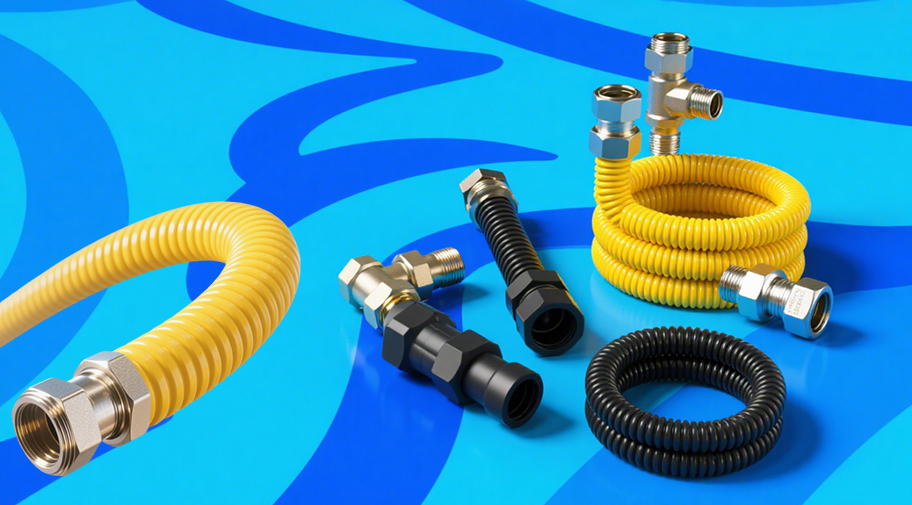
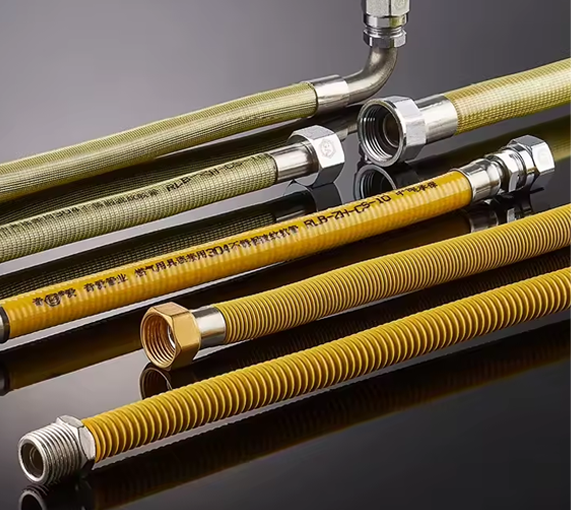
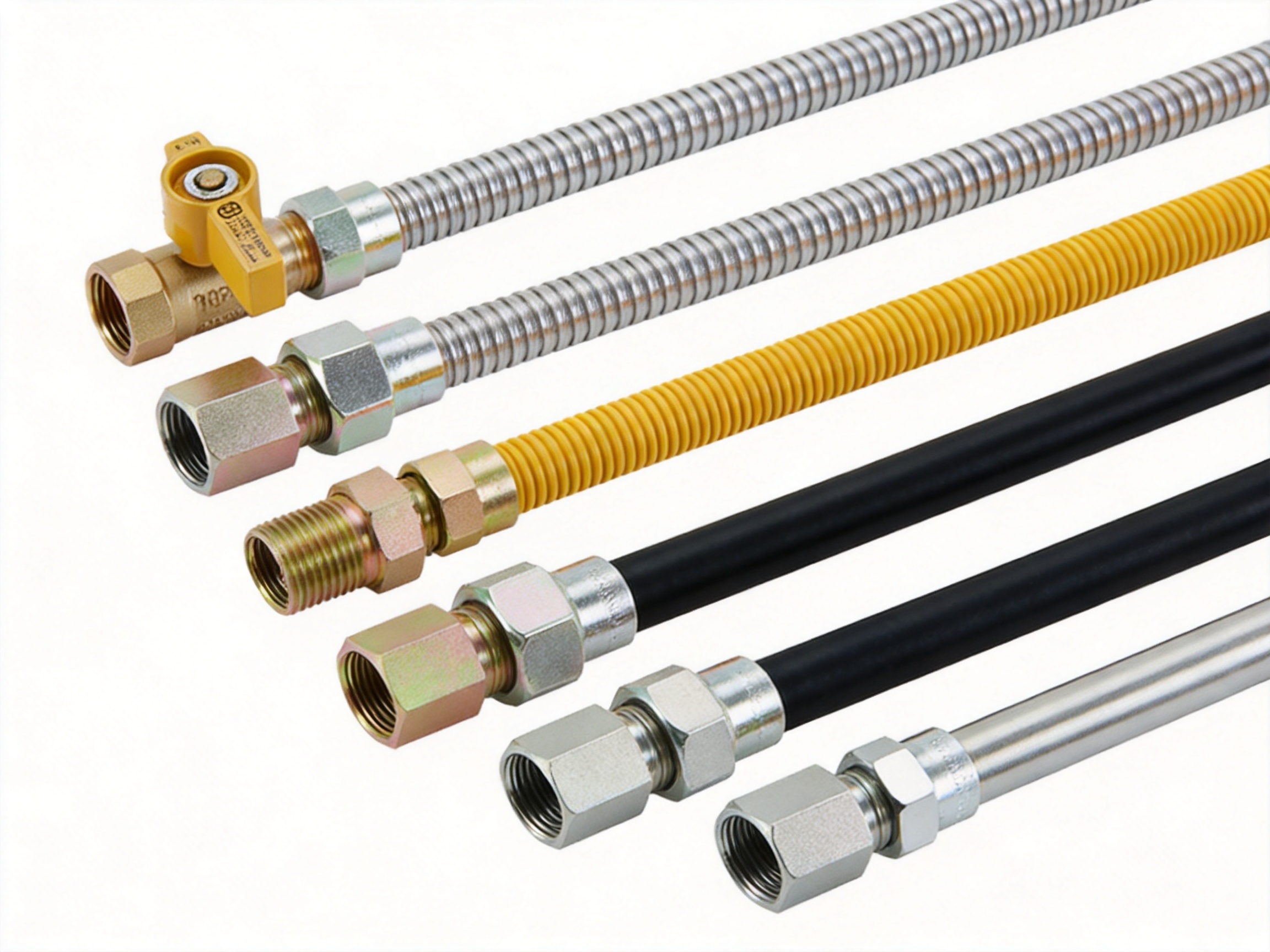
The connector is available in stainless steel, yellow, and black appearances. These color options can support different visual requirements, product ranges, or installation preferences. The nut can be supplied in brass or carbon steel, subject to the selected configuration. The product uses hard sealing, and no separate cover material is specified for the standard version.
| Product | DN10 Stainless Steel Gas Connector |
| Primary application | Residential, commercial, and industrial gas connection systems |
| Tube material | 304 stainless steel |
| Wall thickness | 0.2 mm |
| Flare nut | 5/8-18UNF |
| Available lengths | 12, 18, 24, 36, 48, 60, and 72 inches |
| Adapter options | 3/8 inch OD flare to 3/8 inch MIP with 1/4 inch FIP; 3/8 inch OD flare to 3/8 inch FIP; 3/8 inch OD flare to 1/2 inch MIP with 3/8 inch FIP; 3/8 inch OD flare to 1/2 inch FIP |
| Nut material | Brass or carbon steel |
| Available colors | Stainless steel, yellow, and black |
| Sealing method | Hard sealing |
| Cover material | None for the standard product |
| Certification category | Stainless steel gas connector with CSA certificate designation |
Why Stainless Steel Is Important in Gas Connection Systems
Gas connection components are often installed in environments where moisture, cleaning chemicals, temperature variation, vibration, and accidental contact can affect the service life of ordinary materials. Stainless steel helps address these challenges. The 304 stainless steel used in this product provides a corrosion-resistant tube material suitable for many indoor and protected installation environments.
Corrosion resistance is especially valuable in kitchens, utility rooms, commercial food-service areas, equipment rooms, and building service spaces. These locations may experience humidity, condensation, grease, detergents, or airborne contaminants. A stainless steel tube can maintain its surface integrity more effectively than many unprotected carbon steel alternatives, reducing the risk of premature deterioration caused by the surrounding environment.
Stainless steel also offers high-temperature resistance compared with many nonmetallic flexible tubing materials. The exact allowable operating temperature must always be confirmed against the applicable product certification, local code, and installation instructions. Nevertheless, the metallic structure provides a dependable foundation for applications where a flexible connector must remain stable near gas appliances or heated equipment.
Another advantage is structural consistency. Stainless steel bellows and corrugated tubes can be manufactured with carefully controlled geometry, allowing the tube to bend while retaining a defined flow path and connection profile. Consistent forming is important because irregular corrugations, uneven edges, or dimensional variation can make installation difficult and may create unwanted stress at the fittings.
Flexible Corrugated Construction and Installation Benefits
The flexible corrugated design is one of the central advantages of the connector. Corrugations allow the tube to accommodate bending within the intended installation range. This flexibility helps installers connect equipment where the gas outlet and appliance inlet are not perfectly aligned.
In practical installation work, rigid pipe can require additional elbows, nipples, unions, or custom measurements. Each extra component can increase installation time, occupy valuable space, and add another joint that must be checked. A correctly selected flexible connector can simplify the final connection and reduce the number of alignment adjustments required.
The product can be supplied in multiple lengths, from 12 inches to 72 inches. Shorter lengths are suitable when the appliance is positioned close to the gas outlet. Longer versions can support installations where the connection point is farther away or where the appliance requires greater positioning flexibility. Selecting the shortest practical length is generally preferable because it helps maintain an orderly installation and limits unnecessary movement.
The flexible connector should not be treated as a substitute for proper system design. It must not be stretched, sharply kinked, twisted, crushed, or installed in a way that places continuous strain on the fittings. The connector should be routed according to applicable gas codes and the manufacturer’s installation instructions. It should also remain accessible for inspection and should not be concealed where inspection or replacement is required by local regulations.
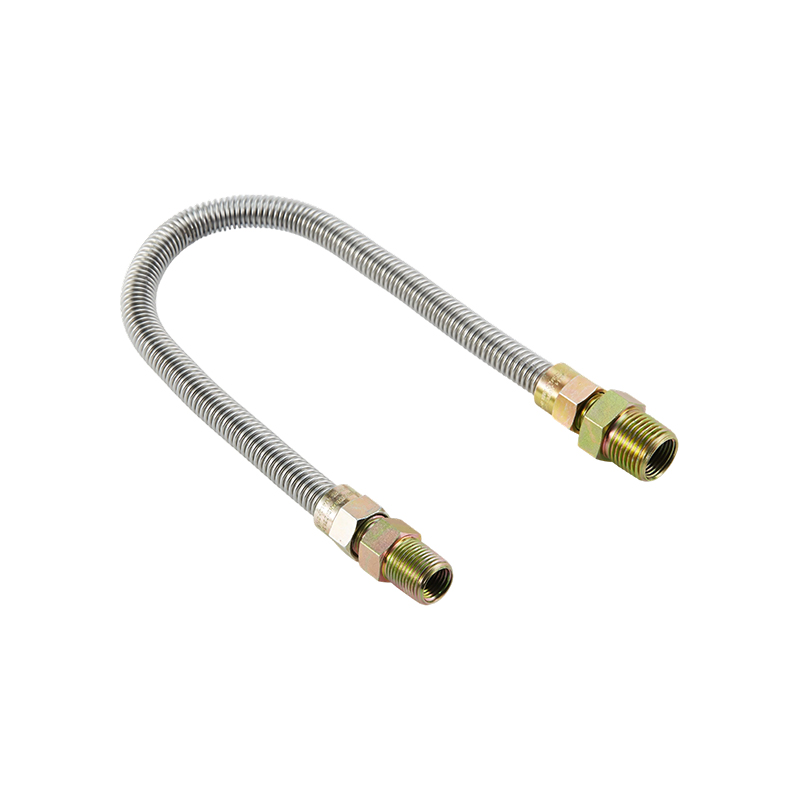
DN10 Stainless Steel Gas Connector
Connection Options for Different Interfaces
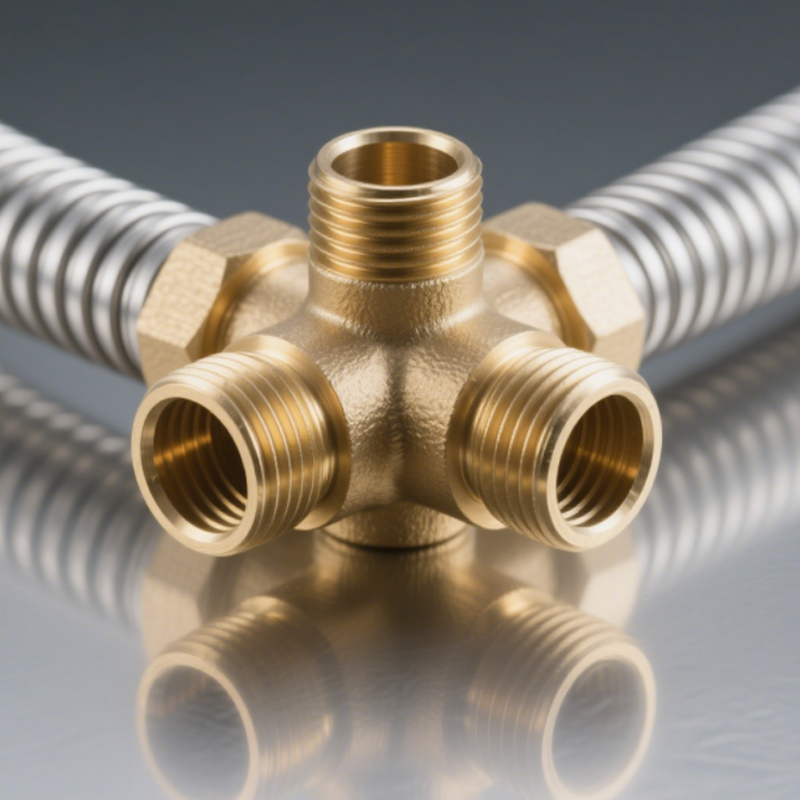
The DN10 connector uses a 5/8-18UNF flare nut and can be matched with several adapter arrangements. This gives the product a practical degree of flexibility when gas equipment and pipework use different connection dimensions. The available options cover 3/8 inch and 1/2 inch interface sizes, with male and female configurations.
The listed adapter options include a 3/8 inch outside-diameter flare to 3/8 inch male iron pipe connection with a 1/4 inch female pipe connection, a 3/8 inch outside-diameter flare to 3/8 inch female pipe connection, a 3/8 inch outside-diameter flare to 1/2 inch male iron pipe connection with a 3/8 inch female pipe connection, and a 3/8 inch outside-diameter flare to 1/2 inch female pipe connection.
Product specifications may also express these configurations in abbreviated form, such as 5/8 × 3/8M with 1/4F, 5/8 × 3/8F, 5/8 × 1/2M with 3/8F, and 5/8 × 1/2F. Because thread terminology and regional standards can vary, installers should verify the exact adapter drawing, thread standard, sealing face, and mating component before ordering or installation.
| Configuration description | Typical interface arrangement | Selection consideration |
| Option 1 | 3/8 inch OD flare to 3/8 inch MIP with 1/4 inch FIP | Suitable where the equipment or transition assembly requires a male pipe connection with an additional female interface |
| Option 2 | 3/8 inch OD flare to 3/8 inch FIP | Suitable where the receiving component provides a matching male pipe thread |
| Option 3 | 3/8 inch OD flare to 1/2 inch MIP with 3/8 inch FIP | Suitable for a larger nominal pipe interface combined with a smaller female transition |
| Option 4 | 3/8 inch OD flare to 1/2 inch FIP | Suitable where the receiving component provides a matching 1/2 inch male pipe thread |
Correct interface selection is essential. A connector should never be forced onto an incompatible thread or used with a fitting that depends on an unsuitable sealing method. Flare connections, tapered pipe threads, and parallel pipe threads perform differently and may require different sealing practices. The assembly should be installed by qualified personnel who understand the applicable gas connection standards.
Hard Sealing and Joint Reliability
The product specification identifies hard sealing as the sealing form. A hard-sealing connection generally relies on accurately machined and properly mated metal surfaces rather than on a soft gasket alone. This approach can provide a compact and durable joint when the flare, nut, adapter, and mating surfaces are manufactured within suitable tolerances.
Reliable hard sealing depends on several factors. The mating surfaces must be clean and free from scratches, dents, metal chips, paint, or other contamination. The nut must be aligned correctly before tightening. Cross-threading must be avoided, and the fitting must be tightened according to the relevant installation instructions. Excessive tightening can damage the flare or threads, while insufficient tightening may prevent proper sealing.
Because gas systems are safety-critical, every completed connection should be inspected and tested in accordance with local regulations and the installation authority’s requirements. A visual inspection should be followed by an approved leak test. Open flames must never be used for leak detection. The specific test procedure, pressure, and acceptance criteria depend on the system, fuel type, jurisdiction, and applicable standard.
Advantages Over Conventional Rigid or Lower-Grade Alternatives
Improved Installation Flexibility
A rigid pipe assembly must be measured and aligned precisely. If the appliance position changes, the rigid assembly may require modification. The flexible stainless steel connector provides more tolerance for practical installation conditions and can reduce the need for multiple rigid fittings.
Corrosion-Resistant Tube Material
Compared with ordinary unprotected carbon steel tubing, 304 stainless steel offers improved resistance to corrosion in many common service environments. This can be especially beneficial in humid rooms, commercial kitchens, utility areas, and building service installations.
Multiple Length Choices
Seven standard length choices provide a broader selection than a single fixed-length connector. The range from 12 inches to 72 inches supports both compact appliance connections and installations requiring greater reach. Buyers can select a size that minimizes excessive loops and avoids unnecessary extension components.
Adaptable Connection Configurations
The availability of four adapter arrangements supports different pipe and equipment interfaces. This reduces the likelihood that an installer will need to source an additional transition fitting from another supplier, although compatibility must always be verified before installation.
Stable Metal Construction
The metallic tube and metal fittings provide a robust connection structure. Compared with some flexible nonmetallic products, stainless steel is less vulnerable to surface damage from ordinary handling and offers a more stable solution near heat-producing equipment when used within approved limits.
Controlled Manufacturing Potential
The connector is produced by a manufacturer specializing in stainless steel bellows and flexible metal connections. This specialization is important because tube forming, welding, fitting assembly, and leak control require dedicated knowledge. A company with relevant process equipment can maintain better control over repeatability than a general trading operation that only assembles or resells components.
Manufacturing Technology Behind the Product
The quality of a flexible gas connector is established long before the product reaches the installation site. It depends on material selection, tube forming, welding, fitting preparation, dimensional control, inspection, and packaging. Haoyin (Ningbo) Bellows Technology Co., Ltd. has developed manufacturing capabilities specifically for stainless steel bellows and flexible connection products.
Material Selection and Incoming Control
The production process begins with suitable stainless steel raw material. For this connector, 304 stainless steel is selected for the tube. Incoming materials should be checked for dimensions, surface condition, grade documentation, and consistency. Careful material control helps ensure that the finished tube has the intended corrosion resistance, formability, and mechanical characteristics.
Material traceability is also valuable for quality management. When raw materials, production batches, and inspection records can be correlated, manufacturers can respond more effectively to customer questions, process deviations, or certification audits. This type of structured control is particularly important for components used in gas systems.
Precision Tube Forming
Corrugated stainless steel tubes require controlled forming to create a consistent bellows profile. The corrugation geometry influences flexibility, bending behavior, dimensional stability, and resistance to repeated movement. CNC forming machines can help control forming parameters and produce repeatable tube profiles across production batches.
Advanced forming equipment also supports product development. Engineers can evaluate different corrugation dimensions, lengths, and connection arrangements while maintaining a controlled production method. This is useful when serving multiple application sectors, including gas, plumbing, heating, and industrial HVAC.
Laser Welding
Laser welding equipment supports precise joining of metal components where controlled heat input and narrow weld zones are desirable. In stainless steel bellows production, welding quality is important because the tube must retain structural integrity while remaining flexible. A consistent weld can reduce the risk of incomplete fusion, excessive distortion, or irregular surface conditions.
Laser welding is also compatible with automated or semi-automated production procedures. When process parameters are documented and monitored, the manufacturer can improve repeatability and reduce variation between operators and production lots.
Flare and Fitting Assembly
The connector’s flare nut and adapter components must be assembled with accurate positioning. The tube end, flare geometry, nut placement, and adapter interface all influence the final connection. Assembly equipment and controlled work instructions help ensure that the fitting is neither misaligned nor damaged during production.
Brass and carbon steel nut options allow the product to be configured for different customer requirements. The selected nut material should be considered together with corrosion exposure, mechanical requirements, compatibility, appearance, and applicable certification conditions.
Non-Destructive Inspection
The company uses eddy current flaw detection equipment as part of its advanced manufacturing resources. Eddy current testing can help identify certain surface and near-surface discontinuities in conductive materials without damaging the product. It is one element of a wider inspection program and should be applied according to appropriate procedures and acceptance criteria.
Non-destructive inspection is valuable for flexible tubes because defects may not always be visible during a routine visual check. Combining visual inspection, dimensional inspection, leak testing, and suitable non-destructive methods creates a more complete quality assurance approach.
Automated Packaging
Packaging protects the connector from contamination, deformation, impact, and moisture during storage and transportation. Automated packaging systems can improve consistency in labeling, quantity control, protective materials, and carton preparation. This is particularly useful when products are supplied in multiple lengths, colors, and adapter configurations.
Quality Management and Corporate Manufacturing Strengths
Haoyin (Ningbo) Bellows Technology Co., Ltd. operates standardized workshops covering approximately 18,000 square meters on an area of approximately 35 mu. The company has obtained ISO9001, ISO14001, ISO45001, and other management system certifications. These certifications indicate structured approaches to quality management, environmental management, and occupational health and safety, subject to the scope and validity of the relevant certificates.
The company is also identified as a National High-tech Enterprise and Green Factory. These distinctions reflect an emphasis on technology development, organized manufacturing, environmental awareness, and continuous improvement. For buyers of gas connectors, the importance lies not only in the product itself but also in the supplier’s ability to maintain consistent processes over time.
A full-process quality management system covers raw material selection, structural design, manufacturing, performance testing, and after-sales support. This broad approach is more valuable than relying only on final inspection. Preventive control at each stage can reduce the possibility that dimensional, material, or assembly problems will reach the customer.
The company’s product range includes gas connectors, plumbing pipes and water liners, metal hoses, and compensators. This product breadth demonstrates experience with flexible metallic components across several technical applications. Knowledge gained in one product category can support improvements in another, particularly in areas such as bellows forming, welding, testing, fitting design, and corrosion-resistant material handling.
Application Areas
Residential Kitchens
In residential kitchens, the connector can be used to connect compatible gas appliances to an approved gas outlet or supply arrangement. The flexible design can simplify installation where cabinet layouts, appliance dimensions, or outlet locations create limited working space. The selected length should be sufficient for safe routing without creating excessive slack.
Commercial Food-Service Equipment
Commercial kitchens often contain ovens, ranges, fryers, cooking lines, and other gas-powered equipment. These environments may include moisture, heat, grease, frequent cleaning, and equipment movement during maintenance. Stainless steel construction can provide a durable connection option when the product configuration and certification meet the requirements of the installation.
Heating and Building Services
Gas-fired heating equipment may require a flexible final connection to accommodate equipment alignment and service access. The connector can support building service installations where a metallic flexible connection is permitted by local code and equipment instructions.
Industrial and HVAC Systems
Industrial gas systems and HVAC equipment can involve vibration, thermal movement, and complex routing. A flexible metal connector may help isolate minor movement or simplify equipment connection. However, industrial applications require careful engineering review because operating pressure, temperature, vibration, chemical exposure, and movement frequency may exceed ordinary appliance requirements.
Maintenance and Replacement Work
When replacing an existing connector, installers can use the available length and adapter options to match the current installation more closely. Replacement work should include inspection of the surrounding pipework, shutoff valve, appliance inlet, and support conditions. A new connector should not be installed to compensate for a damaged valve, unstable pipe, or incorrectly positioned appliance.
Installation Considerations for Long-Term Performance
Before installation, confirm the fuel type, appliance requirements, connection dimensions, local code, product certification, operating conditions, and allowable installation method. The connector should be selected for the specific application rather than chosen only by length or appearance.
Measure the routing path carefully. The connector should be long enough to avoid tension but not so long that it forms unnecessary loops or can be caught, crushed, or abraded. It should be routed away from sharp edges and positioned so that the fittings are not used as bending points.
Do not twist the connector while tightening the flare nut or adapter. The tube should remain in its natural alignment, and the wrench should be applied to the appropriate fitting surfaces. Twisting can transfer stress into the corrugations or the joint and may reduce service life.
Do not install the connector through walls, floors, partitions, or other concealed spaces unless the applicable standard specifically allows that installation. Do not place it under the appliance, where it may be crushed or exposed to excessive heat. Avoid contact with moving doors, drawers, burners, hot exhaust surfaces, and abrasive structures.
After installation, inspect the connector for kinks, flattened corrugations, damaged threads, incorrect adapter engagement, or visible surface damage. Complete an approved leak test before commissioning the equipment. The connector should be checked periodically according to the requirements of the local authority, appliance manufacturer, or facility maintenance program.
Certification and Compliance
The product category identifies this connector as a stainless steel gas connector with CSA certificate designation. Certification is an important consideration because it provides an evaluated basis for certain performance and safety requirements. However, buyers should verify the exact certificate scope, product model, length, fitting configuration, fuel application, and market requirements before placing an order.
A certification associated with one configuration may not automatically cover every possible adapter, nut material, length, or installation condition. Documentation should be reviewed together with the product label, technical specification, installation instructions, and applicable local regulations.
For export projects, compliance requirements may differ by country, province, state, or application. A professional supplier should be able to support customers with product specifications, inspection documents, material information, quality records, and certification-related documentation appropriate to the order.
Why Choose a Specialized Manufacturer
A specialized bellows manufacturer offers several advantages over a supplier that treats flexible connectors as a generic accessory. The first is process knowledge. Forming a corrugated tube that bends reliably while maintaining dimensional stability requires dedicated equipment and experience.
The second advantage is product development capability. A specialized manufacturer can adjust tube lengths, fitting combinations, nut materials, colors, packaging, and other product details more efficiently. This supports distributors, equipment manufacturers, project contractors, and private-label customers with different market needs.
The third advantage is quality consistency. When material control, forming, welding, inspection, and packaging are managed within an integrated production system, the supplier can identify the source of variation more quickly. This is especially important for repeat orders in which customers expect the same dimensions and performance characteristics from one batch to the next.
The fourth advantage is technical support. A company that manufactures gas connectors, water liners, metal hoses, and compensators understands the broader requirements of flexible connection engineering. It can help customers evaluate connection types, length selection, material choices, and application conditions while recognizing the limits of the product.
Purchasing and Customization Guidance
When requesting a quotation, buyers should provide the required length, adapter configuration, nut material, color, estimated order quantity, intended application, destination market, and certification requirements. Clear information reduces the possibility of receiving a connector with an unsuitable thread or fitting arrangement.
For large projects, buyers should request drawings or samples before mass production. Dimensional confirmation is particularly important when the connector must fit into a confined appliance compartment or connect to existing equipment with limited clearance.
Packaging requirements should also be discussed. Products may be supplied for distribution, project installation, appliance assembly, or retail sale. Each channel may require different labeling, carton quantities, barcodes, instructions, and protective packaging.
Private-label and OEM requirements can be evaluated according to the manufacturer’s production capabilities. Possible areas of customization may include color, packaging, labeling, length combinations, fitting arrangements, and customer documentation. Any customized configuration should be reviewed for compatibility with certification and market regulations.
Environmental and Operational Advantages
Durable products can contribute to more sustainable maintenance practices by reducing premature replacement and unnecessary material consumption. A corrosion-resistant stainless steel connector, when correctly installed and maintained, can provide a long service period in suitable environments.
The company’s ISO14001 environmental management certification and Green Factory designation indicate attention to environmental management within its operations. Environmental performance may include resource efficiency, waste control, process management, and responsible production practices. Buyers seeking sustainable supply chains can request current documentation and assess the specific environmental data relevant to their procurement standards.
The flexible connection itself can also support efficient installation. Fewer rigid transition components may reduce material use and simplify the labor required for final appliance connections. The actual benefit depends on the system design and must never override safety or code requirements.
Product Limitations and Responsible Use
No connector is suitable for every gas application. The DN10 Stainless Steel Gas Connector must be used only within its approved pressure, temperature, movement, fuel, and installation limits. The available product information does not specify a universal pressure rating, minimum bend radius, operating temperature range, or service life. These values should be obtained from the technical documentation for the exact configuration.
The connector should not be used as a structural support, lifting device, grounding conductor, or permanent substitute for incorrectly designed piping. It should not be painted, modified, cut, welded, extended, or fitted with unauthorized components after manufacture.
Where the installation is exposed to chemicals, salt spray, outdoor weather, severe vibration, or extreme temperature, the application should be reviewed by a qualified engineer. Although 304 stainless steel offers good general corrosion resistance, material selection must consider the specific environment.
Frequently Asked Questions
What is the main purpose of the DN10 Stainless Steel Gas Connector?
It provides a flexible metallic connection for compatible residential, commercial, and industrial gas systems. It is intended to connect fixed gas piping or an approved outlet to a gas appliance, valve, regulator, or equipment interface where a flexible connection is permitted.
What material is used for the tube?
The tube is made from 304 stainless steel and has a specified wall thickness of 0.2 mm. This material provides corrosion resistance, formability, and durability for many suitable gas connection environments.
Which lengths are available?
The standard listed lengths are 12, 18, 24, 36, 48, 60, and 72 inches. The correct length should be selected according to the installation path, required movement, and applicable safety requirements.
What flare nut does the connector use?
The connector uses a 5/8-18UNF flare nut. The exact mating adapter and equipment connection should be checked carefully because thread size alone does not confirm compatibility.
What adapter options are available?
The listed options include 3/8 inch OD flare to 3/8 inch MIP with 1/4 inch FIP, 3/8 inch OD flare to 3/8 inch FIP, 3/8 inch OD flare to 1/2 inch MIP with 3/8 inch FIP, and 3/8 inch OD flare to 1/2 inch FIP. Buyers should confirm the detailed drawing and thread standard for the required configuration.
Can the connector be used outdoors?
Outdoor use depends on the exact certification, environmental exposure, installation method, and local code. Stainless steel provides useful corrosion resistance, but outdoor installation should not be assumed to be acceptable without confirming the product documentation and applicable requirements.
Is the product available in colors other than stainless steel?
Yes. The listed color options are stainless steel, yellow, and black. Color availability may depend on the selected model, order quantity, and production arrangement.
What materials are available for the nut?
The nut can be supplied in brass or carbon steel, depending on the configuration and customer requirement. The appropriate material should be selected with consideration for corrosion exposure, mechanical requirements, certification, and compatibility.
Does the connector include a protective cover?
The standard product specification lists the cover material as none. If a protective coating, sleeve, or cover is required for a particular installation, buyers should discuss the requirement with the manufacturer before ordering.
How is the connection sealed?
The specified sealing form is hard sealing. Correct sealing depends on clean and undamaged mating surfaces, accurate alignment, suitable tightening, and a compatible connection design. The finished installation must be leak-tested using an approved procedure.
What makes this product different from a basic flexible connector?
Its advantages include 304 stainless steel construction, a controlled 0.2 mm wall thickness, multiple length choices, four adapter arrangements, specialized bellows manufacturing, laser welding, CNC forming, eddy current inspection resources, and structured quality management. The exact benefit compared with another product depends on the competitor’s material, certification, fittings, testing, and manufacturing controls.
Is the connector suitable for high-temperature applications?
The stainless steel construction provides high-temperature resistance compared with many nonmetallic alternatives, but the connector must remain within its certified temperature and installation limits. The exact allowable temperature should be confirmed from the technical data for the selected model.
How should the connector be maintained?
Maintenance should include visual inspection for corrosion, damage, kinks, crushed corrugations, fitting movement, or signs of leakage. Inspection intervals should follow local regulations, appliance manufacturer instructions, and facility maintenance procedures. A damaged connector should be replaced rather than repaired or modified.
Can the company support OEM or private-label orders?
The company’s manufacturing resources and product range support discussions about customized lengths, fittings, colors, labels, packaging, and related requirements. Each customized configuration should be evaluated for technical feasibility, order quantity, documentation, and certification scope.
Conclusion
The DN10 Stainless Steel Gas Connector is a compact but technically important component for flexible gas connection systems. Its 304 stainless steel tube, 0.2 mm wall thickness, 5/8-18UNF flare nut, multiple adapter configurations, and seven available lengths provide practical flexibility for residential, commercial, and selected industrial applications.
Its strongest advantages are not limited to the finished appearance. The product is supported by specialized stainless steel bellows manufacturing, precision tube forming, laser welding, fitting assembly, eddy current inspection resources, automated packaging, and a full-process quality management approach. These capabilities help create a more consistent product and provide buyers with a stronger supply base than a generic, non-specialized connector source.
Safe performance still depends on correct product selection, professional installation, compatible interfaces, compliance with local requirements, approved leak testing, and regular inspection. When these conditions are satisfied, the DN10 connector can provide a durable, corrosion-resistant, and installation-friendly solution for modern gas connection systems.
References
1. Product specification for DN10 Stainless Steel Gas Connector, including dimensions, materials, adapter configurations, colors, sealing method, and available lengths.
2. Manufacturer technical information for stainless steel bellows, gas connectors, plumbing pipes, water liners, metal hoses, and compensators.
3. ISO 9001, Quality Management Systems — Requirements.
4. ISO 14001, Environmental Management Systems — Requirements with Guidance for Use.
5. ISO 45001, Occupational Health and Safety Management Systems — Requirements with Guidance for Use.
6. Applicable national and regional standards for flexible gas connectors, flare fittings, pipe threads, appliance connections, and gas installation safety.
7. General engineering guidance for stainless steel forming, laser welding, non-destructive testing, leak testing, and flexible metallic hose installation.