




 English
  Español
  русский


Modern gas systems require connection components that combine flexibility, sealing reliability, corrosion resistance, and installation convenience. A gas connector may appear to be a relatively small component within a residential, commercial, or industrial gas installation, but its performance can directly influence system safety, operating comfort, maintenance requirements, and service life. For this reason, selecting a connector based only on nominal size or purchase price can create unnecessary risks. Material quality, wall thickness, fitting accuracy, seal design, nut construction, and manufacturing control are equally important.
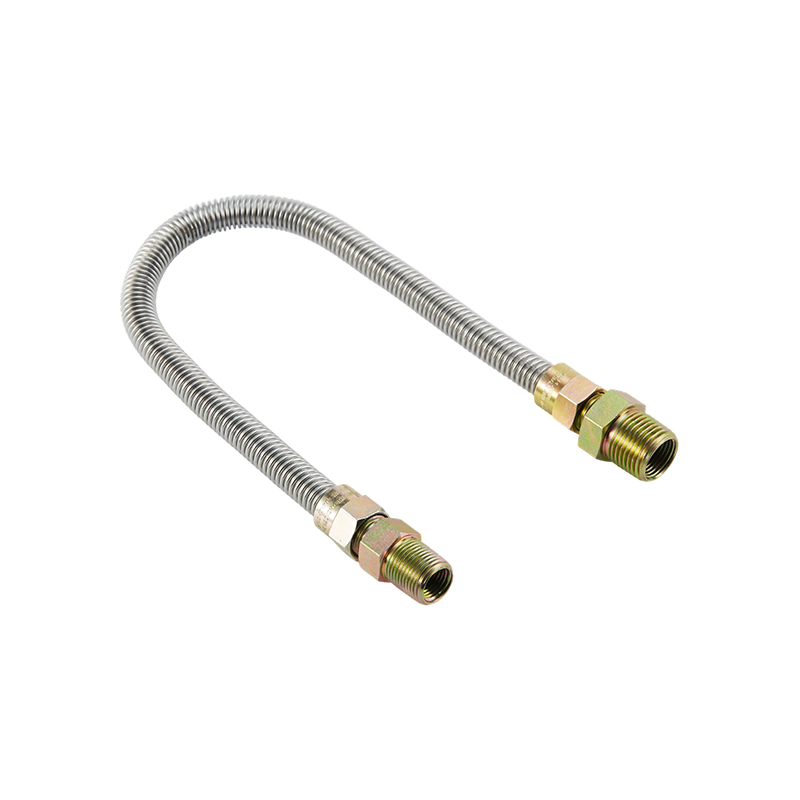
The DN20 stainless steel whistle-free gas connector is designed to address these requirements through a combination of 304 stainless steel construction, a 0.25 mm corrugated tube wall, a 1 1/8"-16UNF flare nut, hard sealing, and adapter options for different interface configurations. Its whistle-free structure is intended to reduce airflow noise, while its flexible stainless steel body allows installers to route the connection around common obstacles without relying on excessive bending of rigid pipe.
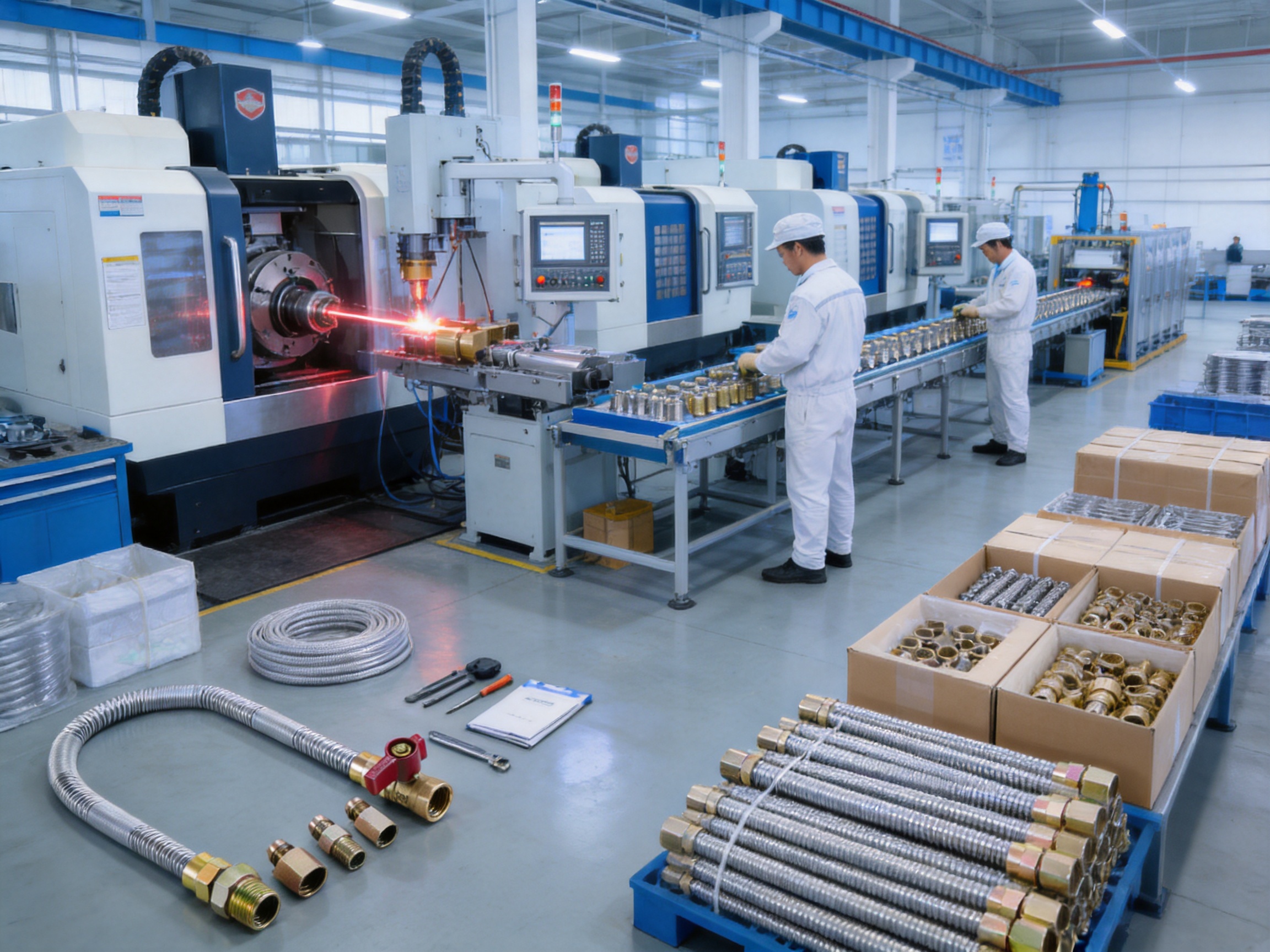
This product is manufactured by Haoyin (Ningbo) Bellows Technology Co., Ltd., a specialist enterprise focused on stainless steel bellows and flexible connection solutions. The company serves applications involving gas, plumbing, heating, healthcare, building heating, industrial HVAC, metal hoses, and compensators. Its manufacturing capabilities include laser welding, CNC forming, COSMO equipment, eddy current flaw detection, and automated packaging. These capabilities support a controlled production process from raw material selection through forming, joining, testing, and delivery.
This article examines the product’s structure, operating advantages, installation value, quality considerations, and manufacturing strengths. It also explains how the DN20 connector compares with common alternatives and identifies the factors that buyers, distributors, installers, engineers, and original equipment manufacturers should evaluate before selecting a flexible gas connection solution.
1. Product Overview
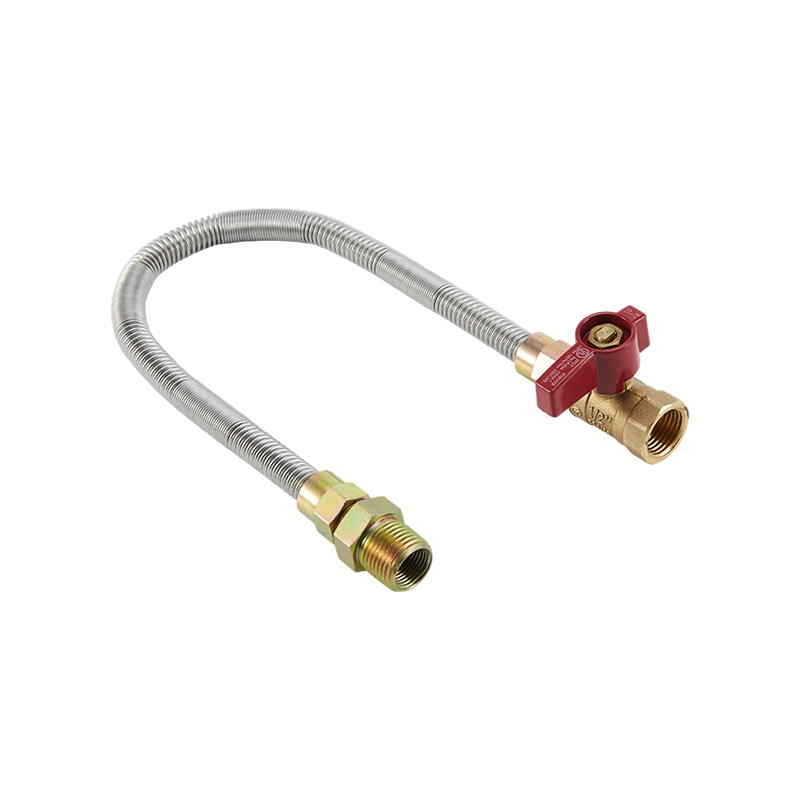
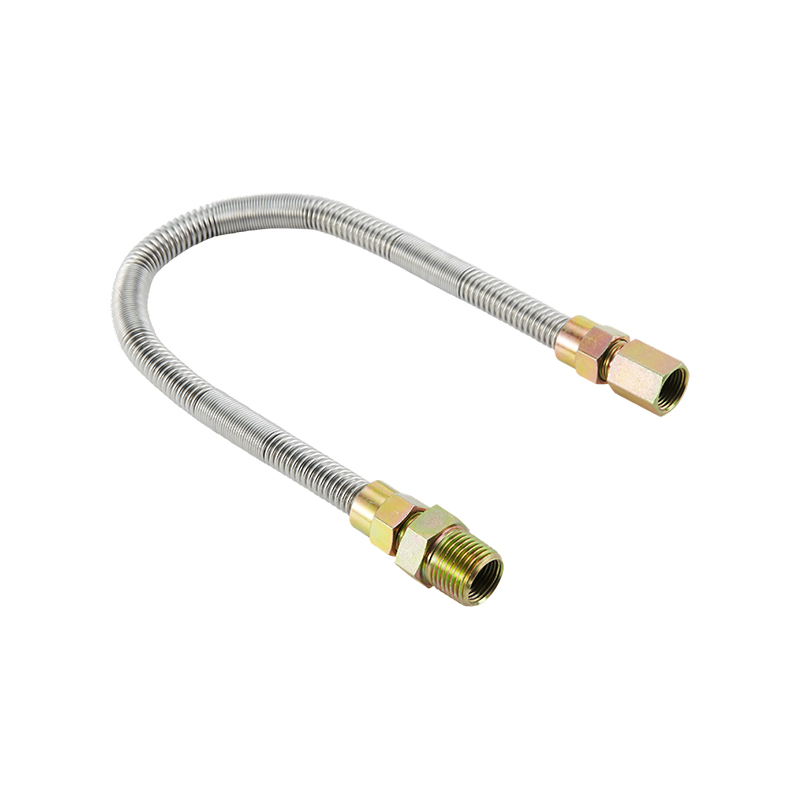
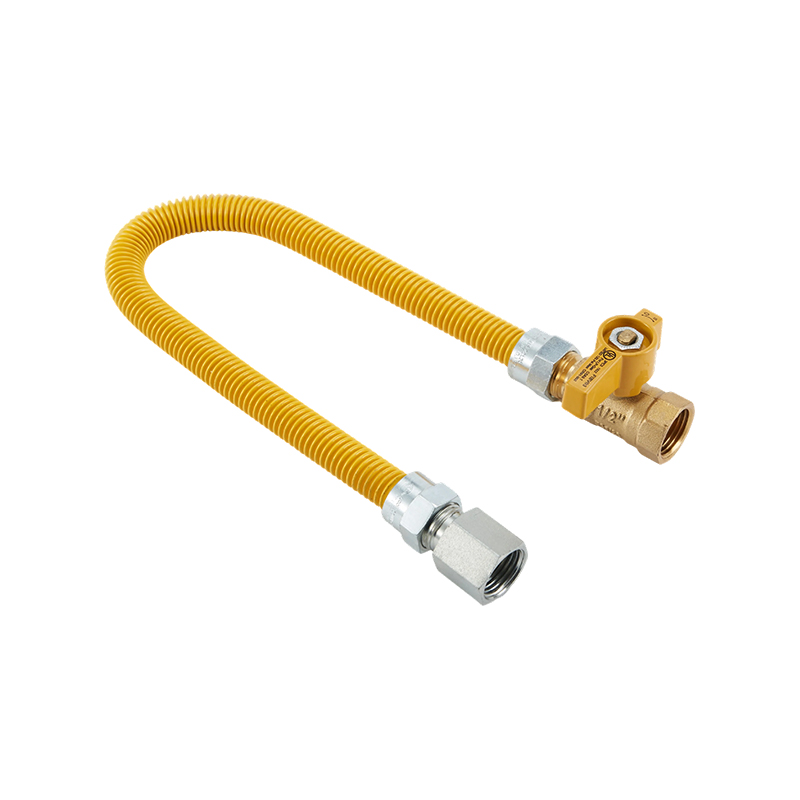
The DN20 stainless steel whistle-free gas connector is a flexible gas connection component made from 304 stainless steel. The tube has a stated wall thickness of 0.25 mm and is supplied in multiple length options: 12, 18, 24, 36, 48, 60, and 72 inches. This range supports short equipment connections as well as longer routing requirements where an appliance or gas device is positioned some distance from the fixed supply point.
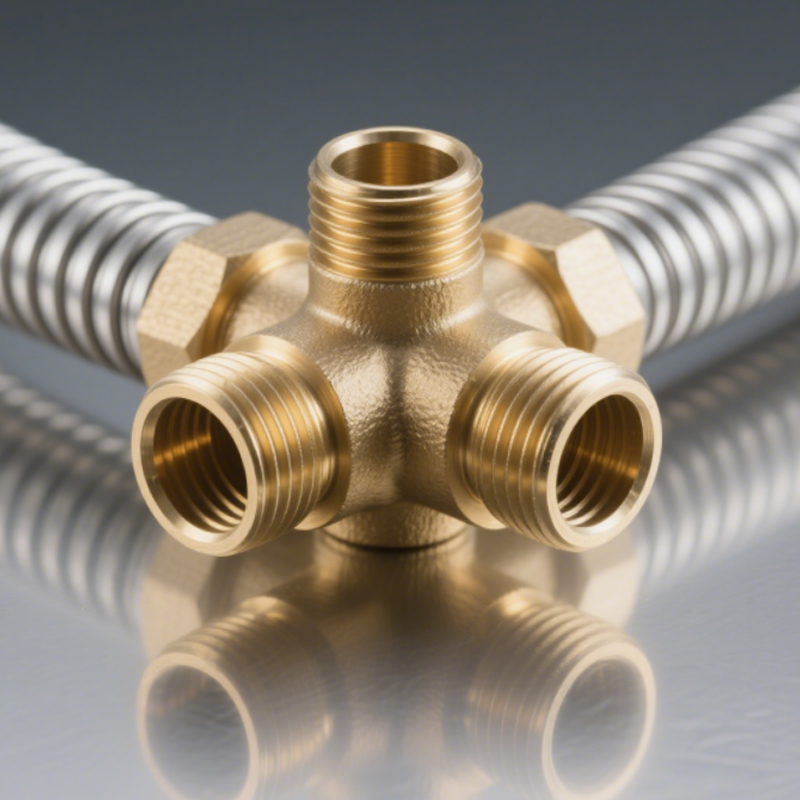
The connector uses a 1 1/8"-16UNF flare nut and can be configured with different adapters. Available adapter specifications include 1 1/8 x 3/4 male with 1/2 female and 1 1/8 x 3/4 female. These options allow the connector to accommodate different connection interfaces and pipe diameter requirements. The nut can be produced from brass or carbon steel, giving buyers a choice based on application preference, specification requirements, and project procurement standards.
A hard sealing structure is used at the connection interface. Unlike sealing arrangements that depend mainly on soft elastomeric elements, a hard seal can provide a stable metal-to-metal or mechanically compressed sealing interface when the fitting is correctly manufactured and installed. This design is particularly valuable in applications where long-term dimensional stability, resistance to aging, and reduced dependence on replaceable soft components are important.
The product has a natural stainless steel appearance and does not use a cover material. The exposed stainless steel finish provides a clean industrial appearance and makes the surface easy to inspect during installation and maintenance. The absence of an external cover may also simplify visual checking of the corrugated tube and fittings, although the connector must still be installed in accordance with applicable gas safety requirements and protected from unsuitable environmental conditions.
The whistle-free design is intended to minimize airflow noise generated as gas passes through the connector. Noise reduction is especially useful in residential kitchens, utility rooms, commercial appliance installations, and other spaces where unwanted gas-flow sound may be noticeable. A quieter connector can contribute to a more comfortable user environment and may help installers avoid unnecessary complaints related to operational noise.
| Specification | Available or Stated Value |
|---|---|
| Product type | DN20 stainless steel whistle-free gas connector |
| Tube material | 304 stainless steel |
| Tube wall thickness | 0.25 mm |
| Flare nut specification | 1 1/8"-16UNF |
| Adapter options | 1 1/8 x 3/4 male with 1/2 female; 1 1/8 x 3/4 female |
| Length options | 12, 18, 24, 36, 48, 60, and 72 inches |
| Nut material | Brass or carbon steel |
| Seal form | Hard sealing |
| Cover material | None |
| Surface appearance | Natural stainless steel |
| Noise-control feature | Whistle-free design |
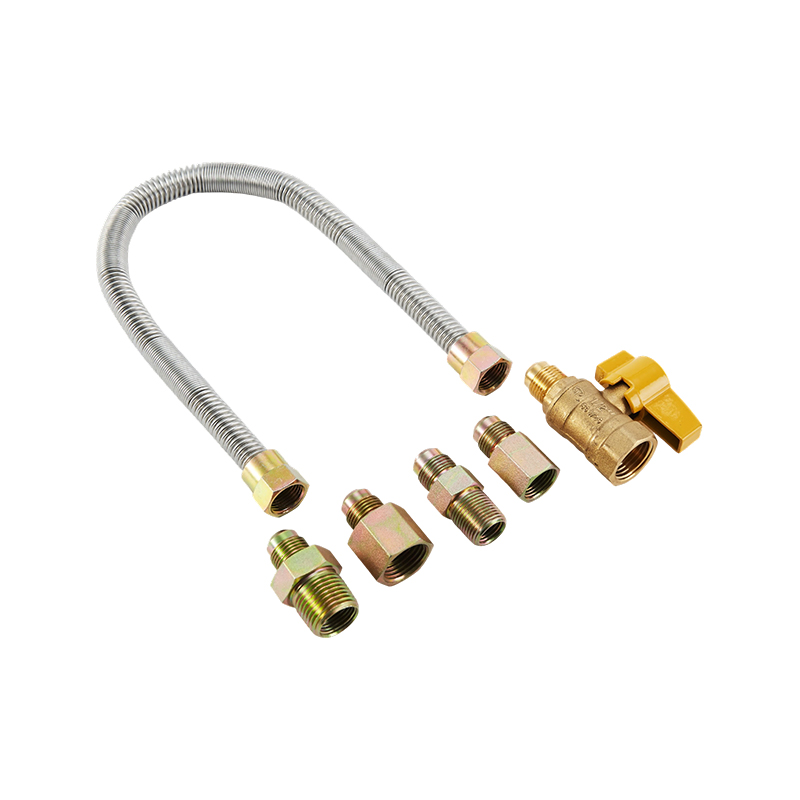
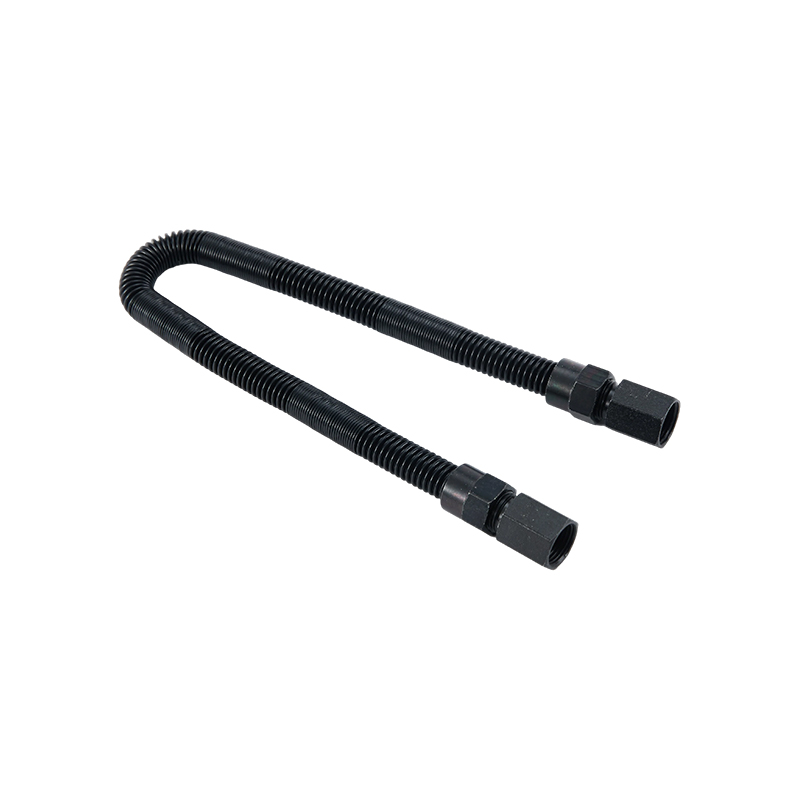
DN20 Stainless Steel Whistle Free Gas Connector
2. Why 304 Stainless Steel Matters
Material selection is one of the most important factors in the performance of a flexible gas connector. 304 stainless steel is widely used in connection components because it offers a useful balance of corrosion resistance, mechanical performance, formability, weldability, and availability. It contains chromium and nickel in proportions that enable the formation of a passive surface layer. This layer helps protect the base metal from ordinary atmospheric corrosion and from many common moisture-related conditions.
For a gas connector, corrosion resistance is valuable because the component may be exposed to humidity, condensation, cleaning agents, airborne contaminants, or occasional contact with moisture during its service life. A stainless steel body is generally more resistant to these conditions than ordinary uncoated carbon steel. This can support a longer service life and reduce the likelihood that surface corrosion will interfere with inspection, fitting movement, or appearance.
304 stainless steel also has good forming characteristics. Corrugated flexible tubing requires precise shaping of repeated ridges and valleys without producing unacceptable cracks, thinning, distortion, or residual defects. A material that can be formed consistently is essential for achieving stable flexibility and repeatable dimensions. The combination of material quality and controlled forming equipment is therefore more important than the material grade alone.
Compared with basic rubber or polymer connectors, stainless steel offers stronger resistance to heat, aging, puncture, and mechanical damage in many ordinary installation environments. Rubber products may be flexible and economical, but their long-term performance can be influenced by temperature, ultraviolet exposure, oils, chemicals, and natural aging. Stainless steel does not eliminate every possible installation concern, but it provides a durable metallic structure that is well suited to demanding connection applications.
Compared with untreated carbon steel tubing, 304 stainless steel can provide better resistance to rust and a cleaner appearance. Carbon steel fittings may perform effectively when properly protected, but coating damage, condensation, or unsuitable storage can lead to corrosion. The stainless steel body of this connector helps reduce dependence on external protective coatings for ordinary indoor use.
Material selection must always be considered together with the actual gas medium, pressure, temperature, installation environment, and applicable regulations. 304 stainless steel is a versatile material, but no material should be treated as universally suitable for every chemical or operating condition. Professional evaluation remains necessary for specialized industrial applications.
3. Flexible Corrugated Construction
The connector’s flexible body is formed into a corrugated structure. Corrugations increase the tube’s ability to bend while maintaining a continuous metallic flow path. Instead of forcing a smooth rigid tube to absorb movement through a small number of sharp bends, the corrugated body distributes bending over many repeated sections. This makes routing easier and can reduce installation stress when the connector is correctly handled.
Flexibility is useful when connecting gas appliances, regulators, manifolds, valves, or other equipment to a fixed supply line. Actual installation spaces may include cabinets, walls, corners, equipment frames, and neighboring components. A flexible connector can accommodate these conditions more easily than a rigid straight section, helping installers achieve a practical route without fabricating multiple elbows and threaded joints.
Fewer intermediate joints may also simplify an installation. Each additional fitting introduces another interface that must be correctly aligned, tightened, supported, and checked. A suitable flexible connector can reduce the number of connection points between the supply and equipment. This does not mean that every installation should use the longest possible connector. Excess length, sharp bends, unsupported loops, or contact with abrasive surfaces can create problems. The correct approach is to select a suitable length and route the connector with generous bends and adequate clearance.
The 0.25 mm wall thickness represents a design balance between flexibility and structural integrity. A thinner tube may be highly flexible but more vulnerable to handling damage, while an excessively thick tube may be more difficult to form and bend. Consistent control of wall thickness is important because local thinning or irregularity can affect corrugation quality and fatigue performance. Advanced forming and inspection processes help manufacturers maintain dimensional consistency throughout production.
Flexible metal tubing should not be used as a substitute for proper system design. It should not be kinked, crushed, stretched, twisted, or used to support the weight of an appliance. The connector should be routed so that it is not exposed to unnecessary tension, repeated movement, sharp edges, excessive heat, or accidental impact. Installation instructions and local gas codes must determine the acceptable routing method.
4. Whistle-Free Performance and User Comfort
Gas flow can generate audible noise when it passes through narrow passages, abrupt transitions, fittings, or internal structures that create turbulence. In some installations, this sound is barely noticeable. In others, it may become an irritating whistle or high-frequency tone, especially when flow demand, pressure conditions, or fitting geometry cause a resonant effect.
The whistle-free design of this connector is intended to reduce such airflow noise. Noise control is not only a comfort feature. A quieter gas connection can make it easier for users to identify unusual sounds elsewhere in the system. When ordinary operating noise is reduced, abnormal sounds associated with a loose component, damaged fitting, or other issue may be more distinguishable during inspection.
Actual acoustic performance depends on the entire gas system. Supply pressure, gas type, flow rate, appliance demand, regulator performance, adapter configuration, installation direction, and surrounding enclosure can all influence sound. Therefore, a whistle-free connector should be understood as a design intended to reduce connector-related airflow noise rather than a guarantee that every gas installation will be completely silent.
Compared with conventional flexible connectors that may produce noticeable airflow tones under certain conditions, a whistle-free configuration can offer a more refined user experience. This may be especially valuable in homes, apartments, hotels, restaurants, healthcare buildings, and other locations where quiet operation is preferred. For distributors and equipment manufacturers, the feature can also provide a practical selling point when buyers are comparing otherwise similar stainless steel connectors.
5. Connection Interface and Adapter Flexibility
The 1 1/8"-16UNF flare nut provides a defined connection interface for the connector assembly. A standardized thread specification supports compatibility with the corresponding fitting design and helps reduce ambiguity during procurement. Clear thread identification is essential because visually similar fittings can have different thread forms, pitches, sealing methods, or dimensional standards.
The available adapters expand the range of possible connection arrangements. The 1 1/8 x 3/4 male with 1/2 female configuration can support installations requiring a reduced or converted interface. The 1 1/8 x 3/4 female option provides another connection route for equipment or pipework using a compatible male fitting. These alternatives can help distributors carry a more flexible product range without requiring a completely different connector body for every application.
Adapter selection must be based on actual thread compatibility rather than approximate size. Nominal dimensions do not always indicate that two fittings can be safely connected. The thread standard, gender, sealing face, pressure rating, material compatibility, and installation instructions should all be verified. Cross-threading, forced assembly, or using an adapter with an unsuitable sealing method can result in leakage or mechanical damage.
The nut is available in brass or carbon steel. Brass is commonly valued for its corrosion resistance, machinability, and suitability for many plumbing and gas fitting applications. Carbon steel can provide strength and may be selected for particular cost, mechanical, or specification requirements. The correct nut material depends on the intended environment, customer requirements, regulatory expectations, and compatibility with the mating fitting.
A reliable connection depends on more than nut material. Thread accuracy, flare geometry, contact surface finish, concentricity, assembly torque, and seal integrity are all important. This is why precision forming, CNC machining, process inspection, and final performance testing are essential parts of the manufacturing system.
6. Hard Sealing and Leak-Prevention Considerations
The hard sealing form is designed to create a dependable seal through controlled contact and compression between rigid surfaces. Properly made hard seals can offer good resistance to aging because they do not depend primarily on a soft gasket that may harden, shrink, swell, or degrade over time. They can also support consistent assembly when the fitting surfaces and dimensions are tightly controlled.
Leak prevention begins with the design of the sealing interface but continues through every stage of manufacturing, packaging, installation, and service. A connector can have a sound design yet fail if the flare surface is scratched, the nut is damaged, the fitting is contaminated, or the assembly is tightened incorrectly. For this reason, quality control must include dimensional inspection, appearance checks, sealing evaluation, and appropriate pressure or leak testing.
The installation surface should be clean and free from debris. The connector should be aligned naturally with the mating fitting rather than forced into position. The flare nut should be started by hand to avoid cross-threading, then tightened using the appropriate method and tools. Excessive torque can damage threads or deform the sealing surface, while insufficient torque can prevent proper contact. The installer should follow the relevant instructions and local standards.
After installation, the complete connection should be inspected and tested using an approved leak-detection method. An open flame must never be used to search for gas leaks. If a leak is detected, the gas supply should be isolated and the connection corrected by a qualified professional. The connector should also be checked periodically for signs of corrosion, deformation, abrasion, disconnection, or contact with excessive heat.
Hard sealing is a significant advantage in applications where long-term sealing stability is prioritized, but it should not be considered a replacement for correct engineering and installation. Seal design, component tolerances, surface quality, and assembly practice must work together to deliver dependable performance.
7. Length Options and Installation Efficiency
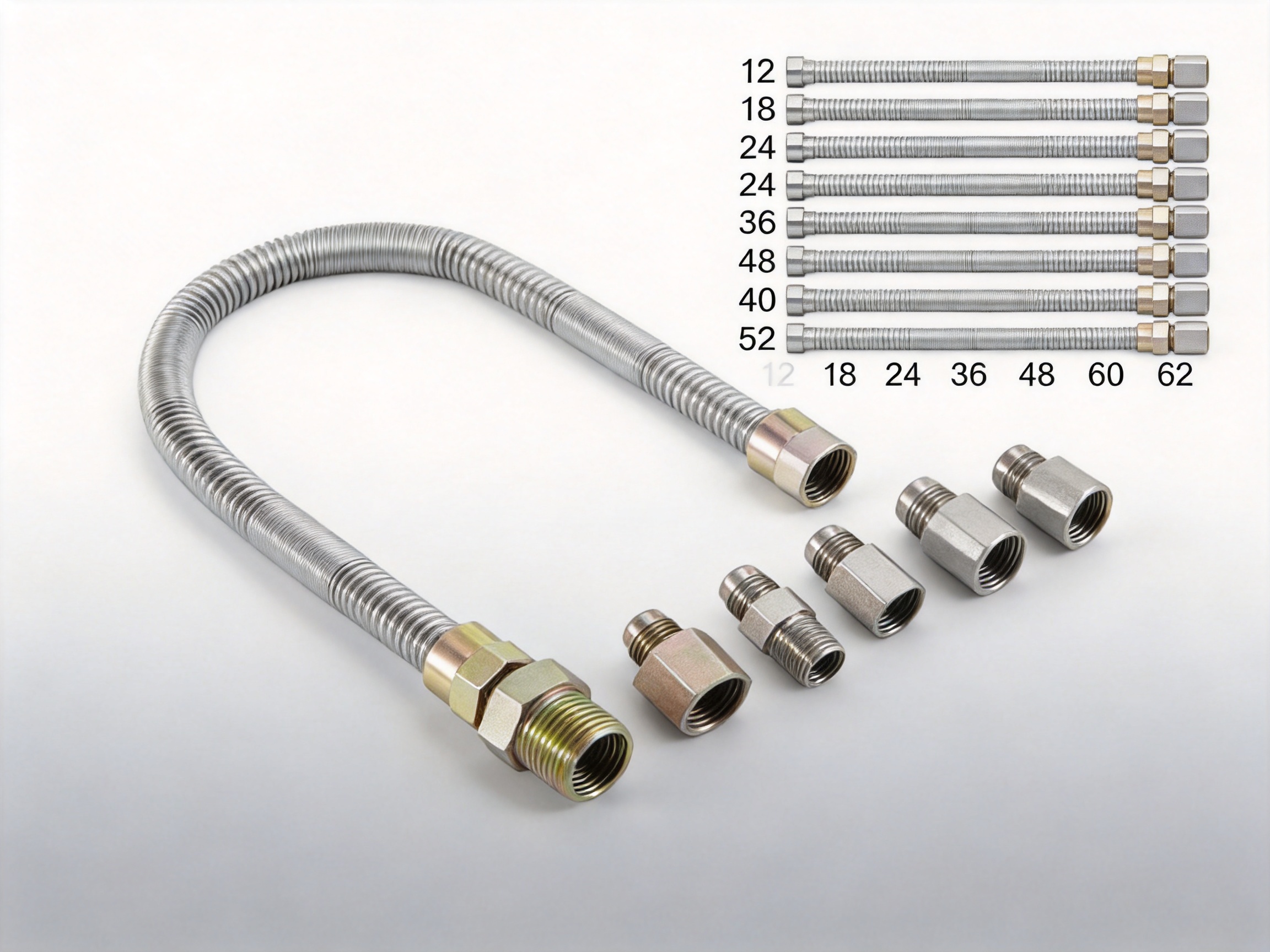
The connector is available in seven stated lengths: 12, 18, 24, 36, 48, 60, and 72 inches. This selection gives buyers practical flexibility when planning installations. Shorter lengths are useful for compact appliance connections where the supply outlet and equipment inlet are close together. Longer lengths can help route around cabinetry, structural members, or equipment arrangements while avoiding unnecessary rigid fittings.
Choosing the correct length is an important part of safe installation. A connector that is too short may be placed under tension or forced into a sharp bend. A connector that is too long may create loops, contact surfaces, or unwanted movement. The best length is generally the shortest option that allows a natural route with adequate clearance and without stretching, kinking, or twisting.
Multiple length options also benefit distributors and project contractors. A standard size range can simplify inventory planning and make it easier to match common customer requirements. It can reduce the need for field modification, which is particularly important because flexible gas connectors should not be cut, extended, or altered outside approved manufacturing and installation procedures.
For original equipment manufacturers and packaged equipment suppliers, offering several connector lengths can improve product configuration flexibility. A manufacturer may select a short connector for a compact appliance or a longer one for a system with a remote connection point. Clear labeling and traceability are important so that the selected length, adapter arrangement, material, and intended application remain identifiable through procurement and installation.
8. Comparison with Common Alternative Connector Types
Product comparison should focus on the requirements of the application rather than on a single feature. The DN20 stainless steel whistle-free gas connector offers several advantages over common alternatives, including corrosion-resistant construction, flexible routing, a noise-reduction design, hard sealing, and adapter choices. However, the suitability of any connector depends on the system conditions and applicable standards.
8.1 Compared with rigid metal pipe
Rigid metal pipe provides a strong and established gas distribution method, particularly for fixed building infrastructure. However, it requires accurate measurement, cutting, threading or joining, and the use of elbows or other fittings when the route changes direction. Installation can be labor-intensive in confined spaces.
A flexible corrugated connector can simplify the final connection to equipment and accommodate small alignment differences. It can reduce the number of elbows and threaded joints required near the appliance. This may shorten installation time and make maintenance access easier. Rigid pipe remains essential in many portions of a gas system, but a flexible connector can be advantageous at the equipment interface.
8.2 Compared with rubber or polymer hose
Rubber and polymer hoses can be lightweight and flexible, but they may be more sensitive to aging, temperature, chemicals, abrasion, and mechanical damage. Their service life may depend heavily on the specific compound and environmental exposure. Stainless steel provides a metallic barrier with strong resistance to many common indoor conditions and generally offers a more durable appearance.
The stainless steel connector may be preferred where long-term corrosion resistance and a robust metallic structure are important. Nevertheless, polymer hoses may be appropriate in applications specifically designed and approved for them. The selection should be made according to the gas type, pressure, temperature, regulatory requirements, and manufacturer instructions.
8.3 Compared with unprotected carbon steel connectors
Unprotected carbon steel can be vulnerable to rust, particularly in damp environments or where coatings are damaged. A 304 stainless steel body offers an advantage in ordinary corrosion resistance and can reduce maintenance related to surface deterioration. The natural finish also provides a clean appearance without requiring an external coating.
Carbon steel nuts may still be selected for certain product configurations, so the entire assembly should be evaluated rather than focusing only on the tube material. Environmental exposure, dissimilar-metal contact, and project specifications should be considered when choosing brass or carbon steel hardware.
8.4 Compared with conventional noisy flexible connectors
Some flexible gas connectors can generate noticeable airflow sounds depending on their internal geometry and operating conditions. The whistle-free design targets this concern directly. It may provide a more comfortable acoustic environment in occupied spaces and give the product an additional advantage in markets where quiet operation is part of the purchasing decision.
9. Manufacturing Process and Technical Capabilities
The performance of a flexible gas connector depends heavily on manufacturing consistency. Stainless steel tubing must be formed accurately, fittings must be produced to controlled dimensions, joints must be securely connected, and finished assemblies must pass inspection. Haoyin (Ningbo) Bellows Technology Co., Ltd. has developed manufacturing capabilities covering the full product process, from material selection and structural design to fabrication, testing, packaging, and after-sales support.
9.1 Raw material selection
Production begins with the selection and verification of stainless steel and fitting materials. Using the specified 304 stainless steel helps establish a consistent foundation for corrosion resistance and forming performance. Material identification and incoming inspection are important because incorrect or inconsistent raw material can affect strength, weldability, surface condition, and service life.
For a company producing bellows, gas connectors, water liners, metal hoses, and compensators, material control is especially important. These products may be exposed to repeated movement, pressure variation, thermal expansion, vibration, and changing environmental conditions. A disciplined raw material process helps ensure that the final component performs as designed.
9.2 CNC forming
CNC forming machines are used to create accurate corrugated structures and repeatable component geometries. Computer-controlled forming helps regulate dimensions, pitch, depth, and alignment. Consistent corrugation is important for maintaining predictable flexibility and avoiding local stress concentrations.
Compared with less controlled manual or semi-manual methods, CNC forming can improve repeatability across production batches. It can also support quicker adjustment when different product sizes or specifications are required. For a connector offered in multiple lengths and adapter combinations, process flexibility is valuable for both standard orders and customized production requirements.
9.3 Laser welding
Laser welding machines provide concentrated energy and precise control at the joint. This is useful when welding thin stainless steel components, where excessive heat can cause distortion, discoloration, burn-through, or undesirable changes in the material. A controlled laser process can create clean, consistent welds with a relatively small heat-affected zone.
Weld quality is critical in a flexible gas connector because the joint must remain secure while the body is bent during installation and exposed to pressure during operation. Production control may include monitoring welding parameters, checking joint appearance, and conducting appropriate leak or strength tests. The exact inspection method depends on the joint design and applicable technical requirements.
9.4 COSMO equipment and specialized production
The company also uses COSMO equipment as part of its advanced manufacturing resources. Specialized equipment of this type can support precision processing, assembly, or inspection depending on the production stage and configuration. The use of dedicated equipment reflects an effort to standardize manufacturing operations and improve process efficiency.
Advanced equipment is most effective when combined with documented procedures, trained operators, preventive maintenance, calibration, and process records. Machines alone do not guarantee quality. A strong manufacturing system integrates equipment capability with engineering controls and continuous improvement.
9.5 Eddy current flaw detection
Eddy current flaw detectors can identify certain surface and near-surface discontinuities in conductive materials without destroying the component. This type of inspection is useful for metal tubing and formed parts because it can help detect defects that may not be visible during an ordinary visual inspection.
For thin-wall stainless steel components, non-destructive testing can provide an additional layer of quality assurance. Detecting flaws before final assembly helps reduce the risk of defective products reaching customers and supports more reliable process feedback. The inspection system should be correctly calibrated and operated according to documented procedures.
9.6 Automated packaging
Automated packaging systems help standardize product protection, labeling, counting, and shipment preparation. Packaging is not merely a logistical step. Flexible metal connectors can be damaged by impact, crushing, sharp objects, moisture, or improper stacking. A controlled packaging process helps preserve the condition of the tube, fittings, threads, and sealing surfaces until installation.
Accurate packaging identification is also important when multiple lengths and adapter configurations are offered. Clear labels can help prevent incorrect selection at the warehouse, distributor, or job site. Automated systems may improve consistency and reduce manual counting or packing errors.
10. Company Infrastructure and Quality Management
Haoyin (Ningbo) Bellows Technology Co., Ltd. operates from a manufacturing base covering approximately 35 mu, with about 18,000 square meters of standardized workshops. This scale provides space for production equipment, raw material storage, assembly areas, inspection stations, finished goods handling, and research and development activities.
The company has obtained ISO9001, ISO14001, ISO45001, and other management system certifications. ISO9001 is associated with quality management, ISO14001 with environmental management, and ISO45001 with occupational health and safety management. These systems provide structured frameworks for documentation, responsibility, process control, risk management, corrective action, and continual improvement.
Certification alone does not replace product-specific testing or regulatory compliance, but it demonstrates that the company has established formal management practices. For buyers, this can be useful when evaluating supplier stability, production discipline, environmental responsibility, and occupational safety controls.
The company is also identified as a National High-tech Enterprise and Green Factory. These designations reflect its focus on technical development, organized production, and environmental management. For customers seeking a long-term manufacturing partner, the combination of product specialization, production infrastructure, research capability, and management systems can be more valuable than a supplier that only performs basic assembly or trading functions.
Its stated quality philosophy, “Striving for Excellence, Forging Quality,” is supported by a full-process quality management approach. Such an approach considers quality at every stage: raw material selection, structural design, process development, forming, welding, inspection, packaging, delivery, and after-sales service. This is particularly relevant for gas connectors because performance depends on the interaction of many small details rather than on one isolated component.
11. Research, Development, and Product Portfolio Strength
A company specializing in stainless steel bellows has a technical foundation directly relevant to flexible connectors. Bellows manufacturing requires knowledge of thin-wall forming, controlled corrugation, fatigue behavior, pressure resistance, welding, dimensional stability, and movement absorption. These capabilities can be applied across gas connectors, plumbing pipes, water liners, metal hoses, and compensators.
The company’s product portfolio covers gas connection, plumbing, heating, healthcare, building heating, industrial HVAC, and related fields. Exposure to multiple application areas can encourage the development of transferable engineering knowledge. For example, a manufacturing improvement developed for a metal hose may help improve forming consistency in a gas connector, while inspection experience from compensator production may support quality control for other bellows-based components.
A professional research and development team can also help customers with specification selection, adapter configuration, length planning, and application-specific requirements. This is valuable for distributors and equipment manufacturers that need more than a standard catalog item. A technically capable supplier can assist in identifying potential incompatibilities before they become field problems.
Product development should remain connected to actual application requirements. For gas connectors, important development topics include flow behavior, acoustic performance, sealing reliability, fitting strength, corrosion resistance, flexibility, installation handling, and long-term durability. A balanced development program evaluates all of these characteristics rather than optimizing one feature at the expense of others.
12. Installation and Handling Guidance
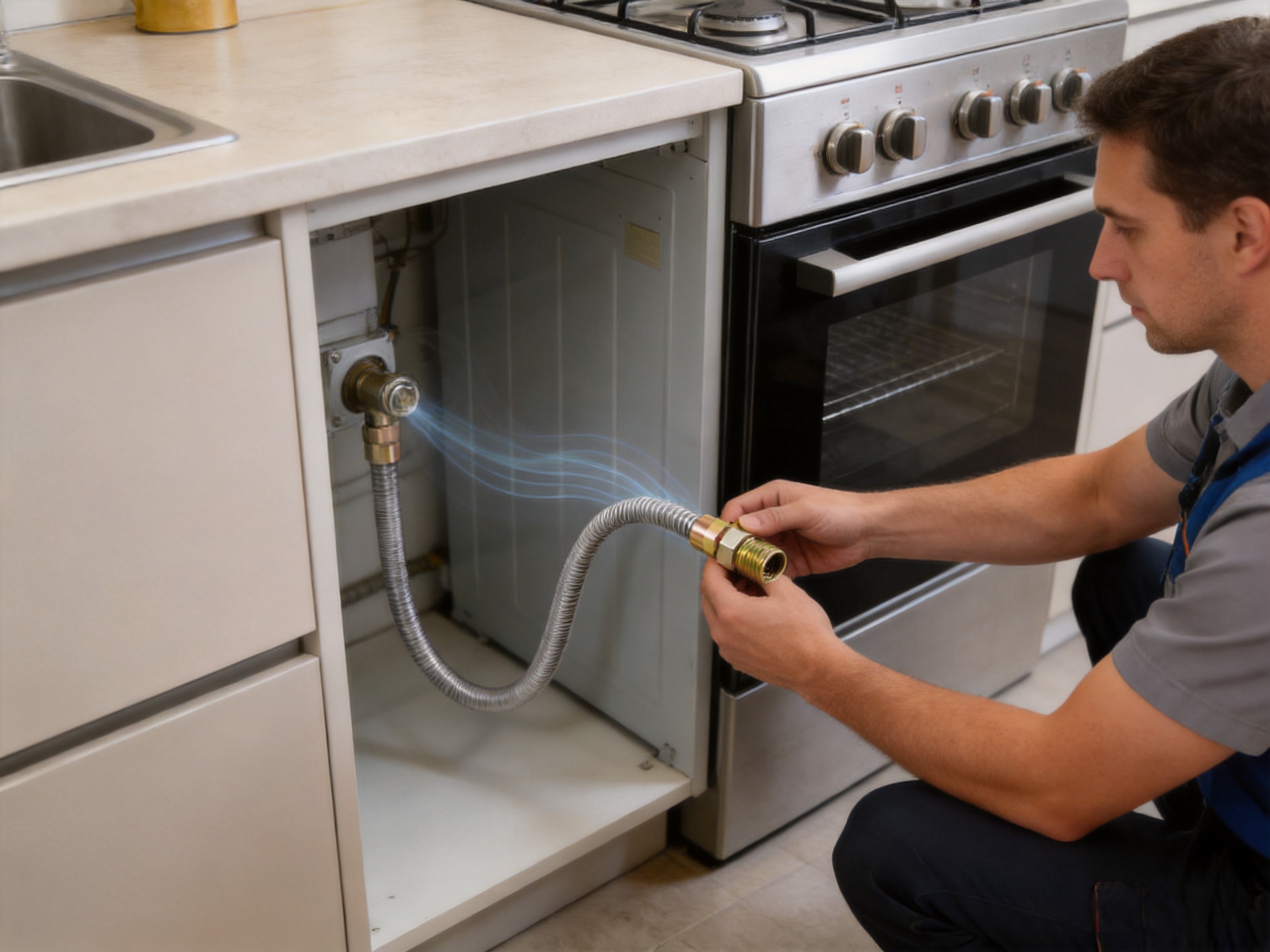
The DN20 connector should be installed by qualified personnel familiar with gas equipment and the requirements of the local jurisdiction. Before installation, the installer should verify the connector size, length, adapter type, thread specification, material, and intended gas application. The mating fittings should be inspected to ensure that they are compatible and undamaged.
The connector should be routed with smooth, gradual bends. Sharp kinks can concentrate stress in a small section of the corrugated tube and may reduce the effective flow area. Twisting can place torsional stress on the tube and fittings. The connector should not be pulled tight or used to correct significant misalignment between two connection points.
Contact with sharp cabinet edges, abrasive surfaces, hot appliance components, moving mechanisms, and corrosive chemicals should be avoided. Where the installation environment creates a risk of abrasion or impact, additional protection or a different approved product may be required. The connector should not be painted, cut, lengthened, welded, or otherwise modified in the field unless the procedure is specifically approved by the manufacturer and relevant authorities.
The flare nut and adapter should be assembled using compatible tools and methods. The installer should avoid holding the corrugated tube in a way that transfers excessive force to the welded or formed joint. Proper support should be provided for the connected equipment so that the flexible connector is not carrying appliance weight or acting as a structural member.
After assembly, the gas supply should be introduced carefully and the connection checked with an approved leak-detection solution or instrument. Any leak, unusual odor, visible damage, or abnormal sound should be treated seriously. The system should be shut down and examined by a qualified professional. Periodic inspection is recommended, especially after equipment movement, renovation, flooding, fire exposure, or other events that could affect the connector.
13. Purchasing and Specification Checklist
Buyers should define the application before placing an order. The following questions can help ensure that the selected connector matches the project:
- What gas type will be conveyed?
- What are the operating and maximum allowable pressure conditions?
- What temperatures and environmental exposures will occur?
- What connector length is required for a natural, unstressed route?
- Which adapter configuration matches the equipment and supply fitting?
- Is a brass or carbon steel nut required by the project specification?
- What local standards or certification requirements apply?
- Does the installation require special corrosion, vibration, or movement resistance?
- What inspection, traceability, packaging, and labeling documents are needed?
- Will the product be supplied as a standard item or as part of a customized assembly?
Distributors should also consider inventory efficiency. Because the connector is available in several lengths and adapter arrangements, distributors can build a product range around the most common installation requirements. Correct product coding and packaging labels can reduce warehouse mistakes. Stock rotation and protected storage should be managed so that fittings and sealing surfaces remain clean and undamaged.
14. Advantages for Different Customer Groups
14.1 Advantages for installers
Installers can benefit from the connector’s flexible routing, multiple length options, and adapter variety. The stainless steel body is easy to inspect, while the defined flare nut and hard-seal configuration support a clear assembly method. Reduced airflow noise may also improve the finished installation in occupied buildings.
14.2 Advantages for distributors
Distributors can offer a product that combines several commercially attractive features: 304 stainless steel, a whistle-free design, flexible lengths, adapter choices, and a natural stainless steel finish. The product can serve residential, commercial, heating, and selected industrial connection requirements, subject to application approval and local regulations.
14.3 Advantages for equipment manufacturers
Equipment manufacturers may use the connector as part of a packaged appliance or system. The range of lengths and adapters can support different equipment layouts. A specialist supplier with R&D and production capabilities may also be better positioned to support design changes, private labeling, engineering samples, and volume production than a purely trading-oriented supplier.
14.4 Advantages for end users
End users may value the connector’s clean appearance, corrosion-resistant construction, flexible installation, and reduced airflow noise. A well-selected and correctly installed connector can support dependable equipment operation while making the connection easier to inspect and maintain.
15. Why Manufacturing Depth Matters More Than Appearance
Stainless steel products from different suppliers may appear similar at first glance, but internal quality can vary considerably. Two connectors may have the same nominal size while differing in wall consistency, corrugation geometry, weld quality, thread accuracy, surface finish, sealing performance, and inspection procedures. These differences may not be visible until installation or long-term service.
A manufacturer with dedicated forming, welding, testing, and inspection resources can control more of the product’s critical variables. Laser welding can improve joint precision; CNC forming can improve repeatability; eddy current testing can identify hidden material discontinuities; and automated packaging can reduce handling damage. Together, these processes create a stronger foundation for consistent product quality.
Management systems add another layer of control. Documented procedures, traceable materials, calibrated equipment, operator training, nonconformance handling, and corrective action help prevent recurring defects. Environmental and occupational safety systems also support responsible factory operation and long-term business stability.
For buyers, supplier evaluation should therefore consider more than unit price. Production capacity, technical support, quality records, testing capability, delivery reliability, customization support, and after-sales communication can all influence the total cost and risk of a project. A connector that performs consistently may reduce installation delays, replacements, warranty claims, and service interruptions.
16. Technical Limitations and Responsible Use
No flexible gas connector is suitable for every situation. The DN20 product must be selected according to its approved application, pressure and temperature limits, gas compatibility, connection standard, and installation environment. The information provided for this product identifies key materials, dimensions, adapters, and construction features, but project-specific requirements may call for additional technical confirmation.
The connector should not be installed where it may be continuously exposed to extreme heat, severe chemical attack, heavy abrasion, direct flame, excessive vibration, or repeated uncontrolled movement unless the application has been evaluated and approved. It should not be buried, concealed, or routed in a way that prevents required inspection unless local regulations specifically permit such use and the product is approved for that arrangement.
Whistle-free construction reduces connector-related airflow noise but cannot compensate for an incorrectly sized regulator, undersized supply line, obstructed fitting, or unstable appliance. Similarly, hard sealing supports leak resistance but cannot correct cross-threading, damaged flares, poor alignment, or incorrect torque.
Responsible use means combining the product’s design advantages with competent engineering, approved materials, proper installation, regular inspection, and compliance with all applicable safety requirements. These principles protect both the user and the equipment.
17. Frequently Asked Questions
What is the main application of the DN20 stainless steel whistle-free gas connector?
It is designed for flexible gas connection applications where a 304 stainless steel corrugated connector, defined flare fitting, hard sealing, and reduced airflow noise are desired. It may be used for suitable residential, commercial, heating, or equipment connection applications after confirming compatibility with local requirements.
What material is used for the flexible tube?
The flexible tube is made from 304 stainless steel. The stated wall thickness is 0.25 mm. This material provides corrosion resistance, formability, and a durable metallic structure for appropriate service environments.
What flare nut specification is provided?
The product uses a 1 1/8"-16UNF flare nut. The mating fitting must have the corresponding compatible thread and sealing geometry. Nominal size alone is not sufficient to confirm compatibility.
Which adapter configurations are available?
The stated options include 1 1/8 x 3/4 male with 1/2 female and 1 1/8 x 3/4 female. Buyers should select the adapter according to the actual equipment and supply interfaces.
What lengths can be ordered?
The available length options are 12, 18, 24, 36, 48, 60, and 72 inches. The correct selection should permit smooth routing without tension, twisting, kinking, or excessive unused length.
What does whistle-free mean?
Whistle-free refers to a design intended to reduce high-frequency airflow noise produced by gas movement through the connector. Actual sound levels depend on the complete system, including pressure, flow rate, appliance demand, fittings, and installation conditions.
Is the connector covered with an external protective material?
No external cover material is specified for this product. It has a natural stainless steel finish. The connector should nevertheless be protected from sharp edges, severe abrasion, excessive heat, and unsuitable chemical exposure.
What type of sealing does the connector use?
The stated seal form is hard sealing. Proper sealing still requires compatible fittings, clean sealing surfaces, accurate alignment, and correct installation torque.
Are the nuts made of brass or carbon steel?
The nut material can be brass or carbon steel. The preferred material should be confirmed according to the project specification, environment, compatibility requirements, and customer preference.
Can the connector be cut or modified during installation?
Field cutting, welding, lengthening, or unauthorized modification is not recommended. The connector should be ordered in a suitable standard length or produced according to an approved manufacturing specification.
How should the connector be checked for leakage?
After installation, the connection should be checked using an approved leak-detection solution or suitable instrument. Open flames must never be used for leak testing. If leakage is detected, the supply should be isolated and the issue corrected by qualified personnel.
What manufacturing technologies support this product?
The manufacturer uses technologies and equipment including laser welding machines, CNC forming machines, COSMO equipment, eddy current flaw detectors, and automatic packaging systems. These resources support forming accuracy, joint quality, non-destructive inspection, and consistent shipment preparation.
Does the company produce other flexible connection products?
Yes. Its product range includes gas connectors, plumbing pipes and water liners, metal hoses, and compensators. The company also provides flexible connection solutions for gas, plumbing, heating, healthcare, building heating, and industrial HVAC applications.
18. Conclusion
The DN20 stainless steel whistle-free gas connector is a flexible connection solution built around several practical performance features. Its 304 stainless steel tube provides corrosion resistance and a durable metallic structure. The 0.25 mm corrugated wall supports flexibility while maintaining a compact connection profile. The 1 1/8"-16UNF flare nut and adapter options provide interface flexibility, while the hard-seal design supports dependable sealing when correctly assembled. Available lengths from 12 to 72 inches help installers choose a practical route for different equipment layouts.
Its whistle-free design adds a user-comfort advantage by targeting airflow-related noise. This differentiates the connector from ordinary flexible products that may produce noticeable tones under certain flow conditions. The natural stainless steel finish and absence of an external cover also make visual inspection straightforward.
The product’s broader advantage comes from the manufacturing system behind it. Haoyin (Ningbo) Bellows Technology Co., Ltd. combines stainless steel bellows specialization with standardized workshops, professional R&D, laser welding, CNC forming, COSMO equipment, eddy current flaw detection, automated packaging, and formal quality, environmental, and occupational safety management systems. This integrated capability supports consistent manufacturing and gives customers access to a supplier with experience across gas, plumbing, heating, HVAC, metal hose, and compensator applications.
For the best results, the connector should be selected according to the actual gas system, installed by qualified personnel, protected from unsuitable conditions, and inspected using approved procedures. When these requirements are followed, the DN20 stainless steel whistle-free gas connector can provide a practical combination of flexibility, corrosion resistance, connection adaptability, sealing reliability, and quieter operation for suitable gas connection applications.
References
1. Stainless Steel Material Selection Principles for Flexible Tubing and Corrugated Bellows.
2. General Engineering Practices for Metallic Hose Routing, Bending, and Installation.
3. Quality Management Systems for Manufacturing Organizations, ISO 9001 Principles.
4. Environmental Management Systems, ISO 14001 Principles.
5. Occupational Health and Safety Management Systems, ISO 45001 Principles.
6. Non-Destructive Testing Practices for Conductive Metallic Components Using Eddy Current Inspection.
7. General Guidance for Flare Fittings, Thread Compatibility, and Hard-Seal Connections.
8. Engineering Considerations for Gas Appliance Connectors, Flexible Metal Tubes, and Connection Safety.
9. Manufacturer-provided technical information for the DN20 Stainless Steel Whistle-Free Gas Connector.
10. Manufacturer-provided company information concerning stainless steel bellows research, development, production equipment, certifications, and product applications.