




 English
 Español
 русский



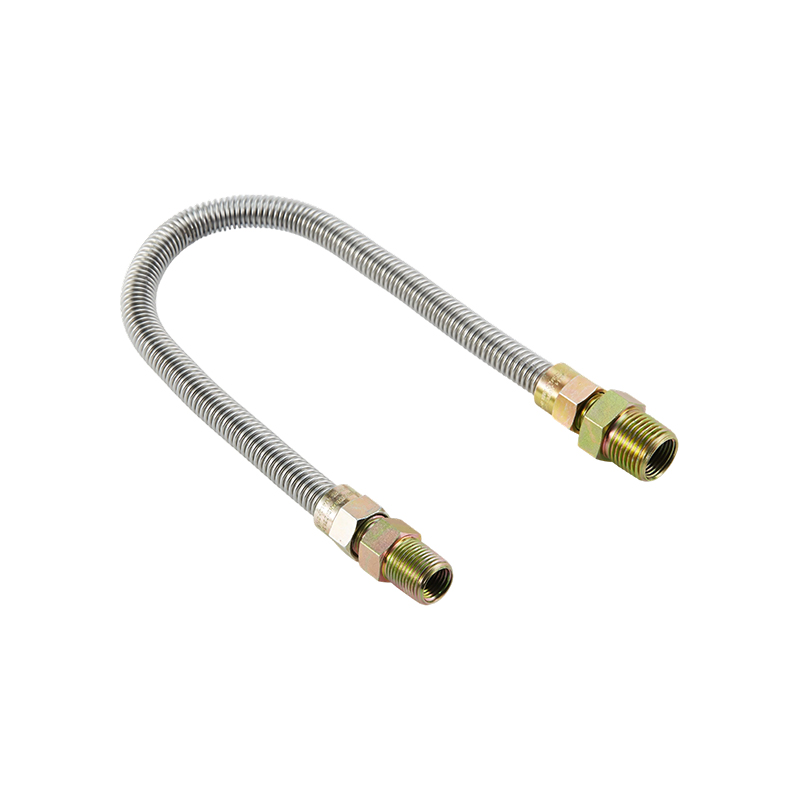
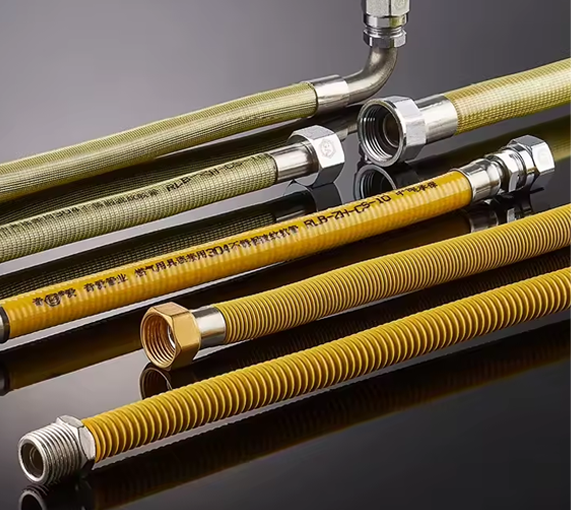
Modern gas systems require connection components that combine mechanical reliability, corrosion resistance, installation flexibility, and long-term sealing performance. A gas connector may appear to be a relatively small part of a residential, commercial, or industrial installation, but its performance directly affects system safety, operating comfort, maintenance requirements, and the service life of connected equipment. The DN15 stainless steel whistle-free gas connector is designed to address these requirements through a flexible stainless steel construction, a practical range of connection options, a hard-seal structure, and a design that helps reduce airflow noise.
With a nominal DN15 format, a 0.25 mm wall thickness, a 15/16"-16UNF flare nut, and multiple adapter configurations, this connector is suitable for connecting gas appliances, pipelines, regulators, and related equipment where a flexible and dependable interface is required. It is offered in lengths from 12 inches to 72 inches and can be supplied in stainless steel or black finishes. Brass or carbon steel nut options further support different installation preferences and project requirements.
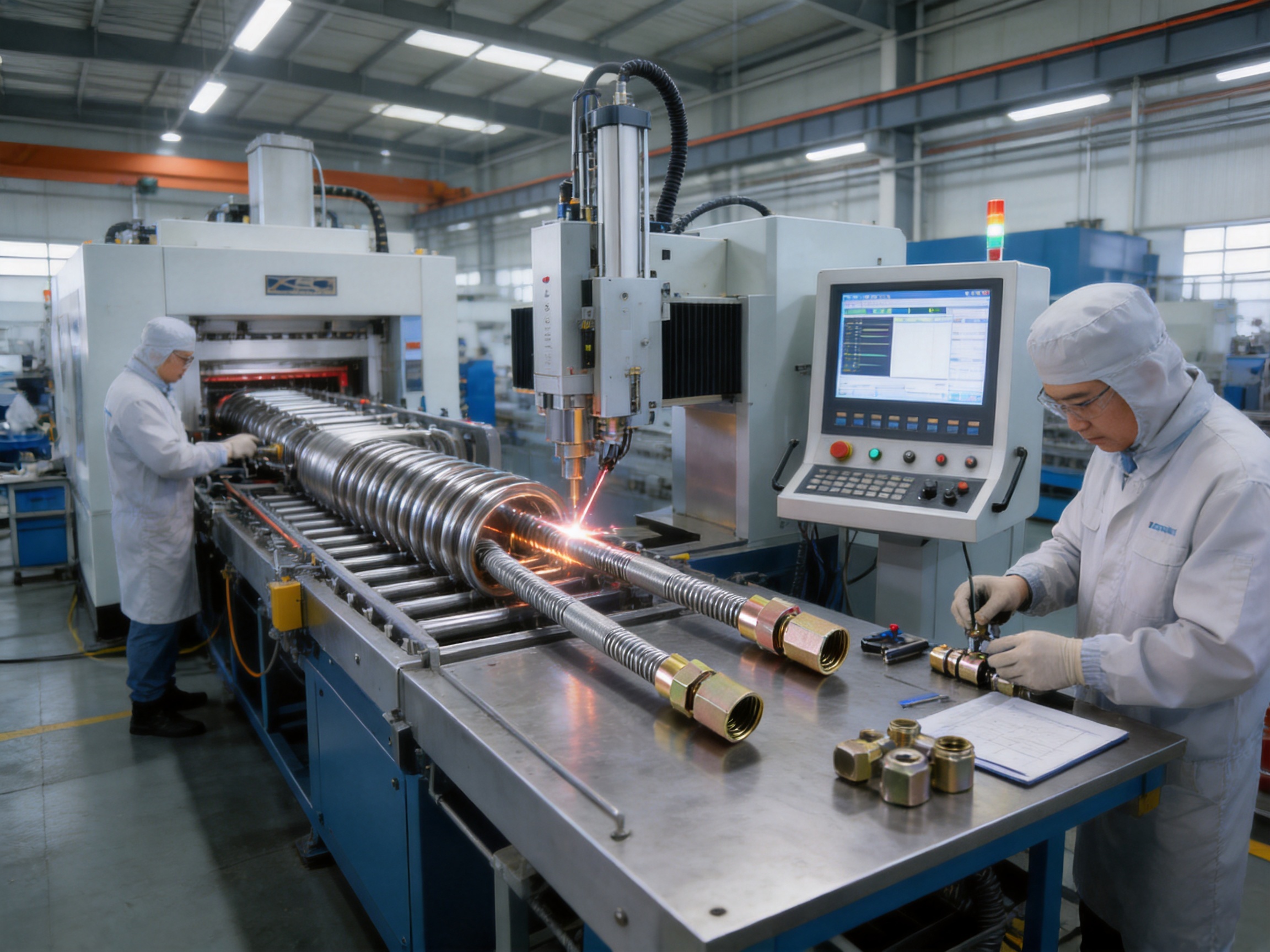
The product is manufactured by Haoyin (Ningbo) Bellows Technology Co., Ltd., a specialist in stainless steel bellows and flexible connection solutions. The company serves gas, plumbing, heating, healthcare, building services, industrial HVAC, and other technical fields. Its manufacturing capabilities include laser welding, CNC forming, eddy current flaw detection, performance testing, and automated packaging. These capabilities allow the connector to be developed and produced through a controlled process that covers material selection, forming, joining, inspection, and delivery.
Understanding the Role of a Flexible Gas Connector
A gas connector forms the transition between a fixed gas supply pipe and an appliance or piece of equipment. Unlike a rigid pipe, a flexible connector can accommodate limited movement, simplify installation, and reduce the need for multiple fittings or complicated alignment work. This flexibility is particularly valuable where an appliance must be moved for cleaning, servicing, replacement, or adjustment.
In many installations, the connector must operate in a restricted space behind or beside an appliance. A suitable product must therefore be flexible enough to route conveniently while remaining mechanically stable after installation. It must also maintain a dependable connection at both ends, resist environmental exposure, and provide a sealing structure appropriate for the gas system.
The DN15 stainless steel whistle-free gas connector is designed around these practical needs. Its corrugated stainless steel body provides flexibility while preserving the advantages of metal construction. The flare nut and adapter system supports connection to different interfaces, while the hard-seal form helps create a stable sealing contact when the product is properly installed.
For professional installers, product selection is not based only on nominal size. Important factors include the material, wall thickness, connection standard, adapter configuration, available length, nut material, surface finish, sealing method, and inspection controls used during production. The combination of these factors determines whether a connector can provide safe and convenient service in a specific application.
Product Construction and Key Specifications
The connector uses 304 stainless steel as its primary material. This stainless steel grade is widely used in engineering applications because it offers a useful balance of corrosion resistance, forming performance, strength, cleanliness, and availability. In a flexible corrugated tube, the material must be capable of repeated forming into a controlled profile without compromising the integrity of the tube wall.
The specified wall thickness is 0.25 mm. This thickness supports the product’s flexible structure while maintaining a metal barrier suitable for gas connection applications when the connector is used within the correct service conditions and installed according to applicable requirements. Wall thickness is an important design parameter because it affects flexibility, forming behavior, pressure capability, resistance to handling damage, and overall weight.
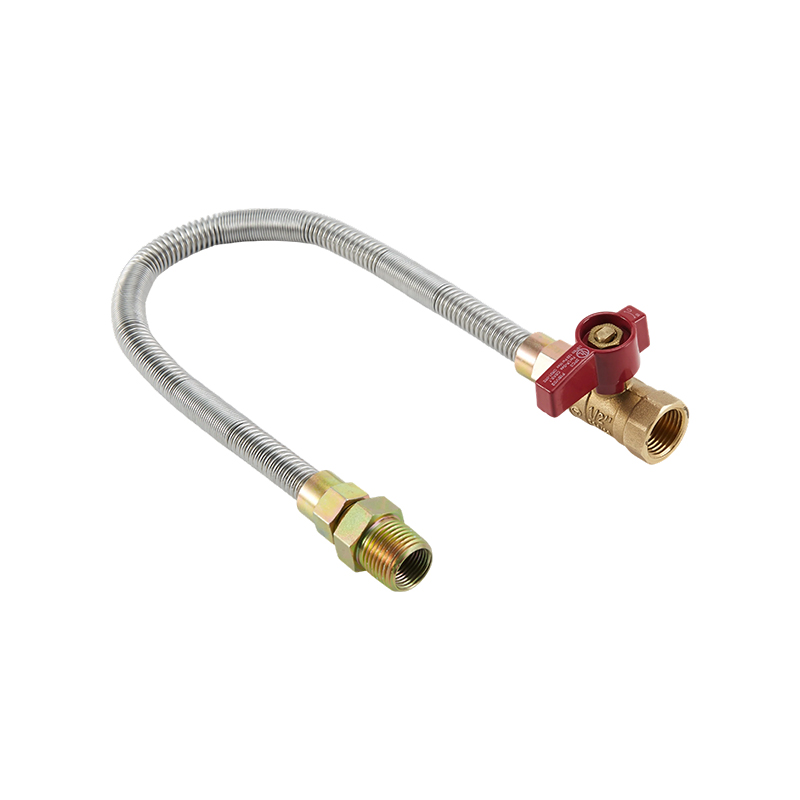
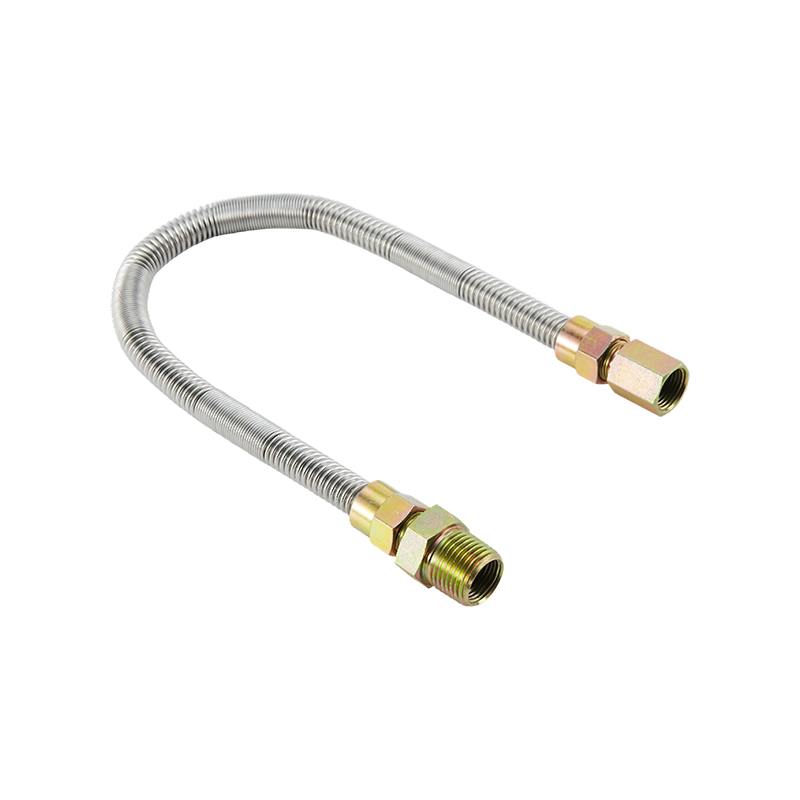
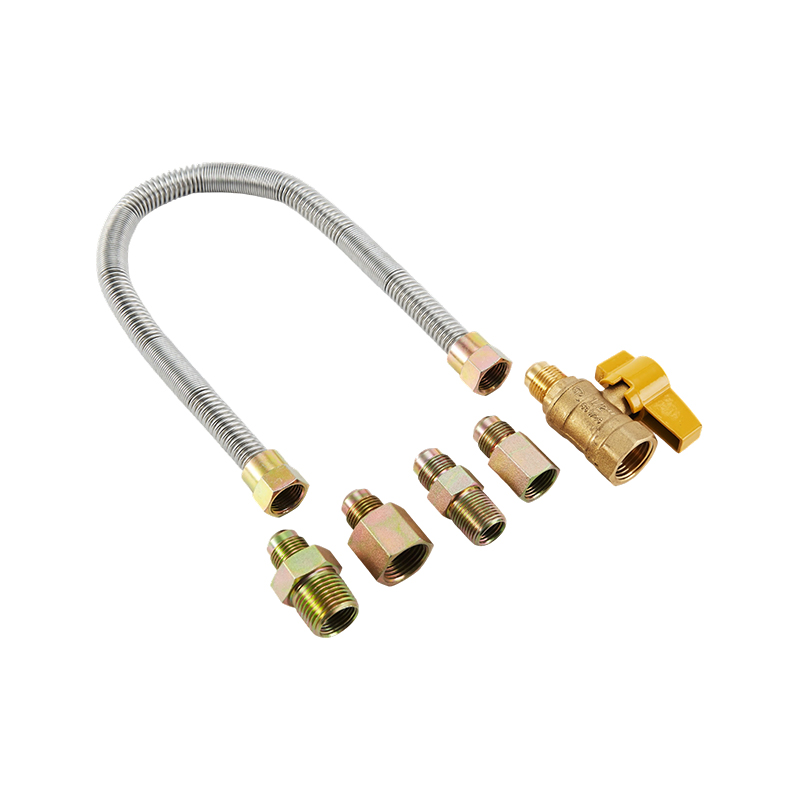
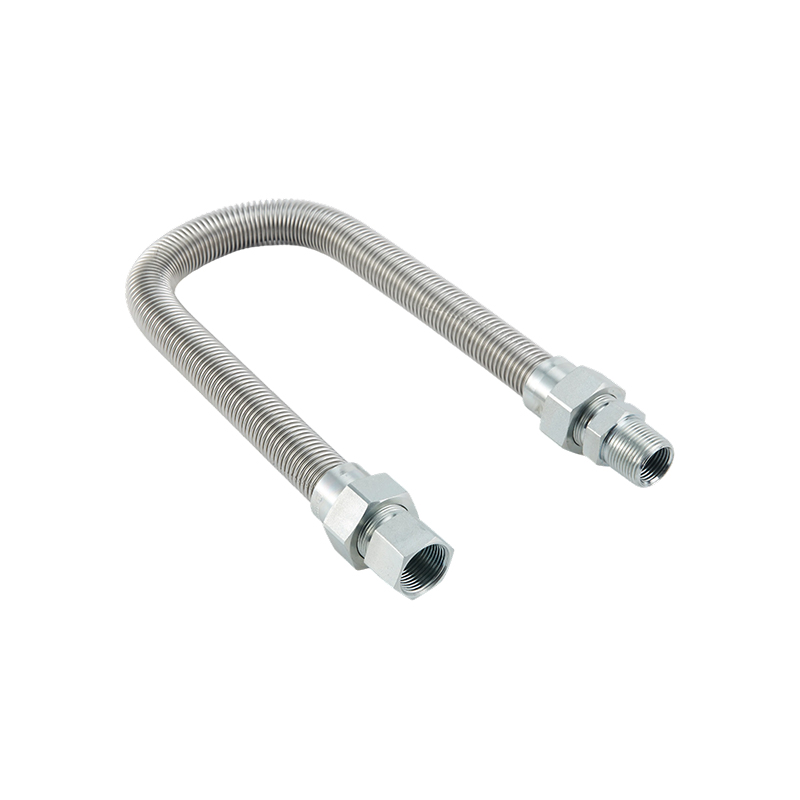
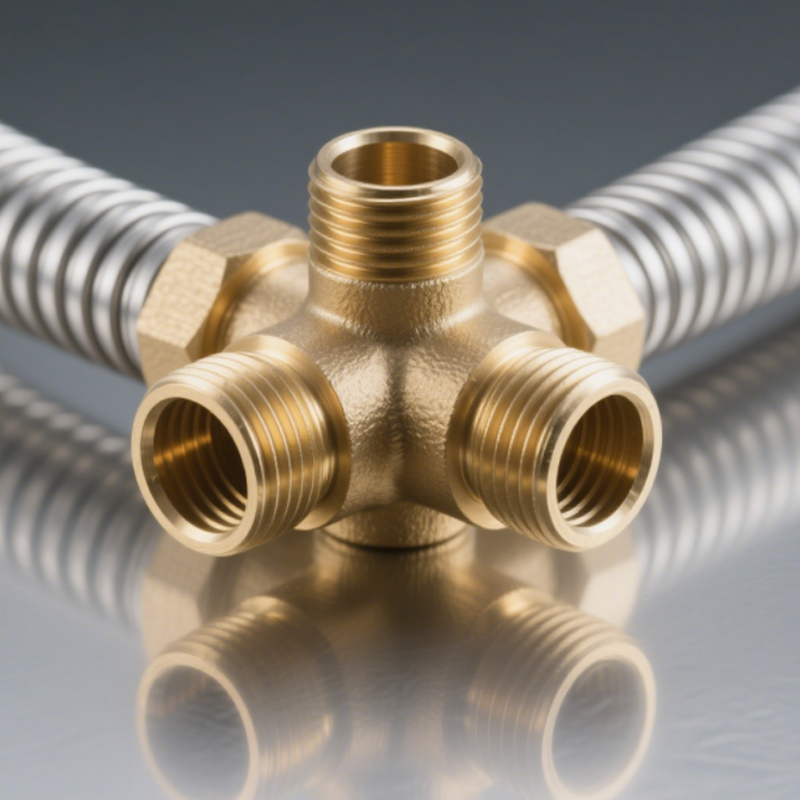
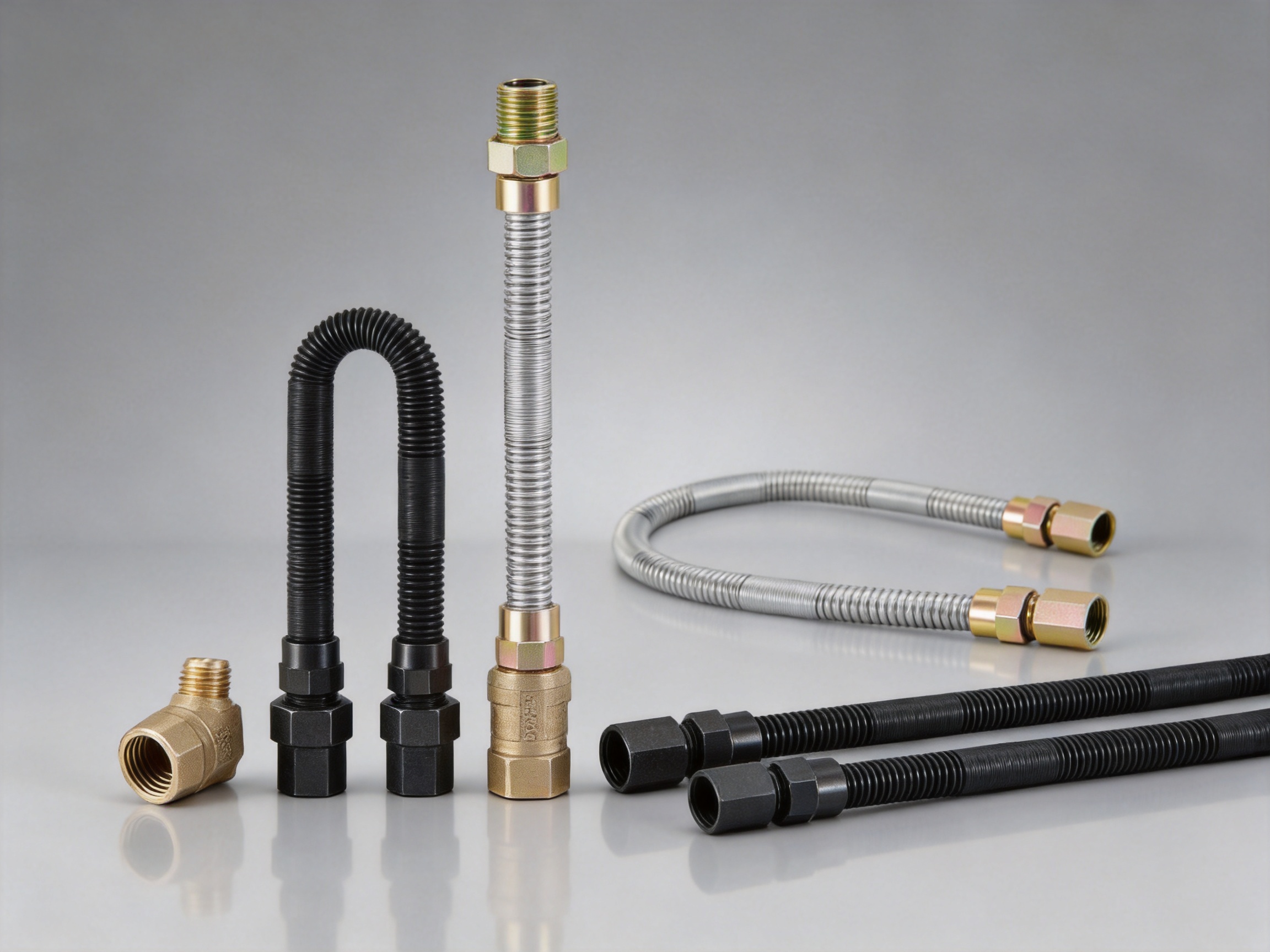
The standard flare nut specification is 15/16"-16UNF. This clearly defined thread interface helps installers identify the compatible connection arrangement before beginning work. The product can also be supplied with several adapter configurations, including 15/16*1/2M(3/8F), 15/16*1/2F, 15/16*3/4M(1/2F), and 15/16*3/4F. These options allow one basic connector family to serve different equipment interfaces and pipe connection requirements.
Available lengths include 12, 18, 24, 36, 48, 60, and 72 inches. This range covers short connections in compact installations as well as longer routing requirements where the supply point and appliance inlet are separated by a greater distance. Selecting the correct length is essential. The connector should reach the connection points without excessive tension, sharp bending, twisting, or unnecessary loops.
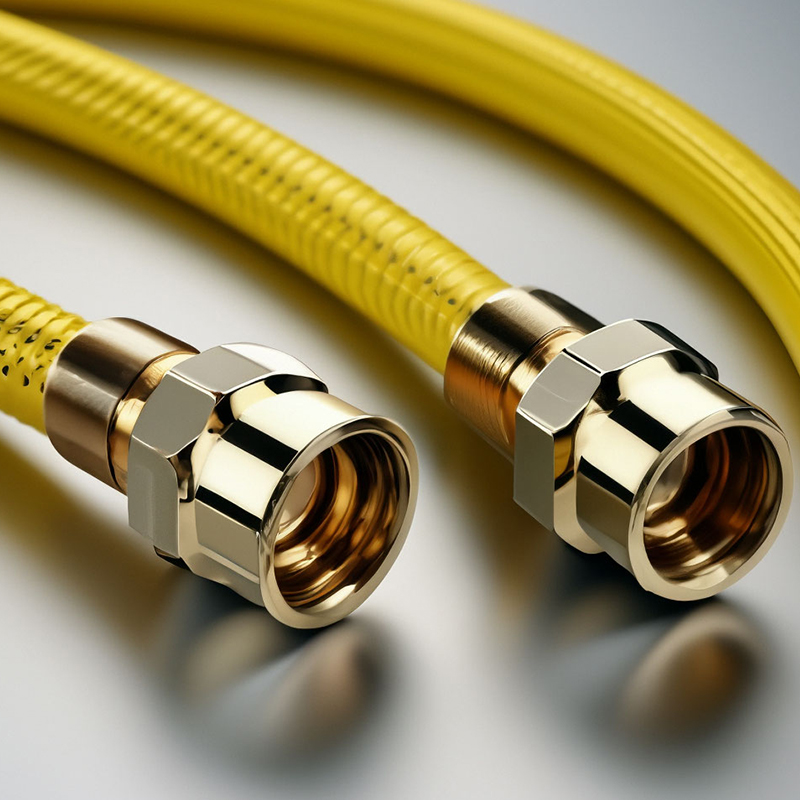
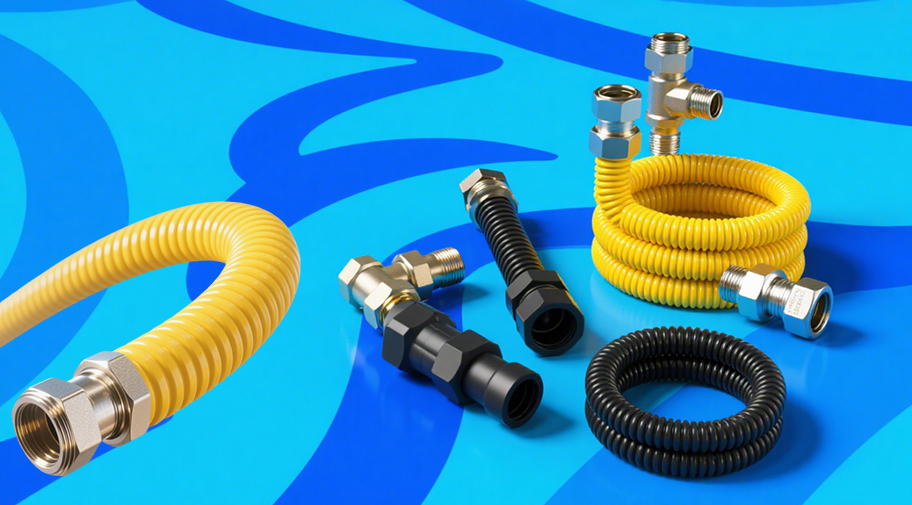
The product is available with a stainless steel finish or a black finish. The stainless steel appearance suits visible installations and technical environments where a clean metallic surface is preferred. The black finish may be selected for visual coordination with dark appliances, equipment housings, or interior designs. The finish also gives project purchasers an additional option without changing the main flexible connection concept.
Nut material options include brass and carbon steel. Brass is widely used for threaded connection components because of its machinability and corrosion performance in many installation environments. Carbon steel may be selected where the project specification, cost structure, or assembly requirements call for that material. The appropriate choice should be based on the complete system design, local regulations, environmental conditions, and compatibility with mating components.
| Specification | Available Detail | Practical Significance |
|---|---|---|
| Product type | DN15 stainless steel whistle-free gas connector | Flexible metal connection for gas equipment and pipeline interfaces |
| Tube material | 304 stainless steel | Corrosion resistance, formability, and durable metal construction |
| Wall thickness | 0.25 mm | Supports a lightweight and flexible corrugated tube design |
| Flare nut | 15/16"-16UNF | Defined threaded connection interface |
| Adapter choices | 15/16*1/2M(3/8F), 15/16*1/2F, 15/16*3/4M(1/2F), 15/16*3/4F | Adapts the connector to different equipment and pipe interfaces |
| Available lengths | 12, 18, 24, 36, 48, 60, and 72 inches | Supports different installation distances |
| Surface options | Stainless steel and black | Offers functional and visual selection |
| Seal form | Hard sealing | Creates a dependable sealing interface when correctly assembled |
| Nut materials | Brass or carbon steel | Provides material choice for different project requirements |
Whistle-Free Design and Installation Comfort
Gas flowing through a connector can generate turbulence, vibration, or tonal noise depending on the internal geometry, flow conditions, pressure, and system configuration. In a kitchen, utility room, commercial food-service area, or equipment room, unnecessary airflow noise can be distracting. A whistle-free design is intended to reduce the likelihood of high-pitched or irritating airflow sounds during normal operation.
The whistle-free feature is particularly useful in locations where people spend significant time near gas appliances. Reduced connector noise can improve perceived installation quality and user comfort. It may also make it easier to identify unusual sounds from other parts of the system because the connector itself is less likely to create a distracting tonal noise under normal conditions.
Noise behavior is influenced by the complete installation rather than by the connector alone. Pipe diameter, gas pressure, flow rate, valve design, appliance demand, bends, regulators, and connection geometry can all affect sound. Consequently, the whistle-free design should be understood as a product feature that helps reduce airflow noise, not as a guarantee that every gas system will be completely silent under all operating conditions.
Compared with ordinary flexible connectors that may produce noticeable airflow sounds in certain conditions, this design offers an additional comfort advantage. It supports a more refined installation without requiring a separate sound-control component. For building contractors, appliance manufacturers, distributors, and end users, this can simplify product selection when low operating noise is an important consideration.
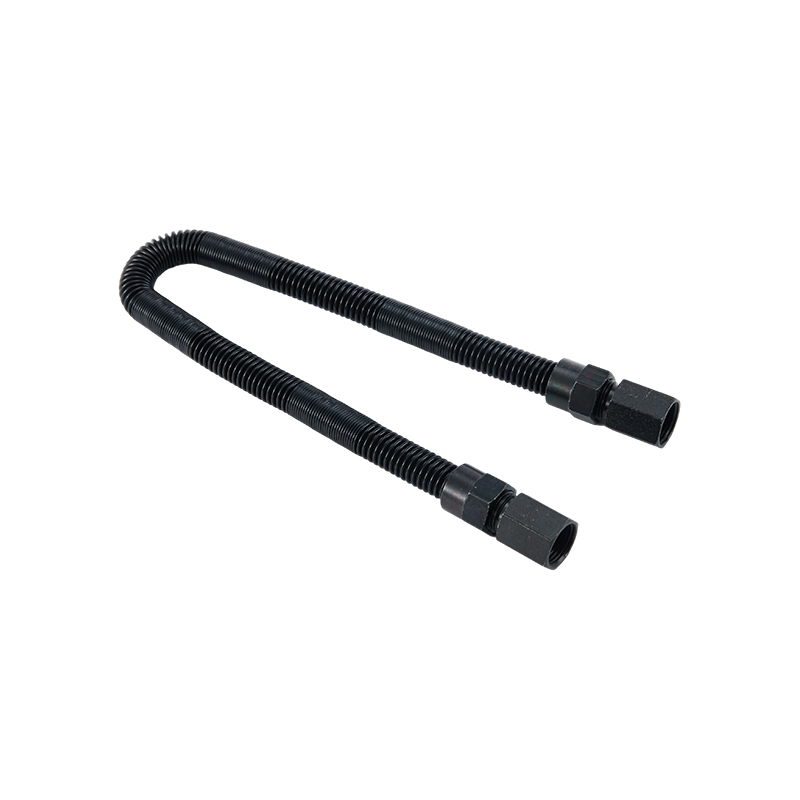
DN15 Stainless Steel Whistle Free Gas Connector
Advantages of 304 Stainless Steel Construction
Material selection is one of the most important differences between flexible gas connectors. 304 stainless steel provides a durable foundation for the tube body and is widely recognized for its resistance to many common forms of atmospheric and service-environment corrosion. This is valuable in kitchens, utility spaces, commercial buildings, and industrial areas where the connector may be exposed to humidity, cleaning residues, or variable indoor conditions.
Stainless steel also supports a clean and professional appearance. Unlike painted or plated surfaces that may change appearance if scratched, the stainless steel body maintains the characteristic appearance of the base material. The optional black finish provides another appearance choice for installations where a less reflective or darker surface is preferred.
The forming characteristics of 304 stainless steel are also important. Corrugating a thin metal tube requires controlled deformation. The material must tolerate the forming process while maintaining a consistent corrugated profile. A stable profile contributes to predictable flexibility and helps the connector bend along its intended axis during installation.
Stainless steel construction can offer a service-life advantage over less corrosion-resistant materials in appropriate environments. It does not eliminate the need for correct installation, inspection, or protection from severe external conditions. However, it gives the product a strong material base for long-term use compared with flexible connectors that rely on materials more vulnerable to corrosion, coating damage, or environmental aging.
For procurement teams, the use of 304 stainless steel also simplifies material identification. The specification provides a recognizable engineering reference that can be included in purchase documents, quality plans, and project submittals. This is more useful than a general description such as “metal hose” because it defines the primary tube material and supports clearer technical communication.
Flexible Corrugated Structure
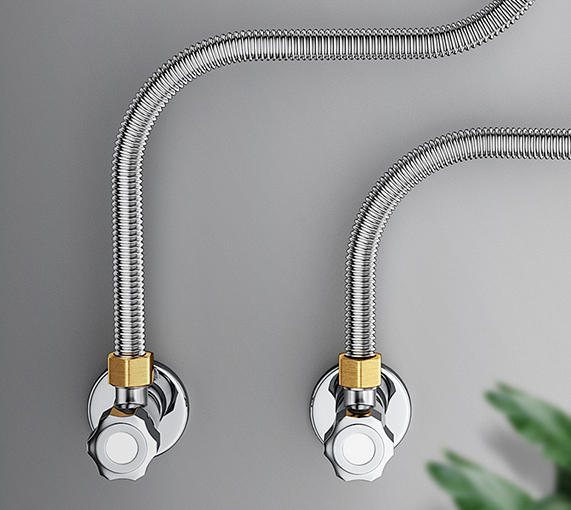
The corrugated form allows the tube to flex without requiring the entire wall to stretch as a smooth, rigid tube would. The series of formed ribs creates a controlled bending structure. This makes it possible to route the connector around limited obstacles and align the appliance with the gas supply point more conveniently.
Flexibility can reduce installation time because the installer may not need to fabricate a rigid offset or add several elbows. Fewer connection points can also simplify the assembly and reduce the number of components that must be checked. Nevertheless, the connector should never be forced into an extreme bend or used to compensate for poor system layout. Flexibility is an installation aid, not a substitute for correct design.
The available length range gives designers greater control over routing. A 12-inch connector may suit a compact appliance connection, while a 72-inch version may be useful where the appliance has greater separation from the supply point. Intermediate sizes help avoid the problems associated with using a connector that is either too short or excessively long.
A connector that is too short may be placed under tension, causing stress at the end fittings. A connector that is too long may form unnecessary loops, contact hot or abrasive surfaces, or become vulnerable to accidental impact. Choosing a suitable length helps preserve the connector’s intended geometry and reduces the temptation to bend or twist it beyond its design purpose.
The corrugated tube must be handled carefully during installation. Tools should not crush the corrugations, and the body should not be used as a lever for tightening the end fittings. The connection should be made through the designated nut and adapter surfaces. A properly routed connector should have a smooth path, adequate clearance, and no sharp kinks.
Hard-Seal Connection Performance
The product uses a hard-seal form. In a hard-sealing connection, the sealing function is achieved through controlled contact between specially designed mating surfaces rather than depending solely on a soft gasket. When the appropriate components are correctly aligned and tightened, the interface can provide a stable barrier against leakage.
Hard sealing offers several practical advantages. It can reduce the number of loose sealing materials required during assembly, support a clean connection design, and provide consistent contact when the mating geometry is manufactured accurately. It also helps make the connection easier to inspect because the sealing arrangement is defined by the fitting design.
Correct installation remains essential. Threads must be clean and undamaged, the nut must be compatible with the mating fitting, and the connector must not be twisted while the connection is tightened. Over-tightening can damage the fitting or distort the sealing surfaces, while under-tightening may prevent the necessary contact from being established.
Installers should follow the relevant installation instructions and applicable gas safety standards for the project location. Leak testing should be completed after installation and before the system is placed into normal service. The connector should also be checked periodically for signs of damage, corrosion, deformation, or contact with unsuitable surfaces.
Compared with flexible connectors that depend on improvised sealing materials or inconsistent assembly methods, a clearly defined hard-seal structure provides a more controlled connection concept. This is especially beneficial for professional installers and original equipment manufacturers seeking repeatable assembly procedures.
Adapter Options for Different Interfaces
Gas systems may include different equipment inlets, pipe outlets, and transition fittings. A single connector with only one fixed end configuration cannot address every installation. The available adapter options for this product improve compatibility and help reduce the need for additional transition pieces.
The listed configurations include 15/16*1/2M(3/8F), 15/16*1/2F, 15/16*3/4M(1/2F), and 15/16*3/4F. The male and female variations allow the connector to be matched with different mating components. The designation should always be confirmed against the actual equipment specification before ordering, because thread size, gender, pitch, sealing method, and regional connection practice must all be compatible.
Adapter selection should be completed during the design or purchasing stage rather than left until installation. A correct adapter can simplify assembly, reduce the number of components in the connection chain, and improve the overall appearance of the installation. It may also reduce the risk of selecting an unsuitable third-party reducer or improvised fitting.
For distributors, offering several adapter configurations under one product family makes inventory planning more flexible. For equipment manufacturers, the choices can support different appliance models or export markets. For contractors, the range makes it easier to select a connector that fits the existing installation without extensive modification.
Manufacturing Process and Quality Control
The performance of a flexible stainless steel connector depends on more than its material specification. Manufacturing consistency is equally important. Variations in tube forming, welding, end fitting assembly, thread quality, or sealing surface accuracy can affect installation and service performance. Haoyin (Ningbo) Bellows Technology Co., Ltd. uses a manufacturing system focused on process control from raw materials through final packaging.
Raw Material Selection
The process begins with the selection and verification of stainless steel and fitting materials. Material selection must consider the required wall thickness, forming behavior, corrosion resistance, and compatibility with the intended product structure. Brass or carbon steel may be selected for nuts and associated components according to the product configuration.
Controlled material sourcing supports consistent product performance. It also helps manufacturers trace production batches and respond efficiently when customers require documentation or quality clarification. For industrial buyers, traceability is an important part of supplier evaluation because it supports project records and after-sales service.
CNC Forming and Corrugation
CNC forming equipment is used to produce accurately shaped metal components and controlled corrugations. Computer-controlled forming can help maintain dimensional consistency across production batches. Consistent corrugation geometry contributes to predictable flexibility and helps ensure that the tube interfaces correctly with the end components.
The forming process must be controlled carefully because the tube wall is only 0.25 mm thick. Excessive deformation, uneven forming, or damage to the material could affect the tube’s performance. Appropriate tooling, machine settings, operator procedures, and in-process inspection all contribute to stable production.
Laser Welding
Laser welding equipment is used in the manufacture of stainless steel bellows and related flexible connection products. Laser welding can provide a concentrated heat input and a precise weld path. When properly controlled, this process supports clean and consistent joints while minimizing unnecessary heat-affected areas.
Welding quality is critical in a gas connector because a joint must maintain mechanical integrity and gas tightness. The welding parameters, material condition, joint preparation, equipment calibration, and inspection procedures must work together. A controlled welding process is a significant advantage over informal or inconsistent joining methods.
Non-Destructive Inspection
The company also uses eddy current flaw detection equipment. Eddy current inspection is a non-destructive technique that can help identify certain surface or near-surface discontinuities in conductive materials. It allows components to be evaluated without destroying them, supporting production efficiency and quality assurance.
Non-destructive inspection is especially valuable for thin-wall metal products because small defects may not always be visible during a basic visual check. Eddy current testing can supplement dimensional inspection, appearance checks, pressure or leak testing, and other verification procedures. Together, these methods create a more complete quality-control process.
Testing and Final Inspection
Before packaging, finished connectors can be checked for appearance, dimensions, thread condition, adapter configuration, assembly quality, and sealing performance. Testing requirements should be aligned with the intended application, customer specifications, and applicable standards. Final inspection helps prevent mismatched adapters, incorrect lengths, damaged surfaces, or incomplete assemblies from reaching the customer.
Haoyin’s stated quality philosophy covers raw material selection, structural design, manufacturing, performance testing, and after-sales support. This full-process approach is an important strength because quality is not treated as a final-stage activity alone. Instead, it is integrated into product development and production management.
Why the Product Offers a Competitive Advantage
The DN15 stainless steel whistle-free gas connector competes in a market that includes basic flexible connectors, rubber-based products, rigid pipe assemblies, and metal connectors with different fitting systems. Its competitive value comes from the combination of features rather than from one specification in isolation.
First, the 304 stainless steel tube provides a strong and corrosion-resistant material platform. This can be advantageous in environments where moisture, cleaning activity, or long service intervals make material durability important. The stainless steel construction also supports a professional appearance and a clear technical specification.
Second, the whistle-free design addresses an operating comfort issue that is often overlooked. A connector that performs its connection function while minimizing airflow noise can provide a better user experience than a basic product that creates an intrusive sound under certain flow conditions.
Third, the product offers several lengths and adapter combinations. This helps distributors and installers select a configuration close to the actual installation requirement. Better matching can reduce unnecessary fittings, simplify routing, and support a neater finished installation.
Fourth, the hard-seal form provides a defined sealing concept. When paired with precise manufacturing and correct installation, it can support consistent connection performance without relying on unsuitable or improvised sealing methods.
Fifth, the product is backed by a company with dedicated stainless steel bellows expertise and specialized equipment. Laser welding, CNC forming, eddy current flaw detection, standardized workshops, and automated packaging indicate a production environment designed for repeatability. Certifications including ISO9001, ISO14001, and ISO45001 further demonstrate the company’s focus on quality management, environmental management, and occupational health and safety systems.
These advantages should be considered in relation to the complete project. No connector is suitable for every gas system, and product selection must comply with local regulations and the appliance manufacturer’s requirements. However, for applications requiring a stainless steel flexible connector with multiple interfaces, a quiet operating profile, and controlled manufacturing, this product offers a well-rounded alternative to more basic connection solutions.
Applications in Residential and Commercial Systems
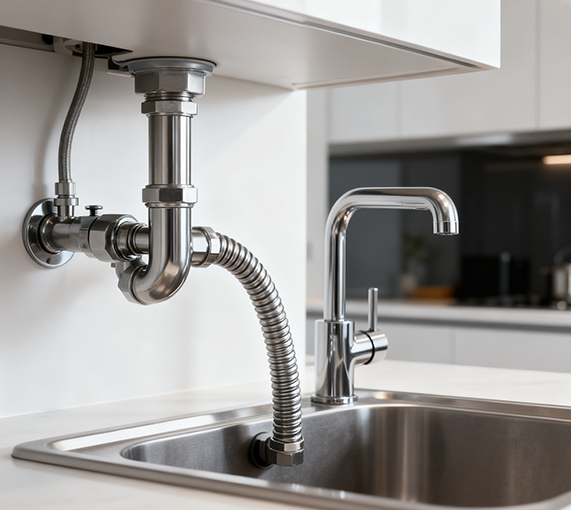
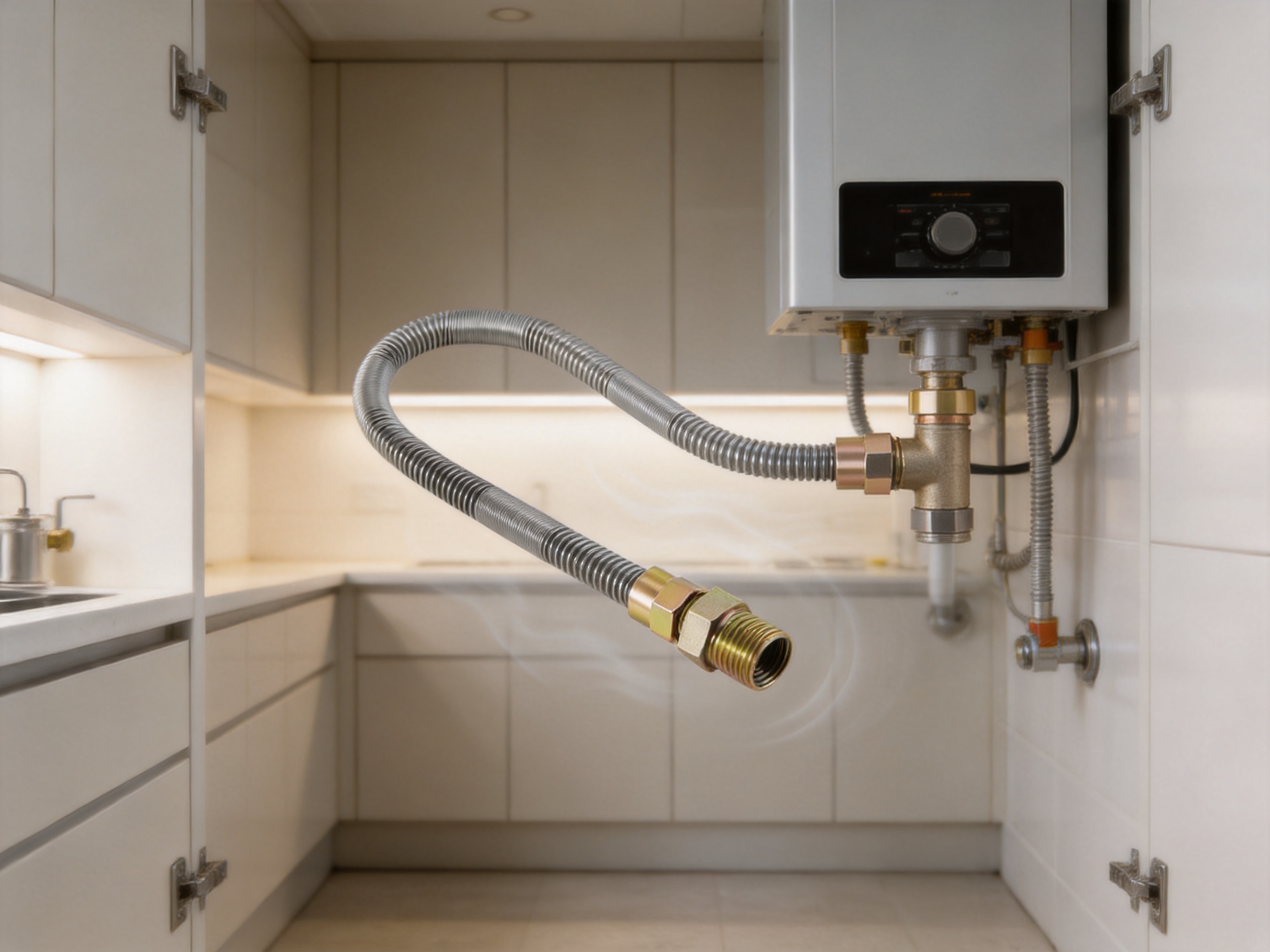
In residential kitchens, the connector can be used to connect gas appliances where a flexible route is needed between the supply point and the appliance inlet. The available short and medium lengths help accommodate different cabinet layouts, appliance positions, and connection heights. The stainless steel and black finishes also allow the connector to coordinate with different appliance environments.
In commercial kitchens, equipment may be moved for cleaning or maintenance more frequently than residential appliances. A flexible metal connection can support practical service access when the installation is designed correctly. The whistle-free feature may also be valuable in busy kitchens where multiple appliances operate simultaneously and unnecessary mechanical noise should be minimized.
In heating equipment installations, the connector may provide a flexible interface between a gas supply line and a heating appliance or burner assembly. The selection must account for equipment demand, temperature exposure, clearance requirements, ventilation, and all relevant codes. The connector should not be routed against hot surfaces or placed in a location where it may be damaged by heat or abrasion.
In light commercial and industrial equipment, the product may be considered for suitable gas connection points where the DN15 format, adapter configuration, length, and operating requirements match the system. Industrial users should complete a detailed technical review that includes gas type, pressure, temperature, movement, vibration, external exposure, inspection access, and maintenance procedures.
The connector can also be integrated into equipment manufactured by original equipment manufacturers. Its defined flare nut, adapter choices, available finishes, and range of lengths give equipment designers flexibility when developing standardized connection kits. OEM users may also request quality documentation, packaging specifications, labeling, and production arrangements suited to their assembly lines.
Correct Selection and Installation Practices
Product selection begins with confirming the gas type, system pressure, temperature range, appliance requirements, connection dimensions, and local regulatory conditions. The nominal DN15 designation should not be treated as the only compatibility requirement. The mating thread, adapter gender, sealing surface, and end configuration must also be confirmed.
The installer should select a length that permits a natural route without excessive slack. The connector should not be stretched, compressed, sharply bent, twisted, or looped unnecessarily. A smooth routing path protects the corrugated tube and reduces stress on the fittings.
Before installation, the tube and fittings should be inspected for dents, scratches, contamination, damaged threads, or other visible defects. The sealing surfaces should be clean. Any component that appears damaged or does not match the specified configuration should not be installed.
The connector should be tightened using the designated nut or fitting surfaces rather than by gripping and twisting the corrugated tube. Tools must be positioned carefully to avoid crushing or deforming the flexible body. The installer should follow the specified tightening procedure and avoid excessive force.
After assembly, the complete connection should be inspected and leak-tested using an approved method. Open flames must never be used for leak detection. The finished connector should have sufficient clearance from sharp edges, moving parts, corrosive chemicals, and hot surfaces. It should remain accessible for future inspection where required by the installation design.
Maintenance personnel should periodically inspect the connector for corrosion, deformation, abrasion, discoloration caused by overheating, loose connections, or other signs of service damage. If any abnormal condition is found, the gas supply should be handled according to established safety procedures and the connector should be evaluated by a qualified professional.
Company Manufacturing Strengths
Haoyin (Ningbo) Bellows Technology Co., Ltd. focuses on the research, design, manufacturing, and sales of stainless steel bellows. This specialization is relevant because a gas connector is not simply a threaded tube. It is a flexible metal assembly requiring controlled forming, joining, fitting integration, sealing, and inspection.
The company operates standardized workshops covering approximately 18,000 square meters on a site of about 35 mu. This production scale supports dedicated manufacturing areas, equipment organization, process management, material handling, and quality inspection. A structured facility is particularly important for products that must be made in consistent quantities for distributors, contractors, and OEM customers.
The company’s product range includes gas connectors, plumbing pipes and water liners, metal hoses, and compensators. This broader product portfolio reflects experience with flexible metal connection technology across gas, plumbing, heating, healthcare, building heating, industrial HVAC, and related applications.
Advanced equipment listed by the company includes laser welding machines, CNC forming machines, COSMO equipment, eddy current flaw detectors, and automatic packaging systems. Each type of equipment contributes to a different part of the value chain. Forming equipment supports geometry, welding equipment supports joint integrity, flaw detection supports inspection, and automated packaging supports consistent product handling and delivery.
The company has obtained ISO9001, ISO14001, ISO45001, and other management system certifications. These certifications are not a replacement for product-specific testing or regulatory compliance, but they demonstrate a formal management framework for quality, environmental responsibility, and workplace safety. The company is also identified as a National High-tech Enterprise and Green Factory.
For international customers, supplier capability is an important purchasing factor. A technically suitable product must also be supported by stable production, communication, packaging, documentation, and after-sales service. Haoyin’s full-process quality approach and flexible product portfolio provide a foundation for serving different project scales, from individual product orders to recurring OEM supply.
Purchasing Considerations for Distributors and OEM Buyers
Distributors should evaluate which lengths and adapter configurations are most relevant to their target market. The seven available length choices create a useful starting range, but inventory should be matched to regional appliance types, common installation patterns, and customer preferences. Maintaining both stainless steel and black finish options may help serve different sales channels.
OEM buyers should confirm whether the connector can be integrated into their assembly process. Important questions include adapter orientation, nut material, packaging format, labeling, inspection records, production capacity, and batch traceability. If a connector is installed on an appliance before shipment, dimensional consistency and repeatable tightening procedures become especially important.
Project contractors should request the exact product configuration rather than ordering only by general description. The purchase specification should identify the wall thickness, tube material, length, flare nut, adapter, finish, nut material, and sealing form. Clear documentation reduces the possibility of receiving a connector that is similar in appearance but unsuitable for the intended connection.
Technical buyers should also review applicable national and regional standards. Gas connection requirements differ among markets, and compliance may depend on the complete assembly, not only the tube material. The supplier can provide product information and technical support, while the project engineer or qualified installer remains responsible for confirming local suitability.
Environmental and Lifecycle Considerations
Durable connection products can contribute to more sustainable building and equipment systems when they remain in service reliably and do not require frequent replacement. The corrosion resistance and metal construction of 304 stainless steel support a long-term product strategy in suitable environments.
The company’s ISO14001 environmental management certification and Green Factory designation indicate attention to environmental management within its operations. Efficient equipment, controlled material use, responsible production practices, and organized packaging can all contribute to a lower-impact manufacturing process, although the environmental performance of a specific project also depends on transportation, installation, maintenance, and end-of-life handling.
Stainless steel also has value as a recyclable engineering material. At the end of its useful life, the connector should be handled according to local recycling and waste-management practices. Before disposal, it must be disconnected safely and confirmed to be free from residual gas or hazardous contamination.
Quality, Reliability, and Service Value
Reliability in a gas connector is the result of multiple controlled factors. The tube material must be appropriate, the wall must be formed consistently, welds must be sound, fittings must be accurately assembled, sealing surfaces must be clean and precise, and the finished product must be protected during shipment. A weakness in any one area can reduce the value of the entire assembly.
The manufacturing resources used by Haoyin support a systematic approach to these factors. Automated or controlled forming improves repeatability, laser welding supports precise joining, non-destructive inspection helps identify defects, and automated packaging reduces the likelihood of handling damage before delivery.
After-sales support is also part of product value. Distributors and installers may need assistance with adapter selection, technical documentation, application review, or replacement identification. A manufacturer that understands the complete product family can provide more useful support than a supplier that treats the connector as an anonymous commodity.
For customers comparing suppliers, the most meaningful evaluation should include product specifications, manufacturing equipment, quality systems, testing methods, delivery capability, customization support, and communication. Price remains important, but a lower purchase price may not represent better value if it leads to installation delays, compatibility problems, premature replacement, or inconsistent supply.
Frequently Asked Questions
What is the main purpose of the DN15 stainless steel whistle-free gas connector?
Its main purpose is to provide a flexible metal connection between a gas supply line and compatible gas equipment. It is designed to combine flexible routing, stainless steel corrosion resistance, a hard-seal connection form, and reduced airflow noise.
What material is used for the flexible tube?
The flexible tube is made from 304 stainless steel. This material offers corrosion resistance, forming performance, and durable metal construction for suitable gas connection applications.
What is the wall thickness?
The specified wall thickness is 0.25 mm. This supports the corrugated tube structure and its flexible installation characteristics.
Which flare nut specification is available?
The connector uses a 15/16"-16UNF flare nut. The compatible adapter and mating connection should always be verified before ordering or installation.
Which adapter options can be selected?
The listed options are 15/16*1/2M(3/8F), 15/16*1/2F, 15/16*3/4M(1/2F), and 15/16*3/4F. The correct option depends on the equipment inlet, pipe outlet, thread arrangement, and project requirements.
What lengths are available?
Available lengths are 12, 18, 24, 36, 48, 60, and 72 inches. The selected length should allow a natural route without stretching, twisting, sharp bending, or excessive looping.
What does whistle-free mean?
Whistle-free refers to a design intended to reduce airflow noise and the possibility of high-pitched sound during normal gas flow. Actual system noise can also be affected by pressure, flow rate, valves, regulators, appliances, and the complete piping arrangement.
What sealing method is used?
The connector uses a hard-seal form. The sealing surfaces must be clean, correctly aligned, and properly tightened. Installation and leak testing should follow the applicable instructions and safety requirements.
Are brass and carbon steel nut options available?
Yes. The product information identifies brass and carbon steel as available nut materials. Selection should be based on the project specification, environmental conditions, compatibility, and local requirements.
Can the connector be used in commercial or industrial applications?
It may be suitable for commercial or industrial applications when the DN15 size, gas type, pressure, temperature, adapter, length, and installation conditions match the system requirements. A qualified engineer or installer should complete the application review.
How should the connector be installed?
It should be routed smoothly, kept away from hot or abrasive surfaces, and tightened through the designated fittings rather than by twisting the corrugated body. The assembly should be leak-tested using an approved method before service.
What manufacturing capabilities support the product?
The manufacturer uses equipment and processes including CNC forming, laser welding, eddy current flaw detection, performance testing, and automated packaging. These capabilities support consistent forming, joining, inspection, and product handling.
What certifications does the manufacturer have?
The company states that it has obtained ISO9001, ISO14001, ISO45001, and other management system certifications. It is also identified as a National High-tech Enterprise and Green Factory.
How can buyers request the correct configuration?
Buyers should provide the required length, finish, flare nut, adapter type, nut material, quantity, application, and delivery requirements. The manufacturer can then help confirm the configuration and provide relevant technical or commercial information.
Conclusion
The DN15 stainless steel whistle-free gas connector is a practical flexible connection solution for compatible residential, commercial, industrial, heating, and equipment applications. Its 304 stainless steel tube, 0.25 mm wall thickness, defined 15/16"-16UNF flare nut, multiple adapters, seven available lengths, hard-seal structure, and whistle-free design address the principal requirements of a modern gas connector.
Its advantages over more basic alternatives include corrosion-resistant stainless steel construction, a broader configuration range, reduced airflow noise, controlled sealing, and a professional appearance. These features are strengthened by a manufacturing system that includes CNC forming, laser welding, non-destructive inspection, performance testing, and automated packaging.
Haoyin (Ningbo) Bellows Technology Co., Ltd. brings dedicated stainless steel bellows expertise, standardized production facilities, formal management certifications, and a broad flexible connection product range. This combination supports reliable supply for distributors, contractors, equipment manufacturers, and project customers seeking safe, efficient, and durable connection solutions.
As with all gas components, correct application and installation are essential. The connector should be selected according to the complete system specification, installed by qualified personnel, checked for leaks, and maintained in accordance with applicable regulations. When these requirements are followed, the product provides a flexible, quiet, and durable approach to gas equipment connection.
References
1. Product specification information for the DN15 stainless steel whistle-free gas connector, including material, wall thickness, fitting options, lengths, finishes, and sealing form.
2. Manufacturer-provided company information concerning stainless steel bellows, gas connectors, plumbing pipes, water liners, metal hoses, and compensators.
3. Manufacturer-provided information concerning CNC forming, laser welding, eddy current flaw detection, COSMO equipment, automated packaging, and quality-control procedures.
4. ISO 9001 quality management system principles and supplier process-control practices.
5. ISO 14001 environmental management system principles for manufacturing organizations.
6. ISO 45001 occupational health and safety management system principles.
7. General engineering guidance for flexible metal hose routing, fitting assembly, leak testing, inspection, and maintenance.
8. General gas installation safety principles concerning material compatibility, connection integrity, appliance interfaces, ventilation, clearance, and qualified installation.