




 English
 Español
 русский



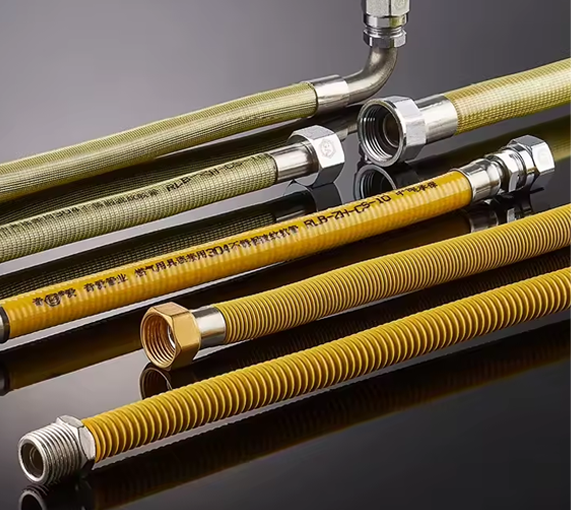
Gas connection components play a critical role in the safety, efficiency, and service life of residential, commercial, and light industrial gas installations. Although a connector may appear to be a small part of a complete system, its materials, sealing method, flexibility, dimensions, and manufacturing quality can directly affect system performance. A poorly selected connector may contribute to leakage, vibration, installation difficulty, premature corrosion, or unwanted operating noise.
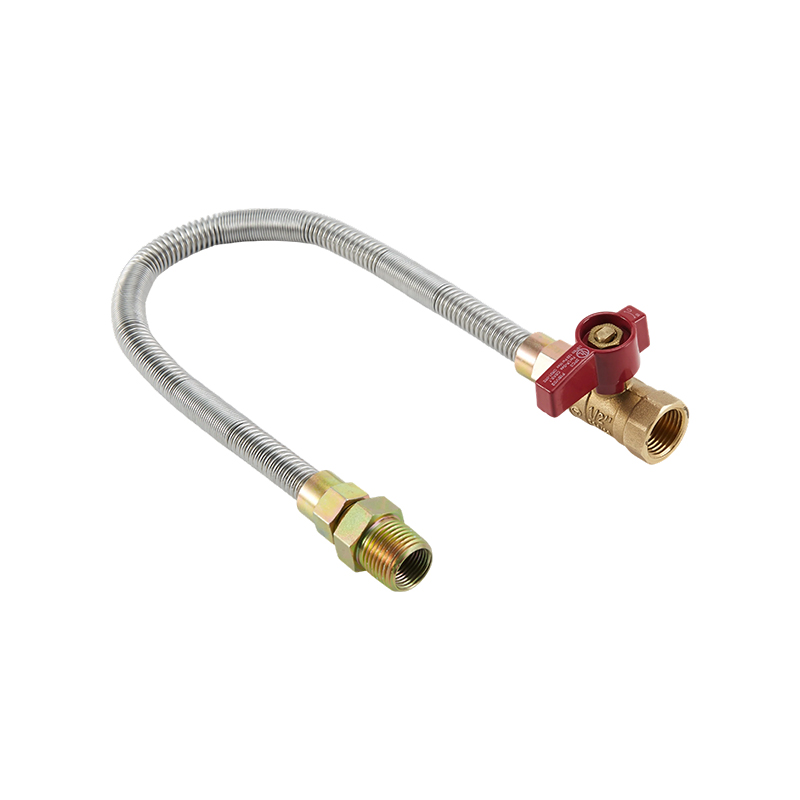
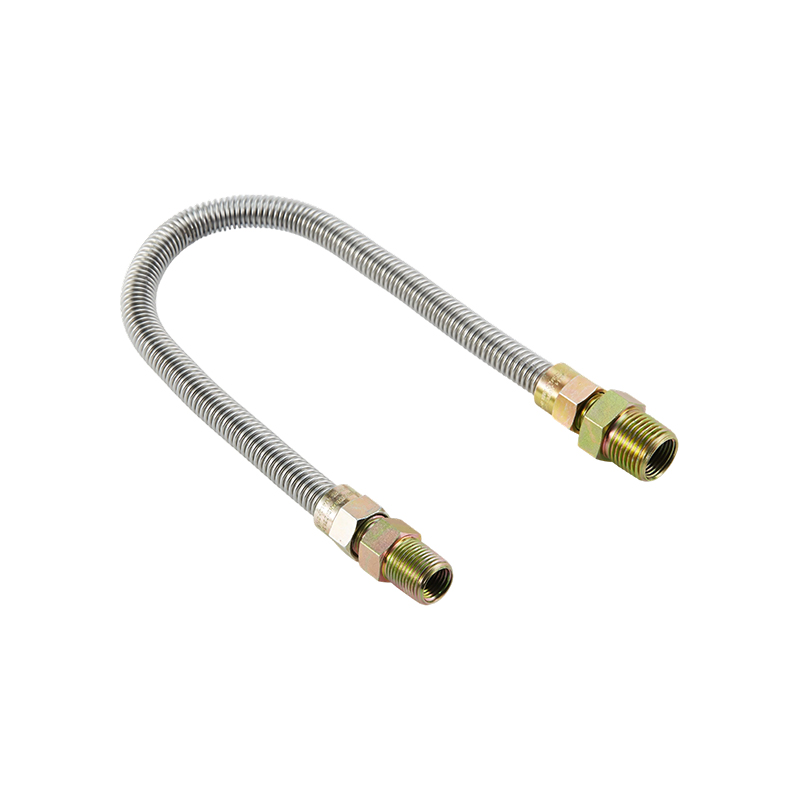
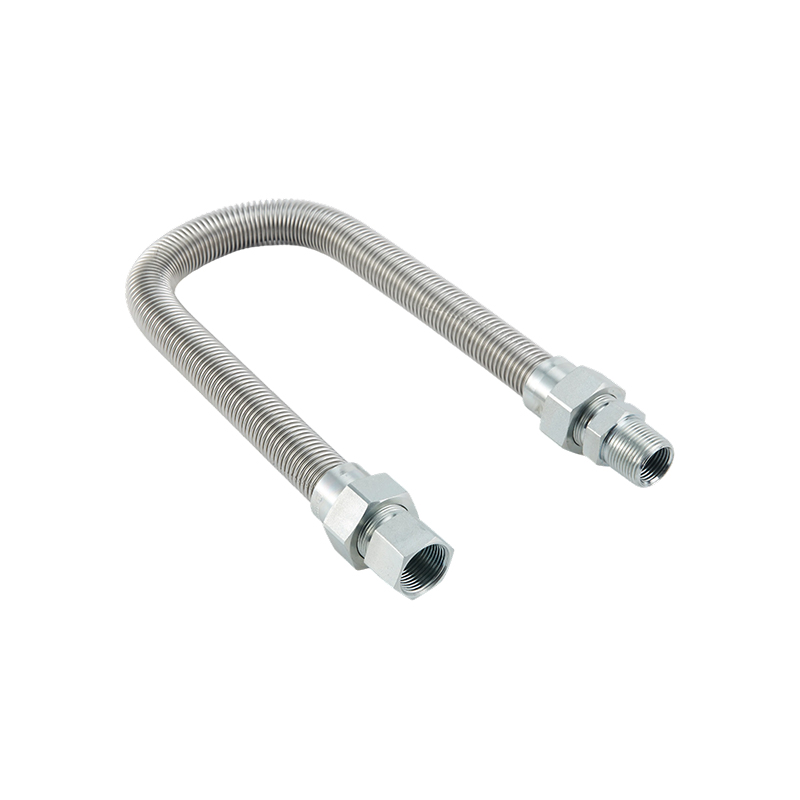
The DN10 stainless steel whistle-free gas connector is designed to provide a dependable solution for gas pipeline connections and equipment installation. Manufactured from 304 stainless steel with a 0.2 mm wall thickness, this flexible connector combines corrosion resistance, mechanical durability, convenient installation, and adaptable connection options. Its whistle-free construction is intended to reduce airflow noise, helping create a more comfortable environment when gas appliances or related equipment are operating.
The connector is available in multiple lengths, connection adapters, colors, and nut material options. These configurations allow installers, distributors, equipment manufacturers, and project contractors to select a suitable version for different pipe diameters and interface requirements. The product is also supported by a manufacturer with experience in stainless steel bellows and flexible connection technology, together with standardized production facilities, testing equipment, and a full-process quality management approach.
Product Overview
The DN10 stainless steel whistle-free gas connector is a flexible gas connection component developed for practical use in a wide range of gas systems. It uses 304 stainless steel as the primary tube material. This grade is widely recognized for its balance of corrosion resistance, formability, strength, and suitability for demanding connection applications.
The tube has a nominal wall thickness of 0.2 mm. A carefully controlled thin-wall structure enables the connector to remain flexible while maintaining the dimensional stability required for installation. Flexibility is important because gas appliances and fixed pipeline outlets do not always align perfectly. A flexible connector can help bridge small differences in position, reduce installation stress, and simplify routing around nearby structures.
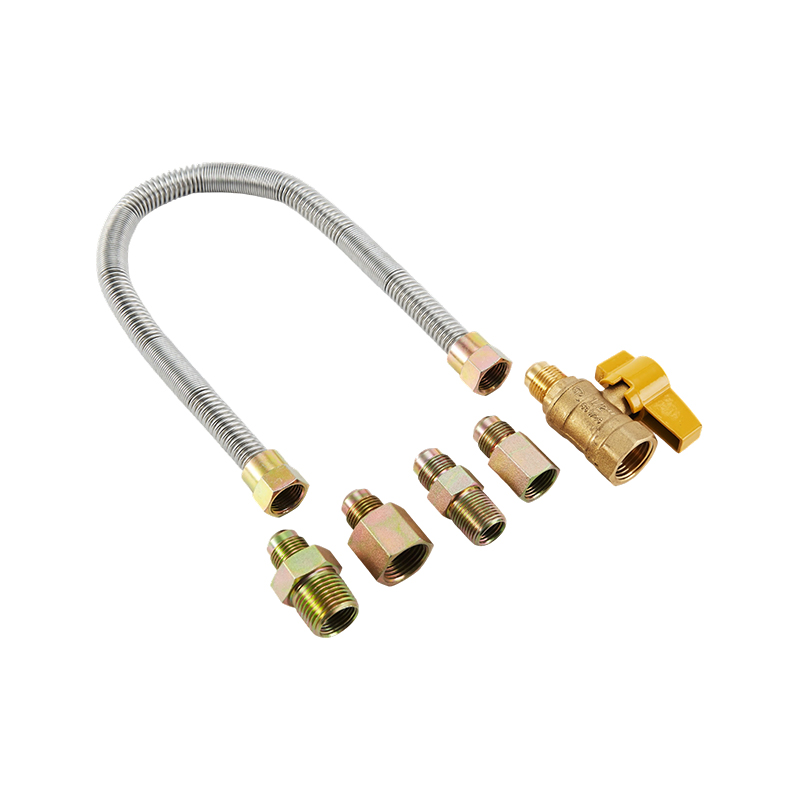
The product is equipped with a 5/8-18UNF flare nut and can be supplied with several adapter configurations. Available options include 5/8 × 3/8 male with 1/4 female, 5/8 × 3/8 female, 5/8 × 1/2 male with 3/8 female, and 5/8 × 1/2 female arrangements. These options support different connection requirements and reduce the need for additional conversion components during installation.
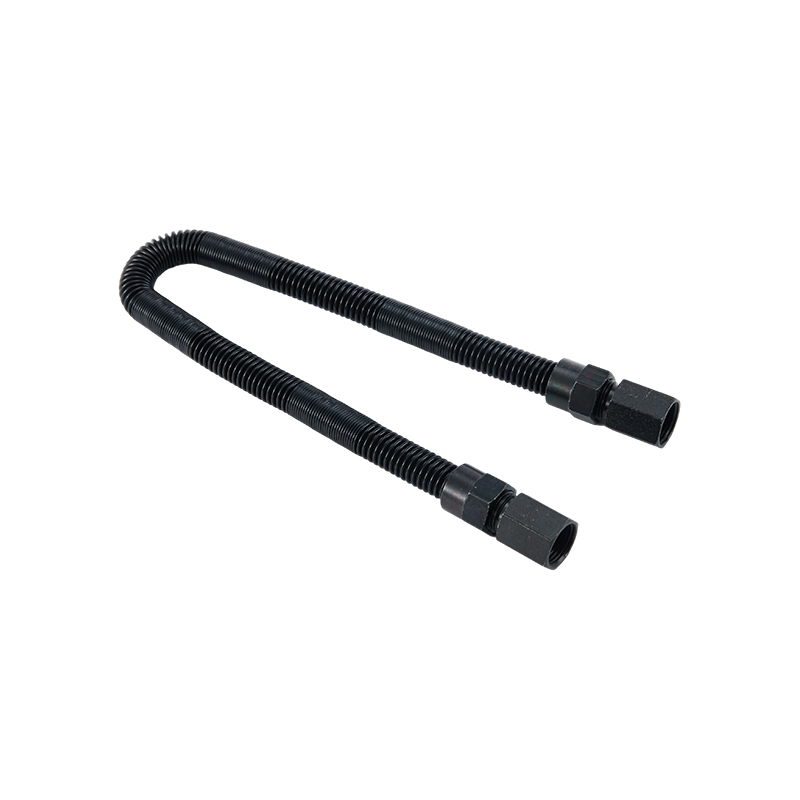
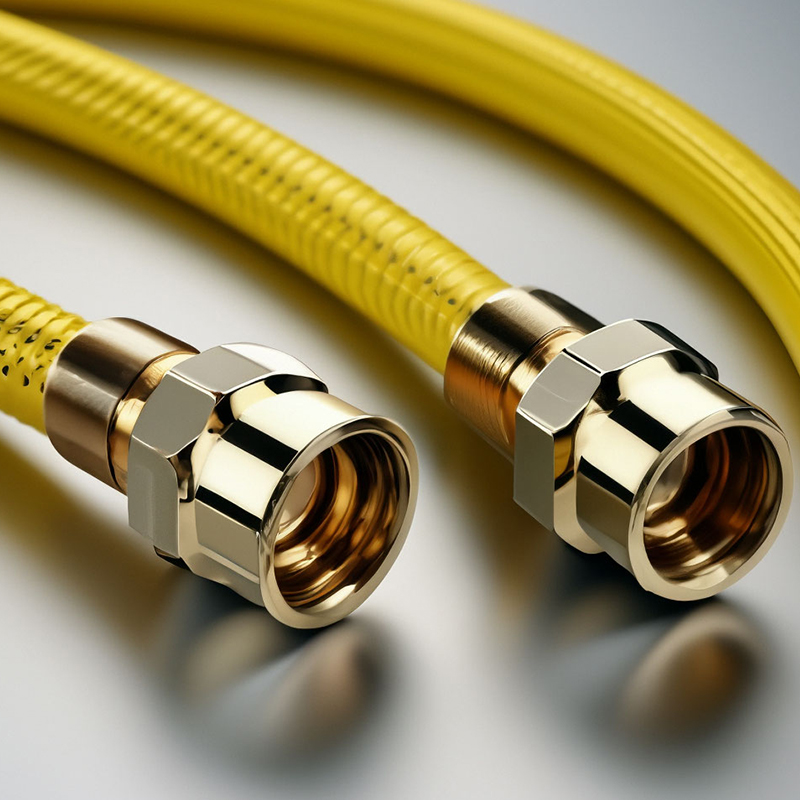
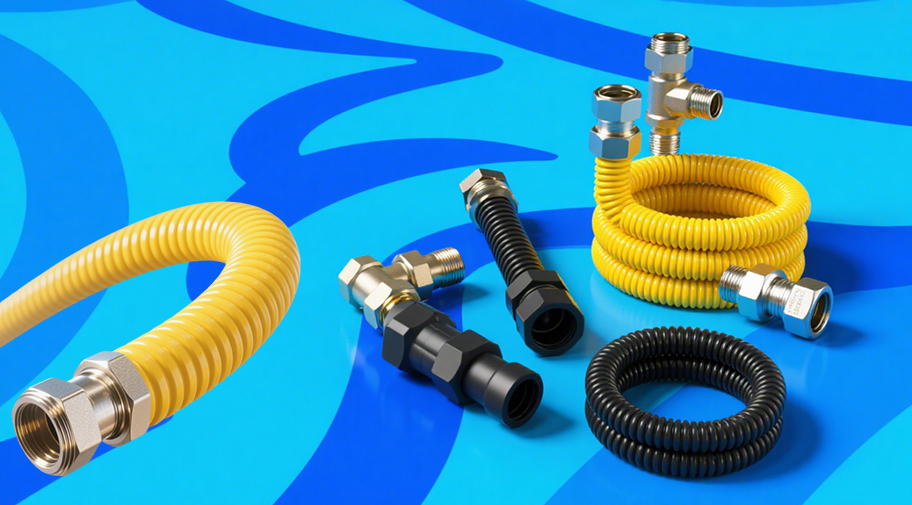
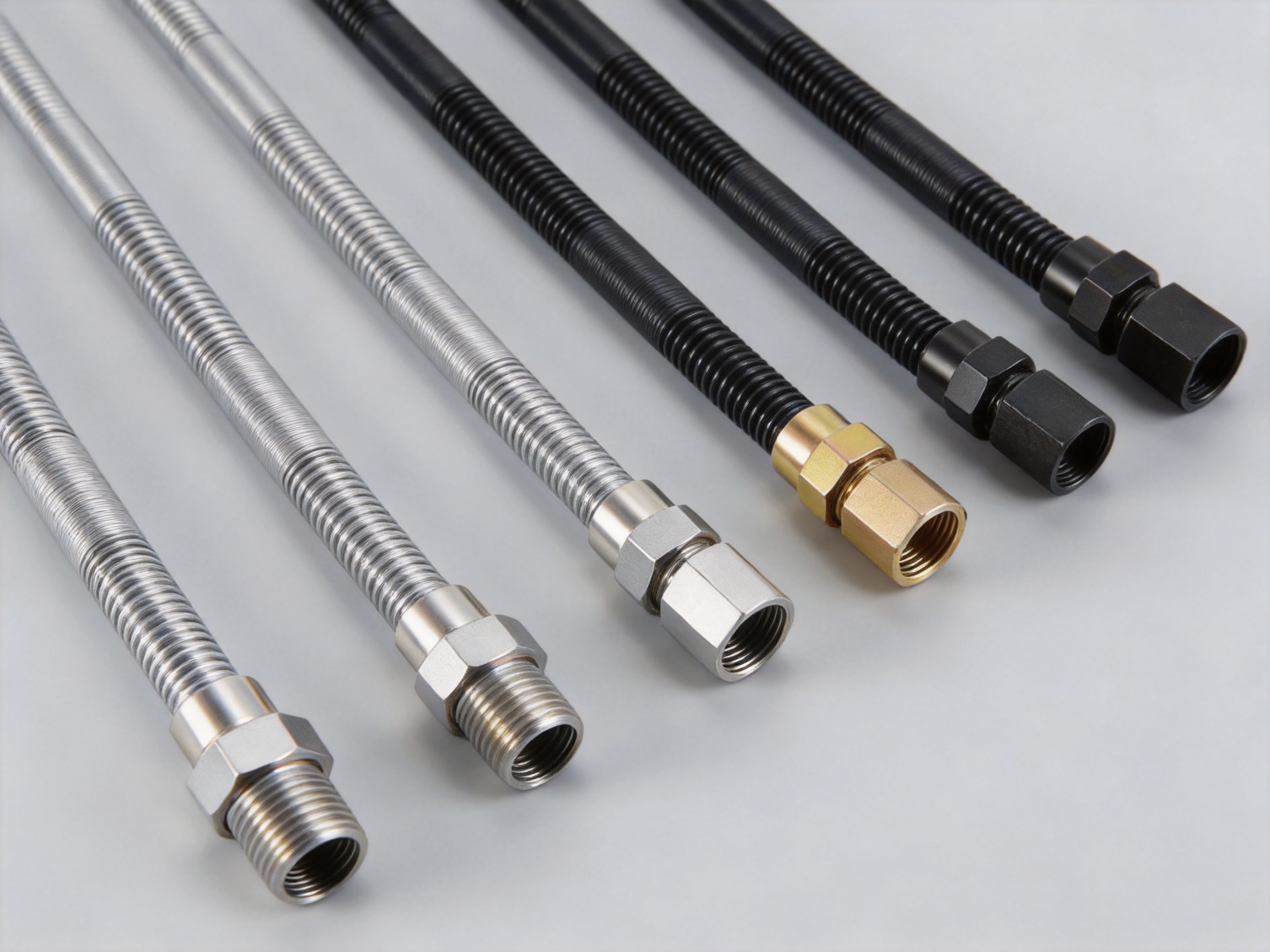
Standard length choices include 12, 18, 24, 36, 48, 60, and 72 inches. This range covers many common residential and commercial installation conditions, from short appliance connections to longer routes requiring additional flexibility. The connector is available in a stainless steel finish and a black finish, allowing the product to be selected according to installation appearance and project preference.
| Specification | Available Information |
|---|---|
| Product type | DN10 stainless steel whistle-free gas connector |
| Main tube material | 304 stainless steel |
| Tube wall thickness | 0.2 mm |
| Flare nut specification | 5/8-18UNF |
| Adapter options | 5/8 × 3/8M (1/4F), 5/8 × 3/8F, 5/8 × 1/2M (3/8F), 5/8 × 1/2F |
| Available lengths | 12, 18, 24, 36, 48, 60, and 72 inches |
| Color options | Stainless steel and black |
| Nut material options | Brass or carbon steel |
| Sealing form | Hard sealing |
Why 304 Stainless Steel Is Important
Material selection is one of the most important factors in the performance of a flexible gas connector. The DN10 connector uses 304 stainless steel, a material selected for its combination of corrosion resistance and manufacturing versatility. In normal service environments, stainless steel offers better resistance to moisture and atmospheric exposure than many ordinary carbon steel alternatives.
Gas installation environments can vary significantly. A connector may be installed in a kitchen, utility room, equipment room, commercial service area, or other location where it can encounter humidity, cleaning chemicals, temperature fluctuations, dust, and accidental contact with common household or industrial substances. The corrosion resistance of 304 stainless steel helps the tube maintain its functional condition over time when the connector is installed and maintained correctly.
Stainless steel also provides a clean and professional appearance. The natural stainless steel finish can be suitable for visible installations where a bright metallic appearance is preferred. The black version offers an alternative appearance that can blend with dark appliances, equipment housings, cabinets, or interior design elements.
The use of stainless steel does not eliminate the need for proper installation. Every gas connector must be selected according to the pressure, temperature, fuel type, local regulations, appliance requirements, and connection standards applicable to the project. However, a corrosion-resistant stainless steel tube provides a strong material foundation for a long-lasting flexible connection solution.
Whistle-Free Performance and Operating Comfort
Gas flow through a connector can sometimes generate turbulence or audible noise. The intensity of this sound may depend on gas velocity, internal geometry, pressure conditions, connection alignment, and the design of the surrounding system. In residential environments, even moderate airflow noise can be noticeable, especially in quiet kitchens, utility rooms, or enclosed equipment spaces.
The DN10 product is designed as a whistle-free gas connector. Its construction is intended to reduce the airflow noise that may otherwise occur during operation. This feature can improve user comfort and contribute to a quieter installation environment.
Noise reduction is not only an aesthetic advantage. Lower operating noise can make it easier for occupants or maintenance personnel to identify abnormal sounds. If an installation develops an unusual vibration, resonance, or sudden change in sound, a quieter baseline may help make that change more apparent during routine observation. However, any unusual noise should be investigated by a qualified professional rather than treated as a normal product characteristic.
The whistle-free design is especially valuable in applications where the gas appliance is located close to living spaces. Residential kitchens, apartment utility areas, hospitality facilities, and commercial food-service environments can all benefit from components designed with operating comfort in mind.
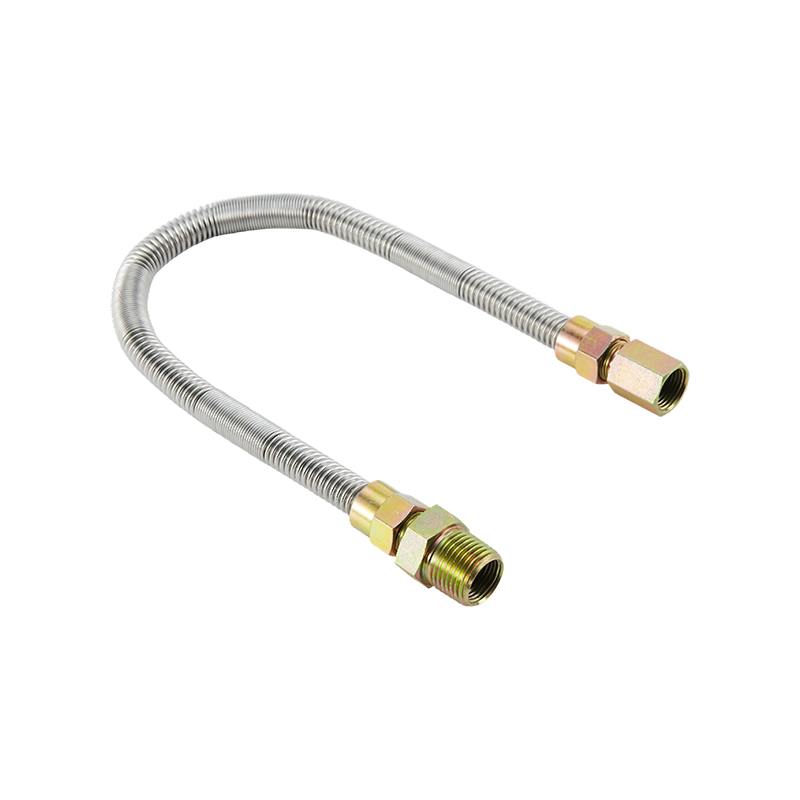
DN10 Stainless Steel Whistle Free Gas Connector
Flexible Installation for Residential and Commercial Applications
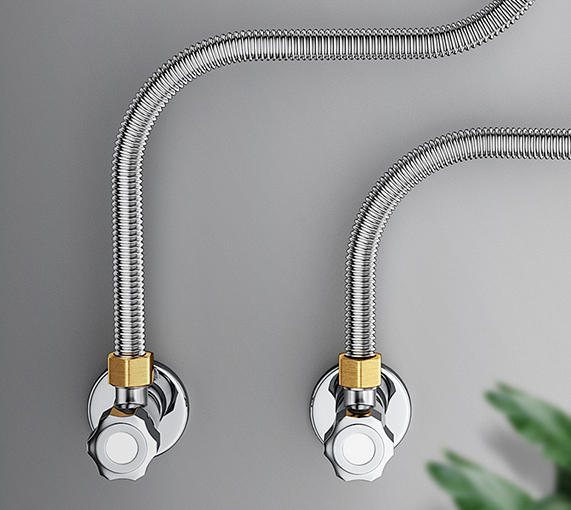
Fixed rigid piping is necessary in many sections of a gas system, but the final connection to an appliance or piece of equipment often requires flexibility. Appliances may need to be moved for cleaning, maintenance, replacement, or adjustment. The connection point may also be offset from the pipeline outlet. A flexible stainless steel connector can accommodate these practical installation conditions more effectively than a fully rigid arrangement.
The available length options make the DN10 connector adaptable to different layouts. A 12-inch version may be suitable for a compact connection where the appliance and supply outlet are close together. Longer versions, such as 36, 48, 60, or 72 inches, may be selected when the route requires additional reach. Choosing the correct length is important: the connector should be long enough to avoid tension, but not so long that it forms unnecessary loops or becomes exposed to avoidable mechanical damage.
For residential use, the connector can be applied to compatible gas appliances and connection points, subject to local code and appliance manufacturer requirements. Potential application environments include kitchens, utility rooms, apartment buildings, small commercial kitchens, and equipment rooms.
For commercial use, the product may be considered for compatible gas equipment installations where flexibility, corrosion resistance, and a clean appearance are important. Restaurants, hospitality facilities, food-service areas, building service rooms, and light commercial equipment spaces may require several different connection lengths and adapter configurations. A product family with multiple options can simplify procurement and reduce the number of unrelated components that installers need to manage.
In every application, the connector should be routed without sharp bends, twisting, crushing, excessive tension, or contact with hot surfaces. It should not be used as a substitute for permanent piping, and it should not be installed in a manner that allows the appliance weight to rest on the connector.
Connection Compatibility and Adapter Selection
The 5/8-18UNF flare nut provides a defined connection interface for the product. The available adapter combinations extend the connector’s compatibility with different pipe or equipment interfaces. This is useful for projects where the gas supply outlet and appliance inlet do not use exactly the same nominal connection size.
The listed adapter configurations include 5/8 × 3/8M with 1/4F, 5/8 × 3/8F, 5/8 × 1/2M with 3/8F, and 5/8 × 1/2F. The male and female designations identify the connection orientation, while the associated dimensions identify the relevant nominal interface sizes. Installers should verify all dimensions and thread details before ordering or installation because nominal sizes do not always describe identical standards in every market.
Correct adapter selection can reduce the need for improvised fittings. Every additional fitting in a gas connection introduces another interface that must be correctly assembled and sealed. A connector supplied with a suitable factory-matched adapter can help simplify the assembly and reduce potential installation errors.
At the same time, adapters must never be selected solely by visual similarity. Thread form, nominal size, sealing surface, pressure rating, fuel compatibility, and local regulatory requirements all need to be confirmed. A qualified installer should inspect mating components and verify that the connection arrangement is approved for the intended gas service.
Hard Sealing for Reliable Connection Integrity
Sealing performance is central to the safety of any gas connector. The DN10 product uses a hard sealing design. This construction is intended to create a reliable sealing interface when the connector and mating components are correctly aligned and tightened according to the applicable installation requirements.
A hard seal can offer a clean and repeatable connection method because sealing depends on the designed contact surfaces rather than on excessive quantities of sealing compound. This can help keep the assembly neat and reduce the risk of unsuitable sealant entering a gas passage. The actual sealing method, however, must always follow the connector design and the relevant installation instructions.
Reliable sealing depends on more than the connector itself. The mating flare or threaded component must be undamaged, clean, and compatible. Threads should not be cross-threaded. Contact surfaces should be free from dirt, metal chips, oil contamination, and other debris. Tightening should be controlled so that the connection is secure without damaging the flare, nut, adapter, or tube.
After installation, the completed system must be checked using an appropriate leak-testing method required by local rules and professional practice. Open flames must never be used for leak detection. If a leak is identified, the gas supply should be isolated and the connection corrected by qualified personnel.
Brass and Carbon Steel Nut Options
The product can be supplied with brass or carbon steel nut options. These materials provide different performance characteristics and allow the connector to be configured according to customer requirements, project preferences, and supply-chain needs.
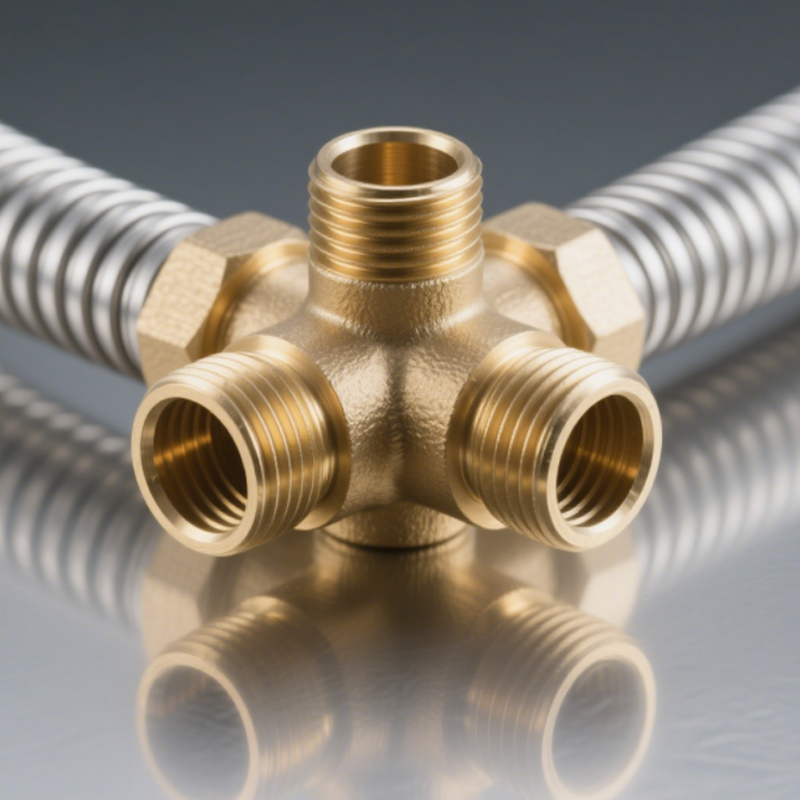
Brass is widely used for fittings and connection hardware because it is machinable, corrosion resistant in many normal environments, and suitable for producing precise threads and sealing surfaces. A brass nut can provide a dependable interface when matched with the correct connector and installed properly.
Carbon steel offers strength and can be appropriate for applications where the hardware specification calls for a steel component. Surface treatment and environmental conditions are important considerations when carbon steel is used. Buyers should confirm the precise finish, protection method, and intended service environment before selecting this option.
The product information identifies brass and carbon steel as available nut materials. The correct choice may depend on customer specifications, required appearance, regional standards, operating conditions, and compatibility with the mating connection. In all cases, the nut material should be considered together with the flare design, adapter material, sealing surface, and expected installation environment.
Advantages Compared with Basic Flexible Connectors
The DN10 stainless steel whistle-free gas connector offers several advantages compared with basic flexible connectors that may use less corrosion-resistant materials, limited size options, or less adaptable connection designs.
Corrosion-Resistant Tube Construction
The 304 stainless steel tube provides a durable alternative to ordinary materials that may be more vulnerable to moisture and surface deterioration. This is particularly useful in kitchens, utility areas, and commercial environments where humidity and cleaning activity are common.
Noise-Conscious Design
The whistle-free design addresses a practical issue that is often overlooked when selecting connection components. By targeting lower airflow noise, the connector can provide a more comfortable operating environment than a conventional design that may generate noticeable whistling under certain conditions.
Multiple Lengths
Seven length options help users select a connector that matches the actual distance between the gas outlet and appliance inlet. This can reduce the need for unnecessary extensions or awkward routing and can make installation planning more efficient.
Flexible Adapter Choices
The range of adapter configurations supports different connection requirements. A wider selection can be especially valuable for distributors and contractors who serve multiple equipment brands, building types, or regional connection standards.
Professional Appearance
Stainless steel and black finish options allow the connector to coordinate with different appliances and installation environments. The result is a component that can provide functional performance without compromising the visual quality of a visible installation.
Factory-Controlled Assembly
A connector manufactured through controlled processes can offer greater consistency than an improvised assembly created from multiple unrelated parts. Tube forming, welding, fitting assembly, sealing-surface preparation, and inspection can be managed within one production system, supporting more stable product quality.
Advanced Manufacturing Capabilities
The performance of a flexible stainless steel connector depends heavily on manufacturing precision. Thin-wall stainless steel tube requires controlled forming and joining processes. Small variations in dimensions, weld quality, flare geometry, or fitting alignment can affect flexibility, sealing, and service life.
Haoyin (Ningbo) Bellows Technology Co., Ltd. specializes in the research, development, design, manufacture, and sale of stainless steel bellows and flexible connection products. Its product range includes gas connectors, plumbing pipes and water liners, metal hoses, and compensators. This product focus gives the company experience in forming and processing flexible metallic components for different applications.
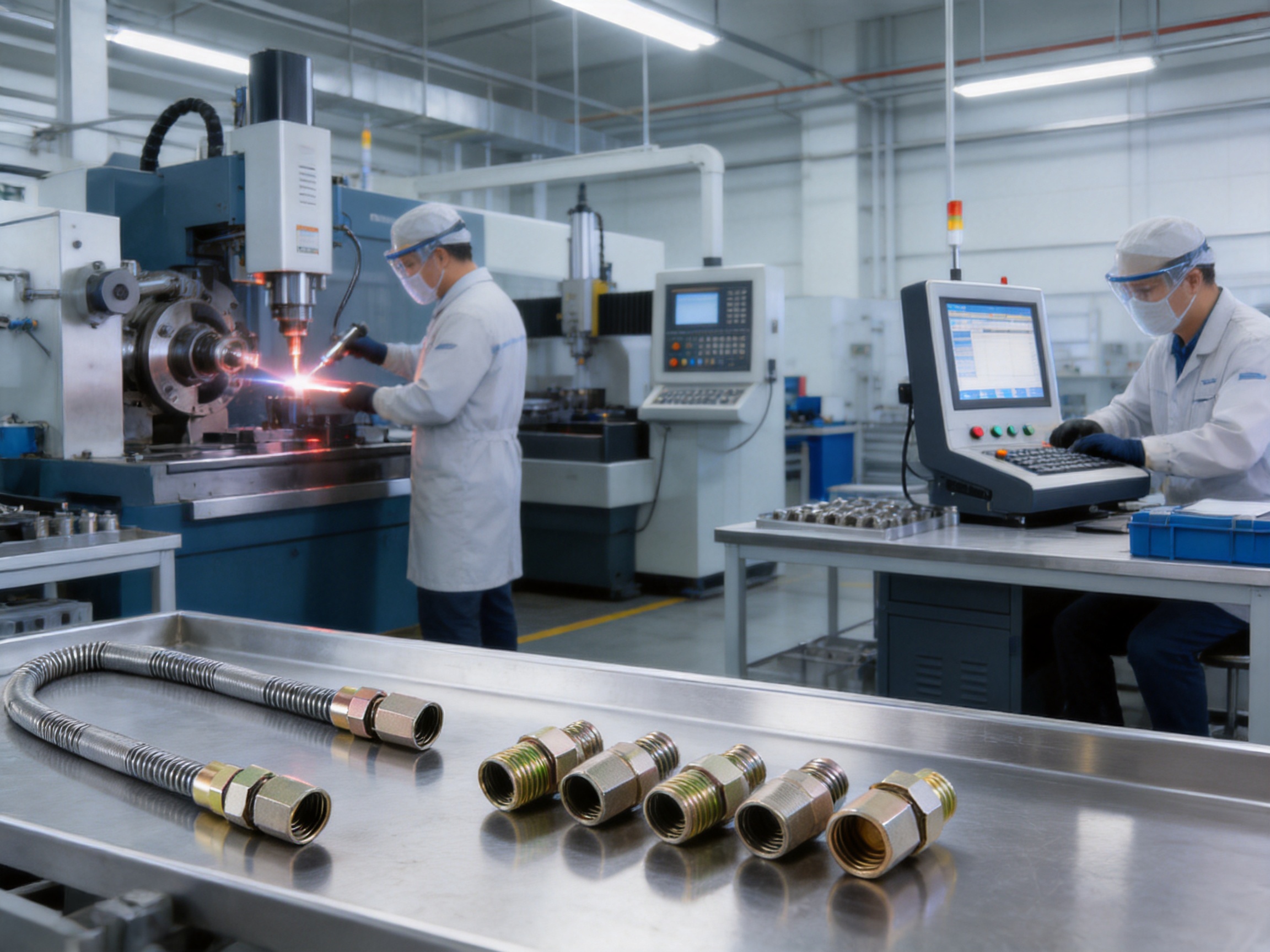
The company operates standardized workshops covering approximately 18,000 square meters on an area of about 35 mu. Its production capabilities include laser welding machines, CNC forming machines, COSMO equipment, eddy current flaw detectors, and automatic packaging systems. Each of these technologies contributes to a different stage of product development and production control.
Laser Welding
Laser welding can provide a concentrated heat source and precise energy control. For thin stainless steel materials, controlled welding is important because excessive heat may cause distortion, discoloration, inconsistent penetration, or changes in the surrounding material. A carefully managed laser welding process can support clean and repeatable joints.
Welding quality is especially important in a gas connector because the tube and its joining areas must maintain structural integrity during handling and operation. Production controls may include monitoring welding parameters, checking joint appearance, and verifying that the finished assembly meets defined requirements.
CNC Forming
CNC forming equipment enables controlled shaping of metallic components according to programmed dimensions. For flexible connectors and bellows-related products, forming accuracy affects geometry, flexibility, and connection alignment. CNC equipment can help improve repeatability across production batches and support the manufacture of complex or finely controlled shapes.
Consistent forming is valuable for distributors and OEM customers because it helps reduce variation between individual products. It also supports predictable installation behavior, especially when multiple connectors are being installed in the same project.
Eddy Current Inspection
Eddy current flaw detection is a non-destructive testing technology used to identify certain surface and near-surface discontinuities in conductive materials. Its application in a manufacturing environment can provide an additional method of checking metallic components without cutting or damaging every product.
For stainless steel components, non-destructive inspection can support process verification and help identify issues that may not be visible during a basic visual inspection. The precise inspection scope and acceptance criteria depend on the product design and internal quality procedures.
Automatic Packaging
Automatic packaging systems help standardize product handling after manufacturing and inspection. Consistent packaging can protect connectors from scratches, contamination, deformation, and confusion between different lengths or adapter configurations. It can also improve warehouse efficiency and support more accurate order fulfillment.
Full-Process Quality Management
Quality should be managed throughout the entire production chain rather than evaluated only at the final inspection stage. The company describes a full-process quality management system covering raw material selection, structural design, manufacturing, performance testing, and after-sales support.
Raw material control is the first step. Stainless steel grades, fitting materials, sealing components, and surface finishes should be identified and managed according to the product specification. Traceability and incoming inspection can help ensure that materials used in production match the required characteristics.
Structural design determines how the tube, flare nut, adapter, and sealing surfaces work together. A product intended for flexible gas connections must balance flexibility with strength, dimensional stability, and connection reliability. Design reviews can help identify possible stress points and installation concerns before mass production.
Manufacturing controls help maintain consistency during tube forming, welding, fitting assembly, finishing, and packaging. Process parameters, equipment condition, operator procedures, and inspection records all contribute to stable production.
Performance testing provides evidence that the finished connector meets defined requirements. Depending on the product specification and applicable standards, relevant evaluations may include dimensional inspection, pressure testing, leak testing, material verification, visual inspection, and other functional checks.
After-sales support completes the quality cycle. Customer feedback can reveal recurring installation questions, packaging issues, or application-specific requirements. When this information is communicated back to design and production teams, it can support continuous improvement.
Certifications, Sustainability, and Corporate Strength
Haoyin reports that it has obtained ISO9001, ISO14001, ISO45001, and other management system certifications. These certifications relate to quality management, environmental management, and occupational health and safety management. Their value lies in establishing organized management procedures, documented responsibilities, monitoring practices, and continuous improvement objectives.
The company also identifies itself as a National High-tech Enterprise and Green Factory. These designations reflect an emphasis on technology development, production efficiency, environmental responsibility, and structured business management. For buyers, such capabilities can be important when evaluating a long-term supplier rather than purchasing a single unconnected component.
Environmental management is increasingly relevant to the manufacturing of metal products. Efficient material use, controlled production processes, responsible waste handling, equipment maintenance, and energy management can all contribute to a more sustainable manufacturing system. These practices may also support stable product quality by reducing process variability and improving workplace organization.
Occupational safety management is similarly connected to manufacturing reliability. A well-managed production environment helps protect employees while encouraging clear procedures, equipment controls, and process discipline. These factors can contribute indirectly to more consistent product output.
Applications in Gas Pipeline Connections
The DN10 connector can be considered for compatible gas pipeline connection applications where a flexible, corrosion-resistant, and noise-conscious product is required. It may be used in residential gas appliance installations, commercial kitchens, building service areas, equipment rooms, and other approved applications.
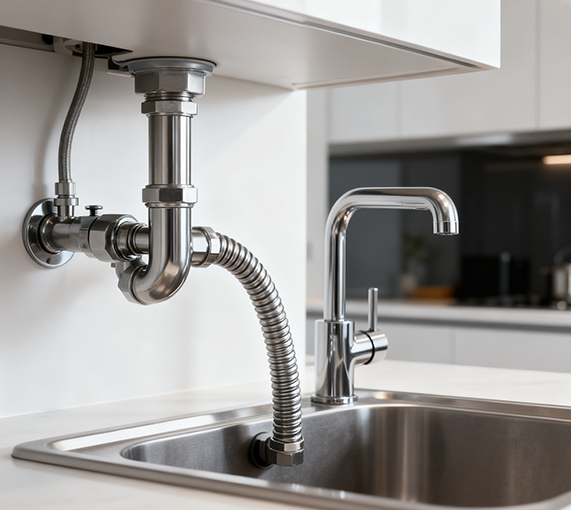
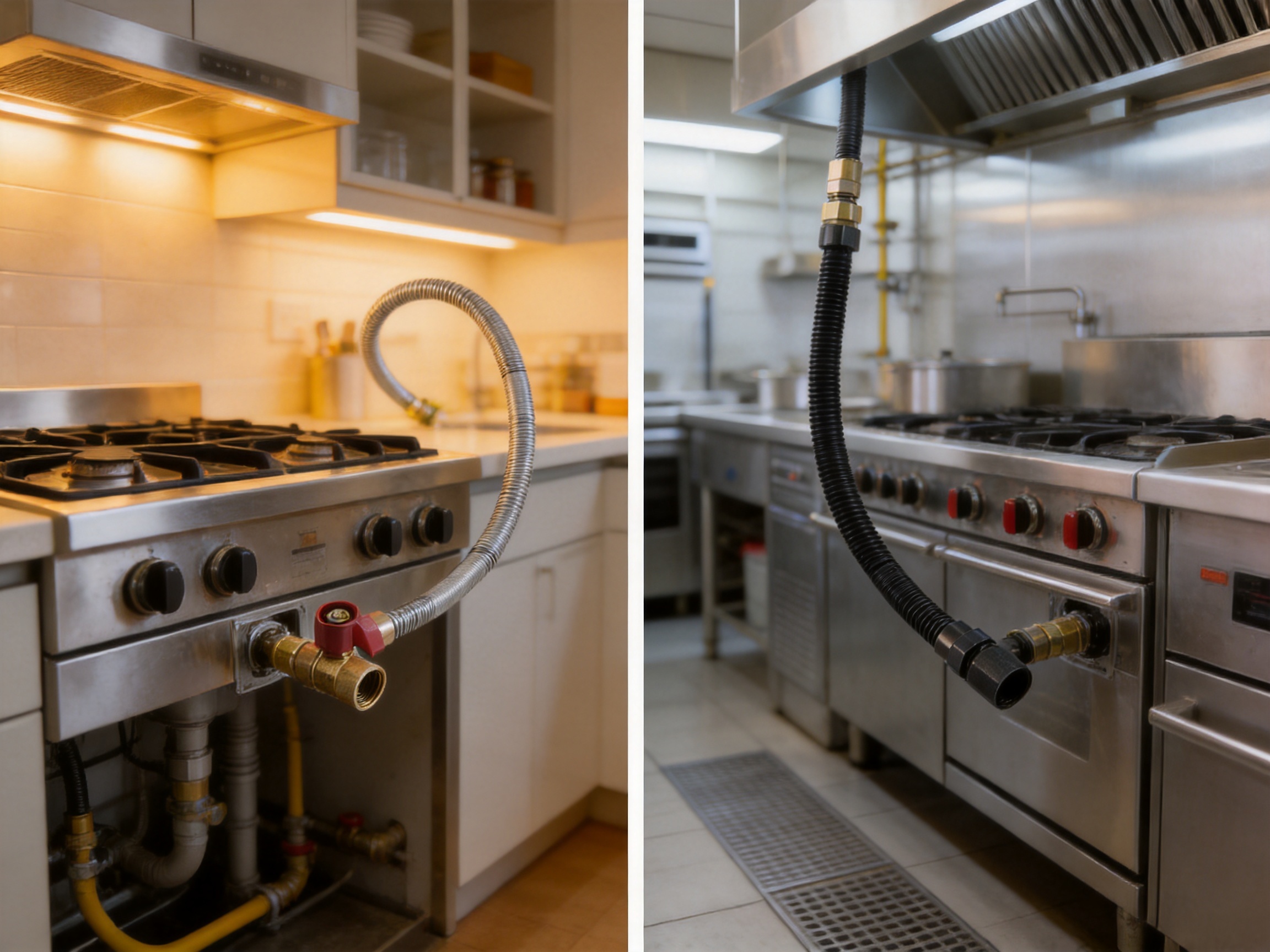
In a residential kitchen, the connector may be routed between a gas supply outlet and a compatible cooker, range, oven, or other appliance. The selected length should allow the appliance to be positioned correctly without placing the tube under tension. The connector should remain accessible for inspection and should not be trapped behind structures in a way that prevents future maintenance.
In commercial food-service environments, several appliances may be installed close together. Flexible connectors can simplify final connections while allowing equipment to be moved for cleaning or servicing when the installation design permits such movement. Because commercial environments may involve higher use frequency, heat, cleaning chemicals, and more demanding maintenance schedules, material selection and installation discipline are particularly important.
In building service areas, the stainless steel appearance may suit visible utility installations. The black finish may be selected when visual coordination with equipment or enclosure systems is preferred. In either case, the connector should be protected from excessive heat, impact, abrasion, and contact with incompatible chemicals.
Installation and Handling Guidance
Only qualified personnel familiar with gas systems and applicable regulations should install or service gas connectors. Before installation, the product should be inspected for damage, deformation, contamination, missing components, or incorrect specifications.
The installer should confirm the connector length, adapter type, thread specification, fuel compatibility, and appliance requirements. The gas supply should be isolated before work begins. Mating surfaces should be clean and properly aligned, and the connector should be installed without twisting.
Flexible connectors should never be bent beyond their permitted radius. Sharp bends can create local stress and may damage the tube or affect the sealing connection. The connector should also not be stretched, compressed, crushed, dragged across sharp edges, or used to support equipment weight.
Heat exposure must be controlled. The connector should be routed away from burners, hot exhaust surfaces, heating elements, and other sources of excessive temperature. Where the installation environment includes potential abrasion or impact, suitable protective measures should be considered in accordance with local requirements.
After assembly, the connection should be leak tested using an approved procedure. The system should then be checked for proper operation. Periodic visual inspection can help identify signs of corrosion, mechanical damage, discoloration from overheating, movement, or connection deterioration.
If any defect is found, the connector should not be repaired with unauthorized methods. A damaged gas connector should normally be replaced with a suitable approved product. Users should follow local regulations and the appliance manufacturer’s service instructions.
Purchasing Considerations for Distributors and Contractors
Distributors and contractors should evaluate more than unit price when selecting a gas connector. Product reliability, material consistency, available configurations, packaging, technical support, and supplier manufacturing capability can all influence the total cost of ownership.
The first consideration is application compatibility. Buyers should identify the gas type, operating conditions, connection dimensions, required length, installation environment, and applicable national or regional standards. Selecting a connector only because the nominal diameter appears similar can create compatibility problems.
The second consideration is configuration availability. A supplier that offers multiple lengths, adapter options, nut materials, and finishes can provide a more complete product range. This may simplify inventory planning and support projects with varied connection requirements.
The third consideration is quality assurance. Buyers should request relevant product documentation, inspection information, material details, and testing records as appropriate for the project. A supplier with standardized facilities and dedicated testing equipment may be better positioned to support repeat orders and larger installation programs.
The fourth consideration is supply consistency. Contractors and distributors often need the same product configuration over an extended period. A manufacturer with established production systems, automated packaging, and controlled processes can help reduce variation between shipments.
The fifth consideration is technical communication. Clear communication about dimensions, threads, sealing methods, installation requirements, packaging quantities, and customization options can prevent ordering mistakes and improve project efficiency.
Comparison with Alternative Connection Solutions
Rigid metal pipe provides high structural stability and is commonly used for permanent pipeline sections. However, rigid pipe requires accurate cutting, threading, bending, alignment, and support. It may be less convenient for final appliance connections where movement, maintenance access, or positional adjustment is needed.
Basic rubber or polymer hoses may offer flexibility and low initial cost, but their performance can depend strongly on material quality, aging resistance, temperature exposure, and environmental compatibility. In applications where a metallic flexible connection is preferred, stainless steel provides a different balance of durability and corrosion resistance.
Uncoated carbon steel connectors may provide adequate strength in controlled environments, but they can require greater protection against moisture and corrosion. The 304 stainless steel construction of the DN10 product offers an advantage in many environments where long-term surface durability is important.
Connectors with a narrow range of lengths or fixed adapter designs may require additional fittings or awkward routing. The DN10 product’s seven length options and multiple adapters provide greater flexibility during system planning.
Finally, a standard connector that does not address airflow noise may be acceptable in some equipment rooms but less desirable near occupied spaces. The whistle-free design adds a comfort-oriented feature that distinguishes the product from simpler alternatives.
OEM, Wholesale, and Project Supply Potential
The product configuration is suitable for consideration by wholesalers, importers, appliance installers, engineering contractors, equipment manufacturers, and project procurement teams. The combination of standardized specifications and multiple options can support both regular distribution and project-based purchasing.
For wholesalers, offering several lengths and adapter configurations can help meet the needs of different customer groups. For contractors, consistent product labeling and packaging can simplify warehouse organization and site distribution. For equipment manufacturers, the product may be evaluated as a flexible connection component within a broader appliance or equipment package, subject to design validation and certification requirements.
Project buyers may also benefit from direct communication with the manufacturer regarding packaging, order quantities, finish preferences, nut materials, and adapter combinations. A manufacturer with in-house research and production capabilities may be able to respond more effectively to technical questions and specification adjustments.
Before placing a large order, buyers should confirm samples, drawings, specifications, testing requirements, production lead times, packaging details, and quality documentation. These steps are especially important when the connectors will be used in regulated markets or integrated into a certified appliance system.
Q&A
What is the main material of the DN10 gas connector?
The main tube material is 304 stainless steel. The tube wall thickness is 0.2 mm. The connector can be supplied with brass or carbon steel nut options, depending on the selected configuration.
What does DN10 refer to?
DN10 identifies the nominal size classification associated with the product. Because nominal designations can vary between connection systems, buyers should verify the complete dimensions, thread type, adapter specification, and applicable standard before installation.
What is the flare nut specification?
The connector is equipped with a 5/8-18UNF flare nut. The mating component must be compatible with this specification and with the connector’s sealing design.
Which adapter options are available?
The listed options are 5/8 × 3/8M with 1/4F, 5/8 × 3/8F, 5/8 × 1/2M with 3/8F, and 5/8 × 1/2F. The correct option should be selected according to the actual equipment and pipeline interfaces.
Which lengths can be ordered?
The available lengths are 12, 18, 24, 36, 48, 60, and 72 inches. The selected length should provide adequate reach without creating unnecessary loops, tension, or contact with hazardous surfaces.
What is the purpose of the whistle-free design?
The whistle-free design is intended to reduce airflow noise during gas operation. This can improve comfort in residential and commercial environments, particularly where the connector is located close to occupied areas.
What sealing method does the connector use?
The product uses a hard sealing design. Proper sealing still depends on compatible mating components, clean contact surfaces, correct alignment, appropriate tightening, and approved leak testing after installation.
Can the connector be used for every gas appliance?
No. Compatibility must be confirmed for each application. The gas type, pressure, temperature, appliance instructions, connection dimensions, local regulations, and certification requirements must all be considered before installation.
Can the connector replace permanent gas piping?
No. A flexible gas connector is intended for approved connection applications and should not be used as a substitute for permanent pipeline systems. Its use must follow the applicable installation design and regulations.
How should the connector be maintained?
The connector should be kept free from excessive heat, impact, abrasion, chemicals, twisting, and mechanical stress. It should be visually inspected periodically for damage or deterioration. Any suspected defect should be evaluated by qualified personnel, and damaged connectors should generally be replaced rather than repaired with unauthorized methods.
What manufacturing capabilities support this product?
The manufacturer uses technologies and equipment including laser welding machines, CNC forming machines, COSMO equipment, eddy current flaw detectors, and automatic packaging systems. The company also describes a full-process quality management system covering materials, design, manufacturing, testing, and after-sales support.
Can buyers request different finishes or configurations?
The standard product information lists stainless steel and black finishes, brass or carbon steel nut materials, several adapters, and seven length options. Buyers should contact the manufacturer to confirm available combinations, minimum order quantities, packaging, and any project-specific requirements.
Conclusion
The DN10 stainless steel whistle-free gas connector is a versatile flexible connection solution for compatible residential, commercial, and equipment applications. Its 304 stainless steel construction provides a strong foundation for corrosion resistance and long-term durability, while the 0.2 mm wall thickness supports the flexibility needed for practical installation.
The product’s 5/8-18UNF flare nut, multiple adapter options, seven available lengths, brass or carbon steel nut choices, hard sealing design, and stainless steel or black finishes give buyers considerable configuration flexibility. Its whistle-free design adds a practical comfort advantage by targeting lower airflow noise during operation.
Compared with basic connectors, the product offers a more complete combination of material performance, installation adaptability, appearance options, and noise-conscious design. These advantages are supported by the manufacturer’s experience in stainless steel bellows and flexible connection products, standardized workshops, advanced forming and welding equipment, non-destructive inspection capabilities, automatic packaging systems, and structured quality management procedures.
For the best results, selection and installation must always be based on the actual gas system, applicable standards, appliance requirements, and professional installation practices. When correctly specified and installed, the DN10 stainless steel whistle-free gas connector can provide a dependable, clean, and flexible connection for modern gas systems.
References
1. Stainless Steel Materials Reference, 304 Austenitic Stainless Steel Properties and Applications.
2. Gas Appliance Installation Practice, Flexible Connector Selection, Routing, and Inspection Principles.
3. Quality Management Systems, ISO 9001 Principles for Manufacturing and Process Control.
4. Environmental Management Systems, ISO 14001 Framework for Responsible Industrial Production.
5. Occupational Health and Safety Management, ISO 45001 Implementation Principles.
6. Non-Destructive Testing Reference, Eddy Current Inspection of Conductive Metallic Components.
7. Metal Joining Technology Reference, Laser Welding of Thin Stainless Steel Components.
8. Flexible Metallic Connection Design Guide, Forming, Sealing, Vibration, and Installation Considerations.