





 English
  Español
  русский


Introduction
Flexible plumbing connectors are essential components in residential, commercial, industrial, and building-service piping systems. They help connect water lines, plumbing pipes, flexible liners, valves, fixtures, and equipment while accommodating installation tolerances, vibration, thermal movement, and minor changes in alignment. Although a connector’s hose, tube, or liner often receives most of the attention, the fastening nut is equally important. A nut must hold the connection securely, support repeated assembly and maintenance, protect mating surfaces, and remain stable in the presence of water, moisture, chemicals, and vibration.
The Flexible Plumbing Connector Nylon Nut is designed for applications in which low weight, electrical insulation, corrosion resistance, surface protection, and economical performance are important. Produced from engineering-grade nylon, this nut provides a practical alternative to conventional metal nuts in suitable plumbing and flexible-connection assemblies. Its low density makes it easy to handle, while its natural elasticity contributes to vibration damping and resistance to loosening. Its non-metallic construction also prevents galvanic interaction with many metal fittings and avoids scratching sensitive contact surfaces during tightening.
For plumbing, water-line, gas-connection, heating, HVAC, healthcare, and industrial applications, a fastening component must be evaluated as part of a complete connection system. Thread compatibility, temperature, pressure, fluid type, torque, sealing method, installation environment, and maintenance requirements all influence performance. The nylon nut is therefore not simply a replacement for every metal nut. Instead, it is a specialized fastening solution that offers distinct advantages where its material characteristics match the application.
Its value becomes even more apparent when it is manufactured through a controlled process supported by professional product development, standardized workshops, inspection equipment, and a full quality-management system. A reliable nylon nut requires more than a suitable raw material. It requires accurate tooling, stable molding or machining conditions, consistent thread formation, careful dimensional inspection, and responsible packaging. These manufacturing strengths help ensure that the nut performs consistently when installed in flexible plumbing connectors and related assemblies.
Flexible Plumbing Connector Nylon Nut
Product Overview
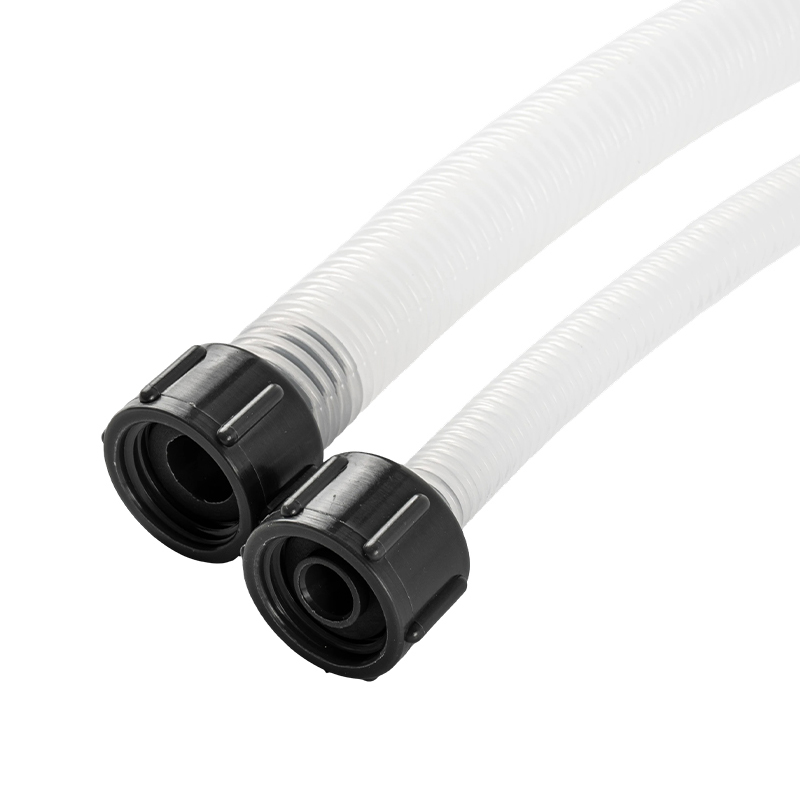
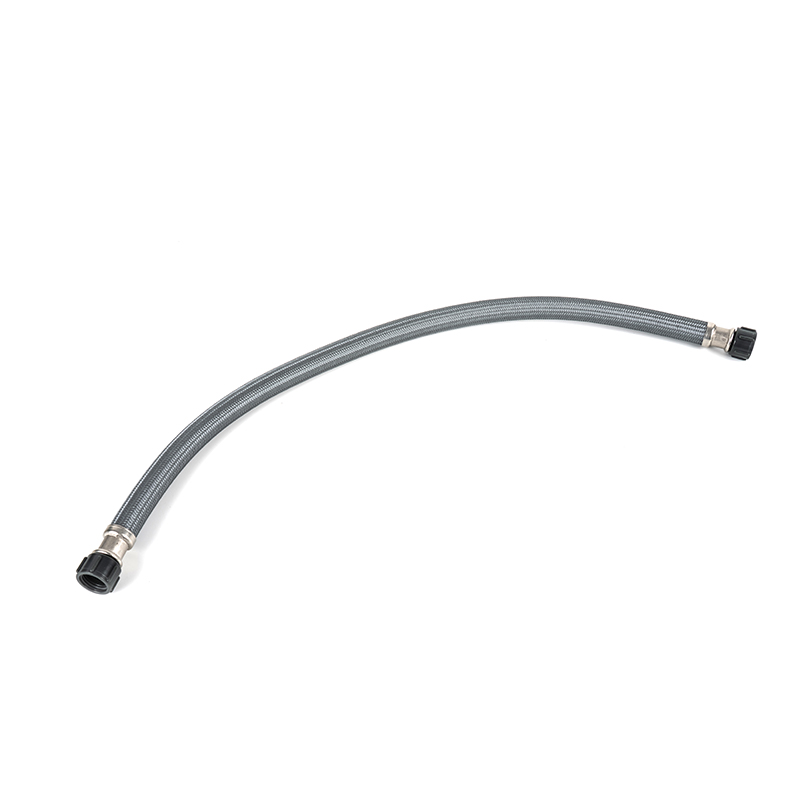
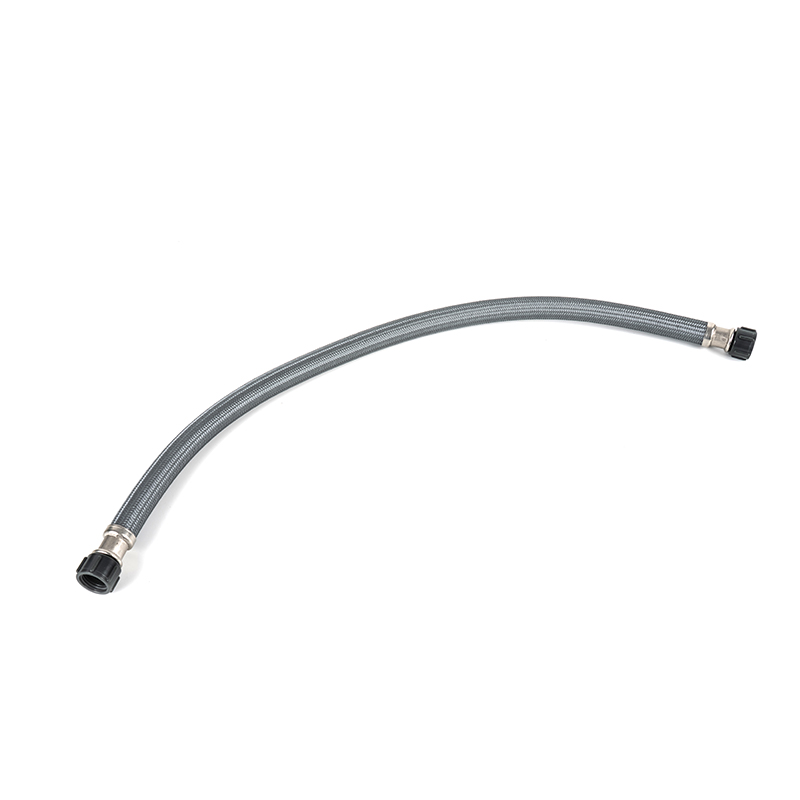
The Flexible Plumbing Connector Nylon Nut is a non-metallic fastening component intended for use with compatible flexible plumbing connectors, water pipes, liners, hoses, fittings, and connection assemblies. Its main function is to provide controlled mechanical fastening between threaded components. Depending on the assembly design, the nut may compress a sealing washer, retain a connector end, secure a liner or hose fitting, or hold two parts together while allowing the sealing element to perform its own function.
Nylon is particularly suitable for this type of product because it combines low weight with useful mechanical strength and good chemical resistance. Compared with steel, brass, or other common metal materials, nylon has a much lower density. This makes the finished nut easy to transport, handle, position, and install. In large projects involving thousands of connectors, even a small reduction in component weight can reduce handling effort and packaging weight.
The nut also provides electrical insulation. Because nylon is a non-conductive material, it can help separate conductive components and reduce the possibility of an unintended electrical path through the fastening element. This characteristic is valuable in equipment rooms, building-service installations, electronic equipment connections, and locations where electrical isolation is required. It should not be considered a substitute for a complete electrical safety design, but it provides an important insulating function within the mechanical assembly.
The soft and slightly elastic nature of nylon offers another benefit. When tightened correctly, the material can absorb a portion of shock and vibration. This can help reduce the transmission of vibration through the connection and support resistance to gradual loosening. Nylon’s self-locking tendency, combined with suitable thread engagement and correct installation torque, can contribute to connection stability under normal operating conditions.
At the same time, nylon is gentler on contact surfaces than many metal alternatives. A metal nut can scratch coated fittings, polished surfaces, plastic components, or soft alloys if excessive force is applied or if contamination becomes trapped between the nut and the mating surface. A nylon nut is less likely to damage these surfaces during normal tightening. This makes it suitable for assemblies where appearance, coating integrity, or surface protection is important.
Core Material Advantages
Extremely Light Weight
The low density of nylon is one of the product’s clearest advantages. A nylon nut can weigh substantially less than a comparable metal nut, reducing the overall mass of a connector assembly. This is useful in prefabricated plumbing modules, compact equipment, suspended pipe systems, mobile installations, and projects where installers must repeatedly carry and position components.
Lower weight can improve productivity in several ways. Workers can handle more components with less fatigue, packaged products can be moved more efficiently, and assemblies can be installed in locations where access is limited. Light components are also advantageous when a flexible connector is attached to a delicate fixture or equipment inlet that should not be subjected to unnecessary mechanical load.
Weight reduction can also support efficient logistics. A lighter product may reduce transportation weight, simplify warehouse organization, and make kitting easier for distributors and contractors. In large-scale building projects, the cumulative effect of lighter fasteners can be meaningful, especially when connectors are supplied in preassembled sets.
Excellent Electrical Insulation
Nylon is naturally electrically insulating. This makes the nut suitable for applications where a metallic fastener could create an unwanted conductive connection. For example, a plumbing or flexible hose assembly may be installed near electrical equipment, sensors, control panels, pumps, heating systems, or other electrically sensitive components. A non-metallic nut can help reduce the risk of accidental electrical bridging within the mechanical connection.
Electrical insulation is also useful when dissimilar metal components are present. By separating certain conductive surfaces, a nylon component may help reduce electrical interaction and support better control of galvanic effects. However, the complete assembly must still be designed correctly. The nut’s insulating property does not replace grounding, bonding, insulation testing, or compliance with applicable electrical codes.
Vibration Damping and Loosening Resistance
Flexible plumbing connectors are frequently installed near pumps, compressors, water heaters, HVAC equipment, valves, and other sources of vibration. Repeated vibration can cause poorly designed or incorrectly installed threaded connections to loosen over time. Nylon has a degree of elasticity that allows it to absorb and damp certain mechanical disturbances.
When the nut is used with compatible threads and tightened according to the assembly requirements, its material behavior can support stable fastening. The slight resilience of nylon helps maintain contact between the threads and may reduce the sharp transmission of vibration. Its self-locking tendency can further help resist gradual rotation caused by repeated movement.
Performance depends on the complete connection. Excessive torque may deform the nut, while insufficient torque may produce an unreliable joint. Thread damage, contamination, misalignment, unsuitable temperature, and excessive pressure can also compromise the assembly. For this reason, nylon’s vibration resistance should be understood as a practical material advantage rather than an unlimited guarantee against loosening.
Chemical Corrosion Resistance
Nylon offers good resistance to many salts, dilute acids, dilute alkalis, oils, and other commonly encountered substances. This makes it attractive for plumbing environments where moisture and mild chemical exposure are unavoidable. Unlike unprotected steel, nylon does not rust. Unlike some metal components, it does not develop conventional red corrosion that can stain surrounding surfaces or interfere with disassembly.
Corrosion resistance is valuable in wet rooms, utility areas, water-treatment environments, building-service shafts, agricultural facilities, and industrial locations. It also benefits maintenance teams because the nut is less likely to seize through ordinary atmospheric corrosion. A clean and intact threaded component is easier to inspect, remove, and replace during scheduled service.
Material compatibility must always be confirmed for the actual application. Concentrated chemicals, strong oxidizers, aggressive solvents, high temperatures, ultraviolet exposure, and certain fluids may affect nylon differently from water or mild cleaning agents. Product selection should therefore consider the complete chemical and environmental profile rather than relying only on general corrosion resistance.
Protection of Contact Surfaces
The non-metallic surface of the nut helps protect the connected fitting from scratches and marks. This is important for plated, painted, polished, coated, or otherwise decorative surfaces. It is also helpful when the mating part is manufactured from a softer material that could be damaged by a hard metal fastener.
Surface protection has functional as well as visual benefits. Scratches can expose an underlying metal to moisture, create stress concentrations, damage a protective coating, or make cleaning more difficult. A nylon nut reduces the likelihood of such damage during routine tightening, provided that the threads are aligned and the nut is not forced onto a defective or cross-threaded connection.
Low Cost and Efficient Use of Resources
Nylon is generally economical in terms of raw material and processing cost compared with many metal alternatives. The manufacturing process can produce repeatable shapes efficiently, especially when the design is optimized for injection molding or other high-volume methods. The lower component weight also supports economical packaging and transportation.
Cost savings should not be measured only by the purchase price. A practical fastening component may reduce installation time, lower handling effort, protect expensive fittings, and simplify replacement. If it provides adequate performance for the intended environment, the total cost of ownership can be attractive.
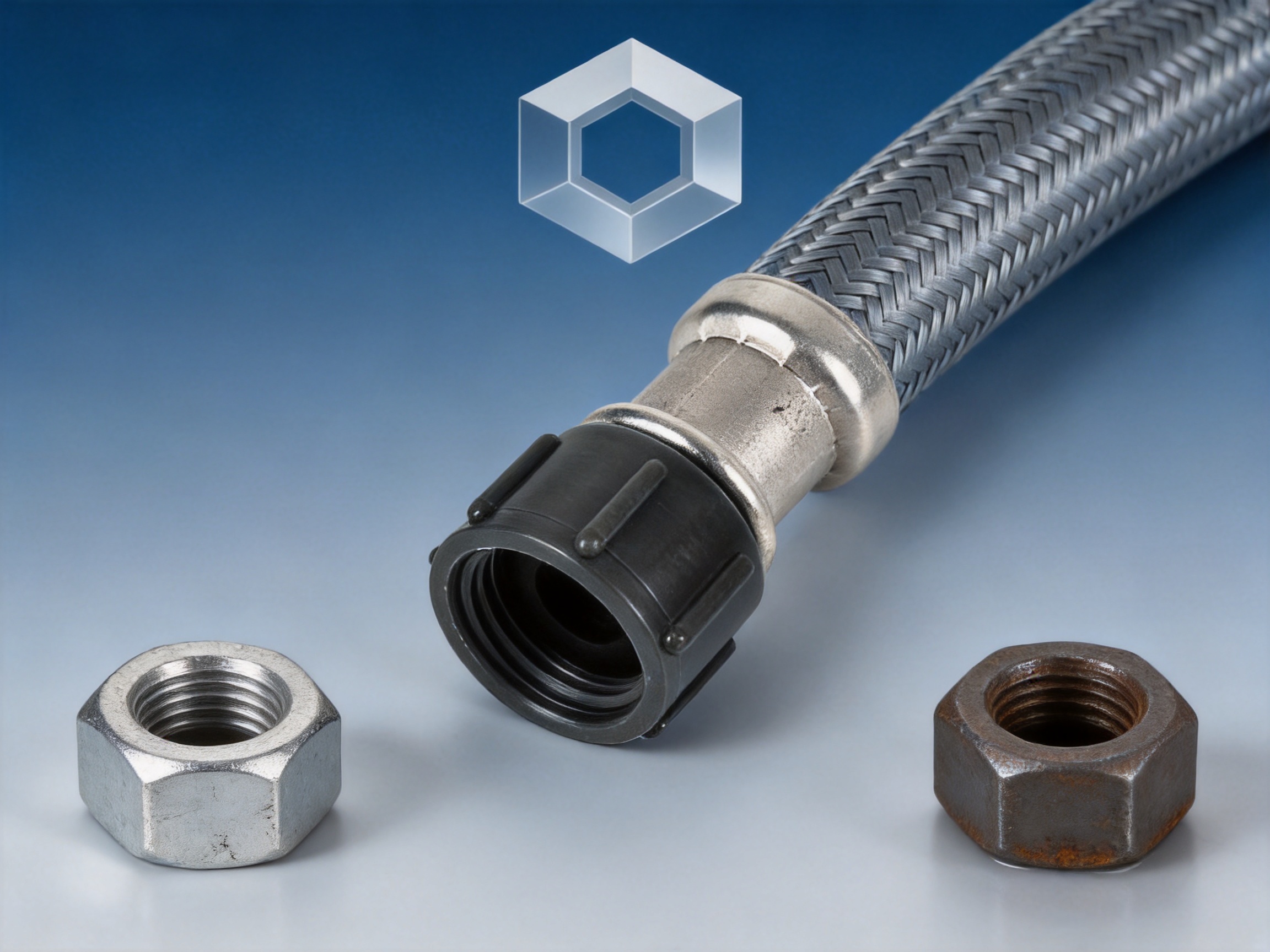
Advantages Compared with Conventional Metal Nuts
Metal nuts remain essential in many high-load, high-temperature, high-pressure, and heavy-industrial applications. Their strength, temperature capability, and long history of use make them suitable for demanding conditions. However, metal is not automatically the best choice for every flexible plumbing connector. In many applications, the nylon nut offers a more balanced solution.
| Performance factor | Nylon nut | Conventional metal nut | Practical significance |
|---|---|---|---|
| Weight | Very low | Moderate to high | Easier handling and reduced assembly weight |
| Electrical behavior | Insulating | Conductive | Useful where electrical separation is needed |
| Surface contact | Soft and less abrasive | Harder and potentially more abrasive | Helps protect coatings and delicate fittings |
| Resistance to ordinary rust | Does not rust like steel | May require coating or alloy selection | Useful in damp environments |
| Vibration response | Elastic and damping | Rigid, depending on design | Can support resistance to loosening |
| Material cost | Generally economical | Varies by alloy and treatment | May reduce component and logistics costs |
| High-temperature capability | Limited by polymer grade | Usually higher | Metal may be preferred for extreme heat |
| Load capacity | Suitable for designed applications | Often higher for heavy loads | Requires engineering review before substitution |
The main competitive advantage of the nylon nut is not that it universally replaces metal. Its advantage is that it solves several common installation and service problems simultaneously. It is lightweight, insulating, corrosion-resistant, surface-friendly, economical, and capable of damping vibration. A metal nut may provide greater strength, but it may also add unnecessary weight, conduct electricity, damage a finish, or corrode in a wet environment.
In systems using stainless steel bellows, flexible metal hoses, plumbing liners, or other metallic connection elements, a nylon nut may also help separate the fastening interface from the connected metal surfaces. This can contribute to better material compatibility when the assembly has been engineered for a non-metallic fastening component.
Applications in Flexible Plumbing Systems
Residential Plumbing
Residential plumbing installations often include flexible connectors for faucets, toilets, water heaters, filtration equipment, washing machines, dishwashers, and other fixtures. These areas are exposed to water, cleaning products, limited installation space, and frequent maintenance. A lightweight nut that does not scratch fittings and resists ordinary moisture can be highly practical.
Under-sink installations are a particularly suitable example. The installer may need to work in a confined space while connecting a flexible water line to a valve or fixture. A nylon nut is easy to position by hand and reduces the risk of damaging a decorative or coated surface. If the connection must later be serviced, the absence of rust can also make removal easier.
Commercial and Public Buildings
Commercial buildings, schools, hospitals, hotels, offices, and public facilities contain extensive plumbing networks. These systems may include many repeated connection points, making consistency and installation efficiency important. Lightweight components can reduce labor demands across the project, while corrosion resistance supports service life in areas with high humidity or frequent cleaning.
Healthcare environments may also benefit from materials that are easy to clean and do not release rust particles into surrounding areas. The final suitability depends on the complete product specification, hygiene requirements, temperature conditions, and applicable regulations. The nylon nut should be selected as part of a documented and approved connection system.
Heating and HVAC Equipment
Heating and HVAC systems frequently experience temperature changes, pressure fluctuations, and mechanical vibration. Flexible connectors are used to isolate equipment, accommodate movement, and simplify installation. The nylon nut can be valuable where the operating temperature remains within the approved range and where the connector assembly does not place excessive mechanical load on the polymer component.
Its vibration-damping property may be beneficial near circulation pumps, air-handling equipment, compact chillers, and other machinery. The insulating nature of nylon can also help separate certain components in systems that include sensors, electrical controls, or mixed mechanical and electrical equipment.
Industrial Plumbing and Utility Systems
Industrial facilities use flexible connectors in process water lines, utility piping, equipment skids, compressed-air accessories, cooling systems, and chemical-service support systems. Nylon nuts may be appropriate for auxiliary lines or moderate-duty connections where the fluid and temperature are compatible with the material.
The product’s chemical resistance to many salts, dilute acids, dilute alkalis, and oils provides a useful starting point for industrial selection. Nevertheless, industrial users should review chemical concentration, exposure time, temperature, pressure, and cleaning procedures. For severe chemical service, a specialized polymer or metal alloy may be necessary.
Gas and Flexible Connection Assemblies
Gas connectors require careful attention to national standards, approved materials, pressure ratings, fire safety, sealing methods, and installation instructions. A nylon nut may be used only where the complete connector design and applicable certification permit it. The component should never be substituted in a gas assembly solely because its dimensions appear similar.
When approved for a particular gas connection, the nylon nut can provide low weight, surface protection, and resistance to ordinary environmental corrosion. The product must remain within its specified temperature and pressure range, and installers must follow the manufacturer’s instructions for tightening, inspection, and leak testing.
Engineering and Design Considerations
Thread Accuracy
Thread quality is central to the performance of any nut. The internal thread must match the mating component in size, pitch, profile, and tolerance. A precisely formed thread promotes smooth engagement and helps distribute load across the connection. Poor thread quality can lead to cross-threading, excessive friction, leakage, deformation, or premature failure.
For nylon components, mold design and process control are especially important. The thread must be formed accurately without excessive flash, incomplete filling, distortion, or shrinkage-related dimensional variation. Where machining is used, cutting tools and process parameters must be controlled to preserve thread geometry and surface quality.
Torque and Compression
Nylon nuts should be tightened using the torque range recommended for the specific assembly. The correct torque must create sufficient clamping force without crushing the nut, stripping the thread, damaging the connector, or over-compressing the sealing washer. Because nylon is more elastic than many metals, torque values cannot automatically be copied from a metal-nut application.
In a flexible plumbing connector, sealing is usually achieved by a washer, gasket, cone, O-ring, or other designed sealing surface. The nut’s job is to generate and maintain the required compression. It should not be used to compensate for an incorrect gasket, damaged fitting, poor alignment, or an unsuitable sealing method.
Temperature
Temperature is one of the most important limits for nylon. The component should be used only within the approved operating and installation temperature range. Hot-water systems, heating equipment, steam environments, and locations exposed to radiant heat require particular attention.
At elevated temperatures, polymers can soften, lose stiffness, or experience accelerated aging. At low temperatures, some materials may become less flexible or more susceptible to impact damage. Product selection should therefore consider normal operating temperature, short-term peaks, cleaning cycles, installation conditions, and possible abnormal events.
Pressure and Mechanical Load
The nut must be evaluated according to the pressure rating and mechanical design of the complete connector. Internal pressure, axial force, bending, vibration, thermal movement, and installation stress can all affect the connection. A nylon nut may be suitable for a specific water or plumbing assembly but unsuitable for a high-load structural joint.
It is also important to avoid using the nut as a pipe support. Flexible connectors should not carry unsupported pipe weight unless the product design explicitly allows it. Proper brackets, clamps, guides, and supports should be used to prevent excessive force from being transferred to the nut and fitting.
Fluid and Chemical Compatibility
Water, mild cleaning agents, salts, diluted acids, diluted alkalis, oils, and many ordinary service fluids may be compatible with nylon. However, compatibility depends on the exact polymer grade and exposure conditions. Some solvents, concentrated chemicals, oxidizing agents, and aggressive disinfectants may cause swelling, embrittlement, cracking, or loss of strength.
Before approving the nut for a specialized service, the user should review the fluid composition, concentration, pressure, temperature, exposure time, and cleaning method. A compatibility evaluation or controlled test may be appropriate for critical applications.
Advanced Manufacturing Strengths
A high-quality nylon nut depends on reliable manufacturing from raw material preparation through final inspection. The manufacturer described in the supplied information operates as a professional enterprise specializing in research and development, design, manufacturing, and sales of stainless steel bellows and flexible connection products. Its product range includes gas connectors, plumbing pipes and water liners, metal hoses, and compensators. This broader product expertise is valuable because a nylon nut performs best when it is designed in relation to the connector, hose, liner, and sealing system with which it will be used.
The company operates standardized workshops covering approximately 18,000 square meters across an area of about 35 mu. A structured manufacturing environment supports orderly material flow, controlled production conditions, equipment maintenance, personnel training, and traceability. These factors are particularly important for connection components because dimensional consistency and assembly compatibility are essential.
Research and Development
Product development begins with understanding the application. Engineers must consider connector geometry, thread dimensions, material compatibility, sealing requirements, installation space, operating pressure, temperature, vibration, and expected service conditions. A professional research and development team can convert these requirements into a practical nut design with suitable wall thickness, thread profile, wrenching geometry, and material selection.
Development may include prototype evaluation, dimensional verification, assembly trials, torque testing, leakage testing of the complete connector, vibration assessment, and environmental exposure evaluation. These activities help identify weaknesses before a product enters regular production. They also allow the design to be optimized for manufacturability and consistent quality.
Precision Equipment
The company’s advanced equipment includes laser welding machines, CNC forming machines, COSMO equipment, eddy current flaw detectors, and automatic packaging systems. Although several of these machines are primarily associated with stainless steel bellows and metal connector production, they demonstrate the company’s ability to manage complex flexible-connection manufacturing processes.
Laser welding equipment supports precise and repeatable joining of metal components. CNC forming machines help produce controlled bellows and formed parts with consistent geometry. Eddy current flaw detection provides a non-destructive method for identifying certain discontinuities in conductive metal components. Automatic packaging systems help protect finished products from contamination, mix-ups, and handling damage.
For the nylon nut specifically, precision tooling, molding equipment, thread-forming processes, inspection instruments, and controlled packaging are equally important. The broader equipment base and engineering capability provide a strong foundation for integrating polymer fastening parts with stainless steel and other flexible connection components.
Full-Process Quality Management
The company follows a quality-management approach covering raw material selection, structural design, manufacturing, performance testing, and after-sales support. This full-process method is more reliable than inspecting only the finished product. Quality must be built into every stage.
Raw material control helps ensure that nylon resin meets the required grade and consistency. Storage conditions must protect the material from contamination and excessive moisture where applicable. Production controls help maintain stable temperature, pressure, cycle time, tooling condition, and dimensional accuracy. Finished-product inspection verifies appearance, thread quality, dimensions, and assembly performance.
After-sales support is also part of product quality. Clear technical information, installation guidance, batch traceability, replacement assistance, and feedback collection help customers use the product correctly and allow the manufacturer to improve future production.
Management System Certifications
The company has obtained ISO9001, ISO14001, and ISO45001 management system certifications. ISO9001 is associated with quality-management processes, ISO14001 with environmental management, and ISO45001 with occupational health and safety management. These certifications do not automatically certify every individual product or application, but they indicate a structured approach to organizational control and continual improvement.
A quality-management system can help standardize production procedures, corrective actions, inspection records, supplier evaluation, customer feedback, and document control. Environmental management supports more responsible resource use and waste control. Occupational health and safety management helps create safer conditions for employees working with machinery, materials, and production processes.
Green Manufacturing and Responsible Production
The company is identified as a National High-tech Enterprise and Green Factory. These designations reflect an emphasis on technology development and more responsible manufacturing practices. For customers, green manufacturing can support procurement objectives related to resource efficiency, environmental management, and responsible supply chains.
The nylon nut itself also offers potential resource advantages through low material density and economical processing. Reduced weight can lower transportation energy, while long service life can reduce the frequency of replacement. Such benefits depend on correct application and responsible end-of-life handling. Polymer components should be managed according to local recycling and disposal practices.
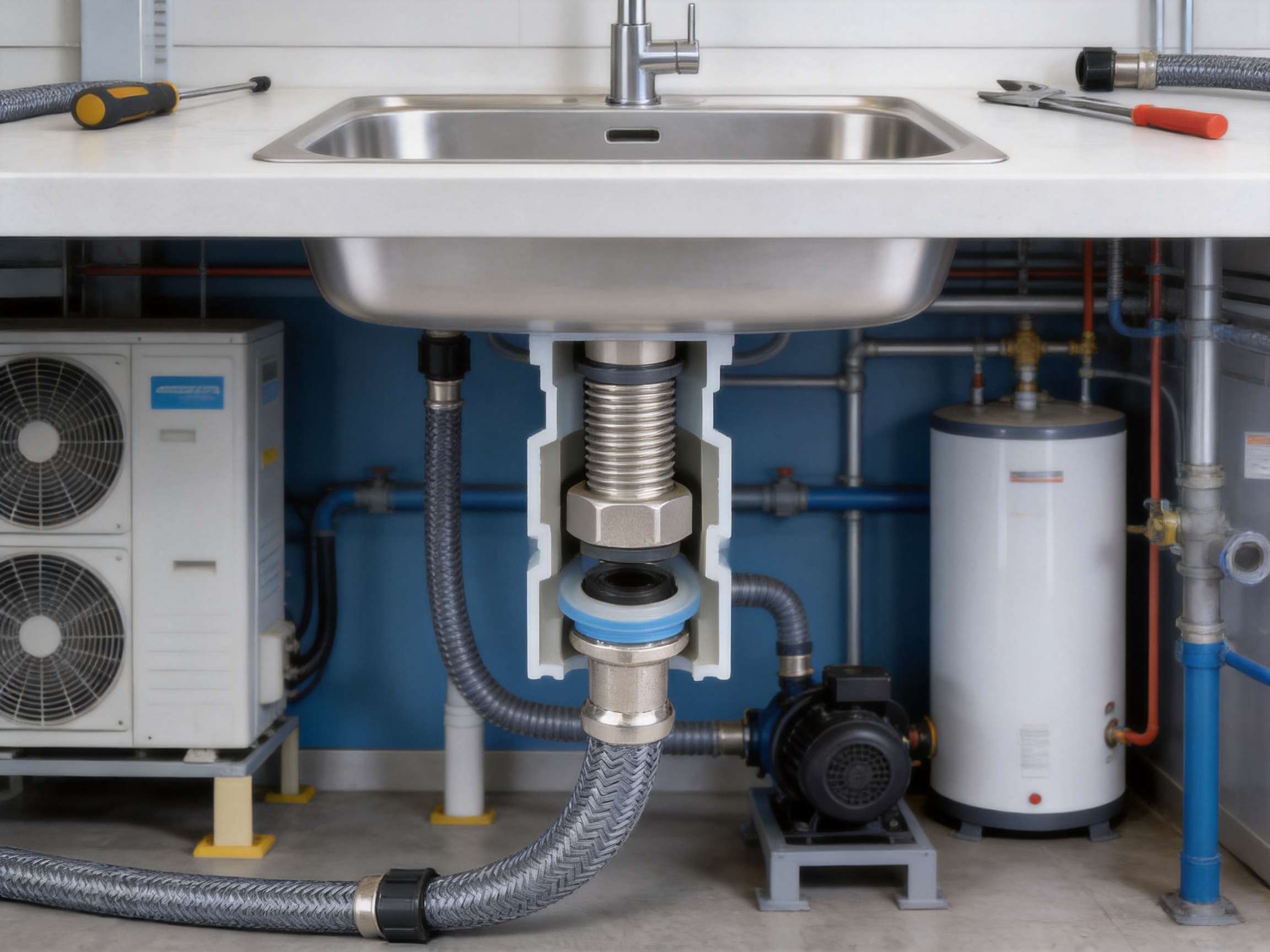
Production Process for a Reliable Nylon Nut
Material Selection and Preparation
The production process begins with the selection of a suitable nylon material. The required grade depends on mechanical strength, toughness, chemical exposure, temperature, dimensional stability, color, and application requirements. Material documentation and incoming inspection help confirm that the raw material is appropriate.
Before processing, nylon may require controlled drying because absorbed moisture can affect molding behavior and finished dimensions. Proper preparation helps reduce defects such as bubbles, surface imperfections, dimensional instability, or inconsistent mechanical performance. Material handling should also prevent contamination from dust, oil, or incompatible polymers.
Tooling and Mold Design
Tooling determines much of the finished nut’s accuracy. The mold must produce the correct external shape, internal thread, wall thickness, and functional surfaces. Good mold design supports balanced filling, controlled cooling, easy ejection, and reduced distortion.
Threaded internal features require special attention. The design must account for polymer shrinkage, draft, ejection, and the required tolerance. If the thread is formed directly during molding, the mold may use a suitable unscrewing or collapsible mechanism. If the thread is machined after molding, the component must be held securely without deformation.
Forming or Molding
During molding, process variables such as melt temperature, injection pressure, holding pressure, cooling time, and cycle speed influence the finished product. Stable settings help ensure that each batch has consistent dimensions and appearance. Excessive heat can degrade the material, while insufficient filling can create incomplete sections or weak areas.
Automation and process monitoring can reduce variation between production cycles. Operators and engineers should monitor equipment condition, mold wear, material drying, cycle records, and abnormal product signals. Well-controlled production is particularly important for threaded parts because even small variations can affect assembly quality.
Finishing and Inspection
After forming, the nut may require removal of gates, flash, or other minor excess material. Finishing must preserve the thread and sealing-contact surfaces. The part should then be inspected for cracks, deformation, short shots, discoloration, contamination, and other visible defects.
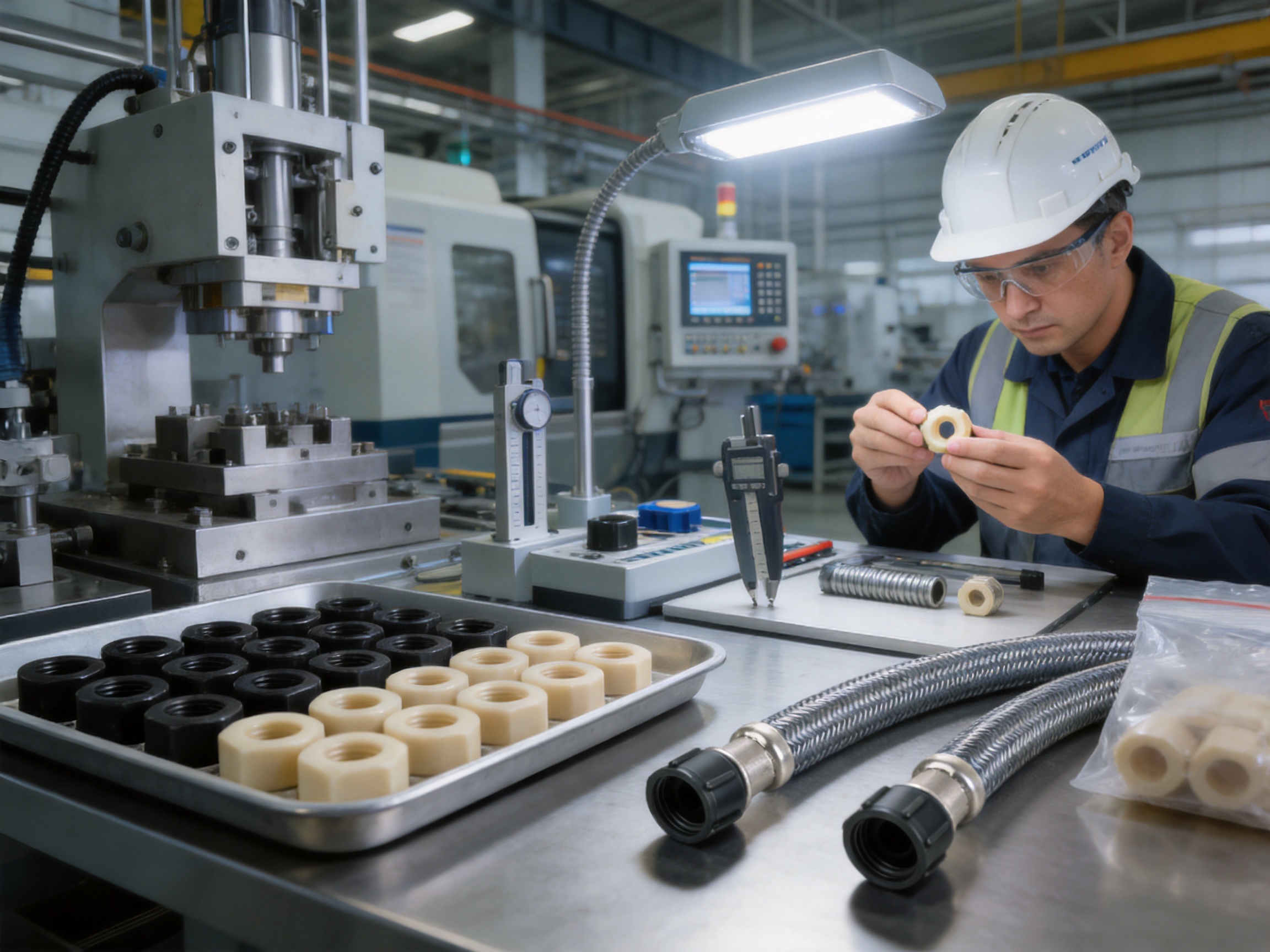
Dimensional inspection may include external diameter, internal thread size, height, wall thickness, wrenching features, and critical contact surfaces. Thread gauges can verify functional fit. Sample assembly with the mating connector helps confirm that the nut engages smoothly and provides the intended compression without excessive force.
Performance Testing
Depending on the application, performance testing may include torque testing, thread stripping resistance, pull-off testing, pressure testing of the complete connector, vibration testing, temperature exposure, chemical compatibility testing, and aging evaluation. Not every test applies to every product, but the test program should reflect the intended service conditions.
Leakage testing is particularly important when the nut is used in a plumbing connector. The nut itself may not be the sealing element, yet its ability to generate and maintain compression directly influences the connection. Testing should therefore evaluate the entire assembly, including the connector body, hose or liner, washer, gasket, and mating fitting.
Packaging and Traceability
Automatic packaging systems can help protect finished nuts from dust, moisture, impact, and mixing with other sizes. Correct labeling should identify the product type, size, quantity, batch information, and applicable installation guidance. Traceability allows production records to be reviewed if a customer reports a concern.
Packaging should also prevent deformation during transportation. Although nylon is resilient, sustained pressure, high heat, or improper stacking can affect small components. Organized packaging supports efficient inventory management and reduces the risk of selecting the wrong size during installation.
Installation Best Practices
Before installation, confirm that the nut, connector, thread, washer, and fitting are compatible. Inspect all components for cracks, damage, contamination, or distortion. The threads should be clean and properly aligned. Do not force the nut if resistance occurs at the beginning of engagement.
Start the nut by hand whenever possible. Hand engagement helps detect cross-threading and confirms that the components are aligned. If the nut cannot be turned smoothly for several revolutions, stop and inspect the connection. Cross-threading can permanently damage a nylon nut and may also damage the metal or polymer mating thread.
Use the recommended washer, gasket, O-ring, or sealing element. Do not rely on excessive tightening to correct a missing or damaged seal. Apply only a lubricant that is approved for the nylon material and the service fluid. Some oils, solvents, or thread compounds may adversely affect the polymer or cause contamination of the sealing surface.
Tighten the nut to the specified torque. If a torque value is not provided, consult the product supplier or technical documentation rather than guessing. Excessive force may strip the internal thread, deform the nut, crush a washer, or damage the connector. Insufficient force may result in leakage or loosening.
After assembly, inspect the connection visually and conduct the required pressure or leak test. Check for movement, uneven compression, visible deformation, or leakage. Where vibration is expected, inspect the connection after initial operation and include it in the regular maintenance schedule.
Do not use damaged nuts, nuts with visibly worn threads, or components that have been exposed to unsuitable chemicals or excessive heat. Replacement is usually more economical and safer than attempting to repair a damaged polymer fastening part.
Maintenance and Service Life
Routine inspection should consider the condition of the nut, connector body, hose or liner, sealing element, and surrounding supports. Look for cracking, discoloration, deformation, thread damage, leakage, or evidence of excessive movement. A change in appearance may indicate chemical exposure, overheating, ultraviolet aging, or mechanical stress.
Flexible connectors should be protected from sharp bends, twisting, abrasion, and unsupported loads. The nut cannot compensate for poor routing or excessive strain. Proper alignment helps preserve the thread and reduces stress on the sealing surfaces.
When servicing the connection, use clean tools and avoid gripping or crushing the nut with pliers unless the design specifically permits it. A suitable wrenching surface should be used. If removal is difficult, investigate corrosion, thread damage, contamination, or over-tightening rather than applying uncontrolled force.
Service life depends on material grade, temperature, fluid, pressure, vibration, installation quality, and environmental exposure. In normal compatible conditions, the nylon nut can provide dependable service. Critical systems should follow a documented inspection and replacement policy based on risk and operating experience.
Quality Assurance and Customer Confidence
Customers purchasing flexible plumbing components need more than a product photograph or a dimensional promise. They need confidence that each batch is made consistently and that technical questions can be answered. A manufacturer with experience in gas connectors, water liners, metal hoses, and compensators understands that connection reliability depends on the interaction of multiple parts.
The combination of research and development, standardized workshops, advanced equipment, management certifications, and full-process inspection provides a stronger foundation than isolated component production. It supports design coordination between the nylon nut and the complete flexible connector assembly.
Quality assurance should include documented material controls, approved drawings, controlled production parameters, inspection standards, test records, nonconformance procedures, and traceability. These practices reduce variation and make it easier to identify the cause of any problem. They also support stable supply for distributors, contractors, equipment manufacturers, and original-equipment customers.
Technical communication is equally important. Product users should receive clear information about dimensions, compatible threads, material grade, temperature range, pressure limitations, tightening recommendations, sealing methods, chemical compatibility, packaging, and storage. Accurate documentation helps prevent misuse and supports compliance with project specifications.
Selection Guide
When selecting a Flexible Plumbing Connector Nylon Nut, begin with the connection type. Identify whether the nut is intended for a plumbing pipe, water liner, flexible hose, gas connector, heating line, HVAC connection, or another assembly. Confirm that the nut is approved for that specific application.
Next, verify the thread standard and size. Similar-looking threads may not be interchangeable. Check nominal diameter, pitch, thread form, gender, and mating-component specifications. If a washer or gasket is used, confirm its dimensions and material as well.
Review the operating environment. Consider water quality, cleaning chemicals, oils, salts, dilute acids, dilute alkalis, ultraviolet exposure, humidity, temperature, pressure, vibration, and installation location. A nylon nut is well suited to many ordinary environments, but extreme conditions require additional evaluation.
Consider the mechanical load. Determine whether the nut only provides clamping force or whether it is exposed to axial load, bending, impact, or structural force. If the connection supports heavy equipment or experiences severe pressure pulses, a higher-strength fastening solution may be required.
Finally, consider supply and quality requirements. For repeated projects, consistent dimensions, batch traceability, packaging, technical support, and delivery capability are important. A manufacturer with established flexible-connection expertise may be better positioned to provide a complete solution than a supplier offering an isolated generic nut.
Q&A
What is a Flexible Plumbing Connector Nylon Nut?
It is a lightweight, non-metallic threaded nut designed for use with compatible flexible plumbing connectors, water pipes, liners, hoses, fittings, and related connection assemblies. Its purpose is to provide controlled fastening and compression within the complete connector design.
What are the main benefits of nylon compared with metal?
The principal benefits include extremely low weight, electrical insulation, vibration damping, resistance to ordinary corrosion, protection of contact surfaces, and generally low material and processing cost. These benefits make nylon attractive for suitable plumbing and flexible-connection applications.
Can it replace every metal nut?
No. Nylon has different temperature, strength, chemical, and load limitations. It should replace a metal nut only when the complete assembly has been designed, tested, and approved for the intended service conditions.
Is the nylon nut suitable for wet environments?
It is generally suitable for many wet and humid environments because it does not rust like ordinary steel. However, the exact nylon grade, fluid, temperature, pressure, and exposure duration must be reviewed before use.
Does the nut prevent leakage by itself?
Usually, the nut is not the primary sealing element. Leakage control normally depends on a washer, gasket, O-ring, cone, or other designed sealing surface. The nut provides the clamping force needed to compress that sealing element correctly.
How does it resist loosening under vibration?
The elasticity of nylon provides a degree of cushioning and vibration damping. Its self-locking tendency can help maintain thread engagement. Correct thread compatibility, alignment, and tightening torque remain essential.
Can the nut be used with stainless steel connectors?
It may be used with stainless steel connectors when the complete assembly has been engineered for that combination. The non-metallic material can help protect surfaces and provide electrical separation, but thread, load, temperature, pressure, and sealing compatibility must be confirmed.
How should the nut be tightened?
Start the nut by hand, keep the threads aligned, and use the recommended torque. Do not force a cross-threaded connection or apply excessive tightening force. If no torque information is available, request technical guidance from the supplier.
Is special maintenance required?
Routine visual inspection is generally sufficient for many applications. Check for cracking, deformation, discoloration, leakage, thread damage, and excessive movement. Replace the nut if it has been damaged, overheated, chemically attacked, or excessively worn.
What manufacturing capabilities support this product?
The manufacturer has professional research and development capabilities, standardized workshops, an established quality-management system, advanced equipment for flexible-connection production, and processes covering material selection, design, manufacturing, testing, packaging, and after-sales support.
Is the product suitable for gas applications?
Only if the complete connector assembly and the applicable regulations specifically approve the nylon nut for gas service. Gas installations require certified components, correct sealing methods, professional installation, and leak testing.
How should customers confirm compatibility?
Customers should provide the connector type, thread size and standard, fluid, temperature, pressure, vibration level, installation environment, and expected service life. The supplier can then help determine whether the nylon nut is appropriate or whether another material is required.
Conclusion
The Flexible Plumbing Connector Nylon Nut is a practical fastening solution for applications that benefit from low weight, electrical insulation, vibration damping, corrosion resistance, surface protection, and economical production. Its non-metallic construction addresses several limitations associated with conventional metal nuts, particularly in damp, confined, vibration-prone, or surface-sensitive installations.
The product is most effective when selected as part of a complete, compatible connector system. Correct thread design, sealing components, torque, temperature, pressure, chemical exposure, and mechanical support must all be considered. Nylon should not be treated as a universal replacement for metal, but its performance advantages are substantial when the application is within the material’s design range.
Reliable production is equally important. Professional research and development, standardized workshops, advanced manufacturing equipment, quality certifications, environmental responsibility, and full-process quality management help support consistent product performance. Experience in stainless steel bellows, gas connectors, plumbing pipes, water liners, metal hoses, and compensators gives the manufacturer a broader understanding of flexible connection engineering.
For distributors, contractors, equipment manufacturers, and project engineers seeking an efficient fastening component for compatible plumbing and flexible connection assemblies, the nylon nut offers a strong balance of functionality, convenience, and cost. When supported by careful design and disciplined manufacturing, it can contribute to safer, cleaner, lighter, and more maintainable piping installations.
References
1. General principles of polymer engineering and nylon material selection for mechanical components.
2. Industrial guidance on threaded fastener design, torque control, and joint integrity.
3. Plumbing system engineering practices for flexible connectors, washers, gaskets, and threaded fittings.
4. Quality management principles for controlled manufacturing and product traceability.
5. Environmental management practices for efficient and responsible industrial production.
6. Occupational health and safety management principles for manufacturing facilities.
7. General guidelines for chemical compatibility evaluation of engineering thermoplastics.
8. Good installation and maintenance practices for water, heating, HVAC, and flexible piping systems.