




 English
  Español
  русский


A dependable gas connection is essential to the safety, efficiency, and long-term performance of residential, commercial, and industrial gas systems. Although a gas connector may appear to be a relatively small component, it must withstand pressure, vibration, repeated temperature changes, installation movement, and exposure to moisture or corrosive environments. The quality of the tube, fittings, sealing method, and manufacturing process can directly affect the reliability of the entire gas installation.
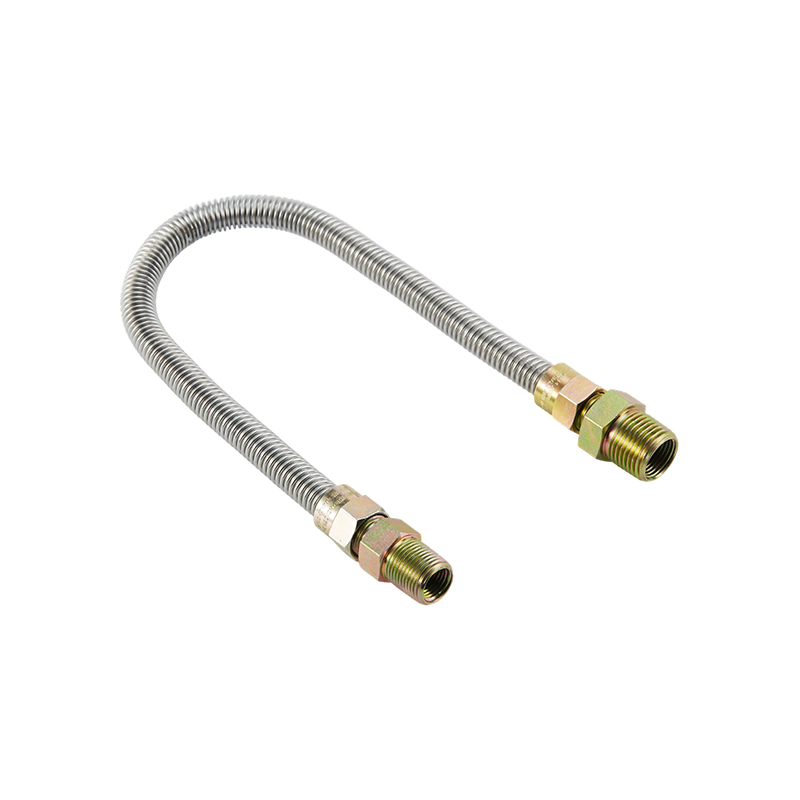
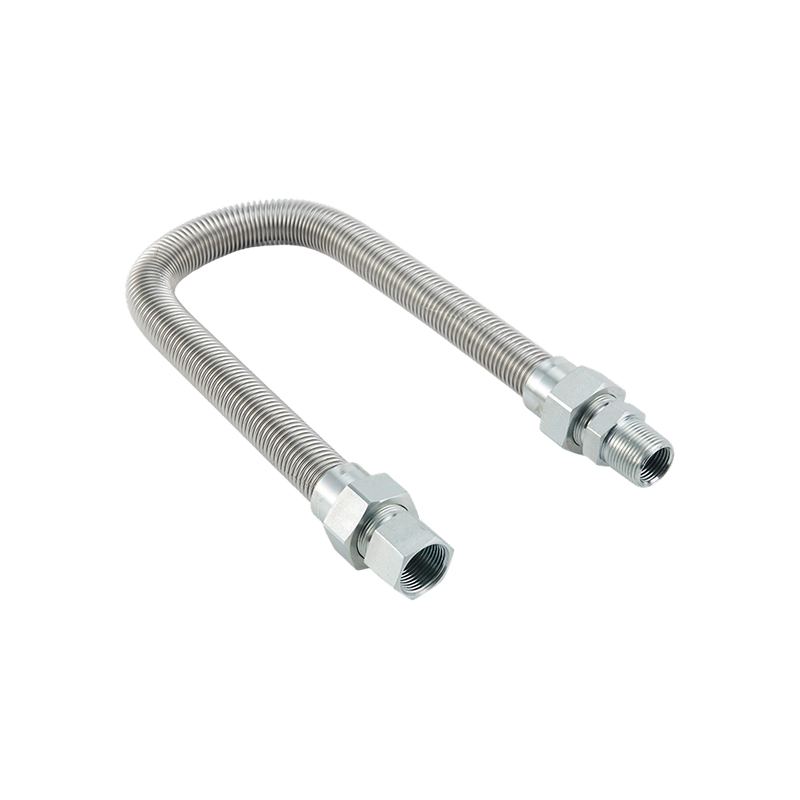
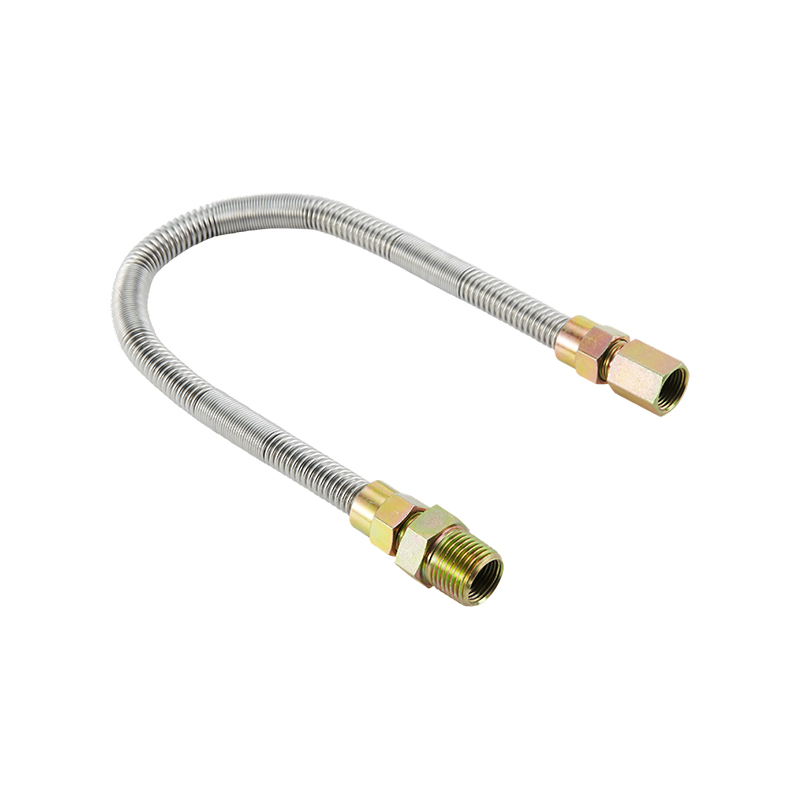
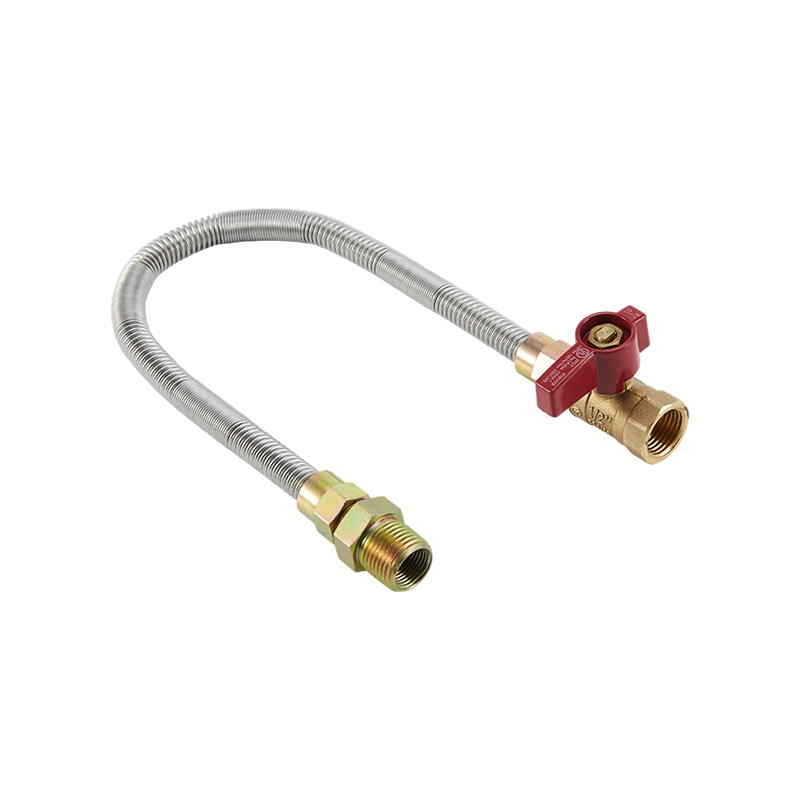
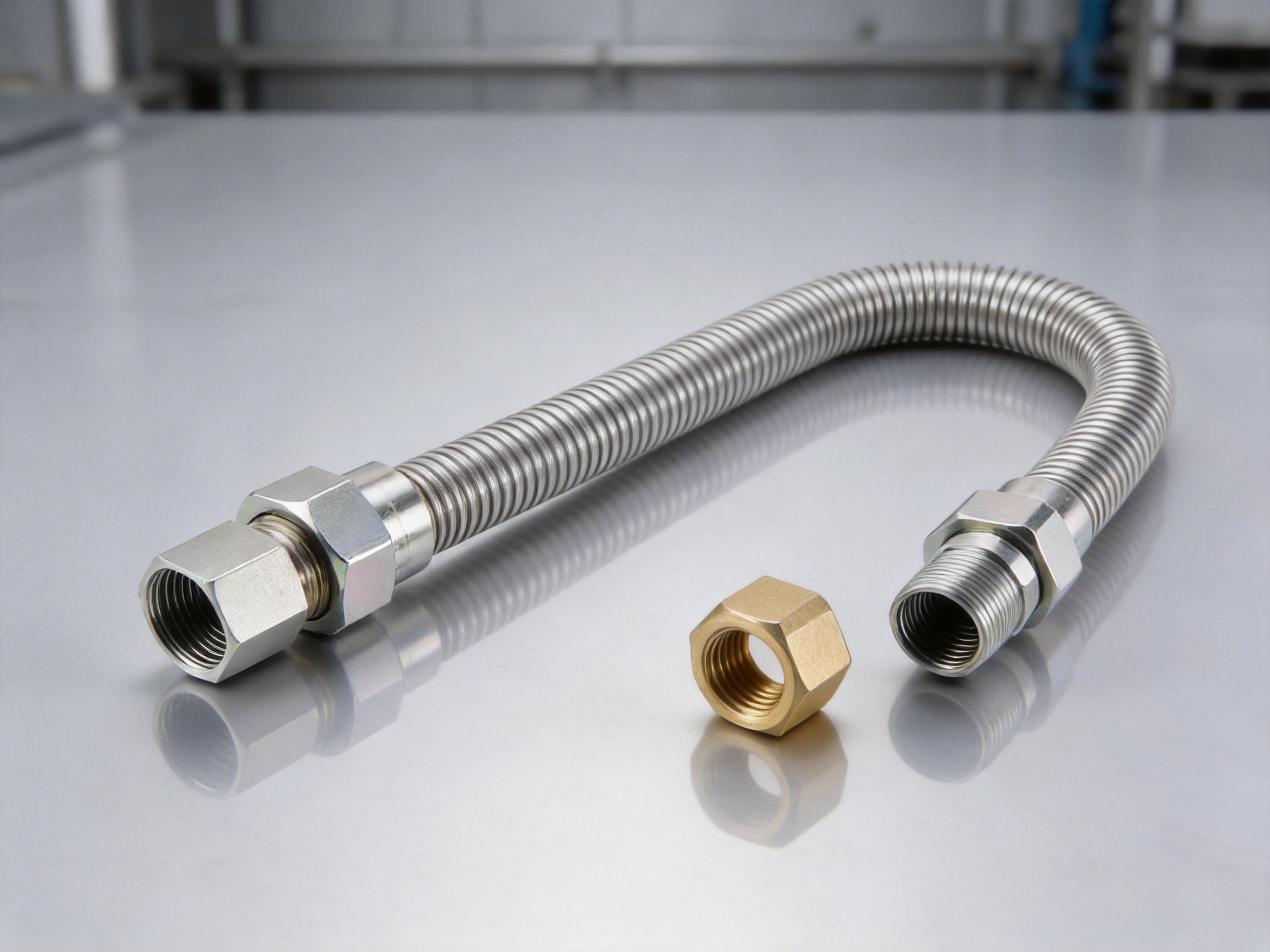
The DN25 Stainless Steel Gas Connector is designed to provide a secure and flexible connection solution for a wide range of gas piping applications. Manufactured with 304 stainless steel and a 0.25 mm pipe wall thickness, this connector combines corrosion resistance, mechanical durability, installation flexibility, and practical configuration options. It is available in multiple lengths from 12 inches to 72 inches, with brass or carbon steel nut options and several external finishes.
Its construction is intended to support safe and efficient connections where a rigid pipe may be difficult to install or unsuitable for absorbing movement. The connector can be used in residential appliances, commercial kitchens, heating systems, equipment connections, and selected industrial gas applications, provided that the product selection and installation method comply with applicable local regulations and technical requirements.
Product Overview
The DN25 Stainless Steel Gas Connector is a flexible corrugated tube assembly designed for gas connection systems. Its nominal DN25 size makes it suitable for applications that require a larger gas flow capacity than smaller household connectors. The flexible body helps installers route the connection around obstacles and align equipment with a fixed gas supply line without excessive bending or complicated pipework.
The tube is made from 304 stainless steel, a widely used stainless-steel grade known for its balance of corrosion resistance, forming performance, strength, and availability. The 0.25 mm wall thickness is engineered to provide a practical combination of flexibility and structural integrity. The tube can accommodate normal installation movement while maintaining a robust barrier between the gas medium and the surrounding environment.
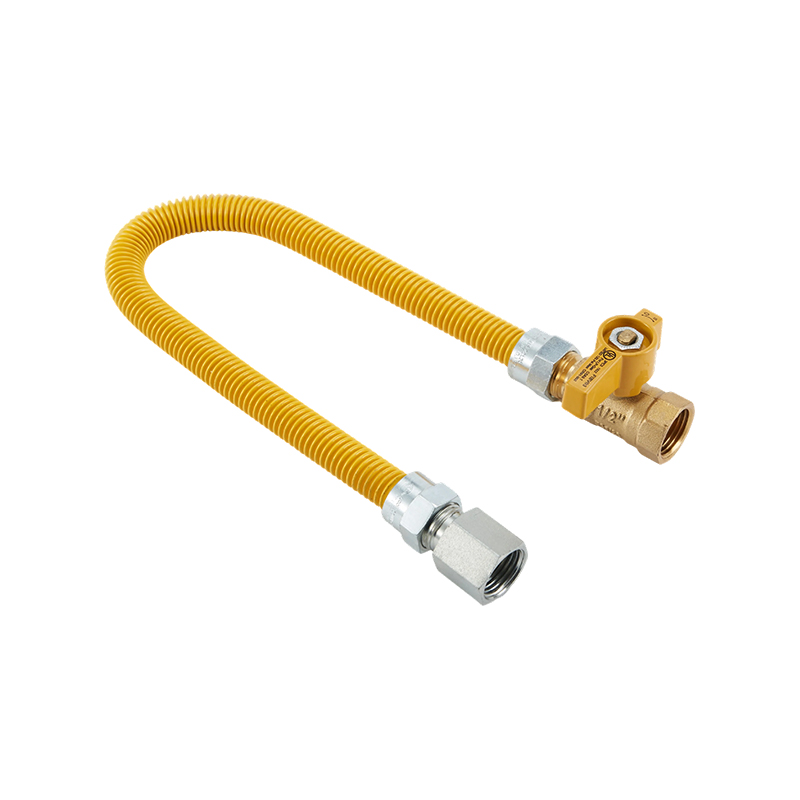
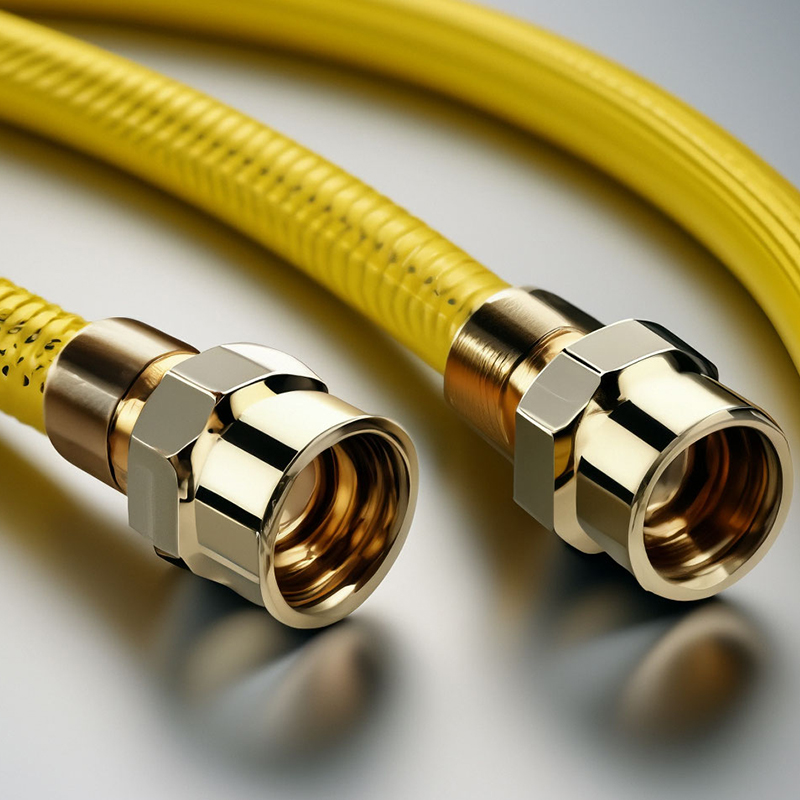
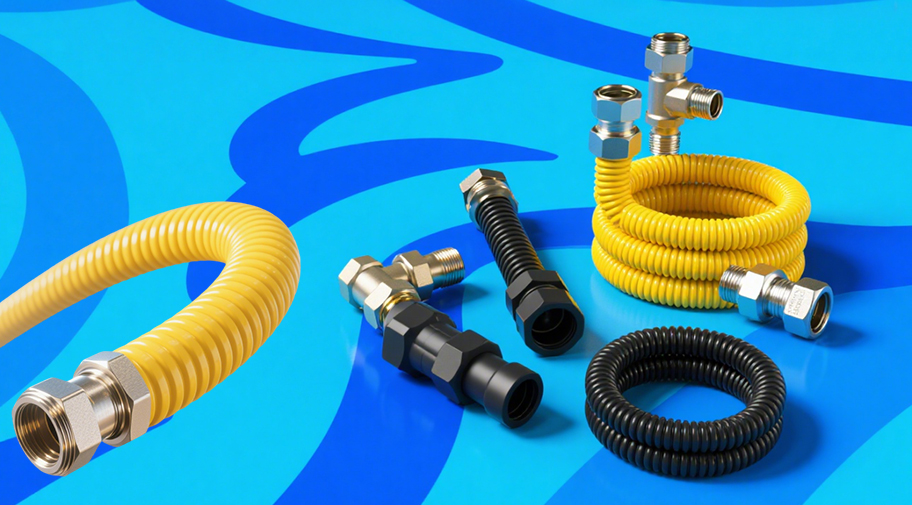
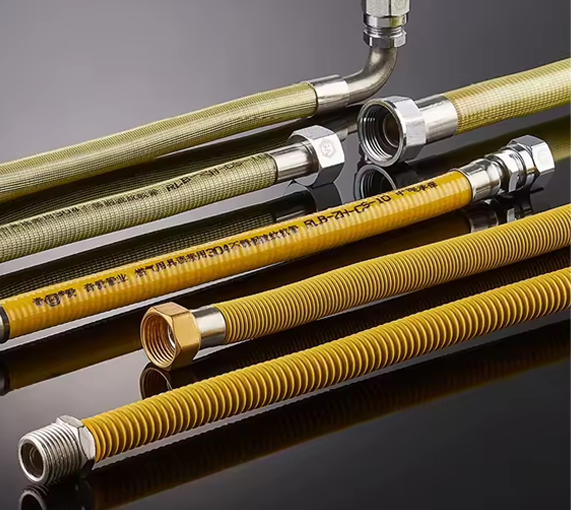
Connection components are available with brass or carbon steel nuts. This choice allows purchasers and project engineers to select a configuration according to application requirements, procurement preferences, fitting compatibility, and cost considerations. The connector can also be supplied in natural stainless steel, yellow, or black finishes. The yellow and black versions contain colored zinc joints, providing visual identification and a distinctive appearance while maintaining the functional purpose of the assembly.
| Product | DN25 Stainless Steel Gas Connector |
| Product Category | Stainless Steel Gas Connector |
| Nominal Size | DN25 |
| Tube Material | 304 stainless steel |
| Tube Wall Thickness | 0.25 mm |
| Available Lengths | 12, 18, 24, 36, 48, 60, and 72 inches |
| Nut Material | Brass or carbon steel |
| Seal Form | Hard sealing |
| Cover Material | None |
| Available Finishes | Natural stainless steel, yellow, and black |
| Certification Category | CSA-certified product category |
Why Stainless Steel Is Important in Gas Connections
Gas connectors are often installed in locations where they may encounter humidity, condensation, cleaning chemicals, salts, dust, or changing temperatures. A material that lacks adequate corrosion resistance may gradually lose thickness or surface integrity. Corrosion can affect the tube, fittings, threads, or sealing areas, creating maintenance concerns and potentially reducing the service life of the connection.
304 stainless steel provides a dependable material platform for these conditions. Its chromium content promotes the formation of a passive surface layer that helps protect the metal from ordinary atmospheric corrosion. This does not mean that stainless steel is immune to every chemical or environmental condition. However, for many common gas installation environments, it offers a stronger resistance profile than ordinary unprotected carbon steel.
The use of stainless steel also supports a clean and professional appearance. The natural finish can be used where the metallic appearance of the material is preferred, while yellow and black options can complement equipment, identify the connection, or meet visual preferences in different installations. The appearance is secondary to safety and performance, but it can be valuable in organized mechanical rooms, commercial kitchens, appliance installations, and equipment assemblies.
Compared with less durable materials, stainless steel can reduce the likelihood of premature replacement caused by surface deterioration. It also offers useful forming characteristics, allowing the tube to be manufactured into a flexible corrugated structure while retaining the strength required for normal service.
Flexible Corrugated Construction
The flexible body of a gas connector is formed with corrugations that allow controlled movement and bending. This design is different from a smooth rigid tube. A rigid pipe generally requires accurately positioned supports, elbows, unions, and fittings to reach the equipment. A flexible connector can simplify the final connection by allowing the installer to route the tube through a more direct path.
Flexibility can be particularly helpful when an appliance is moved for cleaning, inspection, servicing, or replacement. It can also help absorb limited vibration from equipment such as heating appliances, commercial cooking equipment, and mechanical systems. By reducing the need for rigid alignment, the connector can make the installation more adaptable while reducing the number of separate pipe components.
Flexible does not mean that the connector should be sharply folded, twisted, stretched, or used as a substitute for proper pipe support. The tube must be installed with a suitable bend radius and without excessive mechanical stress. It should not be routed through locations where it may be crushed, exposed to unreasonable heat, or subjected to abrasion. Correct installation remains essential to achieving the expected performance of the product.
The corrugated construction also enables the connector to accommodate small differences between the fixed gas line and the appliance inlet. This can be helpful in renovation projects, replacement installations, and situations where the final equipment position differs slightly from the original design.
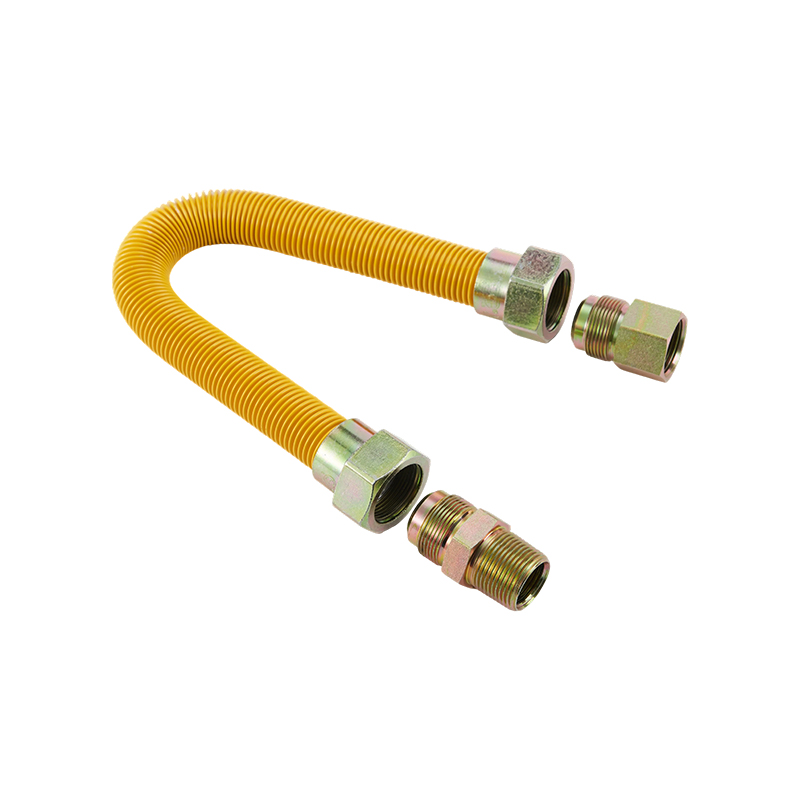
DN25 Stainless Steel Gas Connector
Advantages Over Conventional Rigid Connections
One of the principal advantages of a flexible stainless steel gas connector is installation convenience. Rigid pipe systems require careful measurement and often involve several elbows, couplings, threaded joints, and support points. Each additional component may increase labor time and create another area that must be inspected. A properly selected flexible connector can shorten the final connection route and reduce assembly complexity.
The connector can also help accommodate equipment movement. Many appliances need to be pulled away from a wall or cabinet for maintenance. A rigid connection may restrict movement or require partial disassembly before servicing. A flexible connector provides a more practical connection between the fixed supply line and the movable appliance, subject to the limitations established by applicable gas codes.
Another advantage is routing flexibility. The 12-inch through 72-inch length range gives installers several options for managing different equipment layouts. A short connector can help maintain a compact installation, while a longer version can reach equipment positioned farther from the supply point. Selecting the correct length is important: the connector should be long enough to avoid tension but not so long that excess material creates loops, contact points, or unnecessary exposure.
The 304 stainless steel tube also offers a valuable balance between flexibility and durability. Some competing connection solutions may be less resistant to environmental exposure or may require additional protective treatments. Stainless steel provides corrosion resistance as part of the base material rather than relying only on an external coating.
Finally, the availability of different nut materials and finishes allows the connector to be adapted to different project specifications. Brass nuts can be selected where corrosion resistance and a traditional gas-fitting appearance are preferred. Carbon steel nuts can provide a strong and economical alternative when the surrounding installation and protective requirements are suitable.
Corrosion Resistance and Service Durability
Gas systems are expected to remain reliable for long periods, and corrosion resistance is an important part of service durability. The connector may be exposed to moisture during cleaning, condensation caused by temperature differences, or atmospheric contaminants in industrial and commercial environments. A 304 stainless steel tube helps address these conditions by providing a naturally corrosion-resistant surface.
Material selection affects more than appearance. If corrosion begins at the tube wall or fitting interface, it may eventually compromise mechanical strength. By using a stainless steel body, the product is better positioned to maintain its structural performance in ordinary indoor and sheltered outdoor environments. The stainless material is also suitable for installations where cleanliness and resistance to surface staining are important considerations.
Nevertheless, product selection should always consider the actual environment. Strong acids, chlorides, aggressive cleaning agents, marine exposure, high temperatures, and specialized industrial chemicals may require a different stainless-steel grade, protective system, or connector design. The DN25 connector should be evaluated against the intended gas medium, operating temperature, pressure, surroundings, and local regulatory requirements before installation.
Long service life also depends on protecting the connector from physical damage. It should not be used as a support for equipment, should not be placed where objects can strike it, and should not be in direct contact with sharp edges. Good routing and regular inspection help preserve the advantages of the stainless steel construction.
Wall Thickness and Mechanical Balance
The tube wall thickness is specified as 0.25 mm. In a flexible corrugated tube, wall thickness must be considered together with the material grade, corrugation geometry, diameter, forming process, welding quality, end fittings, and intended pressure rating. A thicker wall is not automatically better in every flexible application because excessive thickness can reduce flexibility and make forming more difficult.
The 0.25 mm specification provides a defined manufacturing target for consistent production. When controlled correctly, it supports repeatable forming and predictable flexibility across production batches. It also allows the tube to be shaped into corrugations that can accommodate installation routing while retaining the necessary metal cross-section.
Mechanical performance depends on the complete assembly rather than the tube alone. The tube, end connections, nuts, sealing surfaces, and joining processes must work together. A high-quality tube cannot compensate for poor fitting alignment or incorrect sealing. For this reason, the manufacturing process must include control of raw material quality, tube forming, welding, fitting assembly, dimensional accuracy, and final inspection.
Manufacturers and buyers should review the applicable technical data for working pressure, temperature range, burst performance, flexibility, and certification requirements. These values are determined through product testing and should not be inferred from wall thickness alone.
Hard Sealing Design
The product uses a hard sealing form. Hard sealing creates a gas-tight connection through accurately matched metallic sealing surfaces rather than depending solely on a soft gasket. This type of sealing can provide a durable connection when the mating surfaces, fitting geometry, and tightening procedure are properly controlled.
A hard seal is especially valuable in applications where long-term stability and resistance to aging are important. Soft sealing materials may be affected by temperature, compression set, chemical exposure, or time. A properly manufactured metallic sealing interface avoids some of these concerns, although it still requires clean surfaces, correct alignment, and suitable installation practices.
Installers must use the correct mating fittings and follow the relevant assembly instructions. Threads should not be damaged, contaminated, or forced into misalignment. Over-tightening can deform components or damage the sealing surfaces, while under-tightening may prevent the connection from achieving the intended seal. After installation, the joint should be checked according to the applicable gas safety procedure.
The hard-sealing arrangement also supports a neat connection profile. With fewer sealing materials exposed at the joint, the finished assembly can be easier to inspect visually. Any signs of damage, cross-threading, corrosion, or distortion should be treated seriously and corrected before the gas system is placed into service.
Nut Material Options
Brass Nut Option
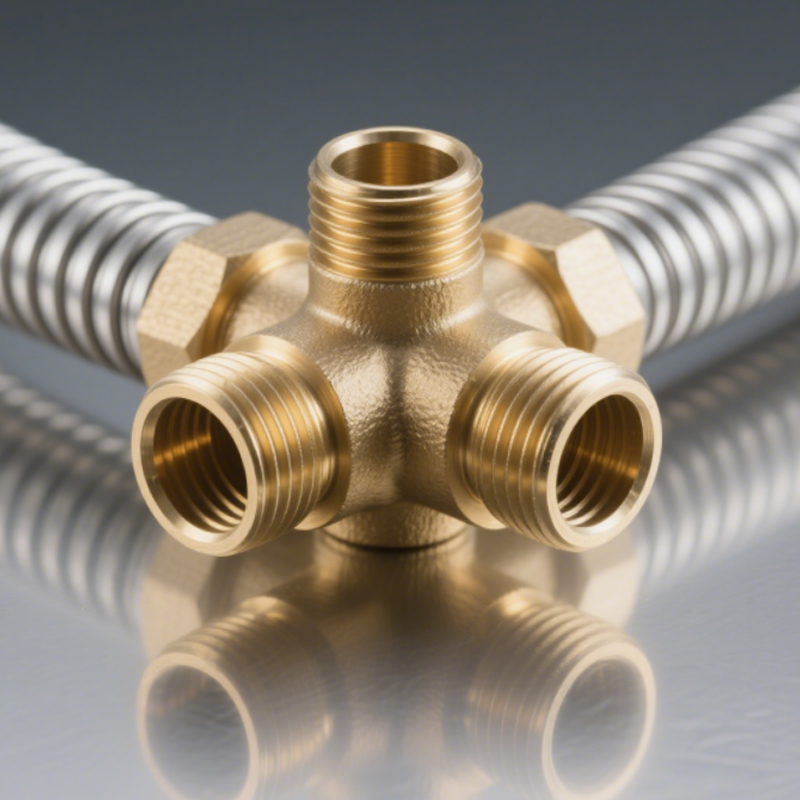
Brass nuts are widely used in connection systems because brass combines good machinability, corrosion resistance, and compatibility with many plumbing and gas-fitting applications. A brass nut can provide a refined appearance and reliable thread performance when manufactured to the required dimensional standards.
The brass option may be suitable for installations where resistance to ordinary atmospheric corrosion is a priority or where the connector is being matched with brass fittings. Brass is also commonly recognized by installers and maintenance personnel, which can simplify component identification during service.
Carbon Steel Nut Option
Carbon steel nuts provide another practical choice. Carbon steel offers high strength and can be cost-effective for projects requiring large quantities of connectors. When the nut is properly finished and used in an appropriate environment, it can provide dependable mechanical performance.
Because carbon steel is more vulnerable to corrosion than stainless steel, the surrounding conditions and protective finish should be considered. The choice between brass and carbon steel should be based on the installation environment, fitting compatibility, project specifications, budget, and maintenance expectations.
Offering both options is an advantage for distributors, contractors, and original equipment manufacturers because it allows the same basic connector platform to be adapted to different market requirements.
Length Selection for Different Installations
The connector is available in seven standard lengths: 12, 18, 24, 36, 48, 60, and 72 inches. This range covers many common connection layouts, from short appliance connections to longer routes between equipment and a fixed supply point.
| Length | Typical Planning Consideration |
| 12 inches | Compact installations with closely aligned connection points |
| 18 inches | Short appliance connections requiring modest routing flexibility |
| 24 inches | Common medium-short connection layouts |
| 36 inches | Installations requiring additional reach around cabinets or equipment |
| 48 inches | Longer appliance or equipment connection routes |
| 60 inches | Extended routing where the supply point is farther away |
| 72 inches | Maximum listed length for larger connection distances |
The best length is not necessarily the longest available option. A connector should normally be selected so that it reaches the connection points without being stretched, sharply bent, or left with excessive slack. Excess length can create unnecessary loops and may increase the risk of contact with hot surfaces, moving components, or sharp edges.
Before ordering, installers should measure the actual route, including the position of fittings and the bend path required for the appliance. They should also consider whether the appliance will need to move during maintenance. A small amount of installation flexibility is beneficial, but the connector should not be used to compensate for an incorrectly positioned gas supply line.
Finish Options and Visual Identification
The product is available in natural stainless steel, yellow, and black. The natural stainless steel finish highlights the material and can be suitable for exposed mechanical installations where a clean metallic appearance is desired.
Yellow and black versions provide additional visual choices. These versions contain colored zinc joints, which contribute to their distinctive appearance. Color can assist with product identification, project coordination, or aesthetic integration with equipment and surrounding components. However, finish color should never replace formal labeling or code-required identification of gas piping.
In commercial and industrial facilities, organized color schemes can make equipment rooms easier to understand during inspection and maintenance. In residential settings, a colored connector may offer a more finished appearance behind an appliance or within a cabinet, provided that the connector remains accessible and is installed in a permitted location.
Surface finish quality is also part of perceived product quality. Consistent color, clean fitting surfaces, and uniform tube forming demonstrate attention to manufacturing detail. Although appearance does not determine pressure performance, it reflects the level of process control applied to the completed assembly.
Applications
Residential Gas Appliances
The DN25 connector can be considered for residential gas appliances and household gas systems that require a larger flexible connection. Potential applications may include selected cooking equipment, heating equipment, water-heating systems, and other approved gas appliances. The exact suitability depends on appliance requirements, connection size, pressure, and local code provisions.
Residential installations benefit from the connector’s flexible routing and range of lengths. A contractor can select a size that connects the appliance to the supply line without extensive rigid pipe modification. The stainless steel body also provides a durable solution in kitchens, utility rooms, and other areas where moisture and cleaning activities may occur.
Commercial Kitchens
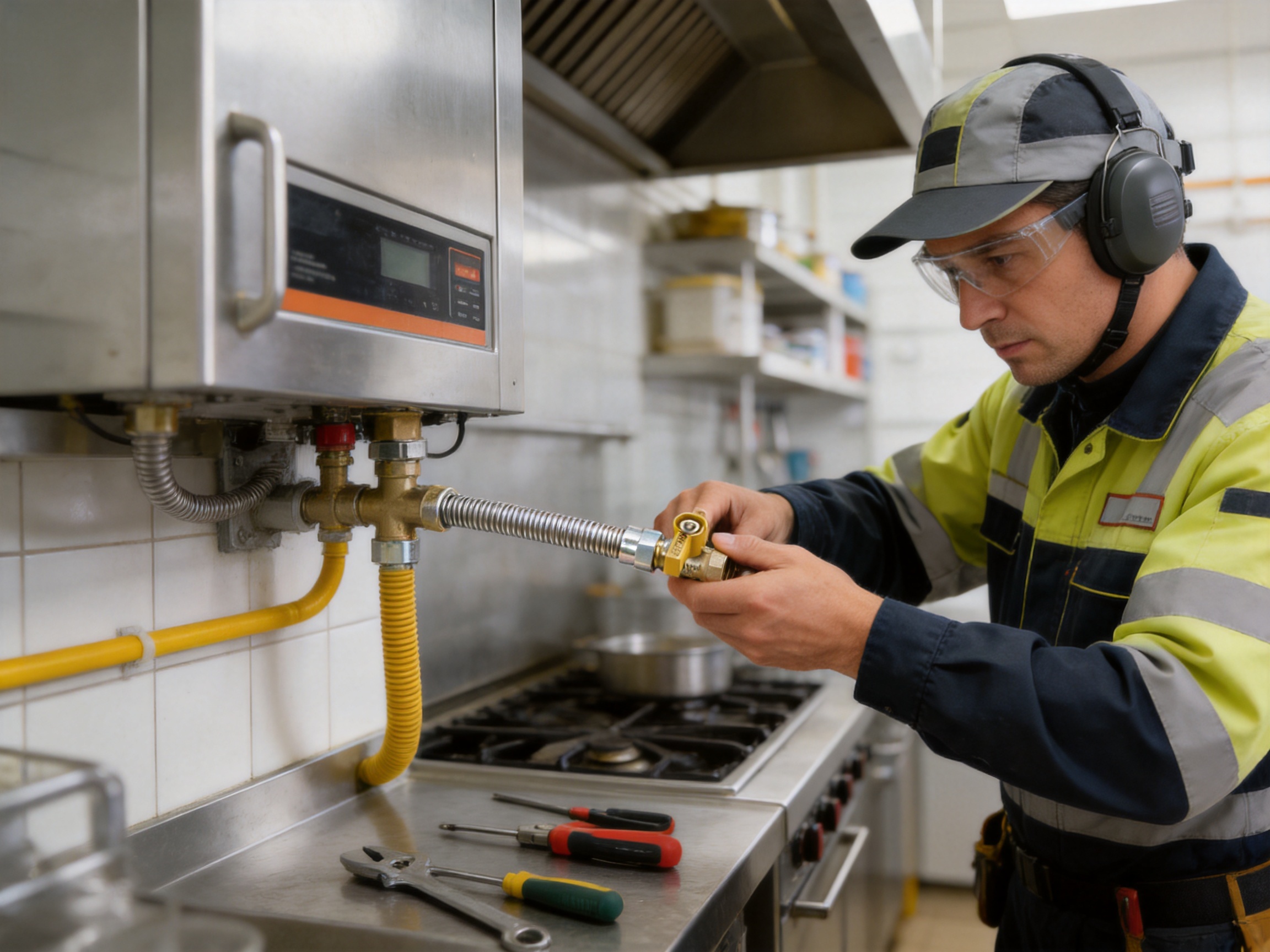
Commercial kitchens often contain multiple appliances arranged in compact spaces. Equipment may need to be moved for cleaning or maintenance, and the connection system must be organized and accessible. A flexible connector can simplify the final connection to cooking equipment while helping accommodate changes in equipment layout.
Commercial environments can also involve frequent cleaning, heat, grease, and high levels of daily use. Proper routing and separation from hot surfaces are essential. The connector should be selected and installed according to commercial gas safety standards, equipment instructions, and the requirements of the local authority.
Heating and Mechanical Equipment
Heating equipment may generate vibration and thermal cycling during repeated operation. A flexible connector can help manage limited movement between the appliance and the fixed gas supply. Its stainless steel construction is useful in mechanical rooms where durability and resistance to ordinary atmospheric exposure are desired.
Heating installations must account for operating temperature, clearance from heat sources, ventilation, service access, and the requirements of the equipment manufacturer. The connector should not be placed where it could be exposed to temperatures beyond its approved range.
Industrial and Equipment Connections
In industrial environments, flexible gas connectors may be used for approved equipment connections, test systems, burners, process equipment, and specialized machinery. Industrial use requires a more detailed evaluation of the gas medium, pressure, temperature, vibration, chemical exposure, and inspection schedule.
The DN25 format and available 72-inch maximum listed length can be useful in equipment layouts where a fixed pipe connection would be difficult to align. However, industrial buyers should confirm all technical ratings and certification requirements before specifying the product for a particular process.
Manufacturing Strengths
Haoyin (Ningbo) Bellows Technology Co., Ltd. specializes in the research, design, manufacture, and sale of stainless steel bellows and flexible connection products. Its product range includes gas connectors, plumbing pipes and water liners, metal hoses, and compensators. This product focus provides a strong technical foundation for the manufacture of corrugated stainless steel components.
The company operates standardized workshops covering approximately 18,000 square meters on a site of about 35 mu. This production environment supports organized material flow, dedicated manufacturing areas, equipment installation, quality inspection, storage, and packaging. A standardized workshop can improve process consistency by reducing uncontrolled movement of materials and separating different production stages.
The company has identified itself as a National High-tech Enterprise and Green Factory. It has also obtained ISO9001, ISO14001, ISO45001, and other management system certifications. These certifications represent structured approaches to quality management, environmental management, and occupational health and safety. They do not replace product-specific testing, but they demonstrate a broader commitment to controlled business and manufacturing processes.
Advanced Equipment and Production Capability
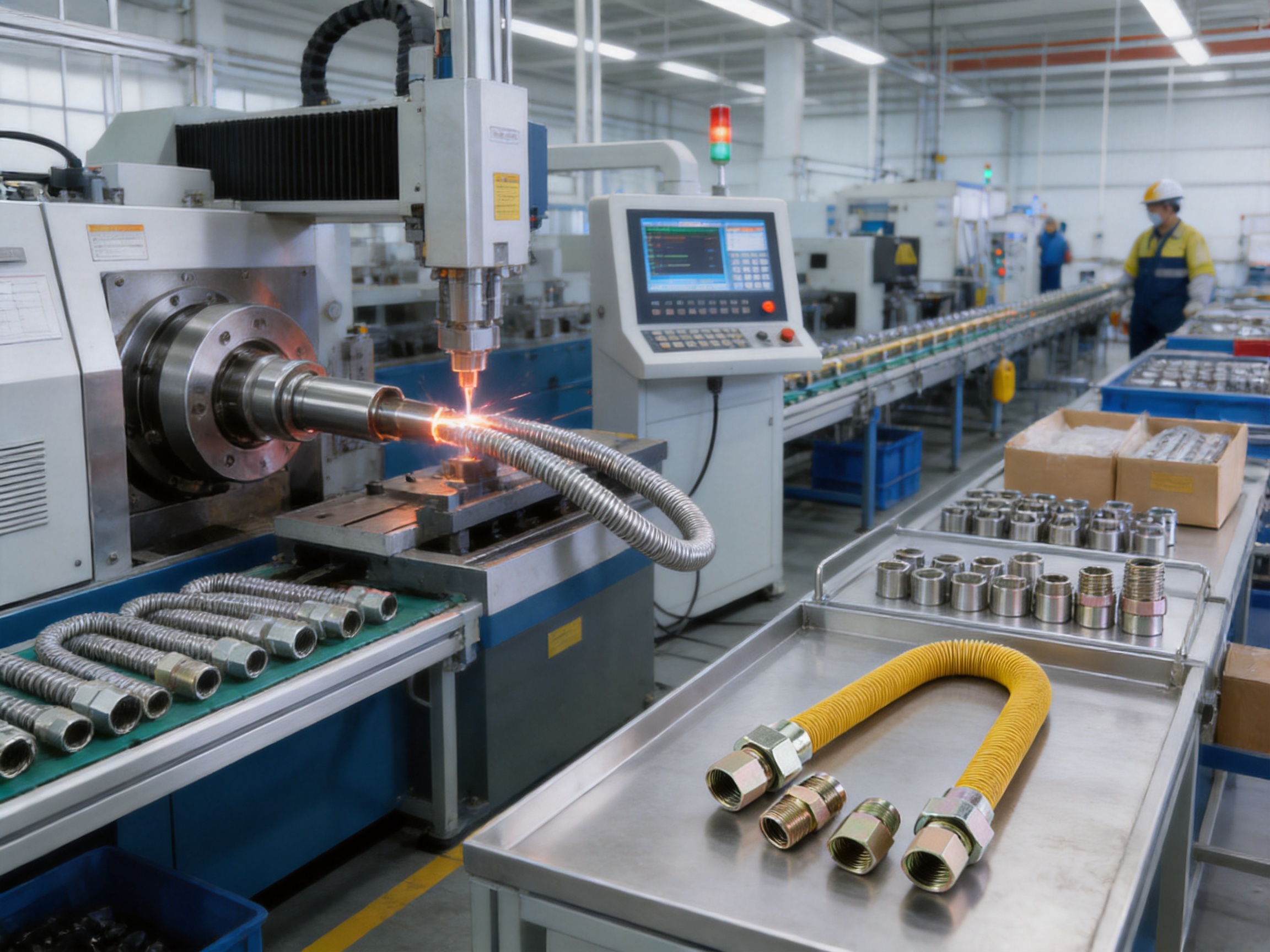
The manufacturing operation includes laser welding machines, CNC forming machines, COSMO equipment, eddy current flaw detectors, and automatic packaging systems. Each category of equipment contributes to a different stage of product quality and production efficiency.
Laser Welding
Laser welding can provide precise, concentrated energy input and narrow weld zones. In stainless steel bellows and connector production, controlled welding is important because the tube and fitting joints must maintain structural continuity without unnecessary distortion. Automated or highly controlled laser welding can improve repeatability across production batches.
Welding quality depends on material preparation, alignment, power settings, speed, shielding, inspection, and operator or process control. The use of dedicated laser welding equipment indicates that the manufacturer recognizes the importance of consistent joining technology in flexible metal products.
CNC Forming
CNC forming machines are used to produce accurate corrugations and repeatable tube geometry. Corrugation dimensions affect flexibility, movement capability, pressure behavior, and fitting alignment. Computer-controlled forming can help maintain consistent pitch, depth, diameter, and overall length.
Consistent forming is particularly important for connectors supplied in multiple lengths. Customers expect the 12-inch product and the 72-inch product to follow the same design principles, even though their total tube lengths differ. CNC-controlled production supports repeatability and makes process adjustments more traceable.
Eddy Current Testing
Eddy current flaw detection is a non-destructive testing method used to identify certain surface and near-surface discontinuities in conductive materials. For stainless steel tube production, this type of inspection can help detect defects that may not be visible during a basic visual examination.
Non-destructive testing is valuable because it allows components to be examined without destroying them. When integrated into a broader quality program, eddy current inspection can support the identification of possible tube imperfections and improve confidence in material consistency.
Automatic Packaging
Automatic packaging systems help standardize the final packing process. Proper packaging protects the connector from scratches, contamination, deformation, and fitting damage during storage and transportation. It also supports more efficient handling for distributors and project suppliers.
Packaging quality is especially important for flexible connectors because improper stacking or pressure can deform the corrugated tube. A controlled packaging process reduces the risk of damage before the product reaches the installation site.
Full-Process Quality Management
The company describes a full-process quality management system covering raw material selection, structural design, manufacturing, performance testing, and after-sales support. This approach is stronger than relying only on final inspection. Quality must be designed into the product and maintained throughout every production stage.
Raw material control begins with verification of the stainless steel grade, thickness, surface condition, and supplier documentation. If incoming material varies significantly, forming behavior and finished-product performance may also vary. Material identification and traceability help manufacturers link production batches with inspection records.
Structural design determines the geometry of the corrugations, fitting arrangement, connection method, and expected flexibility. The design must balance ease of installation with pressure resistance and service durability. Design reviews and prototype testing can identify issues before mass production.
During manufacturing, process parameters must be controlled. Tube forming, welding, fitting assembly, nut installation, surface finishing, and dimensional inspection all influence the final connector. In-process checks can detect problems earlier, reducing waste and preventing defective assemblies from moving to later stages.
Performance testing provides evidence that the product meets its intended technical requirements. Depending on the product and certification program, testing may address leakage, pressure, tensile strength, flexibility, dimensional accuracy, corrosion behavior, and other characteristics. Testing requirements should be matched to the intended market and application.
After-sales support completes the quality cycle. Feedback from distributors, installers, and end users can help identify recurring installation questions or opportunities for product improvement. A manufacturer that combines production capability with technical support is better positioned to serve long-term project requirements.
Certification and Compliance Considerations
The product is presented within a stainless steel gas connector category associated with CSA certification. Certification is an important consideration for gas products because it provides an additional level of evaluation against specified safety and performance requirements. Buyers should verify the exact certification scope, applicable model, market, fitting configuration, and current documentation before placing the product into a regulated installation.
Gas regulations differ among countries, states, provinces, municipalities, and application sectors. A connector accepted for one market may require additional approval or a different fitting configuration in another market. The installer must confirm that the connector is suitable for the gas type, operating pressure, appliance, installation location, and local authority requirements.
Certification should be considered together with installation instructions, product markings, material information, and testing records. A responsible procurement process reviews the complete technical file rather than relying only on a general product description.
Where a project requires certification documentation, the supplier should provide the relevant certificates, test reports, product specifications, and quality records. This is especially important for commercial buildings, industrial facilities, public projects, and export orders.
Installation Best Practices
Installation should be performed by a qualified professional familiar with gas piping regulations and the specific appliance requirements. Before beginning work, the installer should confirm the connector size, length, nut material, fitting type, gas medium, pressure, and approved application.
The connection points should be properly aligned. The connector should not be installed under tension or forced into a position that causes twisting. Bends should be smooth and gradual, with no sharp kinks or flattened corrugations. The tube should be routed so that it remains free from crushing, abrasion, and contact with sharp metal edges.
The connector should be kept away from excessive heat and direct flame. If the appliance produces significant heat, the installer must follow the appliance manufacturer’s clearance requirements and any applicable gas code. The flexible tube should not be painted, modified, cut, welded, or lengthened at the installation site.
Threaded connections should be assembled with the correct mating components. The installer should avoid cross-threading and should use the appropriate tightening method. Since the product uses a hard sealing form, sealing surfaces must be clean and correctly seated. Unapproved sealants or assembly practices may interfere with the intended sealing design.
After assembly, the system must be inspected and tested according to the applicable safety procedure. Leak testing should be performed with an approved method. Open flames must never be used to check for gas leakage. The connector and fittings should be visually inspected after pressurization and again during commissioning.
Maintenance and Inspection
Although stainless steel connectors are designed for durability, regular inspection remains important. Maintenance personnel should look for dents, crushed corrugations, sharp bends, discoloration caused by overheating, corrosion, fitting damage, loose connections, and signs of contact with moving or abrasive surfaces.
The connector should not be moved repeatedly unless the installation has been designed to accommodate such movement. If an appliance must be moved for service, it should be handled carefully, without pulling on the connector or twisting the fittings.
Any connector exposed to fire, severe overheating, flooding, impact, chemical contamination, or visible deformation should be evaluated by a qualified professional. Replacement may be safer than attempting to repair a damaged flexible gas connector. Flexible connectors are generally not intended to be repaired, extended, or reused after severe mechanical stress.
Maintenance records can help facility operators track installation dates, inspection results, and replacement requirements. In commercial and industrial facilities, documented inspection programs support safety management and help identify environmental conditions that may shorten product life.
Purchasing Benefits for Distributors and OEM Customers
The product’s range of standard lengths allows distributors to stock several practical options without requiring every order to be custom-made. Standard lengths simplify quoting, inventory planning, packaging, and customer selection. They also help contractors choose a connector that matches the installation route more accurately.
Multiple nut materials and finishes increase market flexibility. Distributors can serve customers with different technical preferences, appearance requirements, and budget targets. OEM customers may also select a configuration that matches their equipment assembly or regional market expectations.
The manufacturer’s focus on bellows and flexible metal products provides a specialized supply base rather than a general-purpose hardware source. Specialized manufacturing knowledge can be valuable when customers need consistent tube forming, reliable welding, stable dimensions, and technical assistance with product selection.
Automatic packaging and organized production can support export logistics and reduce handling issues. For international orders, buyers should discuss packaging specifications, labeling, carton strength, palletization, inspection requirements, and documentation before shipment.
Comparison with Alternative Connector Materials
Different flexible gas connectors are manufactured from different materials, and each material has its own benefits and limitations. Some alternatives may provide lower initial cost, lighter weight, or a particular installation convenience. The correct comparison should consider the complete service environment rather than price alone.
Compared with ordinary carbon steel tubing, 304 stainless steel generally provides better resistance to atmospheric corrosion. This can be valuable in humid rooms, commercial kitchens, and mechanical spaces where condensation or cleaning exposure is possible. Carbon steel may still be suitable in protected environments when properly specified and finished.
Compared with non-metallic flexible products, a stainless steel connector provides a metallic pressure boundary and can offer strong resistance to mechanical damage when correctly installed. However, non-metallic materials may be preferred in certain specialized applications because of flexibility, chemical compatibility, or regulatory approval. Material selection must be based on the complete application.
Compared with rigid stainless steel pipe, the flexible connector can reduce the number of elbows and threaded joints required for the final appliance connection. It can also simplify alignment and equipment servicing. Rigid stainless steel pipe may be more appropriate for long permanent runs, exposed areas requiring strong physical protection, or installations where flexible connectors are restricted.
The DN25 stainless steel gas connector is therefore best understood as a focused solution for flexible final connections and equipment interfaces. It is not intended to replace every type of gas piping system. Its value comes from combining stainless steel durability with controlled flexibility and standardized connection options.
Environmental and Organizational Strengths
Manufacturing quality is increasingly connected with environmental and workplace responsibility. The company’s ISO14001 and ISO45001 management system certifications indicate structured attention to environmental management and occupational health and safety. These systems can help manufacturers monitor resource use, manage production risks, and improve workplace procedures.
The company’s Green Factory designation further reflects an emphasis on more responsible manufacturing practices. Efficient equipment, controlled production flow, reduced waste, responsible material handling, and improved energy management can benefit both the environment and production consistency.
A safer and more organized factory can also support product quality. Clear procedures reduce the likelihood of material mix-ups, process errors, and unsafe handling. Clean production areas and controlled inspection stations help workers identify problems earlier and maintain better product discipline.
For customers evaluating suppliers, environmental and occupational management systems provide useful information about the manufacturer’s long-term operating approach. They are especially relevant to large construction projects, industrial procurement programs, and multinational supply chains that require documented supplier responsibility.
Research and Development Capability
The company maintains a professional research and development team focused on stainless steel bellows and flexible connection technology. R&D capability is important because flexible metal products require careful coordination between material science, forming technology, welding, sealing, testing, and application engineering.
Product development may involve optimizing corrugation geometry, improving connection strength, refining fitting designs, reducing manufacturing variation, and adapting products to different certification requirements. Practical feedback from gas, plumbing, heating, healthcare, building services, and industrial HVAC applications can guide future improvements.
A manufacturer with in-house technical knowledge can also respond more effectively to customer questions. It may be able to review a proposed installation, recommend an appropriate length or fitting option, and provide technical information for project approval. This level of support is valuable for OEMs, contractors, importers, and engineering companies.
Quality Advantages in International Supply
International customers require more than a product that looks correct. They need stable specifications, repeatable production, clear documentation, consistent packaging, and responsive communication. The DN25 connector benefits from a manufacturing system that combines standardized workshops, specialized equipment, inspection technology, and formal management systems.
For export projects, the buyer should confirm the required drawings, dimensions, materials, surface finish, packaging, labeling, testing, and certification before production. A pre-production approval process can reduce misunderstandings and ensure that the supplied configuration matches the target market.
Batch consistency is particularly important when connectors are installed across a large building or equipment program. Consistent tube wall thickness, corrugation geometry, fitting dimensions, and finish color help contractors work more efficiently and simplify later maintenance.
Quality records, inspection reports, and traceability information can also support project documentation. These records are useful when the connector is part of a larger quality plan for a building, factory, hotel, hospital, or industrial facility.
How to Specify the Product
A complete specification should identify the nominal size, tube material, wall thickness, length, nut material, finish, sealing form, fitting configuration, gas type, working pressure, temperature range, and certification requirement. It should also define the intended application and installation environment.
For example, a purchasing description may specify a DN25 flexible gas connector made from 304 stainless steel with a 0.25 mm wall thickness, a 36-inch length, brass nuts, natural stainless steel finish, hard sealing, and the required certification documentation. Clear descriptions reduce the risk of receiving an unsuitable variation.
Large projects may require additional information such as dimensional drawings, material certificates, production samples, packaging standards, inspection plans, and test reports. These documents should be reviewed before the product is approved for mass installation.
When the connector is being integrated into original equipment, the OEM should evaluate bending space, fitting orientation, service movement, heat exposure, and assembly torque. Prototype testing under actual equipment conditions can help verify that the selected length and configuration are appropriate.
Q&A
What is the main material of the DN25 gas connector?
The flexible tube is made from 304 stainless steel. This material provides a useful combination of corrosion resistance, strength, forming performance, and durability for many residential, commercial, and industrial gas connection environments.
What does DN25 mean?
DN25 identifies the nominal size category of the connector. It is a nominal dimensional designation used in piping and connection systems. The exact outside dimensions, fitting dimensions, and flow characteristics should be confirmed from the technical drawing and product documentation.
What wall thickness does the connector have?
The specified tube wall thickness is 0.25 mm. The final performance of the complete connector also depends on corrugation design, welding quality, fittings, sealing surfaces, and verified product testing.
Which lengths are available?
The standard listed lengths are 12, 18, 24, 36, 48, 60, and 72 inches. Buyers should select a length that reaches the connection points without tension, sharp bending, excessive slack, or contact with unsafe surfaces.
Can I choose the nut material?
Yes. The nut is available in brass or carbon steel. The choice should be based on the environment, fitting compatibility, project requirements, corrosion considerations, and cost expectations.
What finishes are available?
The connector can be supplied in natural stainless steel, yellow, or black. The colored versions contain colored zinc joints. Finish selection may be based on appearance, product identification, or project specifications.
Does the connector use a gasket?
The listed seal form is hard sealing. This means the connection is designed around metallic sealing surfaces rather than depending exclusively on a soft gasket. Correct alignment, clean surfaces, and appropriate tightening are essential.
Is the product suitable for every gas system?
No product should be considered universally suitable without reviewing the application. The connector must be matched to the gas type, pressure, temperature, appliance, installation location, certification requirements, and local regulations.
Can the connector be cut or extended on site?
The connector should not be cut, extended, welded, or modified on site unless a specific approved procedure allows it. Alteration can affect the tube, fittings, sealing performance, and certification status.
How should the connector be tested after installation?
A qualified installer should follow the applicable gas safety procedure and local code for leak testing and commissioning. Open flames must never be used for leak detection. The completed connection should also be visually inspected for twisting, damage, poor alignment, and heat exposure.
What makes the manufacturer suitable for flexible metal products?
The manufacturer specializes in stainless steel bellows and flexible connection solutions. Its capabilities include laser welding, CNC forming, eddy current flaw detection, automatic packaging, formal management systems, and a full-process quality approach from raw material selection through after-sales support.
Does certification remove the need for professional installation?
No. Certification evaluates a product according to a defined standard or program, but safe performance still depends on correct product selection and installation. Gas work should be completed by qualified professionals in accordance with local requirements.
Conclusion
The DN25 Stainless Steel Gas Connector is designed for gas systems that require a durable, flexible, and practical connection solution. Its 304 stainless steel tube, 0.25 mm wall thickness, multiple length options, brass or carbon steel nut choices, hard sealing design, and available finishes provide useful flexibility for different installation and purchasing requirements.
Its advantages over conventional rigid connections include easier routing, reduced alignment complexity, accommodation of limited equipment movement, and fewer components in the final connection path. Compared with less corrosion-resistant materials, the stainless steel body offers a stronger platform for ordinary humid, commercial, and mechanical environments.
The product is supported by a manufacturer with specialized experience in stainless steel bellows and flexible metal products. Standardized workshops, laser welding machines, CNC forming equipment, eddy current flaw detectors, automatic packaging systems, professional R&D resources, and ISO-based management systems contribute to a controlled manufacturing environment.
For best results, buyers should verify certification scope, technical ratings, fitting compatibility, environmental suitability, and installation requirements before ordering. When correctly specified, professionally installed, and regularly inspected, the DN25 stainless steel gas connector can provide a dependable connection between fixed gas piping and approved equipment in a wide range of applications.
References
1. Manufacturer-provided product specification for the DN25 Stainless Steel Gas Connector.
2. Manufacturer-provided company information for Haoyin (Ningbo) Bellows Technology Co., Ltd.
3. ISO 9001, Quality Management Systems—Requirements.
4. ISO 14001, Environmental Management Systems—Requirements with Guidance for Use.
5. ISO 45001, Occupational Health and Safety Management Systems—Requirements with Guidance for Use.
6. General engineering principles for corrugated metal hoses, bellows, flexible connectors, and metallic sealing systems.
7. Applicable local gas installation codes, appliance manufacturer instructions, and certification requirements.