




 English
  Español
  русский


Reliable gas connections are essential in residential, commercial, and light industrial installations. A connector must provide flexibility during installation, maintain a stable seal, resist corrosion, tolerate repeated handling, and remain dependable throughout its service life. The DN20 stainless steel gas connector is designed to meet these requirements through a combination of 304 stainless steel construction, precision-formed corrugated tubing, practical connection options, and controlled manufacturing processes.
With a nominal DN20 size, a 0.25 mm wall thickness, a 1 1/8"-16UNF flare nut, and several adapter configurations, this gas connector is intended to simplify the connection of gas appliances and fixed gas piping. Its available lengths range from 12 inches to 72 inches, allowing installers to select a suitable connection without excessive looping, tension, or unnecessary joints.
The product is manufactured by Haoyin (Ningbo) Bellows Technology Co., Ltd., a specialized manufacturer of stainless steel bellows and flexible connection products. The company serves gas, plumbing, heating, healthcare, building services, industrial HVAC, and related applications. Its manufacturing system includes raw material control, structural design, forming, welding, inspection, performance testing, and packaging.
This article examines the product’s construction, connection design, installation value, manufacturing strengths, quality approach, and advantages compared with conventional or less specialized alternatives. It also explains how buyers, engineers, distributors, and installers can evaluate whether this connector is suitable for a specific gas system.
DN20 Stainless Steel Gas Connector
1. Product Overview
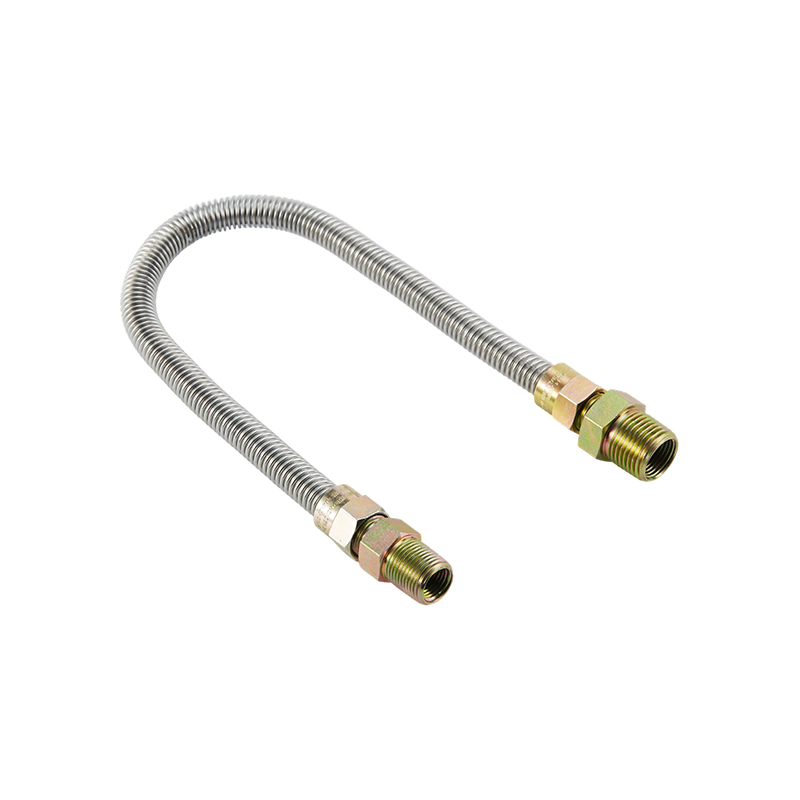
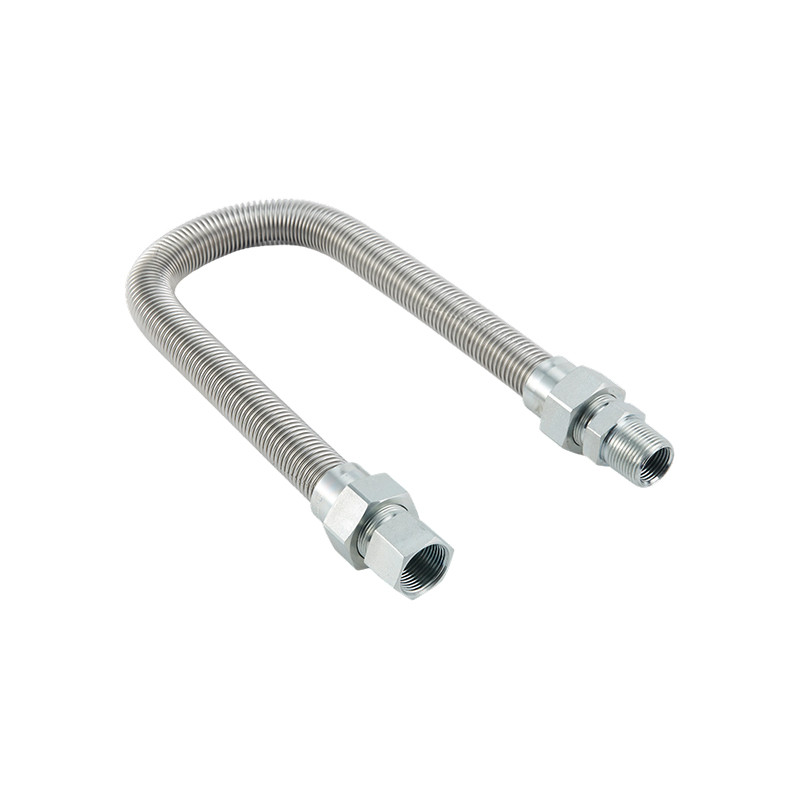
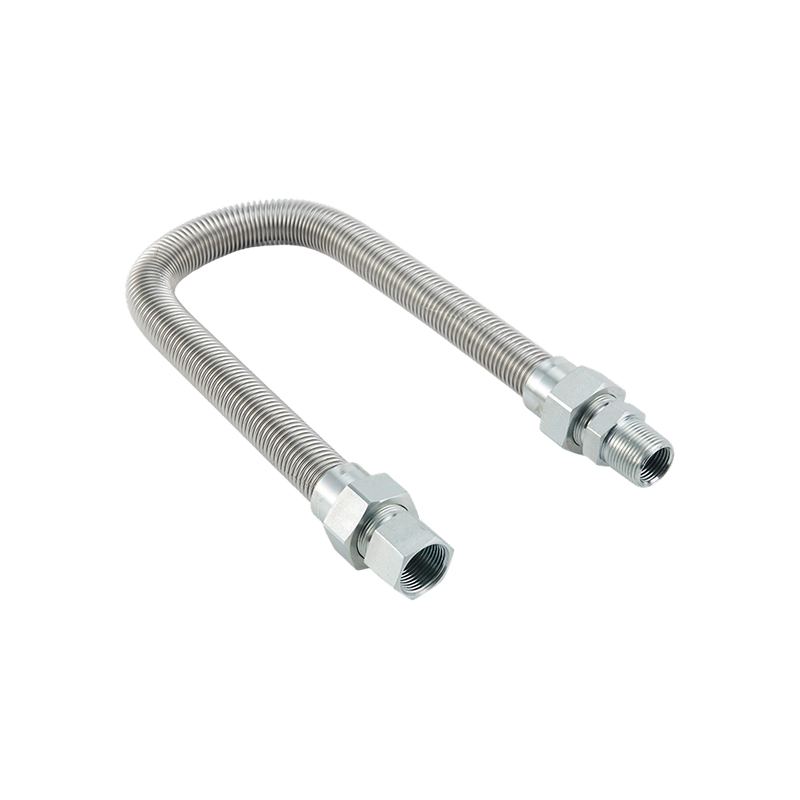
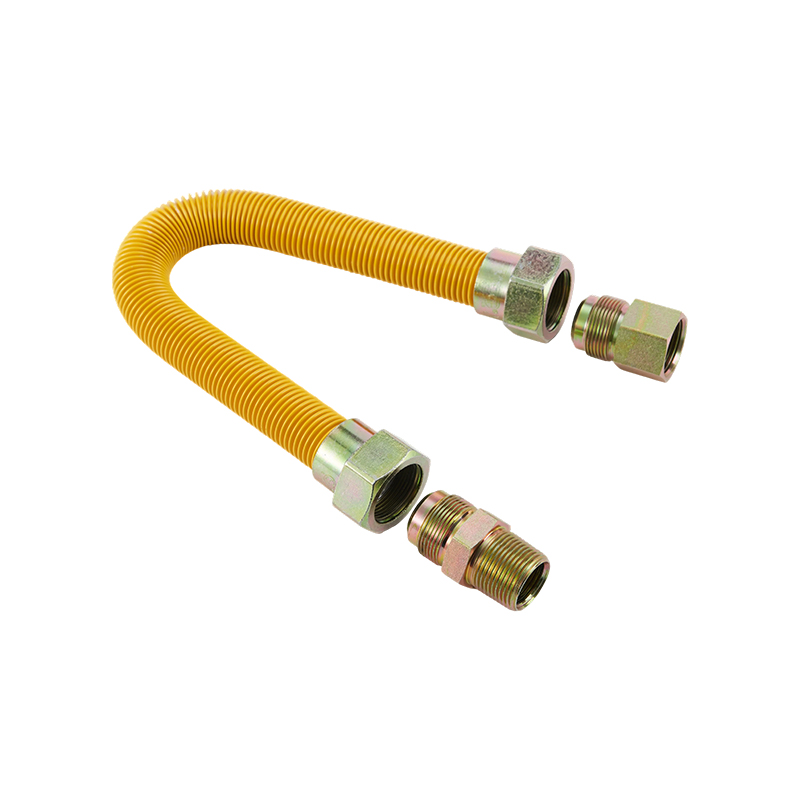
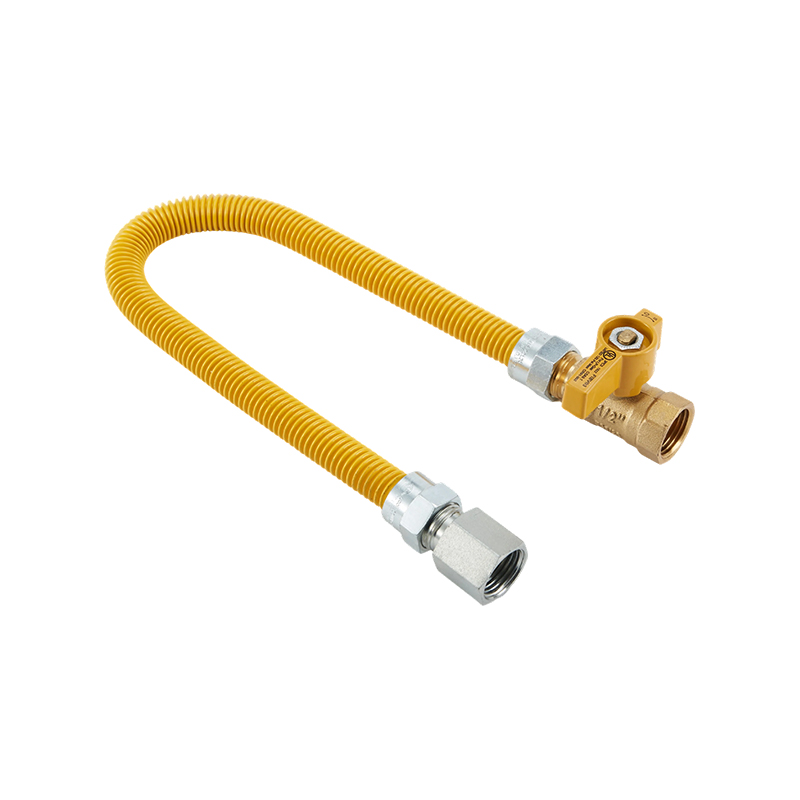
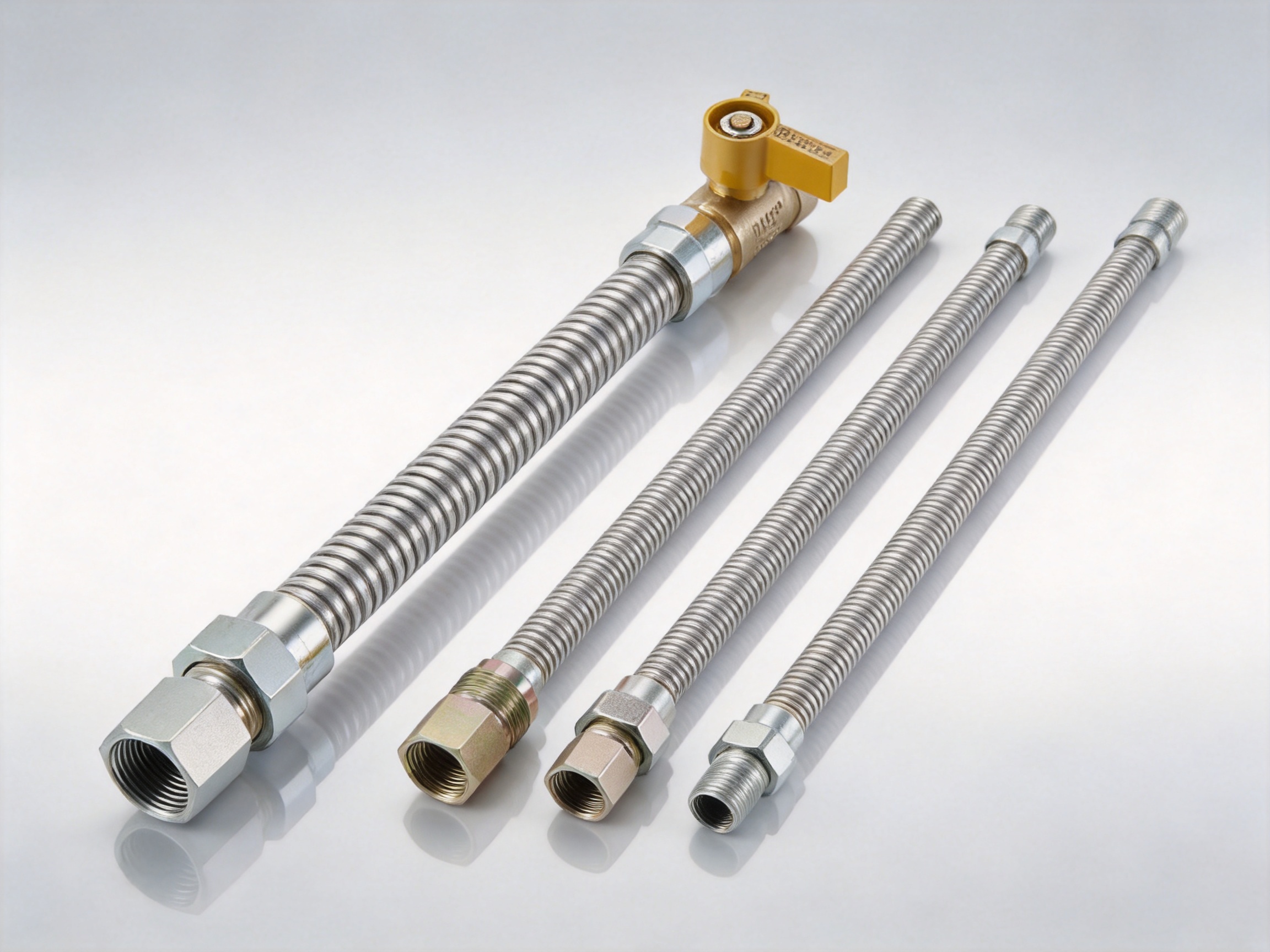
The DN20 stainless steel gas connector is a flexible gas connection component made from 304 stainless steel. The tube has a stated wall thickness of 0.25 mm, providing a balance between flexibility and mechanical durability. The stainless steel body is formed to create a flexible tube suitable for routing around obstacles and aligning with gas appliance inlets or fixed pipework.
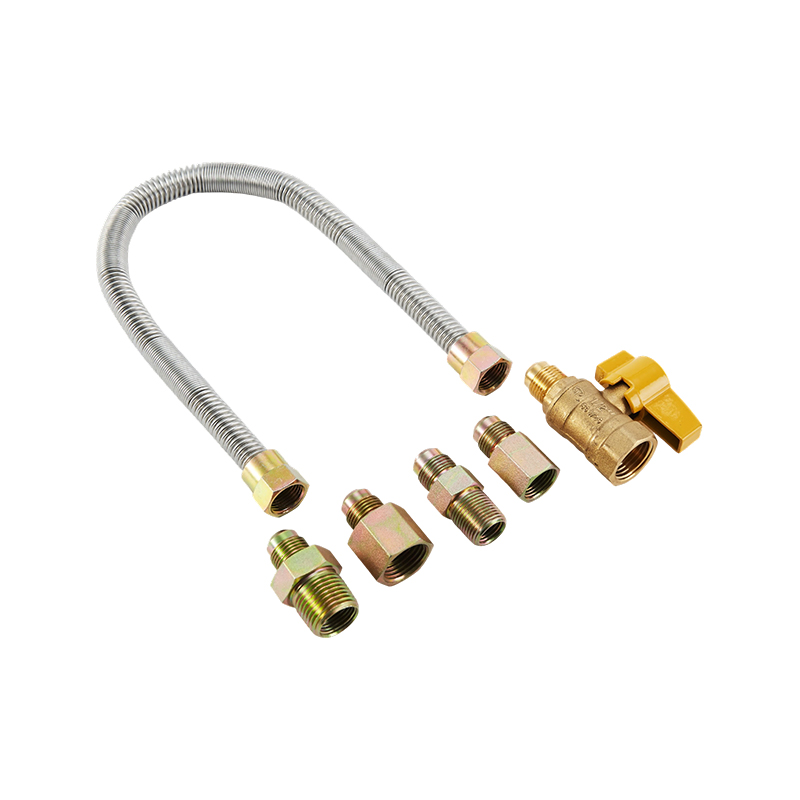
The connector is supplied with a 1 1/8"-16UNF flare nut. Depending on the required interface, it can be configured with adapter specifications including 1 1/8*3/4M(1/2F) and 1 1/8*3/4F. These options support different connection arrangements and reduce the need for improvised transition components at the installation site.
Standard length options include 12, 18, 24, 36, 48, 60, and 72 inches. This range allows the same basic connector design to serve compact appliance installations as well as applications requiring a longer flexible route. Selecting an appropriate length is important because a connector should not be stretched, sharply bent, twisted, or forced into a position that places stress on its fittings.
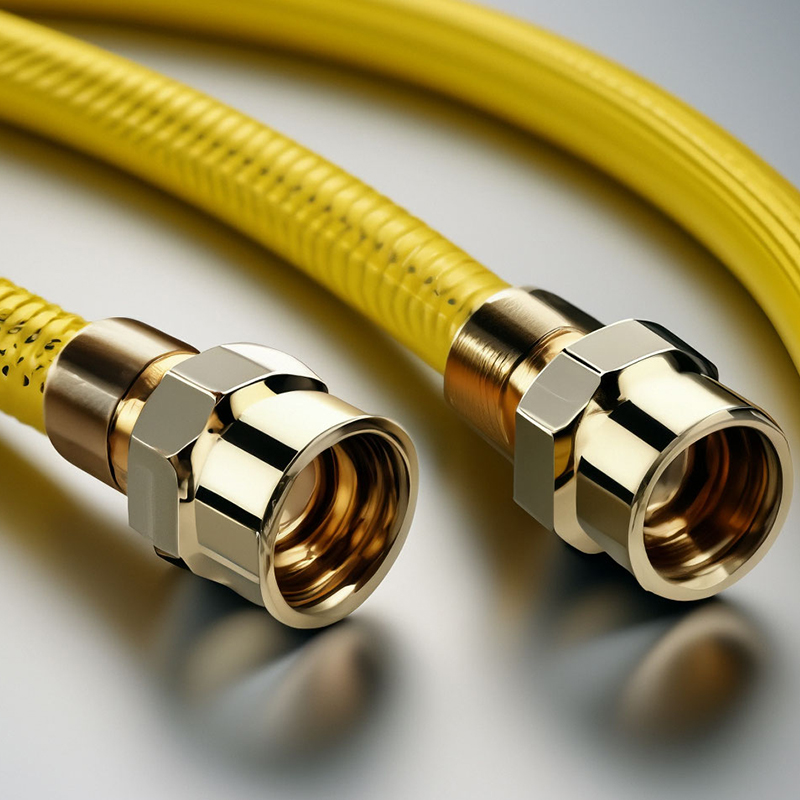
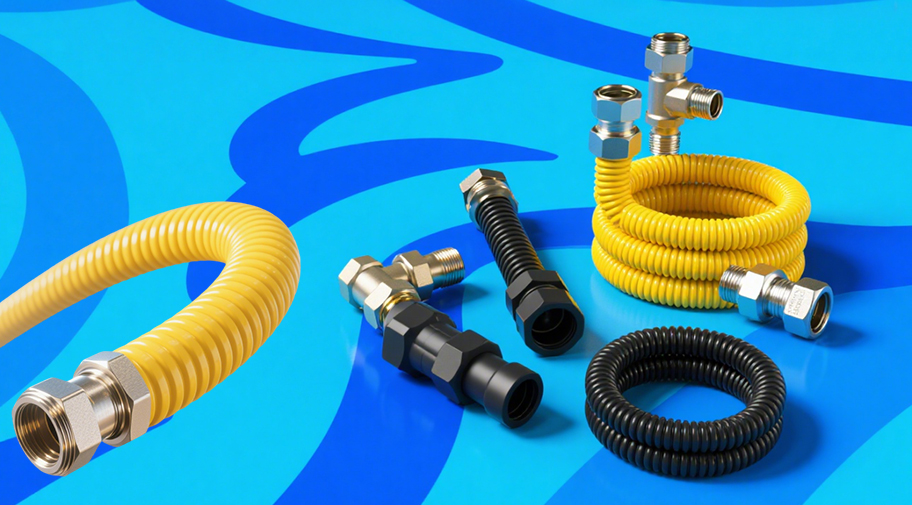
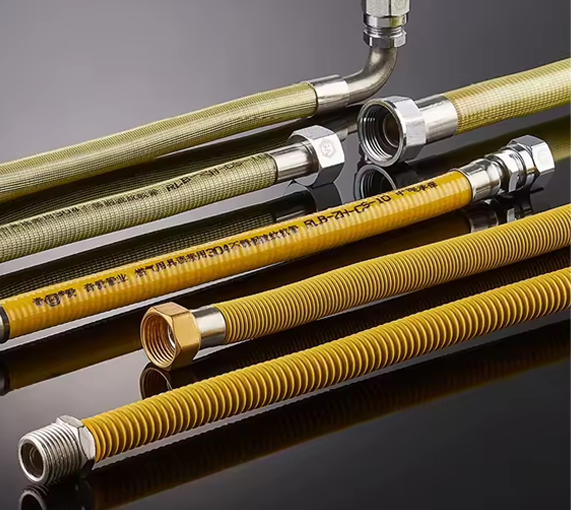
The connector is available in stainless steel, yellow, and black color options. The nut may be manufactured from brass or carbon steel according to the required specification. The product uses a hard sealing form and does not include a cover material in the listed configuration.
Key Product Characteristics
The main characteristics of the connector are its stainless steel material, flexible geometry, connection compatibility, and range of available dimensions. These characteristics address common challenges found in gas installation work, including difficult alignment, restricted space, corrosion exposure, and the need for a dependable mechanical connection.
| Item | Specification | Installation Relevance |
|---|---|---|
| Product type | DN20 stainless steel gas connector | Flexible connection for gas systems and appliances |
| Tube material | 304 stainless steel | Corrosion resistance and long-term durability |
| Wall thickness | 0.25 mm | Supports flexibility while maintaining structural strength |
| Flare nut | 1 1/8"-16UNF | Provides a defined mechanical connection interface |
| Adapter options | 1 1/8*3/4M(1/2F); 1 1/8*3/4F | Supports different pipe and appliance interfaces |
| Available lengths | 12", 18", 24", 36", 48", 60", 72" | Allows selection according to installation distance |
| Nut materials | Brass or carbon steel | Offers specification flexibility and mechanical strength |
| Seal form | Hard sealing | Creates a firm connection when correctly assembled |
| Color options | Stainless steel, yellow, black | Supports identification and project preferences |
2. Why 304 Stainless Steel Matters
Material selection is one of the most important factors in the performance of a flexible gas connector. The tube in this product is made from 304 stainless steel, a widely used stainless steel grade known for its resistance to corrosion, good forming characteristics, and suitability for many plumbing and gas-related components.
Gas connectors may be installed in kitchens, utility rooms, mechanical spaces, plant rooms, cabinets, and other environments where humidity, cleaning agents, airborne contaminants, or temperature variation can affect exposed metal. Compared with ordinary carbon steel, stainless steel generally provides stronger resistance to atmospheric corrosion and surface deterioration. This can help preserve the appearance and functional integrity of the connector over time.
304 stainless steel also supports the manufacturing of thin-wall flexible tubing. The 0.25 mm wall thickness is designed to provide a practical combination of formability and strength. A wall that is too thick can reduce flexibility and make routing more difficult, while a wall that is too thin may provide less resistance to handling damage. The stated wall thickness is therefore part of the product’s overall balance between installation convenience and durability.
Another advantage of stainless steel is its stable surface behavior in ordinary service environments. A clean, properly manufactured stainless steel tube is less likely to develop the heavy rusting associated with untreated carbon steel. This is particularly useful where the connector is visible, where access is limited, or where replacement would require the removal of surrounding equipment.
Corrosion Resistance and Service Reliability
Corrosion resistance does not mean that a connector can be exposed indefinitely to every chemical or environmental condition. Compatibility with the surrounding atmosphere, cleaning materials, condensate, and installation environment should still be considered. However, the use of 304 stainless steel gives this product a strong foundation for general gas connection applications and offers a meaningful advantage over basic low-cost metal alternatives.
By maintaining a more stable surface, stainless steel can help reduce the likelihood of premature visual deterioration and material degradation. This contributes to a longer service interval and can reduce the frequency of replacement in installations where access is inconvenient.
3. Flexible Design for Practical Installation
A rigid pipe connection requires accurate alignment between the fixed pipe and the appliance inlet. In real installation conditions, the connection points may not be perfectly aligned because of cabinet dimensions, appliance positioning, wall construction, pipe routing, or changes made during renovation. A flexible gas connector can absorb these practical differences and make the final connection more efficient.
The DN20 connector can be routed around minor obstacles and positioned to accommodate the location of the connected equipment. This flexibility helps installers avoid unnecessary rigid fittings and excessive changes in direction. It can also reduce the amount of time spent adjusting fixed pipework to match the appliance.
Flexible routing should always be performed carefully. The connector should be installed with a smooth bend radius, without kinks, crushing, twisting, or sharp contact against edges. Flexibility is intended to support controlled routing, not to compensate for poor installation practice or excessive movement.
Length Selection
The available lengths from 12 inches to 72 inches allow the connector to be matched to different installation distances. A short 12-inch or 18-inch model may be appropriate when the appliance and supply connection are close together. Longer options such as 36, 48, 60, or 72 inches may be useful when the connection must pass around cabinetry or reach a more distant inlet.
Choosing the correct length can improve both appearance and performance. An excessively short connector may be pulled tight, placing stress on the fittings. An excessively long connector may create unnecessary loops, occupy more space, or be exposed to avoidable contact with surrounding objects. The best practice is to select the shortest available length that allows a smooth, unstressed route.
For project procurement, the range of standard lengths also simplifies inventory planning. Distributors can stock several common lengths rather than relying on a single universal size. Contractors can specify the required length during the design or purchasing stage, reducing site modifications and installation delays.
4. Connection Configuration and Adapter Options
The connector is equipped with a 1 1/8"-16UNF flare nut. A defined flare nut specification gives the installer a clear connection reference and supports compatibility with the intended mating component. The connection should always be checked against the appliance inlet, valve, adapter, and applicable installation requirements before ordering or assembly.
Two listed adapter configurations are available: 1 1/8*3/4M(1/2F) and 1 1/8*3/4F. These options provide flexibility for different interface arrangements. A male adapter and a female adapter serve different connection conditions, so selecting the correct option is essential for avoiding additional transition fittings or installation confusion.
Hard Sealing
The product uses a hard sealing form. In a hard-sealed connection, the mating surfaces are designed to create the seal through direct mechanical contact when properly aligned and tightened. This differs from systems that depend primarily on a separate soft gasket or sealant.
Hard sealing requires attention to cleanliness, alignment, thread condition, and tightening procedure. The sealing surfaces should be free of dirt, metal chips, oil contamination, and damage. The connector should not be cross-threaded, and the fitting should not be forced into a misaligned position. Proper assembly protects both the seal and the threads.
Installers should follow the relevant local gas code, appliance instructions, and fitting requirements. Thread sealant should not be applied unless specifically permitted for the applicable connection. Applying an unsuitable sealant to a flare or hard-seal surface may interfere with the intended sealing method.
5. Advantages Compared with Conventional Alternatives
The DN20 stainless steel gas connector offers several practical advantages when compared with rigid metal connections, unprotected low-grade metal connectors, or poorly standardized flexible products. These advantages do not eliminate the need for correct engineering and installation, but they can improve the overall efficiency and dependability of a gas connection system.
5.1 Greater Routing Flexibility
Rigid pipe often requires additional elbows, unions, and carefully measured sections to achieve the final route. Every additional joint may increase installation time and create another point that must be inspected. A flexible stainless steel connector can simplify the route and reduce the need for multiple alignment corrections.
5.2 Improved Corrosion Resistance
304 stainless steel is better suited than ordinary untreated steel for environments where moisture or surface contamination may occur. Its corrosion-resistant characteristics help preserve the tube’s condition and offer a longer-lasting alternative to basic metal products that may rust more readily.
5.3 Multiple Interface Options
The listed adapter choices make the product more adaptable to different appliance and pipe connection arrangements. This can reduce the need to purchase separate conversion components and can make project planning more straightforward.
5.4 Selection of Standard Lengths
The seven available length choices support a wide range of installations. A standardized length program makes ordering, warehousing, and replacement easier. It also allows the installer to select a connector based on the actual distance rather than forcing every installation to use the same size.
5.5 Choice of Nut Material
The nut is available in brass or carbon steel. This choice allows the product configuration to be adapted to project requirements, purchasing preferences, mechanical considerations, and cost targets. Brass is widely valued for its machinability and corrosion resistance, while carbon steel can provide a strong and economical mechanical component when properly specified and protected.
5.6 Professional Product Focus
Unlike generic flexible tubing intended for broad, unspecified uses, a dedicated gas connector is developed around gas-system requirements, connection geometry, material selection, and inspection procedures. This product focus supports more consistent procurement and helps users select a component with clearly defined characteristics.
6. Manufacturing Expertise and Process Control
Product performance depends not only on the material specification but also on how the product is formed, welded, assembled, inspected, and packaged. Haoyin (Ningbo) Bellows Technology Co., Ltd. specializes in stainless steel bellows and flexible connection products. Its manufacturing capabilities cover the full product process, from material selection through after-sales support.
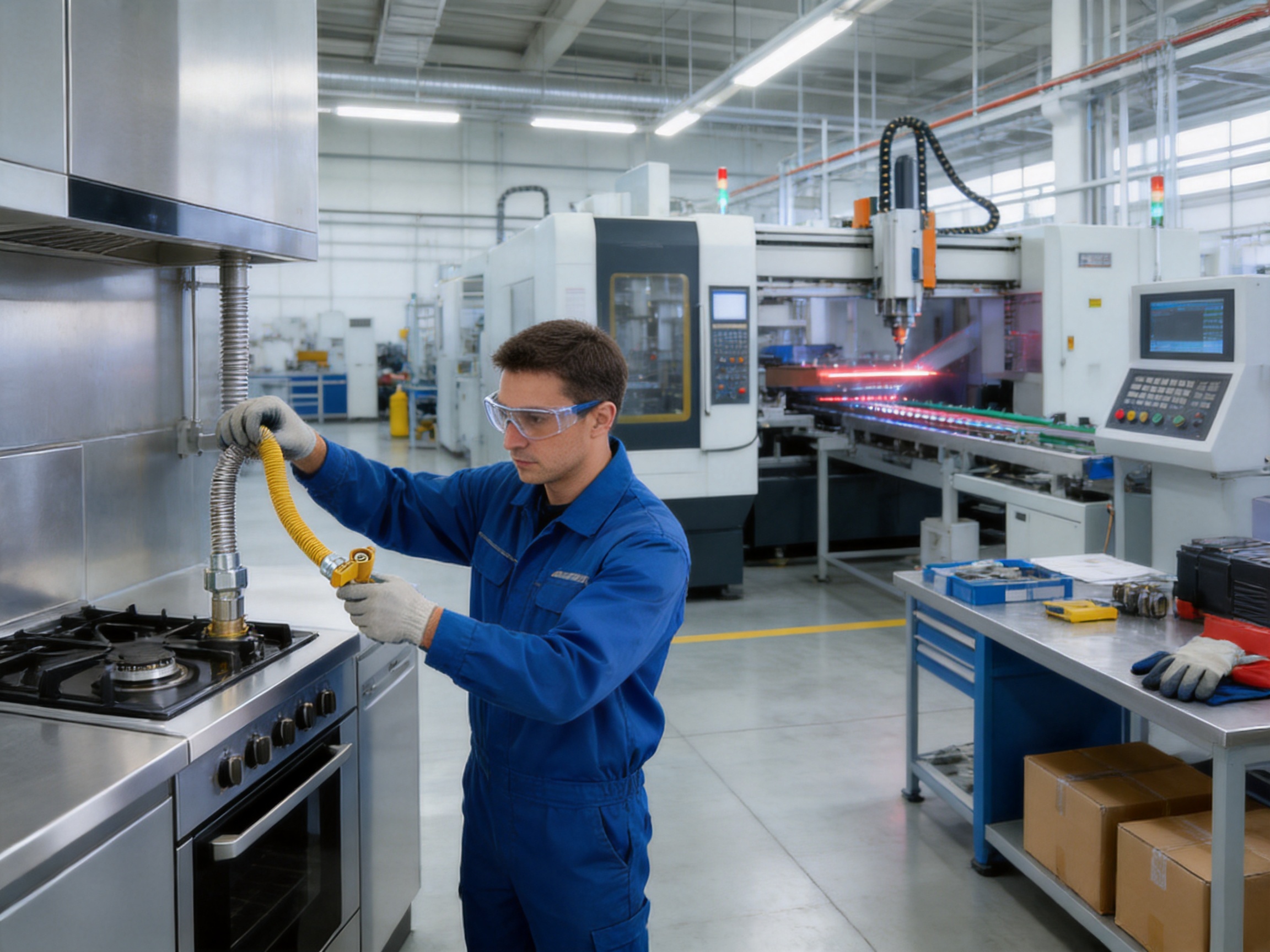
The company operates standardized workshops covering approximately 18,000 square meters on a site of about 35 mu. This production environment supports organized material handling, dedicated manufacturing areas, equipment placement, quality inspection, and systematic packaging operations.
The company reports the use of advanced equipment including laser welding machines, CNC forming machines, COSMO equipment, eddy current flaw detectors, and automatic packaging systems. Each type of equipment supports a different stage of product quality and consistency.
Laser Welding
Laser welding can provide a concentrated heat source and precise weld control. For thin stainless steel components, controlled welding is important because excessive heat can cause distortion, discoloration, uneven penetration, or unwanted changes in the surrounding material. A precision welding process can support consistent joints and improve repeatability during production.
Weld quality is especially important in flexible metal products because the component may experience bending during routing and handling. A stable manufacturing process helps ensure that the weld area is integrated correctly with the rest of the assembly and is not an avoidable weak point.
CNC Forming
CNC forming machines support accurate and repeatable shaping of stainless steel bellows and flexible tubing. Controlled forming helps maintain consistent geometry across production batches. Consistency in the corrugated profile is important because the profile affects flexibility, movement, dimensional accuracy, and the way the tube responds to installation forces.
Computer-controlled forming also reduces dependence on manual adjustment. This can improve production repeatability, simplify process monitoring, and support the manufacture of connectors with consistent dimensions.
Eddy Current Inspection
Eddy current flaw detection is a non-destructive inspection method used to identify certain surface and near-surface discontinuities in conductive materials. Its use in a stainless steel product manufacturing environment demonstrates attention to process verification and material integrity.
Non-destructive testing is valuable because it allows components to be examined without destroying or cutting them open. When incorporated into an appropriate quality system, such inspection can help identify manufacturing irregularities before products reach packaging and shipment.
Automatic Packaging
Automatic packaging systems help standardize the final handling stage. Proper packaging protects threads, adapters, flare surfaces, and the flexible tube from contamination or accidental damage during storage and transportation. Consistent labeling and packing can also support warehouse management and reduce product identification errors.
7. Quality Management and Corporate Strength
Haoyin has obtained ISO9001, ISO14001, and ISO45001 management system certifications. These standards relate respectively to quality management, environmental management, and occupational health and safety management. Together, they indicate an organized approach to production control, environmental responsibility, and workplace safety.
A quality management system can provide a framework for documenting processes, controlling nonconforming products, managing corrective actions, evaluating suppliers, and improving production performance. For buyers, this type of system is valuable because it supports consistency beyond the inspection of one individual connector.
Environmental management is increasingly important for manufacturers of metal products. Responsible control of materials, energy use, waste, and production practices can contribute to a more sustainable supply chain. Occupational health and safety management also helps create a more controlled manufacturing environment for employees working with forming, welding, testing, and packaging equipment.
The company identifies itself as a National High-tech Enterprise and Green Factory. It also maintains a professional research and development team. These strengths support product improvement, process optimization, customization, and the development of flexible connection solutions for different sectors.
Full-Process Quality Control
The company’s stated quality approach covers raw material selection, structural design, manufacturing, performance testing, and after-sales support. A full-process approach is stronger than relying only on final visual inspection. It aims to prevent quality problems at each stage rather than discovering every issue after assembly is complete.
Raw material control helps verify that the stainless steel and fitting materials correspond to the intended specifications. Structural design review helps ensure that dimensions, interfaces, and flexible geometry are appropriate for the application. Manufacturing controls support consistent forming and welding. Performance testing provides an additional verification stage, while after-sales support helps address technical questions and application feedback.
8. Application Areas
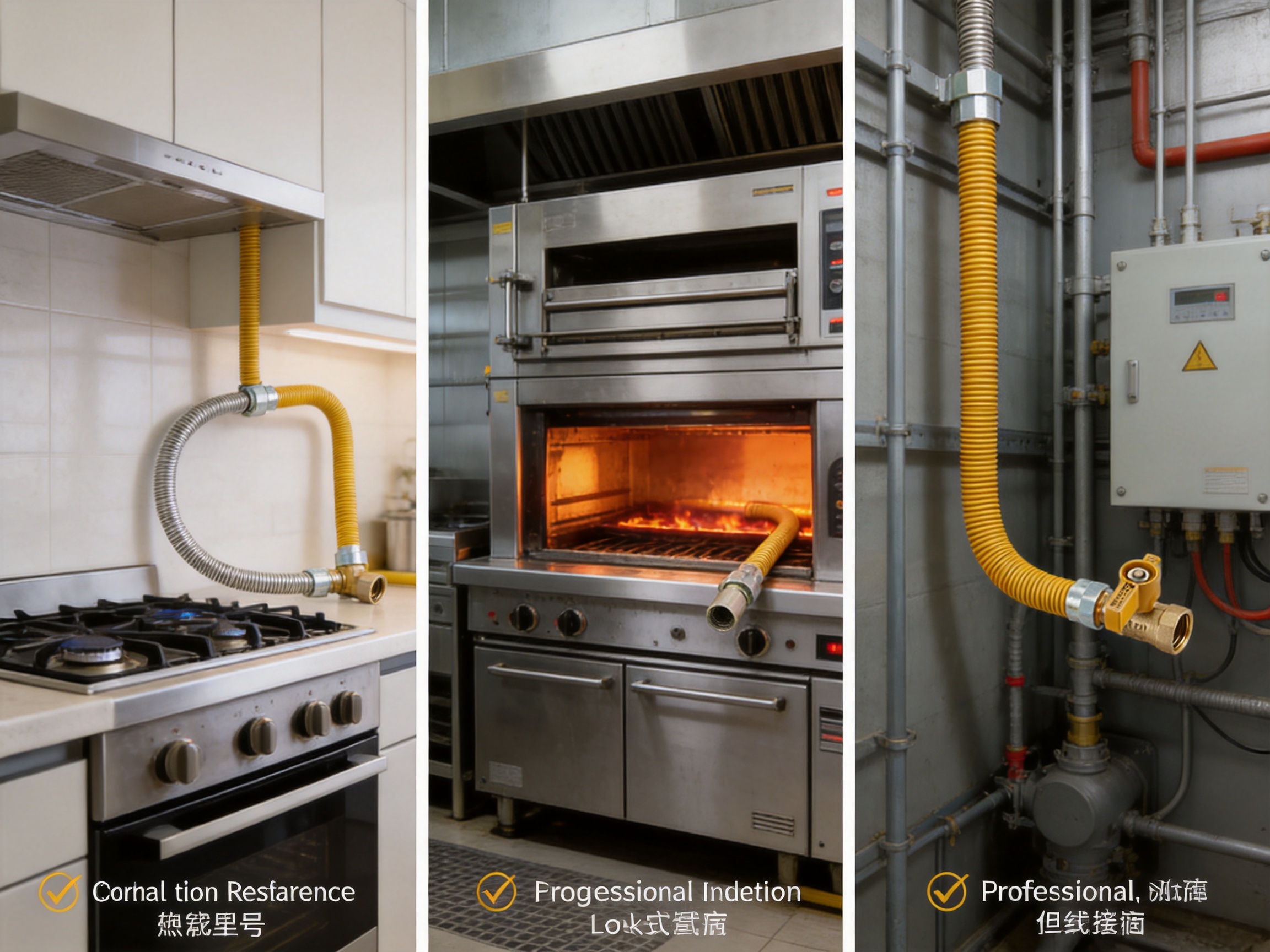
The DN20 stainless steel gas connector is suitable for gas connection applications where a flexible route is needed between a fixed supply line and an appliance or equipment inlet. Potential settings may include residential kitchens, commercial food-service areas, utility rooms, building service spaces, and selected light industrial applications, subject to local approval and system requirements.
Its compact range of lengths and adapter options may be useful in renovation projects, new construction, equipment replacement, and maintenance work. The connector can help accommodate changes in appliance position without requiring extensive modification to the fixed pipe system.
In commercial facilities, a standardized stainless steel connector may simplify procurement across multiple equipment locations. In residential installations, its flexibility can be useful where cabinetry or limited access makes rigid alignment difficult. In building service applications, the corrosion-resistant tube can be beneficial in spaces where ordinary steel components may require more frequent attention.
Application suitability must always be confirmed by a qualified professional. Gas pressure, gas type, appliance rating, ambient temperature, installation location, movement requirements, local regulations, and certification requirements all affect product selection.
9. Installation Considerations
Correct installation is essential to achieving the intended performance of any gas connector. The following considerations provide general guidance, but they do not replace local codes, manufacturer instructions, or the work of a licensed gas professional.
Inspect Before Installation
Before installation, inspect the connector, nut, adapter, threads, flare surfaces, and tube body. Do not install a product that has visible dents, cracks, damaged threads, severe scratches, contamination, or deformation that could affect the seal or flow path.
Confirm Compatibility
Confirm the nominal size, adapter configuration, thread specification, pressure requirements, and appliance connection before assembly. The 1 1/8"-16UNF flare nut and selected adapter must match the mating component. A connector should never be forced to fit a connection that is not designed for it.
Route Without Stress
Choose a route that avoids sharp bends, kinks, crushing, and contact with sharp cabinet edges. Do not twist the connector while tightening the fittings. The tube should be long enough to form a smooth route but not so long that it creates unnecessary loops or can be caught by moving equipment.
Protect from Heat and Damage
Keep the connector away from direct flame, excessive heat, abrasive surfaces, moving parts, and locations where it may be used as a support for other objects. The flexible connector should not carry the weight of an appliance or serve as a structural member.
Complete Leak Testing
After assembly, the connection should be tested for leaks using a method approved by local regulations and applicable professional practice. Open flames must never be used for leak detection. If a leak is found, the gas supply should be isolated and the connection corrected by a qualified person.
Do Not Reuse Damaged Components
A connector that has been crushed, overstretched, sharply bent, exposed to fire, or removed after questionable installation should be carefully evaluated before reuse. In many applications, replacement is safer than attempting to restore a component that may have hidden damage.
10. Procurement and Specification Guidance
For distributors, contractors, and engineering buyers, specifying the product accurately helps prevent errors. A purchase description should identify the DN20 size, 304 stainless steel tube, 0.25 mm wall thickness, required length, flare nut specification, adapter type, nut material, color, and any applicable approval or certification requirements.
The product category is stainless steel gas connector, and the listed category description identifies it as a stainless steel gas connector with CSA certification. Certification and approval should be verified for the exact model, configuration, market, and intended use before shipment or installation. Different lengths, adapter combinations, or nut materials may be subject to different documentation requirements.
Purchasers should also consider packaging, labeling, traceability, inspection records, sample approval, and batch consistency. These factors become increasingly important when connectors are used across a large construction project or distributed through multiple sales channels.
Questions to Ask a Supplier
Useful procurement questions include: What exact adapter is included? Which nut material is supplied? Is the listed length measured end-to-end or by tube length? What operating conditions are supported? What inspection records are available? Which certification applies to the requested configuration? What packaging and labeling options are offered? Are custom lengths or fittings available for larger projects?
Clear communication at the ordering stage helps avoid incorrect adapters, unsuitable lengths, and delays caused by field substitutions. Haoyin’s focus on product development and flexible connection manufacturing provides a foundation for technical communication and project-specific support.
11. Comparison with Other Connector Materials
Different connector materials serve different applications. Rubber or polymer hoses may offer flexibility and low initial cost, but their resistance to aging, heat, chemicals, and mechanical damage depends strongly on the specific formulation and protective design. Ordinary carbon steel may provide strength but can be more vulnerable to corrosion when surface protection is damaged or environmental moisture is present.
Copper tubing can be used in many gas systems, but it is generally installed as a more rigid tube and may require careful bending, cutting, flaring, or additional fittings. It may not offer the same installation convenience as a preassembled flexible stainless steel connector.
The DN20 stainless steel gas connector occupies a practical position between rigid pipework and less durable flexible alternatives. It provides a flexible route while using a metallic tube with corrosion-resistant characteristics. Its standardized flare nut, adapter choices, and multiple lengths further improve its suitability for professional installation.
The correct comparison should consider the entire service requirement rather than only purchase price. Installation labor, number of fittings, replacement access, corrosion exposure, inspection needs, and expected service life can all affect the total cost of ownership.
12. Value for Contractors and Distributors
Contractors benefit from a connector that is easy to identify, available in practical lengths, and compatible with common connection arrangements. The product can reduce the amount of site fabrication required and may help installers complete appliance connections more efficiently. Its stainless steel construction also supports a professional appearance in visible installations.
Distributors can benefit from a clear product family organized by size, adapter, nut material, color, and length. The availability of several configurations makes it possible to serve different customer requirements while maintaining a consistent product category. Standardized packaging and automated packing processes can support more reliable warehouse handling.
For original equipment manufacturers and equipment assemblers, the connector may be considered as part of a complete appliance or equipment connection package. Product selection should be coordinated with appliance design, inlet location, installation instructions, regulatory requirements, and service access.
13. Research and Development Capability
Flexible metal products require the integration of material science, forming technology, welding, connection design, and application knowledge. A manufacturer with dedicated research and development capability can evaluate these factors together rather than treating the connector as a simple commodity component.
Haoyin’s R&D team supports the design and development of stainless steel bellows, gas connectors, plumbing pipes, water liners, metal hoses, and compensators. This broader product experience can contribute to a better understanding of movement, vibration, thermal expansion, pressure, sealing, and installation constraints.
Research and development is also important when customers require modified lengths, alternative interfaces, new packaging, or application-specific construction. The company’s equipment base, including CNC forming and laser welding systems, provides a platform for developing and validating product variations.
Continuous improvement may involve refining forming accuracy, improving weld consistency, reducing material waste, optimizing inspection, enhancing packaging, or making the installation interface easier to use. These improvements can strengthen the product’s competitiveness without changing the basic connection concept.
14. Safety, Compliance, and Responsible Use
Gas is a high-consequence utility, so every connector must be selected and installed responsibly. A product’s material and construction are important, but they are only part of the complete safety system. Safe performance also depends on correct sizing, compatible fittings, appropriate pressure ratings, professional installation, leak testing, and periodic inspection where required.
Users should comply with all applicable national, regional, and municipal requirements. Appliance manufacturers may specify particular connector types, maximum lengths, clearances, or installation methods. Where requirements differ, the stricter applicable instruction should be followed after consultation with a qualified professional.
The connector should not be modified by cutting, drilling, welding, rethreading, or replacing parts with unapproved alternatives. Any modification may change the pressure boundary, sealing performance, mechanical strength, or certification status.
Color options such as stainless steel, yellow, and black may support project preferences or visual identification, but color should not be treated as a substitute for product labeling or technical verification. The exact specification should be confirmed from the packaging, purchase documents, and product records.
15. Maintenance and Inspection
A flexible gas connector should remain accessible enough for inspection. During routine service, a qualified person may check for visible corrosion, dents, kinks, abrasion, heat damage, loose fittings, and signs of movement or strain. The surrounding area should also be examined for conditions that could damage the connector after installation.
Cleaning should be performed using methods compatible with stainless steel and the applicable installation requirements. Harsh chemicals, abrasive tools, or practices that scratch the tube or fitting surfaces should be avoided. If the connector is located in an area subject to frequent cleaning, the cleaning process should be reviewed to ensure that it does not compromise the material or seal.
Any odor of gas, unexplained pressure loss, visible damage, or suspected leak requires immediate attention. The gas supply should be shut off when safe to do so, ignition sources should be avoided, and qualified emergency or service personnel should be contacted according to local procedures.
16. Environmental and Operational Benefits
The long-term durability of stainless steel can contribute to reduced replacement frequency. A connector that remains serviceable for a longer period may reduce material consumption, installation labor, packaging use, and disposal compared with products that require early replacement due to corrosion or damage.
The company’s ISO14001 environmental management certification and Green Factory designation indicate attention to environmental management within its operations. While the environmental impact of one connector is limited, responsible manufacturing becomes meaningful when applied across large production volumes.
Automatic packaging and organized production can also help reduce handling errors and material waste. More consistent forming and inspection may improve production yield, while process control can reduce the number of products that require rework or disposal.
17. Choosing the Right Configuration
The right configuration depends on the installation distance, mating interface, material preference, appearance requirement, and project documentation. Buyers should begin by confirming that DN20 is the correct nominal size. They should then select the adapter configuration and length based on the actual appliance and supply connection.
If the connection points are close together, the 12-inch, 18-inch, or 24-inch options may be appropriate. For wider spacing or routes around obstacles, 36-inch, 48-inch, 60-inch, or 72-inch options may be considered. The selected length should permit a gentle route without tension or excessive slack.
The choice between brass and carbon steel nut materials should be discussed with the supplier or engineer when the installation environment, corrosion exposure, or project specification requires a particular material. Color can be selected according to project requirements, provided that it does not conflict with identification rules or regulatory expectations.
For high-volume projects, it is advisable to approve a sample before placing a large order. The sample can be checked for dimensions, connection fit, flexibility, appearance, packaging, and documentation. This step reduces the risk of discovering a configuration mismatch after delivery.
18. Why Specialized Manufacturing Creates Competitive Value
The strongest advantage of a specialized manufacturer is the ability to control the entire product chain. A company focused on stainless steel bellows and flexible connections is more likely to understand the interaction between tube geometry, weld quality, connection design, and installation behavior than a general metal trading company.
Haoyin combines material selection, product design, CNC forming, laser welding, non-destructive inspection, performance testing, and automatic packaging. This integrated capability can improve communication between engineering and production. It can also make it easier to identify the cause of a quality issue and implement a corrective action.
Specialization supports consistency. When the same organization develops the design, selects the process, manufactures the component, and provides technical support, product requirements can be translated more clearly from the customer’s specification to the production line.
The company’s experience across gas connectors, plumbing pipes and water liners, metal hoses, and compensators also provides a broad technical foundation. These products share important engineering themes, including flexibility, sealing, material resistance, vibration response, and reliable connection under changing service conditions.
19. Recommended Use in Project Planning
During the design stage, engineers should identify the required connection points, routing distance, appliance movement, access limitations, environmental conditions, and inspection requirements. The connector can then be included in the bill of materials with a precise specification instead of being selected as an afterthought.
During procurement, the project team should confirm the exact length, adapter, nut material, color, certification, and packaging. During installation, the team should verify that the delivered connector matches the approved specification and that no damage occurred during transportation.
During commissioning, qualified personnel should complete connection checks and leak testing. The final installation should be documented where project procedures require it. Keeping product records can make future maintenance and replacement easier.
20. Frequently Asked Questions
Q1: What material is used for the tube?
The tube is made from 304 stainless steel. The stated wall thickness is 0.25 mm. This material provides corrosion-resistant characteristics, durability, and suitable formability for a flexible gas connector.
Q2: What does DN20 indicate?
DN20 identifies the nominal size category of the connector. The actual connection dimensions must still be confirmed from the product specification, adapter configuration, and mating appliance or pipe fitting.
Q3: What flare nut is included?
The listed flare nut specification is 1 1/8"-16UNF. Compatibility should be verified before installation because the mating component must be designed for the same connection arrangement.
Q4: Which adapter options are available?
The listed options include 1 1/8*3/4M(1/2F) and 1 1/8*3/4F. The correct choice depends on the required male or female interface and the connection design of the appliance or fixed pipe.
Q5: What lengths can be ordered?
Available lengths are 12, 18, 24, 36, 48, 60, and 72 inches. The most suitable length is the shortest one that allows a smooth, unstressed installation route.
Q6: Is the connector suitable for every gas system?
No connector should be assumed to be suitable for every gas system. Gas type, pressure, temperature, appliance requirements, local regulations, certification, and installation conditions must be evaluated by a qualified professional.
Q7: Can the connector be bent sharply to fit a small space?
No. The connector should be routed with smooth bends and should not be kinked, crushed, twisted, or forced around sharp edges. A different length or installation route should be selected when space is inadequate.
Q8: Are brass and carbon steel nuts both available?
Yes. The nut material is listed as brass or carbon steel. The required material should be confirmed when ordering because availability may depend on the selected configuration and project requirements.
Q9: Does the product include a protective cover?
The listed cover material is “Non,” meaning that no cover material is specified in the described configuration. Buyers requiring a protective cover should confirm whether an alternative version is available.
Q10: What sealing method is used?
The listed seal form is hard sealing. Clean surfaces, correct alignment, proper tightening, and compliance with the relevant installation instructions are essential for achieving the intended seal.
Q11: What manufacturing equipment is used?
The company reports using laser welding machines, CNC forming machines, COSMO equipment, eddy current flaw detectors, and automatic packaging systems. These technologies support forming accuracy, weld control, inspection, and consistent final handling.
Q12: What certifications does the manufacturer report?
The company reports ISO9001, ISO14001, and ISO45001 management system certifications. The product category information also identifies the gas connector as CSA certified. Exact certification documents should be verified for the specific product configuration and destination market.
Q13: Can the connector be used as a support for an appliance?
No. A flexible gas connector should not support the weight of an appliance or other equipment. The appliance must be independently supported, and the connector should only perform its intended connection function.
Q14: How should a suspected leak be handled?
The gas supply should be isolated when safe, ignition sources should be avoided, and qualified service or emergency personnel should be contacted according to local procedures. Open flames must never be used to locate a leak.
Q15: Why choose a specialized stainless steel connector manufacturer?
A specialized manufacturer can combine material knowledge, forming technology, welding control, inspection, product development, and application support. This integrated expertise can improve consistency and provide better technical assistance than an unverified generic source.
Conclusion
The DN20 stainless steel gas connector is designed to provide a dependable and flexible connection solution for gas systems. Its 304 stainless steel tube, 0.25 mm wall thickness, 1 1/8"-16UNF flare nut, hard-sealing design, adapter choices, and range of standard lengths address the practical needs of many professional installations.
Compared with rigid connections or less specialized alternatives, it offers easier routing, corrosion-resistant construction, configuration flexibility, and simplified procurement. Its value is strengthened by the manufacturing capabilities of Haoyin (Ningbo) Bellows Technology Co., Ltd., including CNC forming, laser welding, eddy current inspection, performance testing, automated packaging, and full-process quality management.
The connector should always be selected according to the actual gas system, installed by qualified personnel, and used in compliance with applicable codes and instructions. When the correct configuration is combined with careful installation and inspection, this product can support safe, efficient, and durable gas connection projects across residential, commercial, building service, and selected industrial environments.
References
1. Product specification information for the DN20 stainless steel gas connector, including material, wall thickness, flare nut, adapters, lengths, seal form, and color options.
2. General technical references on 304 stainless steel properties, corrosion resistance, forming behavior, and applications in flexible metal components.
3. General engineering references on stainless steel bellows, corrugated tubing, flexible connectors, mechanical sealing, and controlled routing practices.
4. ISO 9001 quality management system principles and process-based quality control guidance.
5. ISO 14001 environmental management system principles for manufacturing organizations.
6. ISO 45001 occupational health and safety management system principles.
7. General professional guidance for gas appliance connection, leak testing, fitting compatibility, and installation safety.
8. Manufacturer information concerning stainless steel bellows, gas connectors, plumbing pipes, water liners, metal hoses, compensators, manufacturing equipment, and company quality capabilities.