




 English
  Español
  русский


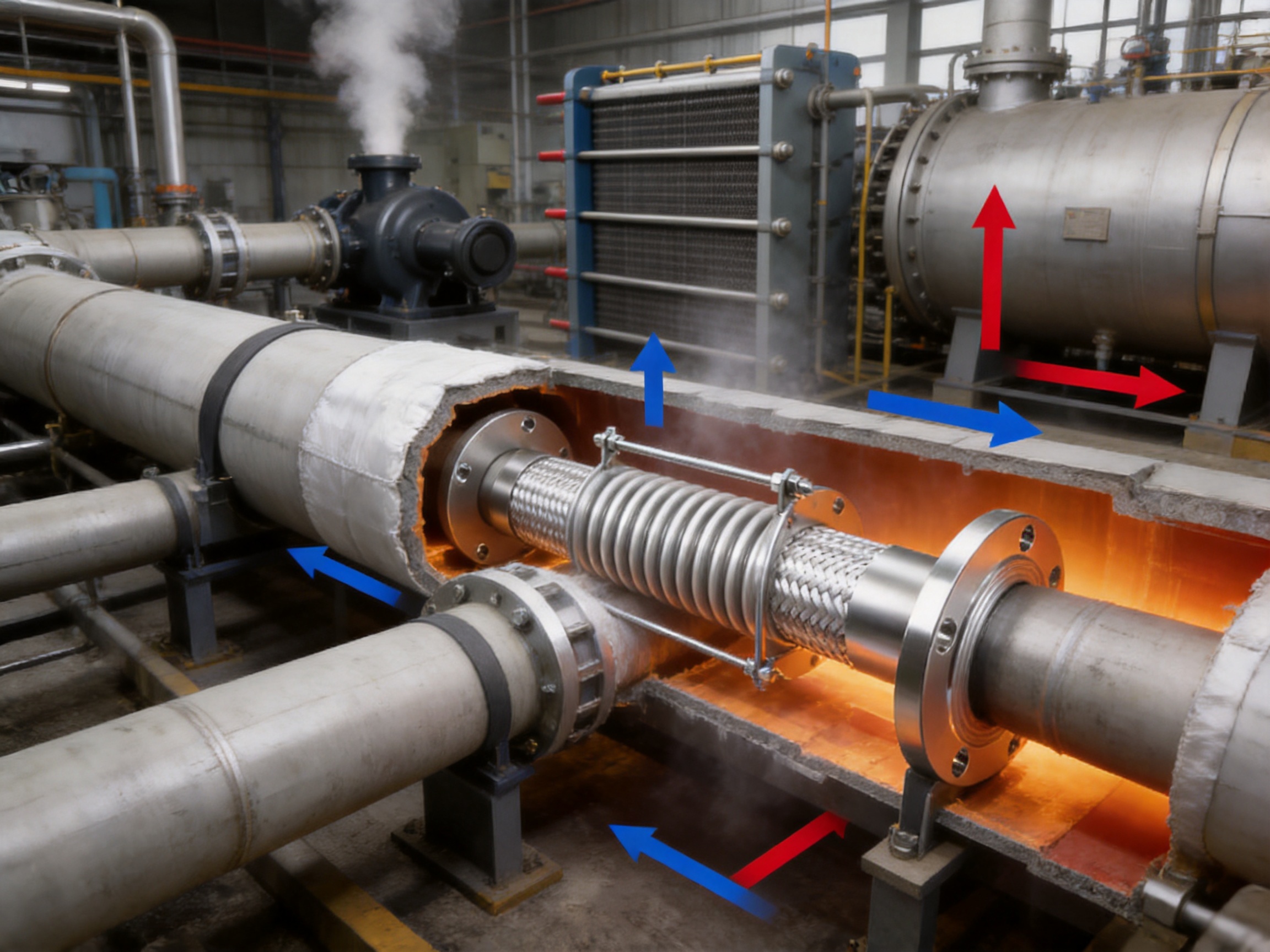
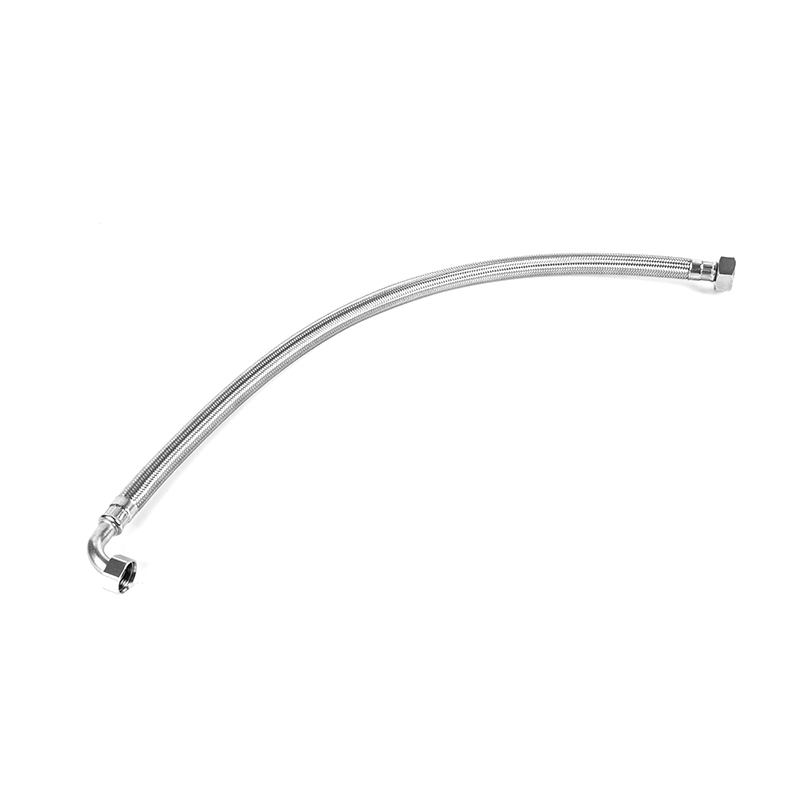
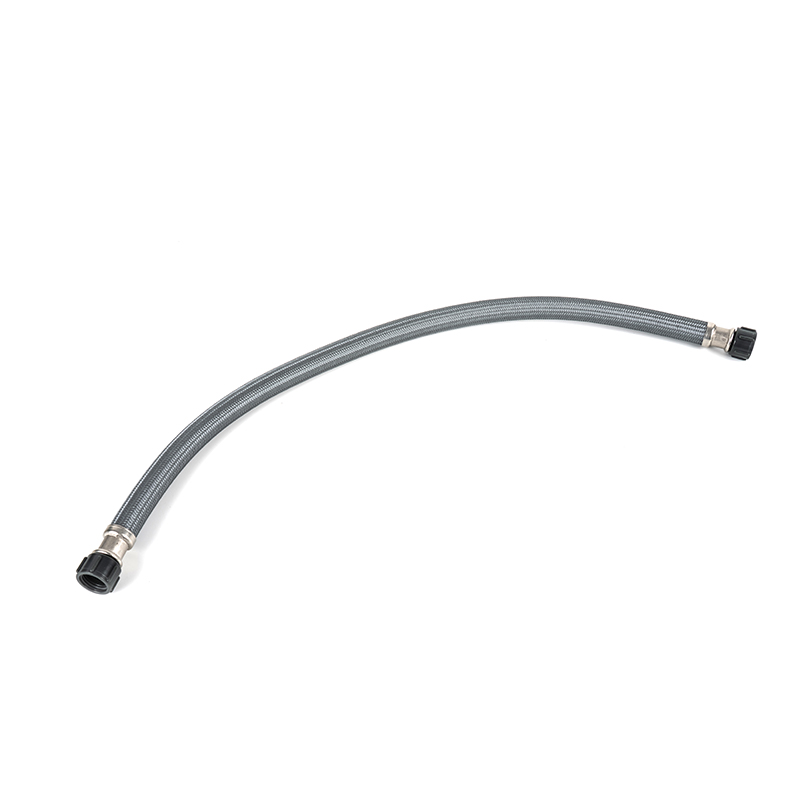
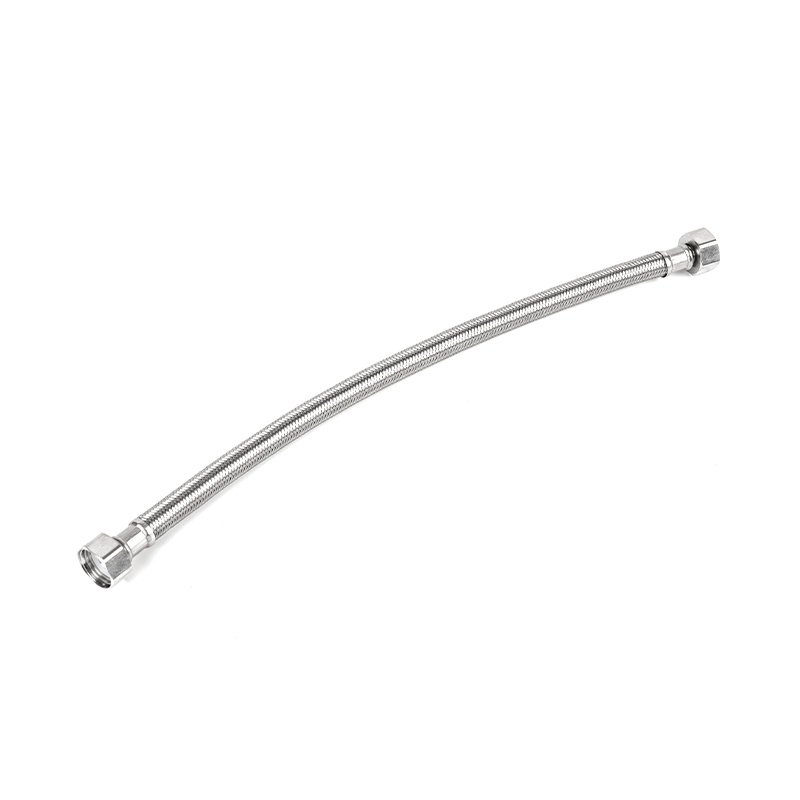
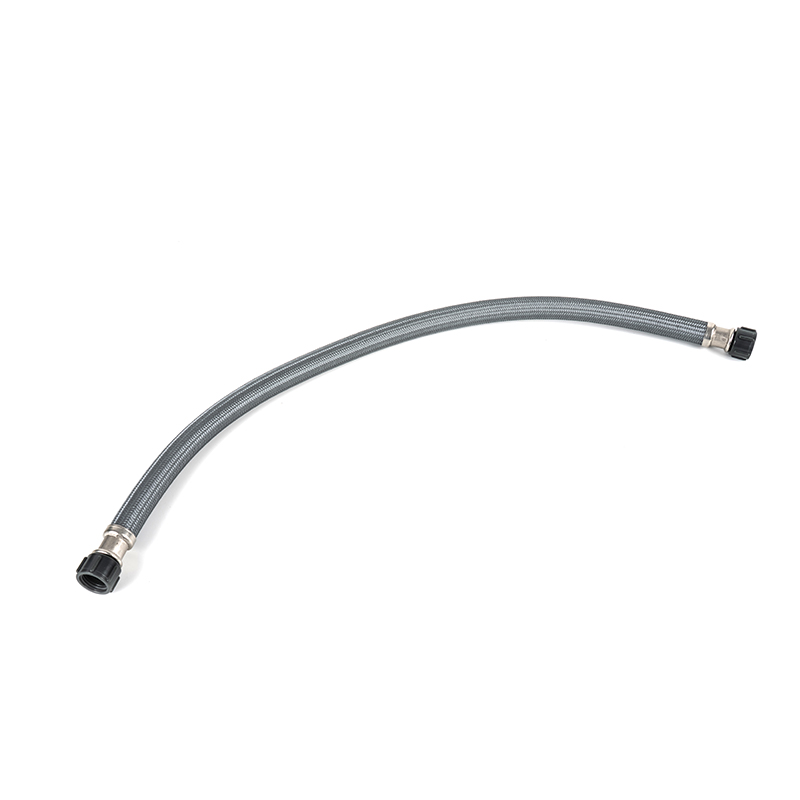
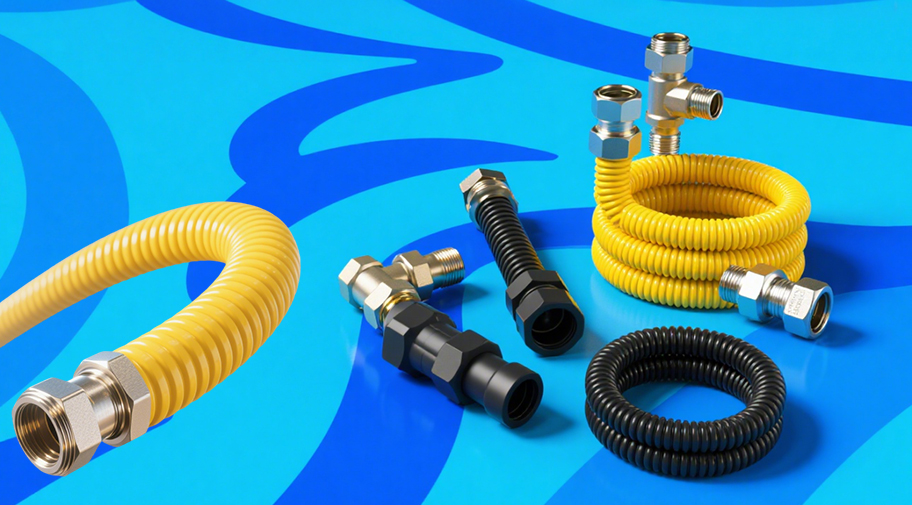
A flexible metal compensator, also known as a corrugated expansion joint, is an engineered piping component designed to absorb thermal expansion, mechanical movement, vibration, installation tolerances, and limited misalignment in a piping system. By combining a formed bellows element with suitable connection components and, where required, a stainless-steel braid or protective structure, the compensator provides a flexible connection without sacrificing pressure resistance or service reliability.
The flexible metal compensator corrugated expansion joint described in this article is manufactured from 304 stainless steel and carbon steel options. It is available for pressure ranges from 0.6 MPa to 1.6 MPa and is commonly used in nominal diameters from DN255 to DN600 according to the supplied product information. Connection configurations may include flanged, welded, and quick-connect designs. Depending on the selected material, connection structure, and operating conditions, the product can be used with water, steam, and petroleum-based media.
These characteristics make the compensator suitable for petroleum and petrochemical facilities, aerospace equipment, machinery manufacturing, electrical equipment, chemical processing, building services, industrial heating, HVAC systems, plumbing networks, and other applications in which rigid piping cannot safely accommodate movement.
What Is a Flexible Metal Compensator?
A flexible metal compensator is a pressure-retaining expansion joint that uses a corrugated metallic bellows to create controlled flexibility in a pipeline. The corrugations allow the component to compress, extend, bend, or absorb lateral movement within specified design limits. This movement capability helps prevent excessive stress from being transferred to pipes, valves, pumps, heat exchangers, equipment nozzles, and other connected components.
Unlike a plain rigid pipe section, a corrugated expansion joint is intentionally designed to move. Unlike many non-metallic expansion joints, a stainless-steel compensator offers strong resistance to heat, pressure, aging, and many industrial environments. The exact performance depends on bellows geometry, material thickness, number of plies, braid construction, connection type, operating temperature, pressure, movement amplitude, and installation conditions.
The product is particularly useful in systems where temperature changes cause pipes to expand and contract. For example, a steam line may become substantially longer as it heats up. A heating-water line may experience repeated dimensional changes during daily operation. A pump discharge line may transmit vibration into the connected piping. A flexible compensator provides a controlled movement zone that can reduce the resulting mechanical load.
Core Construction of the Corrugated Expansion Joint
Corrugated Bellows Body
The bellows body is the central flexible element. Its corrugated profile provides the movement capacity required for axial, lateral, and angular compensation. The geometry must be consistent from one convolution to the next because uneven corrugations can create localized stress concentration, reduced fatigue life, or irregular movement.
The supplied product information highlights a dense bellows pitch and a thickened tube wall. These features contribute to pressure resistance and structural durability. A dense corrugated arrangement can also provide a stable movement pattern when the component is correctly selected and installed. However, the allowable movement must always be confirmed against the product’s technical drawing and application conditions rather than estimated solely from appearance.
304 Stainless Steel Material
304 stainless steel is widely used in flexible metal hose and bellows construction because it combines corrosion resistance, formability, strength, and weldability. It is suitable for many water, heating, industrial, and general process applications. The supplied product description states that the bellows and braid can use 304 stainless steel, while carbon steel is also available as a material option for suitable applications.
Material selection should consider the medium, temperature, pressure, chloride concentration, cleaning chemicals, external atmosphere, and expected service life. Stainless steel is not automatically suitable for every chemical environment. In highly corrosive or chloride-rich conditions, an engineer may need to evaluate alternative stainless-steel grades, protective measures, or a different alloy system.
Stainless-Steel Braid
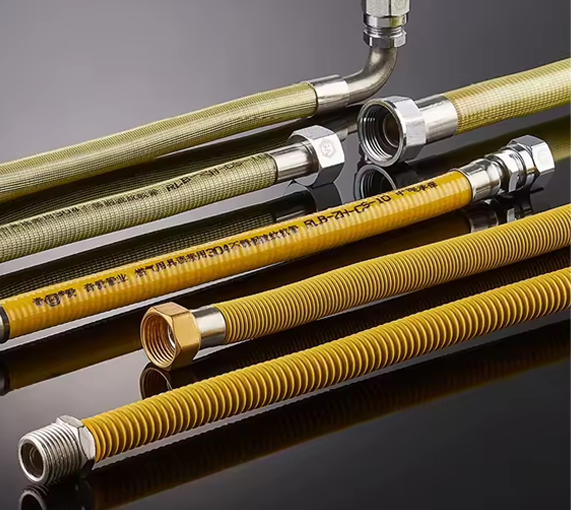
The product is described as using a tightly woven 304 stainless-steel braid. The braid helps contain pressure-related forces and supports the hose or bellows body during operation. A well-formed braid should have an even weave, consistent coverage, and no skipped wires or broken strands. Dense and uniform braiding can improve mechanical stability and reduce the likelihood of localized deformation.
The braid is not merely a decorative outer layer. It works as part of the pressure and movement system. During operation, internal pressure tends to produce an axial force that can cause an unrestrained bellows to extend. The braid and end fittings help manage this force, depending on the specific construction. This is why the compensator should not be shortened, modified, or installed with incompatible fittings without technical approval.
End Connections
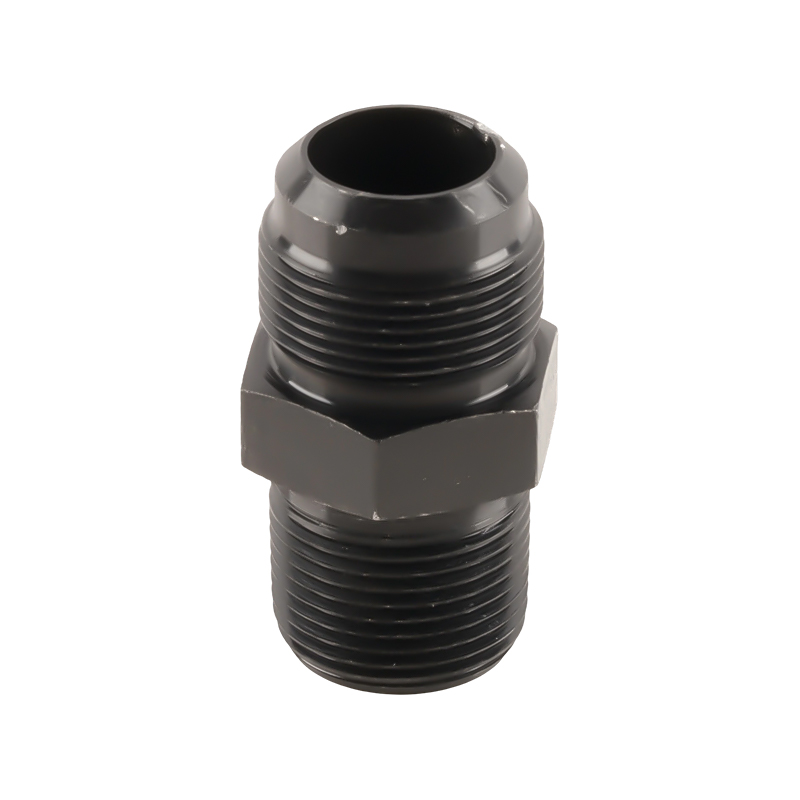
Flexible metal compensators may be supplied with flanged, welded, or quick-connect configurations. Flanged connections are useful where the expansion joint must be removed for inspection or replacement. Welded connections can provide a compact and permanent joint when the piping system is designed for welding. Quick-connect or quick-assembly structures may simplify installation and maintenance in suitable low- or moderate-demand applications.
Connection selection should match the pipe standard, pressure class, gasket material, bolt arrangement, welding procedure, and available installation space. The connection must also allow the compensator to perform its intended movement. A flexible joint that is forced into an incorrect alignment may experience premature fatigue even if the bellows itself is correctly manufactured.
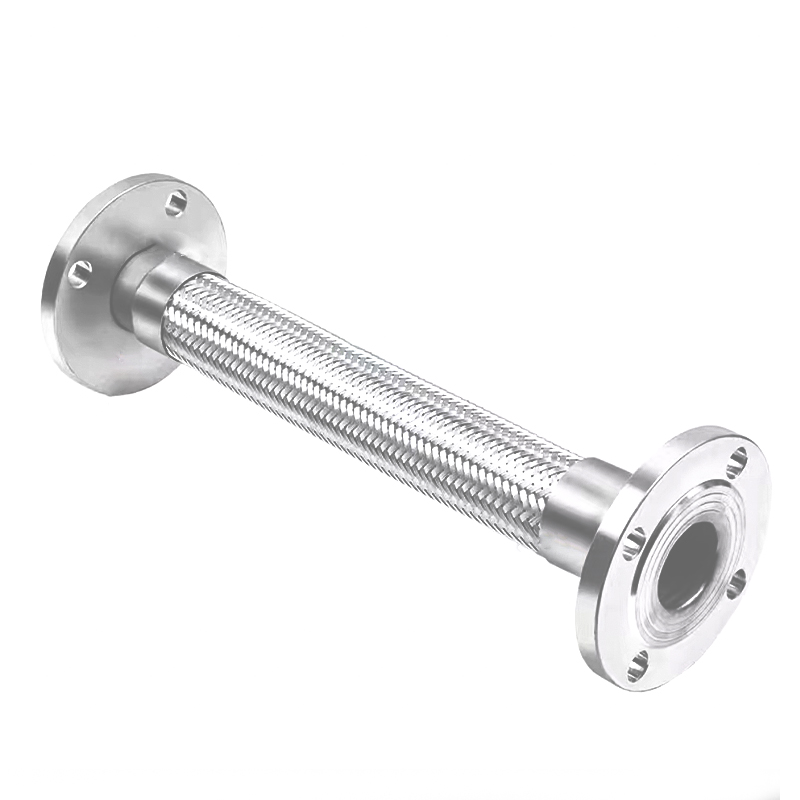
Flexible Metal Compensator Corrugated Expansion Joint
Performance Range and Technical Characteristics
Product type |
Flexible metal compensator and corrugated expansion joint |
Primary materials |
304 stainless steel and carbon steel options |
Stated pressure range |
0.6 MPa to 1.6 MPa |
Common nominal diameter range |
DN255 to DN600, subject to project confirmation |
Connection options |
Flange, welding, and quick-connect configurations |
Applicable media |
Water, steam, and petroleum-based media, subject to compatibility review |
Movement functions |
Axial, lateral, angular, vibration, and installation-tolerance compensation within design limits |
Typical industries |
Petroleum and petrochemical, aerospace equipment, machinery, electrical equipment, chemical, HVAC, plumbing, and heating |
The stated pressure range of 0.6 MPa to 1.6 MPa covers many general industrial and building-service requirements. Pressure capability, however, is only one part of a proper selection. The operating temperature may reduce allowable pressure, particularly when the component is exposed to repeated thermal cycling. Movement frequency, amplitude, vibration, installation alignment, and media compatibility also influence service life.
Nominal diameter must be confirmed carefully during the design stage. The supplied information identifies a commonly used range of DN255 to DN600. Because piping standards may use different dimensional conventions, purchasers should confirm the exact internal diameter, outside diameter, flange standard, bolt circle, face-to-face length, and connection tolerances before ordering.
How the Compensator Works in a Piping System
Thermal Expansion Absorption
When a metal pipeline is heated, it expands. When it cools, it contracts. If the pipeline is restrained by anchors, supports, equipment, or building structures, the resulting thermal movement can generate significant stress. A corrugated expansion joint provides a planned flexible section that absorbs part of this movement.
In a long pipeline, compensators are normally used together with anchors and guides. Anchors control where the thermal movement occurs, while guides keep the pipe aligned and prevent unwanted lateral displacement. The expansion joint should be installed in the intended movement direction and should not be treated as a substitute for a complete piping support design.
Vibration Damping and Noise Reduction
Pumps, compressors, fans, turbines, and other rotating machines can transmit vibration into connected pipework. A rigid pipe can transfer this vibration directly to equipment nozzles or building structures. The flexible corrugated section introduces a degree of mechanical isolation and can help reduce vibration transmission.
The product information identifies vibration damping and noise reduction as key functions. The corrugated arrangement and flexible metallic structure can reduce the direct transmission path. Actual results depend on the source frequency, vibration amplitude, pressure pulsation, pipe support arrangement, equipment speed, and whether the compensator is installed without excessive preloading.
Misalignment and Installation Tolerance
Pipe sections are not always perfectly aligned after fabrication or installation. A flexible metal compensator can accommodate limited offset and angular deviation, helping connect components that cannot be aligned with a rigid spool alone. This feature can reduce installation stress and make replacement or maintenance work more manageable.
Flexibility should not be used to compensate for major construction errors. Excessive bending, twisting, or lateral offset can overload the bellows and braid. The correct approach is to align the pipework as closely as practical and use the expansion joint only within the movement values specified by the manufacturer.
Advantages Compared with Generic or Competing Solutions
Compared with Rigid Pipe Spools
A rigid pipe spool is simple, strong, and economical for fixed sections, but it has little ability to absorb movement. When installed between equipment or across a thermal boundary, a rigid spool may transfer expansion forces into flanges, nozzles, supports, and anchors. The flexible metal compensator provides a controlled movement zone and can therefore reduce the mechanical burden on surrounding components.
The compensator also offers more installation tolerance than a fixed pipe section. This can be valuable in retrofit work, equipment replacement, and systems where the final pipe position may vary slightly from the original drawing.
Compared with Non-Metallic Expansion Joints
Rubber and fabric expansion joints are useful in many low-temperature and water-handling systems, but their temperature, chemical, pressure, aging, and fire-resistance characteristics may not meet the requirements of a hot or industrial medium. A metallic compensator is generally better suited to steam, heated water, petroleum-related service, and environments where a robust metallic pressure boundary is preferred.
Metal construction can also provide a longer service potential in applications involving heat, ultraviolet exposure, sparks, or mechanical abrasion. Nevertheless, a metallic joint still requires correct fatigue assessment and corrosion control. It should be selected according to the complete operating profile rather than on material type alone.
Compared with Unbraided Flexible Tubes
An unbraided flexible tube may provide movement capability, but the absence of a reinforcing braid can limit its pressure resistance or service stability. The tightly woven 304 stainless-steel braid described for this product provides additional containment and mechanical support. It helps the assembly resist pressure-related deformation while retaining flexibility.
The combination of a thickened corrugated body and dense braid offers a balanced design: the bellows supplies movement, while the outer reinforcement supports pressure and durability. This construction is especially useful where the line must accommodate both vibration and moderate pressure.
Compared with Basic Low-Cost Expansion Joints
Some low-cost expansion joints are manufactured with inconsistent corrugation, uneven welding, thin walls, or poorly formed braid. These weaknesses may not be visible during a quick visual inspection but can become important under repeated pressure and thermal cycles. A product made through controlled forming, professional welding, inspection, and traceable quality procedures offers a more dependable basis for industrial procurement.
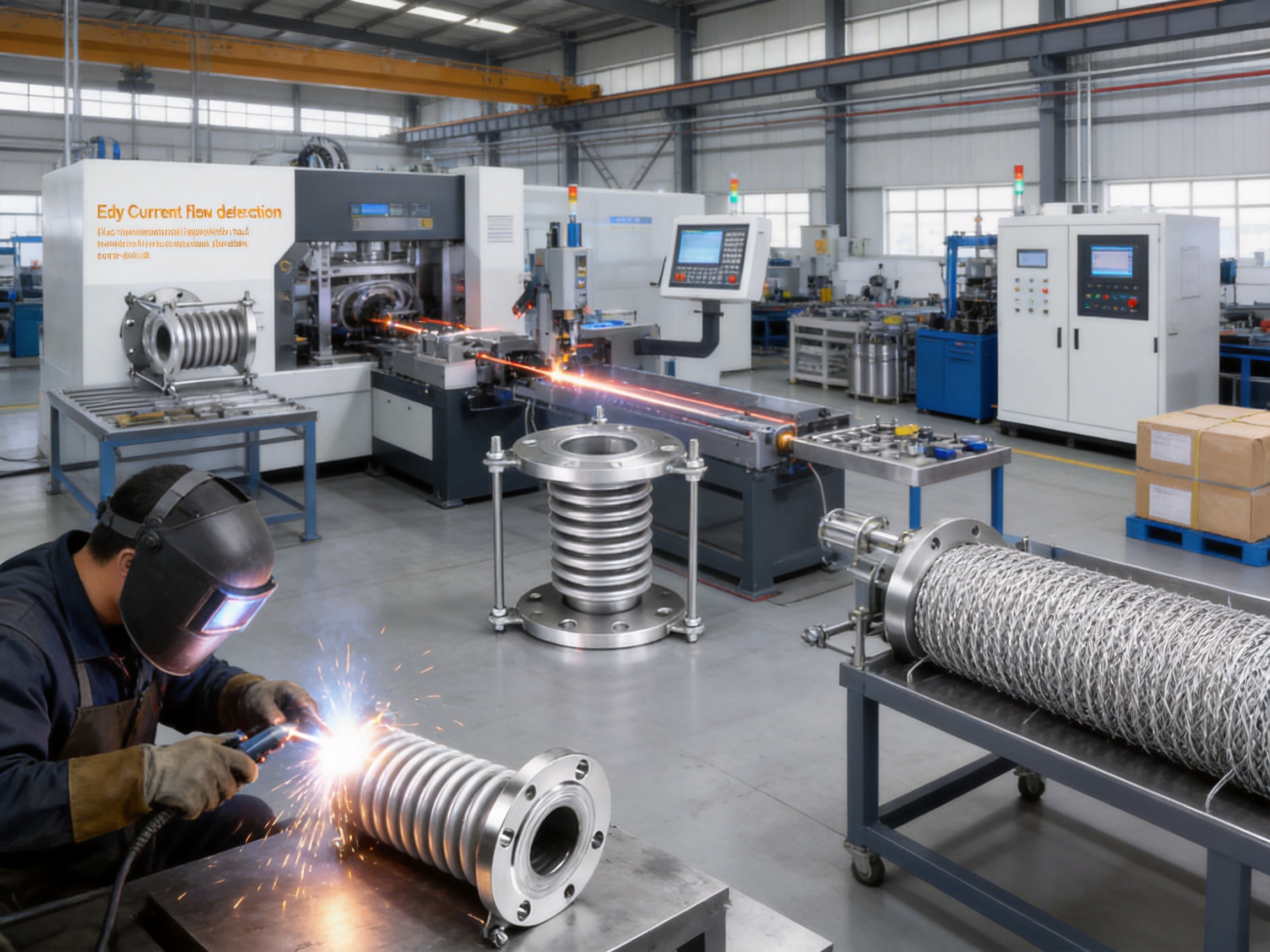
The manufacturing strengths associated with this product include professional argon arc welding, CNC forming equipment, laser welding machines, eddy current flaw detection, and automatic packaging systems. These capabilities can improve consistency from raw material preparation through final shipment. They also support the production of customized dimensions and connection types for different piping requirements.
Manufacturing Process and Quality Features
Raw Material Selection
Manufacturing begins with the selection and verification of stainless-steel or carbon-steel material. Material quality influences corrosion resistance, forming performance, weldability, fatigue behavior, and pressure capability. A structured quality process should verify the material grade, thickness, surface condition, and relevant documentation before production.
For stainless-steel products, the surface should be inspected for scratches, contamination, pitting, and other defects that could become stress concentrators. For carbon-steel components, surface protection and corrosion-control requirements should be considered from the beginning of the production plan.
Precision Forming
The bellows must be formed into a regular corrugated profile. CNC forming machines help control dimensions, pitch, depth, and repeatability. Accurate forming is important because every convolution contributes to the movement and fatigue response of the assembly.
Controlled forming also supports customization. Different systems may require different lengths, diameters, convolution counts, wall thicknesses, or end configurations. A professional manufacturer can evaluate these variables together rather than treating the bellows as a one-size-fits-all component.
Argon Arc Welding
The supplied information identifies professional argon arc welding as a key production process. Argon shielding helps protect the weld area from atmospheric contamination during welding. A properly executed weld should be continuous, clean, and uniform, with a regular fish-scale appearance where applicable.
Weld quality is critical because the joint must maintain pressure integrity while the bellows repeatedly moves. Excessive heat input, contamination, porosity, undercut, incomplete fusion, or uneven penetration may reduce performance. Skilled operators, suitable welding parameters, controlled fixtures, and post-welding inspection are therefore important parts of the manufacturing system.
Laser Welding Capability
Laser welding machines can support precise, repeatable joining for selected components. The concentrated heat source may reduce distortion and help produce narrow, controlled weld zones. This can be beneficial for thin metallic bellows and assemblies in which dimensional accuracy is important.
Laser welding is not automatically superior for every joint. The appropriate process depends on material thickness, joint design, production volume, accessibility, and performance requirements. The value of advanced equipment lies in applying the correct process under controlled conditions.
Braid Weaving and Assembly
The 304 stainless-steel braid is woven to provide consistent coverage around the flexible body. The wire diameter, weave pattern, braid angle, and tension influence the mechanical response of the finished assembly. Proper assembly prevents loose strands, skipped wires, broken wires, and uneven loading.
The braid must also be connected securely to the end fittings. The assembly should permit the bellows to move while ensuring that pressure-related forces are appropriately managed. A braid that is too loose may provide insufficient support, while a braid that is improperly constrained may restrict movement or create localized stress.
Inspection and Testing
Eddy current flaw detection is identified among the company’s advanced manufacturing equipment. This non-destructive testing method can help identify certain surface and near-surface discontinuities in conductive materials. It is particularly useful as part of a broader quality program for metallic components.
Depending on the order and applicable technical requirements, inspection may include dimensional checks, visual weld inspection, pressure testing, leak testing, material verification, surface inspection, and functional or movement evaluation. Customers should specify required standards, test pressures, documentation, and acceptance criteria before production begins.
Automatic Packaging
Automatic packaging systems help protect finished compensators during handling, storage, and transportation. Packaging should prevent impact damage, deformation of the bellows, contamination of connection faces, and moisture-related corrosion. Protective caps, separators, suitable wrapping, and stable palletization can be important for larger-diameter products.
Good packaging is part of product quality. A correctly manufactured expansion joint can be damaged if it is stacked under excessive weight, dragged across a floor, exposed to sharp objects, or transported without protection for its flanges and corrugated body.
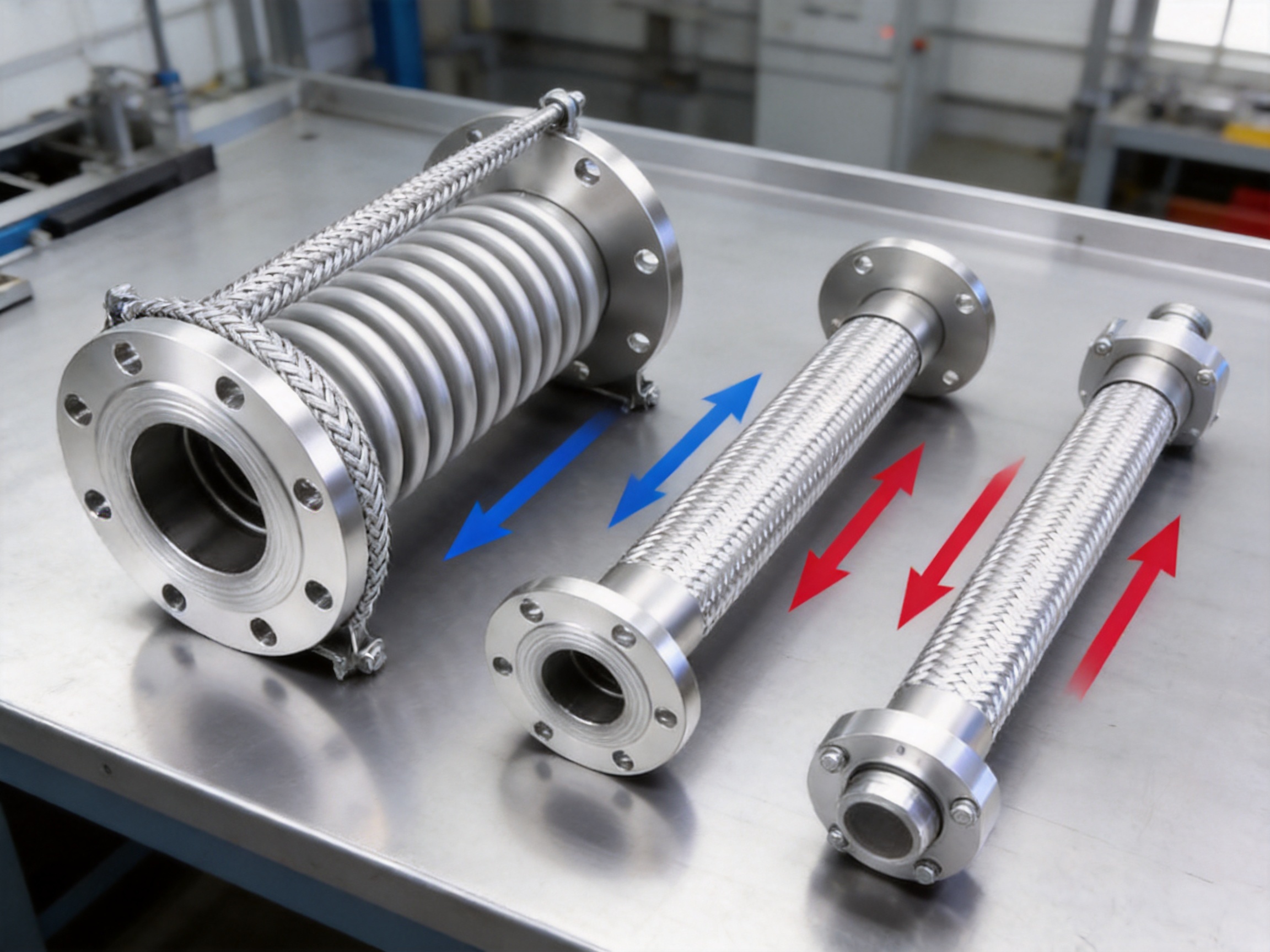
Company Manufacturing Strengths and Technical Capabilities
Haoyin (Ningbo) Bellows Technology Co., Ltd. specializes in the research, development, design, manufacturing, and sales of stainless-steel bellows and flexible connection products. Its product range includes gas connectors, plumbing pipes and water liners, metal hoses, and compensators.
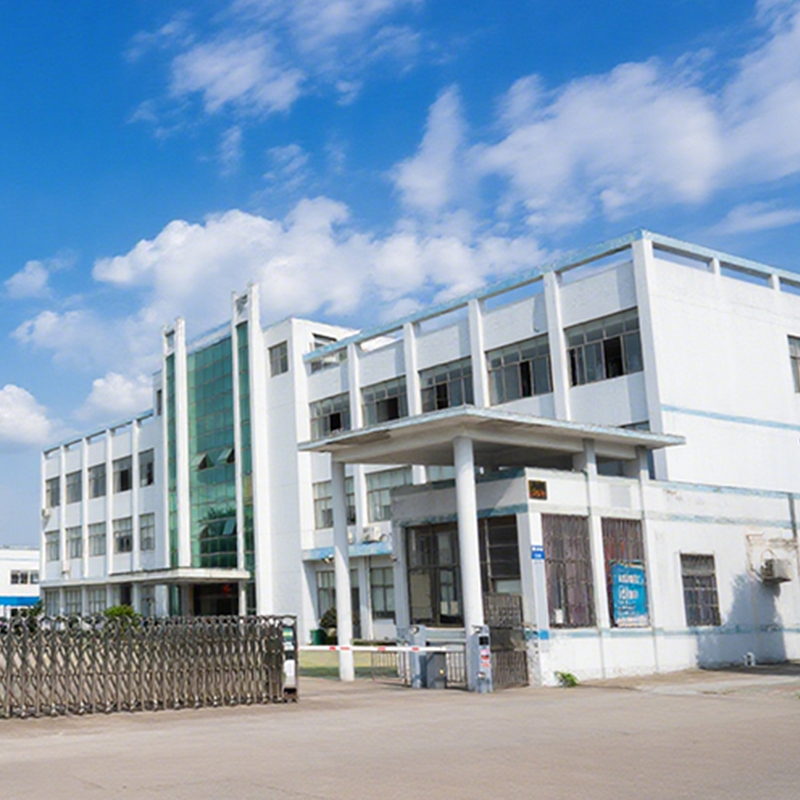
The company operates on an area of approximately 35 mu and has 18,000 square meters of standardized workshops. This scale provides space for organized production lines, inspection areas, warehousing, equipment deployment, and process management. A standardized workshop environment can improve production discipline and reduce the risk of uncontrolled handling or cross-contamination.
The company has obtained ISO9001, ISO14001, ISO45001, and other management system certifications according to the supplied company information. These certifications represent structured approaches to quality management, environmental management, and occupational health and safety. Certification does not replace product-specific inspection, but it can provide an organized framework for documenting and improving manufacturing processes.
As a National High-tech Enterprise and Green Factory, the company emphasizes product development, manufacturing capability, environmental responsibility, and process improvement. Its stated quality philosophy is “Striving for Excellence, Forging Quality,” supported by a full-process quality management system covering raw material selection, structural design, production, performance testing, and after-sales support.
The company’s professional R&D team supports the development of flexible connection solutions for gas, plumbing, heating, healthcare, building heating, industrial HVAC, and other fields. This cross-industry experience is valuable because a compensator used in a building heating system may have very different requirements from one used in a petrochemical or machinery application.
Advanced equipment listed in the company information includes laser welding machines, CNC forming machines, COSMO equipment, eddy current flaw detectors, and automatic packaging systems. Together, these resources support precision forming, controlled welding, non-destructive inspection, and consistent shipment preparation.
Application Areas
Water and Plumbing Systems
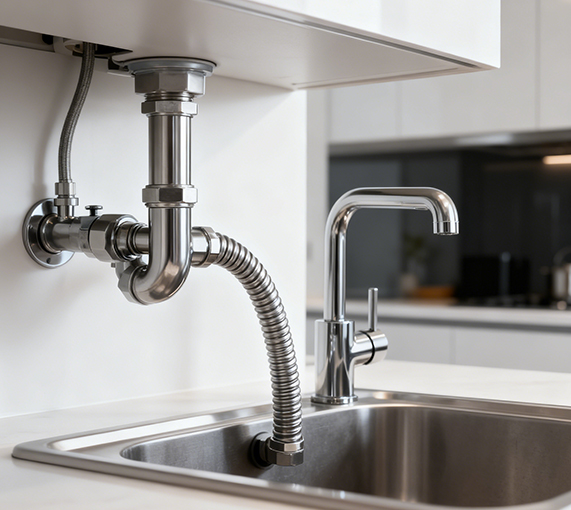
In water systems, a flexible metal compensator can absorb pump vibration, accommodate thermal movement, and simplify connections around equipment. It may be used near pumps, water treatment equipment, heat exchangers, pressure vessels, and long pipe runs. Stainless-steel construction is often selected where cleanliness, corrosion resistance, and long-term durability are important.
Steam and Heating Networks
Steam and heating systems experience significant temperature changes. Expansion joints can reduce thermal stress in hot-water lines, steam distribution lines, boiler connections, and industrial heating circuits. Because temperature strongly affects material strength and fatigue behavior, the design should include operating temperature, startup and shutdown cycles, pressure fluctuations, insulation, and drainage requirements.
Petroleum and Petrochemical Facilities
Petroleum and petrochemical systems may require flexible connections around pumps, process equipment, transfer lines, and thermal sections. A metallic compensator can provide pressure-resistant flexibility and help accommodate vibration or equipment movement. Media compatibility, fire safety, static electricity, hazardous-area requirements, and applicable process piping standards must be reviewed for each installation.
Machinery and Electrical Equipment
Machines often generate vibration and transmit it through pipe connections. Flexible metal compensators can reduce the mechanical connection between equipment and fixed pipework. They may be used with generators, industrial machinery, electrical equipment cooling systems, compressors, and other vibration-producing units.
Aerospace Equipment
Aerospace equipment demands careful control of weight, reliability, vibration, temperature, and dimensional accuracy. Flexible bellows and metal hose assemblies may be used in specialized support systems, test equipment, thermal management, or ground-support applications. Any aerospace-related application requires project-specific qualification and documentation beyond a general commercial product description.
Chemical Industry
Chemical processing systems can involve corrosive media, elevated temperatures, pressure cycling, and strict leak-control requirements. Stainless-steel bellows may be suitable for selected services, but compatibility must be verified using concentration, temperature, exposure time, and stress information. If 304 stainless steel is not appropriate, another alloy or protective design may be necessary.
Installation Guidelines
Before Installation
Inspect the compensator immediately after delivery. Check the bellows for dents, scratches, flattened corrugations, contamination, and other damage. Confirm that the flanges, weld ends, or quick-connect fittings match the approved drawing. Verify the nominal diameter, face-to-face length, pressure rating, material, and connection standard.
Remove shipping protection only when the component is ready for installation. Do not use the bellows as a lifting point. Larger assemblies should be lifted with suitable slings or fixtures that protect the corrugated body and connection fittings.
Pipe Alignment
Align the connected pipework before tightening bolts or completing welds. The compensator should not be used to pull pipes into position. Forced alignment can preload the bellows and reduce its available movement capacity. Pipe supports, guides, and anchors should be installed according to the engineering design.
Flanged Installation
For flanged connections, use the correct gasket and ensure that the flange faces are clean and parallel. Tighten bolts gradually in a crosswise sequence using the specified torque. Do not allow the gasket to protrude into the flow path unless the design specifically permits it. Avoid excessive bolt tightening, which may distort the flange or transfer unnecessary stress to the bellows.
Welded Installation
For welded connections, use a qualified welding procedure compatible with the material and service. Protect the bellows from weld spatter, excessive heat, and accidental arc strikes. A temporary heat shield may be appropriate when the bellows is close to the welding zone. After welding, inspect the joint and remove any contamination or residue according to the project requirements.
Operational Precautions
Never exceed the specified pressure, temperature, movement, or bend limits. Prevent the bellows from rubbing against nearby structures. Ensure that insulation, clamps, or protective covers do not restrict the required movement. If abnormal noise, leakage, deformation, braid damage, or unexpected vibration occurs, shut down the system where safe and inspect the installation.
Maintenance and Service-Life Considerations
Flexible metal compensators are designed for durability, but they are not maintenance-free under all conditions. Periodic inspection can identify problems before they become serious. Inspection intervals should reflect pressure, temperature, movement frequency, vibration, media, and the consequences of failure.
During visual inspection, look for corrosion, discoloration caused by overheating, broken braid wires, loose fittings, dents, cracks, leakage, unusual movement, and contact with adjacent structures. Check that supports, anchors, and guides remain secure. Changes in the surrounding pipe system can alter the load imposed on the compensator.
Where required, pressure or leak testing should be performed using an approved procedure. Testing should not exceed the assembly’s allowable limits. If the product has been exposed to severe cyclic service, a qualified engineer may recommend additional non-destructive examination or replacement based on operating history.
Service life depends heavily on fatigue. A bellows that moves a small amount during occasional heating may last far longer than one that moves continuously through a large stroke. Accurate movement calculations and proper support design are therefore central to long-term performance.
Selection Checklist for Buyers and Engineers
Before ordering, identify the medium and confirm whether it is water, steam, petroleum-based, chemical, or another fluid. Record the normal and maximum pressure, normal and maximum temperature, pressure fluctuations, vacuum conditions if any, and the expected number of operating cycles.
Determine the required nominal diameter and connection standard. Confirm whether the assembly should use flanges, weld ends, or quick-connect fittings. Provide face-to-face dimensions, flange drilling details, pipe material, gasket requirements, and installation orientation.
Calculate the expected axial, lateral, and angular movement. Consider thermal expansion, equipment vibration, settlement, startup and shutdown conditions, and possible pressure thrust. Confirm whether the compensator requires control rods, covers, liners, tie rods, or other accessories.
Specify the required material. 304 stainless steel is suitable for many general applications, while carbon steel may be selected for appropriate non-corrosive or externally protected services. If the medium contains chlorides, acids, alkalis, hydrocarbons, or cleaning agents, request a compatibility review.
Request the applicable inspection and documentation package. Depending on the project, this may include material certificates, dimensional drawings, welding records, pressure-test reports, inspection records, certificate of conformity, and packaging instructions.
Customization and Project Support
Different piping systems rarely have identical requirements. A compensator may need a particular length, diameter, number of corrugations, pressure rating, braid arrangement, flange design, or welding end. The supplied product information states that a complete range of specifications is available and that customization is supported.
Customization should begin with technical information rather than only a product photograph. The manufacturer should receive the line size, connection dimensions, medium, pressure, temperature, movement, installation space, support arrangement, and applicable standard. This information allows the bellows and connection assembly to be evaluated as one engineered product.
Professional technical support is especially useful when the expansion joint is installed near pumps, compressors, boilers, heat exchangers, or sensitive equipment. The correct product may reduce vibration and installation stress, while an incorrectly selected product can become a weak point in the system.
Why Manufacturing Quality Matters
A flexible compensator operates under a combination of pressure and repeated movement. These conditions make manufacturing consistency important. Small variations in wall thickness, corrugation geometry, weld quality, or braid tension can influence the stress distribution of the finished assembly.
A manufacturer with R&D, forming, welding, testing, and packaging capabilities can manage more of the production chain internally. This can improve coordination between design and manufacturing and may make it easier to produce customized products. It also supports clearer quality records and more consistent communication with industrial customers.
The combination of stainless-steel material, precision corrugation, dense braid, professional welding, non-destructive inspection equipment, and controlled packaging gives this type of product several practical advantages over generic, minimally documented alternatives. Buyers should still evaluate each model against the project’s specific pressure, temperature, movement, and compatibility requirements.
Frequently Asked Questions
What is the primary function of a flexible metal compensator?
Its primary function is to absorb controlled movement in a piping system. This may include thermal expansion, contraction, vibration, limited misalignment, and installation tolerance. It helps protect connected equipment and reduce stress in the piping network.
What materials are available?
The supplied product information lists 304 stainless steel and carbon steel. 304 stainless steel is commonly selected for corrosion resistance, formability, and general industrial durability. Carbon steel may be suitable for compatible media and environments where external protection is provided.
What pressure range does the product cover?
The stated pressure range is 0.6 MPa to 1.6 MPa. The applicable rating should be confirmed for the exact model because temperature, diameter, movement, connection structure, and design configuration can affect allowable pressure.
Which media can be handled?
The listed applicable media are water, steam, and petroleum or oil-based media. Compatibility must be confirmed for the exact fluid composition, concentration, temperature, and pressure. Chemical service should receive a dedicated material review.
Can the product absorb vibration?
Yes. The flexible corrugated structure and braided metallic reinforcement can help reduce vibration transmission and noise. The effectiveness depends on the vibration source, frequency, pressure pulsation, support design, and correct installation.
Can a compensator correct major pipe misalignment?
No. It can accommodate limited misalignment within its design movement range, but it should not be used to force significantly misaligned pipes into position. The piping should be aligned first, with the compensator installed without harmful preloading.
Which connection type should be selected?
Flanged connections are convenient for removal and maintenance. Welded connections provide a permanent and compact connection when welding is suitable. Quick-connect configurations can simplify assembly in appropriate systems. The decision depends on pressure, maintenance requirements, pipe standards, space, and project specifications.
Is 304 stainless steel suitable for all chemical applications?
No. 304 stainless steel is suitable for many general environments, but some chemicals, chloride levels, temperatures, and concentrations may cause corrosion. A compatibility assessment should be completed before selecting the material for chemical service.
How should the product be stored?
Store it in a clean, dry location protected from impact, moisture, corrosive chemicals, and excessive stacking loads. Keep protective caps or packaging in place until installation. Do not place heavy objects on the corrugated body or drag the assembly across rough surfaces.
What information should be provided for a quotation?
Provide nominal diameter, connection type, face-to-face length, material, operating pressure, operating temperature, medium, expected movement, installation orientation, applicable standards, and required test documentation. A drawing or photograph of the installation can also help clarify the connection requirements.
Does a thickened hose body eliminate the need for inspection?
No. A thickened body can improve pressure resistance, but all flexible components require correct selection, installation, and inspection. Operating conditions, support loads, movement cycles, corrosion, and external damage still influence service life.
What makes the manufacturing process suitable for industrial applications?
The listed capabilities include CNC forming, argon arc welding, laser welding, eddy current flaw detection, automated packaging, and full-process quality management. These capabilities support dimensional consistency, weld control, non-destructive inspection, and protection during shipment.
Conclusion
The flexible metal compensator corrugated expansion joint is a practical solution for piping systems that must manage thermal movement, vibration, pressure, and limited installation misalignment. Its corrugated metallic body provides flexibility, while the 304 stainless-steel braid and thickened construction support pressure resistance and mechanical durability.
With a stated pressure range of 0.6 MPa to 1.6 MPa, common nominal diameters from DN255 to DN600, and flange, welding, and quick-connect options, the product can be adapted to water, steam, petroleum, heating, plumbing, machinery, chemical, and industrial HVAC systems. Its advantages over rigid pipe spools, many non-metallic joints, and poorly controlled generic alternatives arise from its metallic construction, reinforcement, movement capability, and manufacturing consistency.
Reliable performance depends on more than the component itself. Correct material selection, movement calculation, pipe alignment, anchoring, guiding, welding or bolting, inspection, and maintenance are all essential. A qualified manufacturer with R&D resources, standardized workshops, precision forming equipment, advanced welding systems, non-destructive testing capability, and organized quality management can provide a stronger foundation for dependable project results.
For applications requiring a safe, efficient, and durable flexible connection, this type of compensator should be evaluated as part of the complete piping design. When the operating conditions and installation requirements are clearly defined, it can help extend equipment life, reduce vibration transmission, control thermal stress, and improve the long-term reliability of industrial and building-service pipework.
References
1. Manufacturer-provided product specification for Flexible Metal Compensator Corrugated Expansion Joint.
2. Manufacturer-provided information on 304 stainless-steel braid, bellows construction, welding, inspection, and packaging processes.
3. Manufacturer-provided corporate profile and quality-management information for Haoyin (Ningbo) Bellows Technology Co., Ltd.
4. General engineering principles for metallic bellows, flexible metal hoses, thermal expansion, vibration isolation, and piping support design.
5. General stainless-steel material selection principles for water, steam, petroleum, heating, chemical, and industrial HVAC applications.