




 English
  Español
  русский


Modern gas systems require connection components that combine flexibility, sealing reliability, corrosion resistance, installation convenience, and long service life. A connector may appear to be a small part of a residential, commercial, or industrial gas installation, yet its performance directly affects system safety, operating comfort, maintenance requirements, and overall installation quality. The DN15 Stainless Steel Whistle-Free Gas Connector is designed to address these demands through a stainless steel corrugated construction, a practical range of connection options, hard sealing, and a design that helps reduce airflow noise.
With a nominal DN15 configuration and a 0.25 mm wall thickness, this flexible connector is suitable for a broad range of gas equipment and pipeline connection applications. Its 15/16"-16UNF flare nut and multiple adapter choices allow installers to match the connector with different interfaces and pipe sizes. Available lengths range from 12 inches to 72 inches, supporting both compact equipment connections and installations requiring additional routing flexibility.
The connector is manufactured by Haoyin (Ningbo) Bellows Technology Co., Ltd., a professional manufacturer specializing in stainless steel bellows and flexible connection products. The company serves gas, plumbing, heating, healthcare, building services, industrial HVAC, and other technical fields. Its manufacturing capabilities include stainless steel forming, laser welding, CNC processing, performance testing, eddy current flaw detection, and automatic packaging.
This article examines the construction, advantages, applications, manufacturing process, quality considerations, selection criteria, and installation value of the DN15 Stainless Steel Whistle-Free Gas Connector. It also explains why a properly engineered flexible connector can offer meaningful advantages over less specialized alternatives.
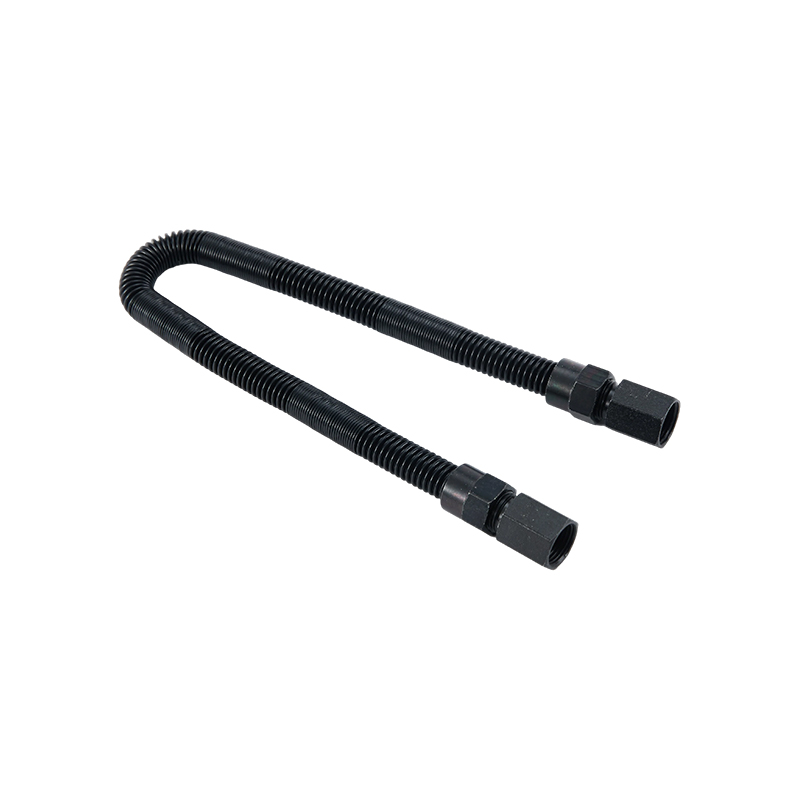
DN15 Stainless Steel Whistle Free Gas Connector
1. Product Overview
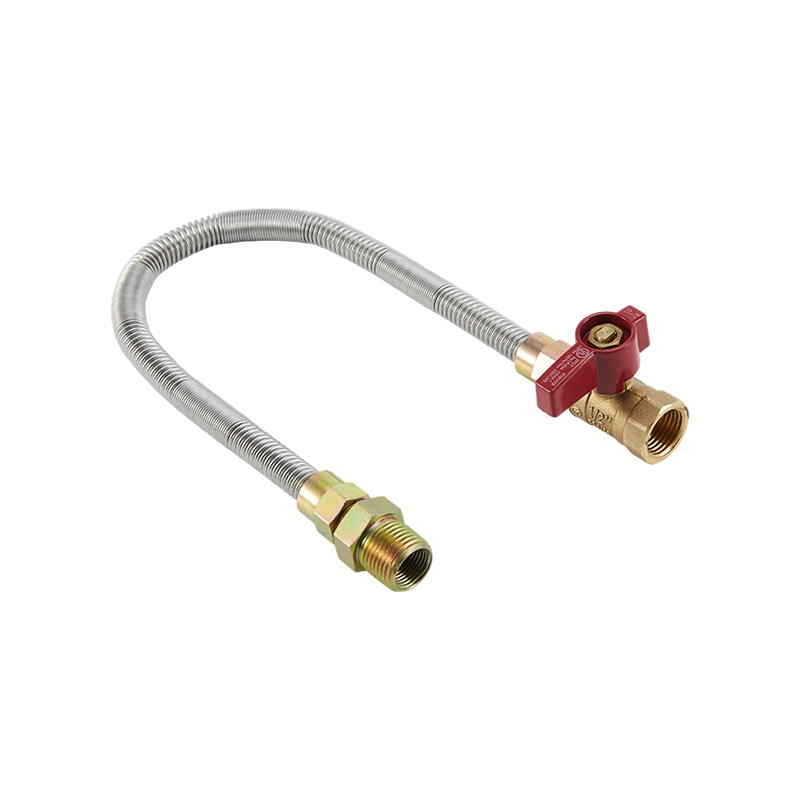
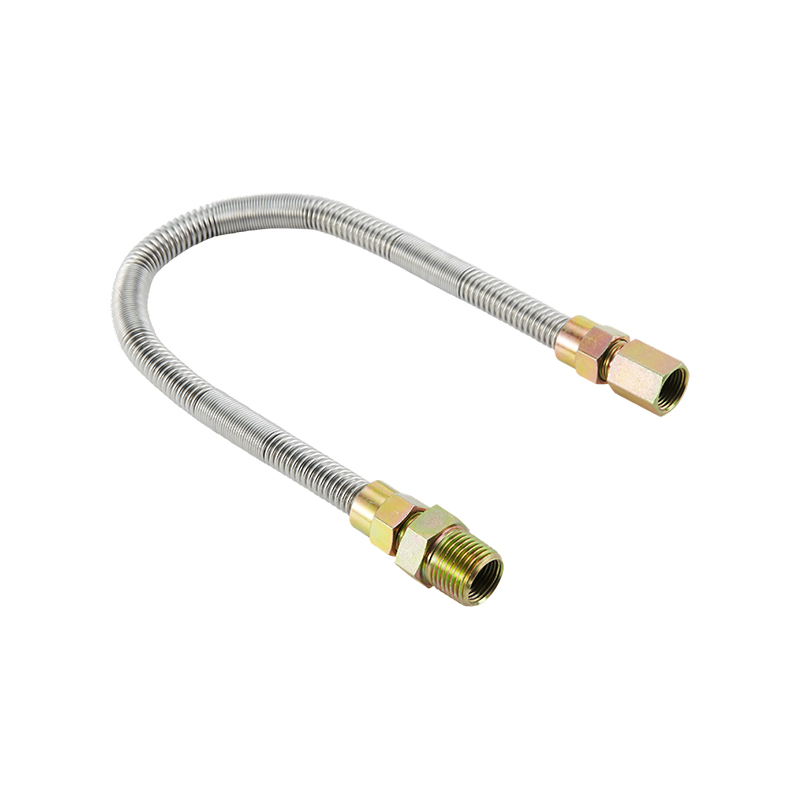
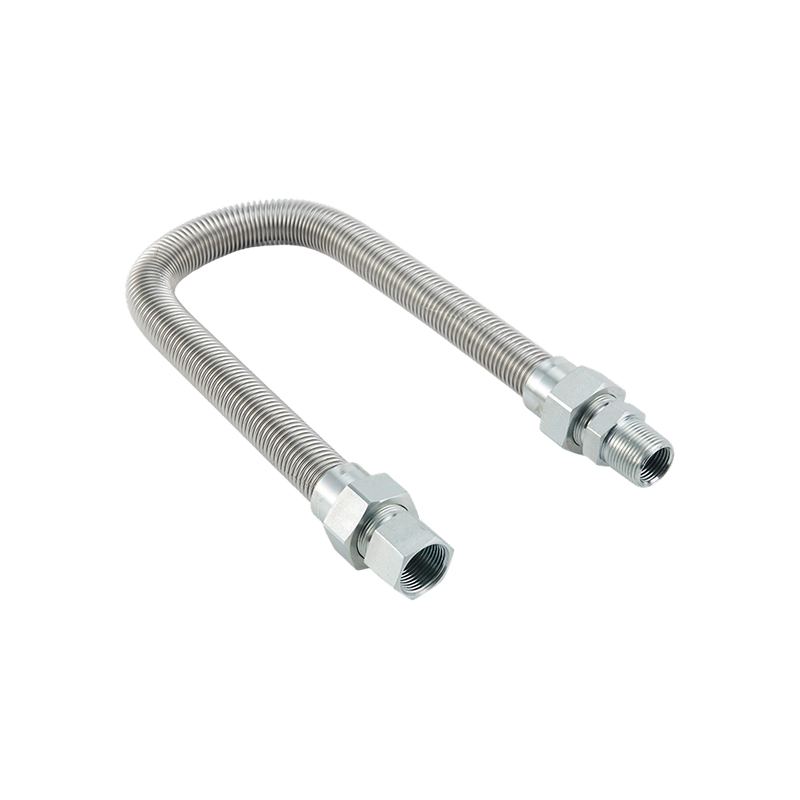
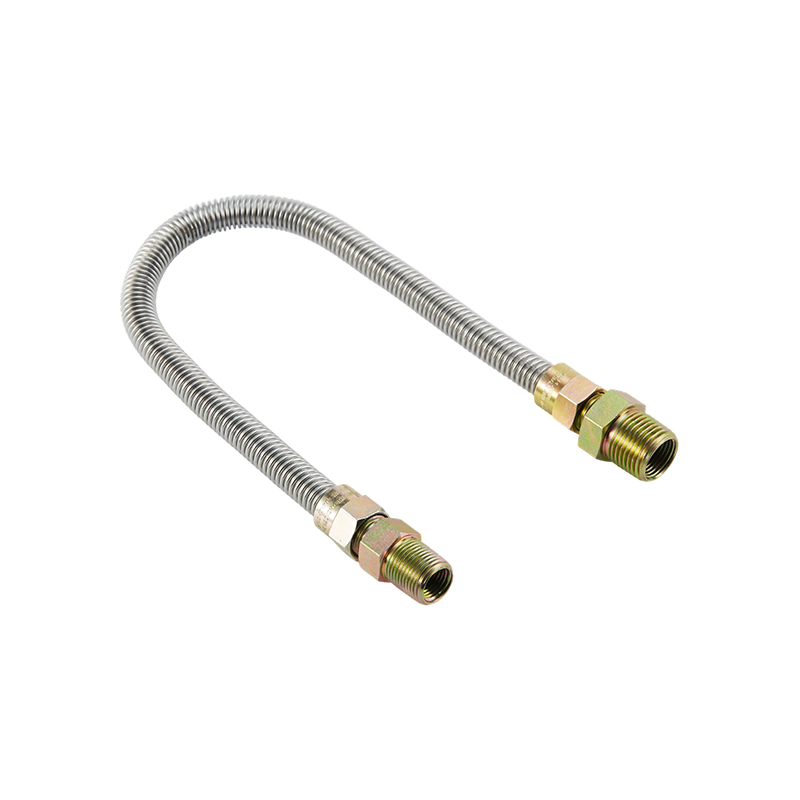
The DN15 Stainless Steel Whistle-Free Gas Connector is a flexible gas connection component made from 304 stainless steel. It is engineered to connect gas appliances, valves, fixed pipework, regulators, and related equipment while accommodating practical installation requirements. Its flexible body allows the installer to route the connector around obstacles and align equipment without forcing rigid pipework into difficult positions.
The product uses a 0.25 mm wall thickness, providing a balance between flexibility and structural integrity. The selected thickness is appropriate for a flexible bellows-style connection in which the tube must bend during installation while maintaining a stable passage for gas. The stainless steel body also provides corrosion resistance that is valuable in kitchens, utility rooms, equipment rooms, commercial service areas, and other environments where humidity, cleaning agents, or atmospheric exposure may affect ordinary materials.
A key feature is the whistle-free design. In some flexible gas connections, airflow can produce an unpleasant whistling or high-frequency noise, especially when gas moves through restricted areas or when the connection geometry generates turbulence. The whistle-free structure is intended to reduce this effect and improve acoustic comfort. Lower connection noise can be particularly beneficial in residential kitchens, apartments, hotels, restaurants, healthcare facilities, and other occupied spaces.
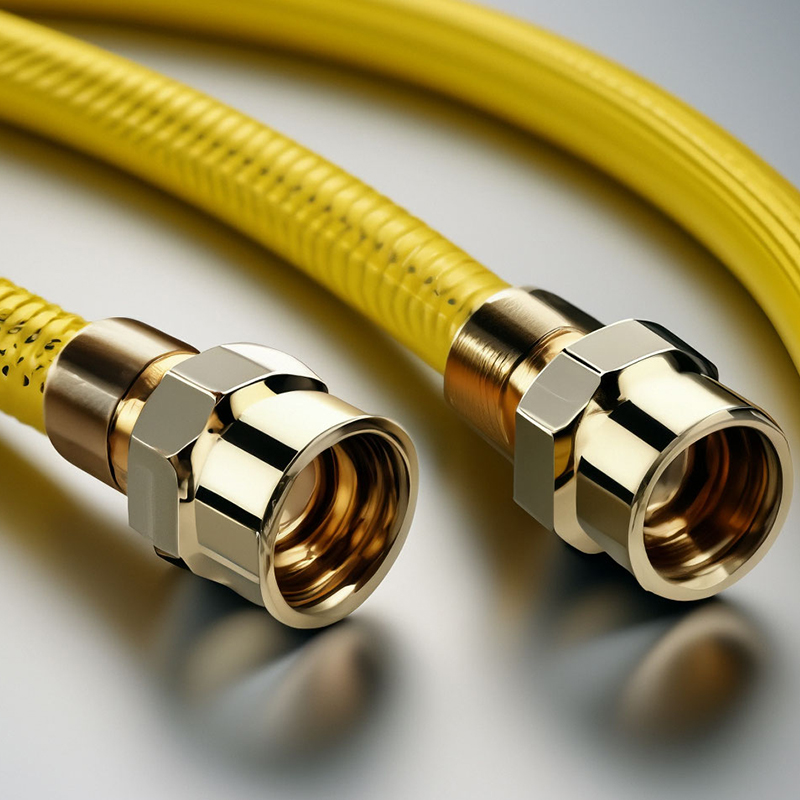
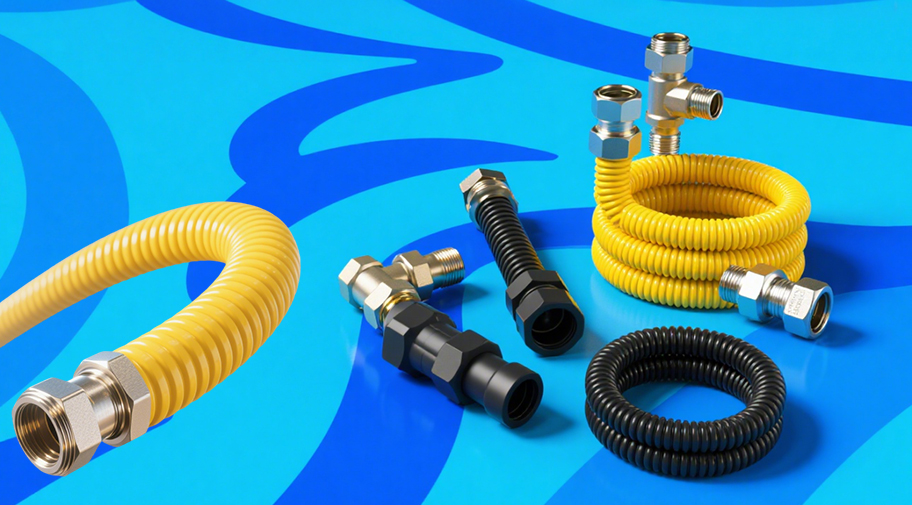
The connector is available in stainless steel and black finishes. Stainless steel provides a clean and technical appearance, while black can coordinate with dark-colored appliances, fittings, or contemporary interior designs. The finish is not merely a visual choice; it can also support product identification and help users distinguish different installation configurations.
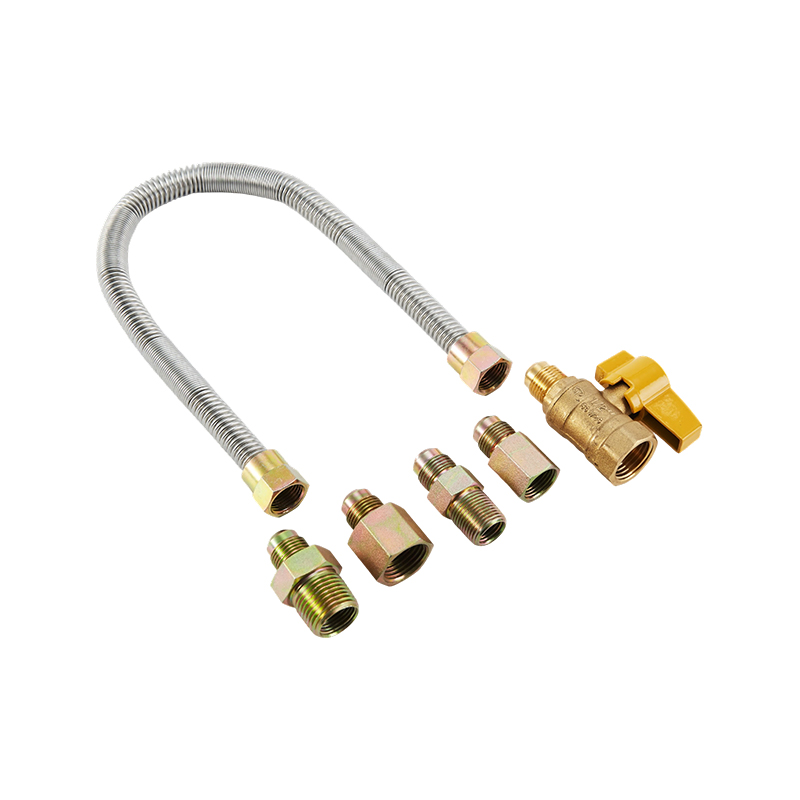
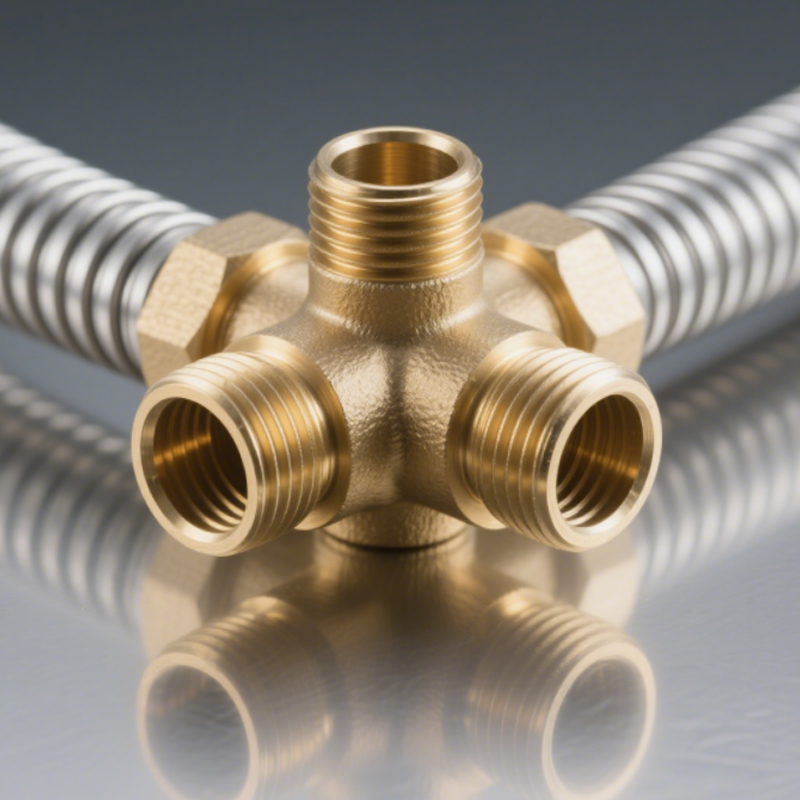
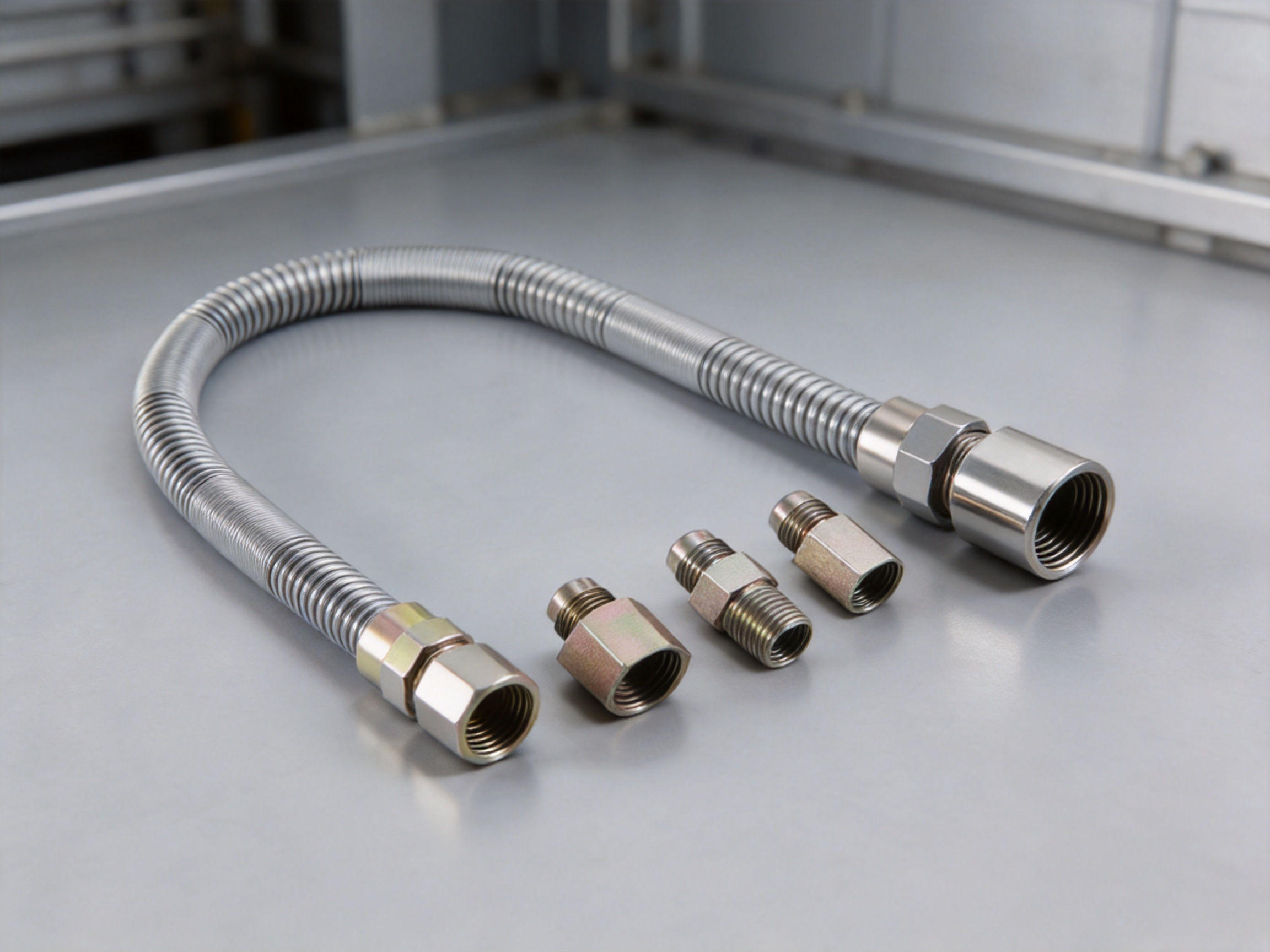
The product is supplied with a flare nut based on a 15/16"-16UNF specification. Several adapter configurations are available, including 15/16 x 1/2M with a 3/8F connection, 15/16 x 1/2F, 15/16 x 3/4M with a 1/2F connection, and 15/16 x 3/4F. These options expand compatibility with different gas appliance interfaces and piping arrangements.
2. Main Technical Specifications
The following table summarizes the principal product information supplied for this connector.
| Item | Specification |
|---|---|
| Product type | DN15 stainless steel whistle-free gas connector |
| Wall thickness | 0.25 mm |
| Flare nut | 15/16"-16UNF |
| Adapter options | 15/16 x 1/2M (3/8F); 15/16 x 1/2F; 15/16 x 3/4M (1/2F); 15/16 x 3/4F |
| Available lengths | 12, 18, 24, 36, 48, 60, and 72 inches |
| Tube material | 304 stainless steel |
| Available colors | Stainless steel and black |
| Cover material | Non-cover configuration; brass or carbon steel fitting options |
| Seal form | Hard sealing |
| Nut material | Brass or carbon steel |
| Primary applications | Gas appliance connections, residential gas systems, commercial installations, and industrial equipment connections |
Actual installation suitability depends on the applicable gas type, pressure, local regulations, appliance instructions, fitting compatibility, and certification requirements. Product specifications should always be checked against the project design before installation.
3. The Importance of a Flexible Gas Connector
Rigid pipework remains important in gas distribution systems, but equipment connections often require a flexible section. Gas appliances may need to be moved for cleaning, inspection, servicing, replacement, or commissioning. A flexible connector allows the appliance and fixed supply line to remain properly positioned without imposing unnecessary stress on the rigid pipe, valve, or appliance inlet.
Flexibility also simplifies installation in areas with limited access. A rigid connection may require precise alignment between the pipe outlet and the appliance inlet. Even a small difference in height, angle, or horizontal position can force installers to add extra fittings or make complex adjustments. A flexible connector can accommodate these positional differences more efficiently, reducing the need for unnecessary elbows and joints.
Fewer connection points can contribute to a cleaner installation. Every additional fitting introduces another interface that must be correctly assembled, tightened, inspected, and maintained. By offering a controlled flexible route between two connection points, the DN15 connector can help installers create a more direct and manageable connection arrangement.
Flexibility must not be confused with unlimited bending. A connector should be routed with smooth curves and without sharp kinks, twisting, crushing, or excessive tension. Correct installation is essential for preserving the mechanical and sealing performance of any flexible gas connector.
4. Stainless Steel Construction and Corrosion Resistance
The use of 304 stainless steel is one of the product’s principal advantages. Stainless steel contains alloying elements that help form a protective surface layer, giving it considerably better corrosion resistance than ordinary carbon steel in many common environments. This is important for gas connectors installed near sinks, cooking areas, heating equipment, humid utility rooms, or locations exposed to condensation and cleaning activities.
Corrosion resistance supports long-term stability. A connector that resists surface deterioration is less likely to suffer from premature weakening, visual degradation, or maintenance concerns caused by rust. Stainless steel is also widely recognized for its clean appearance and compatibility with modern appliance designs.
The 0.25 mm wall thickness is engineered for a flexible tube application. It provides a practical combination of formability, weight control, and service capability. A thicker wall could reduce flexibility and make installation more difficult, while an excessively thin wall could reduce resistance to handling damage. Selecting a controlled wall thickness is therefore part of the product engineering process rather than a simple material-cost decision.
The stainless steel body is particularly useful where a connector must pass through confined installation areas. It can be routed around equipment and structural features while retaining a professional appearance. The material also supports applications where users expect the visible connection to remain clean and presentable over time.
Although stainless steel offers strong corrosion resistance, it should not be treated as immune to every chemical or environmental condition. Direct contact with incompatible chemicals, aggressive cleaning substances, standing water, or dissimilar metals may affect service life. Proper storage, installation, and cleaning practices remain important.
5. Whistle-Free Performance and Acoustic Comfort
Gas flow noise is often overlooked during product selection. In a technical installation, attention naturally focuses on pressure, sealing, and mechanical connection. However, excessive noise can reduce comfort and may lead users to question whether the system is operating normally. A whistling sound from a connector can be especially noticeable at night or in open-plan living areas.
The whistle-free design of this connector is intended to reduce airflow-related noise. Its internal and connection geometry is developed to support smoother gas passage and minimize the conditions that can create an audible whistle. While actual sound levels depend on gas type, pressure, flow rate, appliance demand, system layout, and installation quality, the design provides an important comfort-oriented advantage over basic flexible connectors that do not specifically address noise.
Noise reduction is valuable in residential installations because kitchens and living areas are often close together. It is also useful in hotels, restaurants, offices, retail spaces, healthcare buildings, and other commercial environments where a quiet atmosphere contributes to user satisfaction.
A quieter connector can provide an additional practical benefit during commissioning and maintenance. If unwanted whistle noise is reduced, installers and users may more easily identify unusual sounds caused by other system conditions. Of course, any unexpected noise, smell, pressure change, or suspected leak must be investigated immediately by a qualified professional.
6. Hard Sealing and Connection Reliability
The product uses a hard sealing form, supported by brass or carbon steel nut options. A hard seal is designed to create a dependable contact interface between the connector and the mating fitting. When the correct components are selected and assembled according to the applicable instructions, the sealing interface can provide reliable resistance against leakage.
Sealing quality depends on more than the connector alone. The mating thread, flare surface, adapter geometry, alignment, tightening method, and cleanliness of the interface all influence final performance. Cross-threading, over-tightening, under-tightening, contamination, incompatible fittings, and forced alignment can compromise a connection even when the connector itself is correctly manufactured.
Brass nuts are commonly selected for their machinability, corrosion resistance, and compatibility with many plumbing and gas connection assemblies. Carbon steel options can provide an alternative where project requirements, cost considerations, or fitting specifications call for them. The appropriate nut material should be chosen according to the application environment and the requirements of the complete connection system.
The 15/16"-16UNF flare nut provides a defined interface, while the available adapters make it possible to connect with several common fitting arrangements. This modular approach is useful for distributors, installers, and equipment manufacturers because one basic connector platform can support multiple connection configurations.
7. Adapter Options and Installation Flexibility
Different appliances and pipe systems do not always use the same connection size or gender. A gas connector that is available in only one configuration may require additional adapters, increasing the number of joints and complicating the installation. The DN15 product addresses this issue with several adapter choices.
The listed options include 15/16 x 1/2M with a 3/8F interface, 15/16 x 1/2F, 15/16 x 3/4M with a 1/2F interface, and 15/16 x 3/4F. These configurations allow the user to select the connection arrangement that best matches the equipment inlet and supply-side fitting.
Adapter selection should be made before installation. The installer should confirm nominal dimensions, thread type, thread gender, sealing method, gas compatibility, and applicable standards. Similar-looking threads are not necessarily interchangeable. A connector should never be forced onto a fitting simply because the parts appear close in size.
Offering multiple configurations is a competitive advantage because it reduces procurement complexity. Distributors can stock a product family that serves a wider variety of applications, while contractors can choose a suitable version without redesigning the entire connection route.
At the same time, flexibility in product selection should be combined with disciplined installation practice. Only compatible and approved components should be used. Unnecessary combinations of adapters should be avoided because each added connection can increase the installation’s complexity and inspection requirements.
8. Length Options for Different Applications
The connector is available in seven standard lengths: 12, 18, 24, 36, 48, 60, and 72 inches. This range covers short appliance connections as well as longer routes where the equipment is positioned farther from the fixed pipe outlet.
A 12-inch or 18-inch connector may be appropriate where the appliance is installed close to the supply point. Shorter lengths help keep the connection compact and may reduce unnecessary loops. The 24-inch and 36-inch sizes offer additional routing flexibility for common residential and light commercial layouts.
The 48-inch, 60-inch, and 72-inch options can support equipment layouts that require more distance between connection points. They may be useful in commercial kitchens, equipment rooms, service areas, and installations where the supply outlet cannot be positioned directly behind the appliance.
Choosing the correct length is important. A connector that is too short may be placed under tension or bent beyond an appropriate radius. A connector that is too long may create loops, contact nearby surfaces, or be exposed to avoidable mechanical movement. The ideal length allows a smooth route with adequate clearance and without tension.
The range of available sizes is advantageous compared with products offered in only one or two standard lengths. It gives installers more control over the final layout and can reduce the need for improvised routing or additional fittings.
9. Advantages Compared with Conventional Alternatives
9.1 Compared with Rigid Metal Pipe Connections
Rigid pipe provides strength and permanence, but it requires accurate measurement, cutting, threading, alignment, and support. Connecting a movable appliance with rigid pipe can be time-consuming and may create stress if the appliance is not perfectly positioned.
The flexible stainless steel connector simplifies the final connection between fixed pipework and equipment. It can absorb small positional differences, support easier servicing, and reduce the number of rigid fittings required. This does not replace the need for correctly designed rigid distribution pipework; rather, it complements it at the appliance connection point.
9.2 Compared with Basic Non-Whistle Connectors
Many conventional flexible connectors provide a physical gas path but do not specifically address acoustic performance. The whistle-free design adds a user comfort feature that can be meaningful in quiet environments. Reduced airflow noise can improve the perceived quality of the installation and minimize nuisance sounds.
9.3 Compared with Less Corrosion-Resistant Materials
Carbon steel and other less corrosion-resistant materials may require additional surface protection or may be more vulnerable in damp environments. The 304 stainless steel body provides a strong material advantage for installations where moisture resistance, clean appearance, and long-term stability are priorities.
9.4 Compared with Single-Configuration Products
A product available with only one fitting arrangement may force installers to purchase extra adapters or select a different connector for each appliance. The DN15 connector’s adapter range increases compatibility and helps support a more standardized procurement strategy.
9.5 Compared with Poorly Controlled Flexible Tubes
Flexible connection products must be manufactured with consistent dimensions, reliable welding, controlled forming, and properly finished fittings. A professionally manufactured connector offers advantages over unverified products whose wall thickness, connection accuracy, material composition, or sealing quality may vary significantly from one batch to another.

10. Advanced Manufacturing Capabilities
The performance of a flexible stainless steel connector depends heavily on its manufacturing process. A product may use the correct nominal material but still perform poorly if forming, welding, fitting assembly, or inspection is not carefully controlled. Haoyin (Ningbo) Bellows Technology Co., Ltd. has built its product capabilities around stainless steel bellows and flexible connection technology.
The company operates standardized workshops covering approximately 18,000 square meters within an area of about 35 mu. Its production system is supported by engineering, manufacturing, testing, and quality management functions. This infrastructure enables the company to manage multiple stages of production rather than relying solely on external assembly.
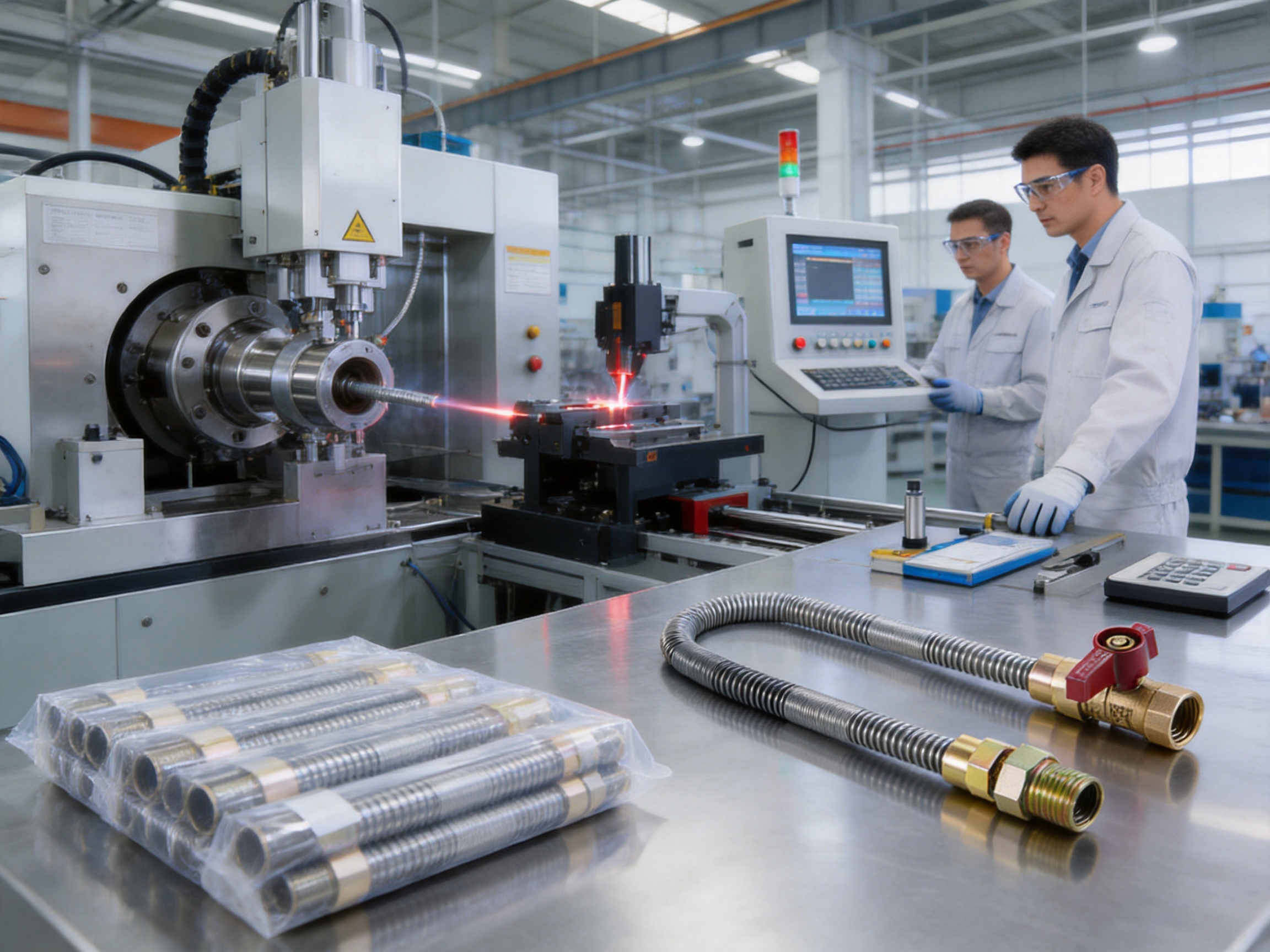
Key equipment includes laser welding machines, CNC forming machines, COSMO equipment, eddy current flaw detectors, and automatic packaging systems. Each type of equipment supports a different part of the product lifecycle, from forming and joining to inspection and delivery preparation.
10.1 Raw Material Control
Product reliability begins with material selection. Stainless steel strip, fittings, nuts, adapters, and other components must be checked against the intended specification. Material control helps ensure that the finished connector has the expected corrosion resistance, dimensional stability, formability, and mechanical performance.
For a product based on 304 stainless steel, controlled sourcing is important because material substitutions or inconsistent grades may affect corrosion resistance and forming behavior. A systematic quality process can include supplier evaluation, incoming inspection, identification control, and traceability records.
10.2 CNC Forming
CNC forming equipment supports the production of repeatable corrugated or bellows-style structures. Controlled forming is important because the geometry of the flexible body influences bending behavior, dimensional accuracy, pressure performance, and fatigue resistance.
Computer-controlled equipment helps maintain consistent forming parameters across production batches. It can also support product development when different lengths, diameters, or structural configurations are required. Consistency is particularly valuable for a product family offered with multiple sizes and adapter arrangements.
10.3 Laser Welding
Laser welding is used where precise, concentrated heat input is valuable. In stainless steel flexible products, weld quality can influence leak resistance and mechanical durability. A controlled laser process can support narrow, accurate welds with reduced heat-affected areas compared with less precise joining methods.
Welding parameters must be matched to material thickness, joint geometry, production speed, and the required performance of the assembly. Proper control helps minimize incomplete fusion, excessive penetration, distortion, and other defects that could affect product reliability.
10.4 Eddy Current Flaw Detection
Eddy current flaw detection provides a non-destructive method for identifying certain surface and near-surface discontinuities in conductive materials. Its use in a manufacturing environment demonstrates the importance of inspection beyond simple visual checks.
Non-destructive testing can help identify defects that may not be immediately visible but could influence service performance. When combined with dimensional inspection, leak testing, pressure-related testing, and process verification, it contributes to a more comprehensive quality assurance system.
10.5 Automatic Packaging
Packaging is part of product quality because connectors can be damaged by impact, contamination, moisture, or improper handling before they reach the installation site. Automatic packaging systems help standardize packing procedures and support efficient order fulfillment.
Consistent packaging can also improve inventory management by making product identification easier. This is useful when multiple lengths, colors, adapter options, and nut materials are supplied within the same product family.
11. Full-Process Quality Management
The manufacturer states that its quality management system covers raw material selection, structural design, manufacturing, performance testing, and after-sales support. This full-process approach is important because reliability cannot be created by final inspection alone.
Design quality determines whether the connector is suitable for its intended application. Material quality affects corrosion resistance and mechanical performance. Manufacturing quality controls forming and joining. Inspection identifies deviations. Packaging protects the finished product. Technical support helps customers select and use the product correctly.
The company holds ISO9001, ISO14001, and ISO45001 management system certifications. These certifications represent structured approaches to quality management, environmental management, and occupational health and safety. They do not remove the need for product-specific verification, but they demonstrate that the organization has established formal management processes in these areas.
The company is also identified as a National High-tech Enterprise and Green Factory. These designations reflect an emphasis on technical development, organized production, and environmental responsibility. For buyers evaluating a long-term manufacturing partner, such capabilities can be as important as the specifications of an individual connector.
12. Applications
12.1 Residential Gas Systems
The connector is suitable for residential gas appliance connection applications when selected and installed according to local requirements. It can support connections for cooking equipment, heating appliances, and other approved gas-powered equipment that use compatible interfaces.
Its flexible body can simplify installation in kitchens and utility areas where the appliance position may need to be adjusted. The whistle-free design can also contribute to a quieter domestic environment.
12.2 Commercial Kitchens
Commercial kitchens often contain multiple appliances, limited service space, frequent cleaning activity, and demanding maintenance schedules. Stainless steel construction is suitable for environments where cleanliness and corrosion resistance are important.
The range of lengths and adapters helps installers accommodate different appliance layouts. However, commercial installations may have specific requirements for movement, support, fire safety, inspection access, and local certification. The connector must be integrated into the complete kitchen gas system by qualified personnel.
12.3 Hotels and Hospitality Buildings
Hotels, restaurants, and hospitality facilities benefit from equipment connections that are reliable, visually clean, and quiet during operation. Flexible connectors can support installation and maintenance activities while the stainless steel finish can coordinate with professional kitchen and service equipment.
12.4 Heating and Building Services
Heating equipment and building service systems often require flexible transitions between fixed pipework and individual appliances or components. The DN15 connector may be considered where its size, interface, pressure rating, and approvals match the design requirements.
12.5 Industrial Equipment
Industrial equipment may use flexible gas connections to accommodate vibration isolation, equipment movement, alignment differences, or maintenance access. In these applications, engineering review is especially important. The connector must be evaluated for operating pressure, temperature, gas composition, vibration, movement frequency, bend radius, and installation protection.
13. Installation and Handling Considerations
Only qualified and authorized personnel should install gas connectors. Before installation, confirm the gas type, operating pressure, temperature range, connector length, adapter configuration, thread specifications, and applicable regulations.
Inspect the connector before use. Do not install a product with visible dents, crushed corrugations, damaged threads, distorted fittings, contamination, or other signs of damage. Confirm that the connector is the correct size and configuration for the appliance and supply system.
Route the connector with broad, smooth bends. Avoid sharp kinks, twisting, compression, pulling, and repeated flexing. The connector should not be used as a support for the appliance, nor should heavy objects rest on it. It should be protected from abrasion, excessive heat, sharp edges, and chemical exposure.
Make sure the fitting faces are correctly aligned before tightening. Do not use excessive force to compensate for misalignment. Follow the relevant installation instructions and use appropriate tools. Threaded or flare connections must be assembled using the sealing method specified for the particular interface.
After installation, the system should be inspected and tested according to local codes and professional procedures. Leak detection must be performed using an approved method. Never use an open flame to check for leaks. If a gas odor is detected, shut off the supply when safe to do so, leave the area, and contact the appropriate emergency or gas service provider.
14. Selection Guide for Buyers and Distributors
Buyers should begin by identifying the application. Residential appliance connections, commercial kitchen equipment, heating systems, and industrial machinery may have different requirements. The connector should be selected based on the complete system rather than appearance alone.
Next, confirm the required length. Measure the intended route while allowing smooth bends and service clearance. Avoid selecting a length that forces the connector to stretch or creates excessive slack.
Then select the correct adapter. Verify the fitting dimensions, thread standard, gender, and sealing interface. If uncertainty exists, provide drawings, photographs, or equipment specifications to the supplier before ordering.
Material and finish should be selected according to environmental and visual requirements. 304 stainless steel is suitable for many general applications, while nut material may be selected as brass or carbon steel according to project specifications.
Distributors should also consider inventory planning. Stocking several standard lengths and the most frequently used adapter configurations can help meet different customer requirements. Clear product labeling is important when multiple versions look similar.
For original equipment manufacturers, the product may be evaluated as part of a broader equipment assembly. In that case, dimensional drawings, testing information, packaging requirements, color options, and customized production arrangements should be discussed with the manufacturer.
15. Why Manufacturing Experience Matters
Flexible bellows and stainless steel connectors require specialized production knowledge. The manufacturer must understand material behavior during forming, weld control, fitting assembly, dimensional tolerances, leak prevention, and product inspection.
Haoyin (Ningbo) Bellows Technology Co., Ltd. focuses on stainless steel bellows and flexible connection solutions rather than treating the gas connector as a generic hardware item. Its product range includes gas connectors, plumbing pipes and water liners, metal hoses, and compensators. This product focus supports the development of engineering experience across several flexible connection applications.
The company’s R&D team and production equipment support continued product improvement. Laser welding, CNC forming, COSMO equipment, eddy current flaw detection, and automatic packaging provide a foundation for controlled manufacturing. A standardized workshop environment also helps organize production flow and quality monitoring.
For customers, this means the supplier can potentially support more than a single purchase. It can provide a product family, technical communication, production consistency, and after-sales assistance. These factors are especially important for importers, distributors, contractors, and equipment manufacturers who need dependable supply over time.
16. Environmental and Operational Benefits
A durable connector can reduce the frequency of replacement and the material consumption associated with premature product failure. Stainless steel’s corrosion resistance may help extend service life in suitable environments, while controlled manufacturing can reduce the risk of inconsistent products entering the supply chain.
The manufacturer’s ISO14001 environmental management certification and Green Factory designation indicate that environmental considerations are incorporated into its management approach. Environmental performance can involve energy use, waste control, process efficiency, material management, and responsible production practices.
From an installation perspective, a flexible connector can reduce labor associated with cutting, threading, and assembling complicated rigid pipe routes. It may also reduce the number of additional fittings required. These potential savings should be evaluated together with the product cost, installation time, inspection requirements, and long-term maintenance value.
17. Maintenance and Service Life Considerations
Flexible gas connectors should be inspected periodically as part of the broader gas system maintenance program. Inspection intervals depend on the application, local regulations, equipment instructions, environmental conditions, and the recommendations of qualified professionals.
Look for visible corrosion, dents, kinks, abrasion, discoloration, fitting damage, movement beyond the intended design, or signs of leakage. A connector that has been exposed to fire, severe impact, aggressive chemicals, or abnormal mechanical stress should be evaluated before continued use.
Do not paint, modify, weld, cut, extend, or repair the connector unless a procedure is specifically authorized by the manufacturer and applicable standards. Field modifications can change the connection geometry and compromise sealing or mechanical performance.
Where an appliance is moved for cleaning or service, care should be taken not to pull, twist, or sharply bend the connector. The appliance should be returned to its original position without trapping or crushing the flexible tube.
18. Customization and Supply Support
The standard product range includes multiple lengths, finishes, adapter options, and nut materials. This provides a practical level of flexibility for common applications. For larger projects or original equipment programs, customers may also need packaging specifications, labeling, production quantities, inspection documentation, or other supply arrangements.
A manufacturer with dedicated R&D and production resources is better positioned to discuss such requirements. Customization should be evaluated carefully because any change to material, fitting geometry, length, finish, or sealing arrangement may require additional testing and approval.
Haoyin provides gas connectors and other flexible connection products for international and domestic application fields. Its location in Yuyao, Ningbo, Zhejiang Province, places the company within an important manufacturing region with access to industrial supply chains, engineering services, and export logistics.
19. Frequently Asked Questions
Q1: What is the nominal size of this gas connector?
The product is a DN15 stainless steel gas connector. Its flare nut specification is 15/16"-16UNF, and it is available with several adapter configurations for different connection arrangements.
Q2: What material is used for the flexible tube?
The flexible tube is made from 304 stainless steel. The specified wall thickness is 0.25 mm.
Q3: What does whistle-free mean?
Whistle-free refers to a design intended to reduce airflow-related whistling noise during gas flow. Actual acoustic performance depends on system pressure, flow rate, gas type, appliance demand, and installation conditions.
Q4: What lengths are available?
Standard lengths include 12, 18, 24, 36, 48, 60, and 72 inches.
Q5: Which adapter options are available?
The listed adapter options are 15/16 x 1/2M with a 3/8F connection, 15/16 x 1/2F, 15/16 x 3/4M with a 1/2F connection, and 15/16 x 3/4F.
Q6: Is the connector available in different colors?
Yes. The product is available in a stainless steel finish and a black finish.
Q7: What types of nuts are available?
The connector can be supplied with brass or carbon steel nut options, depending on the required configuration.
Q8: Does the product use hard sealing?
Yes. The specified seal form is hard sealing. The mating fitting, thread, assembly procedure, and installation conditions must all be compatible with the sealing design.
Q9: Can the connector be used outdoors?
Suitability for outdoor use depends on the environmental exposure, gas system design, local regulations, temperature, chemical conditions, and required approvals. The manufacturer or a qualified engineer should confirm suitability for a specific outdoor application.
Q10: Can it be used with any gas appliance?
No. The connector must match the appliance connection, gas type, pressure, temperature range, local requirements, and installation instructions. A qualified professional should verify compatibility before installation.
Q11: Can the connector be bent repeatedly?
It is designed to provide installation flexibility, not unlimited repeated movement. Sharp bending, twisting, excessive flexing, crushing, and mechanical stress should be avoided.
Q12: How should the connector be checked for leaks?
Leak testing must be performed by qualified personnel using an approved method required by local regulations and the system design. An open flame must never be used for leak detection.
Q13: What manufacturing equipment supports the product?
The manufacturer uses equipment including laser welding machines, CNC forming machines, COSMO equipment, eddy current flaw detectors, and automatic packaging systems.
Q14: What management certifications does the manufacturer hold?
The company states that it has ISO9001, ISO14001, and ISO45001 management system certifications. It is also identified as a National High-tech Enterprise and Green Factory.
Q15: Can the manufacturer supply other flexible connection products?
Yes. Its product range includes gas connectors, plumbing pipes and water liners, metal hoses, and compensators, in addition to stainless steel bellows and related flexible connection solutions.
20. Conclusion
The DN15 Stainless Steel Whistle-Free Gas Connector is designed as a practical, flexible, and durable solution for compatible gas connection applications. Its 304 stainless steel body, 0.25 mm wall thickness, hard sealing form, multiple adapter choices, and seven standard lengths provide a useful combination of installation flexibility and product reliability.
The whistle-free design distinguishes the connector from basic alternatives by addressing acoustic comfort as well as physical connection. Its corrosion-resistant stainless steel construction supports use in many residential, commercial, heating, plumbing-related, and industrial environments, provided the product is matched to the required gas system conditions.
The manufacturer’s strengths extend beyond the individual product specification. Specialized bellows expertise, standardized workshops, R&D capabilities, laser welding, CNC forming, non-destructive inspection, automatic packaging, and full-process quality management support consistent production and dependable supply.
For installers and project buyers, the most important selection principles are correct sizing, compatible adapters, appropriate length, proper material choice, and compliance with local requirements. When these factors are combined with qualified installation and regular inspection, the DN15 stainless steel whistle-free gas connector can provide a clean, quiet, and reliable connection for a wide range of gas equipment applications.
References
1. Product specification information for the DN15 Stainless Steel Whistle-Free Gas Connector, including dimensions, materials, adapter configurations, lengths, finishes, and sealing form.
2. Haoyin (Ningbo) Bellows Technology Co., Ltd. company information concerning stainless steel bellows, gas connectors, plumbing pipes, water liners, metal hoses, and compensators.
3. General principles of flexible metallic hose design, forming, welding, inspection, and installation safety.
4. ISO 9001, Quality Management Systems: Requirements.
5. ISO 14001, Environmental Management Systems: Requirements with Guidance for Use.
6. ISO 45001, Occupational Health and Safety Management Systems: Requirements with Guidance for Use.
7. General gas appliance installation and leak-testing practices issued by applicable local authorities and professional standards organizations.