




 English
 Español
 русский



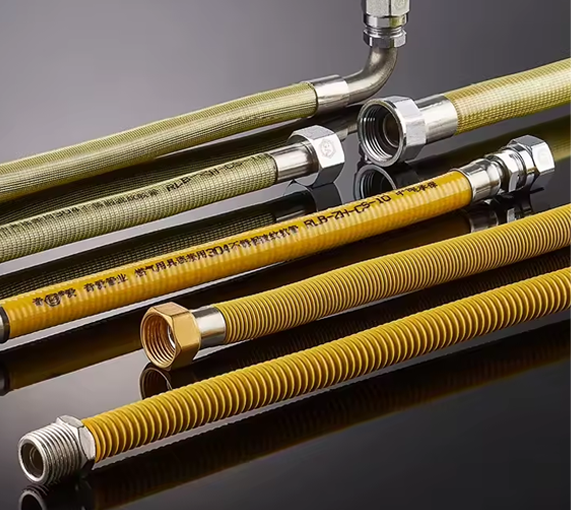
Gas connection components play a critical role in the safety, efficiency, and service life of residential, commercial, and light industrial gas systems. Although a connector may appear to be a relatively small part of an installation, its material quality, sealing method, dimensional accuracy, flexibility, and connection compatibility directly influence the performance of the entire system. A well-designed gas connector must accommodate movement, resist corrosion, maintain a reliable seal, and support convenient installation without introducing unnecessary noise or maintenance demands.
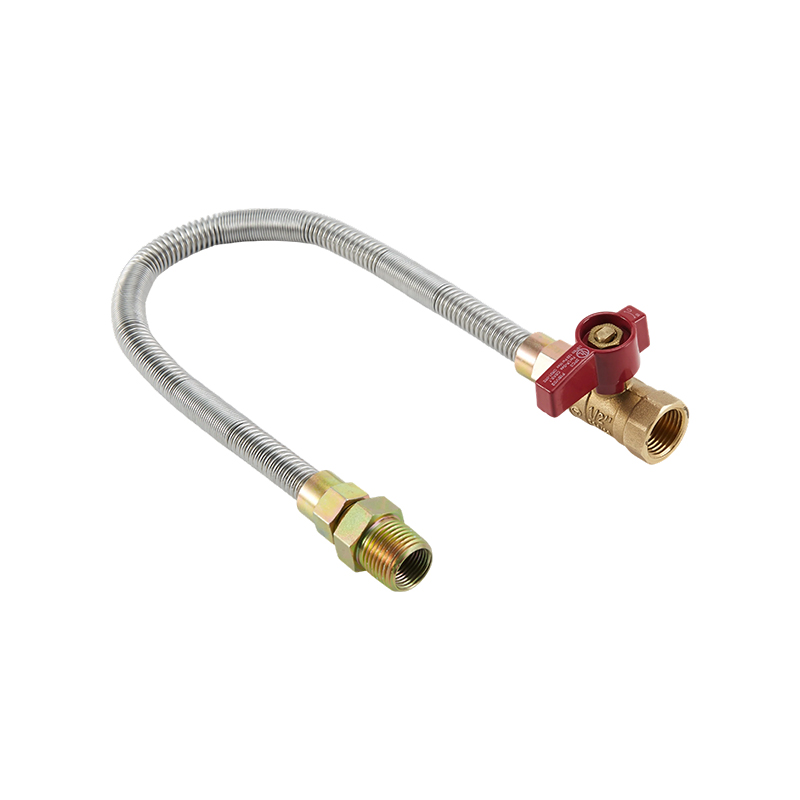
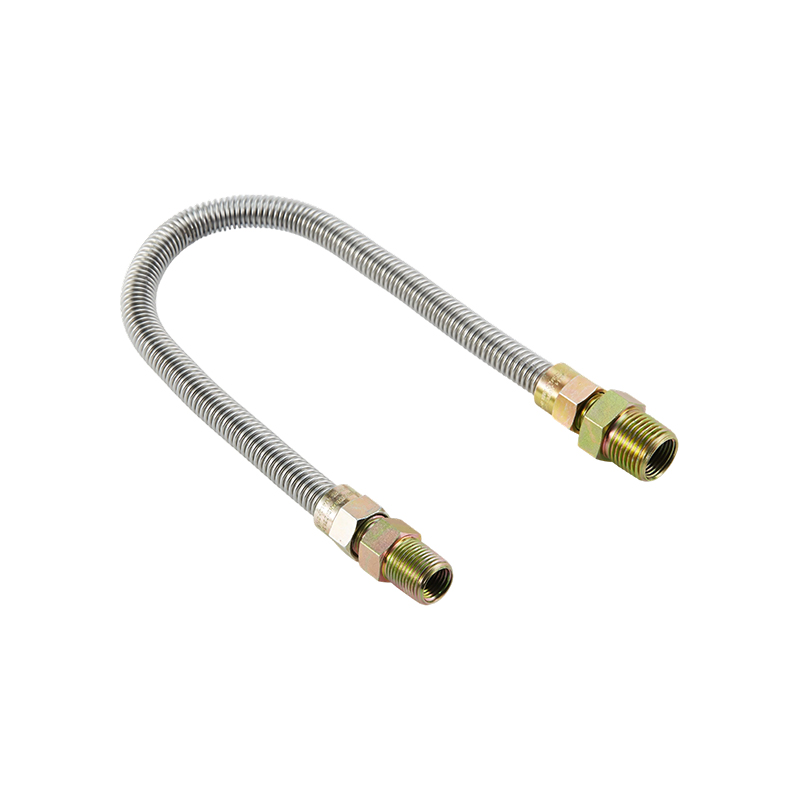
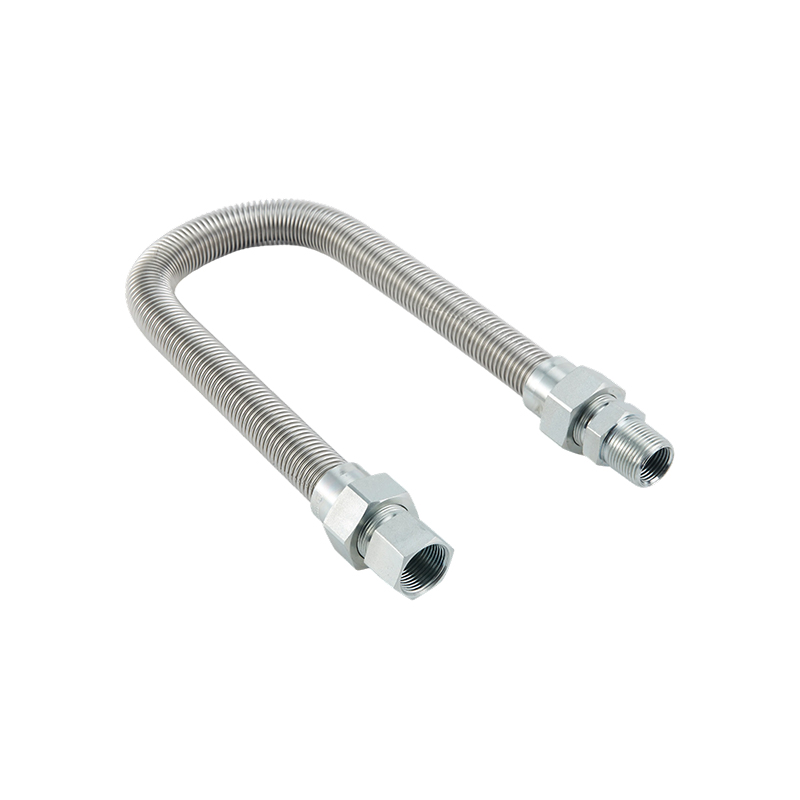
The DN10 stainless steel whistle-free gas connector is engineered to address these requirements through a combination of 304 stainless steel construction, a 0.2 mm pipe wall thickness, adaptable flare and adapter configurations, and a hard-sealing connection design. Available in multiple lengths and in stainless steel or black finishes, it provides installers with practical flexibility for different equipment layouts and gas pipeline connection requirements.
In addition to its functional characteristics, the connector benefits from a manufacturing system focused on stainless steel bellows technology, controlled forming, precision welding, inspection, and organized quality management. The manufacturer behind the product operates standardized workshops, uses specialized production equipment, and maintains management systems covering quality, environmental, and occupational health requirements. These capabilities support consistent production and help the connector compete with ordinary rigid piping, lower-grade flexible hoses, and less carefully engineered gas connection products.
Understanding the Role of a Flexible Gas Connector
A gas connector is used to create a flexible connection between a gas supply line and an appliance, regulator, valve, or other gas-consuming device. Unlike a completely rigid pipe, a flexible connector can accommodate limited movement caused by equipment adjustment, vibration, thermal expansion, installation tolerances, or routine maintenance. This flexibility can simplify installation and reduce stress at the connection points.
However, flexibility alone is not enough. A dependable gas connector must be manufactured from materials that can withstand the intended environment. It must also have accurately formed ends, compatible threads, reliable nuts, and a sealing method appropriate for the connection design. If these elements are poorly matched, the system may experience leakage, premature corrosion, deformation, or difficult maintenance.
The DN10 connector is intended to provide a balanced solution between flexibility and mechanical reliability. Its stainless steel tube body is suitable for applications where corrosion resistance and long-term stability are important. The connector is offered with a 5/8-18UNF flare nut and several adapter options, allowing it to interface with different connection arrangements and nominal pipe sizes.
Because installations vary considerably, a range of available lengths is also important. The product is offered in 12-inch, 18-inch, 24-inch, 36-inch, 48-inch, 60-inch, and 72-inch versions. This selection allows installers to choose a length that supports a clean installation without excessive bending, unnecessary loops, or avoidable tension.
Key Product Construction
304 Stainless Steel Tube Body
The connector body is made from 304 stainless steel. This widely used stainless steel grade is valued for its balance of corrosion resistance, formability, strength, and availability. In gas connection applications, these properties are useful because the connector may be exposed to humidity, cleaning conditions, temperature variation, handling during installation, and atmospheric contaminants.
The stainless steel construction also provides a more durable alternative to materials that are more vulnerable to rust or surface deterioration. Maintaining the integrity of the tube body is essential because the tube forms the primary pressure-containing passage. A stable material helps preserve performance during normal service and reduces the likelihood that external environmental conditions will rapidly affect the connector.
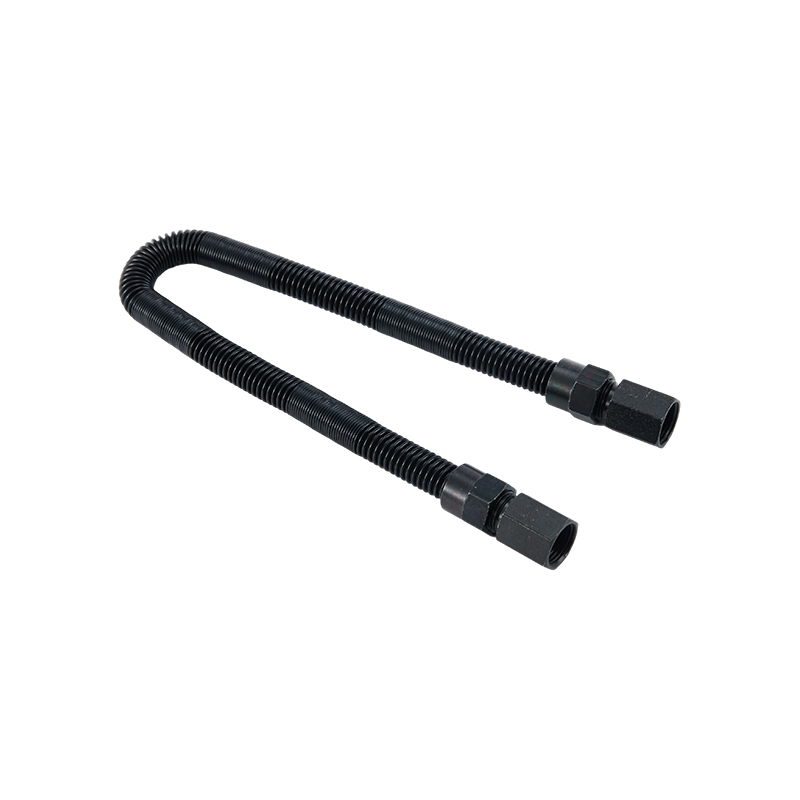
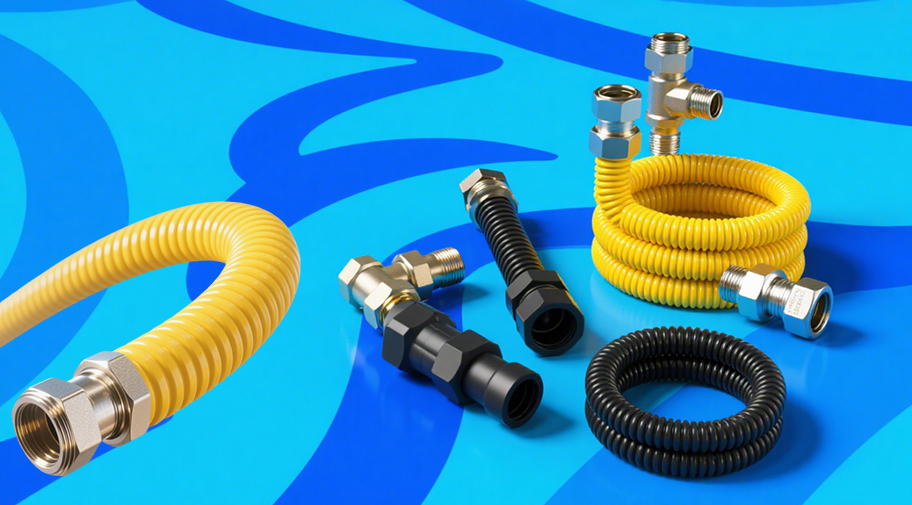
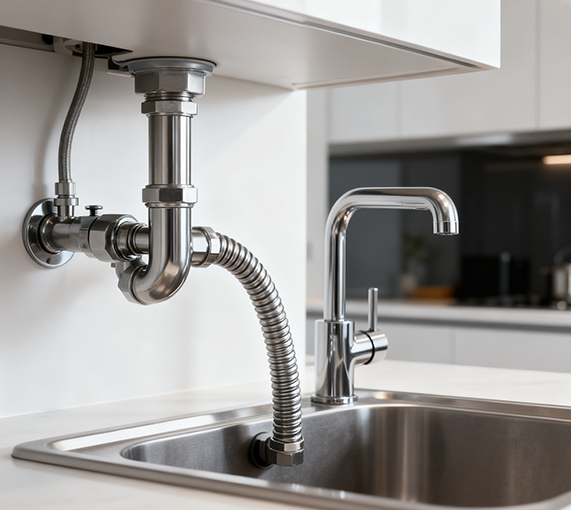
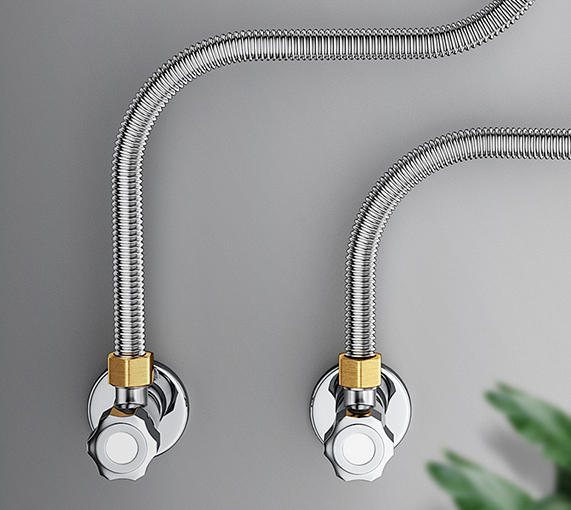
Stainless steel can also provide a clean and professional appearance. The standard stainless steel finish is suitable for visible installations where the connection should blend with modern appliances, plumbing fixtures, or mechanical equipment. The black option offers a different visual treatment for applications where a darker finish is preferred or where the connector needs to coordinate with black appliances and fittings.
0.2 mm Wall Thickness
The specified tube wall thickness is 0.2 mm. This dimension reflects a design that seeks to combine a relatively light, flexible tube structure with the material stability associated with stainless steel. Wall thickness must be considered together with tube geometry, forming quality, welding quality, connection design, and the intended operating conditions. It should not be evaluated in isolation.
A controlled wall thickness can support repeatable forming and predictable flexibility. It also allows the connector to be handled and positioned during installation without the excessive stiffness often associated with heavier rigid tubing. At the same time, stainless steel provides the structural foundation needed for a durable bellows-style or corrugated connection system.
As with all gas products, the connector should be selected and installed according to applicable local regulations, system pressure requirements, appliance instructions, and professional installation practices. The specified wall thickness is a product characteristic, not a substitute for a complete application assessment.
Flare Nut and Adapter Options
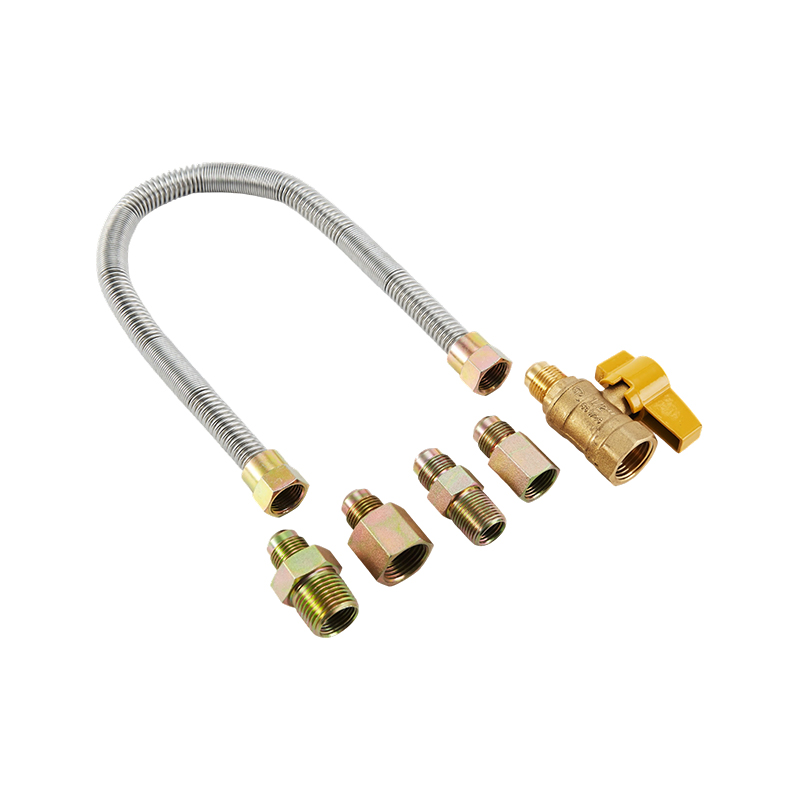
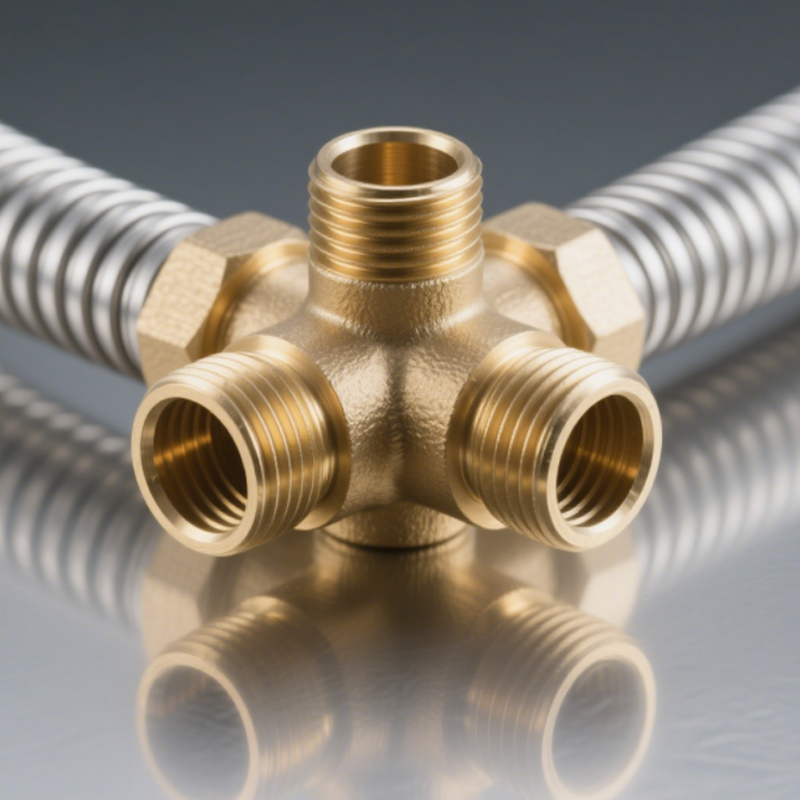
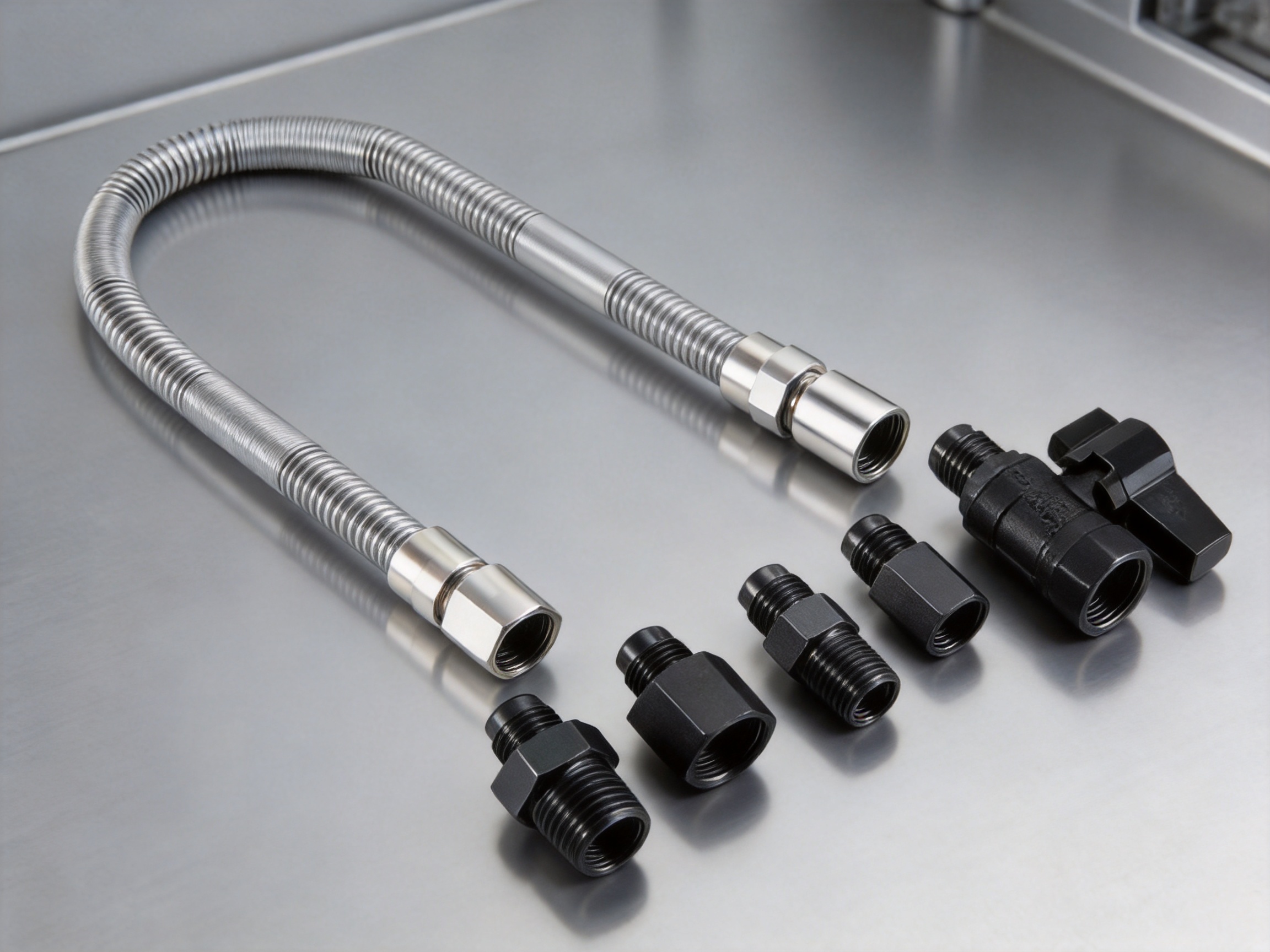
The main flare nut specification is 5/8-18UNF. A defined thread standard is important because connection reliability depends on dimensional compatibility between the connector, adapter, appliance inlet, and mating fitting. The product is also available with multiple adapter arrangements, including 5/8 × 3/8 male with 1/4 female, 5/8 × 3/8 female, 5/8 × 1/2 male with 3/8 female, and 5/8 × 1/2 female configurations.
These options help the same connector platform serve different connection layouts. Installers can select a suitable adapter arrangement rather than relying on improvised transitions or multiple additional fittings. Reducing unnecessary components can simplify the installation, decrease the number of potential leak points, and improve the overall appearance of the completed connection.
Adapter selection must always match the actual equipment connection and the relevant standards. Thread size, gender, sealing surface, pressure rating, and material compatibility should all be verified before installation. A correct adapter is not merely a convenience; it is an essential part of creating a technically sound connection.
Brass or Carbon Steel Nut Options
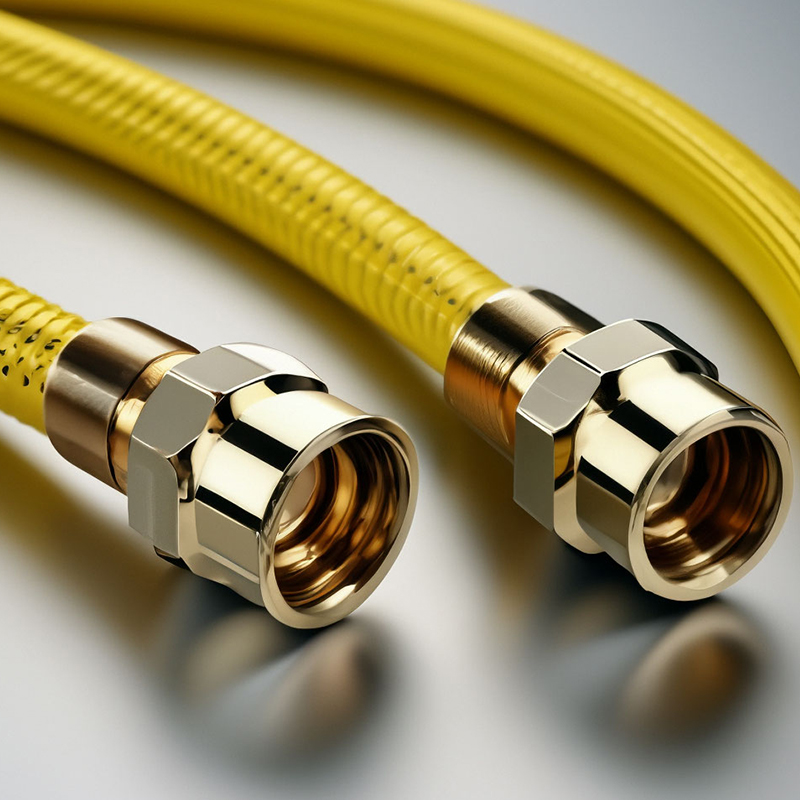
The product information identifies brass and carbon steel as available nut materials. This gives buyers flexibility when balancing corrosion resistance, mechanical characteristics, cost targets, and system preferences. Brass is commonly valued for its corrosion resistance and machinability, while carbon steel may be selected where specific mechanical or commercial considerations apply.
The choice of nut material should be coordinated with the operating environment and the rest of the connection system. In humid, corrosive, or highly visible environments, material selection can have a particularly noticeable effect on long-term appearance and maintenance. The use of a suitable nut material also supports reliable tightening and helps maintain the intended sealing interface.
Whistle-Free Design and Noise Reduction
One of the defining features of this product is its whistle-free design. Gas flow through small passages, connection transitions, or poorly optimized components can sometimes generate high-frequency airflow noise. Although such noise may not necessarily indicate a leak, it can be uncomfortable, distracting, or difficult for users to distinguish from other operating sounds.
A whistle-free connector is designed to reduce the likelihood of this type of airflow noise under appropriate operating conditions. Lower noise can improve the perceived quality of an appliance installation, particularly in kitchens, utility rooms, commercial food-service areas, and other locations where gas equipment operates near people.
Noise reduction is also valuable from a maintenance perspective. A quieter connector makes it easier for users and technicians to notice unusual sounds from other parts of the system. The connector itself should never be used as a substitute for professional leak testing or inspection, but minimizing unnecessary airflow noise can contribute to a more comfortable and intelligible operating environment.
The actual acoustic performance of any gas connection depends on factors such as flow rate, pressure, fitting geometry, appliance design, installation alignment, and system condition. The whistle-free design should therefore be understood as a product feature intended to reduce airflow noise, rather than as a guarantee of identical sound performance in every installation.
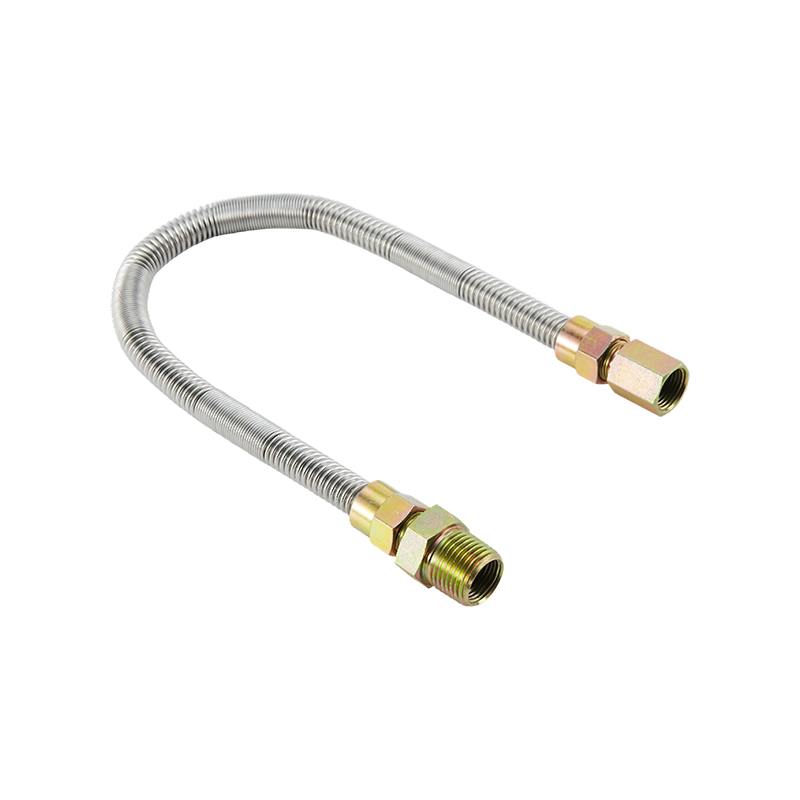
DN10 Stainless Steel Whistle Free Gas Connector
Advantages Over Ordinary Flexible Hoses
Improved Corrosion Resistance
Ordinary flexible hoses may rely on rubber, polymeric materials, coated steel, or lower-grade metal constructions. These materials can be appropriate for particular applications, but their resistance to ultraviolet exposure, moisture, cleaning chemicals, heat, and mechanical wear may differ substantially. The use of 304 stainless steel gives this connector a strong position in applications where a durable metal tube is preferred.
Corrosion resistance is especially important in kitchens, utility areas, commercial facilities, and regions with high humidity. Surface deterioration can affect appearance and, if severe enough, may eventually affect mechanical integrity. Stainless steel does not eliminate the need for inspection, but it provides a more stable material platform for long-term service.
More Professional Appearance
The stainless steel and black finish options provide a cleaner appearance than many conventional hoses. A neat gas connection can contribute to the overall quality of an appliance installation. This is particularly relevant for built-in kitchens, showrooms, hospitality projects, modular homes, and commercial equipment areas where exposed components remain visible.
A professional appearance also reflects installation discipline. Correct length selection, appropriate adapter choice, and proper routing are still essential, but the finish of the connector can help create a more coordinated result.
Flexible Length Selection
A limited range of lengths may force installers to create tight bends in a short connector or leave excessive unused tubing in a long one. Both situations can reduce installation quality. The seven available lengths, from 12 inches to 72 inches, offer more opportunities to match the connector to the actual distance between the gas supply and the appliance.
Choosing the correct length can help prevent stretching, sharp bending, twisting, and unnecessary looping. It can also make future inspection or appliance servicing more manageable. Length should be selected carefully: the connector should be long enough for the intended movement and access requirements, but not so long that it creates avoidable routing problems.
Adaptable Connection Configuration
The range of adapters is another advantage over products available in only one fixed configuration. Different appliances and piping systems may use different nominal sizes, connection genders, and interface arrangements. A flexible adapter offering can reduce the need to search for separate conversion parts and may simplify inventory management for distributors and contractors.
For projects involving multiple appliance models or varied equipment layouts, a connector family with several adapter options can make procurement and installation more efficient. The key is to ensure that the selected configuration is technically appropriate rather than choosing an adapter solely because it appears to fit mechanically.
Product Specifications
| Item | Specification |
|---|---|
| Product type | DN10 stainless steel whistle-free gas connector |
| Tube material | 304 stainless steel |
| Tube wall thickness | 0.2 mm |
| Flare nut | 5/8-18UNF |
| Adapter options | 5/8 × 3/8 male with 1/4 female; 5/8 × 3/8 female; 5/8 × 1/2 male with 3/8 female; 5/8 × 1/2 female |
| Available lengths | 12, 18, 24, 36, 48, 60, and 72 inches |
| Finish options | Stainless steel and black |
| Nut material options | Brass or carbon steel |
| Sealing method | Hard sealing |
| Cover material | Non-cover configuration or specified brass/carbon steel connection components |
The table summarizes the principal specifications provided for the connector. Buyers should confirm the final configuration, available adapter combination, packaging, operating limits, and applicable compliance requirements with the supplier before placing an order. Product specifications may be selected according to project requirements, but every configuration should be evaluated as a complete connection assembly.
Hard Sealing for Reliable Connection Performance
The connector uses a hard-sealing form. In a hard-seal connection, sealing is achieved through the controlled contact of rigid or semi-rigid mating surfaces rather than relying exclusively on a soft gasket or thread sealant. This approach can provide a clean and dependable connection when the components are accurately manufactured and correctly assembled.
Hard sealing places importance on surface quality, dimensional accuracy, alignment, tightening procedure, and compatibility between the connector and mating fitting. Proper installation is therefore essential. The sealing surfaces should be clean, free of damage, and correctly positioned. Excessive force, cross-threading, or the use of unsuitable sealing materials can compromise the connection.
A well-designed hard-sealing interface can offer several practical benefits. It may reduce dependence on consumable sealants, simplify maintenance, and provide a consistent sealing principle across different installations. It can also help keep the connection compact, which is useful when space around an appliance or valve is limited.
Nevertheless, hard sealing should not encourage overconfidence. Every completed gas connection must be checked using the appropriate professional procedure. Leak testing, visual inspection, and compliance with installation instructions remain necessary regardless of the sealing method.
Applications in Residential and Commercial Systems
Residential Kitchen Installations
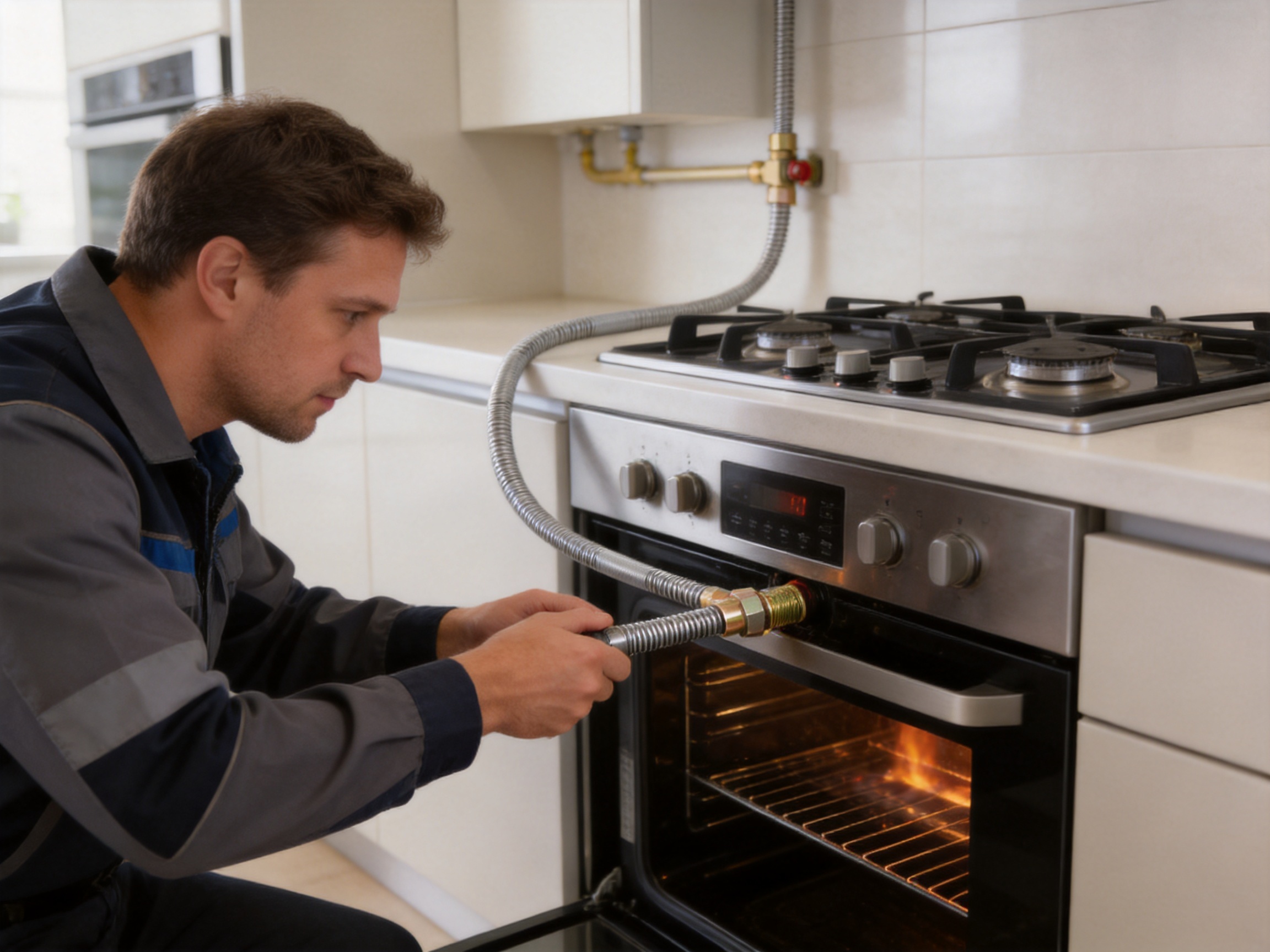
Residential kitchens often require a flexible connection between a gas range, cooktop, oven, or other appliance and the fixed gas supply. Space may be restricted, and the connector can remain partially visible. The DN10 connector’s stainless steel or black finish can support a neat appearance while its flexible construction helps accommodate the practical positioning of the appliance.
The range of lengths is useful in kitchens with different cabinet depths, appliance locations, and access arrangements. A properly selected connector can make appliance replacement or servicing easier without requiring major changes to the fixed pipework. The whistle-free design may also be appreciated in open-plan kitchens where operating noise is more noticeable.
Commercial Food-Service Equipment
Commercial kitchens often contain multiple gas appliances arranged in compact spaces. Equipment may be moved for cleaning, maintenance, or layout changes, making a flexible connection beneficial. Stainless steel construction is also attractive in commercial environments because the surfaces may be exposed to humidity, frequent cleaning, and demanding daily use.
Commercial installations require careful attention to local codes, pressure requirements, movement limits, ventilation, and appliance manufacturer instructions. The connector can support a professional installation, but it must be selected and used within the permitted conditions for the specific project.
Gas-Fired Heating Equipment
Gas-fired heaters and similar equipment may require a flexible connection to reduce installation stress or simplify equipment access. The connector’s material and adapter flexibility can help contractors address different equipment interface requirements. As heating equipment may experience temperature changes and vibration during operation, correct routing and clearance are particularly important.
Maintenance and Equipment Replacement
When an appliance must be removed or replaced, a flexible connector can make the process more practical than modifying rigid pipework. The appropriate length and adapter configuration can support faster connection work while preserving a clean layout. Even when a connector appears visually intact, it should be inspected and replaced according to applicable rules and project procedures if it has been damaged, over-bent, contaminated, or otherwise compromised.
Manufacturing Strengths Behind the Product
Specialization in Stainless Steel Bellows
The manufacturer specializes in the research, development, design, production, and sales of stainless steel bellows and related flexible connection products. This specialization is relevant to the DN10 connector because bellows manufacturing requires knowledge of thin-wall stainless steel forming, dimensional control, joining technology, fatigue considerations, and end-fitting integration.
A company focused on bellows technology is better positioned to develop product structures that balance flexibility with stability. Rather than treating a gas connector as a simple length of tubing with fittings attached, a specialized manufacturer can consider the complete behavior of the tube, connection ends, sealing surfaces, and installation environment.
Standardized Production Facilities
The company operates approximately 18,000 square meters of standardized workshops across an area of about 35 mu. Standardized workshops can support organized material flow, controlled production zones, equipment planning, inspection stations, and more consistent working conditions. These factors are valuable when manufacturing thin-wall stainless steel components in volume.
Organized facilities also help separate key stages such as raw material preparation, forming, welding, assembly, inspection, and packaging. Clear process organization can reduce handling errors and support traceability throughout production.
Advanced Equipment
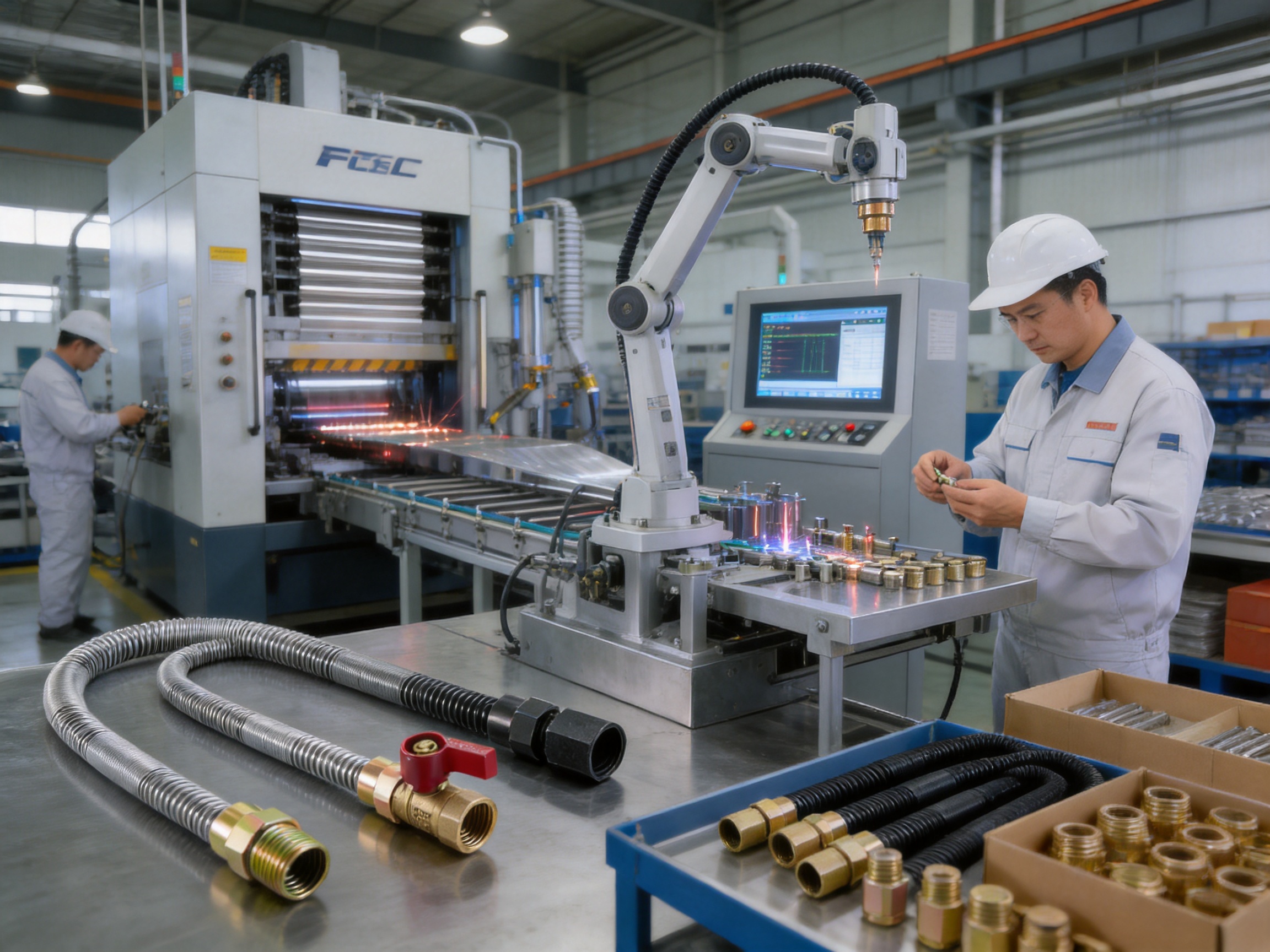
The stated manufacturing equipment includes laser welding machines, CNC forming machines, COSMO equipment, eddy current flaw detectors, and automatic packaging systems. Each category contributes to a different part of the production process.
Laser welding can provide a concentrated heat source and precise weld control. For stainless steel bellows and thin-wall components, controlled welding is important because excessive heat or inconsistent energy input can affect geometry, surface condition, or mechanical performance.
CNC forming machines support repeatable shaping and dimensional consistency. Forming accuracy affects flexibility, alignment, connection fit, and the ability of the finished product to perform consistently across batches. Computer-controlled equipment can help reduce variation compared with less precise manual forming methods.
Eddy current flaw detection provides a non-destructive inspection approach for identifying certain surface and near-surface discontinuities in conductive materials. Its use demonstrates an emphasis on process verification rather than relying solely on visual inspection. Automatic packaging systems can also reduce handling variation and help protect finished connectors during storage and transport.
The reference to COSMO equipment indicates the use of specialized production or testing resources within the manufacturing system. Regardless of the specific equipment function in a given process, the broader value lies in combining specialized machinery with documented procedures and trained personnel.
Full-Process Quality Management
The company describes a quality management approach covering raw material selection, structural design, manufacturing, performance testing, and after-sales support. This full-process approach is stronger than focusing only on final inspection. Quality is most effectively controlled when potential problems are addressed at every stage.
Raw material control helps ensure that the stainless steel and connection components meet the intended specifications. Structural design review helps identify fit, flexibility, and sealing requirements before production. Manufacturing controls support consistency during forming and welding. Performance testing provides an opportunity to verify the finished assembly. After-sales support helps address application questions, technical communication, and customer feedback.
The company also reports ISO9001, ISO14001, and ISO45001 management system certifications. ISO9001 relates to quality management, ISO14001 to environmental management, and ISO45001 to occupational health and safety management. These systems do not replace product-specific testing or local regulatory approvals, but they indicate a structured approach to managing organizational processes.
Research and Development Capability
A professional research and development team can support product improvement, customized design, and technical problem solving. Gas connection products may need to be adapted for different markets, appliance interfaces, installation methods, or customer specifications. R&D capability allows the manufacturer to evaluate these requirements systematically.
Development work may include optimizing corrugation geometry, adjusting end fittings, improving welding parameters, refining noise-reduction characteristics, evaluating materials, or developing new lengths and adapter combinations. The goal is to create products that are easier to install, more stable in service, and better aligned with the actual requirements of contractors and equipment manufacturers.
Why Manufacturing Process Matters to Buyers
For distributors, contractors, original equipment manufacturers, and project purchasers, a product’s manufacturing process is a practical purchasing consideration. Consistent appearance and dimensions help reduce installation delays. Stable welding and forming quality can reduce the risk of rejected components. Reliable packaging can minimize damage during transportation. Documentation and technical support can simplify product approval and project coordination.
Manufacturing capability is especially important for flexible metal products because their performance depends on several interconnected features. A tube may have the correct nominal size but still perform poorly if the corrugation is inconsistent, the end connection is misaligned, or the sealing surface is damaged. Quality therefore depends on the complete process, not one isolated specification.
The combination of specialized equipment, quality management, non-destructive inspection capability, and experienced technical personnel provides a foundation for repeatable production. These strengths can help the product compete not only on price, but also on service life, installation convenience, appearance, and supply reliability.
Installation Considerations
The connector should be installed only by qualified personnel familiar with gas systems and applicable local requirements. Before installation, the installer should verify the connector length, thread configuration, adapter arrangement, nut material, and compatibility with the appliance and supply line.
The connector should be routed so that it is not twisted, sharply bent, stretched, crushed, trapped behind equipment, or exposed to avoidable mechanical damage. It should not be used as a substitute for rigid pipe support, and it should not be positioned where it may contact sharp edges, excessive heat, moving components, or corrosive substances.
The selected length should allow the appliance to be positioned as intended without placing tension on the connector. Excess length should not be arranged in a tight or uncontrolled loop. A gentle route with adequate clearance is generally preferable to a compressed bend or forced alignment.
Threaded connections should be started carefully by hand to avoid cross-threading. The correct tools and tightening method should be used, and the installer should follow the product instructions and applicable technical requirements. The connector should not be modified, cut, rethreaded, welded, or repaired in the field unless such work is expressly approved by the manufacturer and permitted by the relevant regulations.
After installation, the system should be inspected and leak-tested using an approved procedure. Open flames must never be used to locate a gas leak. If a gas odor, hissing sound, visible damage, or abnormal operating condition is noticed, the gas supply should be handled according to emergency procedures and the system should be checked by qualified professionals.
Maintenance and Service Life Considerations
A stainless steel connector is designed for durability, but no flexible gas connection should be considered maintenance-free. Periodic visual inspection can identify corrosion, kinks, crushed sections, damaged fittings, discoloration caused by overheating, or signs of movement and abrasion.
The connector should remain accessible enough for inspection. Covering it with construction materials, concealing it in an inaccessible location, or routing it through an area where damage cannot be observed may complicate future maintenance and may conflict with local requirements.
Cleaning should be performed using methods suitable for stainless steel and the surrounding equipment. Harsh chemicals, abrasive tools, or incompatible cleaners may damage the finish or affect adjacent components. If the connector has been exposed to flooding, fire, severe impact, chemical contamination, or excessive heat, it should be assessed by a qualified professional before further use.
Replacement intervals depend on local regulations, equipment instructions, environmental conditions, and the condition of the connector. A product that looks acceptable externally may still require replacement after a significant installation event or if its sealing surfaces have been disturbed. When in doubt, professional evaluation is the safest approach.
Comparison with Rigid Piping and Lower-Grade Alternatives
Compared with Rigid Metal Pipe
Rigid pipe can provide a strong and permanent gas route, but it may require more cutting, threading, bending, support, and alignment work. It can also transmit vibration and may make equipment removal more difficult. A flexible connector can simplify the final connection between the fixed supply and the appliance, especially where limited movement or service access is required.
Rigid piping remains appropriate for many parts of a gas distribution system. The DN10 connector is not intended to replace every section of fixed pipework. Its value is greatest where a controlled flexible transition is needed.
Compared with Basic Polymer Hoses
Basic polymer hoses can be lightweight and economical, but they may have different limitations regarding heat, aging, abrasion, chemical exposure, and visible appearance. A 304 stainless steel connector offers a metal construction that may be more suitable for demanding or highly visible installations, subject to the conditions for which it is approved.
Compared with Inflexible or Single-Configuration Connectors
A connector available in only one length or one adapter arrangement can create procurement and installation challenges. The DN10 product offers multiple lengths and adapter choices, allowing a closer match to the actual equipment layout. This can reduce the need for improvised combinations and help contractors maintain a more standardized product family across different projects.
Purchasing Guidance for Distributors and Contractors
Purchasers should identify the intended application before ordering. Important information includes the appliance type, connection size, thread standard, required length, installation environment, preferred finish, nut material, gas type, operating pressure, and local compliance requirements.
It is also useful to define packaging and labeling needs. Distributors may require individual labels, carton markings, batch identification, or configuration references. Contractors may prefer packaging that keeps adapters and connectors organized at the job site. Automatic packaging capability can support consistent presentation, but project-specific requirements should be confirmed in advance.
For larger projects, buyers should request technical documentation, inspection information, sample approval, and production lead-time details. Confirming the precise adapter configuration is particularly important because similar-looking fittings may have different thread standards or sealing geometries.
Product quality should be evaluated together with supplier capability. A manufacturer that controls materials, forming, welding, inspection, packaging, and technical support can often provide more dependable long-term cooperation than a trading source with limited visibility into production. This is especially valuable for private-label programs, repeated orders, and projects requiring consistent dimensions across multiple batches.
Quality, Environmental, and Organizational Strengths
The company presents itself as a National High-tech Enterprise and Green Factory. These designations reflect an organizational emphasis on technology development, efficient manufacturing, and environmental responsibility. The reported ISO14001 environmental management certification further indicates that environmental processes are incorporated into the management structure.
Environmental responsibility can be relevant to stainless steel product buyers because efficient material use, controlled production, waste reduction, energy management, and responsible packaging all contribute to the total sustainability profile of a product. A durable connector may also support longer replacement intervals when correctly applied and maintained, reducing material consumption over the product lifecycle.
Occupational health and safety management is another important organizational factor. The reported ISO45001 certification indicates that workplace safety is addressed through a formal management framework. Safe production conditions can support workforce stability, process discipline, and continuity of supply.
These management systems should be viewed as complementary strengths. They do not independently establish that every individual connector is suitable for every gas system, but they demonstrate a structured operating environment in which product quality and organizational responsibility are managed together.
Q&A About the DN10 Whistle-Free Gas Connector
What is the main material of the connector?
The tube body is made from 304 stainless steel. The product information specifies a 0.2 mm wall thickness. Brass or carbon steel options are available for the nut and related connection components, depending on the selected configuration.
What does DN10 identify?
DN10 identifies the nominal size classification of the connector product. The exact connection arrangement should still be confirmed using the specified flare nut, adapter configuration, mating fitting, and project requirements.
What flare nut thread is used?
The connector uses a 5/8-18UNF flare nut. Buyers should verify that the mating component uses the correct compatible connection and sealing interface.
Which adapter options are available?
The listed options include 5/8 × 3/8 male with 1/4 female, 5/8 × 3/8 female, 5/8 × 1/2 male with 3/8 female, and 5/8 × 1/2 female configurations. The final option should be selected according to the appliance and supply-side connection requirements.
What lengths can be ordered?
The available lengths are 12 inches, 18 inches, 24 inches, 36 inches, 48 inches, 60 inches, and 72 inches. Choosing the shortest suitable length that provides proper access and movement can help avoid excessive loops or tension.
Why is the connector described as whistle-free?
The design is intended to reduce airflow noise that may occur in a gas connection under suitable operating conditions. Actual sound performance can vary according to flow rate, pressure, appliance design, fitting geometry, and installation quality.
What are the available finishes?
The connector is available in a stainless steel finish and a black finish. The selected finish can be based on appearance, equipment coordination, and project preference.
What does hard sealing mean?
Hard sealing means the connection is designed to seal through controlled contact between suitable mating surfaces. Correct alignment, clean sealing surfaces, compatible components, and proper tightening are essential for reliable performance.
Can the connector replace all rigid gas piping?
No. It is designed as a flexible gas connection component and should be used only in applications permitted by local regulations, appliance instructions, and professional installation practices. It is not automatically a replacement for fixed distribution piping.
How should the connector be checked after installation?
A qualified installer should perform a visual inspection and an approved leak test after installation. The connector should be checked for twisting, sharp bends, damage, interference, and improper alignment. Open flames must never be used for leak detection.
What manufacturing capabilities support this product?
The manufacturer specializes in stainless steel bellows and flexible connection products. Its reported capabilities include standardized workshops, laser welding machines, CNC forming machines, eddy current flaw detection equipment, automatic packaging systems, a professional R&D team, and quality management covering materials, design, production, testing, and after-sales support.
What certifications or management systems does the company report?
The company reports ISO9001, ISO14001, and ISO45001 management system certifications. These relate respectively to quality, environmental, and occupational health and safety management. Product-specific requirements and local approvals should still be verified for each application.
Conclusion
The DN10 stainless steel whistle-free gas connector combines a 304 stainless steel tube body, a 0.2 mm wall thickness, multiple lengths, adaptable connection options, hard sealing, and stainless steel or black finishes. These features make it a practical choice for gas appliance connections where corrosion resistance, installation flexibility, quiet operation, and professional appearance are important.
Its advantages over basic alternatives are not limited to the visible stainless steel surface. The product offers a coordinated connection system with defined thread specifications, multiple adapter configurations, and length choices that can help installers create cleaner and more reliable layouts. The whistle-free design addresses user comfort, while the hard-sealing structure supports a compact and dependable connection when correctly assembled.
The manufacturer’s expertise in stainless steel bellows, standardized production facilities, laser welding, CNC forming, non-destructive inspection, automatic packaging, and full-process quality management provides an important foundation for consistent product performance. Its reported ISO management systems and R&D capabilities further support its position as a flexible connection solution provider.
For the best results, the connector must be selected for the correct gas system, appliance, pressure, connection interface, and installation environment. Professional installation, approved leak testing, routine inspection, and compliance with all applicable regulations remain essential. When these requirements are observed, the DN10 connector can provide a durable, neat, and low-noise connection solution for residential, commercial, and equipment-related gas applications.
References
1. Product specification sheet for the DN10 stainless steel whistle-free gas connector, including material, dimensions, adapter configurations, finishes, and sealing method.
2. Manufacturer technical information concerning stainless steel bellows, flexible gas connectors, plumbing products, metal hoses, and compensators.
3. ISO 9001, Quality Management Systems—Requirements.
4. ISO 14001, Environmental Management Systems—Requirements with Guidance for Use.
5. ISO 45001, Occupational Health and Safety Management Systems—Requirements with Guidance for Use.
6. General professional guidance for the selection, installation, inspection, and leak testing of flexible gas connectors.
7. Technical literature concerning 304 stainless steel material properties, forming, welding, and corrosion resistance.