




 English
  Español
  русский


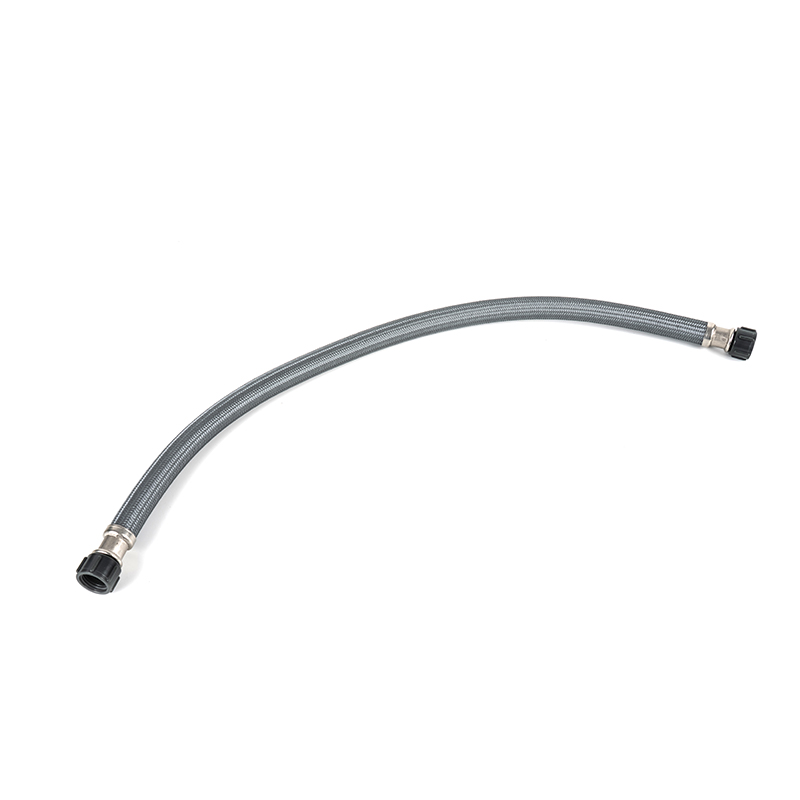
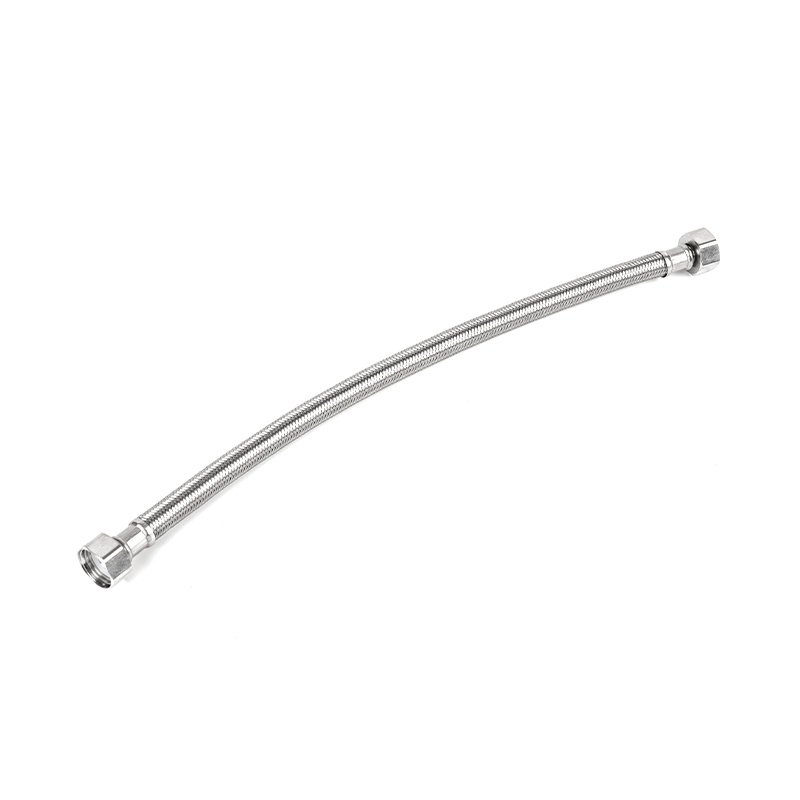
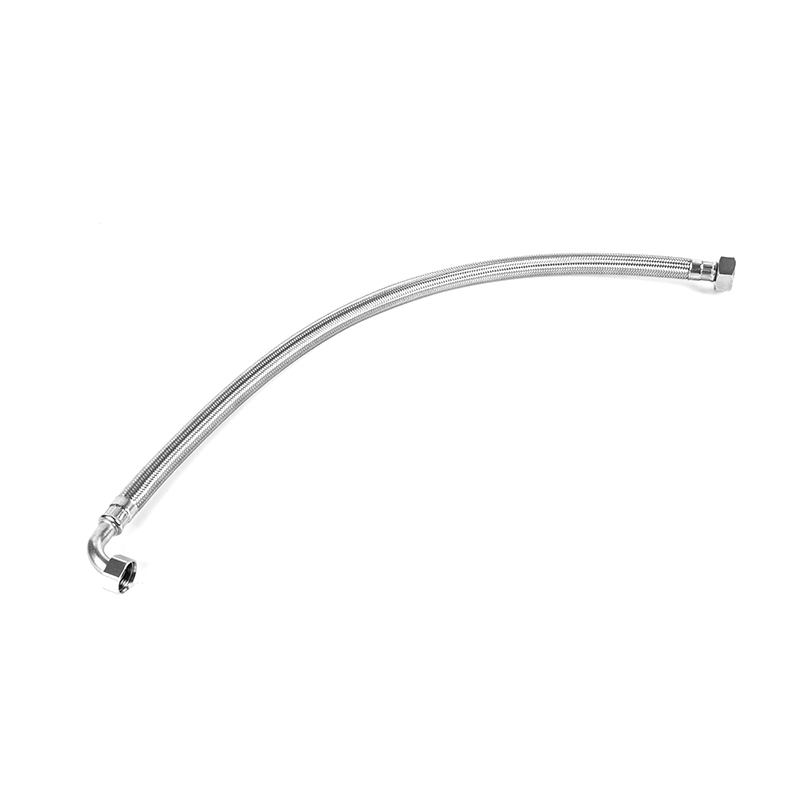
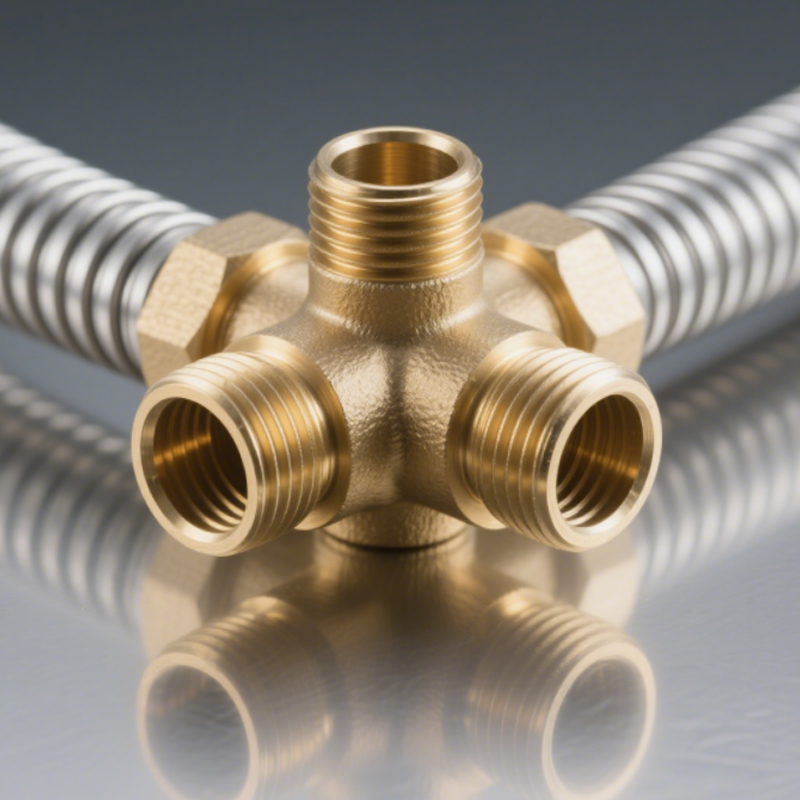
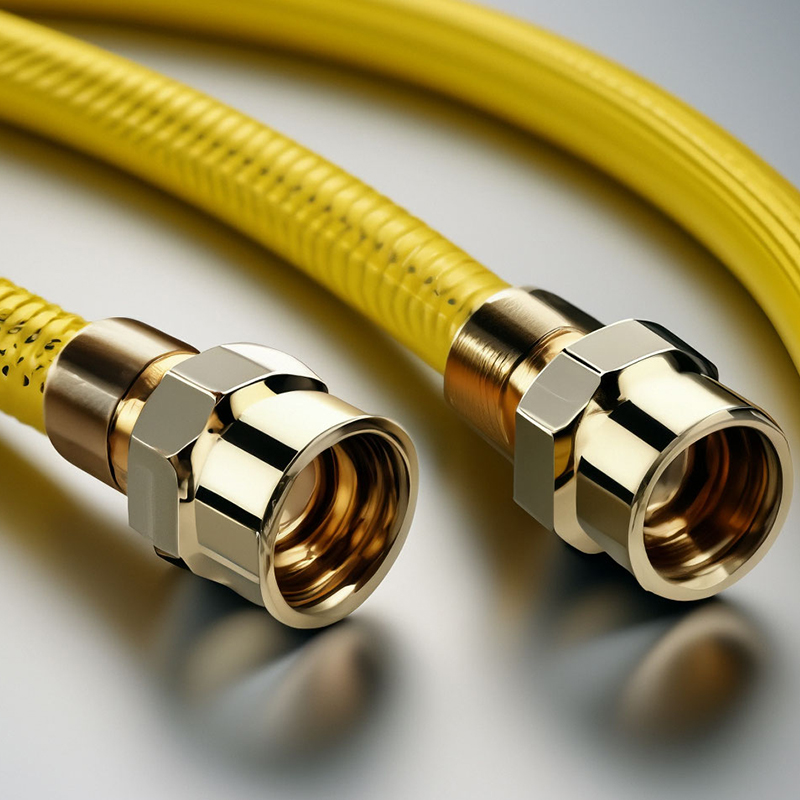
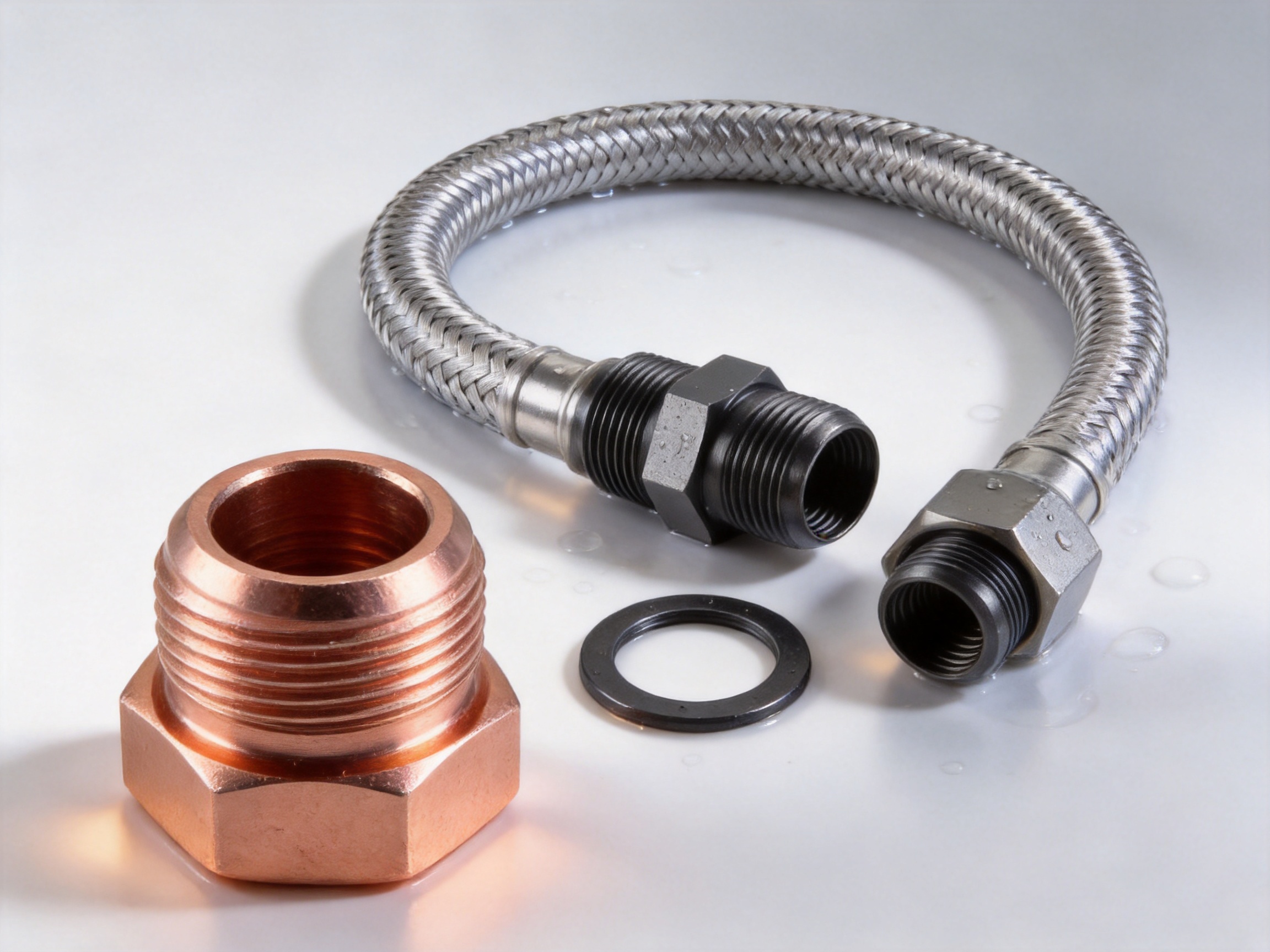
Flexible plumbing systems depend on the quality of every individual component. The hose, liner, tube, fitting, washer, thread, and nut must work together as one sealed connection. Even when the flexible pipe itself is manufactured from high-quality stainless steel, a poorly selected nut can reduce installation reliability, weaken the joint, or create unnecessary maintenance problems. The flexible plumbing connector copper nut is designed to address these practical requirements by combining dependable mechanical fastening with the natural properties of copper.
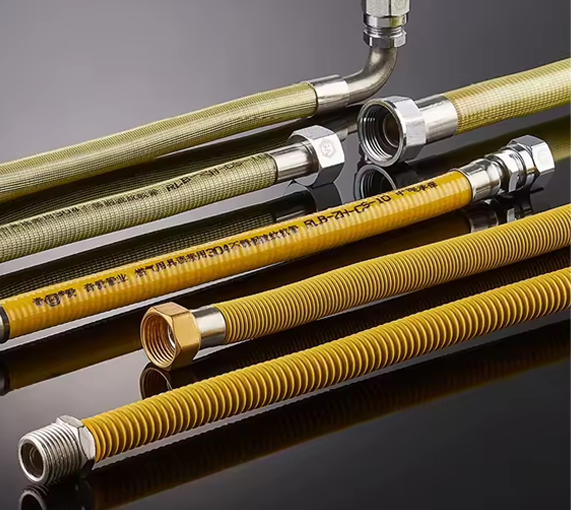
Used in flexible plumbing connectors, water liners, heating systems, sanitary piping, and related connection assemblies, the copper nut provides a secure interface between the connector and the mating fitting. It is particularly valuable in applications where corrosion resistance, cleanliness, thermal conductivity, non-magnetic behavior, and consistent thread engagement are important. Its relatively soft and workable structure also allows it to be manufactured accurately and installed efficiently without sacrificing connection stability.
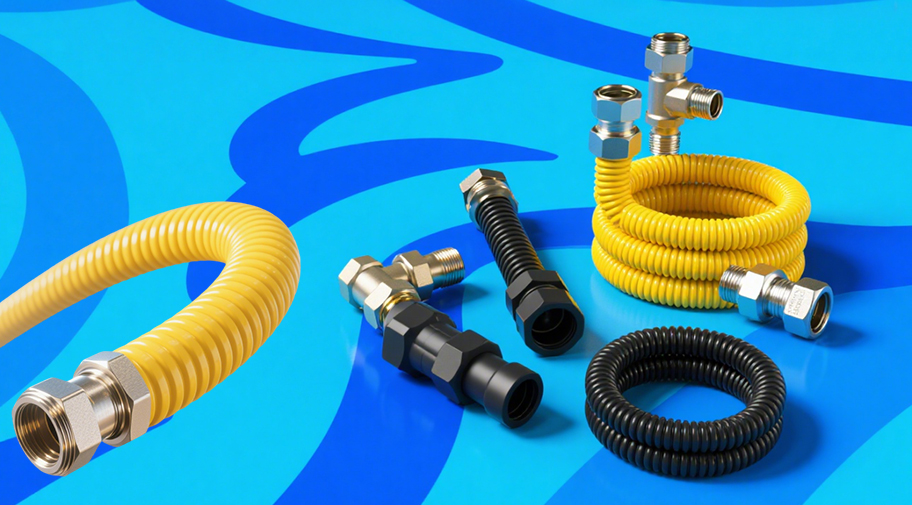
As part of a complete flexible connector system, the copper nut is not simply a fastening accessory. It contributes to sealing performance, installation convenience, service life, and the overall appearance of the finished assembly. When correctly designed and matched with the connector body, it can help create a dependable connection for residential plumbing, commercial building services, heating equipment, healthcare facilities, industrial HVAC systems, and other fluid-handling applications.
Understanding the Flexible Plumbing Connector Copper Nut
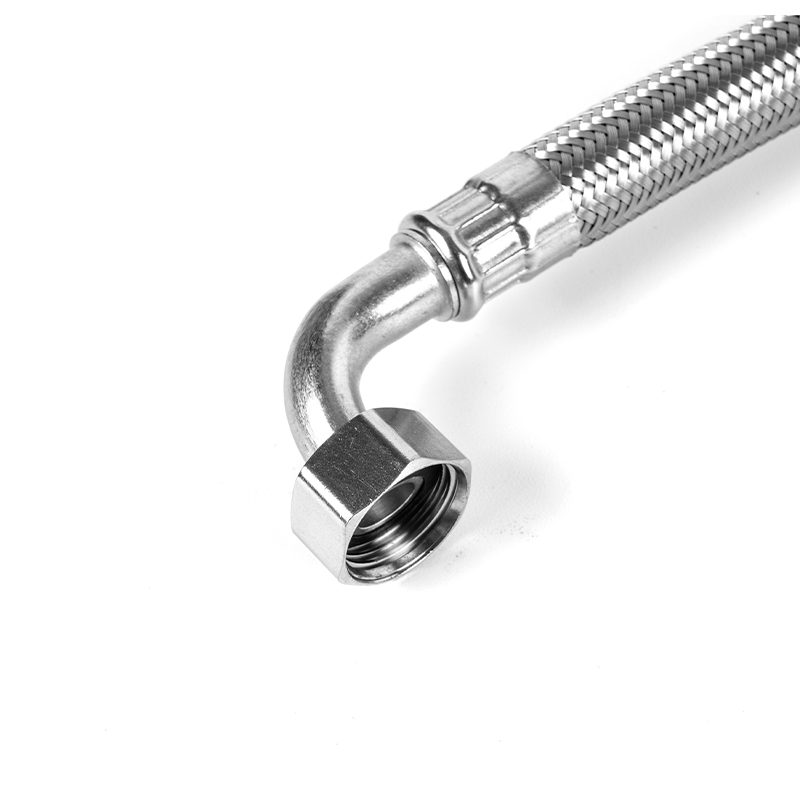
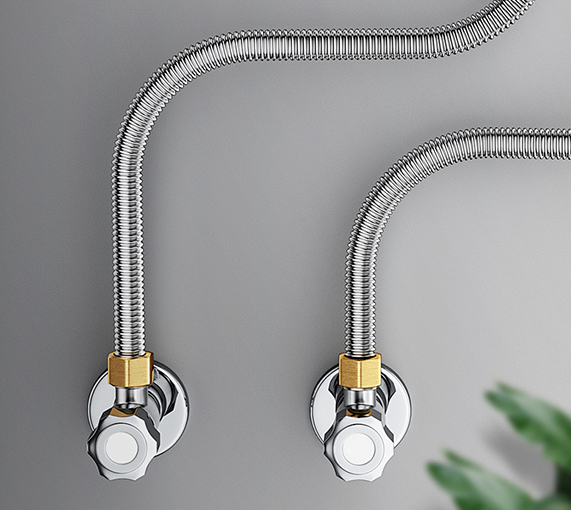
A copper nut is a threaded fastening component used to secure a flexible plumbing connector to a compatible male thread, adapter, valve, appliance inlet, or fixed pipe fitting. During installation, the nut transfers tightening force to the connector assembly. Depending on the structure of the product, it may work together with a sealing washer, cone, ferrule, gasket, or specially formed end section of the flexible pipe.
The exact function of the nut depends on the connector design. In some assemblies, the nut compresses a gasket against a flat sealing surface. In others, it holds a formed end of corrugated stainless steel tubing against a fitting. The nut may also be used to secure an adapter in a system where the flexible pipe must absorb movement, vibration, thermal expansion, or installation misalignment.
Because the nut is exposed to tightening force, contact pressure, moisture, temperature changes, and sometimes chemically treated water, its material and dimensional accuracy are important. Copper is widely valued for its combination of conductivity, corrosion resistance, workability, and hygiene-related properties. These characteristics make it suitable for many plumbing and connection environments where ordinary carbon steel or poorly protected metal may be less suitable.
The copper nut is commonly associated with flexible plumbing connectors, but its design principles also apply to gas connectors, water pipes, plumbing liners, metal hoses, and compensators. The correct material, thread profile, nut height, wall thickness, bearing surface, and internal geometry must be selected according to the intended application and the complete connector structure.
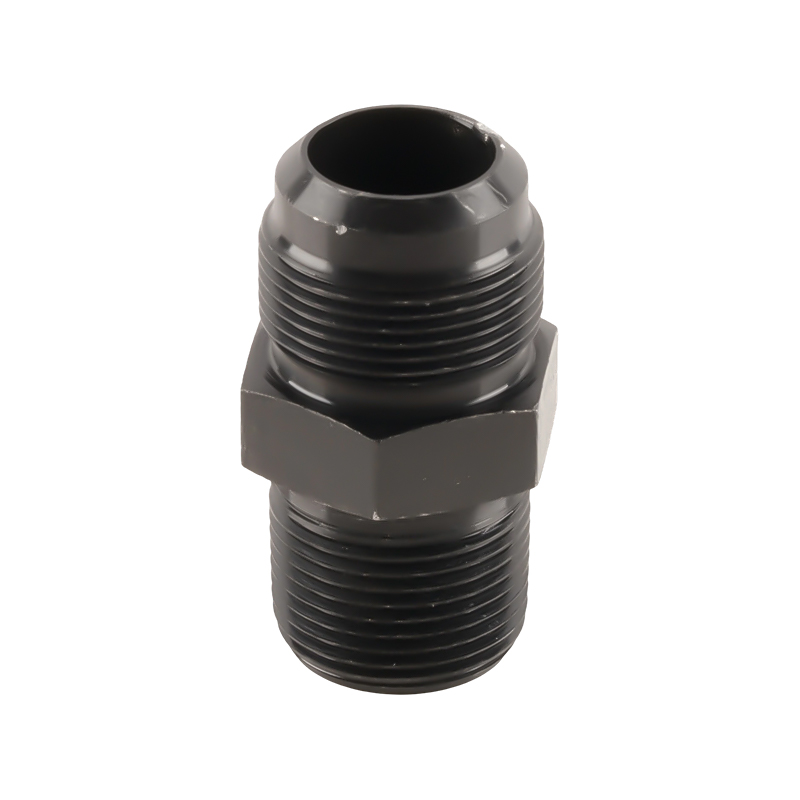
Flexible Plumbing Connector Copper Nut
Why Copper Is Suitable for Plumbing Connector Nuts
Excellent Electrical and Thermal Conductivity
Copper is one of the most conductive engineering metals. In a plumbing connector, electrical conductivity is not usually the primary performance requirement, but it can be advantageous in systems that require electrical continuity, bonding, grounding, or controlled dissipation of static charge. This may be relevant in industrial equipment, technical rooms, heat-producing appliances, and installations where metal components must be integrated into a broader safety system.
Thermal conductivity is also a notable property. Copper can transfer heat more effectively than many common engineering metals. In heating and hot-water applications, this may help reduce localized temperature differences around the connection. A copper nut can respond efficiently to thermal changes, which is useful in systems exposed to repeated heating and cooling cycles.
Although thermal conductivity alone does not determine the safety or service life of a connector, it contributes to predictable thermal behavior. When combined with a flexible stainless steel hose or corrugated tube, the copper nut forms part of a connection that can accommodate temperature variations while maintaining a stable mechanical interface.
Corrosion Resistance in Moist Environments
Plumbing connections are frequently exposed to water, humidity, condensation, cleaning agents, and changing temperatures. Copper offers good resistance to atmospheric corrosion and performs well in many freshwater environments. It is also known for useful resistance to seawater-related exposure, although material selection must always consider the exact water chemistry, salinity, temperature, and presence of dissimilar metals.
Compared with unprotected carbon steel, copper is less vulnerable to ordinary atmospheric rust. This is a practical advantage in kitchens, bathrooms, utility rooms, boiler rooms, and mechanical spaces where moisture cannot always be completely avoided. A corrosion-resistant nut helps preserve thread integrity and makes future disassembly less difficult.
Corrosion resistance does not mean that every copper nut is suitable for every chemical environment. Strong acids, alkaline solutions, high-chloride conditions, and galvanic contact with incompatible metals may affect performance. Professional material selection should therefore consider the fluid, operating temperature, pressure, installation environment, and applicable standards.
Natural Antibacterial Characteristics
Copper ions are associated with natural bactericidal and bacteriostatic effects. This characteristic makes copper attractive for applications where cleanliness and hygiene are important. Plumbing systems serving kitchens, hospitals, laboratories, food-related facilities, and public buildings may benefit from materials that are less favorable to microbial persistence on exposed surfaces.
The antibacterial behavior of copper should be understood as a material advantage rather than a substitute for water treatment, sanitation, proper system design, or regular maintenance. The actual hygienic performance of a complete connector depends on surface condition, water quality, temperature, flow, installation practice, and the presence of other materials.
When used in a properly designed flexible connector, the copper nut can support the hygiene objectives of the system. Its smooth, cleanable surface and resistance to ordinary atmospheric corrosion are additional practical benefits in areas where visible cleanliness and long-term maintenance matter.
Non-Magnetic Performance
Copper is non-magnetic and does not become magnetized during ordinary use. This can be useful in precision instruments, electronic equipment rooms, medical environments, laboratory systems, and installations where magnetic interference must be minimized.
In a conventional household plumbing system, non-magnetic performance may not be a deciding factor. However, for specialized applications, it can be an important distinction compared with ferrous alternatives. A non-magnetic connection component allows designers to preserve the electromagnetic characteristics of sensitive equipment while still using a robust metal fitting.
Good Wear Resistance and Workability
Copper is relatively soft compared with many steels, but this does not make it unsuitable for a connector nut. Its workability is one of its major manufacturing advantages. Copper can be formed, machined, threaded, and finished with high dimensional accuracy. The material can also provide a favorable contact surface when properly designed and tightened.
The relatively soft structure can help reduce the risk of damaging a compatible mating surface during installation. It may also allow controlled deformation at the contact area, supporting a reliable seal when the connector design uses compression or gasket loading. However, installers should always use the correct torque and tools. Excessive tightening can deform threads, damage the nut, or compromise the sealing system regardless of material.
Advantages Compared with Conventional Nut Materials
Flexible plumbing connector nuts are available in various materials, including plated steel, stainless steel, brass, aluminum, and copper alloys. Each material has a suitable application range. The advantage of a copper nut is not that it universally replaces every other option, but that it offers a balanced combination of properties for selected plumbing and connection environments.
| Performance factor | Copper nut | Plated carbon steel nut | Stainless steel nut |
|---|---|---|---|
| Resistance to ordinary atmospheric moisture | Good, with natural corrosion resistance | Depends strongly on coating quality and coating integrity | Very good when the correct stainless grade is selected |
| Thermal conductivity | Excellent | Low to moderate | Low compared with copper |
| Electrical conductivity | Excellent | Low | Low compared with copper |
| Magnetic behavior | Non-magnetic | Generally magnetic | Depends on grade and processing |
| Manufacturing workability | Very good | Good | More demanding, especially for hard grades |
| Hygiene-related material benefits | Natural copper ion characteristics | Primarily dependent on coating and cleanliness | Clean and durable surface when correctly finished |
| Typical selection strength | Plumbing, hygienic, thermal, and specialized connection systems | Cost-sensitive general-purpose applications | High-corrosion or high-strength applications |
Plated carbon steel can be economical, but its long-term corrosion resistance depends on the durability of the plating. Scratches, thread damage, salt exposure, and installation wear can expose the underlying steel. Stainless steel provides excellent corrosion resistance in many environments, but some grades are harder to form and machine, and their cost may be higher. Copper offers a practical balance where workability, thermal performance, non-magnetic behavior, and plumbing suitability are priorities.
Compared with low-quality generic nuts, a precision copper nut can provide more consistent thread engagement and a more dependable bearing surface. The advantage comes not only from the raw material but also from controlled manufacturing. Material traceability, accurate forming, clean machining, deburring, inspection, and functional testing are all necessary to convert copper’s natural properties into a reliable finished product.
Role in Flexible Plumbing Connector Systems
Supporting Sealing Performance
A connector nut does not create a seal by itself. Sealing is achieved through the interaction of the nut, fitting, gasket, ferrule, hose end, and contact surfaces. The nut’s role is to apply and maintain the required compression or clamping force.
A well-designed copper nut must have a precisely formed internal profile and a stable bearing surface. If the internal shoulder is incorrectly positioned, the gasket may be compressed unevenly. If the thread is rough or inaccurately formed, the nut may bind before the seal reaches the required pressure. If the nut wall is too thin, it may deform during tightening. These problems can lead to leakage, difficult installation, or premature failure.
Manufacturers therefore need to control thread dimensions, concentricity, nut thickness, end geometry, and surface condition. The nut must match the connector body and the mating fitting as a complete engineered system. Correct matching is more important than selecting a component based only on nominal size.
Accommodating Movement and Vibration
Flexible plumbing connectors are used because rigid pipes cannot always absorb movement or installation variation. Equipment may vibrate, buildings may experience minor movement, and thermal expansion may change the relative position of connected components. A flexible connector helps isolate these effects.
The copper nut secures the connector to the fixed fitting while allowing the flexible section to perform its intended function. It must remain mechanically stable without imposing unnecessary stress on the hose. Proper installation is essential: the hose should not be twisted, sharply bent, stretched, or used to compensate for incorrect alignment.
In heating and HVAC systems, repeated temperature cycling can place stress on connection points. A correctly manufactured nut, combined with a suitable flexible hose and sealing element, helps maintain a stable connection under these changing conditions.
Enabling Efficient Installation
Installation efficiency is an important advantage in residential construction, commercial projects, equipment assembly, and maintenance work. A nut with clean threads, accurate dimensions, and a smooth bearing surface can be started by hand more easily and tightened with less risk of cross-threading.
Good dimensional consistency also supports faster assembly on production lines. When each nut has the same thread profile and external geometry, automated or semi-automated tools can work more reliably. Consistency reduces adjustment time, helps standardize torque settings, and makes quality inspection easier.
A copper nut may also be suitable for systems where installers need to make repeated service connections. If the threads remain clean and undamaged, the connection can often be disassembled for equipment replacement or inspection. Reuse should always follow the instructions for the specific connector, since some gaskets and sealing elements are intended for single installation.
Advanced Manufacturing Process
Raw Material Selection and Verification
The manufacturing process begins with appropriate copper material selection. The required grade depends on the mechanical strength, forming behavior, corrosion environment, conductivity, dimensional requirements, and application standards. Material certificates and incoming inspection records help confirm that the supplied copper meets the required chemical and physical specifications.
Incoming raw material may be inspected for dimensions, surface condition, hardness, chemical composition, and visible defects. Controlling the starting material is important because inclusions, cracks, excessive hardness, or inconsistent grain structure can affect forming, machining, threading, and final performance.
A professional manufacturer maintains traceability from raw material batches through production and final shipment. This allows production teams to investigate deviations, support customer documentation, and improve process control. Traceability is especially valuable for plumbing, gas, healthcare, and industrial applications where consistent quality is essential.
Precision Forming and Machining
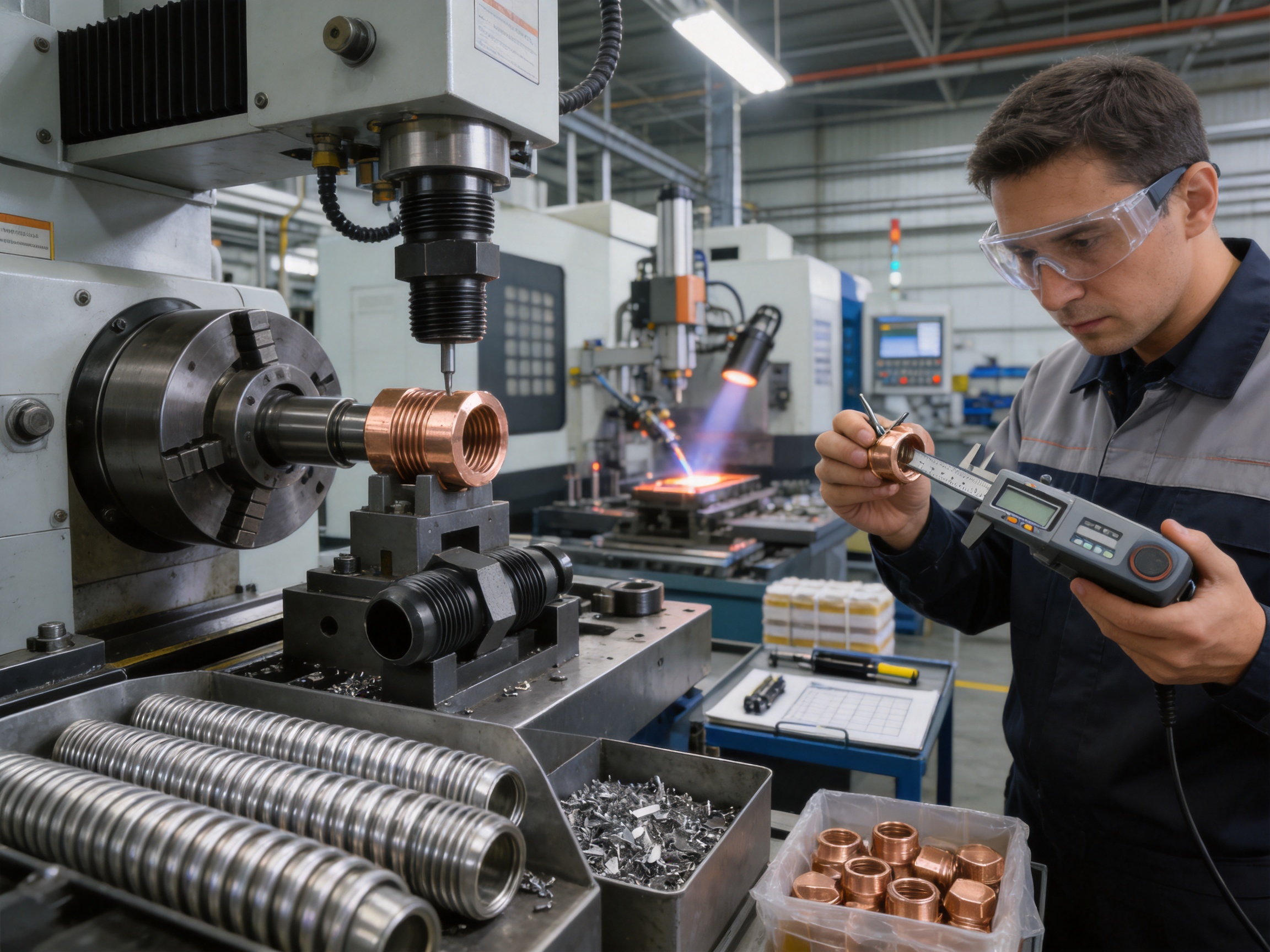
Copper nuts may be produced through a combination of cold forming, hot forming, forging, turning, drilling, tapping, and other machining operations. The selected process depends on the product dimensions, production volume, geometry, material grade, and required tolerance.
Forming can produce a near-net-shape component with efficient material usage and good repeatability. Machining can then refine the external profile, internal bore, seating area, and thread. CNC equipment supports accurate control of cutting parameters and allows the production of consistent batches.
Advanced CNC forming machines are particularly useful for complex connector components. They can maintain repeatable dimensions while reducing variation between production lots. Computer-controlled equipment also makes it easier to adjust programs for different nut sizes and connector configurations.
Thread Manufacturing and Control
Thread accuracy is one of the most important quality factors for a connector nut. The thread must match the specified standard, pitch, diameter, form, and tolerance. A damaged, incomplete, or contaminated thread may cause cross-threading, leakage, or insufficient clamping force.
During production, thread gauges and dimensional measuring equipment can be used to verify internal thread quality. Operators may inspect the thread for burrs, tearing, incomplete profiles, surface damage, and abnormal roughness. Functional assembly checks with a matching fitting provide an additional level of verification.
The thread entrance should be properly chamfered or finished to support smooth engagement. Internal burrs must be removed because they can interfere with assembly or become detached inside the plumbing system. Clean thread production also reduces the risk that metal particles will contaminate valves, filters, pumps, or sensitive equipment.
Deburring and Surface Finishing
After forming and machining, the nut may contain sharp edges or small burrs. Deburring is therefore an essential process. It improves handling safety, supports proper gasket contact, and reduces the chance of damaging the flexible hose or sealing element during assembly.
Surface finishing may include cleaning, polishing, brushing, controlled tumbling, or other treatments suitable for copper. The objective is to achieve a clean and uniform surface without reducing critical dimensions. Excessive polishing can alter the bearing area or thread geometry, so finishing processes must be controlled carefully.
A clean surface is especially valuable in plumbing and hygiene-sensitive applications. Manufacturing residues, cutting oils, abrasive particles, and loose metal fragments should be removed before packaging. The appropriate cleaning method depends on the material, customer requirements, and intended application.
Integration with Stainless Steel Flexible Components
Haoyin (Ningbo) Bellows Technology Co., Ltd. specializes in stainless steel bellows and flexible connection solutions. This capability is important because the copper nut is normally used as part of a larger assembly rather than as an isolated component. The connector body, corrugated tube, end fitting, gasket, nut, and packaging must be considered together.
Stainless steel bellows and corrugated tubes provide flexibility, movement absorption, and resistance to many plumbing and industrial environments. The copper nut provides the threaded fastening interface. Combining these materials requires attention to dimensional matching, contact behavior, galvanic compatibility, temperature, fluid chemistry, and installation torque.
A manufacturer with control over the complete connector system can coordinate the design of the nut with the hose end and fitting. This integrated approach is more reliable than purchasing unrelated components from different sources and assuming that nominal size alone guarantees compatibility.
Welding, Forming, and Specialized Equipment
Advanced stainless steel connector manufacturing may involve laser welding, CNC forming, bellows forming, and specialized inspection equipment. Laser welding provides concentrated energy input and can create precise joints with limited heat-affected areas when correctly controlled. CNC forming machines support repeatable corrugation and component shaping.
Specialized equipment such as COSMO systems, eddy current flaw detectors, and automatic packaging systems can contribute to production efficiency and quality assurance. Eddy current inspection is useful for detecting certain surface and near-surface discontinuities in conductive materials. Automated packaging can reduce handling contamination, improve counting accuracy, and protect components during transportation.
The use of advanced equipment is valuable only when supported by trained personnel, preventive maintenance, calibrated instruments, documented procedures, and effective process monitoring. Manufacturing strength is therefore a combination of technology, engineering knowledge, quality culture, and disciplined execution.
Quality Management and Product Reliability
Haoyin has established management systems associated with ISO9001 quality management, ISO14001 environmental management, and ISO45001 occupational health and safety management. These systems provide a framework for controlling processes, documenting responsibilities, reducing environmental impact, and improving workplace safety.
For a flexible plumbing connector copper nut, quality management should cover the entire product life cycle. It begins with product design and material selection, continues through forming and machining, and extends to inspection, packaging, delivery, and after-sales support.
Dimensional Inspection
Dimensional inspection may include measurements of outside diameter, inside diameter, nut height, wall thickness, thread dimensions, seating geometry, and concentricity. These measurements verify that the component matches the approved drawing and can be assembled with the corresponding connector and fitting.
Critical dimensions should be identified during product development. Not every dimension has the same influence on performance. Thread dimensions, sealing surfaces, and contact shoulders normally require particularly careful control. Statistical process monitoring can help identify gradual tool wear or process drift before nonconforming parts reach the customer.
Visual and Surface Inspection
Visual inspection can identify cracks, dents, deep scratches, oxidation, incomplete forming, sharp edges, contamination, or other visible defects. Surface condition is relevant not only to appearance but also to sealing and corrosion performance.
Inspection lighting, magnification, reference samples, and clearly defined acceptance criteria help improve consistency. For high-volume production, automated vision systems may be used to identify dimensional or surface abnormalities at production speed.
Functional Assembly Testing
Functional testing confirms that the nut performs correctly with its mating components. A sample nut may be assembled onto a specified fitting and checked for smooth thread engagement, correct seating, tightening behavior, and disassembly performance.
Finished connector assemblies may also undergo leak testing, pressure testing, vacuum testing, tensile testing, bending evaluation, vibration testing, or thermal cycling according to the intended product category. The exact test method should reflect the application and relevant technical requirements.
Leak testing is especially important for water, gas, heating, and industrial fluid connections. A successful leak test demonstrates that the complete assembly maintains pressure under the defined test conditions. It does not eliminate the need for correct field installation, but it provides valuable evidence of manufacturing consistency.
Applications Across Plumbing and Connection Industries
Residential Water Supply
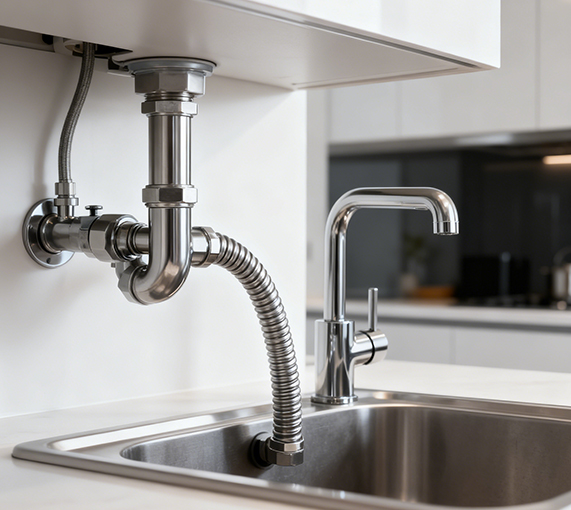
Flexible plumbing connectors are commonly used beneath sinks, behind toilets, near water heaters, and at other points where a rigid pipe connection would be inconvenient. A copper nut can provide a clean and durable fastening component for these environments when matched with the correct connector and fitting.
Residential applications often require compact dimensions, easy installation, attractive appearance, and reliable long-term sealing. The connector should be selected according to water temperature, pressure, connection size, and local plumbing requirements.
Commercial Buildings
Commercial buildings contain extensive plumbing networks serving washrooms, kitchens, heating equipment, mechanical rooms, and utility systems. Flexible connectors can simplify installation around pumps, valves, tanks, heat exchangers, and appliances.
In commercial settings, maintenance efficiency is important. Components with consistent dimensions and dependable corrosion resistance can reduce service interruptions. Clear product identification, packaging accuracy, and traceable quality records also support contractors and facility managers.
Heating and Hot-Water Systems
Heating systems experience thermal expansion, vibration, and repeated temperature cycling. Flexible metal hoses and bellows can help accommodate movement and reduce stress transferred to rigid pipework. A copper nut can be used at the connection point when its temperature, pressure, and material compatibility are suitable.
The complete assembly must be selected for the maximum operating temperature and pressure, not merely the average working conditions. Gaskets and sealing materials must also be compatible with hot water, heating fluids, additives, and expected service life.
Healthcare and Hygiene-Sensitive Facilities
Healthcare facilities, laboratories, food-service areas, and other hygiene-sensitive environments require careful material and surface selection. Copper’s natural antibacterial characteristics, cleanable surface, and corrosion resistance in many water conditions make it a useful option for selected connection applications.
Nevertheless, hygiene depends on the entire installation. Dead legs, stagnant water, poor drainage, contamination during construction, and inadequate cleaning can create risks regardless of the nut material. Connector design and installation should therefore follow the requirements of the facility and applicable regulations.
Industrial HVAC Systems
Industrial HVAC equipment may include pumps, compressors, heat exchangers, fans, cooling units, and control assemblies. Vibration isolation and movement compensation are important in these systems. Flexible metal connectors can reduce mechanical stress and make equipment alignment easier.
Copper nuts may be appropriate where the fluid, temperature, pressure, and mechanical loads are within the selected design range. Industrial users should confirm the chemical compatibility of copper with treated water, glycol solutions, refrigerant-related environments, and any cleaning or maintenance chemicals.
Gas and Specialized Connections
Although the product described here focuses on plumbing applications, the same manufacturing capabilities can support gas connectors and other flexible connection products. Gas applications require especially strict attention to sealing, material compatibility, pressure rating, ignition safety, and certification requirements.
A copper nut should never be used in a gas system solely because it fits mechanically. The complete connector must be specifically designed, tested, and approved for the intended gas service. Installation must be performed according to applicable codes and qualified procedures.
Installation Recommendations
Confirm Compatibility Before Installation
Before installation, verify the connector size, thread standard, nut material, fitting type, pressure rating, temperature range, fluid compatibility, and applicable approval requirements. Nominal diameter does not always guarantee thread compatibility. Different thread standards may appear similar but fail to seal correctly.
Inspect the nut, fitting, hose, and sealing element for damage or contamination. Do not use components with cracked threads, deformed sealing surfaces, deep corrosion, or visible manufacturing defects. Confirm that the gasket or ferrule is the correct type for the connector.
Prevent Cross-Threading
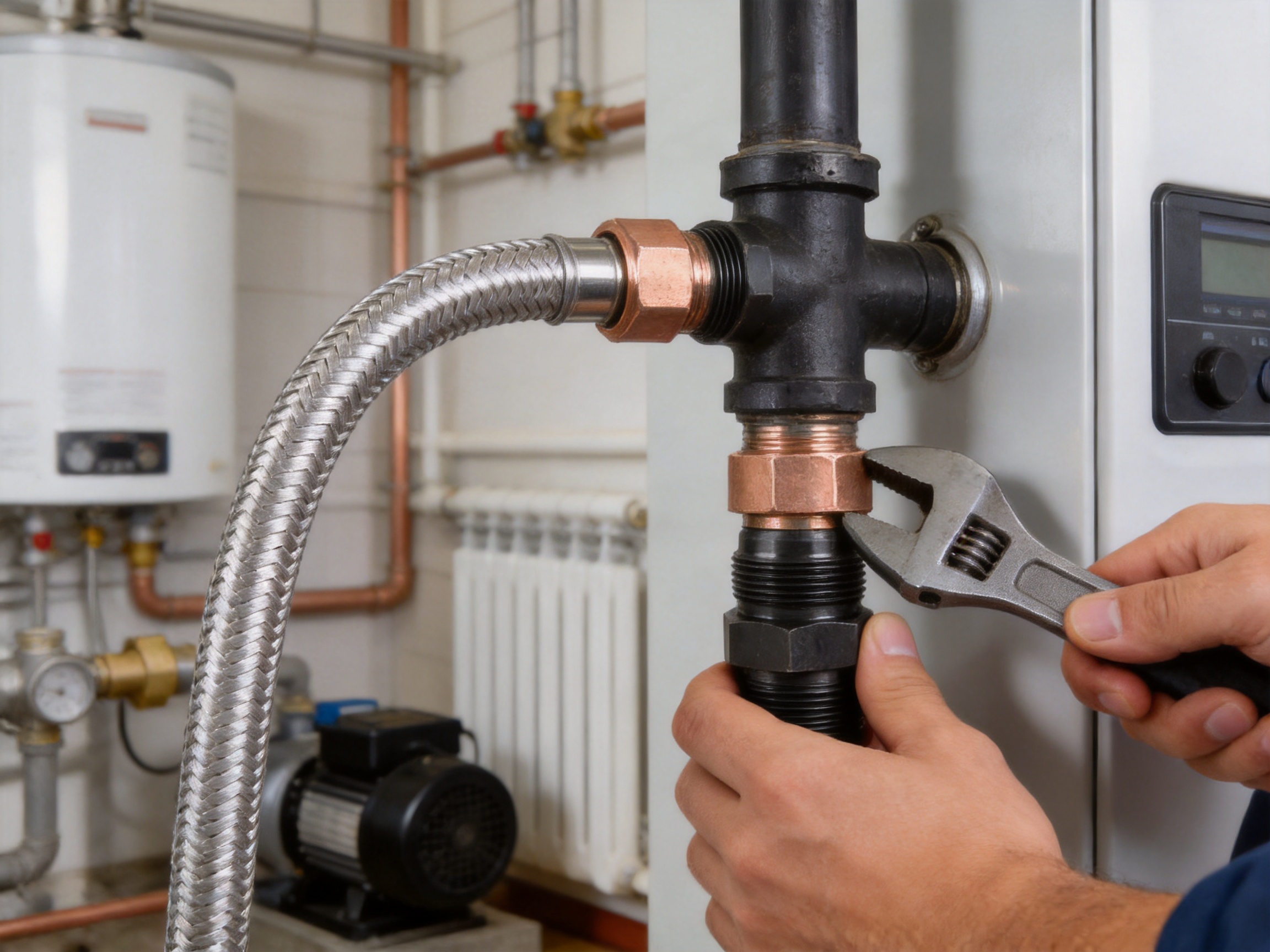
Start the nut by hand and rotate it carefully. It should engage smoothly with the mating thread. If resistance occurs immediately, stop and inspect the alignment. Forcing a cross-threaded nut can damage both components and may create a connection that appears tight but leaks under pressure.
Keep the connector and fixed fitting aligned during installation. The flexible section should not be used to pull two misaligned components together. Correct alignment reduces stress on the nut and improves the reliability of the seal.
Avoid Twisting and Over-Bending
Flexible hose should be bent only within the manufacturer’s specified minimum bend radius. Twisting the hose while tightening the nut can introduce torsional stress into the corrugated tube and may shorten service life. Use a wrench on the designated fitting or nut area rather than turning the hose body.
The connector should not be installed under tension. Allow sufficient length for a natural curve and avoid sharp bends near the nut. If movement, vibration, or thermal expansion is expected, the connector layout should accommodate these effects without exceeding the product’s design limits.
Apply Correct Tightening Torque
Over-tightening is a common cause of connector damage. Excessive torque may deform copper, crush a gasket, strip a thread, or place excessive stress on the hose end. Under-tightening may result in insufficient sealing pressure.
Use the manufacturer’s installation instructions and recommended torque values. Where torque information is not provided, consult the supplier or a qualified plumbing professional rather than relying on force alone. After pressurization, inspect the connection for leakage and retighten only according to approved procedures.
Maintenance and Service Considerations
Flexible plumbing connectors should be inspected periodically, particularly in areas with high humidity, vibration, temperature changes, or limited access. Look for signs of leakage, discoloration, corrosion, mechanical damage, hose distortion, or contact with sharp edges.
The copper nut should remain firmly seated without visible cracking or deformation. If the connector is repeatedly removed and reinstalled, examine the thread and sealing components before each reuse. Replace gaskets, washers, or other disposable sealing elements when required.
Do not paint over threads or sealing surfaces. Avoid applying unapproved compounds that could affect gasket materials, water quality, or thread engagement. If a thread sealant is required, use only a product compatible with the connector design and service medium.
Service life depends on many factors, including water chemistry, operating pressure, temperature, vibration, installation quality, and exposure to chemicals. A high-quality copper nut improves the connection’s potential reliability, but no component can compensate for incorrect selection or abusive operating conditions.
Environmental and Organizational Strengths
Modern component manufacturing must address product quality as well as environmental responsibility and worker safety. Haoyin’s management systems include environmental and occupational health and safety frameworks, supporting a more systematic approach to manufacturing operations.
Efficient forming and machining can reduce material waste when compared with poorly controlled production. Process optimization, recycling of suitable metal scrap, responsible use of cutting fluids, energy management, and organized production planning can contribute to a lower environmental burden.
Standardized workshops and automated packaging systems also improve production organization. Better organization can reduce mix-ups, protect finished components, and support more efficient inventory management. These benefits are valuable for distributors, contractors, and original equipment manufacturers that require stable supply and consistent packaging.
A company’s manufacturing strength is also reflected in its engineering support. Product development teams can help customers select dimensions, connection structures, material combinations, and test requirements. This technical cooperation is particularly useful when a standard connector must be adapted to a specific appliance, building service, or industrial assembly.
Why Professional Manufacturing Matters
The market contains many visually similar connector nuts, but appearance alone does not demonstrate quality. Two copper nuts may have the same nominal size while differing significantly in material grade, thread accuracy, wall thickness, seating geometry, surface cleanliness, and inspection history.
Professional manufacturing reduces these differences through controlled procedures. Engineering drawings define the product. Approved materials establish the starting point. CNC forming and machining provide repeatable geometry. Deburring and cleaning improve assembly behavior. Inspection verifies critical characteristics. Functional testing confirms performance. Proper packaging protects the product until it reaches the installation site.
Haoyin’s focus on stainless steel bellows and flexible connection systems gives it experience with the interaction between flexible tubes and connection hardware. This system-level knowledge helps ensure that the copper nut is not treated as an isolated commodity but as a component that must perform together with the hose, fitting, gasket, and operating environment.
The company’s production capabilities include standardized workshops, a professional research and development team, laser welding equipment, CNC forming machines, eddy current flaw detection, specialized COSMO equipment, and automatic packaging systems. These resources support product consistency, engineering development, and efficient delivery across different connector categories.
Selection Guide for Buyers and Engineers
When selecting a flexible plumbing connector copper nut, buyers should first define the application. Important questions include whether the connector will carry drinking water, hot water, heating fluid, treated water, or another medium. The pressure and temperature range should be identified, along with the expected vibration, movement, installation space, and maintenance conditions.
The next step is to confirm the connection standard. Thread type, size, sealing method, nut dimensions, and mating fitting geometry must correspond exactly. If the connector is being integrated into an existing system, samples or technical drawings may be required to verify compatibility.
Material selection should consider galvanic interaction. Copper connected directly to another metal may behave differently depending on the fluid and environment. The presence of chloride, dissolved oxygen, cleaning chemicals, or stagnant water may influence long-term performance. A qualified manufacturer can help evaluate the suitability of the proposed material combination.
Buyers should also review quality documentation, inspection procedures, packaging requirements, and batch traceability. For regulated projects, request relevant certificates, test reports, and compliance information before placing an order.
| Selection question | Why it matters | Recommended action |
|---|---|---|
| What fluid will pass through the connector? | Fluid chemistry affects corrosion, hygiene, and sealing material compatibility. | Provide the manufacturer with the fluid type and any additives. |
| What are the maximum pressure and temperature? | Extreme conditions influence nut strength, gasket performance, and hose life. | Select the complete connector according to maximum design conditions. |
| What thread standard is required? | Similar-looking threads may not seal or assemble correctly. | Confirm thread type, pitch, diameter, and tolerance. |
| Will the connector experience movement or vibration? | Movement can transfer stress to the nut and hose end. | Use the correct flexible length and installation geometry. |
| Are hygiene or non-magnetic properties important? | Some facilities have material restrictions or special performance needs. | Confirm copper suitability with the project specification. |
| Are certifications required? | Building, gas, drinking-water, and industrial projects may have different approval rules. | Request current documentation before purchase. |
Frequently Asked Questions
What is a flexible plumbing connector copper nut?
It is a threaded copper fastening component used to secure a flexible plumbing connector to a compatible fitting. It normally works with a gasket, washer, ferrule, or formed hose end to create a mechanically stable and sealed connection.
Is the copper nut the same as the complete flexible connector?
No. The copper nut is one component of the assembly. A complete flexible connector may include a corrugated stainless steel tube or bellows, end fittings, gaskets, sleeves, and protective packaging. The nut must be matched to the complete connector design.
What are the main advantages of copper?
Copper offers excellent electrical and thermal conductivity, good resistance to atmospheric and many freshwater corrosion conditions, natural antibacterial characteristics, non-magnetic behavior, and very good manufacturing workability. These properties make it suitable for selected plumbing, heating, hygiene-sensitive, and specialized applications.
Can a copper nut be used for drinking-water systems?
It may be suitable when the material, surface condition, complete connector, and manufacturing process comply with the requirements applicable to the drinking-water project. Buyers should confirm local regulations, approvals, water chemistry, and supplier documentation before use.
Can it be used in seawater or marine environments?
Copper has useful resistance to atmospheric and seawater corrosion, but marine service can be demanding. Salinity, temperature, flow velocity, oxygen concentration, and contact with other metals all affect performance. A complete engineering review is recommended for continuous seawater exposure.
Is copper magnetic?
Copper is non-magnetic under ordinary conditions. This property can be useful in precision equipment, electronic environments, and applications where magnetic interference should be minimized.
Does the copper nut provide the seal by itself?
No. The nut applies the clamping or compression force required by the connector design. The actual seal is created by the gasket, washer, ferrule, formed tube end, or contact surfaces working together with the nut and mating fitting.
How can cross-threading be prevented?
Confirm that the threads are compatible, align the connector carefully, and start the nut by hand. It should turn smoothly for several rotations before a wrench is used. If resistance occurs immediately, stop and inspect the alignment rather than forcing the connection.
Can the nut be over-tightened?
Yes. Over-tightening may deform the copper, damage the thread, crush the gasket, or stress the flexible hose. Use the supplier’s torque instructions and apply force only to the designated nut or fitting area.
What equipment is used to manufacture the connector system?
Professional production may use CNC forming machines, precision machining equipment, laser welding machines, specialized forming systems, eddy current flaw detectors, inspection instruments, and automatic packaging systems. The exact equipment depends on the product structure and required specifications.
Why is stainless steel often combined with a copper nut?
Stainless steel is commonly used for the flexible tube or bellows because it offers flexibility and corrosion resistance in many environments. Copper is used for the nut because it provides good workability, thermal conductivity, non-magnetic performance, and suitable corrosion resistance for selected plumbing applications. The combination must be engineered for compatibility.
What should be checked during maintenance?
Inspect for leakage, thread damage, corrosion, discoloration, hose twisting, sharp bends, vibration damage, and gasket deterioration. Replace damaged components and follow the product instructions for disassembly, gasket replacement, and reinstallation.
Can Haoyin supply only copper nuts?
Product availability depends on the required configuration and order specification. Haoyin specializes in stainless steel bellows and flexible connection solutions, including gas connectors, plumbing pipes and water liners, metal hoses, and compensators. Customers should provide drawings, samples, dimensions, application details, and quantity requirements for confirmation.
Conclusion
The flexible plumbing connector copper nut is a small component with a substantial influence on connection performance. Its value comes from the combination of material properties and manufacturing precision. Copper provides excellent thermal and electrical conductivity, useful corrosion resistance, natural antibacterial characteristics, non-magnetic behavior, and good workability. When these properties are supported by accurate forming, clean machining, reliable thread control, careful deburring, and complete inspection, the result is a dependable connection component.
Compared with generic or poorly protected alternatives, a professionally manufactured copper nut can provide more consistent assembly, improved resistance to ordinary moisture, and suitability for a broader range of plumbing and specialized environments. Its best performance is achieved when it is designed and supplied as part of a complete flexible connector system.
Haoyin (Ningbo) Bellows Technology Co., Ltd. combines research and development, stainless steel bellows manufacturing, CNC forming, laser welding, specialized inspection, quality management, and automated packaging to support flexible connection products. Its experience across gas connectors, plumbing pipes, water liners, metal hoses, and compensators provides a strong foundation for developing safe, efficient, and durable connection solutions.
For buyers, contractors, and engineers, the most important decision is to select the complete assembly according to fluid, pressure, temperature, movement, thread standard, hygiene requirements, and applicable regulations. With correct design, professional manufacturing, and proper installation, the flexible plumbing connector copper nut can contribute to a secure, serviceable, and long-lasting plumbing system.
References
1. General principles of copper and copper-alloy material selection for plumbing and fluid-handling components.
2. General engineering guidance for threaded pipe fittings, mechanical joints, and sealing interfaces.
3. Quality management principles based on ISO 9001 requirements for manufacturing organizations.
4. Environmental management principles based on ISO 14001 requirements.
5. Occupational health and safety management principles based on ISO 45001 requirements.
6. General technical guidance for stainless steel corrugated hoses, bellows, flexible connectors, and compensators.
7. General plumbing installation practices for threaded fittings, flexible connectors, gaskets, and pressure testing.