



 English
 Español
 русский



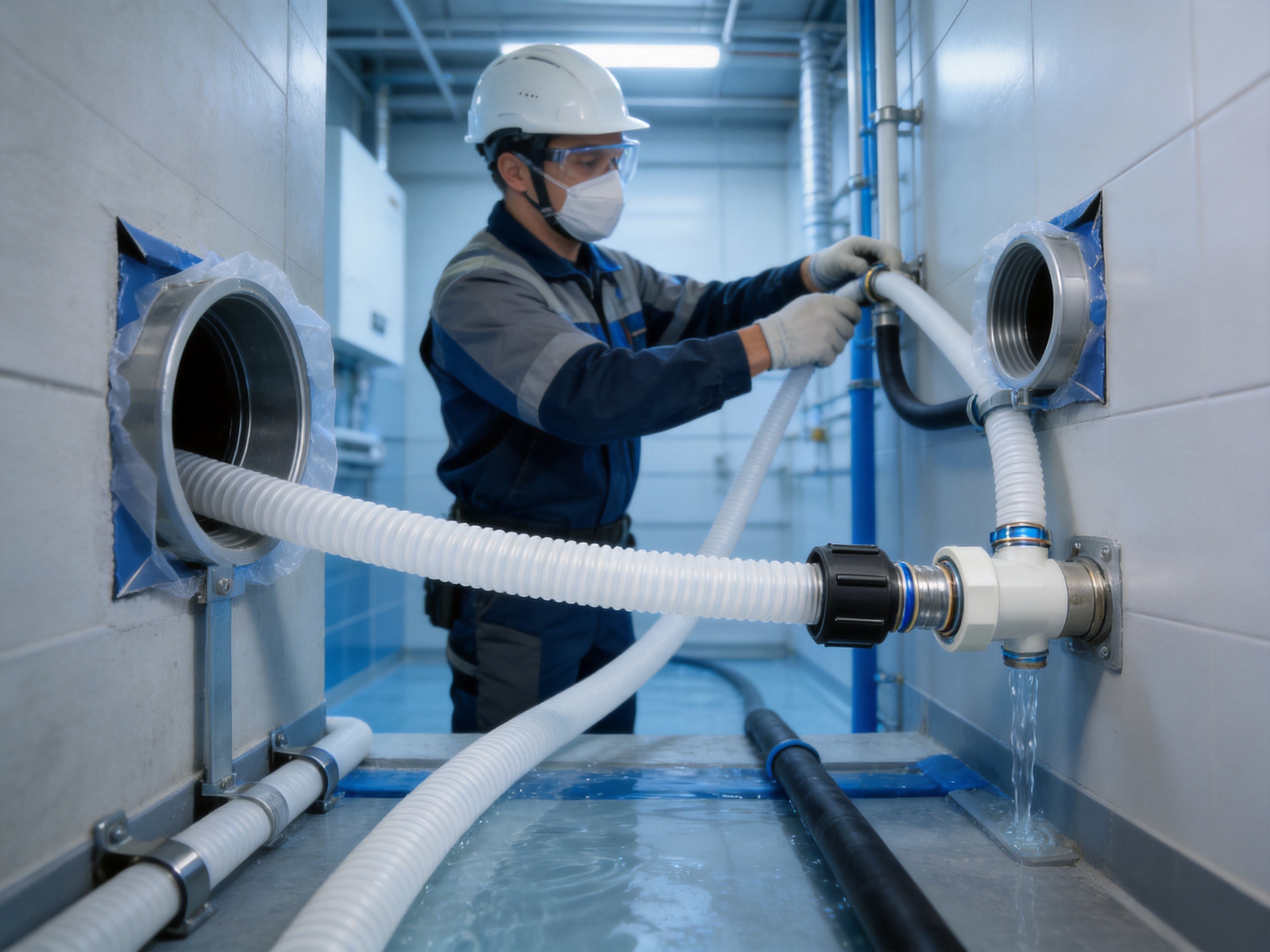
PE/PE corrugated flexible plumbing pipe is designed for applications that require a combination of flexibility, chemical resistance, low weight, reliable flow, and practical installation. Manufactured from polyethylene-based materials, this type of pipe can serve as an inner liner, inner pipe, or inner tube in plumbing, water conveyance, protective routing, and flexible connection systems. Its corrugated structure improves flexibility and supports resistance to external pressure, while the smooth inner wall helps maintain efficient fluid flow.
As building services, water systems, industrial equipment, and infrastructure projects become more demanding, pipe selection must consider more than nominal size and purchase price. Installers and engineers increasingly evaluate material stability, ease of handling, resistance to corrosion, sealing performance, service life, quality consistency, and compatibility with surrounding components. PE/PE corrugated flexible plumbing pipe addresses these requirements through a material and structural design that combines the advantages of polyethylene with the mechanical benefits of corrugation.
Haoyin (Ningbo) Bellows Technology Co., Ltd. supplies flexible connection and piping products for gas, plumbing, heating, healthcare, building heating, industrial HVAC, and other applications. Its product portfolio includes gas connectors, plumbing pipes and water liners, metal hoses, and compensators. The company’s experience in flexible piping, its standardized manufacturing facilities, and its full-process quality management approach provide a strong foundation for producing dependable pipe and liner solutions.
This article examines the construction, performance, installation advantages, manufacturing considerations, quality controls, and application value of PE/PE corrugated flexible plumbing pipe. It also explains how the product compares with more rigid or less chemically resistant alternatives and why supplier capability is an important factor in long-term system performance.
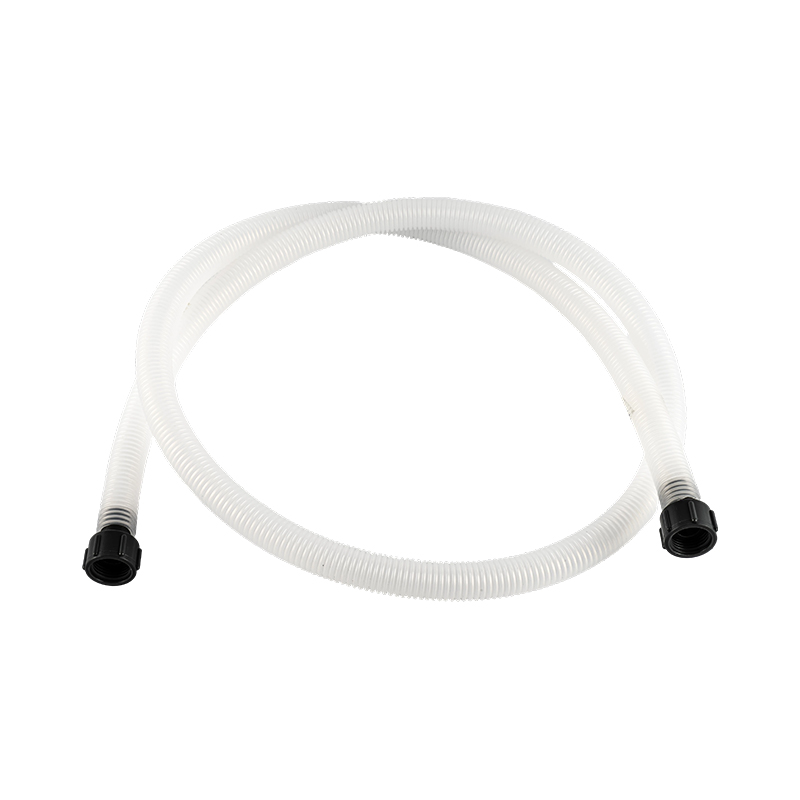
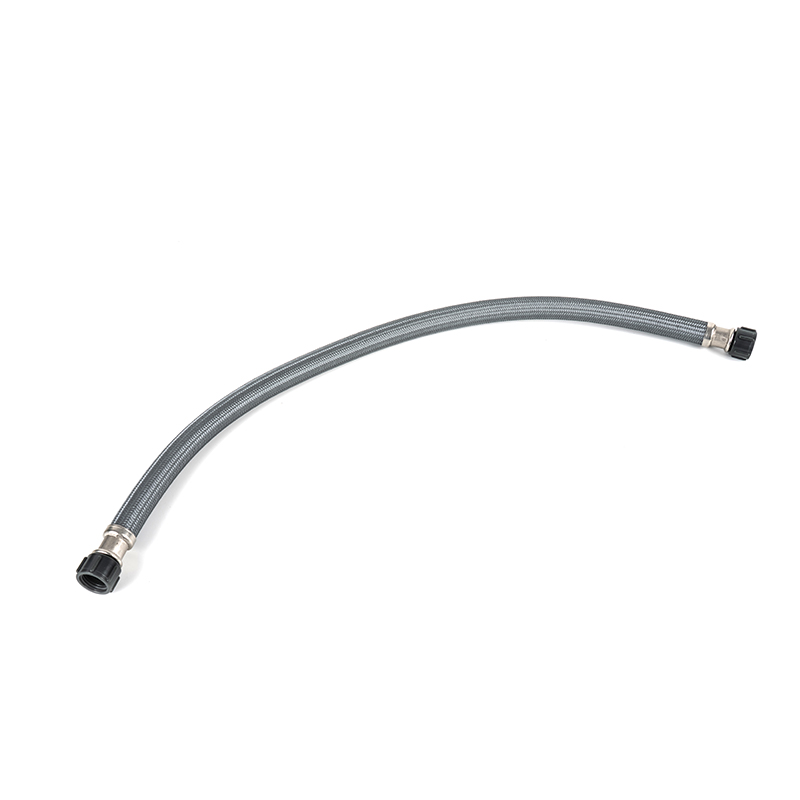
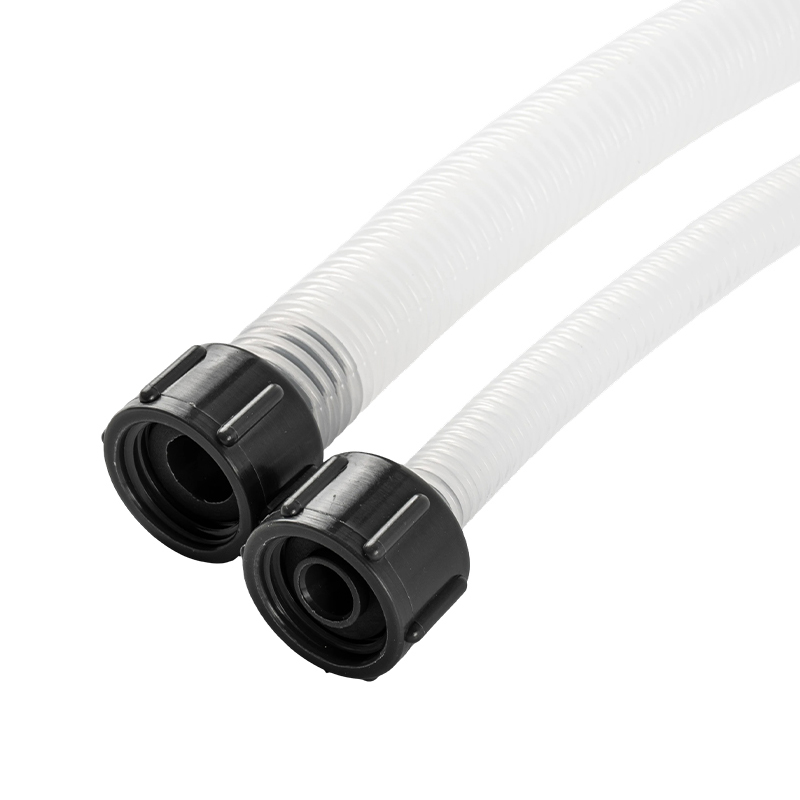
PE/PE corrugated flexible plumbing pipe
Understanding PE/PE Corrugated Flexible Plumbing Pipe
PE/PE corrugated flexible plumbing pipe is a polyethylene-based pipe product with a corrugated outer profile. Depending on the intended application and design specification, the term PE/PE may refer to a pipe system using polyethylene for both the inner fluid-contact layer and the outer corrugated layer. This construction is particularly useful where a smooth internal passage is required together with external flexibility and mechanical support.
The inner wall is responsible for transporting water or another compatible medium. A smooth internal surface reduces friction and helps support a high flow capacity. The outer corrugated structure provides repeated ribs or waves along the pipe length. These corrugations enable the pipe to bend more easily than a comparable rigid pipe and help it accommodate changes in direction, installation tolerances, and limited movement in the surrounding system.
The product is categorized as an inner liner, inner pipe, or inner tube because it can be integrated into broader flexible plumbing and connection assemblies. It may be used as a dedicated water liner, as part of a protective pipe arrangement, or in applications where a flexible polymeric passage is preferred over a metallic tube. Final suitability depends on the operating temperature, pressure, fluid chemistry, dimensions, connection method, and applicable project standards.
Material Characteristics of Polyethylene
Polyethylene is widely used in piping because it offers a useful balance of toughness, chemical stability, electrical insulation, processability, and cost efficiency. It is generally lightweight and can be manufactured in different grades and structural forms to meet varying requirements. For plumbing and water liner applications, the material’s resistance to corrosion is especially important.
Unlike conventional steel pipes, polyethylene does not depend on a metallic surface that can rust when exposed to water, humidity, salts, or certain chemicals. This helps reduce concerns related to corrosion products, surface degradation, and maintenance caused by oxidation. The material is also non-toxic and odorless when appropriate raw materials and manufacturing controls are used, making it suitable for applications where cleanliness and material stability are important.
Polyethylene also has high toughness. This characteristic helps the pipe tolerate handling, bending, vibration, and moderate external stresses during installation. Its flexibility can be beneficial in confined spaces, renovation work, and routing conditions where rigid sections would require numerous elbows or additional fittings.
The Function of Corrugation
A corrugated profile changes how the pipe responds to bending and external loading. Instead of forcing the entire wall to resist deformation as a uniform rigid tube, the corrugations allow controlled movement along the pipe length. This can make routing easier and reduce the need for complex directional fittings.
Corrugation also contributes to ring stiffness. Ring stiffness describes a pipe’s ability to resist deformation under external pressure or loading around its circumference. The exact performance depends on the material grade, wall thickness, corrugation geometry, diameter, and manufacturing precision. A properly designed corrugated pipe can offer strong resistance to external pressure while retaining useful flexibility.
For plumbing and liner applications, this balance is valuable. Excessive rigidity can complicate installation, while excessive softness can reduce dimensional stability. A well-engineered PE/PE corrugated pipe is intended to occupy the middle ground: flexible enough to route efficiently, yet sufficiently stable for its intended operating environment.
Key Product Advantages
Good Chemical Stability
PE/PE corrugated flexible plumbing pipe offers good chemical stability in many common service environments. Polyethylene is resistant to a broad range of water-related conditions and many non-aggressive chemicals. This helps protect the pipe from premature deterioration caused by contact with moisture, salts, cleaning residues, and compatible fluids.
Chemical compatibility must always be evaluated for the actual medium, concentration, temperature, and exposure duration. Nevertheless, the inherent stability of polyethylene provides an advantage over materials that are more vulnerable to rust, scaling, or chemical attack. This is particularly useful in plumbing systems where moisture exposure is continuous and inspection access may be limited.
Corrosion Resistance
Corrosion resistance is one of the clearest advantages of polyethylene pipe over ordinary carbon steel or other easily oxidized materials. Because the pipe is non-metallic, it does not rust in the same way as steel. The absence of metallic corrosion can support a cleaner internal passage and reduce the risk of leakage caused by wall thinning or pitting.
In coastal locations, humid mechanical rooms, underground routing, and areas exposed to condensation, corrosion resistance can reduce long-term maintenance requirements. It can also simplify system planning because designers do not need to apply the same level of corrosion protection used for uncoated steel pipe.
Light Weight and Easy Handling
Polyethylene has a lower density than most metals. As a result, PE/PE corrugated pipe is easier to transport, lift, position, and cut than a comparable metallic pipe. This can reduce physical effort during installation and may improve productivity when work is performed in narrow shafts, ceilings, cabinets, equipment rooms, or residential renovation areas.
Light weight also benefits logistics. More pipe can potentially be moved with less handling equipment, subject to packaging and project requirements. Installers can often position flexible lengths more efficiently than rigid sections, especially when the route includes several changes in direction.
High Flexibility
Flexibility allows the pipe to follow practical installation paths without relying on a large number of elbows, couplings, or directional components. This can shorten installation time and reduce the number of potential leakage points associated with multiple connections.
The pipe can also help accommodate minor movement caused by vibration, thermal change, equipment operation, or building settlement, provided the movement remains within the product’s design limits. Flexibility does not mean that the pipe can be sharply kinked or bent below its minimum radius. Correct support, routing, and bend control remain essential.
Smooth Inner Wall and High Flow Capacity
The smooth inner wall helps reduce resistance to fluid movement. Compared with rougher or internally corroded surfaces, a smooth polyethylene passage can support efficient flow and help reduce the tendency for deposits to accumulate. The actual flow capacity depends on internal diameter, pressure, fluid properties, pipe length, fittings, and system layout.
A smooth inner surface can be especially valuable in water liner applications. It supports predictable hydraulic performance and may help maintain system efficiency over time. Since the internal wall is not affected by metallic rust in the same manner as steel, the flow passage can remain more consistent when the pipe is properly selected and used.
Strong Resistance to External Pressure
The corrugated structure is designed to improve the pipe’s ability to withstand external pressure. This is relevant when the pipe is installed in protective channels, equipment assemblies, service spaces, or other locations where the outer surface may experience contact or loading.
External pressure performance depends on pipe geometry, material properties, installation conditions, support spacing, and load direction. The product should not be treated as universally suitable for heavy buried loading without project-specific verification. Within its intended design range, however, corrugation provides a useful combination of structural support and flexibility.
Excellent Sealing Performance
Reliable sealing is essential in water and plumbing systems. Leakage can damage surrounding structures, reduce system pressure, interrupt operation, and increase maintenance costs. PE/PE corrugated plumbing pipe can be integrated with suitable connection methods and sealing components to provide dependable joint performance.
Sealing quality depends on dimensional accuracy, surface condition, fitting design, gasket compatibility, assembly technique, and inspection. A capable manufacturer supports sealing performance by maintaining consistent dimensions and stable production conditions. Installers must also follow the specified connection procedure and avoid contamination, over-tightening, twisting, or improper insertion.
Long Service Life
Long service life is the result of multiple factors rather than one material characteristic. Polyethylene’s resistance to corrosion, moisture, and many chemicals provides a strong starting point. Its toughness and flexibility can also help it tolerate normal handling and moderate movement.
Actual service life depends on temperature, pressure, fluid chemistry, ultraviolet exposure, mechanical loading, installation quality, and maintenance. When the product is selected for a compatible environment and installed correctly, its non-metallic construction can support durable and economical operation.
Comparison with Alternative Pipe Materials
PE/PE corrugated flexible plumbing pipe competes with several categories of products, including rigid metal pipes, smooth-wall plastic pipes, rubber hoses, and multilayer flexible tubes. The best choice depends on the application, but the polyethylene corrugated design offers a distinctive combination of properties.
| Evaluation Factor | PE/PE Corrugated Flexible Pipe | Rigid Metal Pipe | Conventional Smooth Plastic Pipe | General-Purpose Rubber Hose |
|---|---|---|---|---|
| Weight | Lightweight and easy to handle | Usually heavy, especially in larger sizes | Lightweight | Generally lightweight |
| Flexibility | High, supported by corrugated structure | Low unless additional joints are used | Varies by material and wall design | Usually high |
| Corrosion Resistance | Strong resistance to metallic corrosion | May require coatings or protection | Generally strong | Generally strong, depending on compound |
| Inner Surface | Smooth inner wall for efficient flow | May roughen through corrosion or deposits | Usually smooth | May vary with lining and aging |
| External Pressure Resistance | Supported by corrugated geometry | Usually high, but weight is greater | Depends on wall thickness and design | Usually limited without reinforcement |
| Installation | Convenient routing with fewer directional fittings | Requires cutting, threading, welding, or multiple fittings | Often easy, but may need more rigid routing | Easy to route, but may require more support |
| Dimensional Stability | Balanced through material and corrugation design | High | Varies by polymer and temperature | Can change with pressure, heat, and aging |
| Typical Maintenance Concern | Connection condition and application compatibility | Rust, scale, weight, and joint corrosion | Thermal movement and material compatibility | Aging, abrasion, swelling, and fitting retention |
Compared with Metal Pipe
Metal pipe remains valuable for high-temperature, high-pressure, structural, and specialized industrial applications. However, it can be heavier and more difficult to route. Metallic systems may also require welding, threading, brazing, or additional corrosion protection. These operations increase labor requirements and can be difficult in occupied buildings or restricted spaces.
PE/PE corrugated pipe provides a lighter and more installation-friendly alternative where the operating conditions are compatible with polyethylene. Its resistance to corrosion can also reduce concerns about rust and water quality deterioration caused by internal oxidation. For applications requiring a flexible liner or connection path, the polymeric design may be more practical than rigid metal.
Compared with Smooth-Wall Plastic Pipe
Smooth-wall plastic pipe can provide excellent flow and chemical resistance, but it may be less flexible depending on its diameter, wall thickness, and polymer formulation. The corrugated construction adds a structural feature that can improve routing flexibility and external pressure performance.
The trade-off is that the outer profile is not smooth, so external support and fitting design must be appropriate. A project requiring a very rigid straight run may prefer smooth-wall pipe, while a project involving complex routing or a flexible liner may benefit from corrugation.
Compared with Rubber Hose
Rubber hoses are often highly flexible, but their performance depends strongly on the elastomer formulation, reinforcement, temperature, pressure, fluid chemistry, and aging conditions. Some rubber materials may swell, harden, crack, or lose flexibility over time.
PE/PE corrugated pipe offers a different performance profile. It combines flexibility with polyethylene’s chemical stability, low weight, smooth inner wall, and resistance to corrosion. It may be a better choice when a semi-structured flexible pipe is required rather than a soft hose that can collapse or change shape under pressure.
Applications in Plumbing and Water Systems
Water Liners and Inner Tubes
One of the most direct uses for the product is as a water liner or inner tube. A liner provides a dedicated fluid-contact passage inside a larger assembly or protective route. This arrangement can help isolate the conveyed water from external conditions and simplify integration with flexible plumbing products.
The smooth inner wall supports efficient water movement, while the flexible outer form helps the liner follow the intended route. The liner must be selected according to the water temperature, pressure, connection method, and applicable sanitary or technical requirements.
Residential Plumbing
Residential plumbing often includes tight spaces, multiple direction changes, and installation routes that are difficult to access after construction. A flexible pipe can reduce the need for numerous elbows and simplify routing around structural elements.
In renovation projects, the ability to install a lightweight flexible liner may reduce disruption. However, installers should provide suitable support, protect the pipe from sharp edges, avoid excessive bending, and ensure that all connections remain accessible or properly protected.
Building Heating and HVAC Systems
Building heating and industrial HVAC systems frequently include equipment that produces vibration or requires flexible connections. A suitable PE/PE pipe may be used in compatible low-temperature or water-related sections where flexibility and corrosion resistance are beneficial.
Application engineers must verify temperature and pressure limits before using polyethylene in heating systems. The product’s suitability cannot be determined from flexibility alone. Where the operating temperature exceeds the material’s rated range, another material or a specialized multilayer construction may be required.
Healthcare and Service Facilities
Healthcare facilities, laboratories, and service buildings often require clean, reliable, and maintainable water routing. The non-toxic and odorless characteristics associated with appropriate polyethylene materials can be advantageous in such environments. Smooth internal surfaces and corrosion resistance may also support stable water conveyance.
Projects in these sectors typically have additional requirements for documentation, hygiene, installation control, and traceability. The selected product should therefore be accompanied by the technical information and compliance documentation required by the project specification.
Industrial Equipment Connections
Industrial equipment may require flexible water or fluid connections to compensate for alignment differences, vibration, or limited installation space. PE/PE corrugated pipe can be considered for compatible service conditions where a lightweight, corrosion-resistant, flexible passage is needed.
Industrial applications require careful review of fluid chemistry, operating cycles, external abrasion, temperature variation, and pressure surges. If the system involves aggressive chemicals, high heat, or severe mechanical loads, engineering validation is essential.
Manufacturing Process and Engineering Quality
Product performance is closely related to manufacturing consistency. A pipe may have an appropriate material specification on paper but still underperform if wall thickness, corrugation geometry, surface quality, or dimensional accuracy varies excessively. Reliable manufacturing therefore requires controlled raw materials, stable forming conditions, accurate equipment, inspection procedures, and documented quality management.
Raw Material Selection
The manufacturing process begins with the selection and control of polyethylene raw materials. Material grade, melt behavior, toughness, chemical resistance, and processing stability affect the finished pipe. Consistent raw material quality helps maintain uniform extrusion and reduces variation between production batches.
Material storage is also important. Resin and other production inputs should be protected from contamination, excessive moisture, and improper handling. Traceability supports the ability to connect finished products with their production conditions and material records.
Extrusion and Profile Formation
Polyethylene pipe is commonly manufactured through extrusion. In this process, polymer material is heated, plasticized, and formed through a die into a continuous tube or profile. For a PE/PE corrugated product, the outer profile must be shaped so that the corrugations are consistent along the length.
Process control affects wall thickness, internal diameter, surface finish, concentricity, and corrugation geometry. Cooling conditions must also be controlled because uneven cooling can cause distortion or dimensional instability. Stable line speed, temperature control, and forming pressure contribute to repeatable results.
Inner Wall Smoothness
The inner wall is particularly important for fluid performance. Irregularities, contamination, or inconsistent dimensions can increase flow resistance and affect connection quality. Production equipment and tooling should therefore be maintained to prevent defects that could transfer to the fluid passage.
Inspection may include visual checks, dimensional measurement, surface evaluation, and functional testing. The exact inspection plan depends on the product specification and intended use, but the objective is to ensure that the internal passage remains suitable for the application.
Corrugation Accuracy
Corrugation must be sufficiently uniform to provide predictable flexibility and external pressure resistance. Variations in rib height, pitch, wall thickness, or alignment can create local stress concentrations or inconsistent bending behavior.
Accurate forming equipment, stable cooling, and continuous process monitoring help maintain the intended profile. The finished pipe should also be checked for flattening, cracks, incomplete formation, surface defects, and other conditions that could affect performance.
Connection and Sealing Compatibility
A high-quality pipe must work with its intended connectors, fittings, and sealing elements. Dimensional control is therefore essential. The outer and inner dimensions must remain within the tolerances required by the connection system, and the pipe end should be prepared without deformation or damage.
Manufacturers and installers should consider insertion depth, gasket design, compression, clamping force, and resistance to pullout. A pipe that is chemically stable but poorly connected can still cause system failure. Connection performance is a combined result of product design, manufacturing accuracy, fitting quality, and installation practice.
Manufacturing Strengths and Technical Infrastructure
Haoyin (Ningbo) Bellows Technology Co., Ltd. operates as a professional manufacturer specializing in the research, development, design, production, and sales of stainless steel bellows and flexible connection products. Its product range includes gas connectors, plumbing pipes and water liners, metal hoses, and compensators.
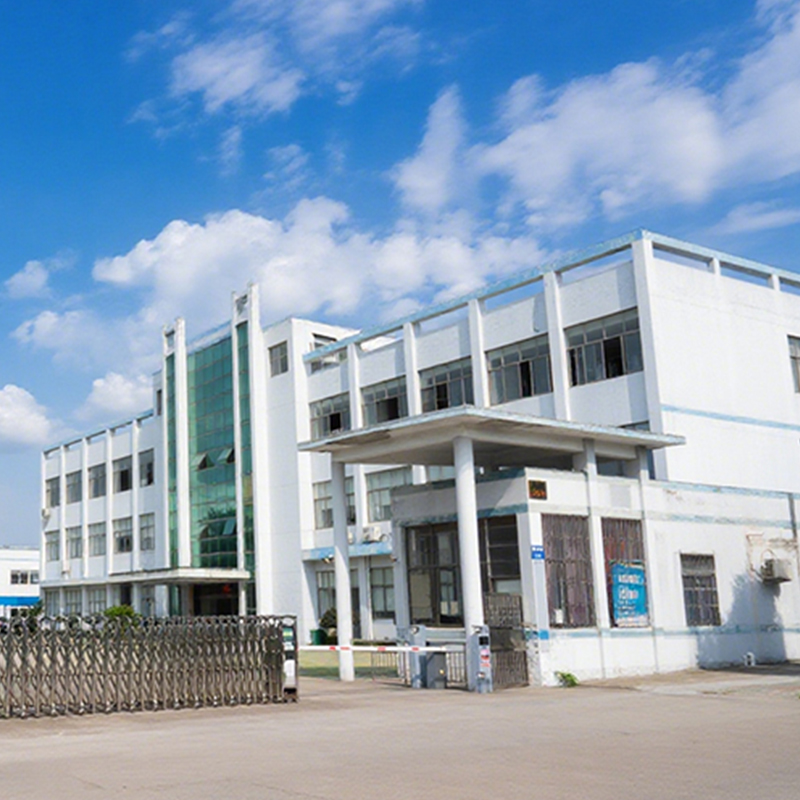
The company covers approximately 35 mu and has 18,000 square meters of standardized workshops. This scale provides a structured environment for production organization, quality control, equipment management, warehousing, and product testing. Standardized workshops are particularly valuable for flexible pipe products because stable environmental and process conditions help reduce dimensional variation.
The company has obtained ISO9001, ISO14001, ISO45001, and other management system certifications. These certifications reflect structured approaches to quality management, environmental management, and occupational health and safety. Certification alone does not replace product-specific testing, but it indicates that the organization has established formal processes for managing production activities and continual improvement.
Advanced Equipment
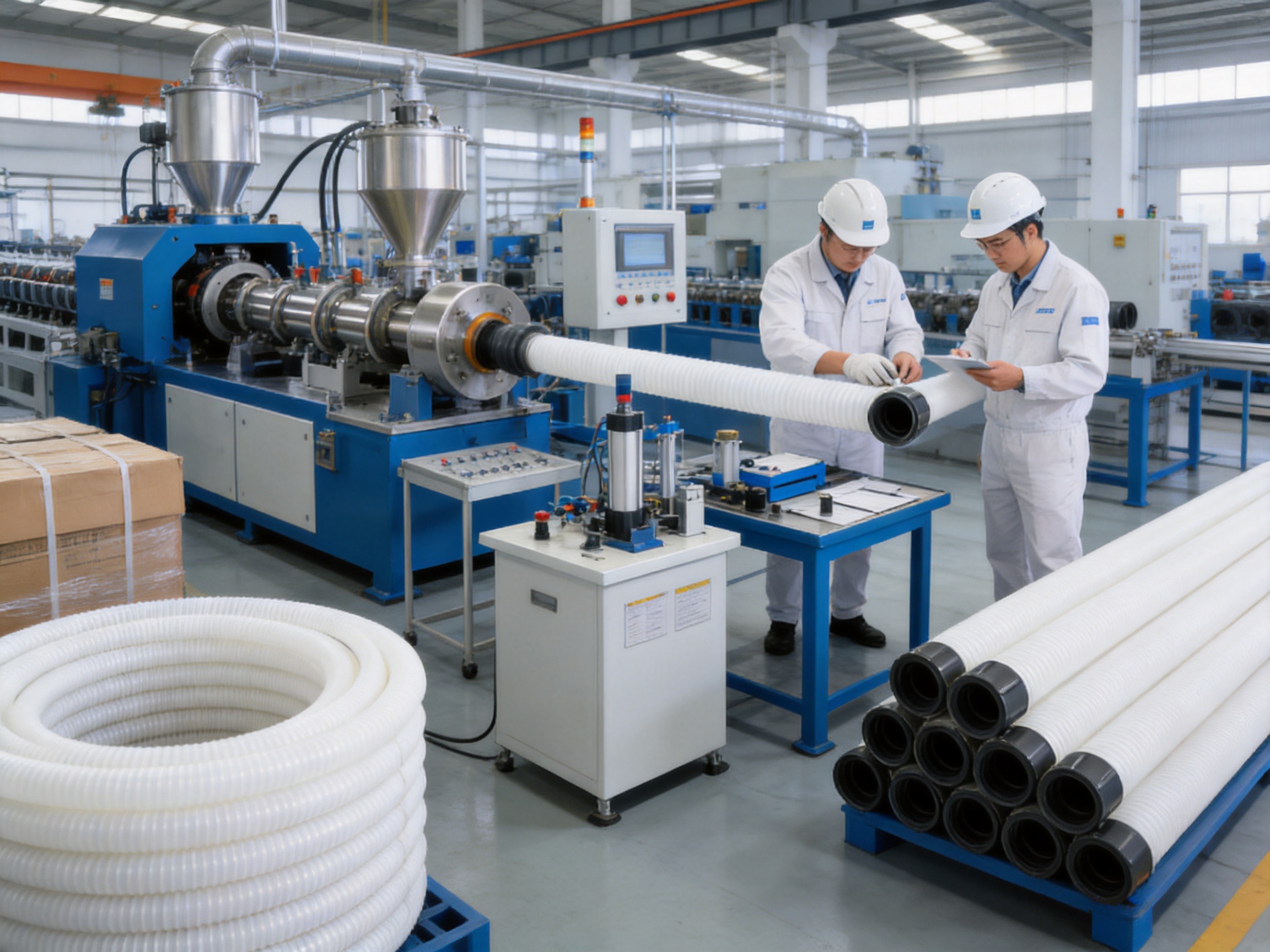
Haoyin has introduced advanced manufacturing equipment, including laser welding machines, CNC forming machines, COSMO equipment, eddy current flaw detectors, and automatic packaging systems. Some of these technologies are particularly associated with stainless steel bellows and metal flexible products, while the broader equipment base demonstrates the company’s ability to manage precision forming, joining, inspection, and packaging operations.
Laser welding can support precise and consistent joining where metallic components require controlled weld quality. CNC forming machines enable repeatable shaping of bellows and other formed components. Eddy current flaw detection provides a non-destructive inspection method for identifying certain discontinuities in conductive materials. Automatic packaging systems help protect finished products and improve handling consistency.
For PE/PE plumbing pipe, the most relevant manufacturing strengths include process discipline, dimensional control, product inspection, technical design, and organized packaging. The company’s experience with flexible connection products also supports an understanding of how pipes, liners, fittings, and assemblies must work together in practical systems.
Full-Process Quality Management
The company describes a full-process quality management system covering raw material selection, structural design, manufacturing, performance testing, and after-sales support. This approach is important because product quality is not created at the final inspection stage alone.
Raw material control helps maintain material stability. Structural design determines the balance between flexibility, ring stiffness, wall thickness, and flow passage. Manufacturing control affects dimensional accuracy and surface quality. Performance testing helps verify whether the finished product meets defined requirements. After-sales support provides technical communication when customers need guidance on selection, installation, or application conditions.
This full-process approach can distinguish a specialized manufacturer from a low-cost supplier focused only on basic extrusion. Buyers benefit when product development, production, inspection, packaging, and technical service are managed as connected activities rather than isolated steps.
Why Supplier Capability Matters
When comparing flexible plumbing pipe suppliers, buyers should evaluate more than unit price. A low purchase price can be offset by installation delays, inconsistent dimensions, leakage, premature replacement, or insufficient technical support. A capable supplier should be able to discuss the intended application and provide clear information about material, size, pressure, temperature, connection method, packaging, and inspection.
Research and Development Support
A professional R&D team can help adapt pipe structure and material selection to specific requirements. Different applications may require changes in diameter, wall thickness, corrugation profile, flexibility, stiffness, or connection design. R&D capability allows a manufacturer to address these requirements systematically rather than relying only on standard products.
Haoyin’s focus on bellows and flexible connection technology provides a relevant technical background for products that must manage movement, alignment, pressure, and sealing. This experience can be valuable when a customer requires a flexible liner or plumbing pipe to function as part of a larger assembly.
Production Scale and Consistency
Production scale can support better process organization, equipment investment, and quality documentation. However, scale is useful only when it is supported by effective management. Standardized facilities, trained personnel, calibrated equipment, and documented procedures are necessary to convert production capacity into consistent product performance.
For projects requiring repeated deliveries, consistency between batches is especially important. Pipe that varies in dimensions or flexibility can create installation problems even when individual pieces appear acceptable. A manufacturer with structured process controls is better positioned to maintain uniformity across production orders.
Testing and Inspection
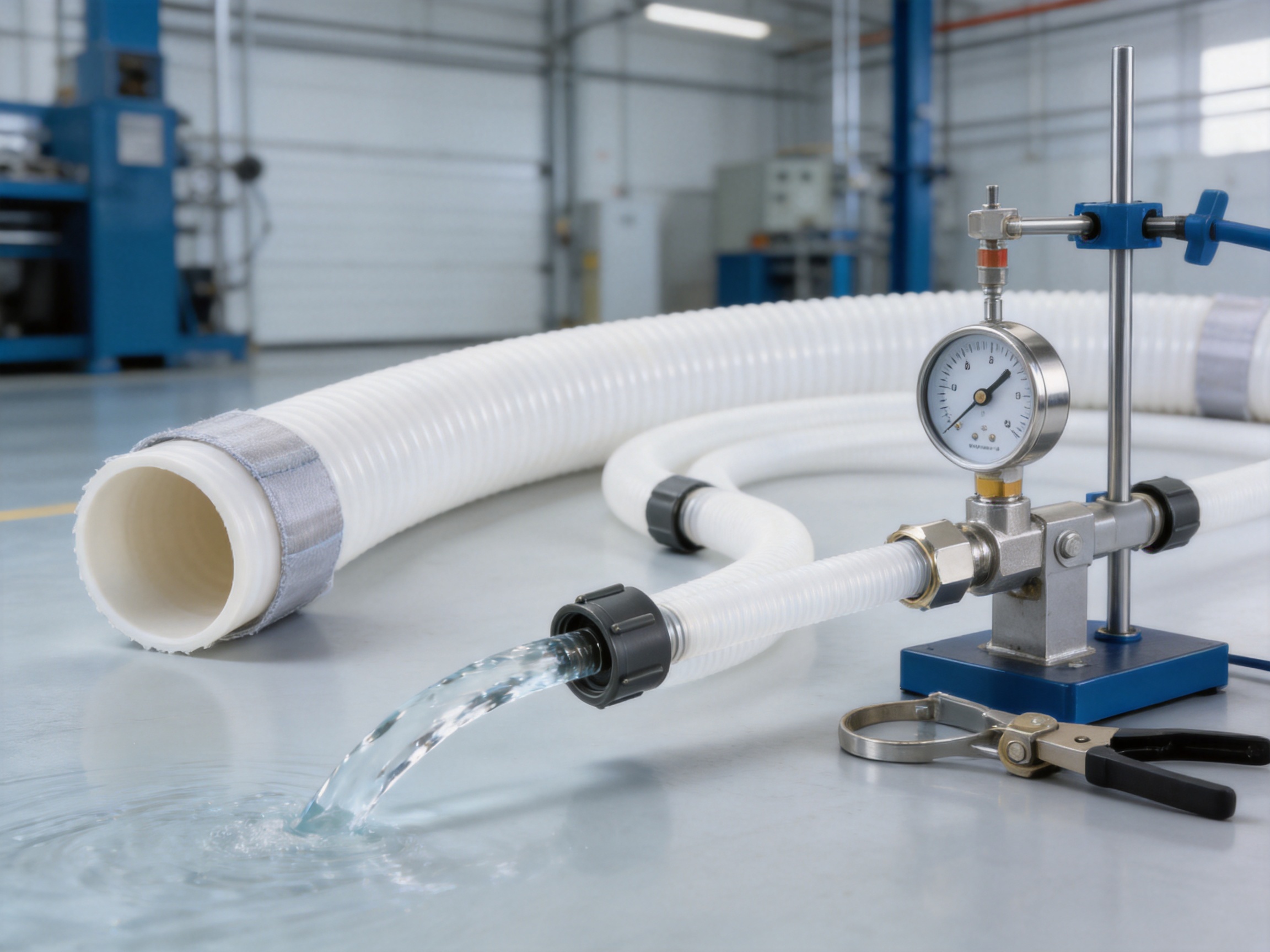
Testing should be matched to the product’s intended function. Possible evaluation areas include dimensional inspection, visual appearance, flexibility, pressure performance, leakage, ring stiffness, chemical compatibility, and connection retention. The exact test methods and acceptance criteria should be agreed according to the application and relevant standards.
Inspection records can support project documentation and traceability. For engineering contractors, distributors, and equipment manufacturers, this information can simplify approval procedures and help resolve questions during installation or commissioning.
Installation Guidance
Planning the Route
Before installation, plan the pipe route to avoid unnecessary sharp bends, abrasion points, excessive compression, and unsupported spans. The minimum bend radius should be respected. A flexible pipe should be routed smoothly rather than forced into a tight angle.
Where the pipe passes through walls, frames, or metal openings, protective sleeves or edge guards may be required. Sharp edges can damage the outer surface during installation or later movement. The pipe should also be kept away from heat sources and incompatible chemicals unless the product has been specifically rated for those conditions.
Handling and Storage
PE/PE corrugated pipe should be stored in a clean area and protected from crushing, contamination, and unnecessary ultraviolet exposure. Coils or lengths should be supported so they do not become permanently deformed. During transportation, avoid dragging the pipe over rough ground or allowing it to contact sharp objects.
Before installation, inspect the pipe for cuts, cracks, flattened sections, contamination, or other visible damage. Damaged sections should not be installed unless they can be properly removed and replaced according to the project procedure.
Connection Procedure
Connections should be made using compatible fittings and sealing elements. The pipe end must be cut squarely and prepared according to the fitting manufacturer’s instructions. Dirt, moisture, burrs, or deformation at the connection area can compromise sealing performance.
Do not twist the pipe excessively while tightening fittings. Excessive force can damage the pipe or distort the sealing element. After assembly, inspect the joint and perform the specified pressure or leakage test before placing the system into service.
Support and Protection
Flexible pipe still requires appropriate support. Excessive unsupported length can cause sagging, movement, or stress at the connections. Support spacing should be determined by pipe size, fluid weight, operating conditions, routing direction, and project requirements.
Where the pipe is exposed to impact, abrasion, sunlight, rodents, or construction activity, additional protection may be necessary. Corrugation improves mechanical performance but does not make the pipe immune to severe external damage.
Performance and Sustainability Considerations
PE/PE corrugated plumbing pipe can contribute to efficient resource use through its low weight, long service potential, and reduced dependence on corrosion protection. Lightweight products require less effort to transport and install, while flexible routing can reduce the number of fittings and the amount of auxiliary material needed in some systems.
The product’s service life is influenced by correct design and installation. Extending service life reduces replacement frequency, material consumption, and disruption to building or industrial operations. Smooth internal flow can also support efficient water conveyance, although total system efficiency depends on pumps, pipe dimensions, layout, fittings, and operating controls.
Haoyin’s ISO14001 environmental management certification and Green Factory designation demonstrate an organizational focus on environmental management and cleaner production practices. These credentials should be considered alongside product-specific information when evaluating sustainability. Buyers may also request details about packaging, production waste management, material identification, and end-of-life handling.
Selection Checklist for Buyers
Before purchasing PE/PE corrugated flexible plumbing pipe, the buyer should define the complete service conditions. The following questions help reduce selection risk:
What fluid will pass through the pipe, and is the polyethylene grade chemically compatible with it?
What are the normal and maximum operating pressures?
What are the minimum and maximum operating temperatures?
What internal diameter and external dimensions are required?
Is the product being used as a water liner, inner tube, protective pipe, or complete fluid-carrying pipe?
What bend radius is required by the installation route?
Will the pipe be exposed to sunlight, abrasion, impact, vibration, chemicals, or external pressure?
Which fittings, gaskets, clamps, or adapters will be used?
What pressure, leakage, dimensional, and performance tests are required?
What documentation is needed for project approval, traceability, and maintenance?
A supplier that can respond clearly to these questions demonstrates stronger technical capability than one that provides only a product photograph and a nominal size.
Quality, Reliability, and Competitive Value
The competitive value of PE/PE corrugated flexible plumbing pipe comes from the combination of several properties rather than a single headline feature. Good chemical stability supports durability. Corrosion resistance reduces maintenance risks. Low weight simplifies handling. Flexibility improves routing. Corrugation adds structural support. A smooth inner wall supports flow. Properly designed connections provide sealing reliability.
Compared with rigid metal alternatives, the product can reduce installation complexity and weight. Compared with soft hoses, it can provide better structural definition and dimensional stability. Compared with rigid smooth-wall plastics, it can offer greater flexibility and improved routing convenience. These advantages make it a practical option for a range of plumbing and liner applications.
The product’s performance is strengthened when it is manufactured by a company with experience in flexible connection technology, standardized facilities, technical R&D, quality certifications, advanced inspection resources, and organized after-sales support. Haoyin’s capabilities in stainless steel bellows, gas connectors, plumbing pipes, water liners, metal hoses, and compensators provide a broad technical platform for serving customers with different flexible piping requirements.
For distributors, original equipment manufacturers, contractors, and engineering companies, this broader capability can simplify sourcing. Instead of coordinating multiple suppliers for every flexible connection component, customers may work with one experienced manufacturer for compatible product families and technical communication.
Frequently Asked Questions
What is PE/PE corrugated flexible plumbing pipe?
It is a polyethylene-based flexible pipe with a corrugated outer structure and a smooth inner passage. It can be used as a plumbing pipe, water liner, inner pipe, or inner tube, depending on the design and application.
What are the main advantages of the product?
The main advantages include chemical stability, electrical insulation, low weight, high toughness, low cost, corrosion resistance, flexibility, ring stiffness, resistance to external pressure, smooth inner walls, high flow capacity, easy installation, long service life, and good sealing performance when used with compatible connections.
Is it suitable for drinking water?
Suitability for drinking water depends on the specific material grade, manufacturing controls, applicable regulations, and project certification requirements. Buyers should request product-specific compliance documentation before using the pipe in potable water systems.
Can it replace metal pipe in every application?
No. PE/PE corrugated pipe is suitable only when its pressure, temperature, chemical, mechanical, and dimensional capabilities match the application. High-temperature, high-pressure, aggressive chemical, or severe industrial conditions may require metal or another specialized material.
Does corrugation reduce flow performance?
The internal wall is designed to be smooth, so the outer corrugation does not necessarily create a rough internal flow passage. Flow performance depends on internal diameter, surface condition, pipe length, fittings, fluid properties, and system design.
Why is corrugation useful?
Corrugation improves flexibility and can support ring stiffness and resistance to external pressure. It allows the pipe to follow changes in direction more easily than many rigid pipe designs.
How should the pipe be connected?
The pipe should be connected with fittings and sealing elements designed for its dimensions and material. Pipe ends should be cut and prepared correctly, kept clean, and inserted or secured according to the connection instructions. The completed system should be tested for leakage and pressure performance as required.
What should be avoided during installation?
Avoid sharp bending below the specified minimum radius, dragging the pipe over rough surfaces, exposing it to incompatible chemicals or excessive heat, crushing it under heavy loads, and connecting it with incompatible fittings. Unsupported spans and sharp edges should also be addressed.
What manufacturing strengths does Haoyin provide?
Haoyin provides R&D, design, manufacturing, testing, and after-sales support for flexible connection products. The company operates standardized workshops, maintains ISO9001, ISO14001, and ISO45001 certifications, and uses advanced equipment such as laser welding machines, CNC forming machines, COSMO equipment, eddy current flaw detectors, and automatic packaging systems.
Can the product be customized?
Customization may be possible for dimensions, structure, connection requirements, packaging, and application-specific conditions. Customers should provide technical information about fluid, pressure, temperature, route, fittings, quantity, and required standards so the manufacturer can evaluate the request accurately.
How can buyers verify product quality?
Buyers can request material information, dimensional tolerances, inspection records, performance test results, quality certificates, traceability details, and installation instructions. They should also confirm that the product is manufactured for the intended service conditions.
Conclusion
PE/PE corrugated flexible plumbing pipe offers a balanced solution for water liners, inner pipes, flexible plumbing routes, and compatible connection systems. Its polyethylene construction provides chemical stability, corrosion resistance, toughness, low weight, and cost efficiency. Its corrugated structure improves flexibility and supports resistance to external pressure, while the smooth inner wall helps maintain efficient fluid flow.
Compared with rigid metal pipe, the product can simplify handling and routing. Compared with soft hoses, it can provide stronger structural definition and dimensional stability. Compared with some rigid plastic alternatives, it can offer greater flexibility and installation convenience. These advantages make it suitable for residential plumbing, building services, water liners, HVAC-related applications, healthcare facilities, industrial equipment, and other systems where operating conditions are compatible.
Reliable performance depends on more than material selection. Raw material control, extrusion stability, corrugation accuracy, dimensional consistency, connection compatibility, testing, packaging, and technical support all contribute to product value. Haoyin (Ningbo) Bellows Technology Co., Ltd. combines flexible connection expertise, standardized workshops, certified management systems, advanced manufacturing equipment, R&D capability, and full-process quality management to support dependable piping solutions.
For buyers seeking a lightweight, flexible, corrosion-resistant, and installation-friendly product, PE/PE corrugated flexible plumbing pipe is a practical option. The best results are achieved when the pipe is matched carefully to the service conditions and installed according to approved technical procedures.
References
1. Polyethylene Materials and Applications in Fluid Conveyance Systems, technical reference publication.
2. Principles of Thermoplastic Pipe Design, Installation, and Performance Evaluation, engineering handbook.
3. Flexible Plumbing and Water Liner Systems: Material Selection and Connection Practices, industry guidance document.
4. Quality Management Systems for Manufacturing Organizations, ISO 9001 reference materials.
5. Environmental Management Systems and Sustainable Manufacturing Practices, ISO 14001 reference materials.
6. Occupational Health and Safety Management in Industrial Production, ISO 45001 reference materials.
7. Polymeric Pipe Flow, Pressure, and External Loading Considerations, fluid engineering reference.
8. Haoyin (Ningbo) Bellows Technology Co., Ltd., product and company information supplied for technical content preparation.