




 English
 Español
 русский



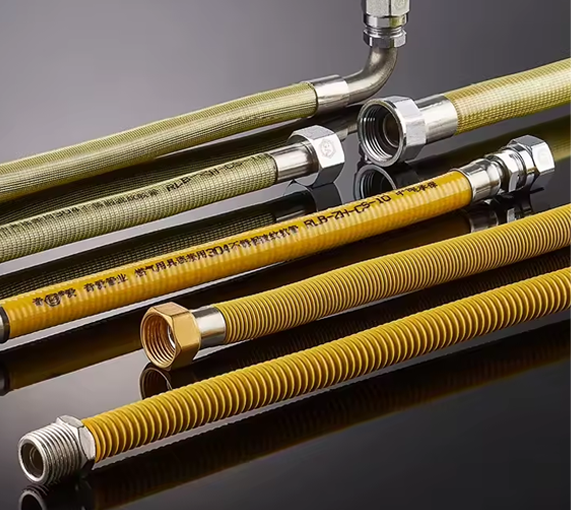
Gas connection components play a critical role in the safety, efficiency, and service life of residential, commercial, and industrial gas installations. Although a connector may appear to be a relatively small part of a complete gas system, its material quality, sealing structure, dimensional accuracy, flexibility, and resistance to environmental conditions can directly influence the performance of the entire installation. A well-designed connector must accommodate movement and alignment variations while maintaining a dependable gas-tight connection over an extended operating period.
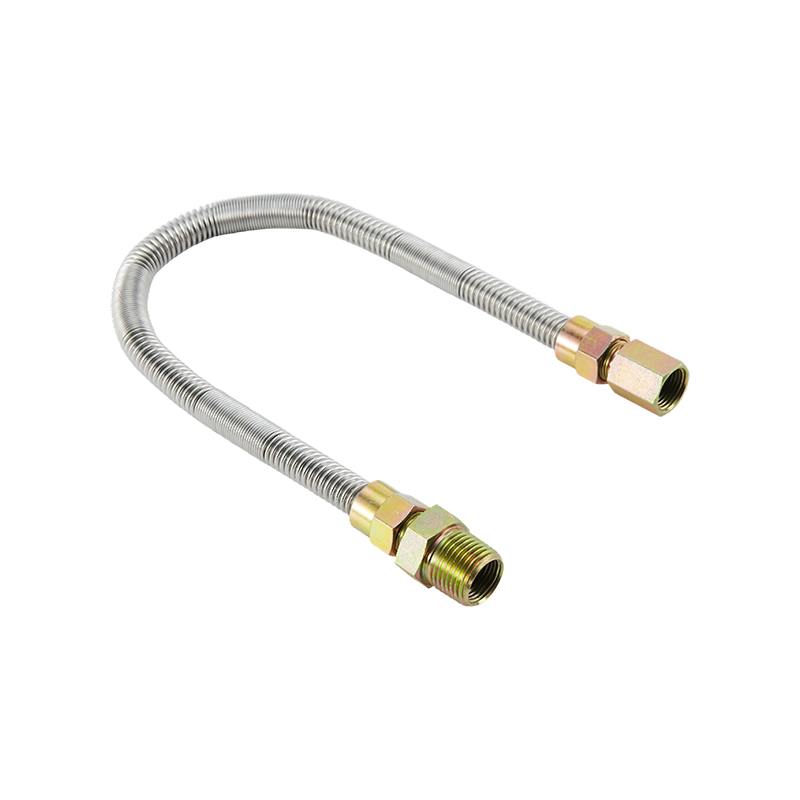
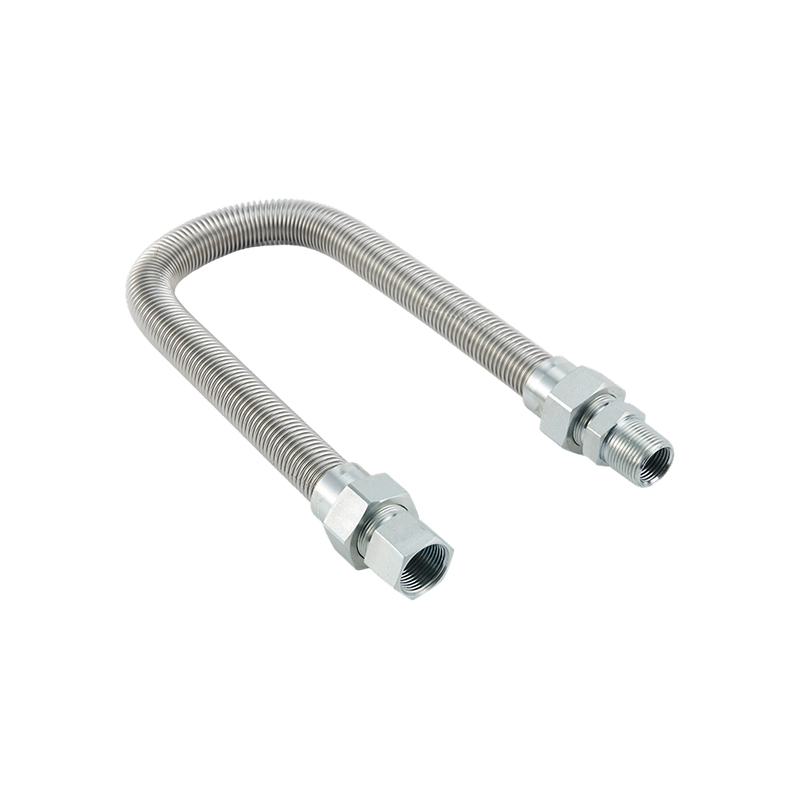
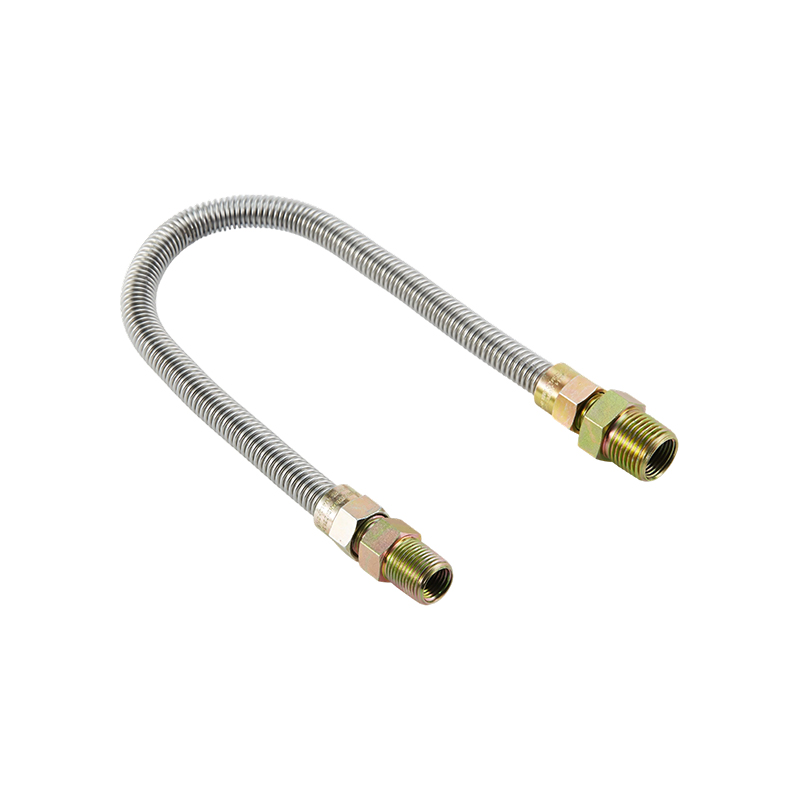
The DN12 Stainless Steel Whistle-Free Gas Connector is developed to meet these requirements with a flexible corrugated stainless steel tube, a practical connection configuration, and a structure designed to reduce operating noise. Manufactured from 304 stainless steel with a 0.25 mm wall thickness, the connector combines corrosion resistance, mechanical flexibility, and installation convenience. Its 3/4"-16UNF flared nut and multiple adapter options allow it to connect with different interface arrangements and pipe sizes.
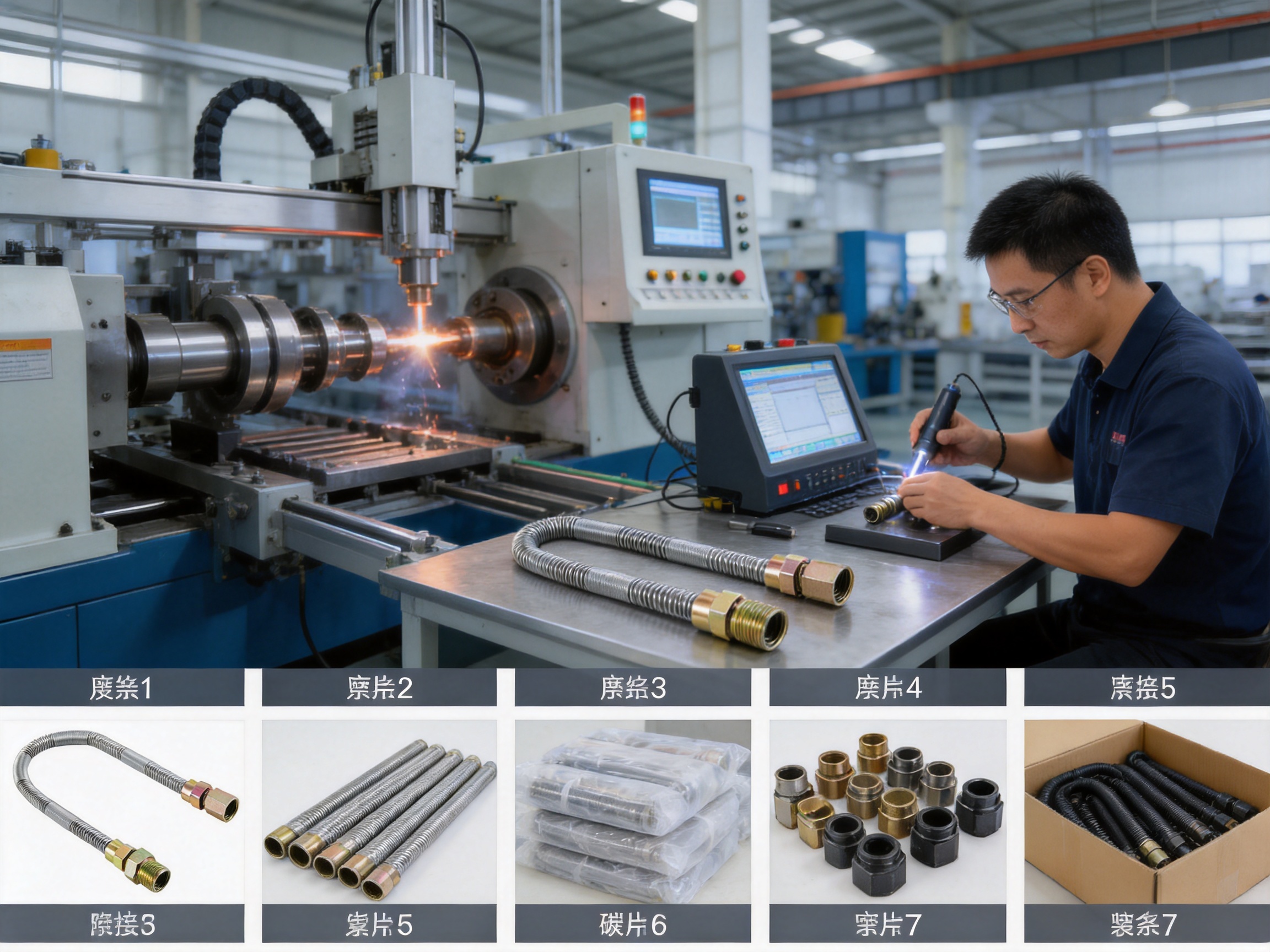
This product is manufactured by Haoyin (Ningbo) Bellows Technology Co., Ltd., a professional enterprise specializing in stainless steel bellows and flexible connection products. The company serves gas, plumbing, heating, healthcare, building services, industrial HVAC, and other application fields. Its manufacturing capabilities include laser welding, CNC forming, eddy current flaw detection, automated packaging, and full-process quality management.
With available lengths from 12 inches to 72 inches, the DN12 connector can be selected for compact appliance connections, longer routing requirements, and installations where rigid piping would be difficult to align. The combination of a stainless steel body, configurable adapter structure, hard sealing, and whistle-free performance makes this connector a practical choice for projects that require safety, adaptability, and a quieter user experience.
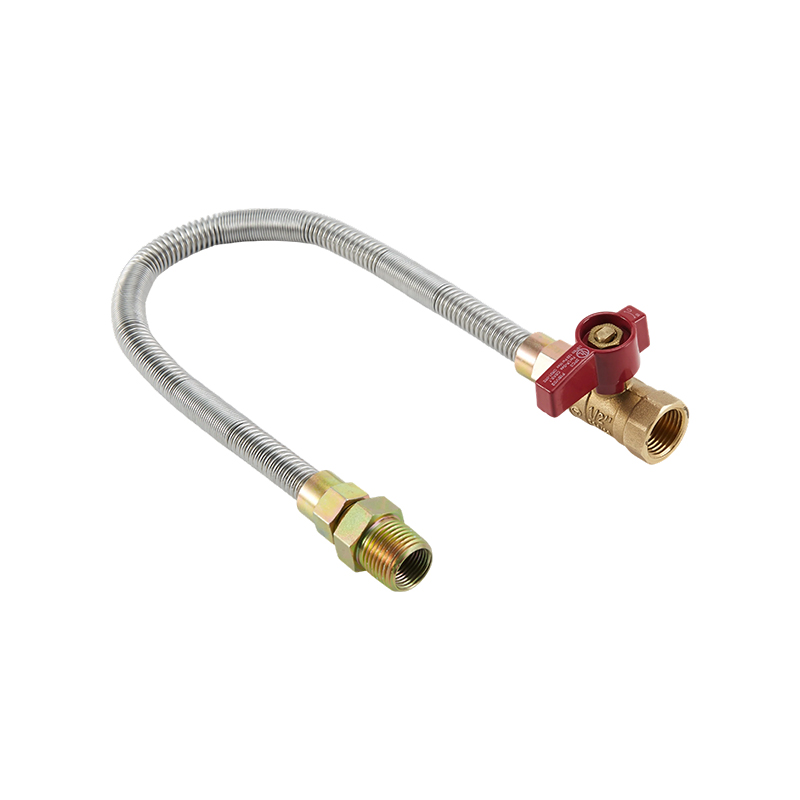
DN12 Stainless Steel Whistle Free Gas Connector
1. Product Overview
The DN12 Stainless Steel Whistle-Free Gas Connector is a flexible gas connection assembly designed to join gas appliances, supply lines, valves, regulators, and related interfaces. The core tube is manufactured from 304 stainless steel, a widely used stainless steel grade known for its corrosion resistance, durability, and suitability for many indoor and protected outdoor applications.
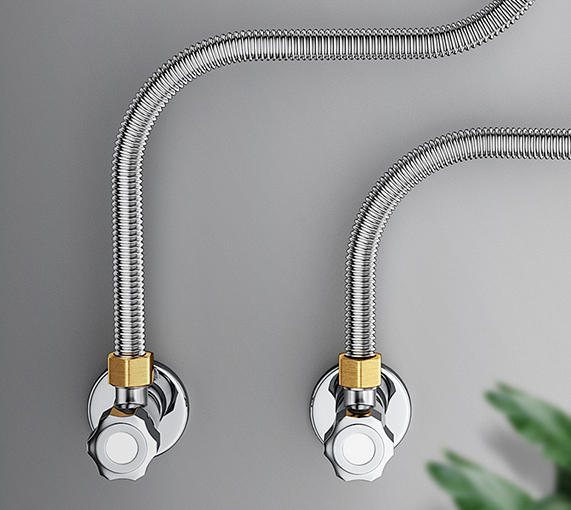
The corrugated construction provides flexibility without relying on a thick rigid pipe. During installation, the connector can accommodate moderate directional changes and positioning differences between the gas source and the connected appliance. This reduces the need for excessive pipe fittings and makes it easier for installers to create a neat, accessible connection.
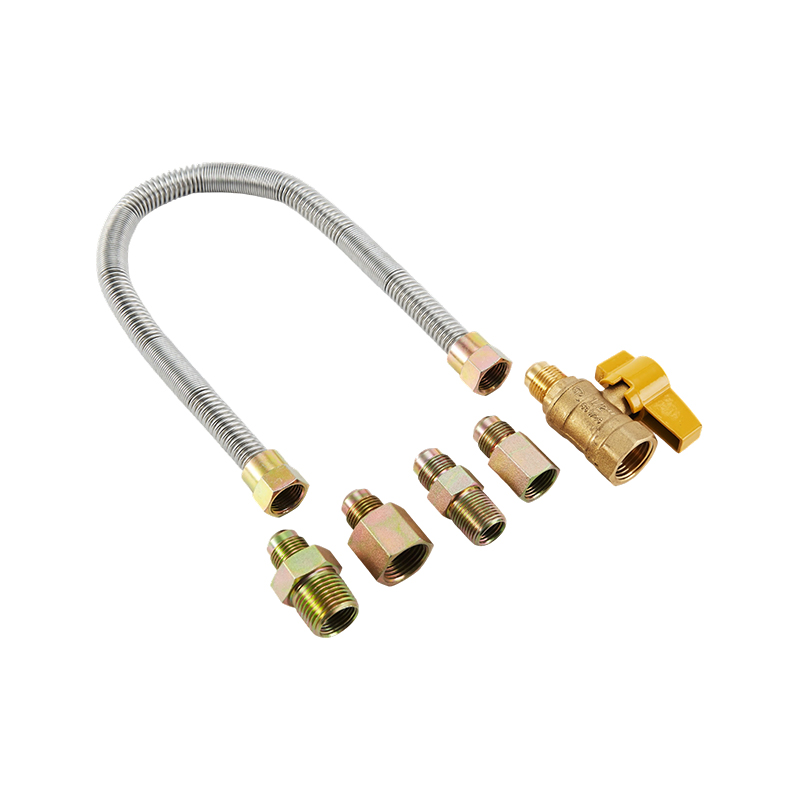
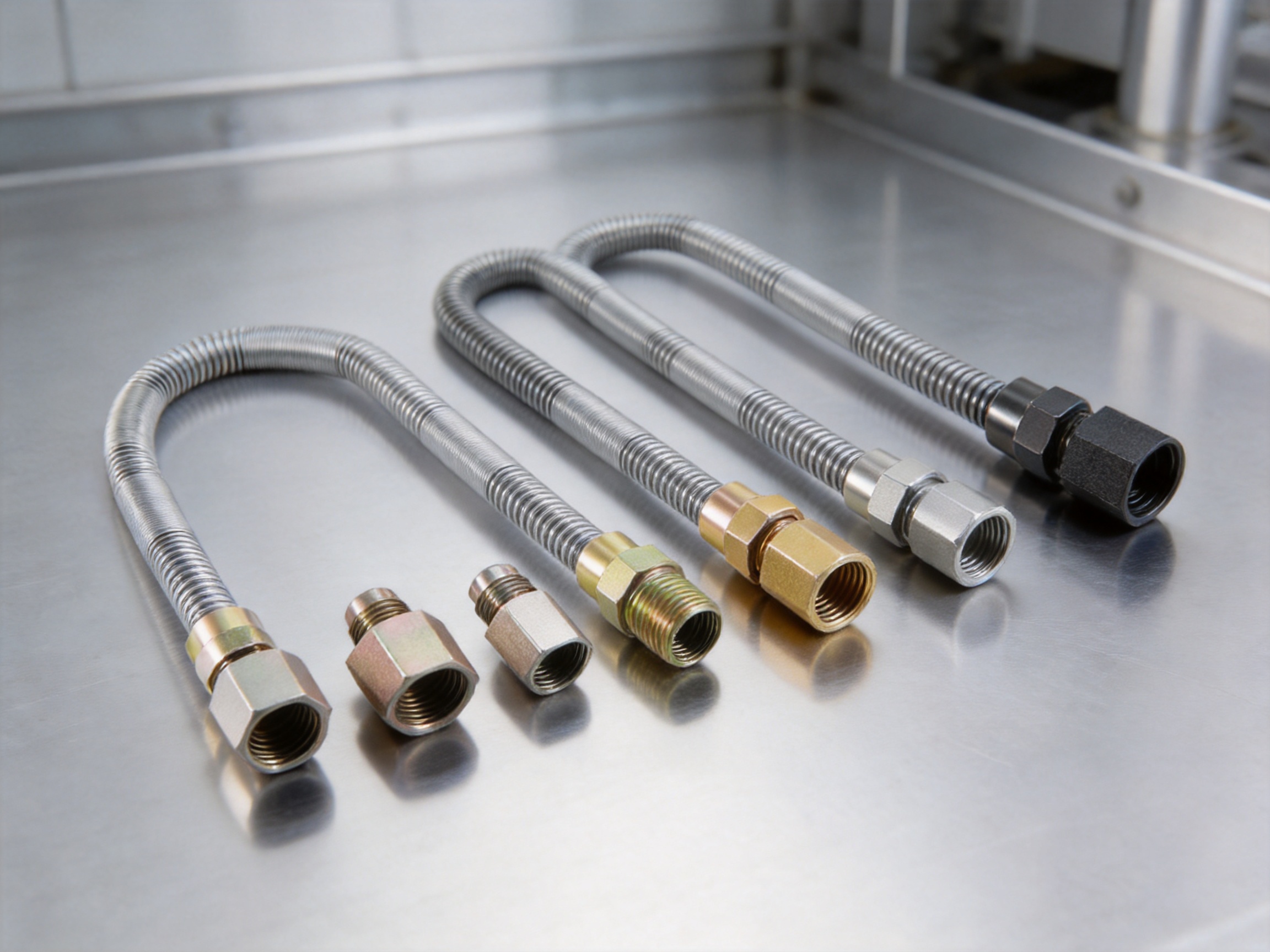
The product uses a 3/4"-16UNF flared nut as a primary connection specification. Various adapter combinations are available, including 3/4*3/8M(1/4F), 3/4*3/8F, 3/4*1/2M(3/8F), and 3/4*1/2F. These configurations enable the connector to work with different thread arrangements and interface requirements. Selection should always be based on the actual system connection, local installation standards, appliance requirements, and the applicable gas safety regulations.
The connector is available in 12-inch, 18-inch, 24-inch, 36-inch, 48-inch, 60-inch, and 72-inch lengths. This range allows purchasers and installers to select a suitable length instead of forcing a short connector into an unsuitable position or using an unnecessarily long assembly. Correct length selection can improve appearance, reduce bending stress, and support more orderly installation.
A key feature of the product is its whistle-free design. Flexible gas connectors can sometimes generate airflow noise when gas passes through the internal passage or when the design produces undesirable turbulence. The whistle-free structure is intended to reduce this type of noise, contributing to a quieter operating environment in kitchens, utility rooms, commercial facilities, and other areas where gas appliances are installed.
| Product Item | Specification |
| Product Type | DN12 stainless steel whistle-free gas connector |
| Tube Material | 304 stainless steel |
| Tube Wall Thickness | 0.25 mm |
| Flare Nut | 3/4"-16UNF |
| Adapter Options | 3/4*3/8M(1/4F), 3/4*3/8F, 3/4*1/2M(3/8F), 3/4*1/2F |
| Available Lengths | 12", 18", 24", 36", 48", 60", 72" |
| Sealing Form | Hard sealing |
| Nut Material | Brass or carbon steel |
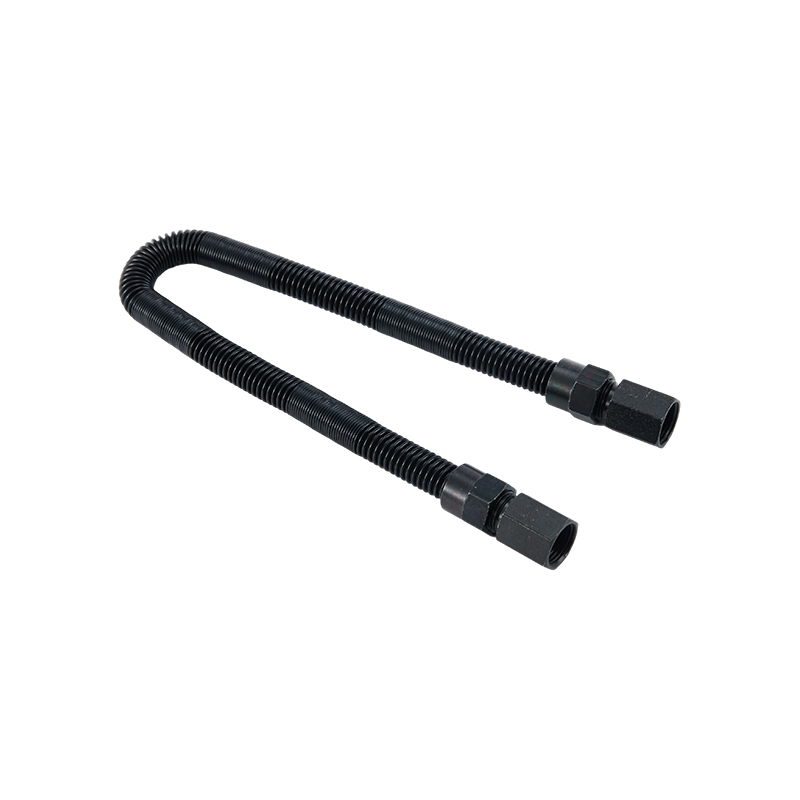
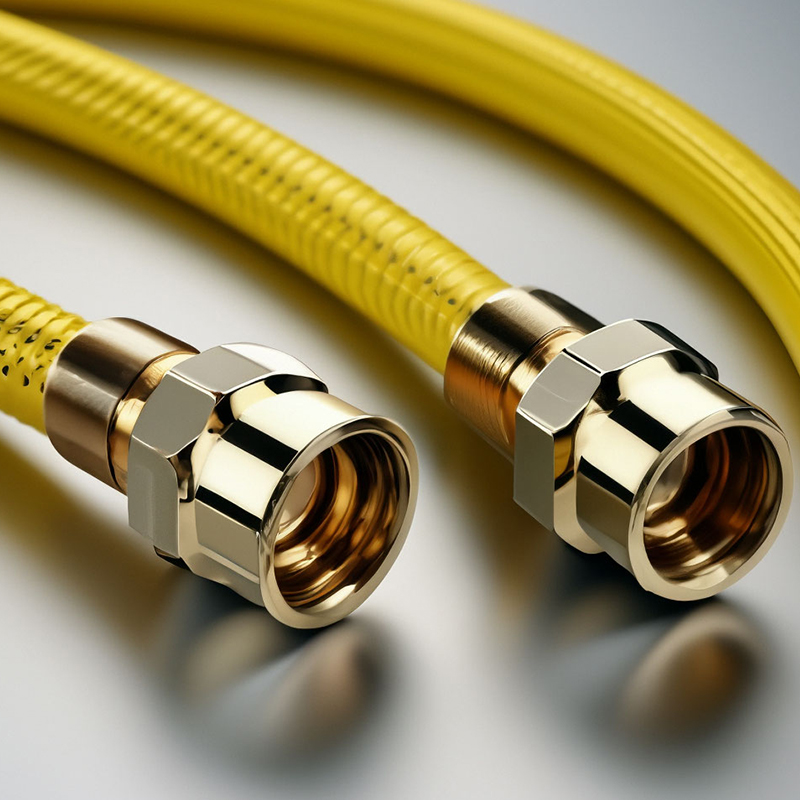
| Color Options | Stainless steel or black, according to configuration |
2. Why Stainless Steel Is Important in Gas Connections
Material selection is one of the most important factors in the performance of a gas connector. Gas connection assemblies may be exposed to humidity, cleaning agents, temperature changes, mechanical movement, installation handling, and occasional condensation. A material that loses strength or develops corrosion too quickly can reduce the service reliability of the connection.
304 stainless steel offers a useful balance of corrosion resistance, formability, strength, and manufacturing practicality. It is suitable for forming into corrugated tube structures while retaining the mechanical properties required for flexible connection applications. Its corrosion-resistant surface also helps protect the tube from many common environmental conditions encountered in residential and commercial installations.
The 0.25 mm wall thickness is designed to balance flexibility and structural integrity. A tube wall that is too thick may reduce flexibility and make installation more difficult. A wall that is too thin may be less resistant to handling damage or deformation. The specified wall thickness supports the product’s intended role as a flexible gas connector while maintaining a compact and manageable profile.
Compared with ordinary carbon steel flexible tubes, stainless steel provides a more durable solution in environments where moisture or corrosive contaminants may be present. Compared with some nonmetallic alternatives, stainless steel offers a strong temperature-resistant and mechanically stable construction. It is also compatible with the visual and technical expectations of modern appliance installation projects.
It is important to understand that stainless steel material alone does not determine the complete safety performance of a gas connector. The quality of forming, welding, end fitting assembly, sealing surfaces, inspection, and installation is equally important. For this reason, an experienced manufacturer with controlled production processes is essential.
3. Whistle-Free Design and User Comfort
Gas systems are generally evaluated first for safety and sealing, but operating comfort is also important. A high-pitched whistling sound can be distracting in a kitchen or commercial workspace. In some cases, it may cause users to believe that a valve, appliance, regulator, or connector has developed a fault, even when the system is operating normally.
The whistle-free design of this connector is intended to reduce airflow noise generated by the gas passage and internal flow conditions. By optimizing the connection structure and flow-related geometry, the product helps provide a quieter connection between the supply line and the appliance. This can be particularly valuable in residential kitchens, restaurants, hotels, and other occupied spaces.
Noise reduction should not be considered separately from connection quality. A connector must maintain a secure, unobstructed passage while also preventing unwanted vibration and turbulence. The product’s structure is therefore designed to combine gas flow functionality with a more comfortable acoustic environment.
The actual noise level in a gas system may also depend on gas pressure, regulator selection, appliance design, pipe length, valve condition, and the configuration of the complete installation. The whistle-free connector is intended to reduce noise at the connector itself, but the overall system should still be checked if unusual sounds occur.
4. Flexible Construction for Easier Installation
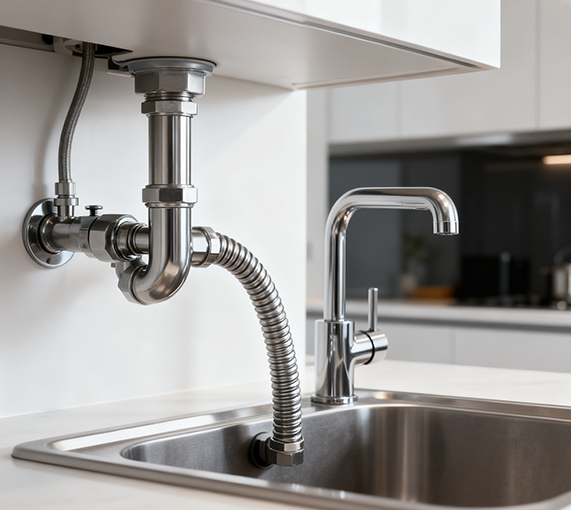
Rigid piping systems can be reliable, but they often require precise measurement, multiple elbows, additional fittings, and more installation time when the gas source and appliance inlet are not perfectly aligned. A flexible connector can simplify the final connection and allow the appliance to be positioned more conveniently.
The corrugated stainless steel tube of the DN12 connector can be routed through moderate directional changes without the same number of rigid fittings. This flexibility is useful when connecting cooking appliances, heating equipment, water heaters, commercial kitchen equipment, and other compatible gas appliances.
Flexibility also helps accommodate small positional changes during installation or maintenance. Appliances may need to be moved forward for cleaning, inspection, or service. A properly selected flexible connector can provide the necessary connection length while reducing stress on the appliance inlet and supply connection.
However, flexibility does not mean that the connector should be sharply folded, twisted, stretched, crushed, or used as a permanent substitute for an incorrectly designed pipe system. It should be installed according to the manufacturer’s instructions and relevant local codes. The connector should have adequate clearance, should not contact sharp edges, and should not be placed where it may be exposed to excessive heat or mechanical impact.
The availability of several standard lengths provides an additional installation advantage. A 12-inch connector may be appropriate for a close appliance connection, while a 36-inch, 48-inch, 60-inch, or 72-inch version may be more suitable when the appliance is positioned farther from the shutoff valve. Selecting the shortest practical length that permits safe routing can help prevent unnecessary loops and reduce the risk of accidental snagging.
Recommended Installation Considerations
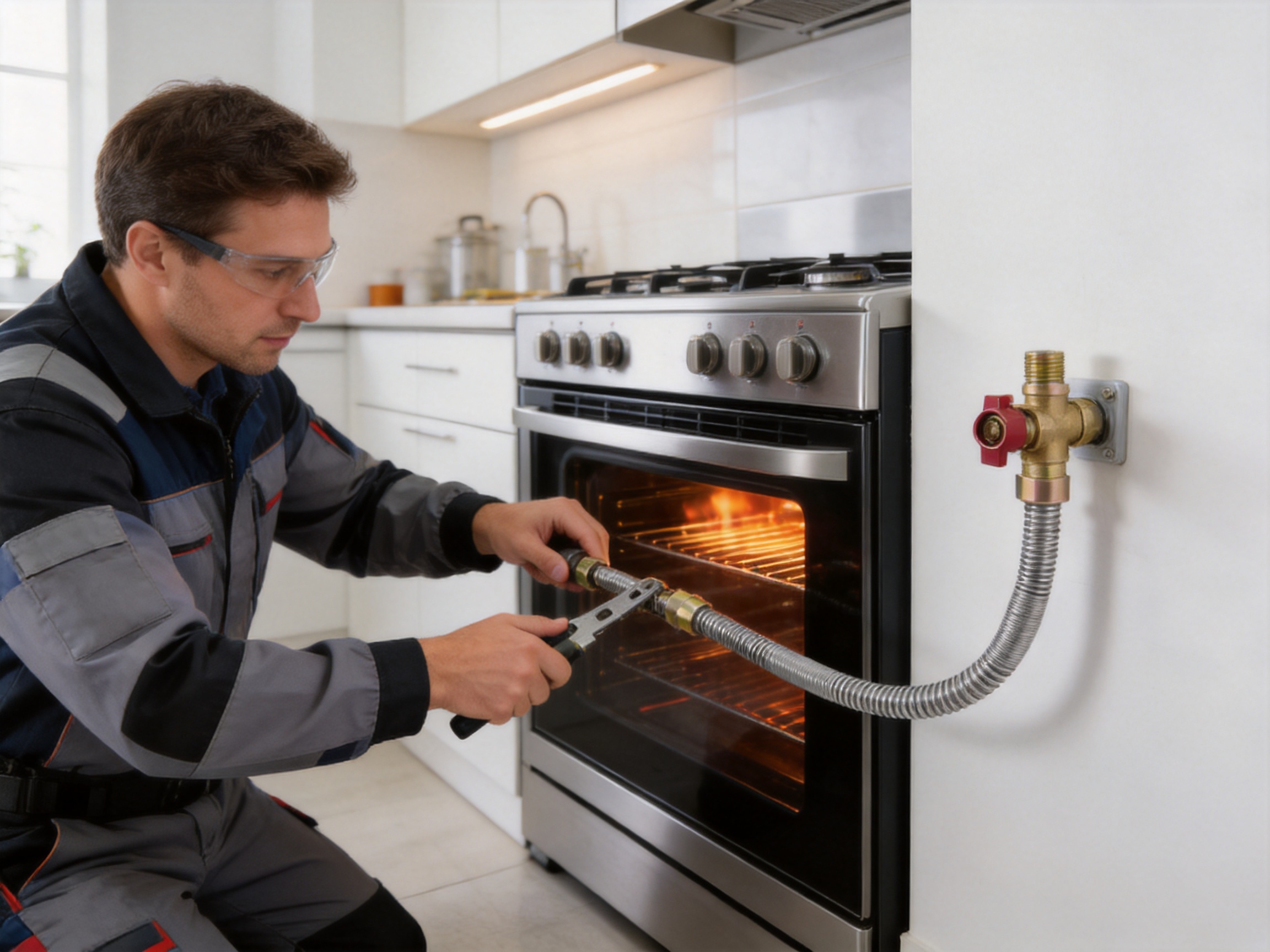
Before installation, the installer should verify the required connector length, thread type, adapter configuration, gas service, pressure range, and appliance compatibility. The connection should be accessible for inspection and should not be concealed in a way that prevents future checking.
The connector should be routed without excessive tension. It should not support the weight of the appliance, and it should not be used to pull the appliance into position. Both ends should remain properly aligned with their mating fittings. Cross-threading, excessive tightening, or the use of an unsuitable sealing method can damage the connection and compromise performance.
After installation, the system should be tested using an approved leak detection procedure. Open flames must never be used to check for gas leakage. If leakage, unusual odor, deformation, or damage is found, the gas supply should be shut off and the installation should be inspected by a qualified professional.
5. Connection and Adapter Versatility
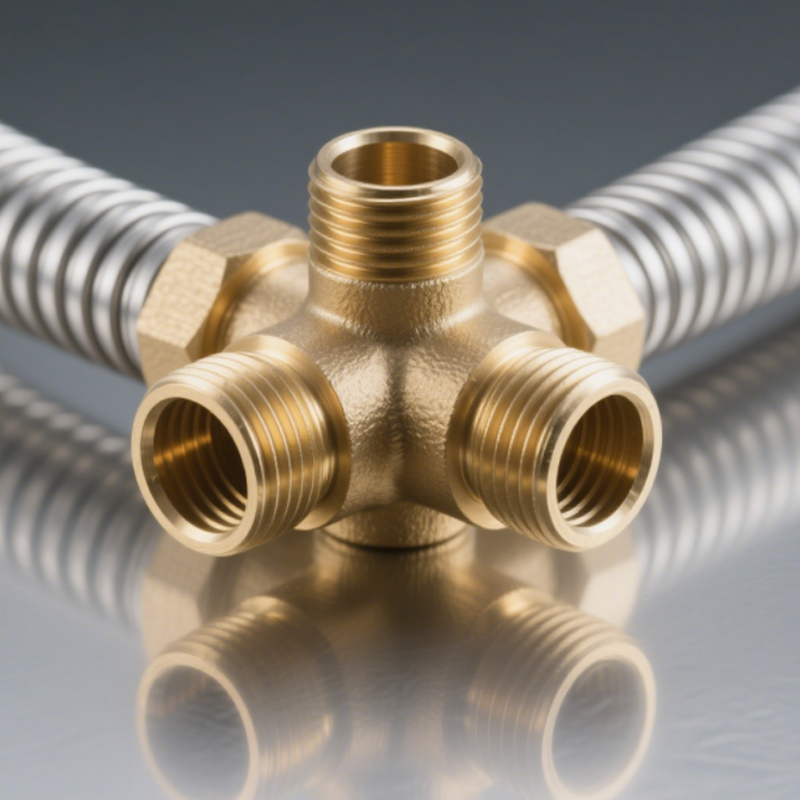
One of the main practical advantages of the DN12 connector is its range of adapter options. Gas systems may use different thread sizes, male or female interfaces, and appliance-specific connection configurations. A single connector configuration cannot meet every installation requirement, so the availability of multiple adapters improves product flexibility.
The listed options include 3/4*3/8M(1/4F), 3/4*3/8F, 3/4*1/2M(3/8F), and 3/4*1/2F. These options allow the user to select the interface that best matches the gas valve, appliance inlet, or transition fitting. The correct adapter should be selected before ordering to avoid improvised modifications at the installation site.
Adapter versatility can reduce the number of additional transition fittings required. This may simplify procurement, shorten installation time, and create a cleaner final assembly. Fewer unnecessary joints can also make the system easier to inspect, although every connection that remains in the system must still be properly assembled and tested.
The flared nut specification is 3/4"-16UNF. This specification provides a defined thread interface and supports consistent assembly when the matching connection is correctly selected. The nut may be supplied in brass or carbon steel, depending on the product configuration and project requirements.
Brass nuts are widely used in connection applications because of their machinability, corrosion resistance, and ability to produce precise threads. Carbon steel may be selected for particular cost, strength, coating, or project requirements. The appropriate material should be confirmed with the supplier when the project has specific environmental, certification, or compatibility demands.
6. Hard Sealing and Leak-Prevention Performance
A gas connector must provide a dependable seal at every connection point. The DN12 connector uses a hard sealing form designed to create a secure interface between the connector and the mating fitting. A hard seal can provide consistent contact when the sealing surfaces, thread specifications, torque, and installation method are correct.
Hard sealing is different from relying on excessive tightening or unsuitable sealant to compensate for mismatched components. The connection should be assembled with compatible parts and the correct procedure. Threads must be clean, undamaged, and properly aligned. The sealing surface should not contain dirt, metal chips, or other contaminants that could prevent uniform contact.
Leak prevention is a complete system responsibility. The stainless steel tube, welded or formed ends, nut, adapter, sealing surface, and appliance connection must all work together. A high-quality tube cannot compensate for a damaged fitting, and a well-machined nut cannot compensate for incorrect installation.
Haoyin’s manufacturing approach includes process control across raw material selection, structural design, forming, welding, inspection, and packaging. This full-process approach is valuable because the reliability of a flexible connector depends on consistency at multiple stages rather than on a single final inspection.
Once installed, gas connectors should be inspected periodically in accordance with local requirements and the appliance manufacturer’s guidance. Signs of concern may include visible corrosion, kinking, flattening, damaged threads, unusual noise, odor, or movement at the connection. Any connector showing physical damage should be replaced or evaluated by a qualified professional.
7. Comparison with Conventional Flexible Connectors
The DN12 stainless steel whistle-free gas connector offers several advantages when compared with basic flexible connectors that lack a corrugated stainless steel body, selectable adapters, or noise-reduction features.
Corrosion Resistance
304 stainless steel generally provides better resistance to moisture-related corrosion than ordinary untreated carbon steel. This can be an important advantage in kitchens, utility rooms, commercial food-service facilities, and other environments where water vapor, cleaning chemicals, or condensation may be present.
Flexible Installation
The corrugated tube can simplify alignment between the gas supply and appliance. Compared with a fully rigid arrangement, it may reduce the need for multiple elbows and short pipe sections. This can save installation time and create a more compact connection when used correctly.
Multiple Connection Configurations
The available adapter options give the product broader application potential than a connector with only one fixed interface. Distributors can also stock a range of lengths and adapters to support different project requirements.
Reduced Operating Noise
The whistle-free design is an advantage over standard connectors that may produce a noticeable high-frequency sound under certain flow conditions. Lower connector noise can improve comfort and reduce unnecessary concern for occupants.
Controlled Manufacturing
Product consistency is especially important for gas components. A manufacturer with controlled forming, welding, inspection, and packaging processes can provide a more dependable product than a supplier that only performs basic assembly without systematic quality control.
Professional Application Support
Haoyin focuses on bellows and flexible connection technology rather than treating gas connectors as a secondary product category. This specialization supports continuous development in forming, welding, inspection, and application design. It also enables the company to serve related markets such as plumbing, heating, healthcare, HVAC, and industrial piping.
| Evaluation Factor | DN12 Stainless Steel Whistle-Free Connector | Basic Fixed or Conventional Connector |
| Tube Material | 304 stainless steel | May vary by supplier |
| Flexibility | Corrugated flexible tube | May offer limited flexibility |
| Noise Control | Whistle-free design | May not include noise reduction |
| Length Selection | 12" to 72" | May have fewer options |
| Adapter Selection | Multiple male and female configurations | May require additional transition fittings |
| Sealing | Hard sealing structure | Depends on design and assembly |
| Application Range | Residential, commercial, and industrial-compatible systems | Often limited by configuration |
8. Manufacturing Strengths of Haoyin
Haoyin (Ningbo) Bellows Technology Co., Ltd. is a professional manufacturer focused on the research, development, design, production, and sales of stainless steel bellows and flexible connection products. Its product range includes gas connectors, plumbing pipes and water liners, metal hoses, and compensators.
The company operates standardized workshops covering approximately 18,000 square meters across an area of about 35 mu. This production base provides space for organized manufacturing, assembly, inspection, storage, and packaging operations. A structured production environment is important for maintaining process flow and reducing the risk of material confusion or uncontrolled handling.
Haoyin has obtained ISO9001, ISO14001, ISO45001, and other management system certifications. ISO9001 relates to quality management, ISO14001 addresses environmental management, and ISO45001 concerns occupational health and safety management. These systems support a more comprehensive approach to manufacturing rather than focusing only on final product appearance.
The company is also identified as a National High-tech Enterprise and Green Factory. These recognitions reflect an emphasis on technical development, production capability, environmental responsibility, and organized operational management. For customers purchasing components for long-term projects, a stable and professionally managed manufacturer can provide important supply-chain value.
Raw Material Control
The performance of a stainless steel connector begins with the quality and consistency of the raw material. Material selection affects corrosion resistance, formability, weldability, strength, and surface condition. Haoyin’s full-process quality philosophy begins with the selection and control of suitable raw materials for the intended product.
CNC Forming
CNC forming equipment supports accurate and repeatable production of bellows and corrugated tube structures. Controlled forming is important because irregular corrugation geometry can affect flexibility, stress distribution, dimensional stability, and connection performance. Automated or numerically controlled forming helps reduce variation between production batches.
Laser Welding
Laser welding technology can provide precise, concentrated heat input and controlled weld formation. For stainless steel flexible connectors, welding quality is important at the tube and end-fitting areas. A stable welding process helps produce consistent joints while limiting unnecessary thermal distortion.
Cosmo Equipment
The company also uses COSMO equipment as part of its manufacturing and testing capabilities. Specialized equipment supports process standardization and helps production personnel evaluate or control critical product characteristics.
Eddy Current Flaw Detection
Eddy current flaw detection is a non-destructive inspection method that can identify certain surface and near-surface discontinuities in conductive materials. Its use in metal product inspection can help detect potential defects without cutting or damaging the product. This is valuable for components that must maintain pressure integrity and structural reliability.
Automatic Packaging
Packaging is more than a presentation step. Proper packaging protects threads, sealing surfaces, tube geometry, and finished appearance during storage and transportation. Automatic packaging systems can improve consistency and reduce handling errors, supporting better delivery quality for distributors and project customers.
9. Quality Management from Design to Delivery
A dependable gas connector requires coordination between product design, materials, production processes, inspection, storage, and after-sales service. Haoyin describes its quality management system as covering the complete process from raw material selection through structural design, manufacturing, performance testing, and after-sales support.
During the design stage, the connector must be evaluated as a complete assembly. The tube, nut, adapter, sealing surface, and connection geometry must be compatible. The product must also be practical to install, sufficiently flexible for its intended use, and suitable for the target market and application.
During manufacturing, process parameters must be controlled. Forming quality affects the corrugation profile, while welding quality affects joint integrity. Thread dimensions and sealing surfaces must be produced consistently so that the final connector can be assembled with compatible components.
During testing, the product may be evaluated for dimensional accuracy, appearance, connection quality, pressure performance, and potential defects. The exact testing program should be confirmed with the supplier and matched to the applicable standards, certifications, and destination-market requirements.
After production, packaging and storage help preserve the connector’s condition until installation. Threads should be protected from impact and contamination. Corrugated sections should not be crushed under heavy loads. The product should be stored in a clean and appropriate environment.
After-sales support is also part of a professional product program. Distributors, installers, and engineering customers may require technical documentation, configuration confirmation, sample support, product selection advice, or assistance with project-specific requirements. A manufacturer with direct experience in flexible metal products can provide more relevant support than a general trading supplier.
10. Applications in Residential and Commercial Projects
The DN12 connector is suitable for a broad range of compatible gas connection applications. In residential settings, it may be used for gas cookers, ranges, water heaters, heating equipment, or other appliances where a flexible connection is permitted by local regulations.
In commercial kitchens, the connector can support the installation of cooking equipment where frequent cleaning, equipment positioning, and limited space make flexible routing useful. The stainless steel construction and whistle-free design can be valuable in busy occupied environments.
In hotels, apartment buildings, and property development projects, standardized connector specifications can help simplify procurement and installation planning. Available lengths from 12 to 72 inches allow project teams to select suitable configurations for different room layouts and appliance positions.
Industrial and HVAC-related applications may also benefit from flexible metal connection technology, although the exact suitability of this product must be confirmed against pressure, temperature, gas type, code, and certification requirements. A connector intended for one service should not automatically be used in another without technical confirmation.
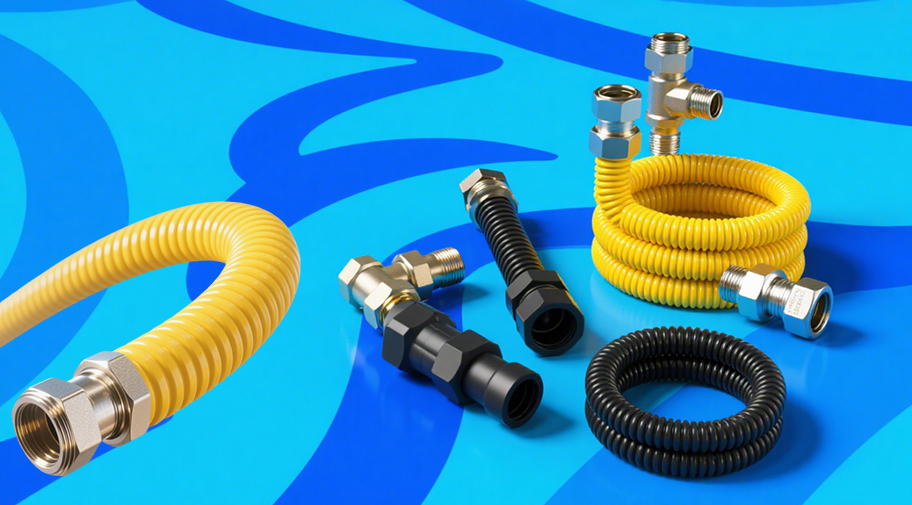
For wholesalers and distributors, the product’s multiple adapter options and length choices create a flexible product portfolio. Stock can be planned around common lengths while special configurations can be supplied for project orders. The stainless steel finish provides a professional appearance, while the black option may be preferred for certain equipment or visual requirements.
11. Selection Guide for Buyers and Distributors
Buyers should begin by identifying the gas type, working pressure, operating temperature, local regulatory requirements, and appliance connection specification. The correct connector must be compatible with the complete system rather than selected only by nominal diameter.
Next, confirm the connection configuration. The 3/4"-16UNF flared nut is the primary listed specification, but the adapter end must also match the mating fitting. Determine whether a male or female adapter is required and verify the relevant 3/8-inch or 1/2-inch interface.
Length should be selected carefully. Measure the practical routing distance and allow enough length for a natural bend without creating excessive slack. The connector should not be stretched between two points, and it should not be forced into a tight radius. A length that is too short may create stress, while an unnecessarily long connector may be more difficult to route and inspect.
Material requirements should also be reviewed. The tube is made from 304 stainless steel, while the nut may be brass or carbon steel according to the selected configuration. If a project requires a specific fitting material, finish, coating, or corrosion resistance level, this should be stated clearly during inquiry.
For large construction or OEM projects, buyers should confirm packaging, labeling, sample approval, delivery schedule, inspection documents, and any required testing or certification. Early technical communication can prevent mismatched orders and reduce installation delays.
12. Installation and Maintenance Recommendations
Installation should be performed by qualified personnel familiar with gas systems and local requirements. Before connecting the product, inspect the tube, nuts, adapters, threads, and sealing surfaces. Do not install a connector that has been crushed, sharply bent, contaminated, or otherwise damaged.
Align the connector with the mating fitting before tightening. Avoid cross-threading. Use the prescribed tightening method and do not apply excessive force that could distort the fitting or sealing surface. The connector should be routed with smooth bends and adequate clearance from sharp edges, moving parts, excessive heat, and sources of mechanical abrasion.
The connector should not be painted, modified, drilled, welded, extended, or combined with unapproved components. It should not be used as a support bracket or as a substitute for a properly installed shutoff valve. Any protective cover, if required by the application, should be compatible with the connector and should not hide damage from inspection.
After assembly, perform an approved leak test. The appliance should not be placed into service until the connection has been verified. Periodic visual inspection can identify early signs of damage or deterioration. If the connector becomes kinked, flattened, corroded, or exposed to abnormal heat, it should be removed from service and evaluated.
Replacement intervals may depend on local regulations, appliance instructions, environmental conditions, and the connector’s actual service history. A flexible gas connector should be replaced when its condition is uncertain or when it has been involved in an appliance relocation, impact, fire, or other abnormal event.
13. Frequently Asked Questions
What is the main material of the connector?
The flexible tube is made from 304 stainless steel. The specified tube wall thickness is 0.25 mm. The connection nut may be supplied in brass or carbon steel, depending on the selected configuration.
What does DN12 refer to?
DN12 identifies the nominal size category of the connector. The exact connection must still be confirmed through the listed flare nut and adapter specifications because nominal size alone does not define every thread or fitting detail.
What is the flare nut specification?
The listed flare nut specification is 3/4"-16UNF. The mating component must have a compatible connection. Buyers should verify the complete interface before placing an order.
Which adapter options are available?
The available adapter options include 3/4*3/8M(1/4F), 3/4*3/8F, 3/4*1/2M(3/8F), and 3/4*1/2F. The appropriate option depends on whether the connected fitting requires a male or female interface and which size transition is needed.
What lengths can be ordered?
Available lengths are 12, 18, 24, 36, 48, 60, and 72 inches. The shortest practical length that allows safe, unstressed routing is generally preferable, subject to the requirements of the specific installation.
What does whistle-free mean?
Whistle-free refers to a design intended to reduce high-pitched airflow noise that may occur in some gas connection assemblies. Actual system noise can also be affected by pressure, regulators, valves, appliances, and other piping components.
Is the connector suitable for every gas appliance?
No product should be assumed to suit every appliance. Compatibility depends on gas type, pressure, temperature, connection dimensions, local codes, appliance instructions, and applicable certifications. A qualified installer or technical representative should confirm suitability.
Can the connector be sharply bent?
No. The connector should be routed with smooth bends and should not be kinked, crushed, twisted, stretched, or bent beyond the manufacturer’s recommended limits. Improper bending can damage the tube or sealing connections.
Can the connector be reused after removal?
Reuse depends on the product instructions, installation history, and condition. Because gas connections are safety-critical, a removed connector should be carefully evaluated and replaced when required by local regulations, the appliance manufacturer, or the installer.
How should leakage be checked?
Leakage should be checked using an approved method and performed by qualified personnel. Never use a flame to test for leakage. If a gas odor or suspected leak is detected, shut off the gas supply when safe to do so and contact a qualified professional.
What manufacturing equipment does Haoyin use?
Haoyin uses equipment including laser welding machines, CNC forming machines, COSMO equipment, eddy current flaw detectors, and automatic packaging systems. These capabilities support controlled forming, welding, inspection, and delivery quality.
Which management certifications does the company have?
The company has obtained ISO9001, ISO14001, ISO45001, and other management system certifications. These certifications relate to quality management, environmental management, and occupational health and safety management.
Can the product be supplied for project orders?
The range of lengths, adapter configurations, nut materials, and color options supports residential, commercial, industrial, distributor, and project-based purchasing. Specific packaging, documentation, testing, and customization requirements should be confirmed directly with the manufacturer.
14. Why Choose This Connector for Professional Projects?
Professional projects require more than a product that fits dimensionally. They require consistent supply, reliable materials, suitable connection options, production traceability, technical communication, and confidence that the manufacturer understands the application.
The DN12 Stainless Steel Whistle-Free Gas Connector provides a balanced solution through its 304 stainless steel corrugated tube, 0.25 mm wall thickness, hard sealing structure, multiple adapter options, and range of standard lengths. Its whistle-free design adds a user-comfort benefit that is not always available in conventional connectors.
Haoyin’s specialization in stainless steel bellows and flexible connection products provides a technical foundation for the product. The company’s standardized workshop, advanced equipment, management certifications, and full-process quality philosophy support stable manufacturing and professional project service.
For distributors, the product offers a practical combination of standard specifications and application flexibility. For installers, the flexible structure and available lengths can simplify positioning. For end users, corrosion resistance, dependable sealing, and reduced operating noise contribute to a safer and more comfortable gas connection experience when the product is properly selected and installed.
15. Conclusion
The DN12 Stainless Steel Whistle-Free Gas Connector is designed for modern gas systems that require flexibility, corrosion resistance, dependable sealing, and reduced operating noise. Made from 304 stainless steel with a 0.25 mm wall thickness, it is suitable for a wide range of compatible residential, commercial, and industrial connection applications.
Its 3/4"-16UNF flared nut, multiple adapter configurations, and seven available lengths provide practical installation flexibility. The hard sealing form supports a reliable connection when matched and installed correctly, while the whistle-free structure helps create a quieter operating environment.
The product’s advantages are supported by Haoyin’s manufacturing strengths. Laser welding, CNC forming, COSMO equipment, eddy current flaw detection, automatic packaging, and certified management systems contribute to a controlled manufacturing process. The company’s expertise in stainless steel bellows, gas connectors, plumbing pipes, metal hoses, and compensators allows it to serve a broad range of flexible connection requirements.
As with every gas component, correct application and professional installation are essential. Buyers should verify all technical parameters, interface dimensions, local requirements, and appliance compatibility before use. When properly selected, installed, inspected, and maintained, the DN12 stainless steel whistle-free gas connector can provide a durable and efficient connection solution for demanding gas system applications.
References
1. Stainless Steel Materials and Applications: General principles of corrosion resistance, forming performance, and material selection for stainless steel components.
2. Flexible Metal Hose and Bellows Engineering: Design considerations for corrugated tubes, flexible connections, stress distribution, and installation routing.
3. Gas Appliance Installation Practice: General requirements for gas connector selection, sealing, leak testing, inspection, and professional installation.
4. ISO 9001 Quality Management Systems: Principles for process control, continual improvement, customer satisfaction, and manufacturing consistency.
5. ISO 14001 Environmental Management Systems: Framework for environmental responsibility and controlled industrial operations.
6. ISO 45001 Occupational Health and Safety Management Systems: Principles for managing workplace health and safety in manufacturing environments.
7. Non-Destructive Testing of Metallic Components: General applications of eddy current inspection for identifying surface and near-surface discontinuities.
8. Stainless Steel Corrugated Tube Manufacturing: General practices for CNC forming, laser welding, dimensional control, and pressure-related product inspection.