




 English
 Español
 русский



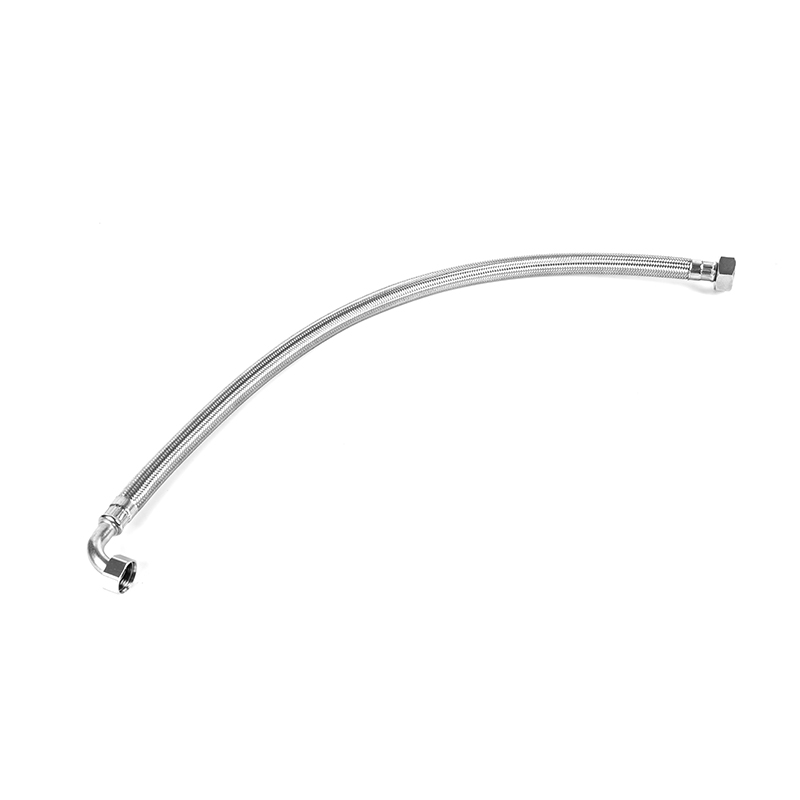
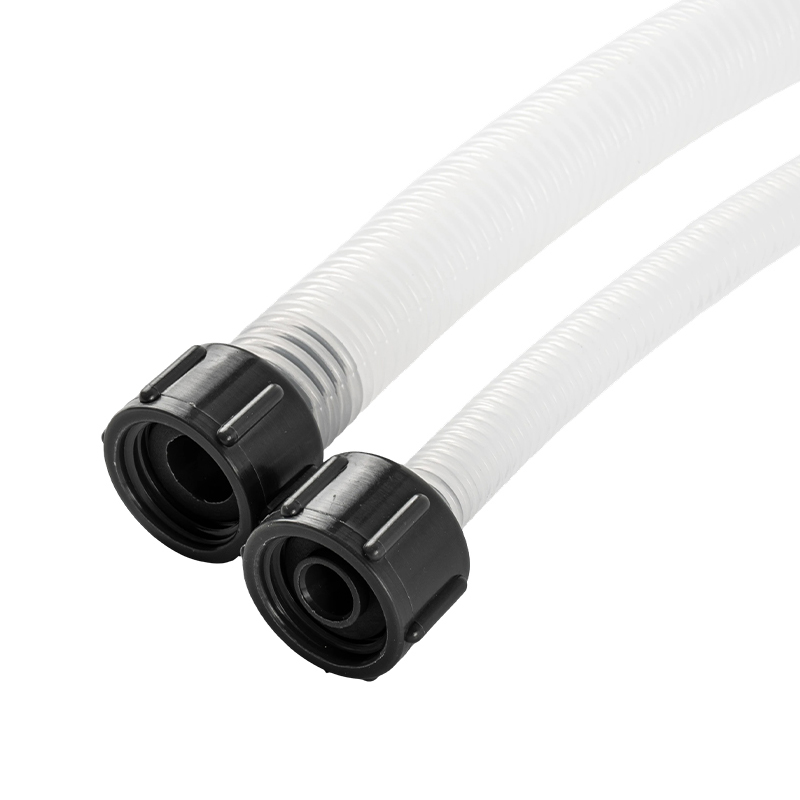
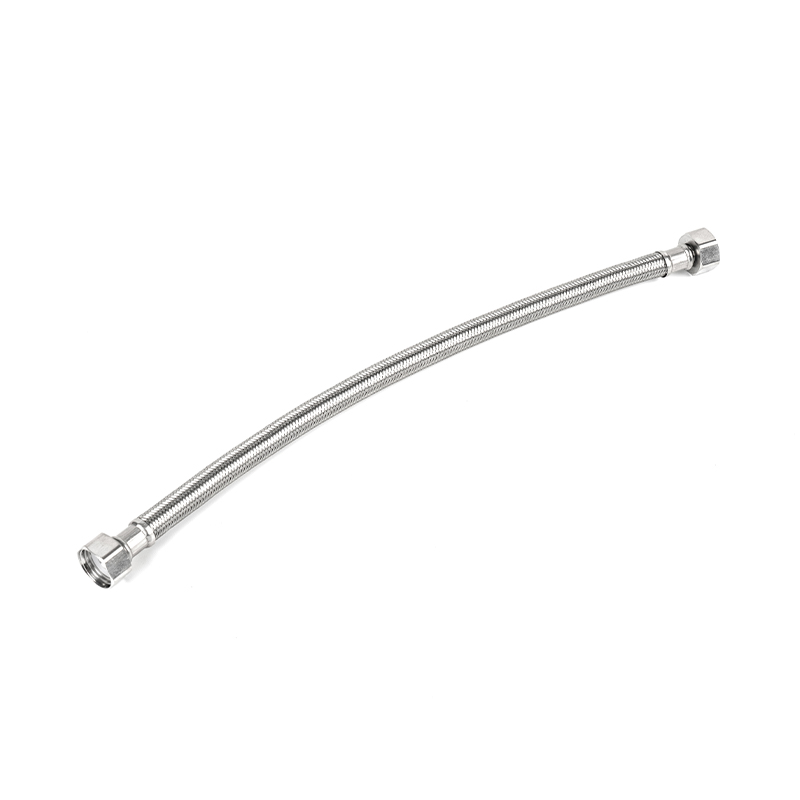
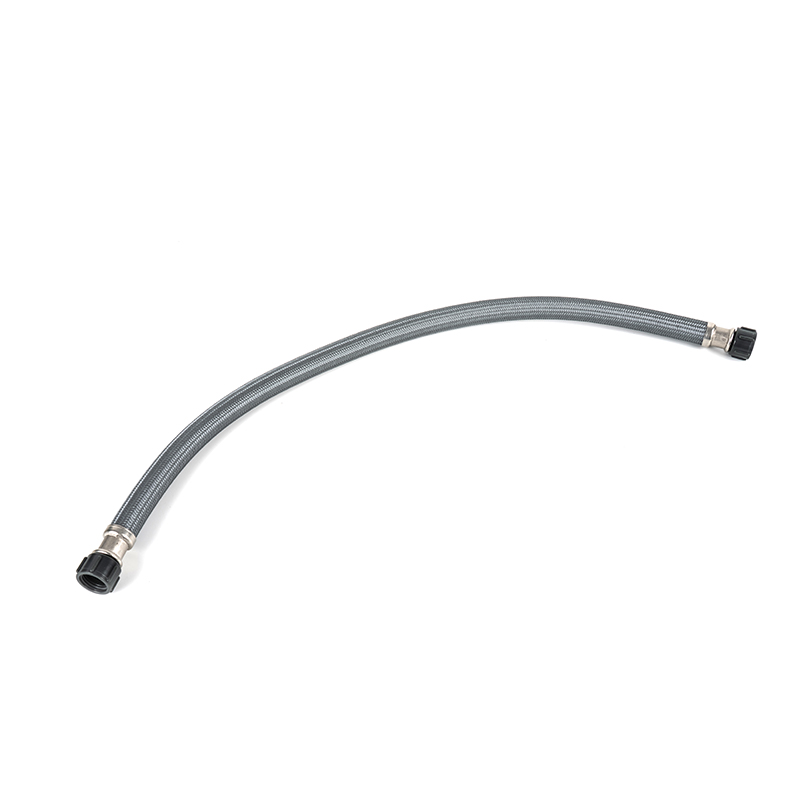
Flexible plumbing systems require more than a leak-resistant inner tube. They also need an outer reinforcement layer that can withstand repeated movement, installation stress, vibration, humidity, and contact with common household or industrial substances. Flexible Plumbing Outer Braid PET Wires are designed for this purpose. Manufactured from polyethylene terephthalate, commonly known as PET, these wires form a protective and reinforcing braid around flexible plumbing pipes, water liners, hoses, and related connection assemblies.
The outer braid is an important functional component rather than a decorative covering. It helps support the inner tube, improves resistance to external damage, controls expansion under pressure, and contributes to the overall service reliability of the finished flexible connection. When the braid is produced with consistent wire quality and carefully controlled braiding parameters, it can provide a practical balance of strength, flexibility, chemical resistance, low moisture absorption, low weight, and cost efficiency.
Haoyin (Ningbo) Bellows Technology Co., Ltd. develops and manufactures flexible connection products for gas, plumbing, heating, healthcare, building heating, industrial HVAC, and other applications. Its product range includes gas connectors, plumbing pipes and water liners, metal hoses, and compensators. Within this product system, PET wire outer braid technology supports the development of lightweight, durable, and adaptable flexible plumbing assemblies.
This article explains the construction, material characteristics, manufacturing considerations, performance advantages, application value, quality controls, and selection factors associated with PET wire outer braid for flexible plumbing products.
1. The Function of an Outer Braid in Flexible Plumbing
A flexible plumbing assembly normally contains several layers. The innermost layer carries water or another working medium. Depending on the design, an intermediate layer may provide sealing, pressure support, thermal protection, or dimensional control. The outer braid surrounds the inner construction and helps protect the assembly from mechanical and environmental stresses.
During installation, flexible plumbing products may be bent, twisted, pulled, or routed through restricted spaces. After installation, they can experience vibration from pumps, pressure fluctuations, movement caused by thermal expansion, accidental contact with tools, and repeated minor displacement. An outer braid helps distribute these forces over a larger area rather than allowing them to concentrate at one point on the inner tube.
The braid can also limit excessive radial expansion. When internal pressure increases, the inner tube tends to expand outward. A properly designed braid provides a restraining effect while still allowing the hose or pipe to bend. This balance between restraint and flexibility is essential for a reliable connection.
In addition, the outer layer can improve handling. A flexible tube without reinforcement may be more vulnerable to kinking, stretching, scuffing, or accidental crushing. PET wire arranged in a controlled braid provides a more stable exterior and can make the finished product easier to route and install.
1.1 Reinforcement without Excessive Weight
Traditional reinforcement materials may provide high strength but can add substantial weight to a finished hose. PET has a relatively low density compared with many metallic reinforcement materials. As a result, a PET outer braid can contribute to strength and protection while helping keep the assembly lightweight.
Lower weight can be valuable during production, packaging, transportation, installation, and maintenance. It may allow installers to position a flexible connector more easily, especially in confined cabinets, under-sink spaces, wall cavities, ceiling systems, and equipment compartments.
1.2 Support for Repeated Bending
Flexible plumbing products are often bent many times during handling and installation. They may also experience small repeated movements during service. PET wire offers good toughness and fatigue resistance, allowing the braid to tolerate repeated bending when the complete assembly has been correctly designed and manufactured.
The performance of the final braid depends on more than the polymer itself. Wire diameter, surface condition, tensile properties, braid angle, carrier tension, coverage, and the construction of the underlying tube all influence bending performance. For this reason, controlled processing is essential.
2. Material Characteristics of PET Wires
PET is a thermoplastic polyester widely used in fibers, films, packaging, industrial yarns, and reinforcement applications. For outer braid production, PET can be formed into wire-like strands or filaments with a controlled diameter and consistent mechanical properties.
The material combines several characteristics that are useful for flexible plumbing applications. It has high strength and high modulus among common polymer fibers, good toughness, low moisture absorption, useful chemical resistance, electrical insulation, low density, and relatively stable production economics.
| Property | Value for Outer Braid Applications | Practical Benefit |
|---|---|---|
| High tensile strength | Supports mechanical reinforcement of the flexible assembly | Improves resistance to pulling and external loading |
| High modulus | Provides rigidity and dimensional support | Helps control expansion and deformation |
| Low moisture absorption | Maintains more stable properties in humid conditions | Supports consistent performance in plumbing environments |
| Chemical resistance | Resists many dilute acids, dilute alkalis, alcohols, and oils | Reduces the risk of material degradation from common exposures |
| Good toughness | Absorbs impact and tolerates repeated movement | Improves handling and flexing durability |
| Wear resistance | Provides resistance to abrasion during contact and movement | Helps protect the braid during installation and service |
| Electrical insulation | Does not readily conduct electricity | May be useful where the outer layer contacts electrical equipment or wiring |
| Low density | Creates a lightweight reinforcement layer | Reduces handling and transportation burden |
2.1 High Strength and High Modulus
PET wire is valued for its tensile performance. High tensile strength allows the braid to resist stretching when the hose is pulled or exposed to external forces. High modulus means that the material resists deformation under load, helping the braid maintain its shape.
In a flexible plumbing product, these characteristics can improve dimensional stability. The braid can assist in preventing the assembly from becoming excessively elongated or expanded. It may also contribute to a more controlled bending radius, depending on the design of the braid and the structure of the underlying tube.
Compared with ordinary low-strength plastic fibers, high-modulus PET provides a more effective reinforcement layer without requiring a very thick or heavy construction. This can help product designers achieve a compact outer diameter while retaining useful mechanical support.
2.2 Chemical Resistance
Plumbing products can be exposed to moisture, cleaning agents, oils, installation residues, and other substances. PET demonstrates resistance to many dilute acids, dilute alkalis, alcohols, and oils. This characteristic helps the outer braid maintain its functional properties in ordinary service environments.
Chemical resistance should always be evaluated in relation to concentration, temperature, exposure duration, and the specific chemical involved. It is not correct to assume that every PET construction is suitable for every chemical environment. However, for many general plumbing and equipment connection applications, its resistance profile provides a useful level of protection and durability.
2.3 Low Moisture Absorption
Humid environments are common around plumbing systems. Water supply cabinets, bathrooms, kitchens, heating rooms, utility spaces, and industrial service areas may expose the outer braid to high humidity or occasional condensation.
PET has low moisture absorption. This means it does not readily take in water from the surrounding environment, helping it retain more stable dimensions and mechanical behavior. A low-moisture material is less likely to swell significantly or lose dimensional consistency simply because of ambient humidity.
This characteristic is especially useful when the braid must maintain a stable fit around the inner tube or when consistent mechanical performance is required over extended service periods.
2.4 Toughness and Wear Resistance
Strength alone is not sufficient for a flexible braid. The material must also withstand impact, rubbing, bending, and handling. PET provides good toughness and wear resistance, which can help the braid tolerate contact with adjacent components and surfaces.
During installation, a flexible connector may be pulled through an opening, routed around a corner, or positioned near a metal bracket. A tough outer layer is less vulnerable to damage from ordinary handling than a brittle or poorly bonded material. The braid can also reduce direct contact between the inner tube and external objects.
2.5 Electrical Insulation
PET is an electrical insulating material. This property may provide an additional functional advantage when flexible plumbing products are installed near electrical equipment, sensors, control wiring, or appliance components.
The braid is not intended to replace certified electrical insulation or protective conduit unless the complete product has been tested and approved for that purpose. Nevertheless, the nonconductive nature of PET can reduce the likelihood of creating an unintended conductive path through the outer reinforcement layer.
3. Advantages Compared with Conventional Outer Reinforcement Materials
The best outer reinforcement material depends on the application. Stainless steel, other metals, textile fibers, and engineered polymers each have useful properties. PET wire outer braid is attractive because it provides a balanced set of characteristics rather than optimizing only one performance category.
| Comparison Factor | PET Wire Outer Braid | Metallic Braid | General Textile Covering |
|---|---|---|---|
| Weight | Low | Higher | Very low |
| Mechanical reinforcement | High for a polymer material | Generally very high | Depends strongly on fiber type and construction |
| Electrical conductivity | Insulating | Conductive | Usually insulating |
| Moisture absorption | Low | Not applicable in the same way, but corrosion may be a concern for some metals | Varies by fiber |
| Corrosion behavior | Does not rust | Depends on alloy and surface treatment | Does not rust, but may have lower mechanical stability |
| Flexibility | Good when correctly braided | Good, but may have a higher bending stiffness | Usually very good |
| Wear resistance | Good | Good, depending on surface and construction | Varies significantly |
| Material cost | Generally cost-effective | Often higher because of metal and processing costs | Potentially low, depending on performance requirements |
3.1 Compared with Stainless Steel Braid
Stainless steel braid offers excellent strength, temperature resistance, and resistance to many forms of mechanical damage. It remains an important option for demanding applications. However, it is heavier than PET and may increase the total weight and cost of the finished assembly.
Metallic reinforcement is also electrically conductive. In installations where electrical isolation is desirable, a polymer outer braid can provide a practical alternative. PET does not rust, and it avoids some of the concerns associated with metal surface damage, galvanic interaction, or corrosion caused by unsuitable environmental conditions.
PET is not a universal substitute for stainless steel. High-temperature service, severe pressure conditions, fire exposure, and certain industrial environments may require metal reinforcement. The advantage of PET is its balanced performance for applications in which lightweight construction, flexibility, insulation, moisture stability, and cost efficiency are important.
3.2 Compared with Ordinary Textile Sleeves
A textile sleeve may protect against abrasion and improve appearance, but it may not provide sufficient tensile support or dimensional control. PET wire braid is a more structured reinforcement system. Its high modulus and controlled braid pattern can provide greater resistance to expansion and external loading than a simple loose fabric cover.
PET also offers a more predictable combination of strength, low moisture absorption, and wear resistance than many ordinary fibers. This makes it suitable when the outer layer must perform a mechanical function rather than merely cover the inner tube.
3.3 Cost and Production Efficiency
Material selection affects the entire supply chain. PET benefits from relatively stable raw material prices and comparatively low production costs. Its low density also means that a given shipment can contain a large number of finished products without the transportation burden associated with heavier metallic reinforcement.
Cost-effectiveness does not mean reducing quality. A well-designed PET braid can reduce material consumption, simplify handling, and support efficient automated production while maintaining useful performance. The important factor is matching the PET construction to the required pressure, temperature, flexibility, and environmental conditions.
Flexible Plumbing Outer Braid PET Wires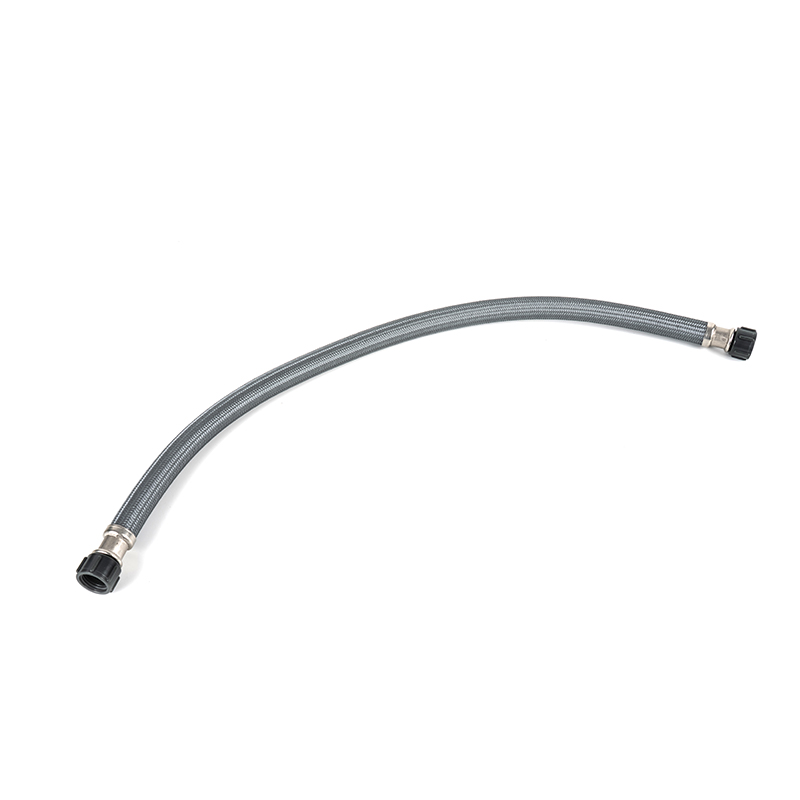
4. Construction of Flexible Plumbing Outer Braid PET Wires
The final performance of an outer braid depends on the relationship between the PET wire and the hose body. The wire must be compatible with the intended braiding equipment, product diameter, coverage requirement, and installation conditions.
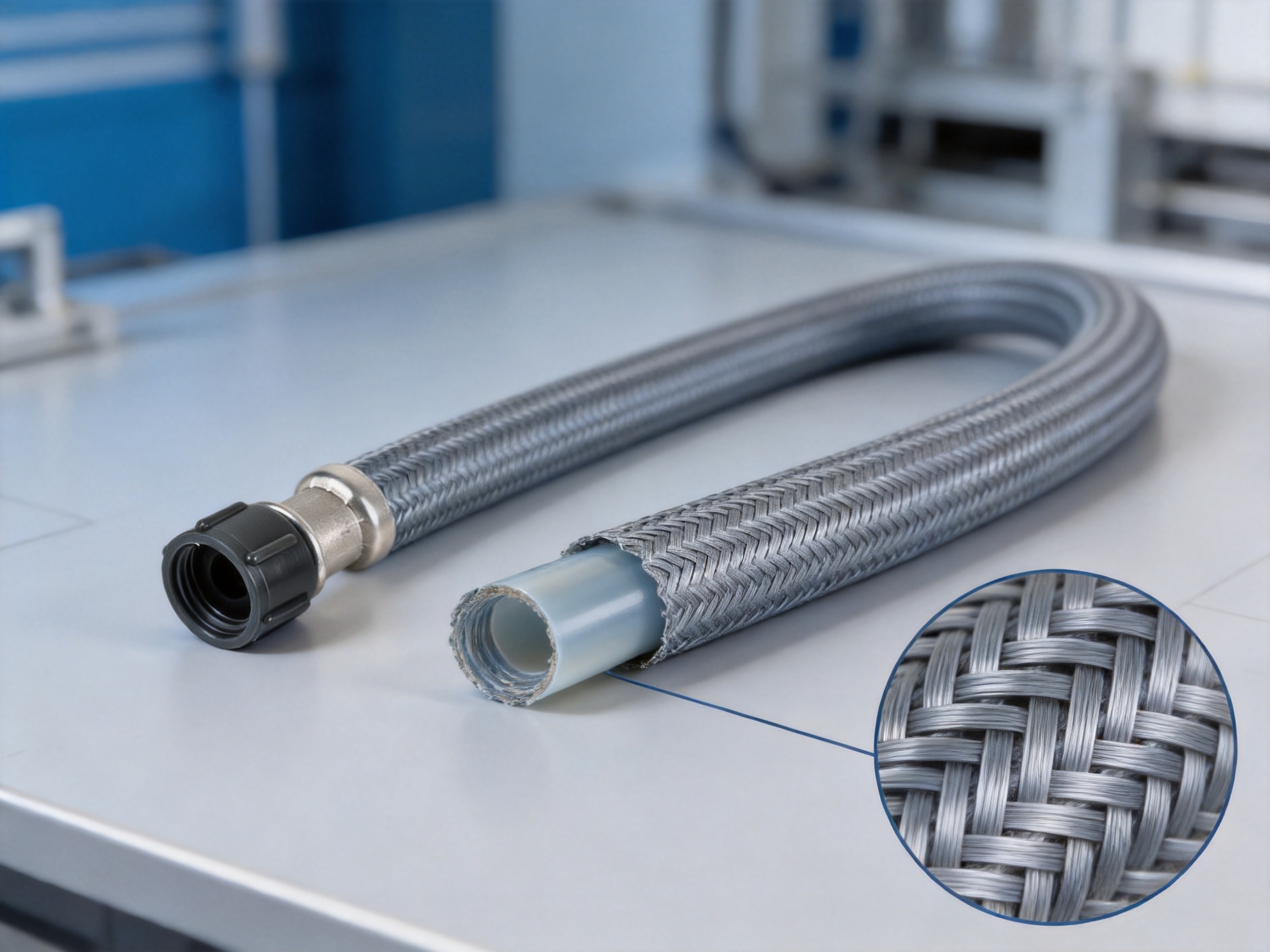
A typical production process begins with selected PET raw material. The material is processed into consistent wire or filament strands. These strands are then wound, supplied, and fed into braiding equipment. Multiple carriers move the wires in alternating directions around the inner tube, creating a stable interlaced structure.
The braid angle affects flexibility and axial reinforcement. A lower or higher angle may be selected depending on whether the design prioritizes resistance to expansion, tensile support, or bending behavior. Carrier tension must remain stable so that the finished braid does not contain loose sections, excessive compression, uneven coverage, or localized stress.
4.1 Wire Diameter and Surface Quality
Wire diameter influences strength, coverage, flexibility, and appearance. A larger wire may provide greater reinforcement but can increase stiffness and outer diameter. A smaller wire may improve flexibility and create a finer braid but may require more carriers or higher coverage to achieve the desired performance.
Surface quality is also important. Scratches, contamination, inconsistent drawing, rough sections, or dimensional variation can interfere with braiding and create weak points. Stable PET wire production should therefore include control of diameter, tensile properties, elongation, surface condition, and winding quality.
4.2 Braid Coverage
Braid coverage refers to the proportion of the underlying surface occupied by the interlaced wires. Too little coverage may leave the tube inadequately protected. Excessive coverage may increase stiffness, material use, and production cost.
Consistent coverage helps distribute external loads and creates a uniform appearance. It also supports repeatable product dimensions, which is important when the finished flexible assembly must fit through a predefined opening or connect with standardized fittings.
4.3 Integration with Fittings
The braid must work with end fittings, sleeves, ferrules, nuts, and sealing components. During assembly, the end of the braid may be secured, compressed, folded, or covered depending on the product design. If the wire pattern is inconsistent, the end termination may become difficult to assemble or may create local stress concentration.
For this reason, the braid is not evaluated separately from the finished product. The performance of the complete flexible connection depends on the compatibility of the inner tube, PET reinforcement, end fittings, sealing elements, and assembly method.
5. Advanced Manufacturing Strengths
Haoyin (Ningbo) Bellows Technology Co., Ltd. is a professional enterprise specializing in the research and development, design, manufacturing, and sales of stainless steel bellows and flexible connection products. Its manufacturing capabilities cover products used in gas, plumbing, heating, healthcare, building heating, industrial HVAC, and other fields.
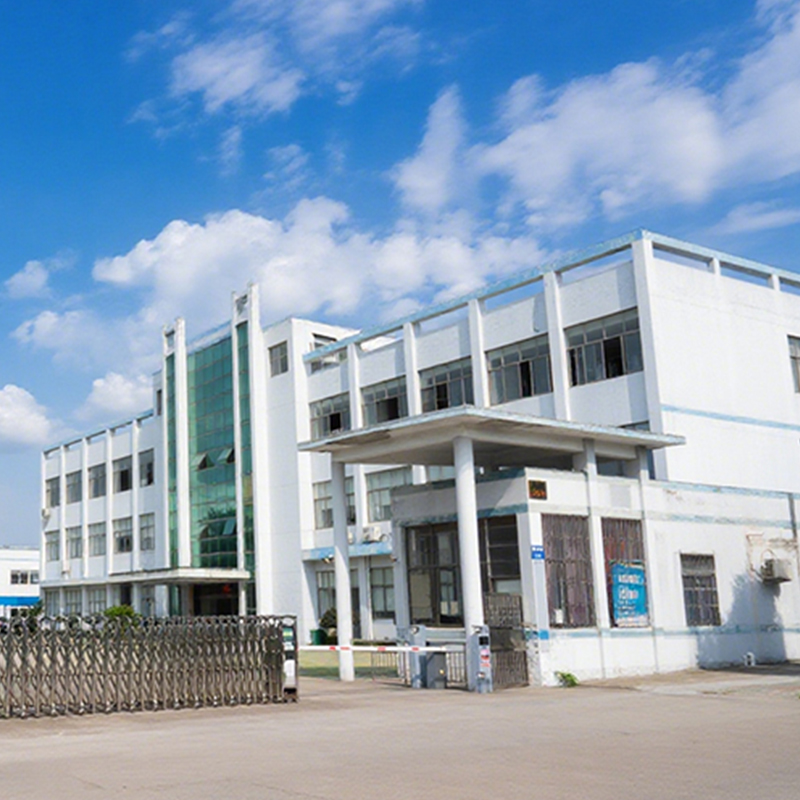
The company operates standardized workshops covering approximately 18,000 square meters on an area of about 35 mu. This production scale supports organized material handling, process separation, equipment deployment, quality inspection, and finished-product management.
Its manufacturing equipment includes laser welding machines, CNC forming machines, COSMO equipment, eddy current flaw detectors, and automatic packaging systems. While PET wire outer braid is a polymer reinforcement component, the broader equipment base is important because many flexible plumbing products require coordinated forming, welding, inspection, assembly, and packaging operations.
5.1 Research and Development
Flexible connection products must be designed around actual installation and service conditions. The company maintains a professional research and development team capable of working on product structure, material selection, forming methods, connection design, and performance improvement.
For a PET outer braid system, research and development may involve selecting wire specifications, adjusting braid construction, evaluating compatibility with water liners, improving end termination, and balancing flexibility with reinforcement. Product design can also take account of packaging, installation tools, routing space, and customer-specific dimensions.
A strong development process reduces the risk of treating the braid as an isolated component. Instead, the braid is considered part of a complete connection solution in which every layer must cooperate.
5.2 Laser Welding and Precision Forming
Laser welding supports precise joining in applications where clean, controlled, and repeatable welds are required. CNC forming machines provide accurate shaping and repeatability for metallic bellows and related components. These capabilities contribute to a broader manufacturing environment in which flexible connectors can be produced with controlled geometry and reliable joints.
Precision forming is relevant to the PET-braided product system because the outer braid must be assembled with correctly formed fittings and support components. Accurate end geometry helps ensure proper sealing, load transfer, and dimensional consistency.
5.3 Inspection and Non-Destructive Testing
Eddy current flaw detection is used for identifying certain surface and near-surface defects in conductive metallic components. In a diversified flexible connection factory, this type of equipment can support inspection of metal tubes, bellows, and fittings that may be combined with or used alongside polymer-reinforced plumbing products.
For PET wire braid itself, quality control may include visual inspection, dimensional measurement, tensile testing, elongation testing, abrasion evaluation, bending tests, and checks of braid coverage and uniformity. The exact inspection program should be based on the product specification and intended application.
5.4 Automatic Packaging
Automatic packaging systems help protect finished flexible products from contamination, tangling, compression, and handling damage. They can also improve consistency in labeling, quantity control, and shipment preparation.
Packaging is especially important for braided plumbing assemblies because improper coiling or excessive compression can create bends that remain in the product. Controlled packaging helps preserve the intended shape and protects fittings and sealing surfaces until installation.
6. Quality Management and Manufacturing Control
Consistent quality requires control throughout the complete production process. Haoyin follows a full-process quality management approach covering raw material selection, structural design, manufacturing, performance testing, and after-sales support. This approach is more reliable than depending only on final inspection.
6.1 Raw Material Selection
The quality of PET wire begins with the polymer and the conversion process. Raw materials should be selected according to strength, modulus, moisture behavior, chemical resistance, thermal requirements, and processing compatibility.
Incoming material controls may include supplier qualification, documentation review, sampling, identification, and physical testing. Stable raw material quality helps reduce variation during wire formation and braiding.
6.2 Process Control
Process control includes monitoring the wire-forming operation, winding condition, braid tension, carrier speed, braid angle, coverage, and finished diameter. Operators and automated systems should be able to identify deviations before large quantities of product are affected.
Important process controls may include:
• PET wire diameter and roundness.
• Tensile strength and elongation.
• Surface cleanliness and absence of visible defects.
• Braid coverage and pattern consistency.
• Outer diameter of the finished assembly.
• Bending performance and minimum bend radius.
• Connection and fitting dimensions.
• Pressure resistance of the complete product.
• Leakage and sealing performance.
• Packaging condition and traceability.
6.3 Performance Testing
Testing should reflect actual use. A flexible plumbing product may be exposed to internal pressure, bending, vibration, temperature changes, humidity, chemical contact, and installation loads. Laboratory tests can evaluate whether the braid and inner tube continue to function after repeated stress.
Potential tests include hydrostatic pressure testing, burst testing, cyclic bending, pull testing, torsion testing, abrasion testing, accelerated aging, temperature exposure, and chemical compatibility testing. The exact test conditions should be established according to the applicable product standard, customer specification, and intended market.
A PET outer braid should not be judged only by its appearance. A visually attractive braid may still have uneven tension or inadequate reinforcement. Conversely, a correctly manufactured braid should be evaluated as part of the complete connection assembly, including fittings and seals.
6.4 Management System Certifications
Haoyin has obtained ISO9001, ISO14001, ISO45001, and other management system certifications. ISO9001 relates to quality management, ISO14001 addresses environmental management, and ISO45001 focuses on occupational health and safety management.
These systems support organized procedures, documented responsibilities, corrective action, risk control, and continual improvement. They do not replace product testing, but they provide a framework for controlling production activities and maintaining accountability.
7. Application Areas
PET wire outer braid can be used in flexible plumbing and water connection products where the design requires mechanical support, lightweight construction, and resistance to ordinary environmental exposure.
7.1 Residential Plumbing
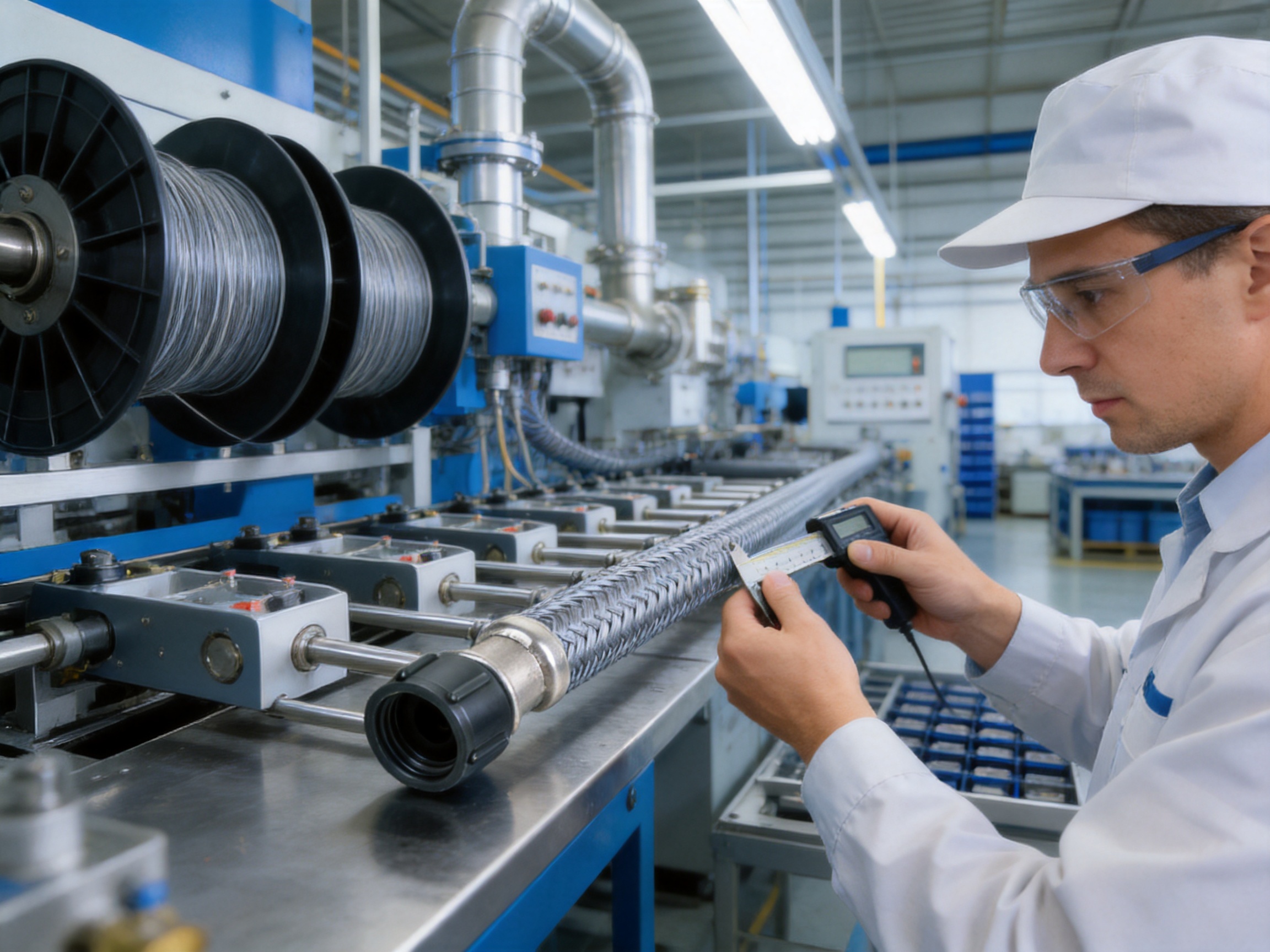
In homes and apartments, flexible connectors are used for faucets, water heaters, toilet tanks, filtration systems, washing machines, dishwashers, and other fixtures. Installation spaces are often narrow, and the connector may need to be routed around cabinets or behind equipment.
A lightweight PET-braided assembly can be easier to position than a heavier metallic alternative. Its flexibility can simplify installation, while the braid provides additional support against accidental pulling or abrasion.
7.2 Commercial Buildings
Commercial buildings use flexible connections in washrooms, kitchens, mechanical rooms, heating systems, and HVAC installations. These systems may involve more frequent maintenance and equipment replacement than residential systems.
In such environments, a durable outer braid can help the flexible connector withstand repeated access and handling. The low moisture absorption of PET is also useful in service areas where humidity and condensation are common.
7.3 Heating and HVAC Systems
Heating and HVAC systems may experience vibration, thermal movement, and pressure cycling. Flexible connections help isolate vibration and accommodate small changes in alignment. A PET outer braid can support the flexible tube while maintaining a relatively low overall weight.
Temperature limitations must be considered carefully. PET should be used within the temperature range established by the product design and testing program. For high-temperature areas or direct exposure to intense heat, a different reinforcement material may be more suitable.
7.4 Healthcare and Specialized Facilities
Healthcare facilities require dependable plumbing and fluid connections, clean manufacturing practices, and appropriate material selection. PET’s low moisture absorption, chemical resistance, and electrical insulation may be beneficial in selected applications.
However, healthcare applications can involve strict requirements related to hygiene, sterilization, fluid compatibility, and traceability. The complete product must be evaluated against the relevant requirements rather than relying solely on the properties of PET wire.
7.5 Industrial Equipment
Industrial equipment often requires flexible connections to accommodate vibration and movement. PET-braided products may be suitable for selected water, air, or general service applications where the pressure and temperature conditions fall within the design range.
Industrial users should provide information about operating pressure, temperature, fluid composition, duty cycle, installation geometry, and exposure to chemicals. This information allows the manufacturer to recommend an appropriate construction.
8. Installation and Service Considerations
Correct installation is essential to obtain the expected performance from a PET-braided flexible plumbing product. Even a high-quality assembly can be damaged by excessive twisting, sharp bending, over-tightening, or improper support.
8.1 Avoid Sharp Bends
The connector should be routed with a bend radius appropriate to its construction. A sharp bend can concentrate stress at one location, distort the braid, and place excessive load on the inner tube or fitting.
The product should not be forced into a position that is smaller than its recommended minimum bend radius. If the available space is too restricted, the correct solution may be a different product length, fitting orientation, or connector design.
8.2 Prevent Twisting During Tightening
When a fitting is tightened, the flexible body should not be allowed to rotate excessively. Torsional stress can distort the braid and inner tube. Installers should use the appropriate tools and hold the fitting correctly while tightening the connection.
Over-tightening can damage threads, seals, fittings, and the connection body. The recommended tightening method and torque should be followed for the complete assembly.
8.3 Protect against Abrasion
The PET braid provides useful wear resistance, but it should not be intentionally rubbed against sharp edges or rough surfaces. Where the connector passes through a metal opening, a suitable edge protection method may be needed.
The assembly should also be kept away from moving mechanisms, cutting tools, intense heat sources, and aggressive chemicals unless it has been specifically designed for those conditions.
8.4 Inspection and Replacement
Flexible connections should be inspected periodically in applications where leakage could cause damage. Signs of concern may include braid deformation, unusual swelling, cuts, severe abrasion, fitting corrosion, leakage, or permanent kinking.
A flexible connector is a service component. Replacement intervals depend on the product specification, operating conditions, local regulations, and manufacturer recommendations. A damaged or visibly degraded connector should not remain in service simply because the leak has not yet appeared.
9. Product Selection Guide
Choosing the correct PET-braided plumbing product requires more than selecting a nominal size. Buyers and engineers should review the complete operating environment and the required connection design.
| Selection Item | Questions to Confirm |
|---|---|
| Working medium | Is the product intended for potable water, heating water, air, oil, or another fluid? |
| Pressure | What are the normal, peak, and surge pressures? |
| Temperature | What are the minimum, maximum, and cycling temperatures? |
| Size | What are the tube diameter, fitting size, and connection thread requirements? |
| Length | What length is needed without forcing the connector into tension or excessive bending? |
| Movement | Will the product experience vibration, repeated bending, thermal movement, or torsion? |
| Environment | Will it be exposed to humidity, cleaning chemicals, oils, sunlight, heat, or abrasion? |
| Standards | Which national, regional, plumbing, or customer standards apply? |
| End fittings | Which materials, thread forms, seals, and termination designs are required? |
| Testing | What pressure, leakage, aging, and durability documentation is needed? |
For purchasing departments, supplier capability is also important. A qualified supplier should be able to provide product specifications, inspection records, batch traceability where required, packaging information, and technical support.
10. Why Manufacturing Integration Matters
A major advantage of working with an integrated flexible connection manufacturer is the ability to coordinate material, braid, tube, fitting, testing, and packaging decisions. If these elements are sourced and designed independently, compatibility problems may appear during assembly or service.
For example, a braid may have excellent tensile performance but may not fit correctly around the selected inner tube. A fitting may provide a strong connection but create excessive local stress at the braid termination. A flexible tube may meet pressure requirements but fail after repeated bending because the braid angle is unsuitable.
Integrated engineering reduces these risks. The manufacturer can consider the complete product architecture and adjust the design according to the intended application. This is especially valuable for customers requiring custom dimensions, special packaging, unusual fittings, or coordinated product families.
Haoyin’s experience with stainless steel bellows, gas connectors, plumbing pipes and water liners, metal hoses, and compensators provides a broad understanding of flexible connection behavior. This product knowledge supports the development of practical solutions in which the PET outer braid is selected for its specific role within the overall assembly.
11. Environmental and Operational Benefits
PET outer braid can contribute to resource efficiency through low weight, long service potential, and relatively low production cost. A lighter product requires less material mass for transportation and may reduce packaging requirements.
Durability also has an environmental value. When a flexible connection remains reliable for a longer period, fewer replacements may be required. Preventing leakage can reduce water loss and avoid damage to buildings, equipment, and interior finishes.
Haoyin has obtained ISO14001 environmental management certification and identifies itself as a Green Factory. Environmental management in manufacturing may include resource monitoring, waste reduction, process improvement, energy management, and responsible handling of production materials.
Environmental performance should be evaluated across the complete product life cycle. Customers may consider material selection, manufacturing efficiency, packaging, service life, replacement frequency, and end-of-life handling when comparing flexible plumbing solutions.
12. Advantages of the Product in Competitive Applications
Flexible Plumbing Outer Braid PET Wires offer several competitive advantages when used in suitable applications:
First, they provide high tensile strength and high modulus for a polymer reinforcement material. This allows designers to obtain useful mechanical support without relying exclusively on heavier metal braid.
Second, they provide a balanced combination of flexibility and toughness. The braid can support the assembly while allowing it to be routed through practical installation spaces.
Third, low moisture absorption helps maintain more stable properties in humid plumbing environments. This is important for products installed near water, condensation, or damp service areas.
Fourth, resistance to many dilute chemicals, alcohols, oils, and similar substances provides practical durability during ordinary handling and service. The specific chemical exposure must still be verified.
Fifth, PET does not rust and is electrically insulating. These properties can be advantageous compared with conductive metallic braid in selected installations.
Sixth, low density reduces product weight. This supports easier handling, lower transportation burden, and more convenient installation.
Seventh, the material is relatively cost-effective. Stable raw material economics and efficient production can help manufacturers offer competitive flexible connection products without sacrificing the functional role of the outer reinforcement.
Finally, the product benefits from a manufacturing organization that combines research and development, standardized workshops, precision equipment, quality systems, performance testing, and automated packaging.
13. Frequently Asked Questions
13.1 What are Flexible Plumbing Outer Braid PET Wires?
They are PET polymer wires or strands used to create an outer braided reinforcement layer around flexible plumbing pipes, water liners, hoses, and related connection products. The braid helps support the inner tube, improve resistance to external damage, and control deformation.
13.2 Is PET wire the same as stainless steel wire?
No. PET is a lightweight, nonmetallic polymer, while stainless steel is a metal alloy. Stainless steel generally provides higher temperature capability and very high mechanical strength, but PET offers lower weight, electrical insulation, no rusting, good chemical resistance, and cost advantages in suitable applications.
13.3 Can PET braid be used for every plumbing application?
No. Product selection must consider pressure, temperature, fluid, movement, chemical exposure, fire conditions, applicable standards, and installation requirements. PET braid is appropriate for many flexible plumbing applications, but highly demanding conditions may require stainless steel or another reinforcement material.
13.4 Does PET absorb water?
PET has low moisture absorption. It does not readily absorb water from humid surroundings, which helps maintain dimensional stability and mechanical performance. Low moisture absorption does not mean that the complete assembly is automatically waterproof; sealing depends on the inner tube and fittings.
13.5 Does PET outer braid corrode?
PET does not rust like ordinary steel. It can still be affected by excessive heat, strong chemicals, ultraviolet exposure, mechanical damage, or unsuitable service conditions. The complete product should be protected and used within its specified operating range.
13.6 What makes the braid flexible?
Flexibility depends on the PET wire construction, wire diameter, braid angle, carrier tension, coverage, inner tube design, and end fittings. A properly balanced design allows bending while still providing useful reinforcement.
13.7 How is the quality of PET braid controlled?
Quality can be controlled through raw material verification, wire diameter checks, tensile testing, surface inspection, braiding tension control, coverage inspection, dimensional checks, bending tests, pressure tests, leakage tests, and inspection of the complete finished assembly.
13.8 Can the product be customized?
Customization may be possible for wire specification, braid construction, length, tube size, fitting type, connection configuration, packaging, and labeling. Customers should provide technical information about the intended application so that the design can be evaluated correctly.
13.9 What certifications does the manufacturer have?
Haoyin (Ningbo) Bellows Technology Co., Ltd. has obtained ISO9001, ISO14001, ISO45001, and other management system certifications. Product-specific approvals and testing should be confirmed according to the application and destination market.
13.10 How should a PET-braided connector be installed?
It should be installed without sharp bends, excessive twisting, over-tightening, or intentional abrasion. The recommended bend radius, fitting procedure, pressure rating, and environmental limits should be followed. The connector should be inspected after installation and during service when required.
13.11 What information should a buyer provide when requesting a quotation?
A buyer should provide the working medium, pressure, temperature, size, length, fitting type, thread standard, required quantity, installation environment, movement conditions, applicable standards, packaging requirements, and any testing or documentation requirements.
13.12 Why is an integrated manufacturer useful?
An integrated manufacturer can coordinate the inner tube, PET braid, fittings, forming, inspection, testing, and packaging. This reduces compatibility risks and makes it easier to develop a complete flexible connection rather than purchasing an isolated reinforcement component without considering the final assembly.
14. Conclusion
Flexible Plumbing Outer Braid PET Wires provide a practical reinforcement solution for flexible plumbing and water connection products. Their high strength, high modulus, good toughness, wear resistance, low moisture absorption, chemical resistance, electrical insulation, low density, and cost-effectiveness make them competitive in applications where lightweight and durable construction are important.
The value of PET wire is greatest when it is incorporated into a correctly engineered flexible assembly. Braid angle, coverage, wire diameter, carrier tension, inner tube compatibility, end termination, and testing all influence final performance. Proper installation and service conditions are equally important.
Haoyin (Ningbo) Bellows Technology Co., Ltd. combines product development, manufacturing experience, standardized workshops, precision production equipment, quality management systems, inspection capabilities, and automated packaging. Its broader portfolio of gas connectors, plumbing pipes and water liners, metal hoses, and compensators supports an integrated approach to flexible connection technology.
For customers seeking a lightweight and durable outer reinforcement solution, PET wire braid can provide an effective alternative to heavier or less mechanically capable coverings. By matching the braid construction to pressure, temperature, fluid, movement, and environmental requirements, manufacturers and users can obtain a flexible plumbing product that is easier to handle, efficient to produce, and reliable in service.
References
1. ISO 9001, Quality Management Systems — Requirements.
2. ISO 14001, Environmental Management Systems — Requirements with Guidance for Use.
3. ISO 45001, Occupational Health and Safety Management Systems — Requirements with Guidance for Use.
4. General technical literature on polyethylene terephthalate fibers, polymer reinforcement, and industrial textile construction.
5. General engineering literature on braided hose design, pressure restraint, bending fatigue, and flexible connection assemblies.
6. General plumbing engineering guidance concerning flexible connectors, installation practice, leakage prevention, and service inspection.
7. Manufacturer technical information concerning PET wire outer braid, flexible plumbing products, water liners, metal hoses, bellows, and compensators.