




 English
 Español
 русский




Modern gas systems depend on connection components that combine mechanical strength, dimensional accuracy, corrosion resistance, and dependable sealing performance. A gas connector may appear simple, but its quality has a direct influence on installation efficiency, operating stability, maintenance requirements, and overall system safety. The DN10 stainless steel gas connector described in this article is designed to provide a practical and durable flexible connection solution for residential kitchens, commercial appliances, heating systems, and selected industrial gas applications.
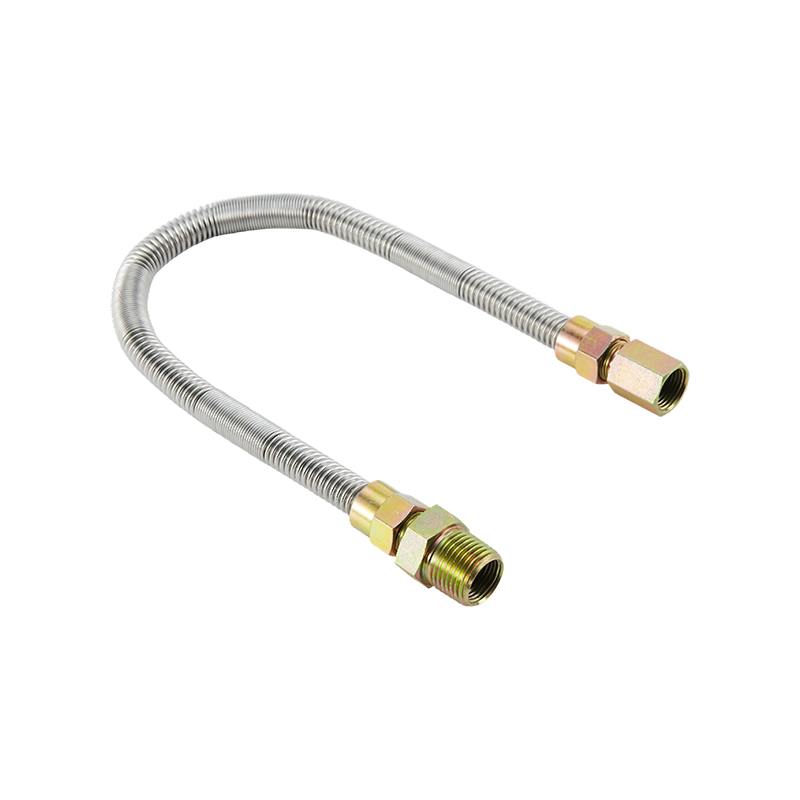
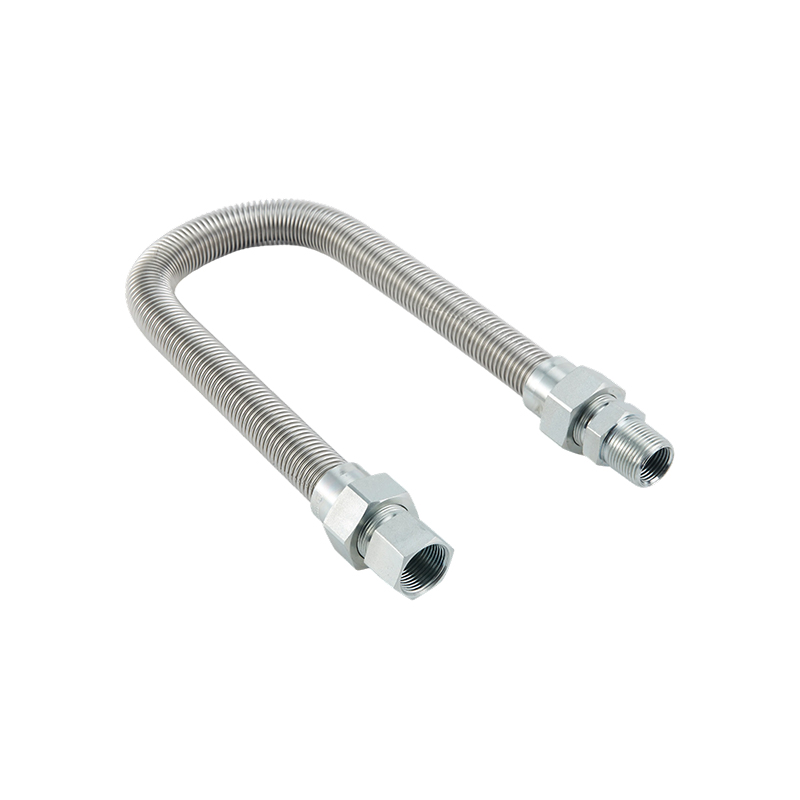
Manufactured from 304 stainless steel and formed with a 0.2 mm wall thickness, this connector is designed to withstand demanding service conditions while remaining flexible enough for installation in confined spaces. Its 5/8-18UNF flare nut and range of adapter configurations allow it to connect with different interface requirements. Available lengths from 12 inches to 72 inches provide additional freedom during equipment placement and system design.
The product is part of a broader portfolio of stainless steel bellows and flexible connection products developed for gas, plumbing, heating, healthcare, building services, and industrial HVAC applications. Its performance is supported not only by material selection and connector design, but also by controlled manufacturing processes, inspection equipment, management systems, and application-focused engineering.
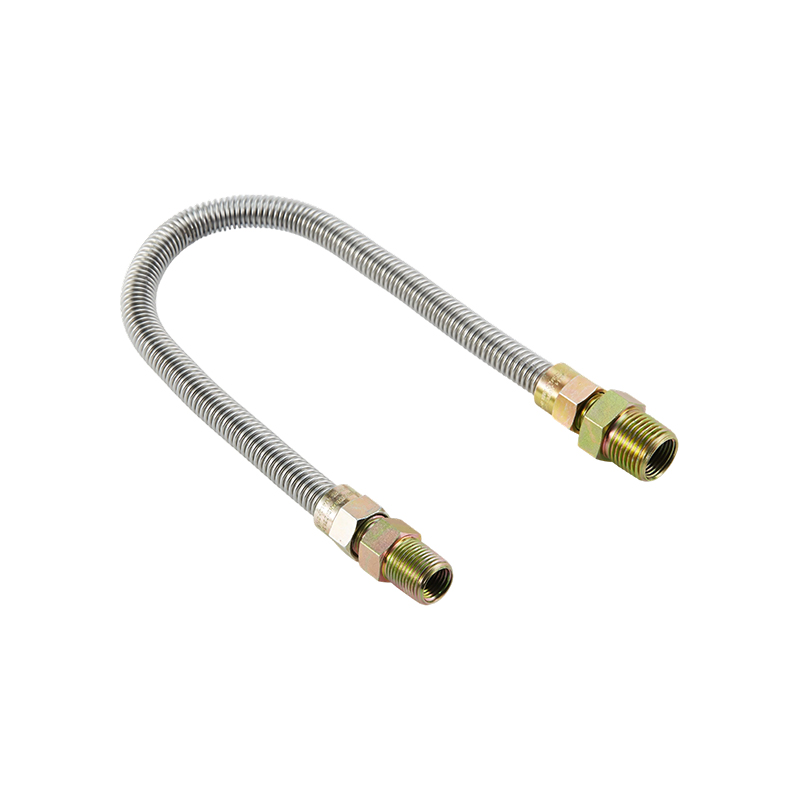
DN10 Stainless Steel Gas Connector
1. Understanding the DN10 Stainless Steel Gas Connector
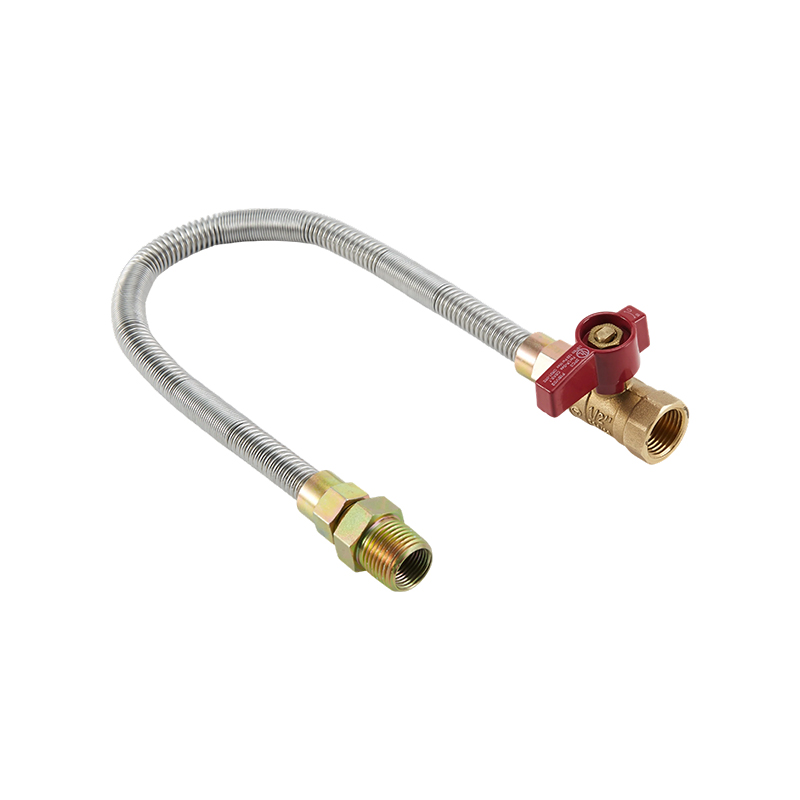
The DN10 stainless steel gas connector is a flexible metallic connection component intended for use in gas piping arrangements. It provides a link between a fixed gas supply line and an appliance, valve, manifold, or other compatible gas-system interface. Its flexibility helps accommodate small alignment differences, installation movement, and practical routing requirements that may be difficult to manage with rigid pipe alone.
The core tube is made from 304 stainless steel. This widely used austenitic stainless steel grade is valued for its balance of corrosion resistance, formability, strength, and availability. In normal indoor and covered installation environments, it provides a strong material foundation for long-term gas connection service. The stainless steel construction also gives the product a clean metallic appearance and helps it resist common moisture-related deterioration better than many ordinary carbon-steel alternatives.
The stated wall thickness is 0.2 mm. This relatively thin formed wall supports flexibility while maintaining the structural characteristics required for a compact connector. The final performance of a thin-wall flexible tube depends on more than thickness alone. Forming quality, weld integrity, end preparation, connection geometry, dimensional control, and inspection are all important. For that reason, the manufacturing process has a significant influence on the reliability of the completed assembly.
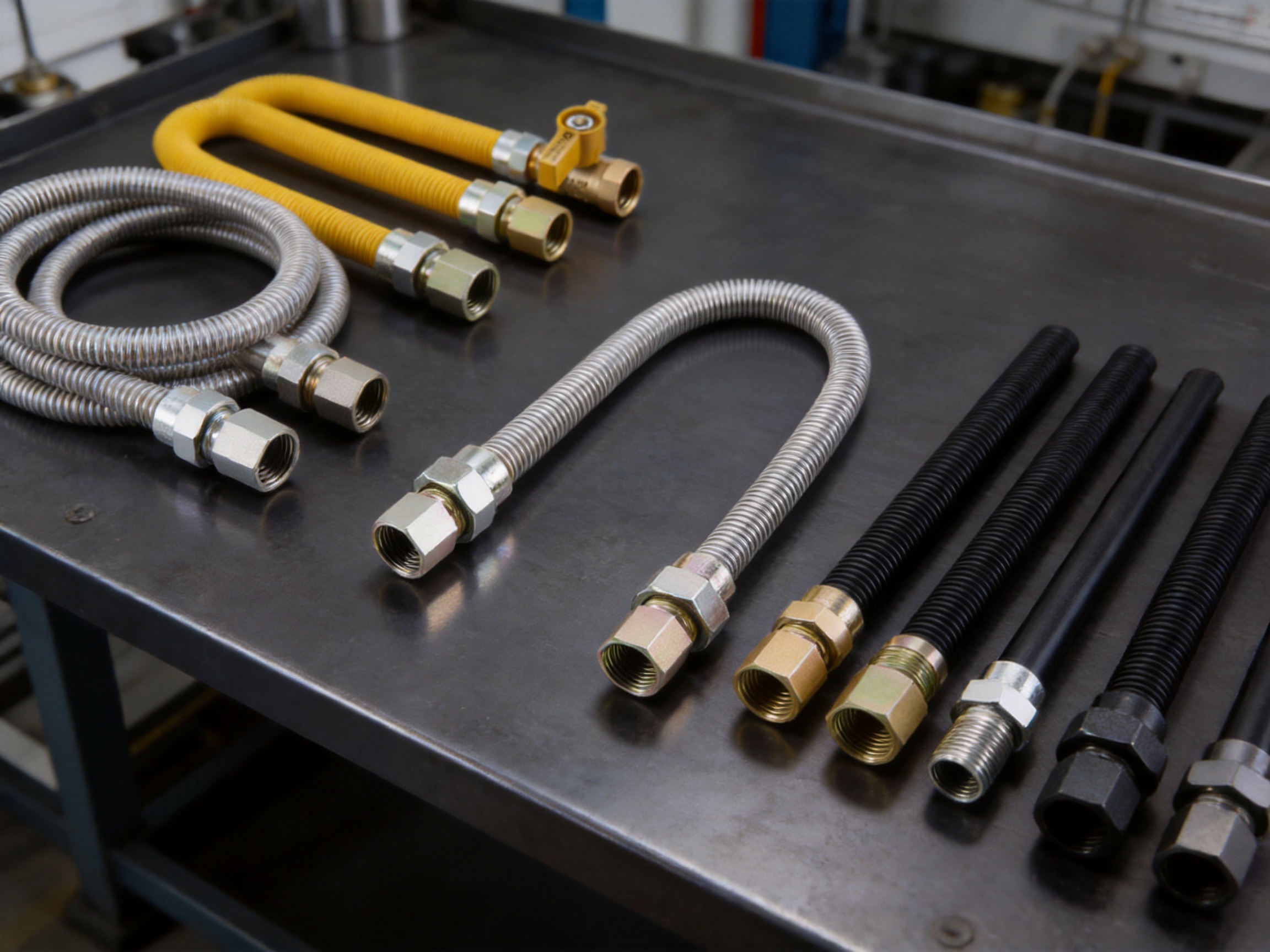
The connector uses a 5/8-18UNF flare nut. This thread specification provides a defined interface for compatible flare connections and allows the product to be integrated with a range of adapters. The available adapter options cover several common combinations involving 3/8-inch and 1/2-inch connections, helping installers match the connector to different pipe diameters and terminal arrangements.
Hard sealing is used as the stated seal form. In a properly matched flare connection, the sealing surfaces are brought together through controlled tightening, creating a metal-to-metal sealing interface. This arrangement can reduce reliance on separate soft sealing elements at the flare face. Correct assembly remains essential: mating surfaces should be clean, compatible, correctly aligned, and tightened according to the applicable installation requirements.
2. Key Product Specifications
The following table summarizes the principal specifications supplied for this DN10 stainless steel gas connector.
| Item | Specification |
|---|---|
| Product type | DN10 stainless steel gas connector |
| Primary material | 304 stainless steel |
| Tube wall thickness | 0.2 mm |
| Flare nut thread | 5/8-18UNF |
| Adapter options | 5/8 × 3/8 M, 5/8 × 3/8 F, 5/8 × 1/2 M, and 5/8 × 1/2 F configurations, including listed female-interface combinations |
| Available lengths | 12, 18, 24, 36, 48, 60, and 72 inches |
| Nut material | Brass or carbon steel |
| Cover | None |
| Seal form | Hard sealing |
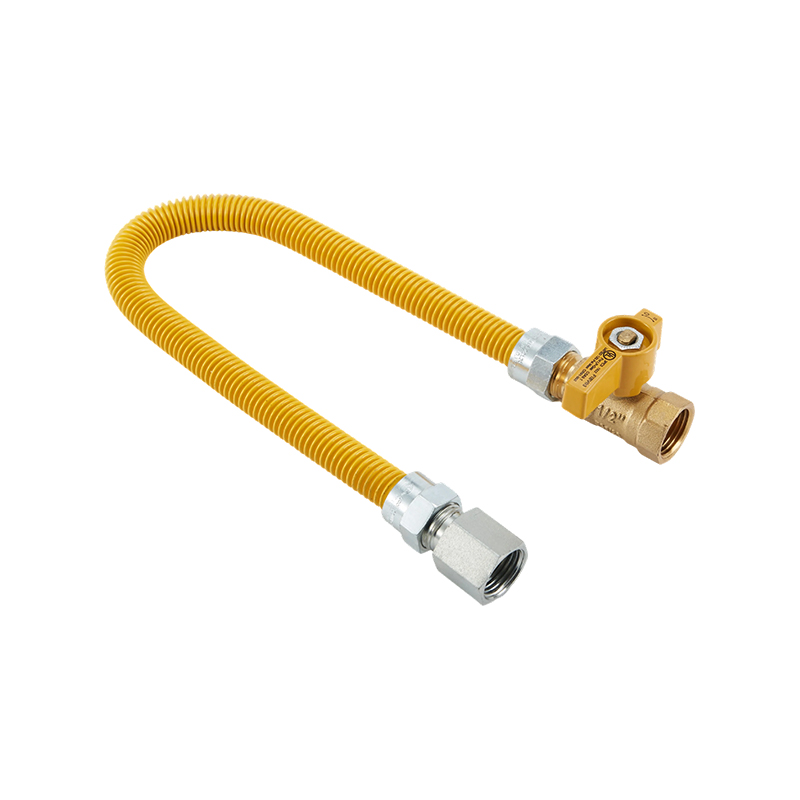
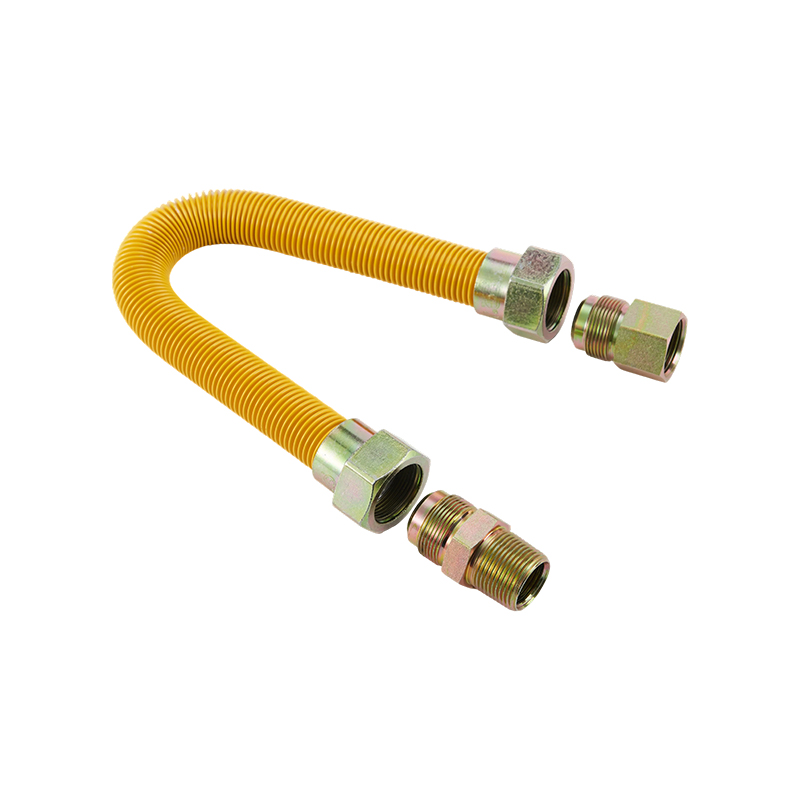
| Color options | Stainless steel, yellow, and black |
| Intended application areas | Residential, commercial, heating, plumbing-related, and industrial connection systems, subject to applicable requirements |
The adapter combinations are particularly useful for projects where the flexible connector must transition between different nominal connection arrangements. Before ordering or installation, the actual gas appliance connection, supply-side fitting, thread form, nominal size, and local code requirements should always be checked. Thread appearance alone is not enough to confirm compatibility.
3. Material Advantages of 304 Stainless Steel
Material selection is one of the most important differences between a dependable gas connector and a low-quality substitute. 304 stainless steel is widely selected for flexible connection products because it offers a balanced combination of corrosion resistance and manufacturability. It is suitable for many indoor and sheltered environments where the connector may encounter humidity, kitchen vapors, cleaning residues, or temperature variation.
One advantage of stainless steel is its resistance to rust in ordinary service environments. Unlike unprotected carbon steel, stainless steel naturally forms a passive surface layer that helps slow further oxidation. This does not make the material immune to every chemical or environmental condition, but it provides a useful level of protection for common residential and commercial applications.
Stainless steel also offers good formability. A flexible connector must be shaped without creating unacceptable cracks, thinning, sharp folds, or stress concentrations. The forming behavior of 304 stainless steel allows manufacturers to create corrugated or flexible tube structures while maintaining a consistent production process. When combined with controlled tooling and inspection, this supports repeatable product quality.
Another benefit is temperature resistance. Gas systems may be installed near cooking appliances, heating equipment, boilers, or other sources of heat. The connector must be selected and installed according to the actual operating temperature, pressure, gas type, and applicable certification requirements. Within an appropriate design range, stainless steel provides a stable metallic structure that is less vulnerable to softening or aging than some polymer-based alternatives.
304 stainless steel is also suitable for applications where appearance and cleanliness matter. The bright metallic finish can be used where the connector is visible, while yellow or black color options may help with visual identification or project preferences. The absence of a separate cover simplifies the basic construction and allows the installer to inspect the metallic body more directly.
Although 304 stainless steel is a strong general-purpose choice, material selection should always be matched to the service environment. Highly aggressive chemical exposure, outdoor coastal conditions, buried installation, or unusual temperature and pressure conditions may require additional engineering review or a different stainless steel grade. The product should be used only within the limits established by the applicable product documentation and local regulations.
4. Flexible Construction for Practical Installation
Rigid pipe systems require accurate cutting, threading, bending, and alignment. Even when installed by skilled personnel, rigid components can make the final connection more time-consuming, particularly when an appliance outlet and supply pipe are not perfectly aligned. A flexible stainless steel connector simplifies the final section of the installation by allowing controlled routing between two fixed points.
The DN10 connector is available in seven stated lengths: 12, 18, 24, 36, 48, 60, and 72 inches. This range supports short appliance connections as well as longer routing requirements. Selecting a suitable length can reduce unnecessary bends, avoid excessive tension, and make the finished installation easier to inspect.
Length selection should not be based only on the straight-line distance between connection points. The installer should allow for the natural routing radius, connection alignment, access for tightening, appliance movement where permitted, and any required clearance from hot surfaces or sharp edges. A connector should never be stretched tightly between two points or bent more sharply than the manufacturer’s installation guidance permits.
The flexible structure can help absorb minor installation movement and vibration. Gas appliances may experience small movements during operation, cleaning, servicing, or repositioning. A properly routed metallic connector can accommodate limited movement more effectively than an overly rigid connection. However, it is not intended to serve as a lifting device, a structural support, or a substitute for correct pipework anchoring.
In commercial and industrial settings, flexibility may also assist with equipment layout changes. A connector can reduce the need to redesign an entire branch line when a compatible appliance or component is moved within a practical installation area. This may support faster commissioning and more efficient maintenance, provided that the connector remains accessible and is used within the approved application conditions.
5. Connection Options and Interface Compatibility
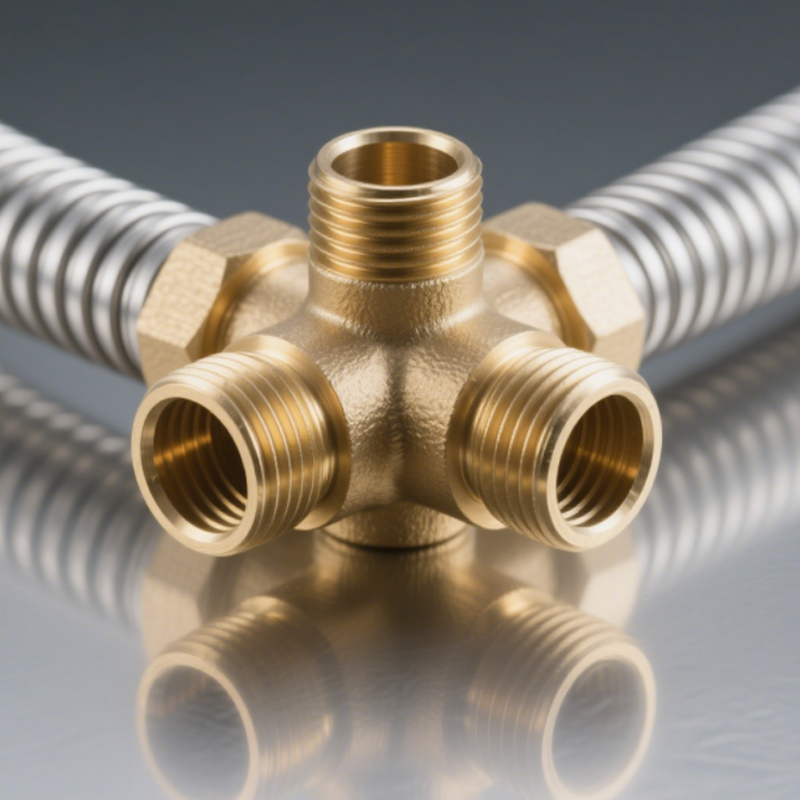
A major practical feature of this product is its adapter flexibility. The listed configurations include 3/8-inch outer-diameter flare connections paired with 3/8-inch or 1/2-inch male and female interfaces. The supplied information identifies combinations such as 3/8-inch OD flare to 3/8-inch MIP with a 1/4-inch FIP option, 3/8-inch OD flare to 3/8-inch FIP, 3/8-inch OD flare to 1/2-inch MIP with a 3/8-inch FIP option, and 3/8-inch OD flare to 1/2-inch FIP.
These choices can reduce the need for multiple separately sourced transition fittings. For distributors, offering several configurations under one product family can simplify inventory planning. For installers, it can make product selection more convenient when the appliance and supply-side connection sizes differ.
Thread and flare terminology must be interpreted carefully. A male pipe thread, female pipe thread, flare connection, and metric connection are not interchangeable simply because their nominal sizes appear similar. The thread profile, pitch, sealing method, and dimensional standard must match. An incorrect combination may damage the threads or fail to create a safe seal.
The 5/8-18UNF flare nut provides the principal connector-side interface. The adapter should be selected according to the actual terminal fitting and the design of the gas appliance. Where a female connection is specified, the installer should verify whether it is intended for a particular male thread standard and whether an additional approved sealing method is required at that interface.
Hard sealing at the flare face requires proper alignment. The flare nut should be started by hand to avoid cross-threading. The tubing and fitting should remain in line while tightening, and the connection should not be forced into position by using the nut to correct a major misalignment. After assembly, the system should be tested using the method required by the applicable gas code, authority, or project specification.
Because gas connector standards vary by market, a product described as suitable for a particular category or certification program should still be checked against the exact local approval requirements. The supplied product information identifies the category as a stainless steel gas connector with CSA certification. Project managers and installers should confirm the current certification marking, listing scope, permitted gas types, pressure limits, and installation conditions before use.
6. Competitive Advantages in Real-World Applications
The product offers several advantages when compared with basic rigid connections or poorly specified flexible alternatives. The first is the combination of stainless steel construction and flexible geometry. This allows the connector to support easier installation while maintaining a metallic structure suitable for many demanding environments.
The second advantage is configuration flexibility. The available lengths and adapter options make it possible to select a connector that better matches the installation rather than relying on one standard size. A closer fit can improve routing, reduce unnecessary bends, and minimize the need for extra transition components.
The third advantage is corrosion resistance. In kitchens, utility rooms, boiler rooms, and commercial service areas, moisture and airborne contaminants can gradually affect exposed metal. A 304 stainless steel body provides stronger resistance to ordinary corrosion than untreated carbon steel, helping the connector retain its appearance and functional integrity when correctly installed.
The fourth advantage is the hard-seal connection concept. A properly assembled flare joint provides a direct metallic sealing interface and avoids dependence on a separate gasket at the flare face. This can simplify inspection and reduce the number of components that must be tracked during installation. The connection must nevertheless be assembled correctly, and any pipe-thread adapter joints must use the appropriate approved sealing method where required.
The fifth advantage is manufacturing consistency. Flexible metal products are sensitive to variations in wall thickness, forming depth, weld quality, end geometry, and nut assembly. A supplier with dedicated bellows technology, automated equipment, and inspection systems is better positioned to control these variables than a general trading operation with limited production oversight.
Finally, the product family is supported by an organization that manufactures more than one type of flexible connection. Experience with plumbing pipes, water liners, metal hoses, and compensators can contribute to a broader understanding of material behavior, forming, welding, pressure-related design, and application requirements. This wider technical base can be valuable when customers need customized lengths, connection arrangements, or project-specific product support.
7. Advanced Manufacturing Capabilities
The manufacturing quality of a stainless steel gas connector begins with raw material control. Stainless steel strip, tube material, brass or carbon-steel nuts, and adapter components must be sourced and verified according to defined requirements. Consistent material chemistry, surface condition, dimensional accuracy, and mechanical properties help establish a stable production foundation.
The company operates standardized workshops covering approximately 18,000 square meters across a site of about 35 mu. This production environment supports organized material flow, dedicated manufacturing areas, equipment management, and process separation. A structured workshop layout can reduce handling errors and improve traceability from incoming material through finished-product packaging.
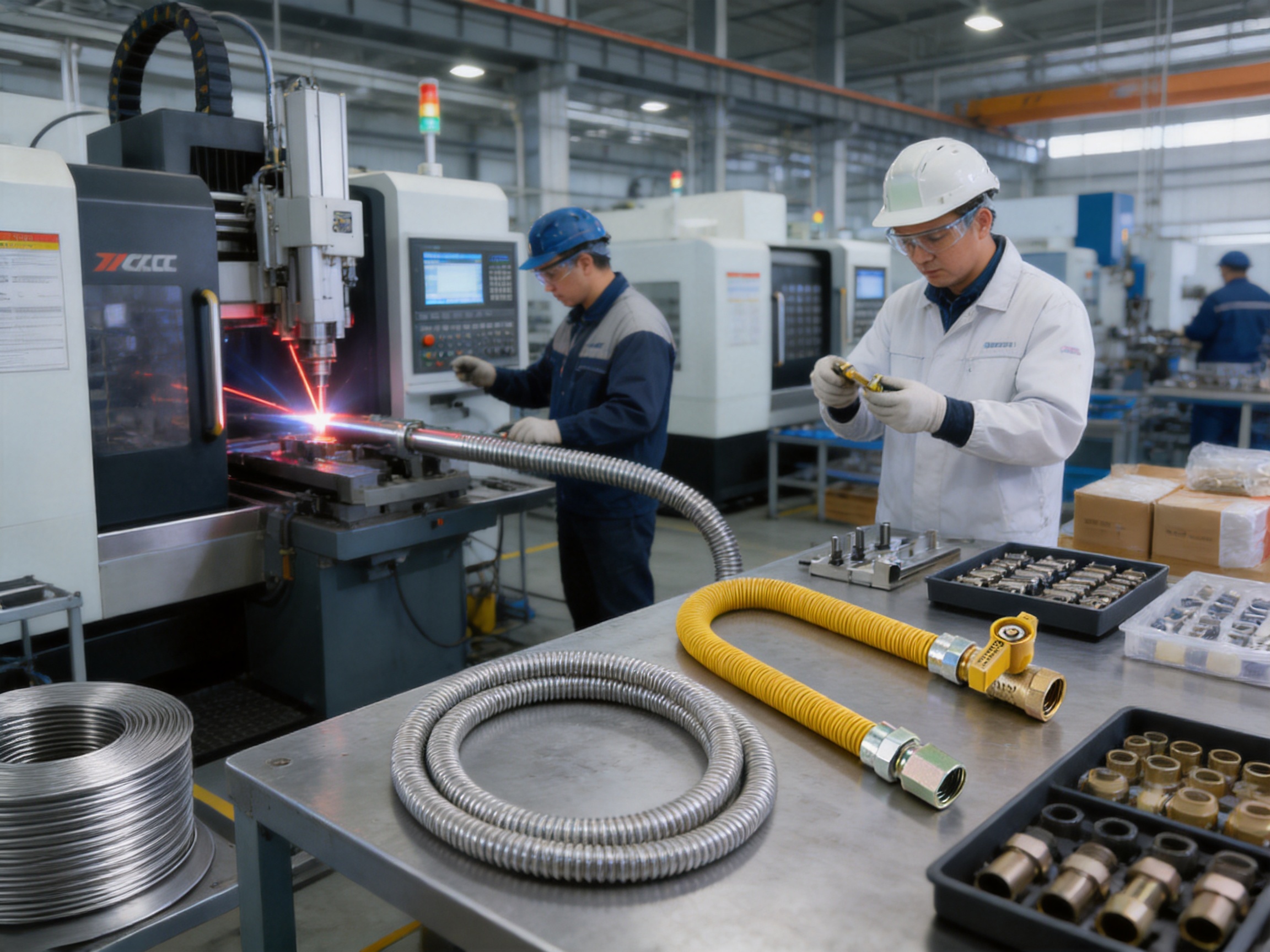
Laser welding equipment is used as part of the advanced manufacturing system. In flexible stainless steel products, weld quality is important because a weld may be exposed to repeated forming stresses, pressure, temperature variation, and vibration. Laser welding can provide a concentrated heat input and a controlled weld profile when the process is properly parameterized. It may also help reduce distortion and support repeatable joints in thin-wall stainless steel components.
CNC forming machines are another important part of the production process. Flexible tubing and bellows structures depend on accurate forming geometry. Corrugation depth, pitch, diameter, end dimensions, and transition areas must remain within controlled limits. CNC equipment supports programmable forming conditions and repeatability across production batches, which is especially important when different connector lengths or configurations are manufactured.
The company also identifies COSMO equipment among its production resources. Such equipment contributes to specialized manufacturing and quality-control activities within the product process. In combination with forming and welding equipment, it supports the production of flexible metallic components for different application fields.
Eddy current flaw detectors are used for non-destructive inspection. This type of technology can help identify certain discontinuities or irregularities in conductive metallic materials without destroying the inspected component. For thin-wall stainless steel products, non-destructive inspection provides an additional layer of process control beyond visual examination and dimensional measurement.
Automatic packaging systems help standardize the final handling stage. Packaging is not merely a presentation issue. Proper packaging can protect flare surfaces, threads, finished surfaces, and connector bodies from impact, contamination, and deformation during storage and transportation. Automated or controlled packaging also helps ensure that product labels, lengths, adapter configurations, and quantities are handled consistently.
Manufacturing equipment alone does not guarantee quality. It must be supported by documented procedures, trained operators, maintenance programs, calibration controls, inspection plans, and corrective-action systems. The company’s stated management certifications, including ISO9001, ISO14001, and ISO45001, indicate a structured approach to quality, environmental management, and occupational health and safety.
8. Full-Process Quality Management
A reliable connector requires quality management at every stage rather than a final visual check alone. The company describes a full-process quality system covering raw material selection, structural design, manufacturing, performance testing, and after-sales support. This approach is important because a defect introduced during material preparation or forming may not be obvious after assembly.
During raw material selection, the production team can evaluate the grade and consistency of stainless steel, the dimensional quality of nuts, and the suitability of adapter materials. Material documentation and incoming inspection help reduce the risk of using components that do not meet the intended specification.
During structural design, engineers consider how the connector will be formed, assembled, sealed, routed, and used. Product design should account for the interaction between the flexible tube, flare nut, adapters, end fittings, and installation environment. The goal is not simply to create a component that can be manufactured, but to create one that can be installed and operated reliably.
During manufacturing, process parameters must be controlled. Welding energy, forming force, tooling condition, tube positioning, nut assembly, and surface treatment may all influence the final product. Production records and batch controls can help identify the source of any deviation and support continuous improvement.
Performance testing provides evidence that the finished connector meets defined requirements. Depending on the applicable standard and product scope, testing may include dimensional verification, leak testing, pressure testing, tensile or pull testing, bend-related evaluation, material checks, and visual inspection. The exact test program should follow the relevant certification and technical requirements for the intended market.
After-sales support is also part of product reliability. Customers may require help with adapter selection, length confirmation, installation questions, replacement planning, or project documentation. A manufacturer with technical personnel and an established product portfolio can provide more useful support than a supplier that only resells generic components.
9. Applications in Residential Gas Systems
Residential kitchens are one of the most common environments for compact gas connectors. A connector may be used between a gas supply outlet and a compatible cooking appliance, subject to local regulations and appliance instructions. The available 12-inch, 18-inch, and 24-inch lengths may be suitable for short connections where the appliance is positioned close to the supply point.
The stainless steel body can be advantageous in a kitchen because the connector may be exposed to humidity, cleaning activity, and occasional temperature changes. Its flexible form can make it easier to route behind or beside equipment without requiring complex rigid pipework.
Residential heating equipment may also require flexible connections, although the appropriate connector type, pressure rating, temperature range, and certification must be confirmed for the specific appliance. Longer lengths such as 36 or 48 inches may be useful where access or equipment layout requires additional distance, but extra length should never be left in an uncontrolled loop or placed where it can be crushed.
Installation in a home should be performed by a qualified professional or in accordance with the applicable local requirements. The connector should remain accessible for inspection, should not pass through unsuitable openings, and should be protected from abrasion, excessive heat, sharp edges, and mechanical damage.
10. Commercial and Industrial Uses
Commercial kitchens often have more demanding installation conditions than residential kitchens. Equipment may be larger, service access may be frequent, and cleaning procedures may expose components to moisture and chemical residues. A stainless steel flexible connector can support practical equipment connections when it is correctly selected and installed.
Commercial heating systems may also benefit from flexible connections around boilers, burners, control assemblies, or other compatible equipment. The connector can help simplify alignment and service access while reducing stress on rigid branches. However, the system designer must confirm the connector’s suitability for the gas type, operating pressure, temperature, movement, and required certification.
In industrial environments, flexible metallic connectors are used in a wide range of systems, including equipment supply lines, process gas arrangements, heating assemblies, and HVAC-related installations. The DN10 product may be appropriate for selected smaller-diameter connection requirements. Industrial users should conduct a detailed engineering review before application because industrial conditions can involve vibration, chemical exposure, high temperature, outdoor installation, or frequent movement beyond ordinary appliance service.
The connector may also be useful for original equipment manufacturers that need a repeatable flexible connection component in an appliance or equipment assembly. The range of adapter configurations can help manufacturers standardize selected interface options while retaining flexibility in final equipment layout.
11. Installation and Handling Recommendations
Before installation, inspect the connector, flare surfaces, threads, adapters, and nut. Do not install a product with visible dents, cracks, damaged threads, contamination, or deformation. The connector should be kept in its protective packaging until it is needed, particularly where the flare surface or thread could be exposed to dirt.
Confirm the required length and interface configuration before beginning work. A connector that is too short may be placed under tension, while an excessively long connector may create unnecessary loops or contact nearby surfaces. The selected adapter must match the equipment connection and the applicable thread and sealing standard.
Route the connector with broad, natural curves. Avoid sharp bends, repeated back-and-forth flexing, twisting, crushing, and contact with abrasive edges. The connector should not be used to compensate for severe misalignment. If the connection points do not line up reasonably, the surrounding pipework or mounting arrangement should be corrected.
When tightening the flare nut, keep the connector and fitting aligned. Start the nut by hand and stop immediately if the threads do not engage smoothly. Use suitable tools on the designated flats and avoid applying force to the flexible tube. Over-tightening can damage the flare or thread, while under-tightening can result in leakage.
After assembly, perform the required leak test using an approved procedure. Never use an open flame to check for gas leakage. The completed connection should be inspected for accessibility, clearance, routing, and signs of mechanical strain. If the appliance is moved later, the connector should be checked again rather than being dragged or sharply flexed.
Maintenance personnel should inspect visible connectors periodically where required by the installation standard or equipment maintenance plan. Look for discoloration, corrosion, dents, abrasion, unusual deformation, damaged threads, and evidence of movement. A connector that has been exposed to fire, severe impact, flooding, chemical attack, or unauthorized modification should be evaluated and replaced if necessary.
12. Why Manufacturing Expertise Matters
Flexible gas connectors require more than basic metal forming. The product must combine thin-wall material, controlled geometry, reliable end connections, suitable nuts and adapters, and stable sealing performance. Small variations can influence flexibility, fatigue behavior, fit, and leak resistance.
A specialized manufacturer brings relevant knowledge from product development through production and testing. Experience in stainless steel bellows, metal hoses, water liners, and compensators provides insight into forming behavior, weld design, movement control, and connection reliability. This can support both standard products and customized engineering projects.
The company’s status as a National High-tech Enterprise and Green Factory reflects its stated emphasis on technical development and responsible production. Environmental management certification can help structure waste control, energy management, process improvement, and compliance activities. Occupational health and safety management is also relevant in a manufacturing environment involving welding, forming, machining, inspection, and packaging.
Research and development capability is especially valuable when customer requirements extend beyond a catalog item. A project may require a special length, a different nut material, a modified adapter, a particular surface color, an unusual routing arrangement, or documentation for a specific market. An established engineering team can assess whether such a request is technically and commercially practical.
13. Selection Guidance for Buyers and Distributors
Buyers should begin by identifying the application conditions. Important questions include the gas type, operating pressure, operating temperature, installation location, expected movement, exposure to moisture or chemicals, required length, and connection standards. The connector should be selected only after these conditions are understood.
The required end configuration should then be confirmed. The available 5/8-18UNF flare nut and adapter options offer flexibility, but the correct option must be matched to the actual appliance and supply interfaces. Buyers should request technical drawings or dimensional information when the connection arrangement is not fully clear.
Length planning is equally important. The seven available lengths provide broad coverage, but the best choice is the shortest suitable length that permits safe routing without tension or excessive bending. Distributors may benefit from stocking several high-demand lengths while maintaining access to longer options for commercial and industrial projects.
Nut material may also influence purchasing decisions. Brass and carbon-steel nut options are identified in the product information. The selection should be based on the required mechanical properties, corrosion environment, customer specification, and applicable certification or project requirements.
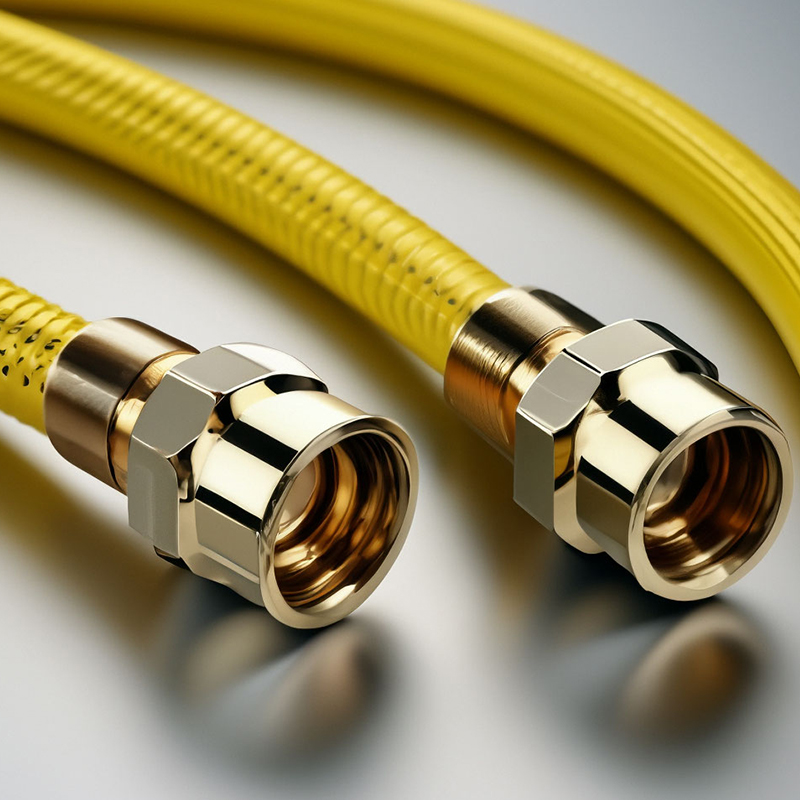
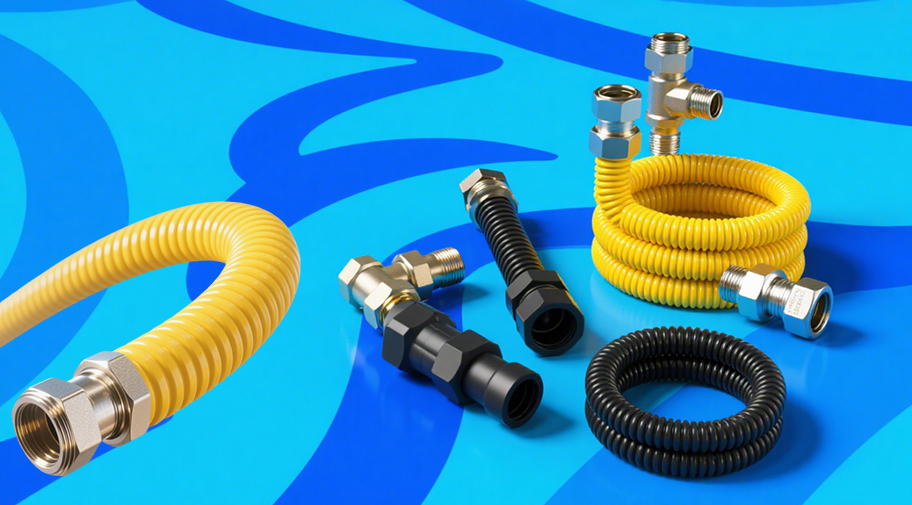
Color options include stainless steel, yellow, and black. Color can support product identification, project appearance, or customer preference, but it should not replace formal labeling and technical documentation. The product name, size, length, adapter configuration, certification status, and batch information should be clearly managed through the supply chain.
For large projects, buyers should evaluate more than unit price. Important factors include dimensional consistency, documentation, delivery reliability, replacement availability, technical support, quality systems, certification scope, and total installation cost. A connector that is slightly more economical at purchase may become more expensive if it causes installation delays, leakage problems, or premature replacement.
14. Product Value for Contractors and Project Engineers
Contractors value products that are easy to identify, straightforward to install, and consistent from one project to the next. The DN10 connector’s defined thread, adapter range, standard lengths, and material specification can simplify planning and reduce uncertainty during installation.
Project engineers may value the ability to select a flexible connection that accommodates equipment layout while preserving a metallic construction. The product can be incorporated into design packages where the connector’s dimensions, materials, interfaces, and installation requirements are clearly documented.
Maintenance departments benefit from accessible and replaceable connection components. If a connector is available in multiple lengths and configurations, replacement planning can be more efficient. A consistent product family can also simplify staff training and inventory management.
Equipment manufacturers may use the connector as part of a broader assembly strategy. Standardized components can reduce design variation and help purchasing teams consolidate suppliers. Where customization is needed, the manufacturer’s engineering and production capabilities may support adaptation without abandoning the basic product platform.
15. Q&A
Q1: What is the main material of the DN10 stainless steel gas connector?
The connector body is made from 304 stainless steel. This material offers a useful combination of corrosion resistance, formability, durability, and temperature resistance for many residential, commercial, and selected industrial gas connection environments.
Q2: What does DN10 indicate?
DN10 identifies the nominal size category of the connector. Nominal size should not be treated as a direct substitute for every actual outside diameter, thread, or flare dimension. The connector’s complete dimensional information and adapter configuration should be checked before installation.
Q3: What thread does the flare nut use?
The listed flare nut specification is 5/8-18UNF. It must be connected to a compatible flare or adapter arrangement. Installers should verify the thread profile, pitch, sealing method, and applicable standard rather than relying only on nominal size.
Q4: Which lengths are available?
The available lengths are 12, 18, 24, 36, 48, 60, and 72 inches. The correct length should allow smooth routing without tension, sharp bending, twisting, or unnecessary loops.
Q5: Which adapter options are available?
The product family includes configurations based on 3/8-inch OD flare connections and 3/8-inch or 1/2-inch male and female interfaces. The listed combinations include 3/8-inch OD flare to 3/8-inch MIP, 3/8-inch OD flare to 3/8-inch FIP, 3/8-inch OD flare to 1/2-inch MIP, and 3/8-inch OD flare to 1/2-inch FIP, with the supplied specifications also identifying associated female-interface combinations.
Q6: Does the connector use a gasket?
The stated seal form is hard sealing. The flare connection is designed to seal through matching metallic surfaces when correctly aligned and tightened. Any pipe-thread adapter connection should be assembled with the sealing method required by the applicable standard and installation instructions.
Q7: Is the connector suitable for every gas installation?
No product should be assumed to suit every installation. The gas type, pressure, temperature, location, movement, certification, and local code requirements must be confirmed. The connector should be used only within its approved technical and regulatory scope.
Q8: What colors are available?
The listed colors are stainless steel, yellow, and black. Color selection may depend on customer preference, identification requirements, and project specifications.
Q9: What materials are available for the nut?
The supplied information identifies brass and carbon steel as nut material options. The appropriate option depends on the product configuration, corrosion environment, mechanical requirements, and applicable project standards.
Q10: How does the product compare with a rigid pipe connection?
The flexible connector can simplify final alignment, reduce installation effort, and accommodate limited movement or vibration. It should not replace properly supported rigid pipework or be used as a structural component. Its advantage is controlled flexibility within an appropriately designed system.
Q11: What manufacturing equipment supports the product?
The company identifies laser welding machines, CNC forming machines, COSMO equipment, eddy current flaw detectors, and automatic packaging systems among its manufacturing resources. These capabilities support welding, forming, non-destructive inspection, process control, and consistent final handling.
Q12: What quality systems does the company report?
The company reports ISO9001, ISO14001, and ISO45001 management system certifications. These relate respectively to quality management, environmental management, and occupational health and safety management. The exact scope and validity of any certification should be confirmed through current documentation.
Q13: Can the connector be used outdoors?
Outdoor use depends on the specific environment and product approval. Moisture, salt spray, ultraviolet exposure, temperature changes, physical impact, and local installation rules must be considered. Additional protection or a different product may be necessary in severe outdoor conditions.
Q14: How should the connector be checked after installation?
The completed installation should be checked for correct alignment, secure tightening, suitable routing, clearance from heat and sharp edges, and absence of tension or twisting. A required leak test should be performed using an approved non-flame procedure.
16. Conclusion
The DN10 stainless steel gas connector is designed as a practical flexible connection solution for compatible residential, commercial, heating, and selected industrial gas applications. Its 304 stainless steel body, 0.2 mm wall thickness, 5/8-18UNF flare nut, hard-sealing design, multiple adapter choices, and seven available lengths provide a useful combination of durability, installation flexibility, and interface adaptability.
Compared with basic rigid connections or poorly controlled generic alternatives, the product can offer easier routing, better resistance to ordinary corrosion, a broader selection of configurations, and more convenient maintenance planning. Its value is strengthened by the manufacturer’s dedicated experience in stainless steel bellows and flexible metallic products.
Advanced equipment, including laser welding machines, CNC forming machines, COSMO equipment, eddy current flaw detectors, and automatic packaging systems, supports a controlled production process. Standardized workshops, technical research capability, management system certifications, and full-process quality control further contribute to product consistency.
Correct selection and installation remain essential. The connector must be matched to the gas type, pressure, temperature, connection standards, certification requirements, and installation environment. When these conditions are properly evaluated, the DN10 stainless steel gas connector can provide a durable and efficient link between gas supply piping and compatible equipment.
References
1. Product specification information for DN10 stainless steel gas connectors, including material, dimensions, adapter configurations, lengths, nut materials, color options, and sealing form.
2. General technical references for 304 austenitic stainless steel, including corrosion resistance, forming characteristics, and common engineering applications.
3. General installation principles for metallic gas connectors, flare fittings, pipe threads, leak testing, routing, and appliance connections.
4. Quality management principles based on ISO 9001 requirements for controlled manufacturing and continuous improvement.
5. Environmental management principles based on ISO 14001 requirements for responsible manufacturing operations.
6. Occupational health and safety management principles based on ISO 45001 requirements for industrial production environments.
7. General technical literature on laser welding, CNC forming, non-destructive eddy current inspection, and automated packaging of metallic flexible products.