





 English
 Español
 русский




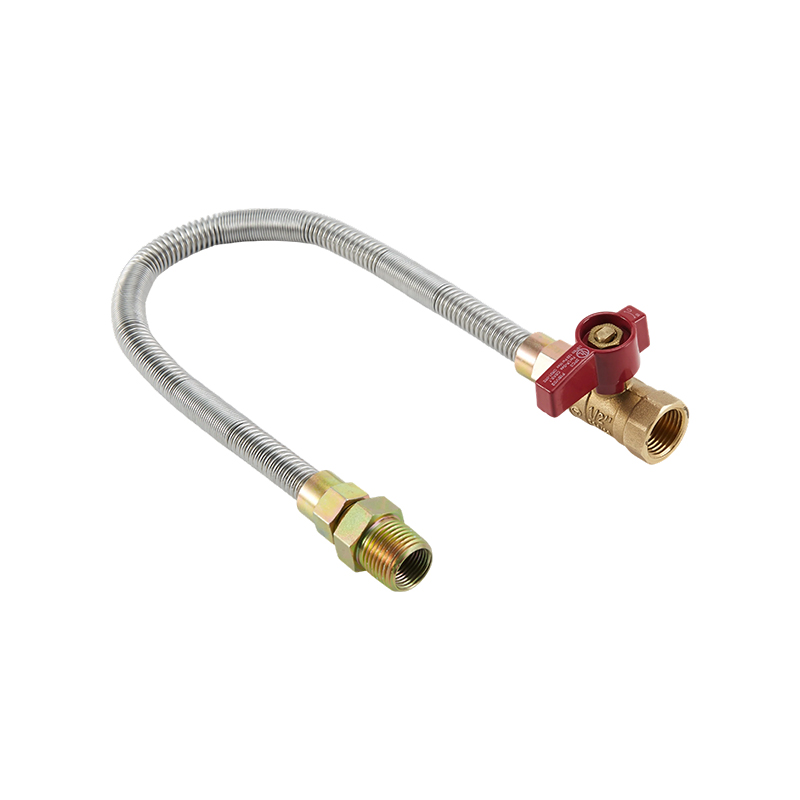
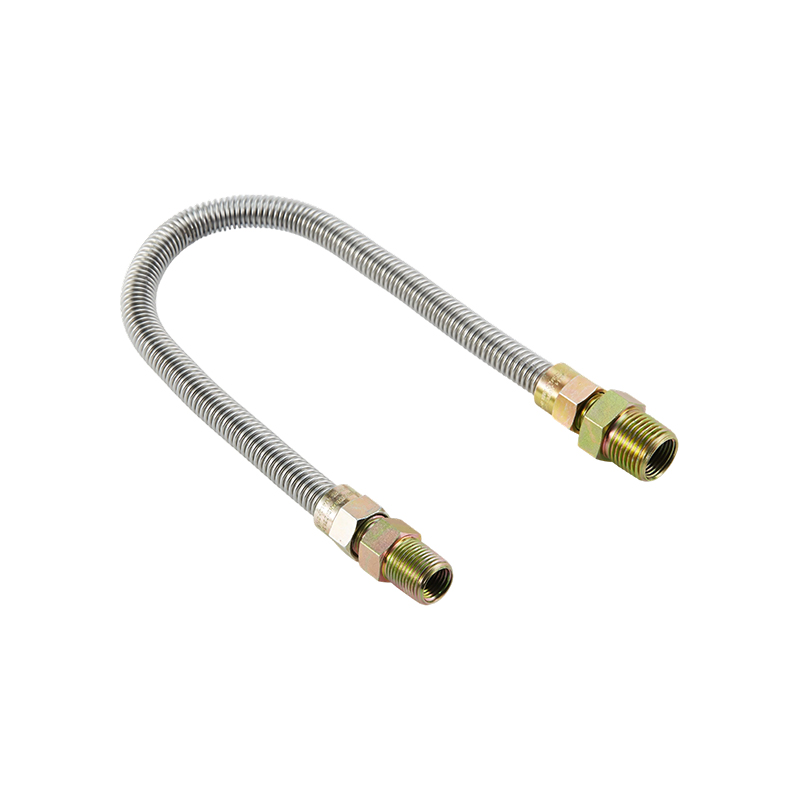
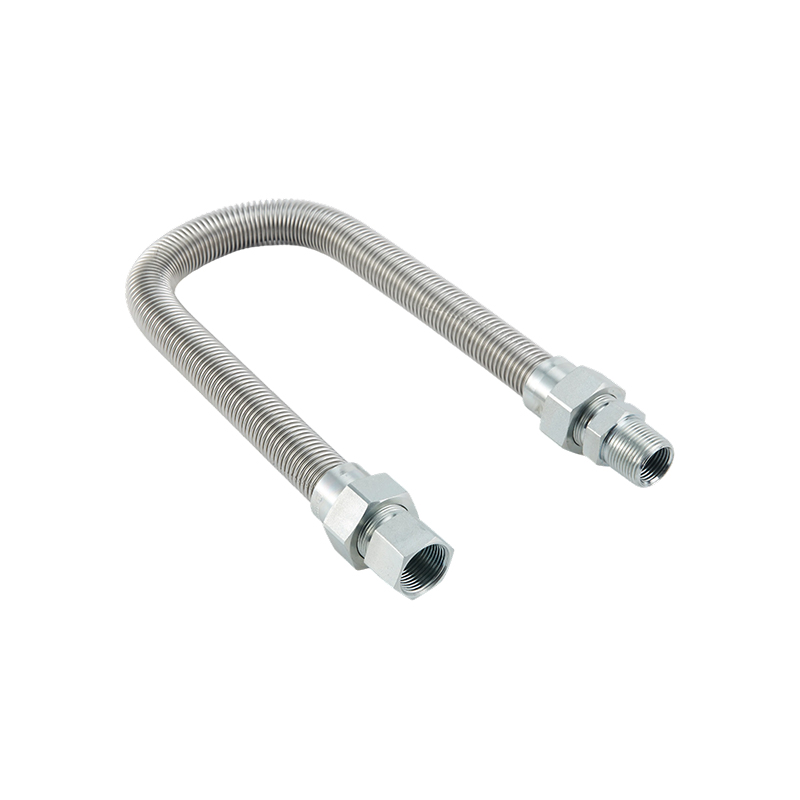
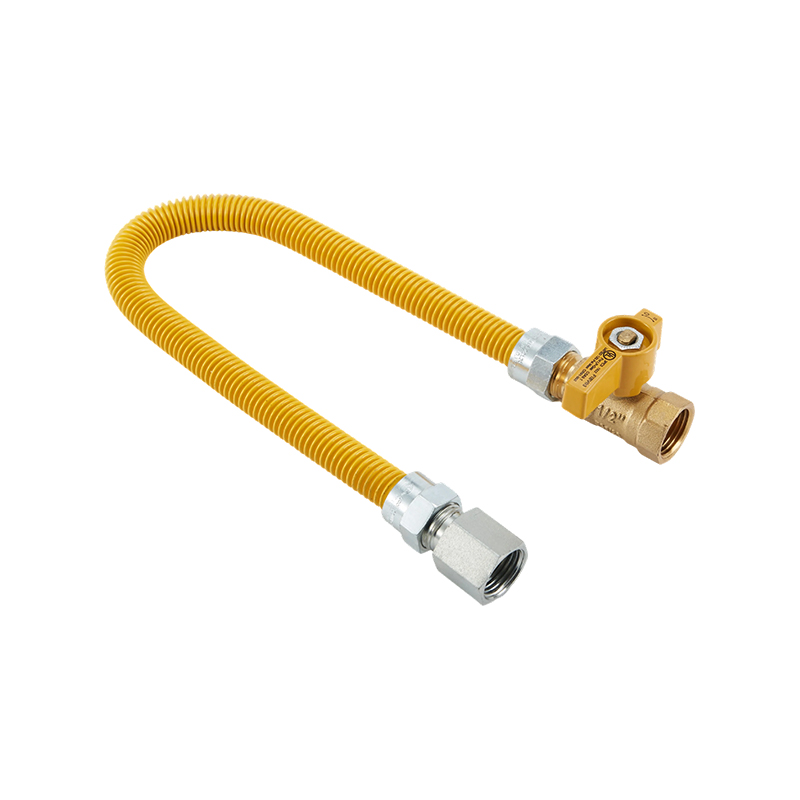
Modern gas installations require connection components that combine flexibility, mechanical strength, corrosion resistance, reliable sealing, and straightforward installation. A gas connector may appear to be a relatively small part of a complete piping system, but its performance can influence the safety, service life, and maintenance requirements of the entire installation. The DN12 Stainless Steel Gas Connector is designed to provide a dependable flexible connection for residential, commercial, and industrial gas applications.
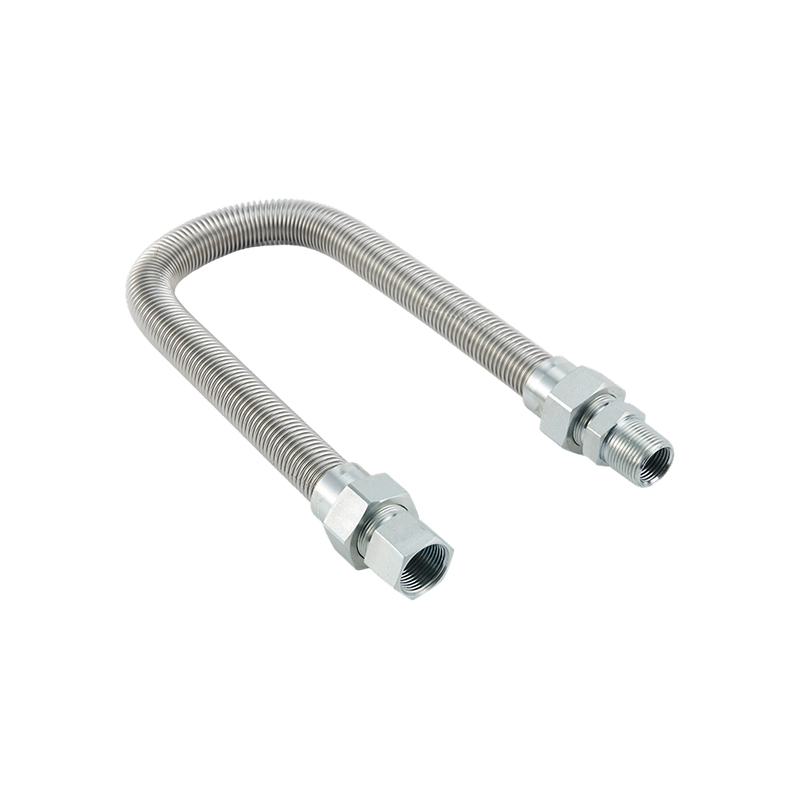
Manufactured from 304 stainless steel with a wall thickness of 0.25 mm, this connector offers a practical balance between flexibility and durability. Its stainless steel construction helps resist corrosion, while its available lengths, adapter options, and nut materials allow it to be configured for different installation conditions. The product uses a 3/4"-16UNF flare nut and a hard-sealing connection form to support a secure interface between gas appliances, valves, regulators, and gas piping.
Beyond the connector itself, product quality depends on raw material control, forming accuracy, welding quality, inspection procedures, and final packaging. Haoyin (Ningbo) Bellows Technology Co., Ltd. specializes in stainless steel bellows and flexible connection products, supported by standardized workshops, professional research and development capabilities, and advanced equipment. This combination enables the DN12 connector to address the practical needs of installers, distributors, equipment manufacturers, and end users.
Product Overview
The DN12 Stainless Steel Gas Connector is a flexible gas connection component made from 304 stainless steel. It is intended to connect gas equipment and piping systems where a rigid pipe would be difficult to install or would not adequately accommodate movement, alignment differences, or limited installation space.
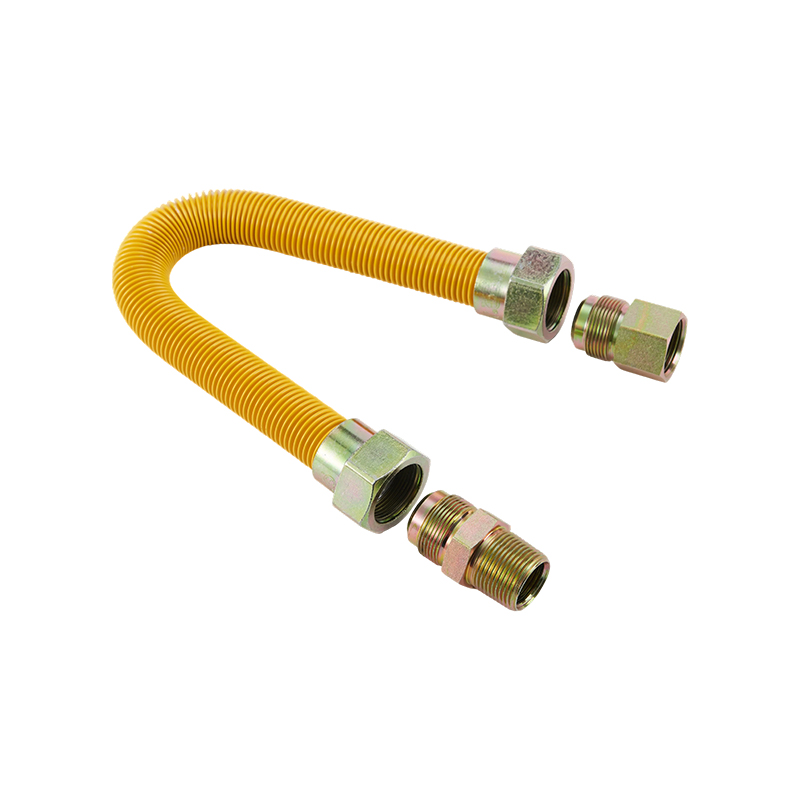
The connector is available in lengths of 12, 18, 24, 36, 48, 60, and 72 inches. This range allows users to select a length that fits the installation without unnecessary loops or excessive tension. Correct length selection is important because a connector should normally be installed without sharp bends, stretching, twisting, or forced compression.
The standard flare nut specification is 3/4"-16UNF. Several adapter configurations are available to accommodate different connection interfaces, including 3/4 × 3/8 male with 1/4 female, 3/4 × 3/8 female, 3/4 × 1/2 male with 3/8 female, and 3/4 × 1/2 female options. These combinations give installers greater flexibility when connecting the stainless steel hose to different pipe diameters or appliance fittings.
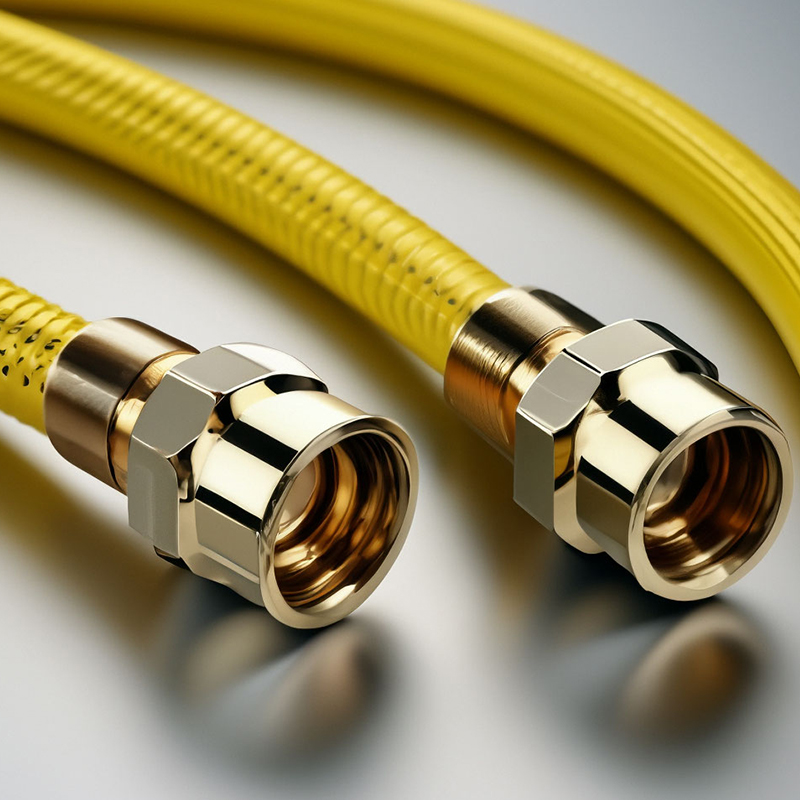
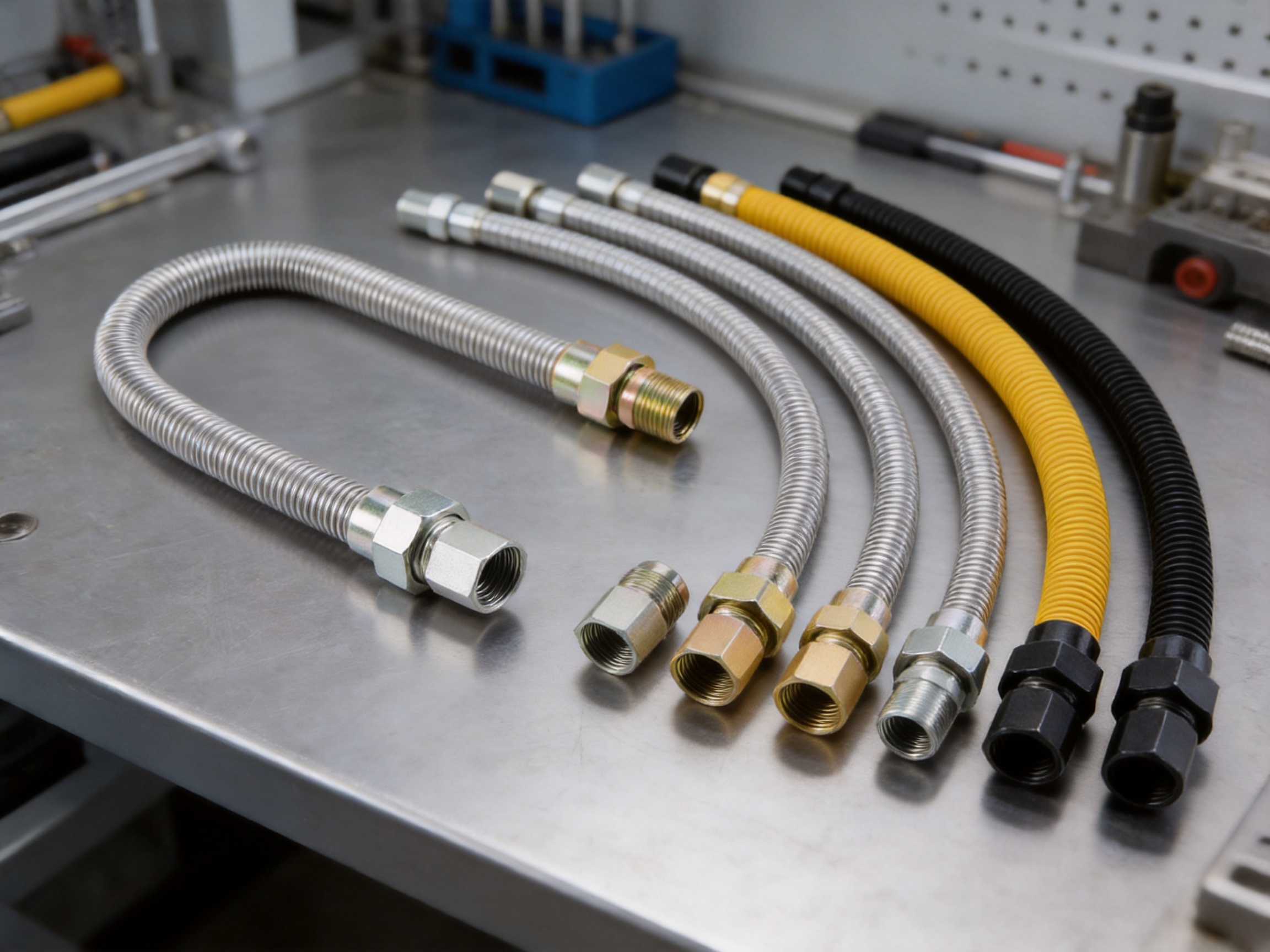
The product can be supplied in stainless steel, yellow, or black. The nut can be manufactured from brass or carbon steel, depending on the required application and configuration. The cover material is listed as non-covered, and the sealing method is hard sealing.
| Specification | Details |
|---|---|
| Product type | DN12 stainless steel gas connector |
| Primary material | 304 stainless steel |
| Wall thickness | 0.25 mm |
| Flare nut | 3/4"-16UNF |
| Available adapters | 3/4 × 3/8M (1/4F), 3/4 × 3/8F, 3/4 × 1/2M (3/8F), 3/4 × 1/2F |
| Available lengths | 12, 18, 24, 36, 48, 60, and 72 inches |
| Available colors | Stainless steel, yellow, and black |
| Nut materials | Brass or carbon steel |
| Cover material | None |
| Seal form | Hard sealing |
| Certification category | Stainless steel gas connector with CSA certificate category |
Why Stainless Steel Is Suitable for Gas Connections
Material selection is one of the most important factors in flexible gas connector design. The connector must remain stable in an environment where it may encounter humidity, temperature changes, cleaning agents, atmospheric contaminants, and mechanical movement. 304 stainless steel is widely used for demanding piping and connection applications because it provides a combination of corrosion resistance, strength, formability, and service durability.
The chromium content of stainless steel contributes to the formation of a passive surface layer that helps protect the material from ordinary atmospheric corrosion. This does not make the connector immune to every chemical environment, but it gives it an important advantage over many unprotected carbon steel components. In kitchens, utility rooms, equipment rooms, and building service areas, this corrosion resistance can help maintain the appearance and functional integrity of the connector during long-term use.
Compared with ordinary low-cost steel tubing, stainless steel is less dependent on paint or external coatings for basic corrosion protection. Coatings can be scratched during transportation or installation, exposing the underlying steel. A 304 stainless steel connector maintains its material-based corrosion resistance even when the surface experiences normal handling, provided that it is installed and maintained correctly.
Stainless steel also offers good mechanical performance at the thin wall thickness used in flexible products. The 0.25 mm wall provides a lightweight structure while retaining the strength necessary for a properly manufactured corrugated or formed connector. The design can therefore achieve flexibility without relying on excessive material thickness that would make installation difficult.
Another advantage is dimensional stability. Accurate forming and controlled welding allow the connector to maintain consistent geometry from one production batch to another. Stable geometry is essential for predictable bending behavior, reliable end fitting attachment, and effective quality inspection.
Flexible Design for Easier Installation
Rigid pipe systems require precise measurement, cutting, threading, alignment, and support. They can be highly effective when installed correctly, but they may require more labor and more components when the appliance outlet and supply line are not perfectly aligned. A flexible stainless steel gas connector simplifies the final connection between fixed points.
The DN12 connector can accommodate moderate alignment differences and help installers route the gas line around obstacles. Its flexible structure is particularly useful where appliances are positioned close to walls, inside cabinets, beneath counters, or in equipment spaces with limited access. The available length range makes it possible to select a connector that reaches the intended connection point while avoiding unnecessary excess.
Flexibility also helps reduce the need for multiple rigid fittings. Each additional fitting may increase installation time and create another interface that must be correctly assembled and inspected. A properly selected flexible connector can reduce the number of changes in direction and simplify the overall layout.
However, flexibility should not be misunderstood as permission to install the connector in any shape. The connector should not be kinked, twisted, sharply bent, crushed, stretched, or used as a permanent support for an appliance. It should be routed with smooth bends and protected from impact, abrasion, excessive heat, and contact with sharp edges. Professional installation and compliance with local gas codes remain essential.
DN12 Stainless Steel Gas Connector
Reliable Connection and Hard-Sealing Performance
A gas connector is only as reliable as its connection points. Even a high-quality stainless steel tube can become unsafe if the fitting is incorrectly selected, poorly aligned, overtightened, undertightened, or contaminated during assembly. The DN12 connector uses a 3/4"-16UNF flare nut and is available with multiple adapters to support different interface requirements.
The hard-sealing design is intended to create a firm sealing interface between compatible mating surfaces. In a hard-sealed connection, the sealing effect comes from controlled contact between accurately formed metal surfaces rather than from a soft gasket alone. This type of interface can offer good resistance to aging, compression loss, and temperature-related deterioration when correctly manufactured and properly installed.
Hard sealing does not eliminate the need for installation discipline. Mating surfaces must be clean, undamaged, and correctly aligned. The installer should confirm that the adapter and appliance connection have compatible dimensions and thread characteristics. Threads should not be forced together if resistance occurs immediately, because cross-threading can damage the fitting and compromise the seal.
The 3/4"-16UNF flare nut provides a defined connection specification, while the available adapters provide additional transition options. This is useful for distributors and equipment manufacturers who may need to offer one connector family for several installation configurations. It also helps reduce the need to source unrelated fittings from multiple suppliers.
After installation, the connection should be checked according to applicable safety procedures. A qualified professional should inspect the final assembly and perform an appropriate leak test using approved methods. An open flame should never be used to check for gas leakage.
Adapter Options for Different Piping Interfaces
Gas systems can contain different outlet sizes and connection arrangements depending on the appliance, regulator, valve, building design, or regional installation practice. The DN12 stainless steel connector is available with four principal adapter configurations.
3/4 × 3/8M (1/4F)
This configuration combines a 3/4-inch connection with a 3/8-inch male interface and a 1/4-inch female portion. It can be used where the installation requires a transition between the main connector fitting and a smaller threaded component. The exact application should always be confirmed against the appliance and local fitting requirements.
3/4 × 3/8F
This female adapter option is intended for systems that require a 3/8-inch female interface. It can simplify connection to a compatible male fitting while preserving the flexibility of the stainless steel connector.
3/4 × 1/2M (3/8F)
This configuration provides a 1/2-inch male interface together with a 3/8-inch female portion. It is useful for installations involving a larger external connection and a smaller internal transition point.
3/4 × 1/2F
This female adapter provides a 1/2-inch interface for compatible male fittings. It can be selected when the appliance, valve, or pipe end requires this arrangement.
Adapter selection should be based on the actual connection drawings and installation requirements rather than appearance alone. Thread size, thread standard, gender, sealing surface, and pressure-service requirements must all be verified before installation.
Available Lengths and Application Planning
The product is available in seven standard lengths: 12, 18, 24, 36, 48, 60, and 72 inches. Offering multiple lengths is a practical advantage because installation conditions vary considerably between appliances and buildings.
A 12-inch connector may be suitable for a compact connection where the appliance and shutoff valve are located close together. Eighteen- and 24-inch versions can provide additional routing flexibility for common residential installations. Longer versions, such as 36, 48, 60, and 72 inches, may be useful when the connection points are separated by cabinets, equipment frames, walls, or other fixed structures.
Using an excessively long connector can create avoidable installation problems. Extra length may form loops, contact hot surfaces, or become exposed to mechanical interference. Conversely, a connector that is too short may be stretched or sharply bent, placing unnecessary stress on the fittings. Selecting the shortest practical length that allows a smooth, relaxed route is generally the preferred approach.
Distributors can benefit from stocking a range of lengths because it allows them to serve different customer requirements without modifying the product. Equipment manufacturers can also select a consistent connector family while specifying different lengths for different appliance models.
Color and Identification Options
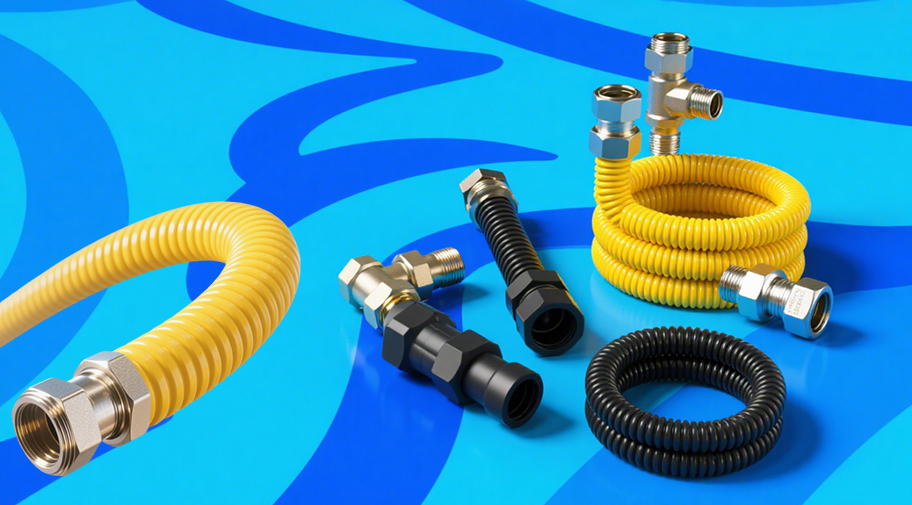
The DN12 connector is available in stainless steel, yellow, and black. Color options can support product identification, visual coordination, and channel-specific requirements.
The natural stainless steel appearance presents a clean industrial finish and can be suitable for visible installations where a metallic appearance is preferred. Yellow and black options may assist with visual differentiation in inventory systems or installation environments. In some markets, color can also support recognition of gas-related components, although users must always follow local identification standards rather than relying solely on color.
For distributors, multiple color options may make it easier to organize product families by application or customer preference. For original equipment manufacturers, color selection can support a consistent appearance across a complete appliance or equipment package.
Brass and Carbon Steel Nut Options
The nut is a critical part of the connection assembly because it transfers installation force to the mating surfaces. The DN12 connector can be supplied with brass or carbon steel nuts.
Brass is widely valued for its machinability, corrosion resistance, and suitability for threaded components. It can provide a smooth, accurate thread and is often selected for applications where corrosion resistance and appearance are priorities.
Carbon steel can offer high strength and robust mechanical performance. It may be selected according to the requirements of a particular project, supply chain, or equipment configuration. When carbon steel is used, the complete installation environment and any required surface protection should be considered.
Providing two nut material options gives purchasers greater control over product configuration. Instead of accepting a single standard, customers can select the material that best matches their connection requirements, commercial specifications, and installation environment.
Advantages Compared with Common Alternatives
The DN12 stainless steel gas connector provides several practical advantages compared with less flexible, less corrosion-resistant, or less configurable alternatives. These advantages should be understood as part of a complete engineered solution rather than as a replacement for proper design and installation.
Compared with Rigid Metal Pipe Sections
Rigid pipe sections may require more cutting, threading, elbows, unions, and alignment work. They can be effective in permanent distribution systems, but the final connection to movable appliances may become complicated. A flexible connector reduces the number of rigid alignment steps and can make appliance installation or replacement more convenient.
The flexible product can also help absorb small positional differences between the gas outlet and equipment inlet. This may reduce assembly stress caused by forcing two rigid components into alignment.
Compared with Unprotected Carbon Steel Tubing
Unprotected carbon steel can be more vulnerable to rust in humid or contaminated environments. Although surface coatings may improve resistance, coating damage can expose the base material. The 304 stainless steel construction of the DN12 connector provides inherent corrosion resistance that is valuable in kitchens, utility areas, and mechanical rooms.
Compared with Generic Low-Cost Flexible Hoses
Generic hoses may not provide the same level of material traceability, adapter selection, manufacturing control, or application-specific configuration. The DN12 product is designed around a defined material, wall thickness, connection specification, length range, nut material selection, and sealing method. This makes it easier for purchasers and installers to evaluate whether the product matches the intended application.
Compared with Single-Configuration Products
A connector available in only one length or one end fitting may force users to purchase extra adapters or accept an awkward installation route. The DN12 range provides multiple lengths and adapter options, supporting more efficient procurement and reducing the need for improvised modifications.
Compared with Poorly Controlled Flexible Components
Flexible gas products require consistent forming, welding, fitting attachment, and inspection. Manufacturing variation can affect bending behavior, fit, and sealing performance. A supplier with standardized production facilities and dedicated inspection equipment can provide stronger process control than a source that relies on inconsistent manual production.
Advanced Manufacturing Capabilities
Haoyin (Ningbo) Bellows Technology Co., Ltd. is a professional manufacturer specializing in the research, development, design, production, and sales of stainless steel bellows and flexible connection products. Its product range includes gas connectors, plumbing pipes and water liners, metal hoses, and compensators.
The company operates standardized workshops covering approximately 18,000 square meters within an area of about 35 mu. This manufacturing environment supports organized production flows, dedicated equipment placement, material handling, process inspection, and finished-product management.
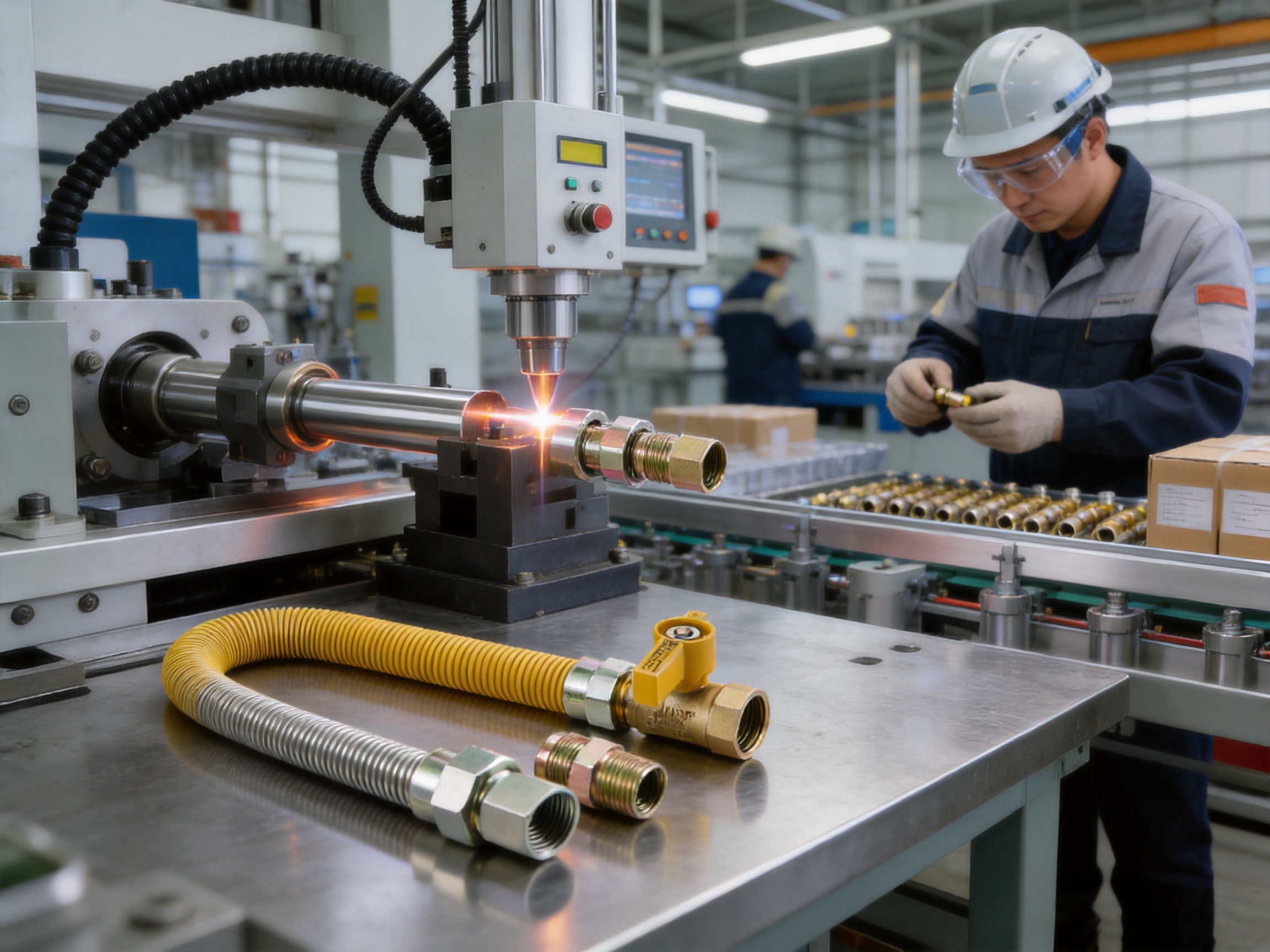
The production system includes laser welding machines, CNC forming machines, COSMO equipment, eddy current flaw detectors, and automatic packaging systems. Each type of equipment contributes to a different stage of product quality.
Laser Welding
Laser welding can provide a concentrated heat source and precise energy control. In stainless steel flexible products, controlled welding is important because excessive heat can distort thin material, while insufficient fusion can weaken the joint. A controlled laser welding process can support repeatable weld geometry and clean production results when properly configured and monitored.
Welding parameters must be matched to the material, wall thickness, joint design, and production speed. Process control can help reduce inconsistencies and improve the reliability of end connections or formed components.
CNC Forming
CNC forming equipment supports accurate and repeatable shaping of stainless steel bellows and flexible tubes. Computer-controlled forming helps maintain dimensional consistency across batches and can reduce variation in corrugation geometry, length, and end alignment.
Consistent forming is especially important for flexible connectors because the geometry determines how the product bends and distributes movement. A connector with uneven forming may be more difficult to route or may experience localized stress during installation.
Eddy Current Flaw Detection
Eddy current testing is a non-destructive inspection method that can help identify certain surface and near-surface discontinuities in conductive materials. Its use in a stainless steel manufacturing environment demonstrates an emphasis on process verification beyond visual inspection alone.
Non-destructive inspection can support earlier identification of manufacturing irregularities and help prevent unsuitable components from progressing through the production process. The specific inspection scope and acceptance criteria should be established according to the product design and applicable technical requirements.
Automatic Packaging
Packaging is part of product quality because fittings and sealing surfaces can be damaged during storage and transportation. Automatic packaging systems can improve consistency, reduce handling variation, and support orderly product identification. Proper packaging also helps protect the connector from contamination, impact, and unnecessary deformation before installation.
Quality Management and Technical Development
The company has obtained ISO9001, ISO14001, ISO45001, and other management system certifications. These certifications relate to quality management, environmental management, and occupational health and safety management. A structured management system can help coordinate purchasing, production, inspection, documentation, corrective action, and customer service.
For a gas connector manufacturer, quality management should cover the entire product life cycle. It begins with raw material selection and supplier control. It continues through design review, tooling, forming, welding, fitting assembly, inspection, packaging, shipment, and after-sales support.
A professional research and development team contributes to product improvement by evaluating materials, connection structures, manufacturing methods, and application requirements. R&D activity is particularly valuable in flexible piping because small changes in geometry or end fitting design can influence installation behavior and service performance.
The company describes itself as a National High-tech Enterprise and Green Factory. These designations reflect an emphasis on technical development and resource-conscious manufacturing. Environmental responsibility can include efficient production planning, material utilization, waste control, energy management, and responsible handling of manufacturing by-products.
The stated quality philosophy, “Striving for Excellence, Forging Quality,” is supported by a full-process quality management approach. For customers, this is important because product performance is not created by a single inspection at the end of production. It is created through control at each stage of the manufacturing process.
Application Areas
Residential Gas Appliances
The connector can be used for suitable residential gas appliance connection applications, including equipment installed in kitchens, utility areas, or other approved locations. Its flexible structure can simplify the connection between an appliance inlet and a fixed gas outlet.
Residential users should never install or modify a gas connector without following local regulations and using qualified personnel where required. The connector must be kept away from excessive heat, sharp edges, moving parts, and locations where it may be crushed or damaged.
Commercial Kitchens
Commercial kitchens often contain several gas appliances, limited service access, and frequent cleaning activity. Stainless steel construction can be advantageous in environments where humidity, food residues, and cleaning products may be present. The connector length and adapter options can support different equipment layouts.
Commercial installations require particular attention to routing, accessibility, appliance movement, inspection, and local code compliance. A flexible connector should not be positioned where it can be dragged across the floor or exposed to repeated impact.
Industrial and Equipment Connections
Industrial equipment may require flexible connections to accommodate vibration, maintenance access, thermal movement, or alignment differences. The DN12 connector can be considered for suitable low-pressure or equipment connection applications when its specifications match the system design.
Industrial users must evaluate operating pressure, temperature, gas type, movement range, chemical exposure, vibration, and required certification before selecting the connector. The product should not be used outside its approved service conditions.
Building Service Systems
Building heating and service equipment often requires compact connections in mechanical rooms and equipment enclosures. The range of lengths and adapter configurations can help installers manage varied connection points while maintaining a neat and accessible layout.
Installation and Handling Guidance
Installation should be performed by a qualified professional and in accordance with applicable gas regulations, building codes, appliance instructions, and safety procedures. The following guidance is intended as general product-use information and does not replace project-specific requirements.
Inspect Before Installation
Before installation, inspect the connector, fittings, threads, flare surfaces, and packaging condition. Do not install a product that shows visible dents, deep scratches, deformation, damaged threads, contamination, or signs of impact.
Verify Compatibility
Confirm the connector length, adapter type, thread specification, nut material, gas service, and appliance requirements. Do not assume that two fittings are compatible solely because they appear to have a similar diameter.
Plan a Natural Route
The connector should be routed with broad, smooth bends. Avoid kinks, twisting, tight loops, stretching, crushing, or contact with sharp corners. The connector should not be used to correct a major misalignment caused by poor piping design.
Protect from Heat and Mechanical Damage
Keep the connector away from open flames, hot exhaust surfaces, burner components, abrasive edges, moving mechanisms, and locations where it may be stepped on or struck. If protective spacing or shielding is required, it should be designed in accordance with applicable standards.
Use Correct Assembly Practices
Align fittings before tightening and avoid cross-threading. Use appropriate tools and tightening procedures. Do not use the flexible tube itself as a lever for tightening the nut. Excessive torque may damage the fitting, while insufficient torque may prevent proper sealing.
Perform a Leak Test
After installation, the complete assembly should be tested using an approved leak-detection method. The system should be checked before placing the appliance into normal operation and whenever the connection is disturbed during maintenance.
Inspect During Service
Periodic inspection should look for corrosion, deformation, abrasion, discoloration caused by overheating, movement-related damage, loose connections, and other abnormal conditions. If damage or suspected leakage is found, the gas supply should be handled according to emergency procedures and the system should be serviced by qualified personnel.
Procurement Benefits for Distributors and OEM Customers
The DN12 product family is suitable for customers who need a flexible gas connector with defined specifications and multiple configuration choices. Distributors can build a product range around one core connector design while stocking different lengths, colors, adapters, and nut materials.
This approach can simplify inventory management. Instead of maintaining unrelated products from several sources, a distributor may be able to organize its offering according to connection size, length, color, and material. Clear product data also makes it easier for sales teams to recommend the correct configuration.
Equipment manufacturers can incorporate the connector into appliance assemblies or equipment packages. Consistent dimensions and available customization options can support product standardization across different models. The manufacturer’s R&D and production capabilities may also support technical discussions when a special configuration or application-specific requirement must be evaluated.
For project contractors, the main benefit is installation flexibility. The combination of standard lengths and adapters can reduce field modification and help maintain a cleaner connection layout. A reliable supply of consistently manufactured components can also reduce project delays caused by incompatible or poorly fitting alternatives.
Product Selection Checklist
Before ordering the DN12 stainless steel gas connector, purchasers should confirm the following points:
Required connector length and routing distance.
Required 3/4"-16UNF flare nut specification.
Correct adapter configuration and thread gender.
Required nut material: brass or carbon steel.
Preferred color: stainless steel, yellow, or black.
Compatibility with the gas type, appliance, valve, and installation code.
Required certification and documentation for the intended market.
Environmental conditions, including humidity, temperature, chemicals, vibration, and movement.
Packaging, labeling, and quantity requirements.
Completing this checklist before purchase can reduce ordering errors and help ensure that the selected connector is suitable for its intended use.
Q&A
What is the main material of the DN12 gas connector?
The main body is manufactured from 304 stainless steel. The listed wall thickness is 0.25 mm. The connector nut can be supplied in brass or carbon steel.
What does DN12 indicate?
DN12 identifies the nominal size category of the connector. The actual connection configuration must still be verified using the specified flare nut and adapter dimensions.
What flare nut specification is used?
The connector uses a 3/4"-16UNF flare nut.
What lengths are available?
Available lengths are 12, 18, 24, 36, 48, 60, and 72 inches.
Which adapter options are available?
The available options include 3/4 × 3/8M (1/4F), 3/4 × 3/8F, 3/4 × 1/2M (3/8F), and 3/4 × 1/2F.
Is the connector available in different colors?
Yes. The listed color options are stainless steel, yellow, and black.
How does the connector seal?
The listed sealing form is hard sealing. The mating surfaces must be clean, compatible, correctly aligned, and properly tightened to achieve a reliable connection.
Can this product be used for every gas installation?
No. The product must be selected according to the gas type, pressure, temperature, appliance requirements, local codes, certification requirements, and installation environment. A qualified professional should confirm suitability.
Can the connector be bent sharply to fit a small space?
No. Sharp bends, kinks, twisting, crushing, and excessive stretching should be avoided. The connector should be installed with smooth, natural bends and sufficient clearance.
Can the connector support or suspend an appliance?
No. A flexible gas connector should not be used as a structural support. The appliance must be independently supported according to its installation instructions.
What manufacturing equipment supports product quality?
The manufacturer uses equipment including laser welding machines, CNC forming machines, COSMO equipment, eddy current flaw detectors, and automatic packaging systems. These technologies support forming accuracy, welding control, non-destructive inspection, and consistent packaging.
What management certifications does the company have?
The company has obtained ISO9001, ISO14001, ISO45001, and other management system certifications according to the supplied company information.
How should leakage be checked?
Leakage should be checked using an approved method and by qualified personnel. An open flame must never be used for leak detection.
Where is the manufacturer located?
Haoyin (Ningbo) Bellows Technology Co., Ltd. is located at No. 25 Gubei Road, Simen Town, Yuyao, Ningbo City, Zhejiang Province, China.
Conclusion
The DN12 Stainless Steel Gas Connector is designed to provide a flexible, durable, and configurable solution for gas equipment connections. Its 304 stainless steel body, 0.25 mm wall thickness, 3/4"-16UNF flare nut, multiple adapter options, seven available lengths, and choice of brass or carbon steel nut materials make it suitable for a broad range of properly designed applications.
Its principal advantages include corrosion resistance, flexible routing, installation convenience, reliable hard-sealing design, and configuration flexibility. Compared with rigid pipe sections, unprotected steel tubing, or generic single-configuration hoses, it offers a more adaptable connection solution when selected and installed correctly.
The product is supported by a manufacturer with dedicated stainless steel bellows expertise, standardized workshops, professional R&D capabilities, management system certifications, and advanced production equipment. Laser welding, CNC forming, eddy current flaw detection, and automatic packaging contribute to a process-oriented approach to manufacturing quality.
For distributors, contractors, equipment manufacturers, and project purchasers, the connector offers a practical balance between performance and selection flexibility. The most important conditions remain correct specification, professional installation, appropriate routing, leak testing, and compliance with all applicable safety requirements.
References
1. Product specification information for the DN12 Stainless Steel Gas Connector, including dimensions, materials, adapter options, colors, lengths, and sealing form.
2. Company information for Haoyin (Ningbo) Bellows Technology Co., Ltd., including manufacturing capabilities, product categories, management certifications, and technical equipment.
3. General principles of stainless steel material selection for flexible piping and gas connection components.
4. General installation and inspection practices for flexible gas connectors and threaded or flare-type gas connections.
5. General quality management principles for metal forming, welding, non-destructive testing, packaging, and industrial component manufacturing.