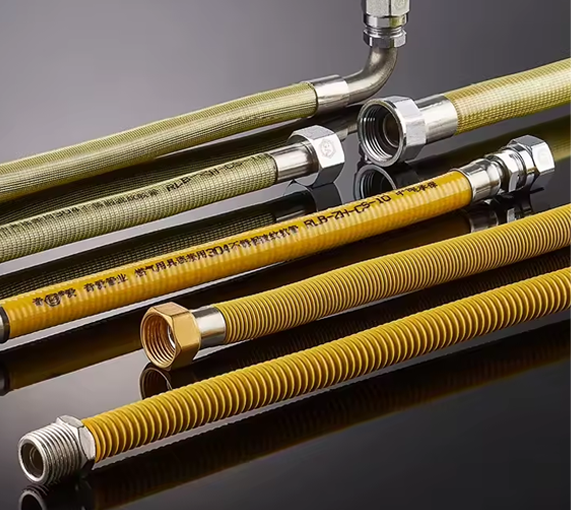
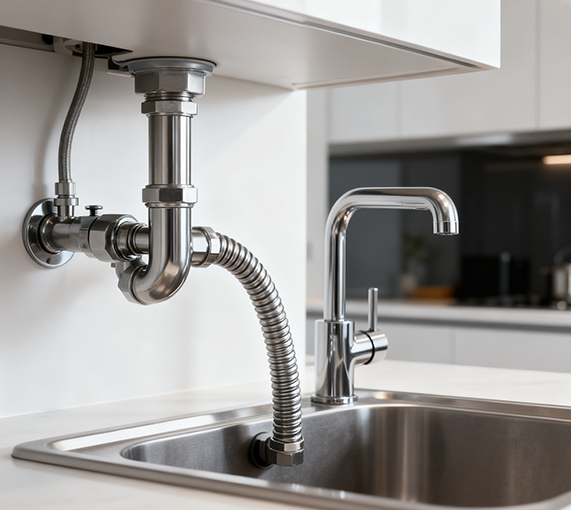
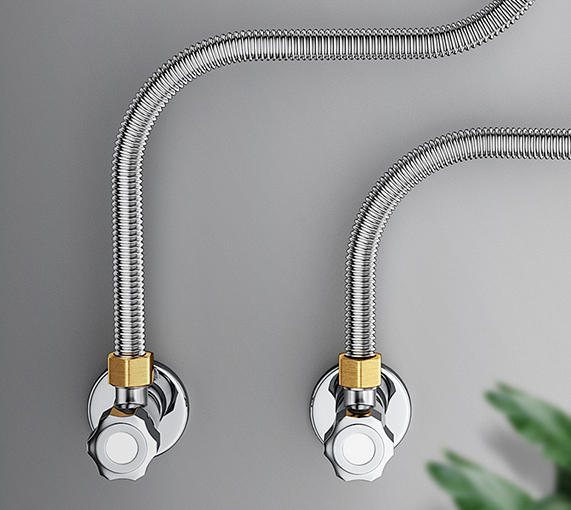





 English
 Español
 русский



Reliable gas connections are essential in residential, commercial, and industrial systems. A gas connector must do more than join two threaded components. It must accommodate installation requirements, maintain a dependable seal, resist corrosion, tolerate everyday movement, and support safe operation over an extended service life. At the same time, installers and equipment manufacturers need flexible specification options so that one product family can serve different appliances, pipe layouts, connection points, and project requirements.
The DN15 stainless steel whistle-free gas connector is designed to address these needs through a combination of stainless steel construction, a compact DN15 format, a 0.25 mm wall thickness, multiple adapter configurations, several standard lengths, and a hard-sealing connection design. Its whistle-free structure also helps reduce the airflow noise sometimes associated with gas connectors, improving the acoustic environment around residential appliances, commercial equipment, and technical installations.
Manufactured by Haoyin (Ningbo) Bellows Technology Co., Ltd., the connector reflects the company’s broader specialization in stainless steel bellows and flexible connection systems. The manufacturer combines material selection, forming, welding, inspection, testing, and packaging within an organized production system. Its capabilities are supported by standardized workshops, professional research and development resources, quality management certifications, and specialized equipment for stainless steel bellows manufacturing.
This article examines the product’s construction, technical specifications, connection options, performance advantages, applications, installation considerations, quality controls, and manufacturing strengths. It also explains how the connector compares with less specialized alternatives and why its configuration flexibility can simplify sourcing for gas system projects.
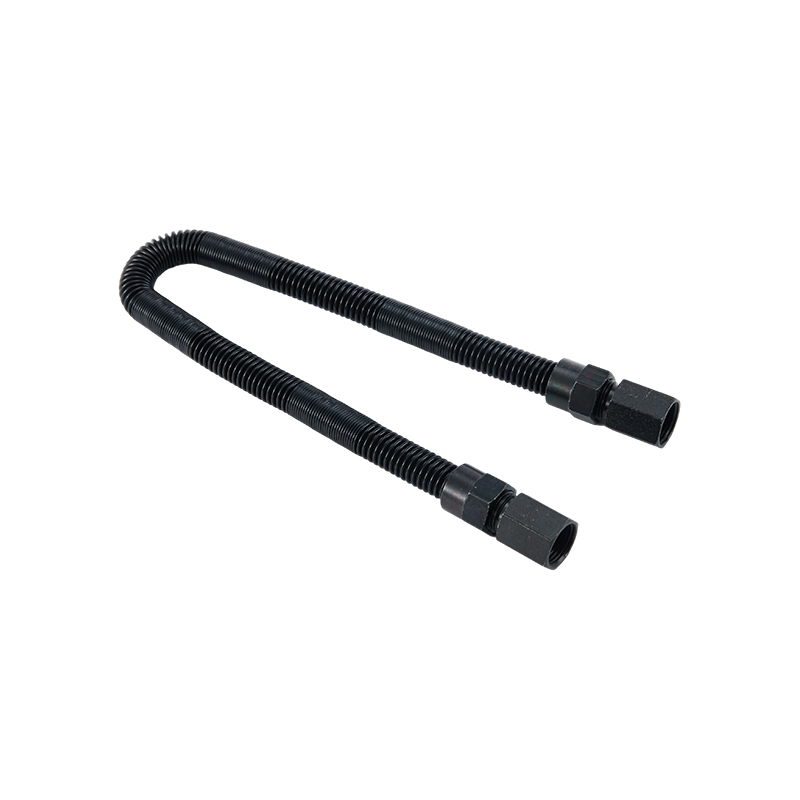
DN15 Stainless Steel Whistle Free Gas Connector
1. Product Overview
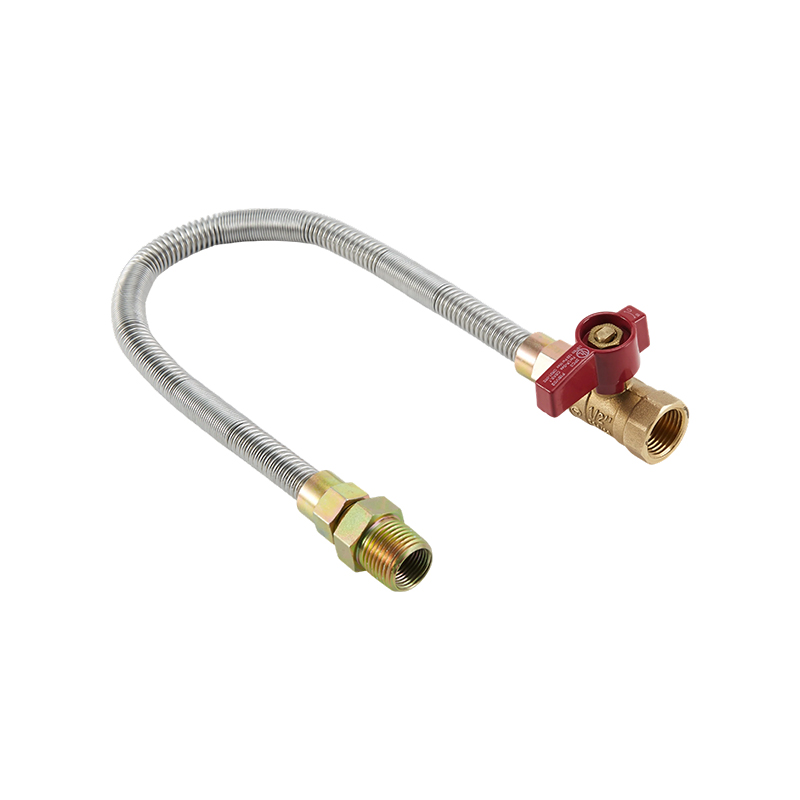
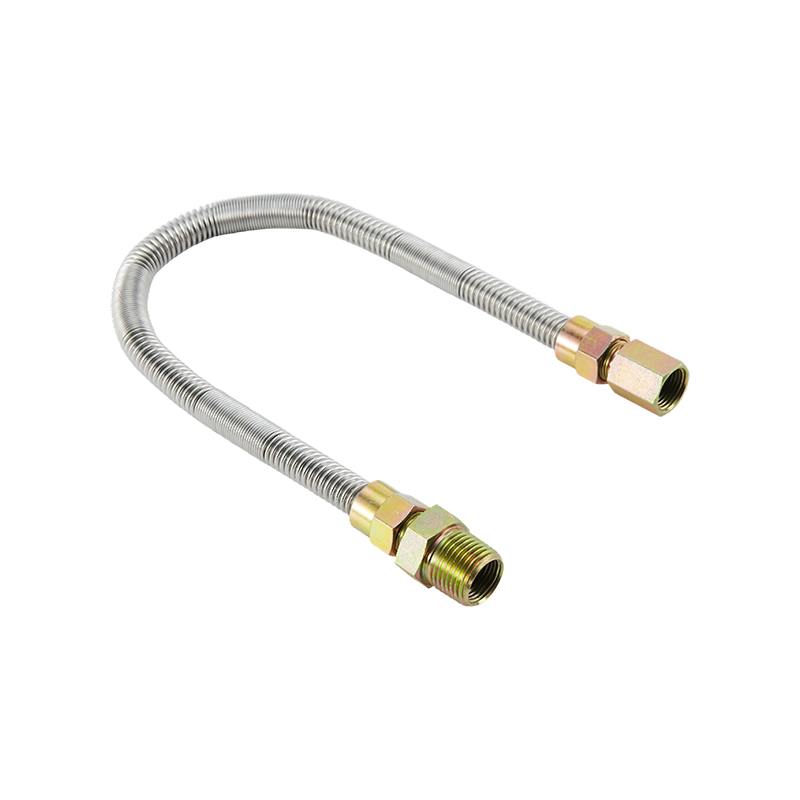
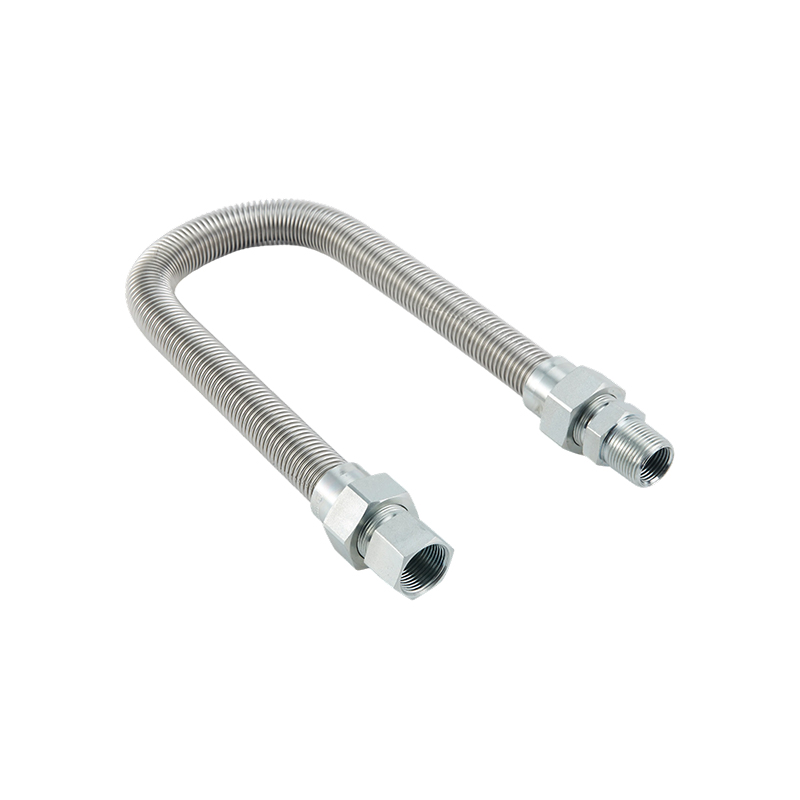
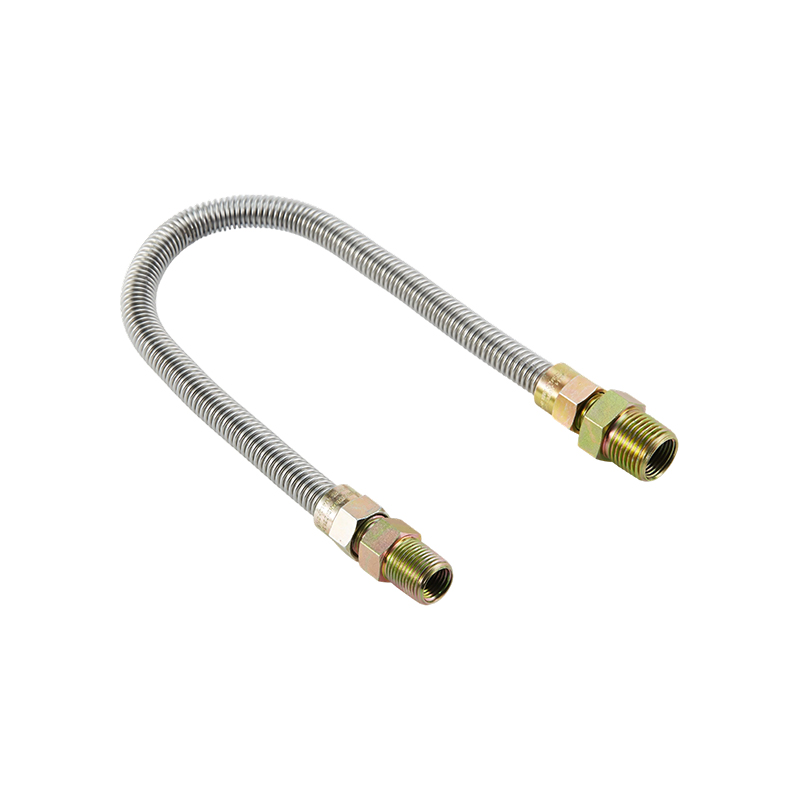
The DN15 stainless steel whistle-free gas connector is a flexible gas connection component intended for use between gas supply piping and gas appliances or equipment. It is categorized as a stainless steel whistle-free gas connector and forms part of a wider product range that includes gas connectors, water pipes and plumbing liners, metal hoses, and compensators.
The connector uses 304 stainless steel as its primary hose material. This material is widely selected for flexible piping because it provides a useful balance of corrosion resistance, mechanical strength, formability, and manufacturing consistency. The specified wall thickness is 0.25 mm, giving the corrugated tube a lightweight and flexible structure while maintaining the material characteristics expected from a stainless steel connection product.
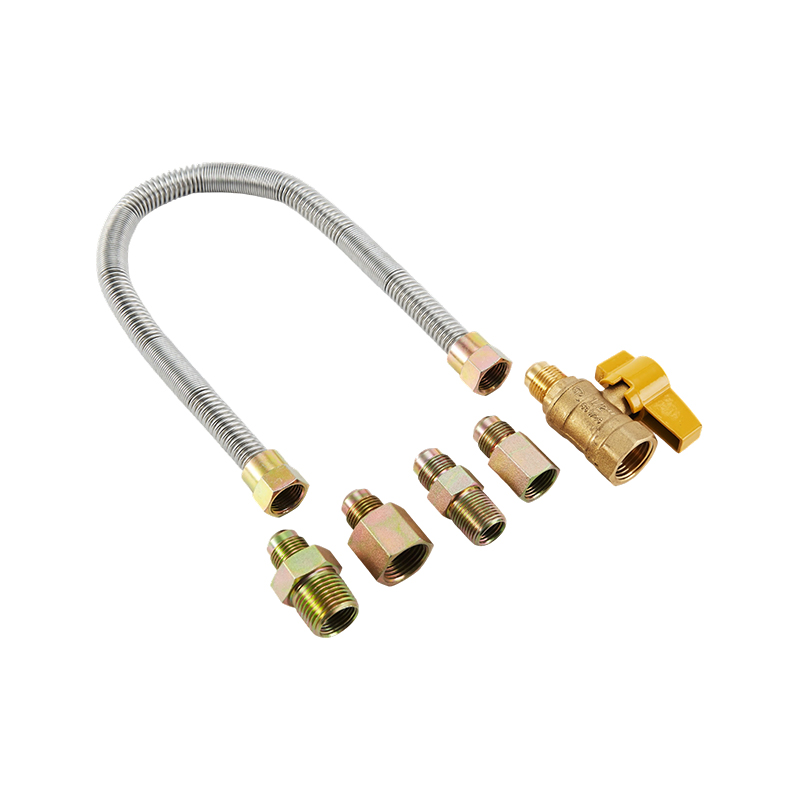
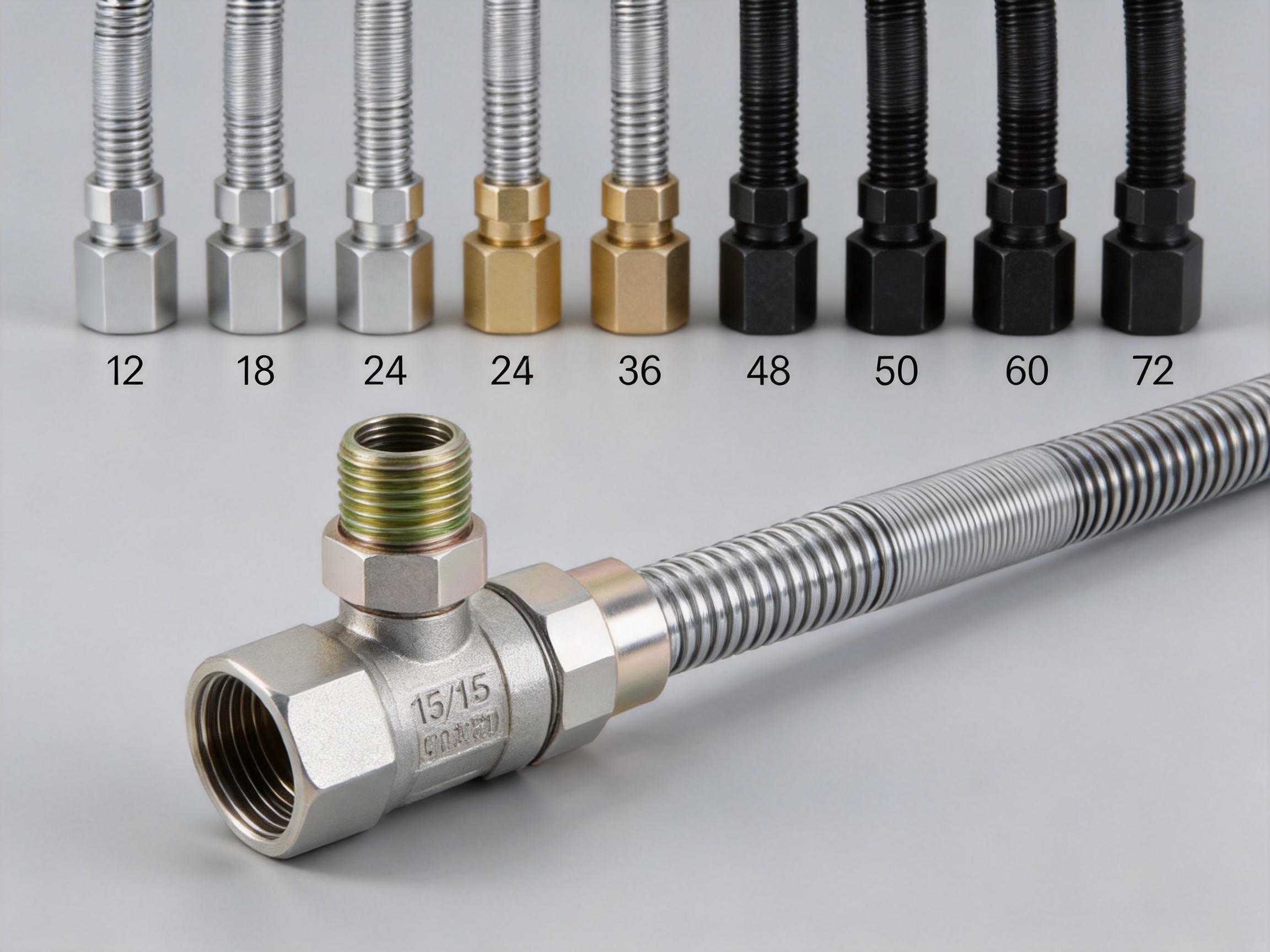
A 15/16"-16UNF flare nut is used as the principal flare connection specification. Several adapter configurations are available, including 15/16 × 1/2 male with a 3/8 female interface, 15/16 × 1/2 female, 15/16 × 3/4 male with a 1/2 female interface, and 15/16 × 3/4 female. These options allow the same basic connector family to be adapted to different equipment connections and project piping arrangements.
Standard length choices include 12, 18, 24, 36, 48, 60, and 72 inches. This range supports short appliance connections as well as installations requiring a longer routing path around cabinets, walls, frames, or other obstacles. Selecting an appropriate length can reduce excessive bending, unnecessary couplings, and installation tension.
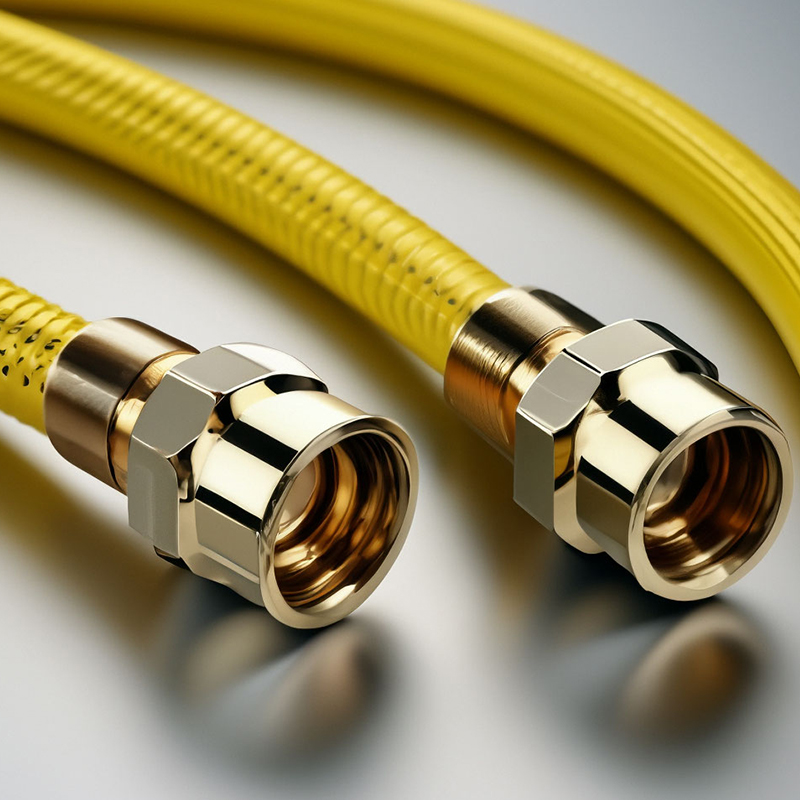
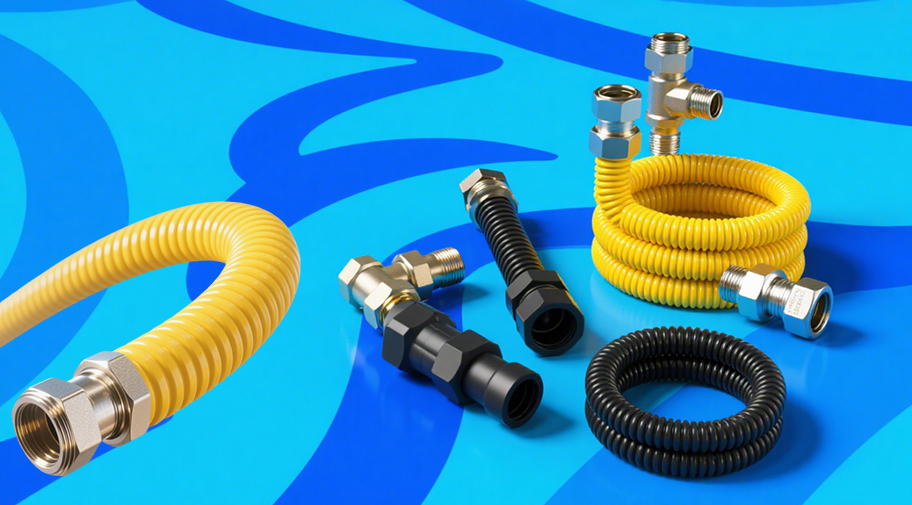
The connector is offered in a stainless steel finish and a black finish. The finish options enable the product to suit different installation environments, equipment appearances, and purchasing preferences. The nut may be supplied in brass or carbon steel, depending on the selected configuration and application requirements.
Core Technical Specification Table
| Item | Specification | Application Significance |
|---|---|---|
| Product type | DN15 stainless steel whistle-free gas connector | Flexible connection for gas piping and equipment |
| Tube material | 304 stainless steel | Corrosion resistance, strength, and formability |
| Wall thickness | 0.25 mm | Lightweight flexible construction |
| Flare nut | 15/16"-16UNF | Standardized connection interface |
| Adapter options | 15/16 × 1/2M, 15/16 × 1/2F, 15/16 × 3/4M, 15/16 × 3/4F configurations | Adaptation to different equipment and pipe interfaces |
| Available lengths | 12, 18, 24, 36, 48, 60, and 72 inches | Supports different installation distances |
| Finish options | Stainless steel and black | Functional and appearance flexibility |
| Seal form | Hard sealing | Reliable mechanical sealing at the connection |
| Nut material | Brass or carbon steel | Configuration choice for different requirements |
| Cover material | None or brass/carbon steel according to configuration | Supports alternative connection constructions |
2. Why Stainless Steel Is Important in Gas Connectors
Gas connectors operate in environments where material durability and connection reliability are critical. They may be exposed to humidity, cleaning agents, temperature changes, kitchen vapors, dust, mechanical vibration, and repeated minor movement during appliance servicing. A material that can maintain its integrity under these conditions provides an important foundation for long-term performance.
304 stainless steel is widely recognized for its resistance to general atmospheric corrosion and many common household and commercial environments. This does not mean that every installation condition is identical or that stainless steel is immune to all chemical attack. However, compared with many ordinary carbon steel or low-grade metal alternatives, 304 stainless steel provides a stronger baseline for resisting rust and surface deterioration.
Corrosion resistance is especially valuable in concealed or semi-concealed installations. A connector installed behind an appliance or inside a cabinet may not be inspected frequently. If the surface deteriorates, the problem may remain unnoticed until it affects the connection or requires premature replacement. Stainless steel helps reduce this risk when the product is selected and installed in accordance with applicable requirements.
The material also supports a clean appearance. The stainless steel finish can complement modern appliances, exposed service areas, commercial kitchens, and equipment rooms. The black finish provides an alternative where a darker visual profile is preferred or where the connector must coordinate with black appliances and fittings.
Stainless steel also offers useful manufacturing characteristics. It can be formed into corrugated bellows structures that provide flexibility while preserving a continuous metallic wall. It can be processed through controlled forming and welding operations, allowing manufacturers to produce repeatable geometries and consistent connection components at commercial scale.
Material Advantages Compared with Basic Alternatives
Compared with ordinary rigid pipe, a flexible stainless steel connector can simplify alignment between the gas supply and the appliance inlet. Rigid pipe requires accurate measurement, cutting, threading, and support. A flexible connector can accommodate a more practical routing path and can reduce the need for multiple rigid fittings.
Compared with unprotected carbon steel flexible products, stainless steel offers a more attractive resistance profile in humid or corrosive environments. Compared with low-quality thin-wall alternatives, a controlled 0.25 mm 304 stainless steel construction provides a defined material specification that can support more consistent purchasing, inspection, and quality management.
The main advantage is not simply that the tube is metallic. It is that the material, wall thickness, corrugated structure, connection design, and production controls are considered together. A connector’s performance depends on the complete assembly rather than on one specification in isolation.
3. Whistle-Free Design and Acoustic Comfort
Gas flow can create turbulence and pressure-related noise as it moves through a connector, fitting, valve, or appliance inlet. In some installations, this noise may be noticed as a whistle, hiss, or high-frequency sound. The level and character of the sound depend on several factors, including gas type, flow rate, pressure, internal geometry, fitting condition, and the surrounding installation.
The whistle-free design of this connector is intended to reduce airflow noise within the operating conditions for which the product is selected. This feature can be valuable in homes, apartments, hotels, restaurants, healthcare environments, offices, and other locations where unnecessary background noise is undesirable.
Noise reduction contributes to comfort, but it can also support easier observation of abnormal conditions. A connector that avoids producing unnecessary whistle-like noise makes it easier for users and maintenance personnel to distinguish normal operating sounds from unusual sounds that may require investigation.
The whistle-free feature should be understood as part of a complete gas system design. It does not replace proper pressure regulation, correct sizing, leak testing, suitable appliance connections, or compliance with local installation standards. Nevertheless, incorporating noise-reduction considerations into the connector design demonstrates attention to both technical performance and user experience.
4. Connection Design and Adapter Flexibility
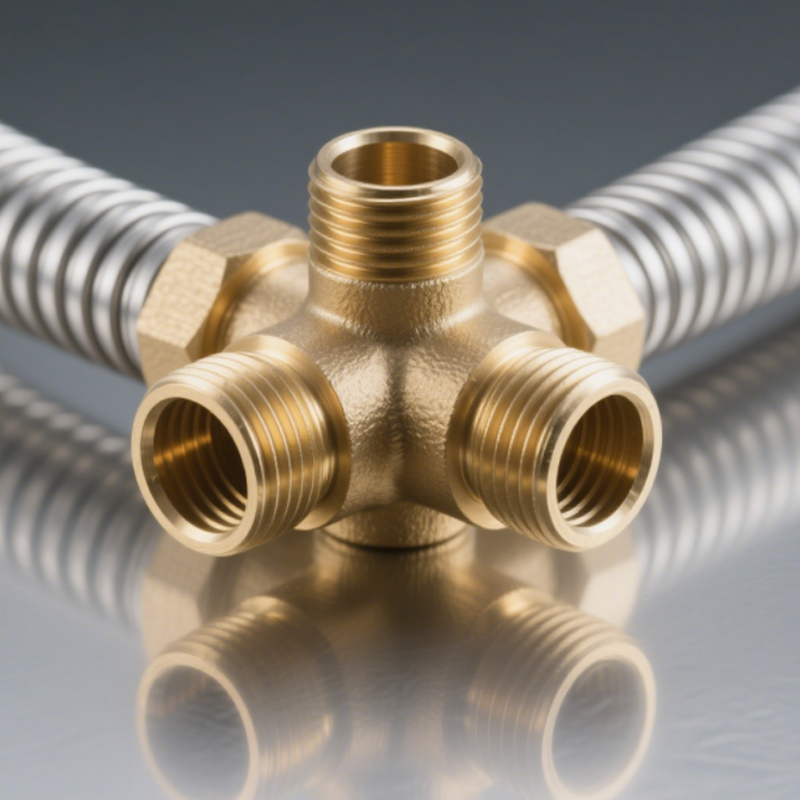
One of the most practical advantages of the DN15 connector is its range of interface options. Gas appliances and supply systems are not always configured with the same connection size or gender. A connector that is available with only one end configuration may require additional adapters, increasing the number of joints and making installation more complicated.
The available adapter choices include 15/16 × 1/2M with a 3/8F interface, 15/16 × 1/2F, 15/16 × 3/4M with a 1/2F interface, and 15/16 × 3/4F. These configurations give distributors, installers, and original equipment manufacturers several ways to match the connector to their equipment and piping layouts.
Reducing the number of unnecessary transition fittings can offer several benefits. It can shorten the connection assembly, reduce the number of threaded interfaces, improve installation neatness, and lower the possibility of selecting incompatible components. It can also simplify inventory management because one product family covers multiple connection requirements.
The 15/16"-16UNF flare nut provides a defined connection reference. A clearly specified thread standard helps purchasing teams and installers identify compatible components. It also helps manufacturers organize tooling, inspection gauges, packaging labels, and production documentation.
Connection compatibility must always be confirmed before installation. Thread size alone does not establish complete compatibility. The installer should check thread type, connection gender, sealing method, pressure requirements, gas type, appliance instructions, and local regulations. Adapters should never be forced into mismatched or damaged threads.
Hard-Sealing Construction
The product uses a hard-sealing form to establish a dependable connection. Hard sealing relies on controlled contact between accurately formed metallic or fitting surfaces rather than depending solely on a soft gasket. When correctly matched, aligned, and tightened, this type of sealing can provide a stable joint with good resistance to aging and temperature changes.
A hard seal also reduces reliance on elastomeric materials that may deteriorate because of heat, compression set, chemical exposure, or long service periods. The actual sealing performance still depends on the design of the mating components and correct installation procedure. Clean surfaces, undamaged threads, correct alignment, and appropriate tightening are essential.
Brass and carbon steel nut options allow the connector to be configured for different purchasing and application preferences. Brass is commonly valued for its machinability and corrosion resistance in many general environments. Carbon steel may be selected for particular cost, strength, or project requirements when the overall assembly and protective finish are appropriate.
5. Length Selection and Installation Flexibility
The connector is available in seven standard lengths: 12, 18, 24, 36, 48, 60, and 72 inches. This range allows installers to select a length that is suitable for the distance between the gas supply point and the appliance inlet without automatically relying on an excessively long hose.
A short 12-inch or 18-inch connector may be useful where the appliance and supply outlet are closely positioned. A 24-inch or 36-inch length can serve common residential layouts, while 48-inch, 60-inch, and 72-inch versions can accommodate larger appliances, commercial equipment, or installations that require routing around structural features.
Correct length selection is important for both appearance and mechanical performance. An excessively short connector may be pulled tight, forced into an extreme bend, or placed under continuous tension. An excessively long connector may create unnecessary loops, contact surrounding surfaces, or become difficult to inspect and clean.
The connector should be routed with smooth bends and without kinks. It should not be twisted during installation, used as a structural support, crushed by an appliance, or placed against sharp edges. The flexible section should have enough clearance for normal appliance movement and service access while remaining protected from avoidable mechanical damage.
For commercial and industrial installations, routing should also account for vibration, thermal exposure, cleaning procedures, equipment movement, and maintenance access. A flexible connector can accommodate movement, but it should not be treated as a substitute for proper equipment supports, pipe anchors, or system expansion design.
Typical Selection Considerations
Before selecting a connector, confirm the nominal connection size and both end configurations. Measure the practical routing distance rather than relying only on a direct straight-line measurement. Consider whether the appliance will need to move for cleaning or maintenance. Check whether the connector will be exposed to heat, moisture, chemicals, or physical contact.
It is also important to confirm the gas type and operating pressure. Product selection should follow the appliance manufacturer’s instructions and the requirements of the applicable installation code. Where a project specification requires a particular nut material, finish, or adapter arrangement, the purchase order should identify the exact configuration.
6. Application Areas
The DN15 stainless steel whistle-free gas connector is suitable for a broad range of gas connection scenarios when its specifications match the system requirements.
Residential Kitchens
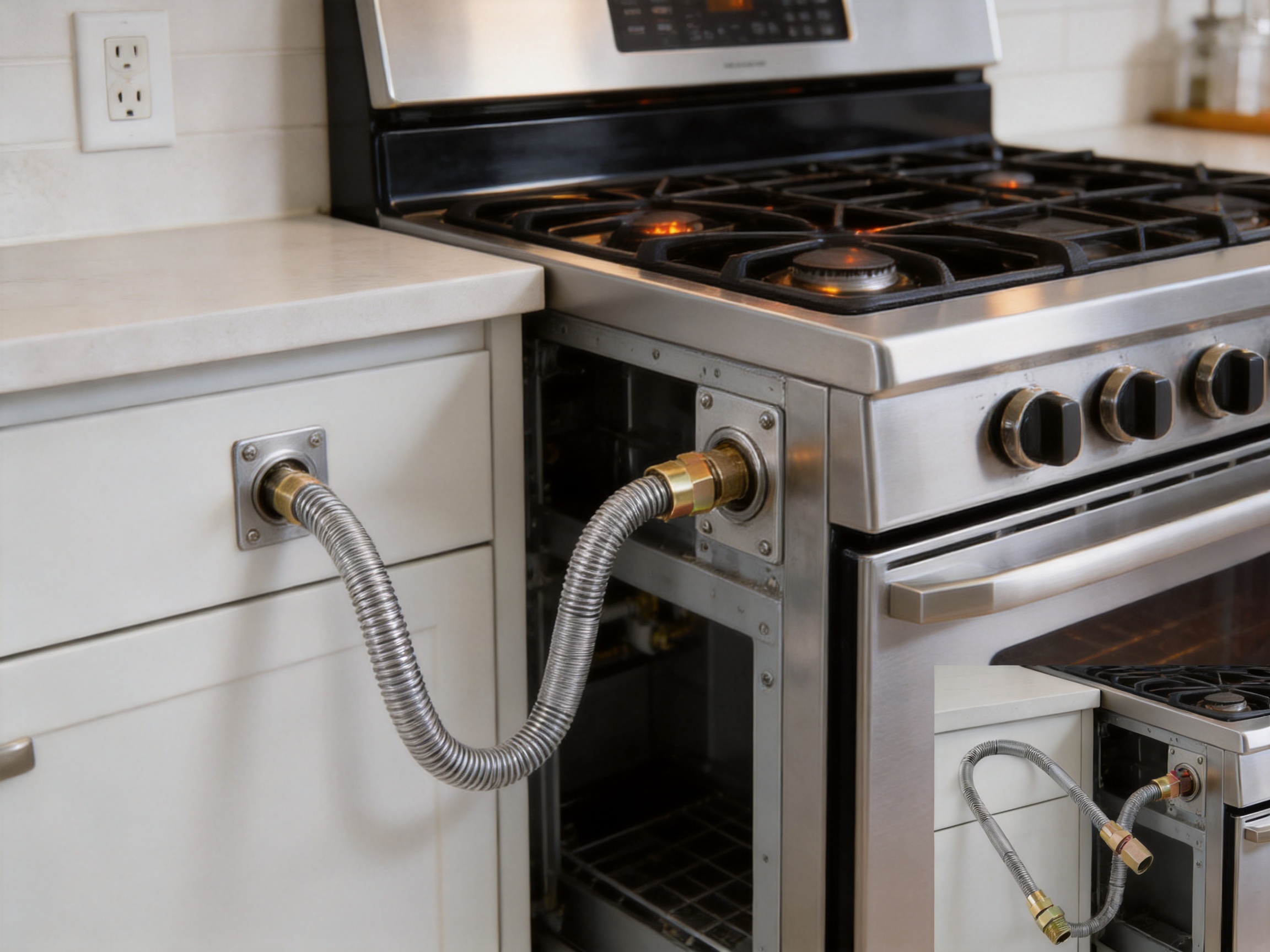
Residential cooking appliances often require a flexible connection between a fixed gas outlet and a movable or serviceable appliance. The connector can simplify alignment behind cookers, ranges, ovens, and similar equipment. Its stainless steel construction supports use in kitchen environments where humidity, food vapor, and routine cleaning are common considerations.
The whistle-free design is particularly relevant in homes, where residents may notice even moderate high-frequency noise. The range of lengths helps accommodate different cabinet layouts, wall outlet positions, and appliance depths.
Commercial Kitchens
Commercial kitchens commonly contain multiple gas appliances, including cooking ranges, ovens, fryers, griddles, and specialized food-service equipment. Installations may involve more frequent cleaning, greater equipment movement, and higher demands on maintenance access than residential environments.
A flexible stainless steel connector can help equipment installers create organized connection layouts. The selected length and adapter arrangement should be matched to the appliance and the local code requirements. In applications involving frequent movement, additional safety measures and approved connection practices may be required.
Heating and Building Services
Gas-fired heating equipment and building service appliances may require flexible connections to simplify alignment or accommodate limited movement. The connector can be considered for suitable heating-related applications where the pressure, temperature, connection size, and approval requirements are compatible.
Industrial and Equipment Installations
Industrial equipment often presents complex routing challenges. Machines may vibrate, require periodic servicing, or contain multiple connection points. Flexible metal connectors can help absorb limited movement and make equipment connections easier to assemble than rigid pipe alone.
Industrial users should perform a full application review before specifying the product. Factors such as cyclic movement, vibration frequency, temperature, gas composition, pressure, external abrasion, and chemical exposure may influence the appropriate connector design. The DN15 connector is a flexible gas connection component, not a universal solution for every industrial process line.
7. Advantages Over Less Specialized Competitor Products
Gas connectors are available in many materials, structures, and price ranges. The advantages of this product are most apparent when it is compared with basic alternatives that provide fewer configuration choices or less clearly defined construction details.
Defined Stainless Steel Construction
The use of 304 stainless steel gives buyers a clearly identified primary material. This is an advantage over products sold with vague descriptions such as “metal hose” or “stainless-style connector,” where the actual grade, wall construction, or corrosion-resistance characteristics may not be clearly stated.
Multiple Adapter Options
Many competing connectors are offered in only one end configuration. The available 15/16 × 1/2 and 15/16 × 3/4 adapter options make this product family more adaptable. This can reduce the need to source separate transition fittings and can make it easier for distributors to support different customer requirements.
Broad Standard Length Range
The seven length choices provide more flexibility than a product line limited to one or two standard sizes. Better length matching can improve routing, reduce stress, and create a cleaner installation. It can also help contractors avoid cutting or modifying components in the field.
Whistle-Free Design
The whistle-free structure addresses an aspect that is sometimes overlooked by low-cost alternatives. While sealing and pressure performance remain fundamental, acoustic comfort is meaningful in residential, hospitality, healthcare, and office environments. A connector designed with noise reduction in mind offers a more complete user-oriented solution.
Hard-Sealing Connection
The hard-sealing design provides a defined approach to joint sealing and reduces dependence on soft sealing elements that may age or lose compression. Proper installation remains essential, but the design supports a stable mechanical connection when used with compatible fittings.
Material and Finish Choices
Stainless steel and black finishes allow the product to match different visual and practical requirements. Brass and carbon steel nut choices also provide sourcing flexibility. This is useful for distributors and equipment manufacturers serving multiple markets or project types.
Manufacturer-Level Process Control
The product is supported by a manufacturer specializing in stainless steel bellows rather than treating flexible connectors as an incidental product category. This specialization supports deeper knowledge of forming, welding, dimensional control, leak prevention, and flexible metal product inspection.
These advantages should be evaluated alongside project-specific requirements. A connector is suitable only when its pressure rating, approvals, dimensions, material compatibility, and installation method meet the intended application. The value of the product lies in the combination of defined specifications and manufacturing support, not in any single feature alone.
8. Advanced Manufacturing Capabilities
Haoyin (Ningbo) Bellows Technology Co., Ltd. specializes in the research and development, design, manufacturing, and sales of stainless steel bellows and flexible connection products. Its product portfolio includes gas connectors, plumbing pipes and water liners, metal hoses, and compensators. This product concentration gives the company experience across several related applications that depend on controlled metal forming and reliable connection assemblies.
The company operates standardized workshops covering approximately 18,000 square meters within an overall area of about 35 mu. This production environment supports organized material flow, dedicated manufacturing areas, equipment placement, inspection activities, and packaging operations.
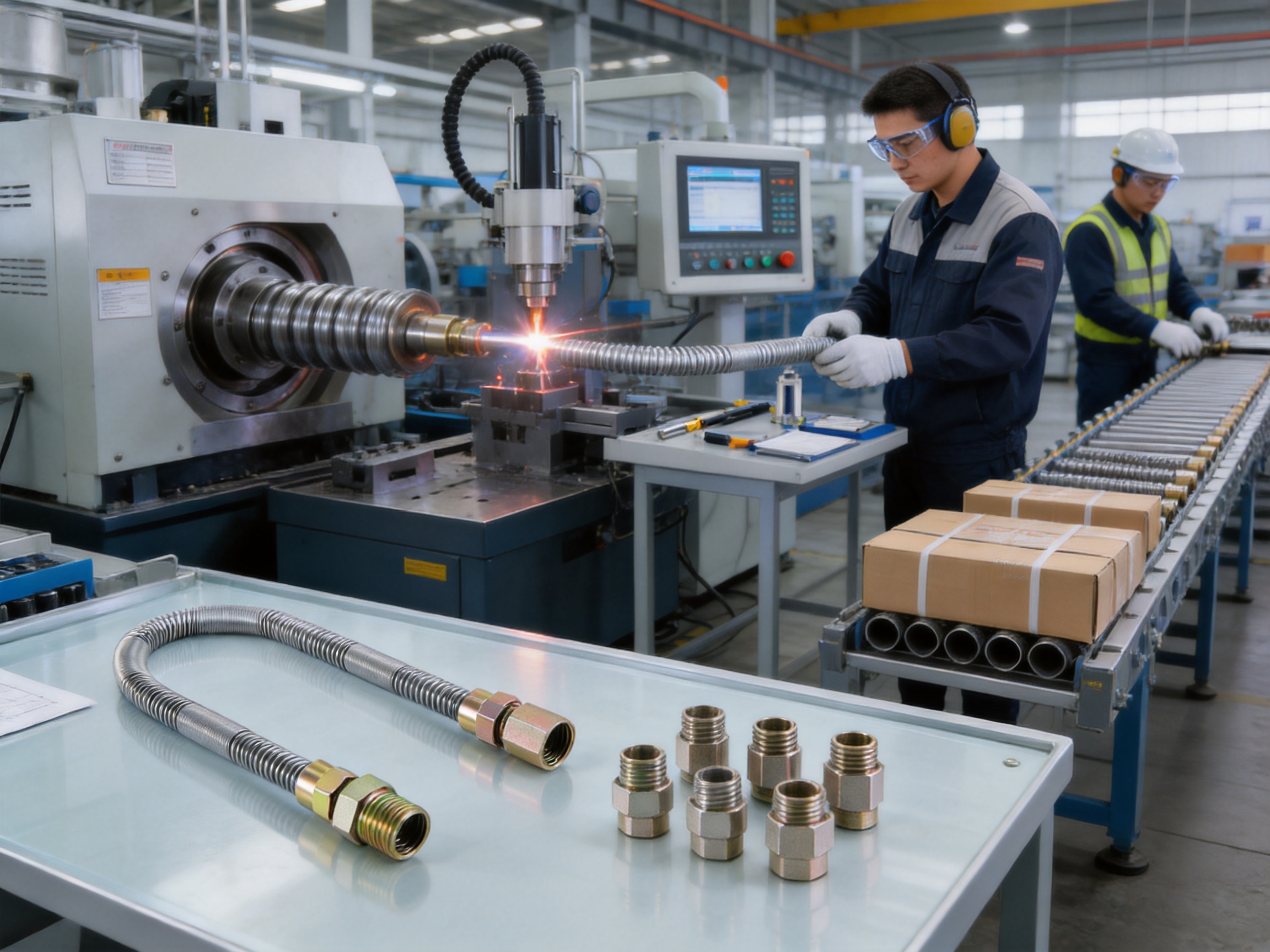
The manufacturer uses advanced equipment including laser welding machines, CNC forming machines, COSMO equipment, eddy current flaw detectors, and automatic packaging systems. Each equipment category contributes to a different stage of product quality and production efficiency.
Laser Welding
Laser welding can provide concentrated heat input and controlled weld formation when correctly configured. In stainless steel bellows and connector manufacturing, controlled welding is important because the metal wall may be relatively thin and the joint may be exposed to pressure, bending, vibration, and repeated handling.
A controlled laser welding process can support narrow, consistent welds and reduce unnecessary thermal influence on nearby material. Process parameters such as power, speed, focus, shielding, and material preparation must be managed carefully. The result is influenced not only by the equipment but also by fixture accuracy, operator training, maintenance, and inspection procedures.
CNC Forming
CNC forming machines help produce repeatable corrugated geometries and component dimensions. The shape and spacing of corrugations affect flexibility, movement behavior, and installation handling. Automated or numerically controlled forming improves repeatability compared with purely manual operations.
Consistent forming is especially important when products are manufactured in different lengths or with different adapter arrangements. The tube must maintain the intended structure throughout the production run, while end sections must remain suitable for connection and assembly.
Inspection and Eddy Current Testing
Eddy current flaw detection is a non-destructive inspection method that can identify certain surface and near-surface discontinuities in conductive metals. Its use in a stainless steel product manufacturing environment supports the search for defects that may not be visible during a simple visual inspection.
Non-destructive testing is valuable because it allows manufacturers to examine product integrity without destroying every inspected component. It is one part of a broader quality system and should be combined with dimensional checks, visual inspection, weld evaluation, leak testing, and appropriate performance verification.
Automatic Packaging
Automatic packaging systems help improve consistency in product protection, labeling, quantity control, and shipment preparation. Packaging is not merely a logistics issue. A connector can be damaged by impact, bending, contamination, or loss of identification during transport if it is not protected properly.
Consistent packaging also helps distributors and installers identify product length, adapter configuration, finish, and batch information. Clear product identification reduces the risk of selecting an incorrect connector at the warehouse or installation site.
9. Quality Management and Corporate Strengths
The manufacturer has obtained ISO9001, ISO14001, ISO45001, and other management system certifications. These certifications represent structured approaches to quality management, environmental management, and occupational health and safety. Certification alone does not guarantee that every individual product is suitable for every application, but it indicates that the organization has established documented management processes and ongoing system requirements.
ISO9001 supports systematic control of processes related to customer requirements, production, inspection, corrective action, and continual improvement. For a gas connector manufacturer, this type of system can help organize specifications, traceability, supplier management, nonconformance handling, and customer feedback.
ISO14001 reflects attention to environmental management. Manufacturing activities involving metal processing, welding, cleaning, packaging, and energy consumption can affect the environment. A structured environmental management system encourages the company to identify impacts, establish controls, and improve resource management.
ISO45001 addresses occupational health and safety. Manufacturing equipment such as forming machines, welding systems, inspection equipment, and packaging lines must be operated within controlled safety procedures. A formal system helps identify hazards, train personnel, and improve workplace safety practices.
The company is also described as a National High-tech Enterprise and Green Factory. These designations are consistent with an organization that emphasizes technical development, process improvement, energy and environmental considerations, and investment in manufacturing capability.
Its stated quality philosophy, “Striving for Excellence, Forging Quality,” is supported by a full-process quality management approach covering raw material selection, structural design, manufacturing, performance testing, and after-sales support. This complete-chain approach is important because connector reliability depends on the interaction of every stage.
10. From Raw Material to Finished Connector
A reliable connector begins with appropriate raw materials. Stainless steel strip, fitting materials, nuts, adapters, and other components must be purchased according to defined specifications. Material identification, surface condition, dimensions, and supplier consistency are important considerations before production begins.
During design, engineers determine the tube structure, corrugation geometry, connection dimensions, adapter arrangement, wall thickness, finish, and sealing method. The selected design must balance flexibility, manufacturability, connection strength, installation convenience, and application requirements.
Forming operations create the flexible corrugated tube structure. Dimensional consistency is important because irregular corrugations can affect flexibility and may create stress concentrations. Equipment settings, tooling condition, material properties, and production speed all influence forming quality.
Welding and fitting assembly connect the tube to end components. These operations require clean surfaces, accurate positioning, controlled process parameters, and suitable fixtures. The joint must be mechanically stable and suitable for subsequent sealing and pressure-related requirements.
Surface finishing and appearance inspection help maintain the specified stainless steel or black finish. The finished surface should be free from obvious damage, contamination, sharp defects, or unacceptable discoloration. Appearance is not a replacement for functional inspection, but it is an important part of product consistency.
Inspection and testing may include dimensional verification, thread checks, visual checks, weld assessment, leak testing, and other evaluations appropriate to the product design and customer requirements. The exact inspection plan may vary according to model, market, and applicable standards.
Finally, automatic packaging and identification help protect the connector during storage and transport. A well-controlled process ensures that the correct length, finish, adapter, nut material, and quantity are shipped to the customer.
11. Installation Best Practices
Only qualified personnel familiar with gas connection work and applicable regulations should install the connector. Before beginning, isolate the gas supply and verify that the work area is safe. Review the appliance manufacturer’s instructions and confirm that the selected connector is approved for the gas type, pressure, temperature, and installation environment.
Inspect the connector before installation. Do not use a product with crushed corrugations, damaged threads, deformed fittings, deep scratches, contamination, or visible weld defects. Confirm that the length and adapter configuration match the installation plan.
Align the connector carefully with the appliance and supply connection. Misalignment can place side loads on the fitting and may interfere with the sealing surfaces. The connector should not be twisted to compensate for an incorrect orientation. If the connection does not align naturally, correct the piping or fitting arrangement rather than forcing the flexible section.
Use the correct tools and tightening method. Do not grip or crush the corrugated tube with pliers or pipe wrenches. Tools should be applied to the designated fitting surfaces. Excessive tightening can damage threads or sealing surfaces, while insufficient tightening can lead to leakage.
Route the connector with smooth bends and adequate clearance. Avoid contact with sharp edges, hot surfaces, moving parts, chemicals, and locations where the connector could be crushed by the appliance. Do not install the connector through walls, floors, or partitions unless the applicable regulations specifically permit that arrangement and provide appropriate protection.
After installation, conduct a suitable leak test in accordance with local requirements and accepted professional practice. Never use an open flame to check for leaks. If a leak is detected, shut off the gas supply, identify the cause, correct the connection, and repeat the test before placing the appliance into service.
The connector should remain accessible for inspection. Users and maintenance personnel should periodically check for corrosion, deformation, abrasion, unusual noise, odor, loose fittings, or other signs of deterioration. Any product exposed to fire, severe impact, flooding, chemical attack, or significant deformation should be evaluated and replaced as appropriate.
12. Procurement and Specification Guidance
For distributors and project purchasers, product identification should include the connector type, DN15 size, tube material, wall thickness, flare nut specification, adapter configuration, length, finish, and nut material. Listing these details clearly helps prevent substitution with a visually similar but technically different product.
Purchasers should also request relevant technical documents when required, such as dimensional drawings, material information, inspection records, packaging specifications, installation instructions, and applicable compliance documentation. For regulated gas applications, approval requirements vary by country and market, so documentation should be confirmed before bulk procurement.
Inventory managers may benefit from organizing products by length and adapter type. Since the product is available in multiple configurations, clear labeling and barcode control can reduce picking errors. Distributor training can also help sales teams recommend an appropriate connector based on connection geometry rather than selecting by length alone.
For original equipment manufacturers, the connector can be integrated into appliance or equipment assemblies where the selected length and adapter are standardized. The manufacturer’s engineering and production capabilities may support discussions about packaging, finish, component material, and project-specific supply requirements.
13. Sustainability and Lifecycle Value
A durable connector can contribute to lifecycle value by reducing premature replacement and maintenance interruptions. Stainless steel’s corrosion resistance can help preserve appearance and function in suitable environments. The product’s range of lengths and adapters can also reduce field modifications and unnecessary additional fittings.
Manufacturing efficiency contributes to sustainability as well. CNC forming, controlled welding, non-destructive inspection, and automatic packaging can reduce avoidable process variation, rework, material waste, and packaging inconsistency when properly managed.
The manufacturer’s ISO14001 environmental management certification and Green Factory designation indicate attention to environmental practices at the organizational level. Environmental performance should be evaluated across the full lifecycle, including raw materials, production energy, packaging, transport, installation, service life, and end-of-life handling.
At the end of service, stainless steel and metallic components may offer recycling value through appropriate waste collection channels. Local recycling requirements should be followed, and products that have been used in gas service should be handled safely and responsibly.
14. Frequently Asked Questions
Q1: What is the main purpose of the DN15 stainless steel whistle-free gas connector?
It is designed to provide a flexible connection between gas supply piping and gas appliances or equipment. The product combines a 304 stainless steel corrugated tube, defined flare connection, adapter options, multiple lengths, and a whistle-free design intended to reduce airflow noise.
Q2: What material is used for the flexible tube?
The flexible tube is made from 304 stainless steel with a specified wall thickness of 0.25 mm. The material provides corrosion resistance, strength, and formability for suitable gas connection applications.
Q3: Which connection sizes are available?
The principal flare nut specification is 15/16"-16UNF. Available adapter configurations include 15/16 × 1/2M with a 3/8F interface, 15/16 × 1/2F, 15/16 × 3/4M with a 1/2F interface, and 15/16 × 3/4F. The exact configuration should be confirmed before ordering.
Q4: What lengths can be selected?
Standard lengths are 12, 18, 24, 36, 48, 60, and 72 inches. The correct length should allow smooth routing without tension, kinking, excessive looping, or interference with appliance movement.
Q5: What does whistle-free mean?
Whistle-free refers to a design intended to reduce airflow-related whistling or high-frequency noise under suitable operating conditions. It does not replace proper system sizing, pressure regulation, leak testing, or compliance with installation requirements.
Q6: What type of sealing does the connector use?
The connector uses a hard-sealing form. Reliable performance requires clean and undamaged mating surfaces, correct alignment, compatible connection components, and proper tightening according to professional installation practice.
Q7: Are brass and carbon steel nuts available?
Yes. The nut material may be brass or carbon steel depending on the selected configuration and project requirements. Buyers should identify the required nut material in the purchase specification.
Q8: Is the connector suitable for every gas system?
No product should be considered universal. The connector must be suitable for the gas type, operating pressure, temperature, connection dimensions, installation environment, and regulatory requirements of the project. Qualified personnel should verify suitability before installation.
Q9: Can the connector be bent sharply?
No. The connector should be routed with smooth bends and should not be kinked, twisted, crushed, or bent beyond the manufacturer’s recommended limits. Sharp bending can damage the corrugations and affect service performance.
Q10: How does the product compare with rigid pipe?
The flexible connector can simplify alignment and accommodate limited movement, making it useful where rigid pipe would require more cutting, threading, or fittings. Rigid piping may still be necessary for fixed sections, supports, or applications governed by specific codes.
Q11: What manufacturing equipment supports the product?
The manufacturer uses equipment including laser welding machines, CNC forming machines, COSMO equipment, eddy current flaw detectors, and automatic packaging systems. These resources support forming consistency, weld control, non-destructive inspection, and shipment preparation.
Q12: What quality certifications does the manufacturer hold?
The company is described as holding ISO9001, ISO14001, ISO45001, and other management system certifications. These relate respectively to quality, environmental, and occupational health and safety management practices.
Q13: Can the connector be used in commercial kitchens?
It may be suitable for commercial kitchen equipment when the selected configuration meets the appliance, pressure, temperature, movement, and code requirements. Commercial installations should be designed and installed by qualified professionals.
Q14: How should the connector be checked after installation?
It should be checked for correct routing, alignment, visible damage, and secure connections. A suitable leak test must be completed before operation, and periodic inspections should look for corrosion, abrasion, deformation, unusual noise, odor, or loose fittings.
Q15: Why are several adapter options useful?
Different appliances and supply systems use different connection sizes and genders. Multiple adapter configurations improve compatibility and may reduce the need for additional transition fittings, helping simplify installation and inventory planning.
15. Conclusion
The DN15 stainless steel whistle-free gas connector is a flexible connection solution built around a defined 304 stainless steel construction, 0.25 mm wall thickness, 15/16"-16UNF flare nut, hard-sealing design, and multiple adapter and length options. Its whistle-free structure adds attention to acoustic comfort, while stainless steel construction supports corrosion resistance and a durable appearance in suitable environments.
The product’s advantages over less specialized alternatives include broader configuration flexibility, a clearly identified material specification, several standard lengths, alternative finishes, brass or carbon steel nut options, and a connection design intended to support reliable sealing. These features can benefit residential, commercial, heating, and selected industrial applications when the product is correctly matched to the system.
Its performance is also supported by the manufacturer’s expertise in stainless steel bellows and flexible metal products. Laser welding, CNC forming, eddy current inspection, automatic packaging, standardized workshops, management certifications, and a full-process quality system provide a strong manufacturing foundation.
As with any gas component, correct selection and professional installation remain essential. Confirming compatibility, using the correct adapter and length, avoiding mechanical damage, performing leak testing, and following applicable codes are necessary steps. When these requirements are observed, the connector offers a practical balance of flexibility, corrosion resistance, connection adaptability, acoustic consideration, and manufacturing reliability.
References
1. Product technical specification for the DN15 stainless steel whistle-free gas connector, including material, wall thickness, connection, adapter, length, finish, and sealing information.
2. Manufacturer corporate information concerning stainless steel bellows, gas connectors, plumbing pipes, water liners, metal hoses, and compensators.
3. Manufacturer process information concerning laser welding, CNC forming, non-destructive eddy current inspection, COSMO equipment, and automatic packaging systems.
4. ISO 9001 quality management system principles and continual improvement practices.
5. ISO 14001 environmental management system principles for manufacturing organizations.
6. ISO 45001 occupational health and safety management system principles.
7. General professional guidance for flexible gas connector selection, installation, inspection, and leak testing.
8. General technical references concerning 304 stainless steel corrosion resistance, metal forming, welding quality, and flexible bellows construction.